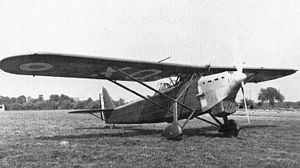
The ANF Les Mureaux 110 originated with a French air ministry requirement for an aircraft to replace the Breguet 19 in Armeé de l’Air service in the “R2” reconnaissance role. The Mureaux 110 first flew in 1931. Two slightly different variants, the 110 and 111 were presented to the air force for evaluation, and were soon ordered into production.
The first mass-production version was the 113 in 1933, of which 49 examples were purchased.
ANF Les Mureaux 113
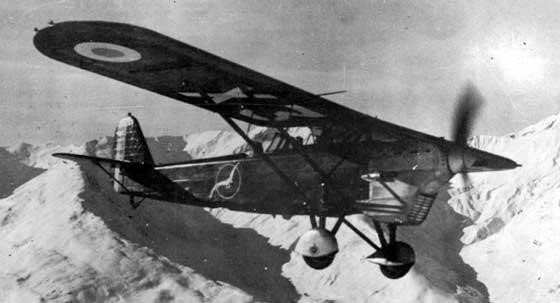
This was supplanted in production by the 115 in 1935 and the 117 later than year. The major difference between the 117 and the earlier 115 was that the 117 had improved aerodynamics. Both these series were given light bombing capability as well. By the outbreak of World War II, the ANF Les Mureaux 117 equipped nine Groupes Aériens d’Observation.
Mureaux 117
The Mureaux 115.R2 was a two-seat fighter. A Mureaux 115 model was the first French aircraft destroyed by the Luftwaffe.
In early 1938, the Ilmavoimat / Maavoimat test team evaluated the ANF Les Mureaux 117. It was assessed as a rugged but somewhat dated aircraft similar to the Fokker C.X the Ilmavoimat already had in service and without any real multi-role or STOL capability.
A total of 285 military reconnaissance aircraft were built.
ANF Les Mureaux 117 Engine: single 634-kW (850-hp) Hispano-Suiza 12Yers Maximum speed: 210 mph Range: 620 miles Service ceiling: 32,800 ft Armament: 1 × 20 mm Hispano-Suiza HS.9 cannon through propeller hub, 2 × fixed, forward firing 7.5 mm MAC 34 machine guns and 2 × flexible 7.5 mm MAC 34 machine guns for observer Bombload: 200 kg (440 lb) Crew: 2 (Pilot and Observer)
In September 1941 the Germans were approaching Voronezh, but even under these circumstances the aviation factory continued to deliver Il-2 assault aircraft to the front. At the beginning of September 1941, the decision was made to evacuate Factory No. 18 and OKB-31 led by Moscalev.
The new production base was established in the Siberian village of Zavodoukovsk, located in the Tyumen Oblast, where a new factory was organized that was numbered 499. AS Moscalevwas selected as director and main constructor.
Some time later the factory began to deliver the Antonov A-7 7-seater landing glider productions and a little later the A-2 training gliders, from the same manufacturer.
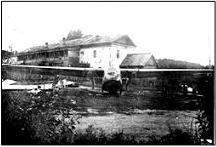
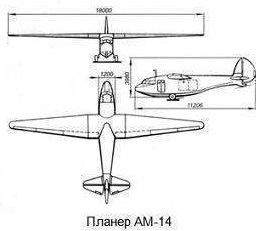
At the end of 1942 A. S. Moscalevwas given the task of modernizing the A-7 glider. The task envisaged the development of an enlarged version with capacity increased to 14 people, which was renamed AM-14 (Antonov – Moscalev14 seats, in Russian Антонов / Москалёв АМ-14). The prototype was built in Factory No. 499 in 1943.
Modifications to the base model included lengthening the central region of the fuselage by 670 mm, increasing the wing area and tailplane span, and increasing the diameter of the wheels.
After the tests, which were carried out successfully, Factory No. 499 began serial production of the model.
At the end of May 1943, A. S. Moscalev was tasked with urgently producing 50 AM-14 landing gliders at Factory No. 499, to be used in a supply mission to Belarusian guerrillas in the Minsk region. The gliders had to be prepared to carry fuel, weapons and ammunition, including cannon. The request established a delivery time of only 25 days for the 50 gliders and its fulfilment was personally followed by Stalin.
The glider launch operation over Belarus was kept a great secret, so for the Germans it was totally unexpected. This operation was led by the Air Landing Troop Headquarters and was planned to be carried out at night. Ilyushin DB-3F and Lisunov Li-2 towed gliders Moscalev and Gribovski pairs, releasing about 50 to 60 km from the target. The guerrillas had prepared surfaces for landing and at the agreed time they lit bonfires as signalling. This operation was successful and allowed the Belarusian partisans to achieve significant successes against the fascist groups.
For their contributions to support the partisans, the designers OK Antonov, AS Moscalev and VK Gribovski received the 1st level “Guerrilla of the Great Patriotic War” medal, which was one of the few exceptions for the delivery of this medal to personnel from the deep rear.
AM-14 Wingspan: 18.0 m Wing area: 29.10 m² Aspect ratio: 11.2 Length: 11.20 m Empty weight: 1080 kg Wing loading: 84 kg / m² Surface of the horizontal plane: 3.97 m² Vertical plane surface: 3.24 m² Spoiler area: 2.7 m² Glide ratio: 18 Crew: 1 Carrying capacity: 14 soldiers equipped
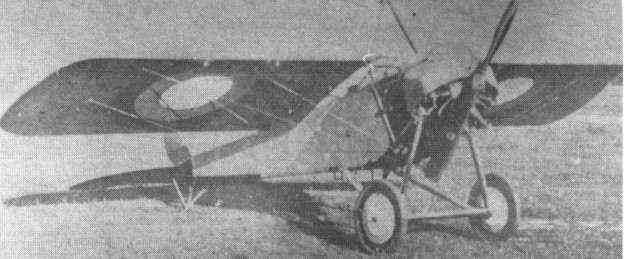
First original design was the Mosca MB, first flown in July 1915, a single-seat high-wing monoplane fighter evolved from the Morane J. During the course of 1916, the MB Mosca-Bystritsky (Moskva-MB) developed a single-seat fighter derivative of its two-seat reconnaissance monoplane. Appreciably smaller and more powerful than the two-seater, the Mosca-B bis fighter retained such features as wing warping for lateral control and detachable flying surfaces permitting the aircraft to be towed along roads. Powered by either an 80 hp Le Rhône or Clerget rotary engine, the Mosca-B bis was delivered both with a 7,7-mm unsynchronised forward-firing machine gun with propeller-mounted steel bullet deflectors and with a similar weapon mounted above the cockpit and firing clear of the propeller disc. A total of 50 Mosca-B bis fighters had been built up to 1918, and a few additional aircraft of this type were reportedly built after the revolution.
Max speed, 81 mph (130 km/h) Time to 3,280 ft (1000 m), 35 min Empty weight, 710 lb (322 kg) Loaded weight, 1,074 lb (487 kg) Span, 25 ft 11 in (7,90 m) Length, 20 ft 1/8 in (6,10 m) Wing area, 12917 sq ft (12,00 sq.m)
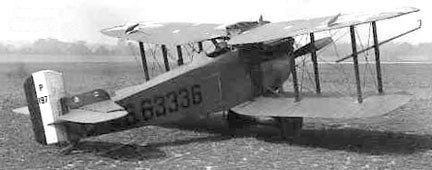
The MB-3 first flew on 2 February 1919. Fifty were for the US Army (AS63331-AS63380), 10 for USMC (A6060 to A6069); plus 1 static and 3 flying prototypes (AS40092 to AS40095), and 4 production for tests at McCook Field (AS63332, and AS63336 and AS63337).
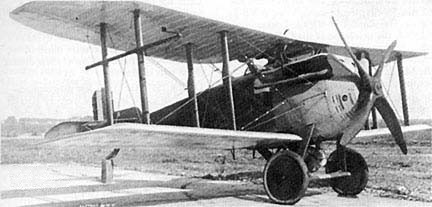
The 1922 MB-3A featured a new cooling system and four-bladed prop. First flying on June 7, 1922, 200 Morse MB-3A fighters (AS68237 to AS68436) were built by Boeing during 1921 -1922, contracted by the government in 1920. Some later became MB-3M advanced trainers. Design elements went into Boeing PW-9. In addition 50 were built by Thomas-Morse.
Thomas-Morse MB-3A
Three clipped-wing models were built in 1921, with one becoming MB-6 / R-2, and 10 for the USMC in 1921.
Boeing factory building MB-3A in 1922
The MB-3B modified Boeing four-aileron design was cancelled.
Thomas-Morse MB-3 Engine: 300hp Wright-Hisso H Wingspan: 26’0″ Length: 20’0″ Useful load: 823 lb Max speed: 141 mph Cruise speed: 125 mph Range: 310 mi Ceiling: 23,700′ Seats: 1
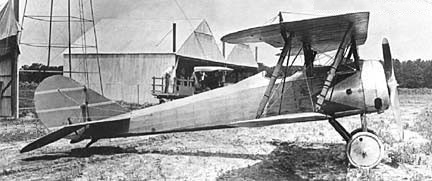
Designed by B D Thomas, the S-4 was evaluated for combat, but rejected and used as a trainer. The S-4 civil prototype (possibly still extant as NR66Y) was powered with a 100hp Gnôme and first flew in June 1917, piloted by Paul D Wilson. Twelve went to the USN, A395 to A406.
S-4 prototype
Thomas brothers, backed by Morse Chain Company, built three civil S-4B and 97 S-4B single-seat biplane advanced trainers for the Army, AS4276 to AS4372, plus ten for the USN, A3235 to A3244.
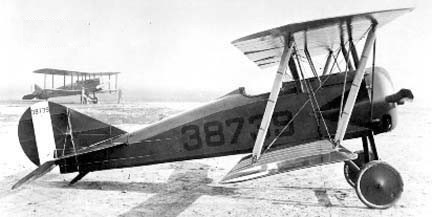
The improved S-4Cs were built powered by 80hp Gnôme B-9 or 80hp LeRhône C-9 engines. Priced at $5400, six civil, 461 for Army (AS38637 to AS38979, AS39882, AS41359 to AS41408, and AS44608 to AS44674), and four with twin floats for USN (A5855 to A5858); 50 with Gnôme and 447 with LeRhône, were built.
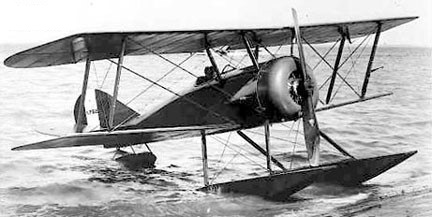
The designation S-5 was applied to S-4B fitted with two short main floats and a tail float. Six, A757 to A762, went to the US Navy in 1917.
Thomas-Morse S-5 A-762
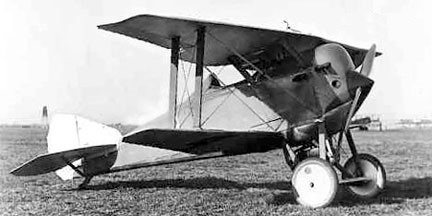
Thomas-Morse S-4E
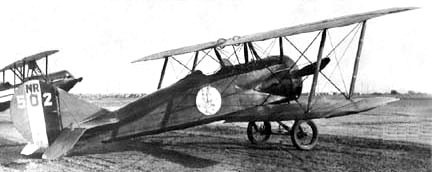
The 1918 S-4E had a tapered wings and redesigned landing gear and a 110hp LeRhône. One was built for evaluation as an aerobatic trainer but was rejected and used as a racer ‘Space-Eater’ with a 135hp Aeromarine V-8, piloted by Basil Rowe.
Thomas-Morse S-4C as civil racer NR502
The S-4 was in considerable varied civil use from war surplus with about 60 show on records, with many converted to 90hp Curtiss OX-5.
S-4C Engine: 1 x 80hp Le Rhone 9C or 80hp Gnôme B-9 Max take-off weight: 623 kg / 1373 lb Empty weight: 438 kg / 966 lb Wingspan: 8.08 m / 26 ft 6 in Length: 6.05 m / 19 ft 10 in Height: 2.46 m / 8 ft 1 in Wing area: 21.7 sq.m / 233.58 sq ft Max speed: 83 kt / 153 km/h / 95 mph Ceiling: 4500 m / 14750 ft Initial climb rate: 826.77 ft/min / 4.2 m/s Range: 217 nm / 402 km Armament: 1 x .30CAL 7.62mm machine-gun Crew: 1
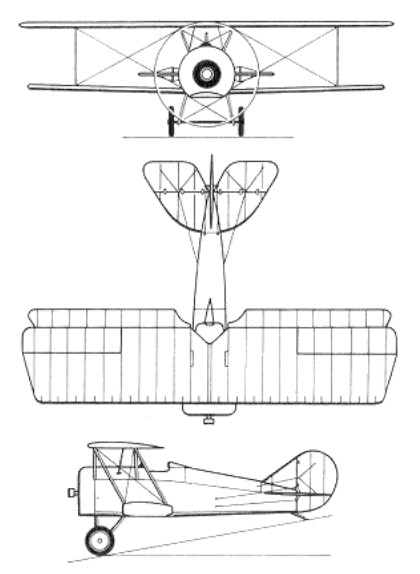
The Morane-Saulnier MS.147 and its derivatives, the MS.148 and MS.149 were a family of trainer aircraft produced in France in the late 1920s for civil and military use.
First flying in 1928, they were derived from other machines in Morane-Saulnier’s successful line of monoplane trainers, combining the wire-braced parasol wing of the MS.138 with the fuselage and undercarriage of the MS.130. The M.S.130 had been a training aircraft used by the French Navy, while the M.S.138 was used by the Armée de l’Air in the early 1930s.
The prototype M.S.147 made its maiden flight in 1928. It was powered by a 120hp Salmson 9Ac radial engine and had a top speed of 90mph. 109 were built, of which thirty were sold to Brazil, five to Greece, three to the Aéropostale company.
The M.S.147 was followed by a single M.S.148 and then by fifty-six M.S.149s produced for the French Navy. The M.S.149 first flying in 1929.
A total of 166 were built. The various subtypes saw service with the Aéronavale, Aéropostale, and a number of foreign air arms. They were largely withdrawn from French military service by 1935.
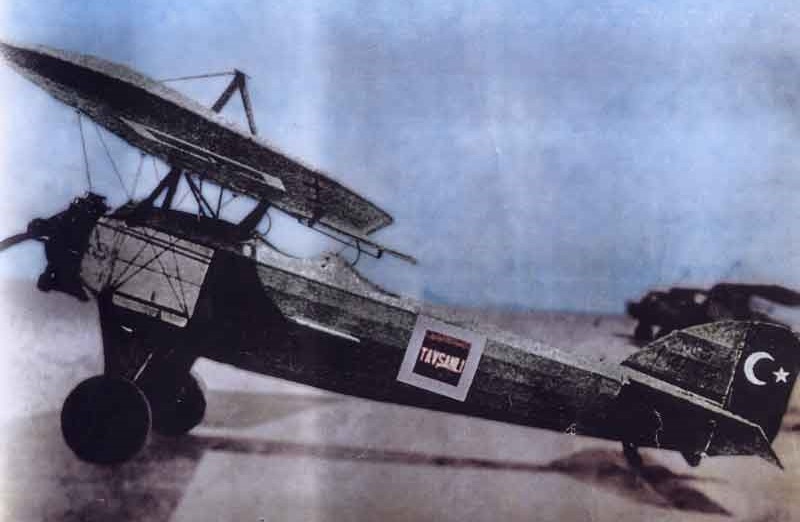
Operators were Aéronavale (56 × MS.149), Aéropostale (3 × MS.147P), Brazil (30 × MS.147), Hellenic Air Force (5 × MS.147), Guatemalan Air Force, Turkish Air Force, Venezuelan Air Force (MS.147).
The aircraft was used as a basic trainer during the early 1930s. Most had been withdrawn from service by 1935, although a small number remained in use as late as 1939.
Variants:
MS.147 production version 106 built Engine: Salmson 9Ac, 89 kW (120 hp) Propeller: 2-bladed fixed pitch Wingspan: 10.9 m (35 ft 9 in) Wing area: 19.3 m2 (208 sq ft) Length: 7 m (23 ft 0 in) Height: 3.69 m (12 ft 1 in) Empty weight: 584 kg (1,287 lb) Gross weight: 850 kg (1,874 lb) Maximum speed: 145 km/h (90 mph, 78 kn) Wing loading: 43.6 kg/m2 (8.9 lb/sq ft) Power/mass: 0.1067 kW/kg (0.0649 hp/lb) Crew: 2
MS.147P mailplane version for Aéropostale 3 built
MS.148 Engine: Salmson 7Ac 1 built
MS.149 version for Aéronavale (56 built) Engine: Lorraine 5Pa, 100hp Top speed: 87mph
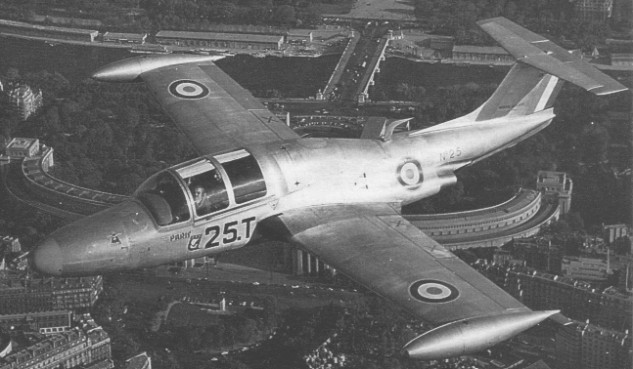
In January 1953 Morane-Saulnier flew the prototype M.S.755 Fleuret, a two-seat jet trainer which competed with the Fouga Magister for an air force order. The Fleuret lost the competition, but its design formed the basis of the Morane-Saulnier M.S.760 Paris which, designed primarily as a high-speed liaison aircraft, can be considered as a forerunner of the executive jet. Morane-Saulnier developed the Fleuret into a four seat light communications aircraft by enlarging the cabin, increasing the internal fuel capacity and strengthening the airframe.
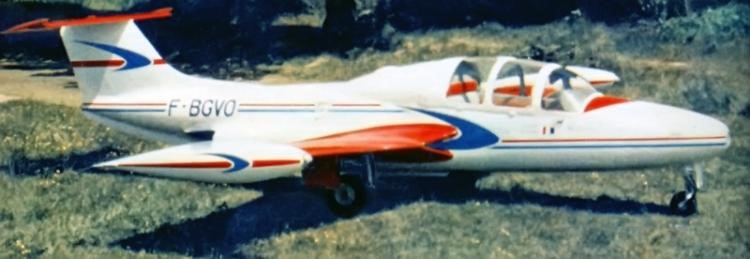
The Turboméca Mabore II powered first prototype, MS.760-01 F WGVO (then F-BGVO), was flown on 29 July 1954, and interest shown by the French military authorities resulted in orders for 50 for the air force and navy on 18 July 1956, the initial production example designated M.S.760A, flying on 27 February 1958. Fitted with tip tanks, this type was delivered as the Paris IR to the Armée de l’Air and the Aeronavale.
Two basic models will be manufactured in series. The MS 760A Paris I (one hundred and fifty built), and MS 760B Paris II (sixty-three built). The dates of the first flight respectively, February 27, 1958 and December 12, 1960.
Orders were received for 109 civil and military use, 12 MS.760A sets of components were supplied to Argentina for assembly at the Fabrica Militar de Aviones (FMA) factory in Cordoba, followed by production of 36 more. The 760 MS was purchased by Argentina in May 1957. Forty-eight Paris were operated by the Fabrica Militar de Aviones Cordoba. The first shipped to Argentina was Paris I No. 3, on 1 May 1958. By February 1959, twenty-six complete aircraft had crossed the Atlantic in separate shipments.
MS 760 of Argentina
Brazil acquired 30 for liaison, photographic survey and training. A first order of eight Paris II for Brazil was signed February 19, 1960 with twenty other options. In total, Brazil assembled forty-eight Paris II, mainly for the Air Force.
The first Paris was delivered to the Air Force as a training and liaison aircraft on 27 February 1958. The Naval Aviation were to receive a small number for the same missions as the Air Force. On a training mission, it can be armed with two 7.5mm machine guns plus four rockets or two bombs of 50 kg fixed under the wing.
At the end of 1958 the College of Aeronautics, Cranfield, received an MS.760 (No. 8) for practical demonstrations. Two were sold in the U.S., and one in Iran (delivered on 15 July.1958).
The initial production version was superseded in 1961 by the M.S.760B Paris II with 10581bst / 480kg thrust Marbore VI turbojets and various systems improvements and integral fuel tanks in wing leading edges.
When production ended in 1964 a total of 156 aircraft of the two series had been built, including 48 assembled in Argentina.
In 1969, four MS 760A were registered in France and many 760B, one registered in Italy and seven in Holland. Seven Paris II were purchased to train airline pilots at the Eelde school in Holland, the first being delivered September 14, 1962.
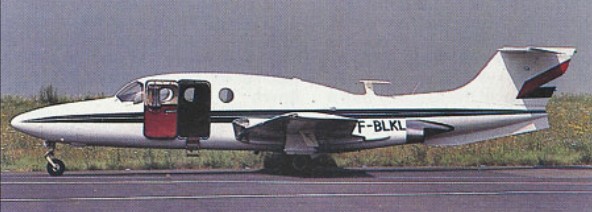
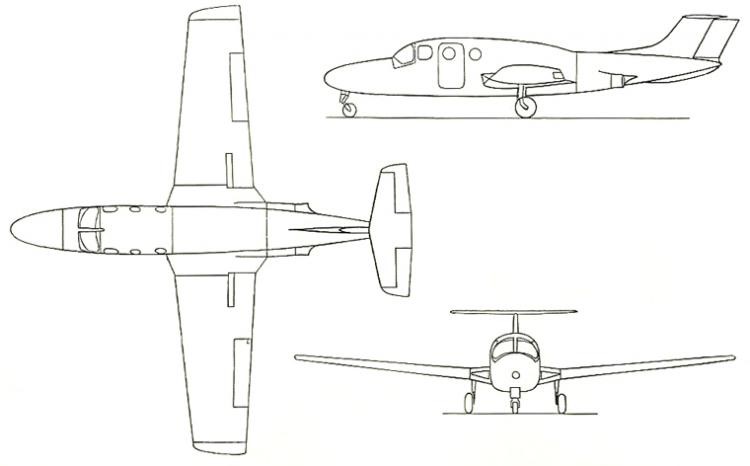
The final version was the 1963 Marbore VI-powered M.S.760C Paris III, with an enlarged wing but without tip tanks, plus increased fuel in a redesigned fully integral cabin fuselage accommodating five or six passengers, and a car-type door on port side instead of a sliding canopy. It was also fitted with an air system for cabin and pressurisation bled from the turbojet (SEMCA automatic air-conditionning system). The sole prototype, F WLKL, flew for the first time on 28 February 1964 but the variant did not find favour as a business jet and proceeded no further. Only one aircraft built, F-BLKL.
Paris III F-BLKL / 366 (cn 01)
A total of 109 MS.760A Paris I, 10 MS.760B Paris II and 1 MS.760C Paris III were built. For replacement, Argentina selected the FMA Pampa jet trainer, while France chose the TBM700 turboprop.
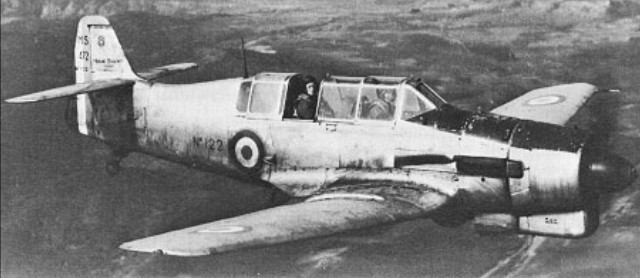
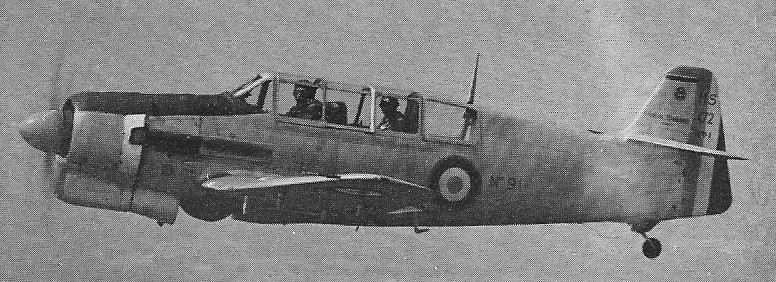
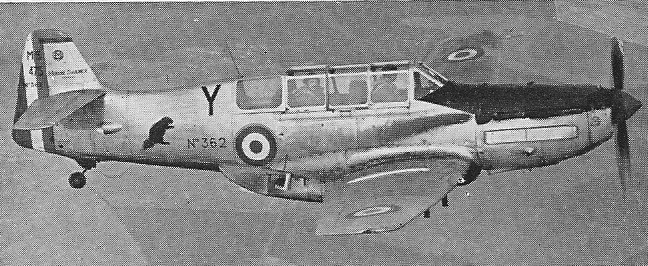
Developed under the Vichy regime by Morane-Saulnier chief designer Gauthier, the Morane-Saulnier M.S.470.01 Vanneau two-seat advanced trainer prototype made its first flight on 22 December 1944. Successful tests led to a decision by the Armee de I’Air to buy the Vanneau (Plover) to train its new generation of pilots, and three prototypes of the revised M.S.472 were ordered, M.S.472.01 flying on 12 December 1945.
In configuration the M.S.470 was an all-metal low-wing cantilever monoplane with pupil and instructor housed under a long glazed canopy. The main landing gear legs retracted inwards to lie partially exposed in the fuselage underside, a feature which was intended to reduce damage in the event of ‘wheels-up’ landings. The M.S.472 replaced the 515kW Hispano-Suiza 12X engine of the M.S.470 with a 522kW Gnome-Rhone 14M radial. The M.S.472 first flew on 12 February 1945.
M.S.472
230 Series M.S.472s were delivered from December 1946 onwards, and 69 series M.S.474 aircraft, modified for carrier operations, were delivered to the Aeronavale from December 1947, an M.S.472 having been temporarily converted to serve as the prototype M.S.474 in February of that year.
MS.472
Total production of the M.S.472 Vanneau II was 230 and of the M.S.474 Vanneau IV 70. Another series version was the M.S.475 Vanneau V, the prototype making its maiden flight on 8 August 1947. Production deliveries of the 200 series aircraft to the Armee de I’Air began in March 1950, the M.S.475 differed only in detail from its predecessors except for installation of a 634kW Hispano-Suiza 12Y-45 V-12 engine.
MS.475
The M.S.475 proved superior to its predecessors in manoeuvrability, speed and rate of turn, incorporating a wing of improved design, but a more radical modification with an increase in wing surface area was incorporated in one production machine, which was then re-designated M.S.476.01. Another M.S.475 was re-engined with an SNECMA Renault 12S-02 of 433kW and became the M.S.477.01, flown in November 1950. The M.S.478.01 project, to be powered by an Italian Isotta Fraschini Delta engine, was not built, and the last experimental development of the Vanneau was M.S.472 no. 295 modified as the M.S.479.01 to take an SNECMA 14X Super Mars engine of 611kW. It began its flight test programme in March 1952, but development was soon abandoned. The Vanneau II, IV and V remained in service at training bases of the Armee de I’Air and Aeronavale into the late 1960s.
M.S.470 Engine: Hispano 12X, 720 hp
M.S.472 Engine: Gnome-Rhone 14N-9, 700 hp Wingspan: 34 ft 11 in Length: 28 ft 3 in Height: 11 ft 10.5 in Empty weight: 3717 lb Loaded weight: 5290 lb Max speed: 290 mph Cruise: 258 mph Range: 950 mi Armament: 2 x 7.5mm mg Seats: 2
M.S.475 Engine: 1 x Hispano-Suiza 12Y 45 V-2, 641kW Max take-off weight: 3125 kg / 6889 lb Empty weight: 2351 kg / 5183 lb Wingspan: 10.65 m / 34 ft 11 in Length: 9.05 m / 29 ft 8 in Height: 3.62 m / 11 ft 11 in Wing area: 17.30 sq.m / 186.22 sq ft Max. speed: 445 km/h / 277 mph Ceiling: 8500 m / 27900 ft Range: 1500 km / 932 miles Armament: 2 x MAC 1934 7.5mm wing-mounted machine-guns, light bombs
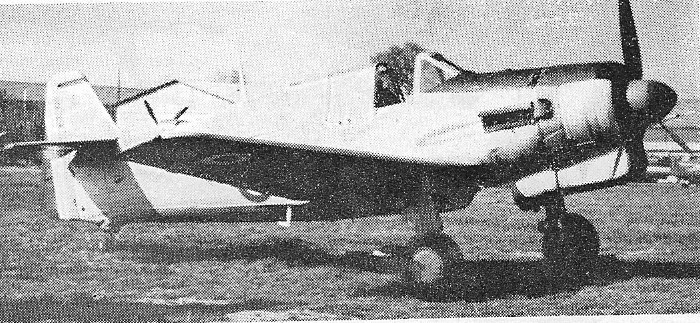
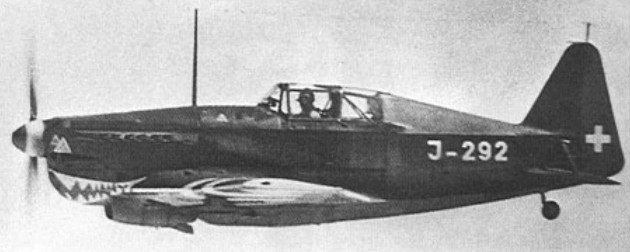
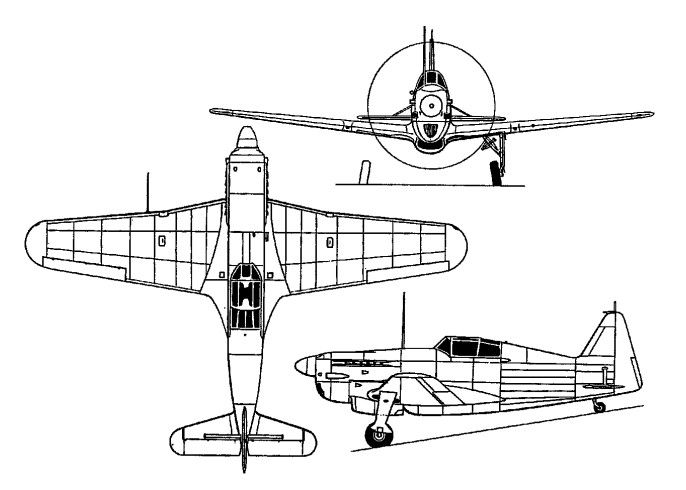
Prior to the Franco-German Armistice, the M.S.412, an improved version of the M.S.406, was under development primarily to fulfil a Swiss requirement. As an interim development aircraft, the twelfth pre-series M.S.405 had been fitted with the more powerful Hispano-Suiza 12Y45 engine and flown as the M.S.411, but a prototype of the M.S.412 with the still more powerful HS 12Y51 engine was not completed in France, the programme continuing in Switzerland as the D-3801. Flown for the first time in October 1940, the D-3801 had an HS 12Y51 rated at 1,050hp for take-off, a fixed radiator bath similar to that developed for the M.S.410 and the same armament as that of the D-3800. Although protracted teething troubles were suffered by the Saurer-built HS 12Y51 engine, series production of the D-3801 was undertaken by the Eidgenossisches Flugzeugwerke, the Dornier-Werke AG (Doflug) and SWS, deliveries commencing in 1941 and continuing until 1945, and a total of 207 being manufactured. These were augmented by a further 17 built in 1947-48 from spare assemblies remaining from the main production run. After withdrawal from first-line service, some D-3801s remained in use as advanced trainers and target- tugs until 1959.
Max take-off weight: 2 720 kg Empty weight: 2124 kg / 4683 lb Wingspan: 3.32 m / 10 ft 11 in Length: 8.17 m / 26 ft 10 in Height: 2.71 m / 8 ft 11 in Wing area: 17.10 sq.m / 184.06 sq ft Max. speed: 535 km/h / 332 mph Range: 1200 km / 746 miles
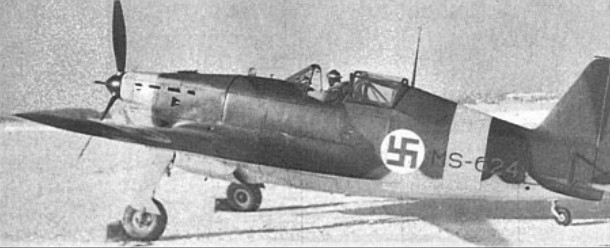
During the winter of 1939-40, development of an upgraded version of the M.S.406 was begun as the M.S.410. The programme was based on the use of existing M.S.406 airframes which were to be fitted with a fixed radiator bath to overcome problems presented by the standard semi-retractable radiator and a revised wing permitting installation of two belt-fed 7.5mm guns rather than one drum-fed weapon. It was also proposed to fit ejector exhausts. The radiator bath and modified wing were flight tested during January and February 1940, 500 pairs of two-gun wings being ordered, and the ejector exhausts were tested in April 1940, these boosting max speed to 509km/h at 4000m. The events of May 1940 interrupted the programme when only five M.S.410s had been completed. At the time, a further dozen conversions were virtually complete and some 150 sets of modified wings had been produced. After the Armistice, a modification centre was established under the auspices of the German authorities, repairable M.S.406s being sent to this centre for conversion to M.S.410 standard. In the event, 74 aircraft were fitted with the new wings, but some were completed as hybrids in that they retained the semi-retractable radiator, and none was fitted with the ejector exhausts. Eleven M.S.410s were delivered to Finland and otherswere included among the Morane-Saulnier fighters supplied to the Croat Air Force.
Max take-off weight: 2581 kg / 5690 lb Empty weight: 1923 kg / 4240 lb Wingspan: 10.62 m / 34 ft 10 in Length: 8.17 m / 26 ft 10 in Height: 2.71 m / 8 ft 11 in Wing area: 17.10 sq.m / 184.06 sq ft Max. speed: 470 km/h / 292 mph Ceiling: 8500 m Range: 1100 km




 All Aero