Piasecki PV-3 / HRP / PV-17

On 1 February 1944 Piasecki received a contract to develop a tandem-rotor utility transport and rescue aircraft for the U.S. Navy.

Given the factory designation PV-3, this machine was a development aircraft for the US Navy’s HRP Rescuer transport and rescue helicopter. Powered by a Wright R-975 piston engine, the tandem-rotor PV-3 first flew at Morton, Pennsylvania on 7 March 1945. The first of its kind, initially flew as a bare metal frame and was covered later. It was followed by two XHRP-1airframes, 37968 and 37969, one of which was used for static tests while the other undertook the U.S. Navy flight development programme, during the course of which the company changed its name to Piasecki Helicopter Corporation.
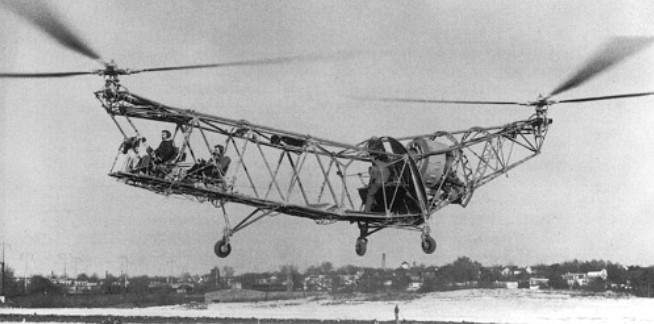
The XHRP-1 SDTA hovers the morning after its first flight

In June 1946 Piasecki received an initial order for 10 production HRP-1 helicopters. The test programme was completed in the spring of 1947, by which time work had already begun on an initial batch of ten HRP-1 Rescuers, 111809 to 111828. The first of these flew on 15 August 1947, powered by a 447kW / 600hp Pratt & Whitney R-1340-AN-1 engine

A second batch of ten was built later, 111834 to 111848, the final machine being delivered in 1949, with a metal-skinned rear fuselage and fabric covering over the main cabin section, although they were often flown with the fabric removed.

Service evaluation was undertaken by US Navy Squadron VX-3 and US Marine Corps Squadron HMX-1. Twelve of the HRP-1’s were eventually assigned to the U.S. Marine Corps for assault training, while three others, as HRP-1G’s, were used as rescue craft by the U.S. Coast Guard. After withdrawal of the Rescuer from military service in the early 1950s, about six appeared on the U.S. civil register.
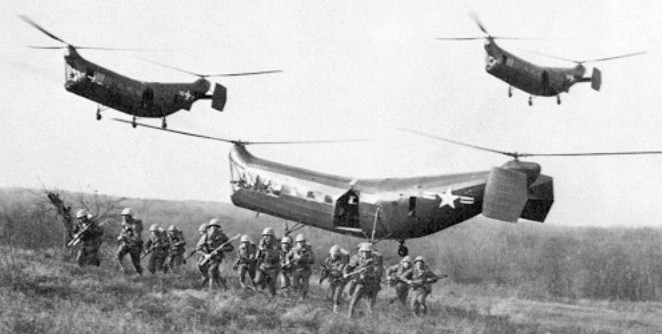
HRP-1, Quantico, Va., in November 1948.

The HRP-1 (redesignated as PV-3) carried a crew of 2 sitting in tandem, and its 11.33cu.m cabin could accommodate 8 passengers, 907kg of cargo or 6 stretchers. The single engine was mounted in the rear part of the fuselage, with a clutch and gearbox amidships from which drive shafts ran to reduction gearboxes below each of the rotor hubs.

In June 1948 the U.S. Navy ordered five examples, 111829 to 111833, of the much-developed PV-17 with the designation HRP-2. The much-improved HRP-2 (PD-17) featured a streamlined metal fuselage offering better visibility for two pilots, who now sat side by side ahead of the front rotor. The most significant improvement was the HRP-2’s all-metal stressed-skin construction, and modified rotor heads. The length was 54’9″.

It used the same engine and rotors as the HRP-1, but was slightly shorter and lighter. The Piasecki team used a thinner skin and had the longitudinal members shaved down, as well as other extruded parts that could not be manufactured thinly enough. Produced by Boeing-Vertol in 1948.

Jim Ryan lifted the new Navy helicopter into the air for the first time October 29, 1949. While it was indeed better than the HRP-1, the fast pace of helicopter technology had already passed it by, and better helicopters could now be built. With a gross weight of 3260kg, the HRP-2 was simply too light to offer much utility and only five were built.

The HRP-2 formed the basis of the later PD-22 model which became the military Vertol H-21 series.
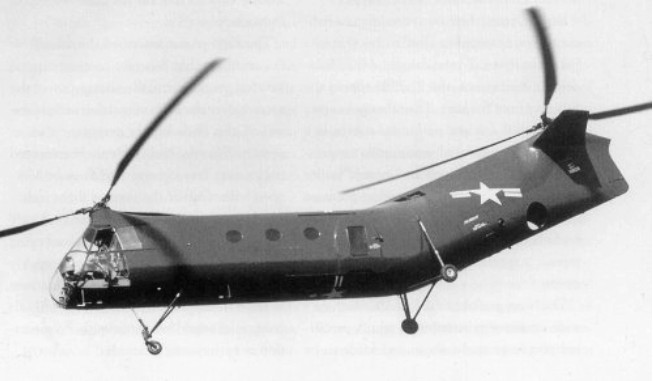
HRP-2

Robert Cummings, 23.02.2009
As a U.S.Navy pilot I was stationed in VX-1 at Key West. We had 12 of the HRP-1s and developed the dunking sonar for helicopters. Lt. Lockwood and I were later assigned to a project at Mine Counter-Measures station at Panama City, Florida where we developed towing mine sweeping gear with an HRP-1. George Spratt from Piasecki was the head engineer on that project. The time period for these projects was 1951 to 1953.

Gallery

HRP / PV-3
Engine: 600hp P&W R-1340
Rotors: 41’0″
Length: 48’0″;
Capacity: 12 passenger

HRP-1 / PV-14
Engine: 1 x Pratt & Whitney R-1340-AN-1, 600 hp / 445kW
Rotors: 2 x 3-blade main rotors in tandem
Rotor diameter: 12.50m / 41 ft
Fuselage length: 14.63m / 47 ft 2 in
Height: 3.81m
Take-off weight: 3629kg / 6,900 lb
Max speed: 193km/h
Service ceiling: 3658m / 12,000 ft
Normal range: 483km
Typical range: 264 miles at 85 mph with 100 USgals fuel
Seats: 10

HRP-2 / PV-17
Engine: 1 x Pratt & Whitney R-1340, 600 hp
Seats: 10
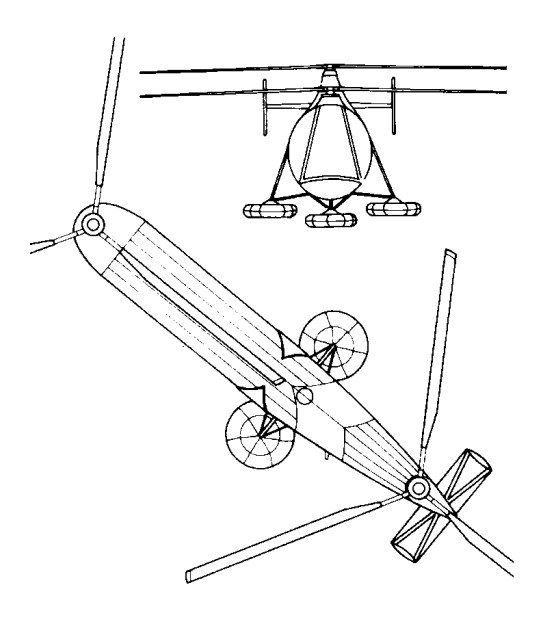
Piasecki HRP-1

Piaggio PD-808

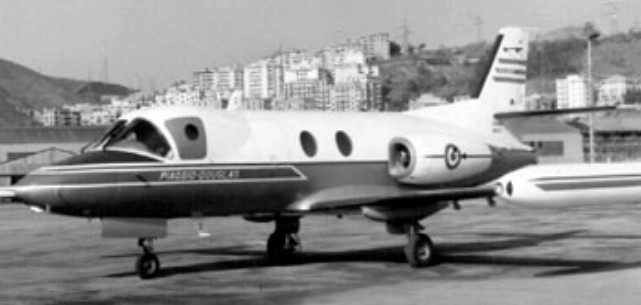
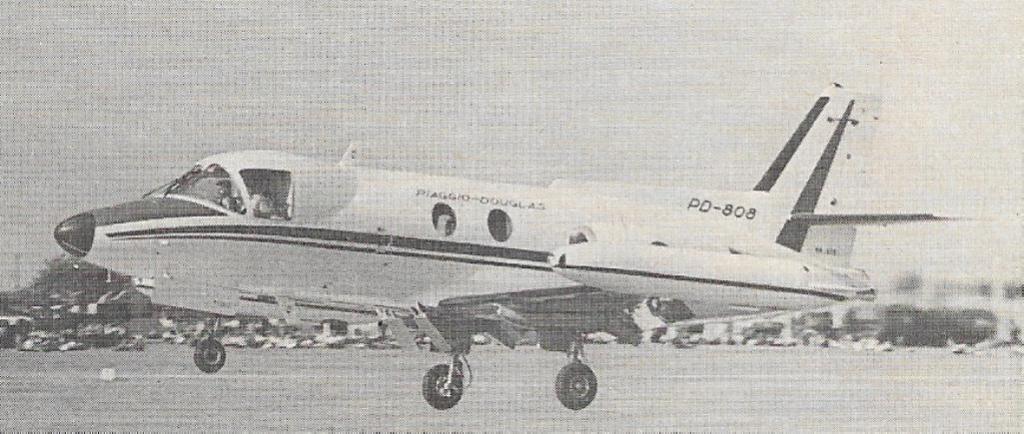
Under an agreement signed in 1961, Piaggio and Douglas Aircraft developed the PD-808 for military and commercial use. Originally designed by the Douglas Aircraft Company of Long Beach, California, as a business jet. No orders were received, and the complete project was bought by Piaggio, which flew the first prototype in 29 August 1965.

Piaggio PD-808 Article

The PD-808 was powered by Bristol Siddeley Viper turbojets mounted on the sides of the rear fuselage. Piaggio also failed to secure any worthwhile commercial interest, but a few examples were taken by the Italian air force.

After appearing at the Paris Air Show it was modified.

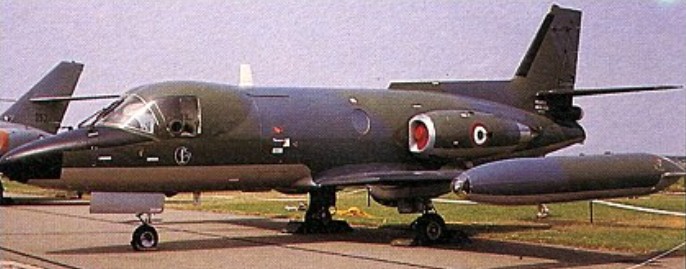
Only 27 examples of this type, with low-set wings and aft-mounted turbojet engines, were produced, and 25 of these went to the Italian air force. The first aircraft were configured for the utility role (navaid calibration, navigation training for three pupils, and light transport of up to eight passengers or an equivalent freight load), but the last six aircraft were completed as electronic warfare platforms with cabin accommodation for specialist Elint (electronic intelligence) equipment and its three operators.

Power increased in 1966 to 3,300 lbs. s.t. The PD-808 differed from the original model by having larger tip tanks, a longer dorsal fin, and a forward-sliding nose fairing. By 1972, the aircraft was available in several versions: a five-seat executive version, a seven-seat executive transport, a six-seat version for the Italian Air Force, and one powered by 3,500-lb. s.t. AiResearch turbofans. Other PD-808s are powered by twin 3,360-lb. s.t. turbojets drawing from two integrated tanks of 511 gallons total capacity and wingtip tanks with 473 gallons total capacity.

Four versions were produced for the Italian Air Force as the PD-808 VIP six-seater for government and military VIP transport duties; PD-808 TA nine-seat transport and navigation trainer; PD-808 ECM electronic-countermeasures version; and the PD-808 RM radio-calibration version that is equipped for medium- and high-altitude calibration of navigation aids.

Engines: two Rolls-Royce Bristol Viper Mk 526 turbojets, 3,368-lb. s.t / 1524kg
Wingspan: 13.2 m / 43 ft 4 in
Length: 12.85 m / 42 ft 2 in
Height: 4.8 m / 16 ft 9 in
Wing area: 20.9 sq.m / 224.97 sq ft
Max take-off weight: 8165 kg / 18001 lb
Empty weight: 4830 kg / 10648 lb
Max. speed: 850 km/h / 528 mph
Cruise 497 mph
Stall 104 mph
Service ceiling: 13700 m / 44950 ft
Range w/max.fuel: 2100 km / 1305 miles
Initial climb rate: 5,400 fpm
Takeoff distance (35′): 3,180 ft
Landing distance (50′): 2,990 ft
Seats: 5-9

PD-808ECM
Five-seat electronic warfare plane
Engines: two 3,360-lb (1,524-kg) thrust Piaggio built Rolls-Royce (Bristol Siddeley) Viper Mk 526 turbojets
Maximum speed 529 mph (851 kph) at 19,685 ft (6,000 m)
Initial climb rate 5,415 ft (1,650 m) per minute
Service ceiling 44,950 ft (13,700 m)
Range 1,322 miles (2,128 km)
Empty weight 10,648 lb (4,830 kg)
Maximum take-off weight 18,001 lb (8,165 kg)
Wing span 43 ft 3.75 in (13.20 m)
Length 42 ft 2in (12.85 m)
Height l5ft 9in (4.80m)
Wing area 224.97 sq ft (20.90 sq.m)
Armament: none

Piaggio P.149

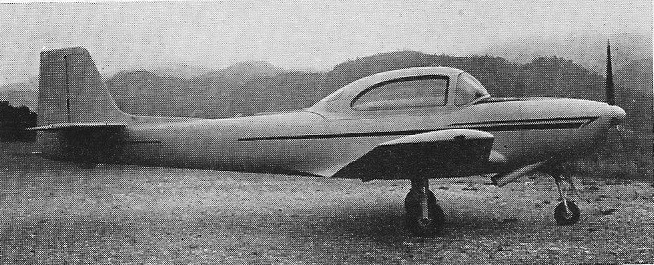
The Piaggio P.149 was a 4-seat touring development of the P.148 with many of the same structural components. A 2-seat side-by-side all metal trainer with a fixed tailwheel undercarriage.

Piaggio P.149 Article

The prototype of the P.149 (I-PIAM c/n 171) with a 260 hp Avco Lycoming GO-435-C2 engine and a retractable tri-gear flew first on 19 June 1953. Two years later the P.149 was selected by the Federal German Air Force as a standard basic training and liaison monoplane.

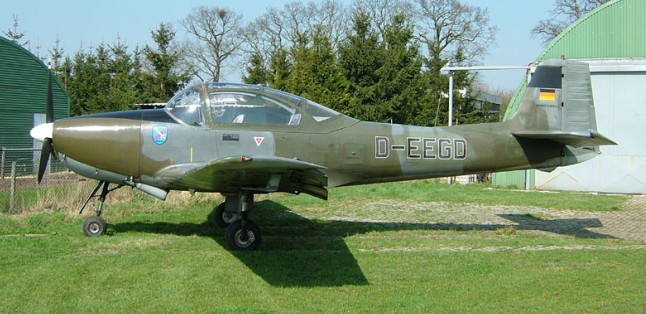
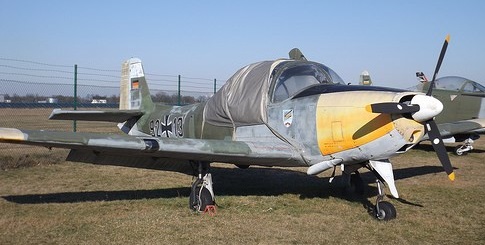
To meet their requirements a 2-seat military trainer version of the P.149 with glazed cabin roof, deeper rear fuselage and a 280 hp Lycoming GO-480 engine was developed, designated P.149-D. The Federal German Air Force (Luftwaffe der Bundesrepublik Deutschland) ordered 265 Piaggio P.149D for use as a 2-seat primary trainer and 5-seat liaison aircraft.

92+13 Piaggio P-149 D 309

Piaggio built 76, including one which was written off before delivery. Focke-Wulf built 190 under licence from Piaggio. The first Piaggio built P.149D (AS+401 c/n 250) was delivered to Memmingen Air Base in May 1957. In the mean time Focke-Wulf had started production in Bremen, Germany and delivered its first example in November 1957.

Accommodation was provided for five, reduced to two for aerobatic flying.

P.149D
Engine: 1 x Avco Lycoming GO-480, 201kW / 270hp
Prop: 3 blade constant speed
Wingspan: 11.12 m / 37 ft 6 in
Length: 8.8 m / 29 ft 10 in
Height: 2.9 m / 10 ft 6 in
Wing area: 18.85 sq.m / 202.90 sq ft
Empty weight: 1160 kg / 2557 lb
Max take-off weight: 1680 kg / 3704 lb
Max. speed: 305 km/h / 190 mph
Cruise: 165 mph
Ceiling: 6050 m / 19850 ft
Range: 1090 km / 677 miles

Piaggio P.32

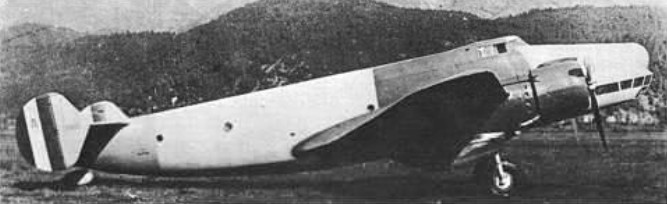
The prototype of the Piaggio P.32 twin-engine bomber flew in early 1936 powered by two Isotta Fraschini Asso XI V-12 engines. Of mixed construction, the P.32 had a stubby fuselage with a low/ mid-set wing incorporating Handley-Page leading-edge slats and double trailing-edge flaps, and a tail unit with twin fins and rudders. The V-12 engines were later replaced by 746kW Piaggio P.XI RC.40 radials. Armament comprised a single 7.7mm Breda machine-gun in a nose turret, and twin guns of the same type and calibre in retractable dorsal and ventral turrets.

A production series of 16 P.32s with Isotta Fraschini engines went into service with the 47a and 48a Squadriglie B.T. of the Regia Aeronautica during 1937, only to be withdrawn and scrapped the following year after a crash which indicated irremediable control problems. Twelve radial-engined aircraft under construction were never completed.

Used in the disasterous attempt by the Italians to bomb London on 11 November 1940.

Piaggio P.16

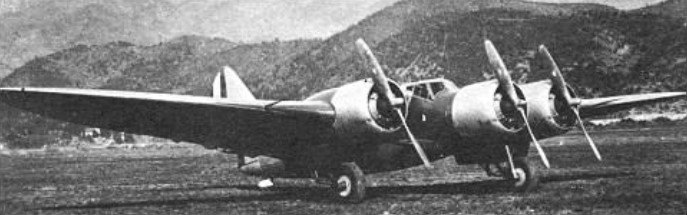
The Piaggio P.16 three-engine heavy bomber of 1934 was distinguished by a thick-section semi-elliptical wing set at shoulder height, and of inverted gull configuration. Defensive armament comprised four 7.62mm machine-guns located in the wing leading edge, in a retractable dorsal turret and in the rear fuselage beneath the high-positioned single fin and rudder. Largely of metal construction, the P.16 had retractable main landing gear units and a non-retractable tailwheel with a spat-type fairing. The bomb-aimer’s compartment was located in the underside of the fuselage, just behind the central engine.

Armament: 4 x 7.62mm machine-guns

Piaggio P.6

In 1927 two parallel, designs were developed to meet an Italian naval requirement for a two-seat catapult-launched seaplane. One was a small flying-boat, the Piaggio P.6bis powered by a single 194kW Isotta Fraschini V.6 engine mounted between the wings and driving a pusher propeller; the other was the P.6 floatplane with a large central float, two wing-tip stabilising floats, and a 288kW A.20 engine in the nose. The two aircraft had identical wing structure, with rigid strut bracing, and each mounted a single defensive machine-gun, that of the flying-boat in the bow, and the floatplane’s in the rear cockpit.

The P.6ter of 1928 was similar to the P.6, but had an engine boosted to 306kW to provide a maximum speed of 195km/h. Wing span was 13.50m and maximum take-off weight 2360kg. A batch of 15 P.6ter floatplanes was built, and the type was used for a period aboard several Italian capital ships and cruisers.

P.6bis
Engine: 1 x 194kW Isotta Fraschini V.6

P.6
Engine: 1 x 288kW A.20

P.6ter
Engine: 1 x Fiat A.20, 306kW
Max take-off weight: 2360 kg / 5203 lb
Wingspan: 13.5 m / 44 ft 3 in
Max. speed: 195 km/h / 121 mph

Phönix D.II

J.I

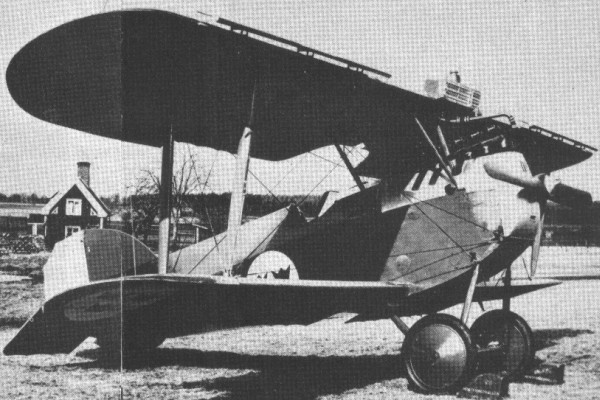
The D.I and D.II were flown during First World War by the Austro-Hungarian Flying Service, a few being fitted with cameras for high-speed aerial photo-reconnaissance work. Seventeen of the final batch of 122 Phonix D.IIs were completed as improved variants and transferred to the Swedish Army Air Service after the war.

Sweden built 15 of the WW1 Phoenix D2 and designated the type J-1.

Phönix C 1

No. 121.50

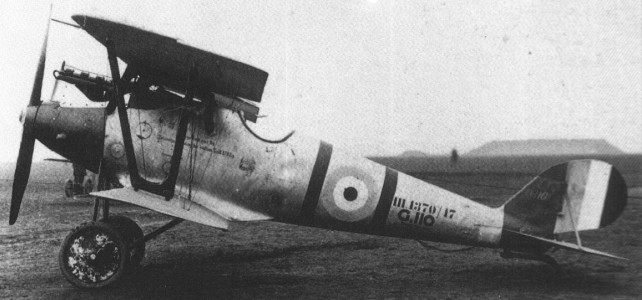
Powered by a Hiero IV engine and designed by Ing. Hieronymus some were made at Skoda Mlada Boleslav Company in Bohemia.

The aircraft used by the Austrian Air Force for recce duties.

Phoenix C 1
Engine: Hiero, IV 230 hp
Span: 11 m
Length: 7.5 m
Empty weight: 820 kg
Loaded weight: 1240 kg
Maximum speed: 176 km.p.h
Service ceiling: 6 000 m
Endurance: 3 hr
Armament: one synchronized machine gun plus one flanking the cockpit
Seats: Two

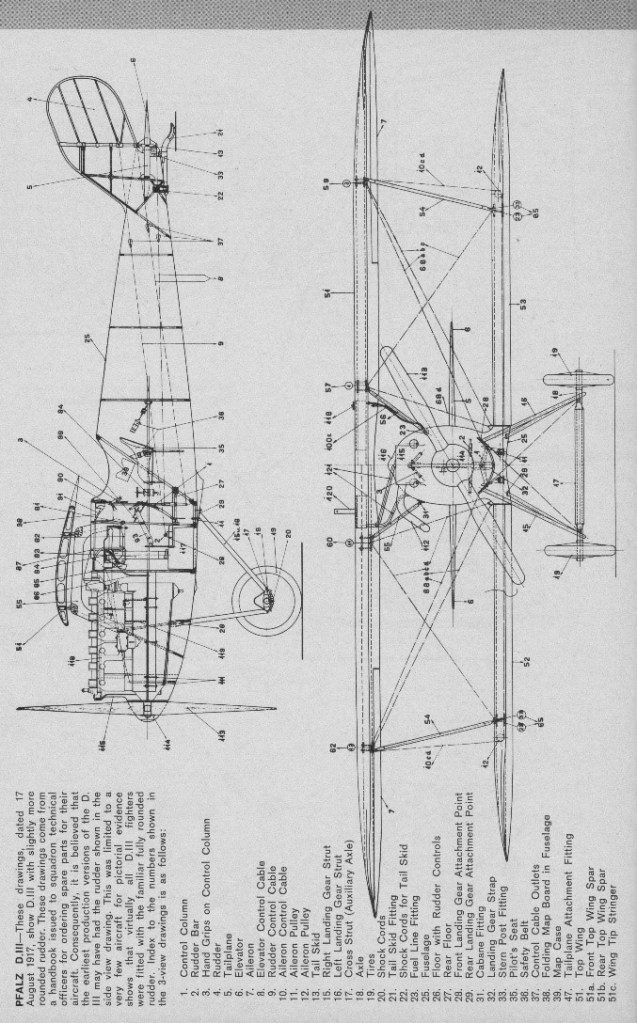
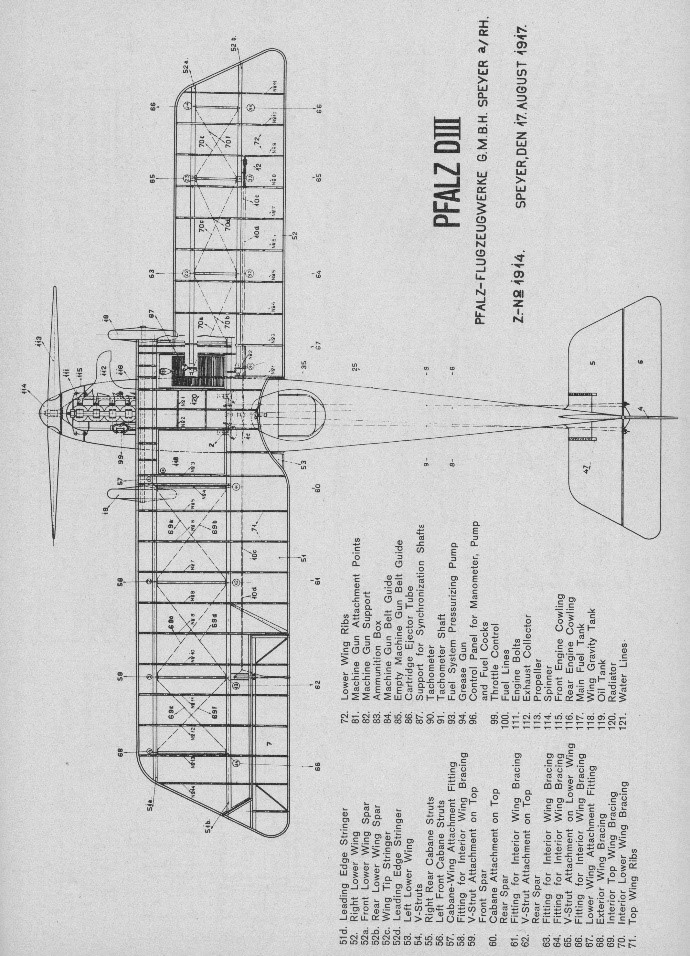
Pfalz D.III

D.III

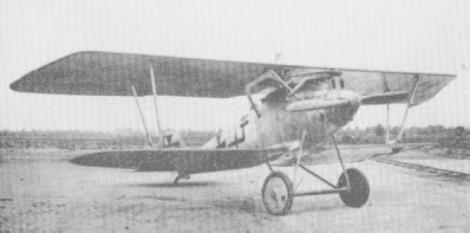
The Pfalz Flugwerke GmbH did not develop a biplane fighter design of its own until the Pfalz D.III prototype appeared in the spring of 1917. It had its roots in the Roland fighters that Pfalz had been building under license until then.

The type was an unequal-span biplane with an almost sesquiplane layout, a fuselage of very clean lines, and a 119-kW (160 hp) Mercedes D.III inline in a commendably low-drag installation. The D III entered service in the autumn of 1917, mainly with Bavarian units, and was complemented from 1918 by the D IIIa with a more powerful engine. By the end of 1917 approximately two hundred and fifty D.IIIs were at the Front. Many Jagdstaffein had mixed equipment at this period and it was not unusual for the new fighter to operate m the same formation with Roland and Albatros machines

Pfalz D.III

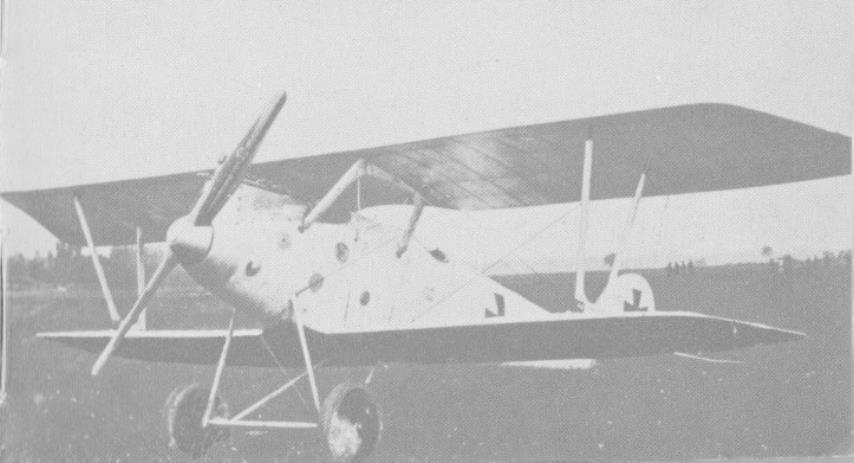
Compared with its contemporaries, the Pfalz D.III had a poor rate of climb, a tendency to catch fire rapidly and average manoeuvrability. On the other hand, it was an excellent gun platform thanks to a fuselage-upperwing; gap kept to a minimum to afford a good all-round view from the cockpit. Twin Spandau guns were mounted inside the fuselage with only their muzzles protruding. It also featured a tailplane of inverted aerofoil section, made of ply-covered wood. This resulted in the capacity to dive hard and fast, a factor that led to its extensive use as a balloon-buster. Except for the tailplane, the fuselage was constructed of thin layers of plywood round a wooden frame of longerons and formers, covered with fabric.

The Pfalz D.III was powered by the Mereedes D.III six-cylinder liquid cooled inline 160hp engine. This gave it a maximum speed of 180 km/hr and an endurance of 2.5 hr.

The Pfalz D.III continued to operate until mid-1918. Then it was already looked upon by the Allied fighter pilots as a sitting duck.

Production totaled about 600 machines, including D.IIIa’s with 180 hp Mercedes engines.

About 350 were still operational in August 1918.

Replica:
Bellamy Pfalz D.III
Personal Plane Services Ltd Pfalz D.III

Pfalz D IIIa
Powerplant: l x Mercedes D.III, 160 hp
Span upper: 9.40m (30ft 10 in)
Span lower: 26 ft 8 in
Wing area: 238.5 sq.ft
Length: 6.95m (22 ft 9.5 in)
Height: 8 ft 9 in
Fuel capacity: 21.5 Imp.Gal
Empty weight: 1532 lb
Max T/O weight: 935 kg (2,061 lb)
Max speed: 103 mph at 9,845 ft
Operational endurance: 2 hr 30 min
Armament: 2 x Spandau mg
Crew: 1

Pfalz D IIIa
Powerplant: l x Mercedes D.IIIa, 134kW (180 hp)
Span: 9.40m (30ft 10 in)
Length: 6.95m (22 ft 9.5 in)
Armament: 2 x 7.92-mm (0.31 2-in) LMG 08/15 mg
Max T/O weight: 935 kg (2,061 lb)
Max speed: 103 mph at 9,845 ft
Operational endurance: about 2 hr
Crew: 1