In the late 1930s, ASJA and Saab in Trollhättan (operating under the joint title of AB Förenade Flygverkstäder) competed with each other to build a reconnaissance aircraft for the Swedish Air Force. Although the order went to ASJA, its activities were taken over by Saab in early 1939 and Aircraft 17 became exclusively a Saab project.
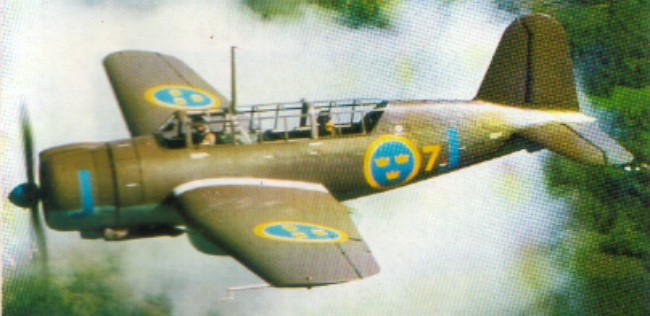
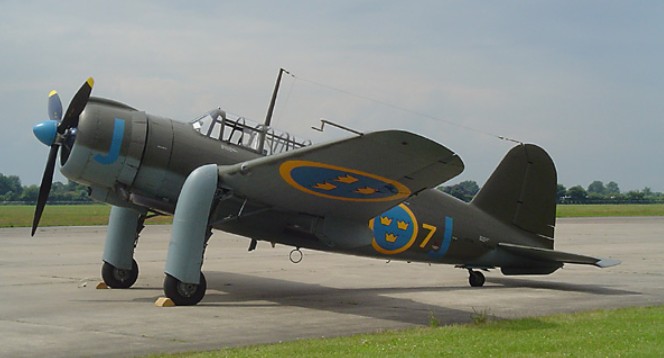
Developed in close collaboration with American engineers, the aircraft was a mid¬wing monoplane equipped with retractable landing gear. The SAAB B17 was first designed as a reconnaissance aircraft but was mainly used as a dive-bomber.
Production was under Swedish direction, the Americans being responsible for the drafting work. The first test flight took place on 18 May 1940, six months after the end of the American involvement in the project. Not unexpectedly, teething troubles were encountered – the cockpit canopy blew off, spin was difficult to correct and the engine stalled in a right-hand spin. However, when the Air Force came to test the plane, they found that “the aircraft and its equipment are of a generally excellent standard”.
Following the first flight the company made the proposal that its development as a bomber should be given consideration by the Flygvapen. Evaluation of the prototype led to the aircraft being developed for this role as well as for reconnaissance.
B17
In 1940, the Swedish Air Force ordered 322 aircraft that were delivered in the period December 1941 – 1944.
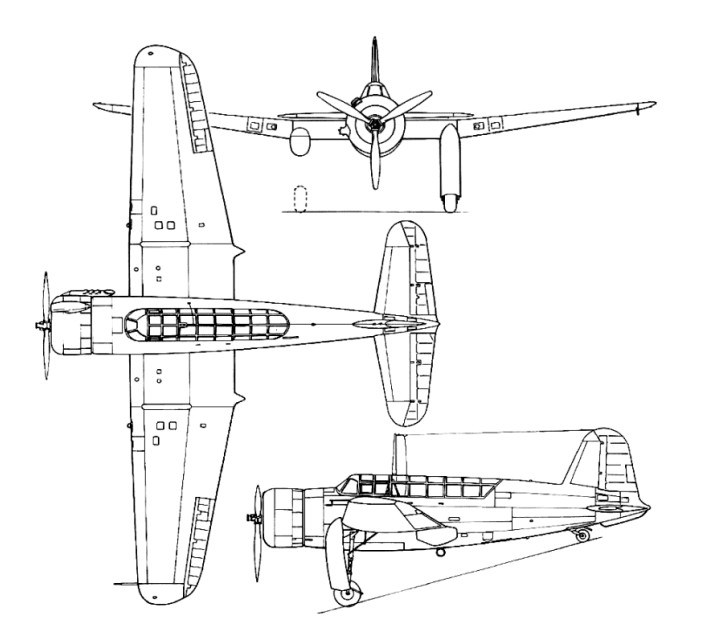
Five versions were developed out of the basic SAAB B17. A cantilever mid-wing monoplane with retractable tail-wheel landing gear, the Saab-17 had its crew accommodated beneath a long continuous canopy. Powerplant varied, the B17A dive-bomber having the 794kW / 1065 hp Svenska Flygmotor-built Pratt & Whitney R-1830-SC3G Twin Wasp radial. A light bomber, the B 17A armament consisted of two fixed 8 mm machine-guns m/22 in the wings and a moveable 8 mm machine-gun at the observers place behind the pilot. A bomb-load of 500 kg could be carried. 132 SAAB B 17A were manufactured.
The B17B dive-bomber and similar S17B (equipped for the reconnaissance role) powered by the 731kW Swedish-built Bristol Pegasus XXIV radial, and the B17C dive-bomber (which differed from the B17B only in its engine, the Piaggio P.XIbis). Included in the total production were 38 examples of the S17BS, a maritime patrol version of the B17B on twin floats. Many of the landplane versions were later given retractable ski landing gear for operation from snow-covered surfaces.
325 were built.
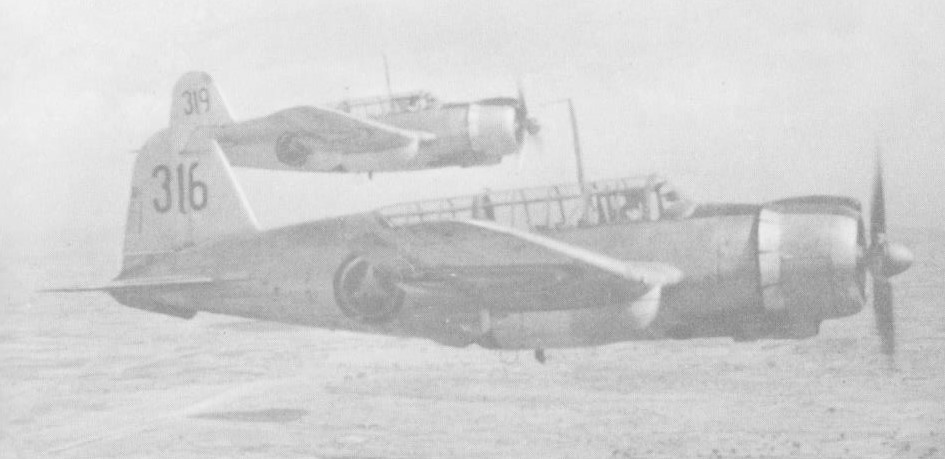
Entering service with the Flygvapen in 1941, the Saab-17 was notable for the robust construction that has since been a feature of the company’s designs, and the type remained in service until 1948. Although retired from active operation in 1948, the Saab 17 continued to fly as a target towplane until 1968.
After World War II 47 were delivered to the Ethiopian air force.
17A Engine: STWC 3 Pratt & Whitney Twin Wasp/ 1065 hp Span: 13.7 m (45 ft 1 in) Length: 9.8 m (35 ft 1.75 in) Height: 14 ft 6 in Wing area: 307 sq.ft Take-off weight: 3790 kg (8355 lb) Maximum speed: 435 kph (270 mph) Cruising speed: 390 kph (242 mph) Landing speed: 125 kph (77 mph) Range: 1800 km (1120 miles) Max altitude: 8700 m (28550 ft)
17B Engine: Bristol Mercury XXI V/980 hp Span: 13.7 m (44 ft 11.25 in) Length: 9.8 m (35 ft 1.75 in) Take-off weight: 3605 kg (7948 lb) Maximum speed: 395 kph (245 mph) Cruising speed: 375 kph (233 mph) Landing speed: 125 kph (77 mph) Range: 1400 km (870 miles) Max. altitude: 8000 m (26250 ft)
17BS Engine: Bristol Mercury XXI V/980 hp Span: 13.7 m (44 ft 11.25 in) Length: 9.8 m (35 ft 1.75 in) Take-off weight: 3825 kg (8433 lb) Maximum speed: 330 kph (205 mph) Cruising speed: 315 kph (196 mph) Landing speed: 125 kph (77 mph) Range: 2000 km (1240 miles) Max. altitude: 6800 m (22300 ft)
17C Engine: Piaggio PXI bis RC40D, 1040 hp / 761kW Span: 13.7 m (44 ft 11.25 in) Length: 9.8 m (35 ft 1.75 in) Height: 4.40 m / 14 ft 5 in Wing area: 28.50 sq.m / 306.77 sq ft Take-off weight: 3870 kg (8532 lb) Maximum speed: 435 kph (270 mph) Cruising speed: 370 kph (230 mph) Landing speed: 125 kph (77 mph) Range: 1700 km (1060 miles) Max. altitude: 9800 m (32150 ft) Armament: 2 x 13.2mm + 1 x 7.9mm machine-guns Bomb load: 680kg
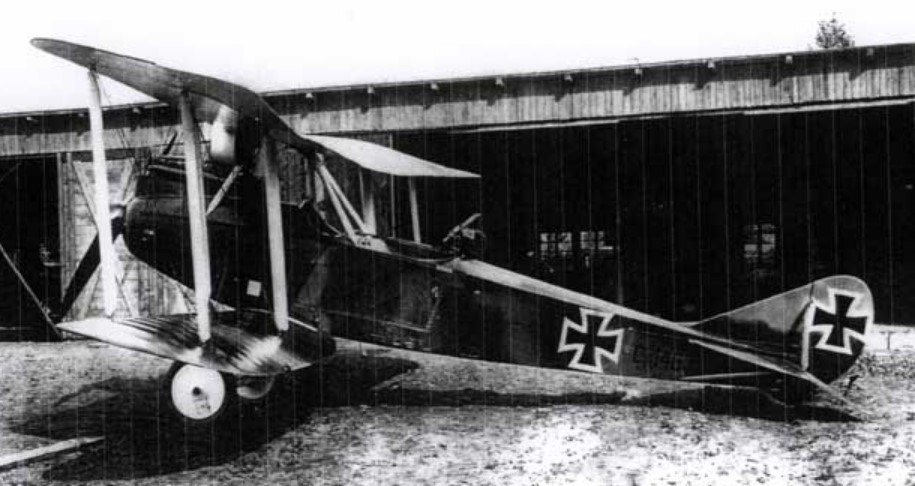
The Rumpler C.IV was a German single-engine, two-seat reconnaissance biplane. It was a development of C.III with different tail surfaces and using a Mercedes D.IVa engine in place of the C.III’s Benz Bz.IV. The Rumpler 6B 2 was a single-seat floatplane fighter variant with a 120 kW (160 hp) Mercedes D.III engine built for the Kaiserliche Marine (Imperial Navy).
For a two-seater reconnaissance aircraft, Rumpler C.IV had an excellent performance, which enabled it to remain in front-line service until the end of World War I on the Western Front, as well as in Italy and Palestine. Its exceptional ceiling allowed pilots to undertake reconnaissance secure in the knowledge that few allied aircraft could reach it.
300 aircraft were licence-built by Pfalz Flugzeugwerke as the Pfalz C.I, differing in ailerons on all four wings. From February 1917 they were renamed Rumpler C.IV (Pfal).
Replica Slingsby T.58 Rumpler C.IV
Rumpler C.IV Powerplant: 1 × Mercedes D.IVa, 190 kW (260 hp) Propeller: 2-bladed fixed-pitch Wingspan: 12.66 m (41 ft 6 in) Wing area: 33.5 m2 (361 sq ft) Length: 8.41 m (27 ft 7 in) Height: 3.25 m (10 ft 8 in) Empty weight: 1,080 kg (2,381 lb) Gross weight: 1,530 kg (3,373 lb) Maximum speed: 171 km/h (106 mph, 92 kn) at 500 m (1,640 ft) Endurance: 3½-4 hr Service ceiling: 6,400 m (21,000 ft) Crew: 2 (pilot and observer) Guns: 1 × fixed, 7.92 mm (.312 in) LMG 08/15 and 1 × 7.92 mm (.312 in) Parabellum MG14 machine gun Bombs: 100 kg (220 lb)
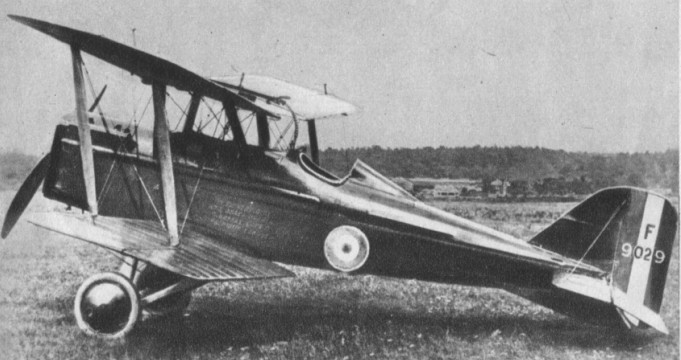
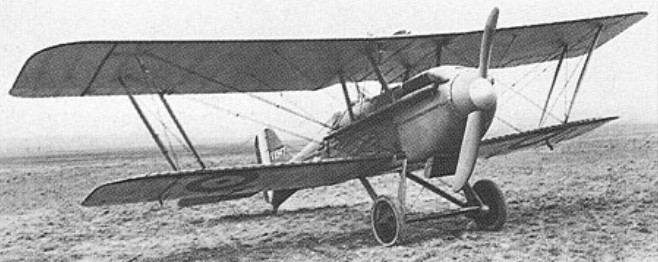
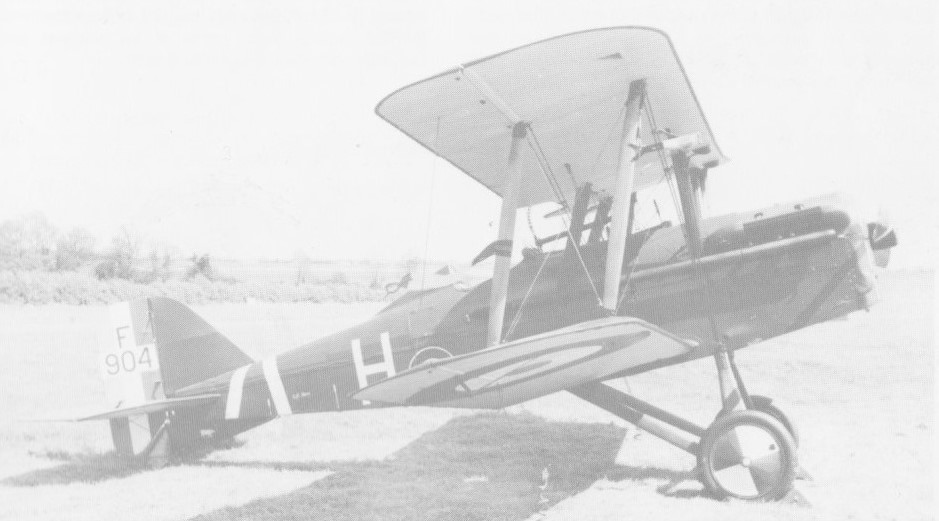
Designed at the Royal Aircraft Factory at Farnborough by H P Folland, Goodden, and Kenworthy at Farnborough in 1916, the prototype flew on 22 November 1916 but was lost one month later following collapse of its wings. After the design had been strengthened, the S.E.5 soon acquired a reputation for sturdiness.
The first production aircraft had the 150hp Hispano-Suiza fitted and were designated SE5. a single-seat biplane ‘fighting scout’, with ailerons on all wings.
The later SE5a had the 200 or 220hp Hispani-Suiza or 200hp Wolseley Viper engine. It could climb to 10,000 feet in 11 minutes 20 seconds and it had a service ceiling of 20,000 feet. The Viper version had a maximum speed at sea level of 138 mph.
Armament was a single fixed .303in Vickers machine-gun, firing through the propeller and/or one .303in Lewis gun with four 97 round ammunition drums mounted over the wing. Four 25 lb Cooper bombs could be carried under the fuselage.
SE.5A
In 1918 one experimental SE.5b, modified from an S.E.5, was built.
SE.5b
The third prototype of the S.E.5 flew at Farnborough on 12 January 1917 powered by a 200hp geared Hispano-Suiza 8B water-cooled eight-cylinder V-type engine, but otherwise similar to the 150hp-engined earlier prototypes. While production deliveries of the 200hp engine were awaited, airframe modifications were introduced in the light of early experience with the first production batch of S.E.5s. In particular, the wing rear spars were shortened at the tips to provide greater strength, this serving to blunt the previously raked tips and reduce overall span by 39.4cm. At the same time, lateral control was improved by shortening the levers on the ailerons. With a small Avro-type windscreen in place of the S.E.5’s voluminous structure, a small fabric-covered head fairing behind the cockpit, the blunt wings and the standard Vickers + Lewis gun armament, the version with 200hp engine became the subject of large-scale production as the S.E.5a, starting with part of the second batch S.E.5s already ordered from the RAF.
Two hundred more were built at Farnborough itself and, in addition, by the time the war came to an end in November 1918, some 5125 S.E.5a’s had been built by five companies in less than 18 months: Austin (1,550), Bleriot & Spad (560), Martinsyde (400), Vickers (2,215) and Wolseley (400). Production of the 200hp Hispano (in several sub-variants, and including licence-production by Wolseley as the W.4B Adder I, II and III) failed to keep pace with this prodigious output, and numerous operational difficulties with the engine enhanced the problem. Consequently, many S.E.5a’s were fitted (without change of designation) with the 200hp direct-drive Wolseley W.4A Viper, a derivative of the French engine. At least six S.E.5a’s were flown with the 200hp Sunbeam Arab I (geared) or Arab II (direct drive) water-cooled eight-cylinder engine in trials at Farnborough, and some production aircraft received high-compression versions of the French-built Hispano-Suiza engine, increasing maximum output to 220hp.
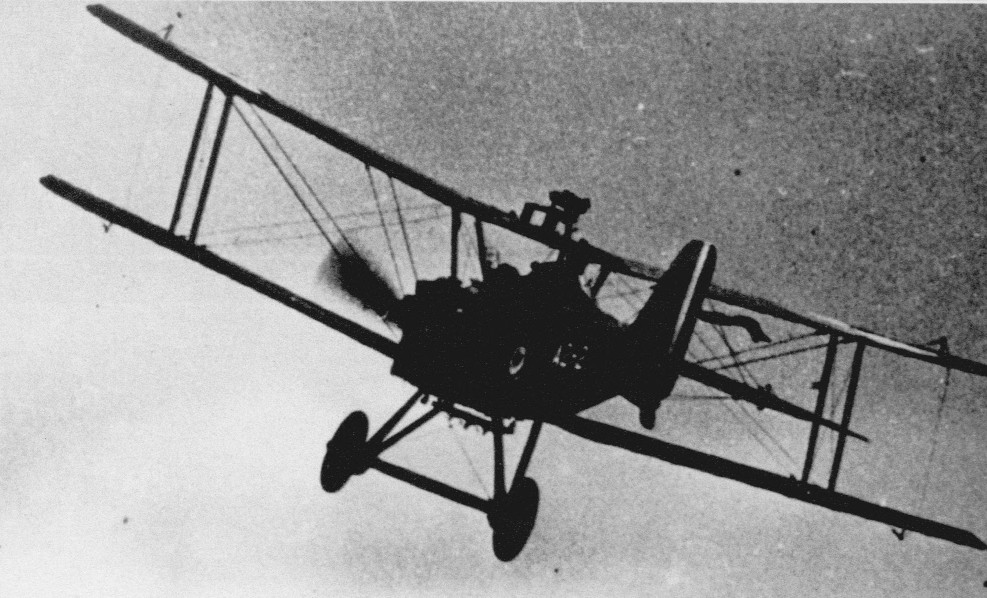
S.E.5s entered service with No. 56 Squadron in France in April 1917, and were followed by the improved S.E.5a with 200 240 hp versions of the Hispano and later the 200 hp Wolseley Viper. The higher powered Hispanos gave persistent trouble at first, but when this was overcome the little fighter soon showed itself the master of the formidable Albatros and Pfalz scouts used by the enemy. Its standard armament comprised one Vickers gun on the engine cowling and a Lewis gun on a movable mounting above the centre ¬section, which enabled it to be fired upwards if required. Light bombs were often added for ground attack duties. Altogether 5205 S.E.5’s and S.E.5A’s were built.
Twenty-two squadrons of the RFC and the US Air Service were flying the S.E.5a by the time of the Armistice, but this brought an end to planned largescale production by Curtiss in the US when only one of 1,000 on order had been completed (in addition to 56 assembled from British components). Service use continued on a small scale for only a short time after the end of the war, in Australia, Canada and South Africa as well as with the RAF.
The final aircraft built at Farnborough against contracts for 74 S.E.5s placed in 1917 was used early the following year for an experimental programme aimed at improving the performance and fighting ability of the type. Fitted with a 200hp Hispano-Suiza 8B engine and armed with the Lewis and Vickers gun combination of the standard S.E.5a, it had new single-bay wings of unequal span and chord. In addition, a retractable radiator was provided in the forward fuselage, and a large, shallow, propeller spinner was fitted, to combine with a re-profiled cowling and give better streamlining of the fuselage. The head-fairing behind the cockpit was also improved. Tests in 1918 revealed little performance gain or handling benefit, with the extra drag of the big upper wing offsetting gains from the more streamlined fuselage. Standard S.E.5a wings were fitted to the S.E.5b in 1919, as well as a modified horizontal tail, for comparative testing at Martlesham Heath, and this aircraft made an appearance at the RAF Pageant at Hendon in 1920.
The SE.5a was one of the outstanding fighters of the First World War. About 5,000 were produced, serving with twenty Royal Flying Corps (later Royal Air Force) squadrons over the Western Front. They also equipped the 25th and 148th Aero Squadrons of the US Air Service. Four squadrons flew the type on Home Defence duties.
It was used by twenty-four squadrons of the Royal Flying Corps and Royal Air Force in France, Palestine, Macedonia, Mesopotamia and the United Kingdom, and replacing the DH5 as the equipment of the Australian 2 AFC late in 1917, and two of the United States Air Service on the Western Front.
The AFC Training Schools at Minchinhampton used the SE5A to prepare pilots for their service with the operational squadrons in France
Some famous British fighter aces scored many of their victories while flying S.E.5a’s, including V.C. winners Mannock (73 victories), Bishop (72), and McCudden (57).
The RAAF received 35 SE.5As from Britain in 1921 as an ‘Imperial Gift’. Only a handful had been reassembled by 1925 for Nos 1 and 3 Squadrons and many were so deteriorated in storage that 14 were never flown.
RAAF SE.5A
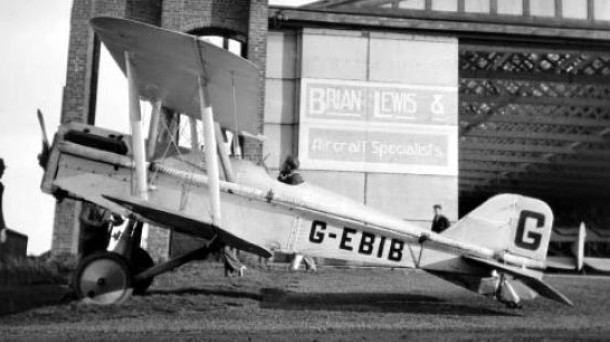
Of the five-and-a-half thousand built, 2,700 were left at the end of the war. These gradually found their way into civilian hands and are credited with having pioneered skywriting. The basic airframe/engine price at the time was 2,067 pounds.
SE.5a G-EBIB – 3 September 1934
In 1922 Eberhart Aeroplane & Motor Co Inc assembled 50 British-designed S.E.5E fighters from spare parts, “E” suffix denoting company name and plywood-covered fuselage.
Engine: 1 x RAF 4a, 112kW Max take-off weight: 1300 kg / 2866 lb Empty weight: 717 kg / 1581 lb Wingspan: 12.98 m / 43 ft 7 in Length: 8.5 m / 28 ft 11 in Height: 3.47 m / 11 ft 5 in Wing area: 35.07 sq.m / 377.49 sq ft Max. speed: 164 km/h / 102 mph Ceiling: 4115 m / 13500 ft Armament: 2 x 7.7mm machine-guns, 100kg of bombs
SE.5a Engine One 200 h.p. Hispano Suiza Length 21 ft. (6.4 m.) Wing span 26.6 ft. (8.1 m) Height: 2.89 m / 10 ft 6 in Wing area: 22.83 sq.m / 245.74 sq ft Weight empty 1,400 lb. (635 kg.) Max take-off weight: 929 kg / 2048 lb Seats: 1 Endurance: 2.5 hr Armament: 1 x Vickers gun / 400 rds, 1 x Lewis gun / 4 x 97 rds Max cruise speed: 138 m.p.h. (220 kph) Ceiling 17,000 ft. (5,200 m.) fully loaded.
SE5A Engine: Wolseley W4 Viper, 200 hp Span 26 ft. 7.5 in Wing area 244 sq. ft Length 20 ft 11 in Height 9 ft, 6 in Wing chord 5 ft Empty weight: 1400 lb Weight loaded 1,940 lb Fuel capacity: 35 Imp.Gal Max. speed 138 mph Service ceiling: 17,000 ft Endurance 2.5 hr Armament: 1 x Vickers mg, 1 x Lewis gun Bombload: 4 x 25 lb bombs
SE.5b Engine: 1 x 200-h.p. Wolseley Viper Max take-off weight: 885 kg / 1951 lb Wingspan: 9.32 m / 30ft 7 in Length: 6.35 m / 21 ft 10 in Height: 2.89 m / 10 ft 6 in Wing area: 25.83 sq.m / 278.03 sq ft Seats: 1
SE.5A Engine: 215 hp Wolseley W4a Viper 8 Wingspan 26 ft 7 in (8.1 m) Length 20 ft 11 in (6.4 m) Height 9 ft 6 in (2.9 m)
From early 1917 the aircraft settled to a steady career as a reconnaissance aircraft and light bomber on the Western Front and in Palestine and Italy, remaining active until the Armistice, when they were in service with 15 RAF squadrons.
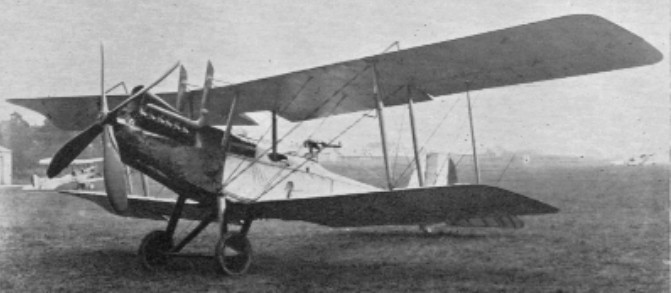
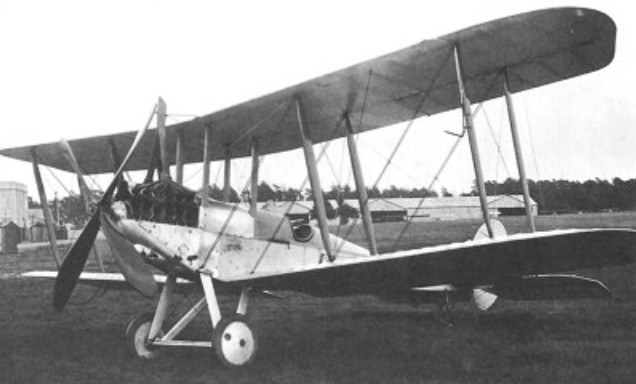
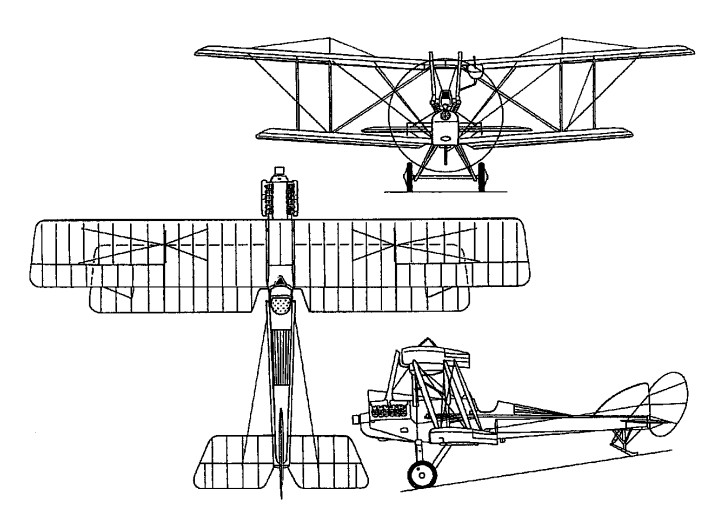
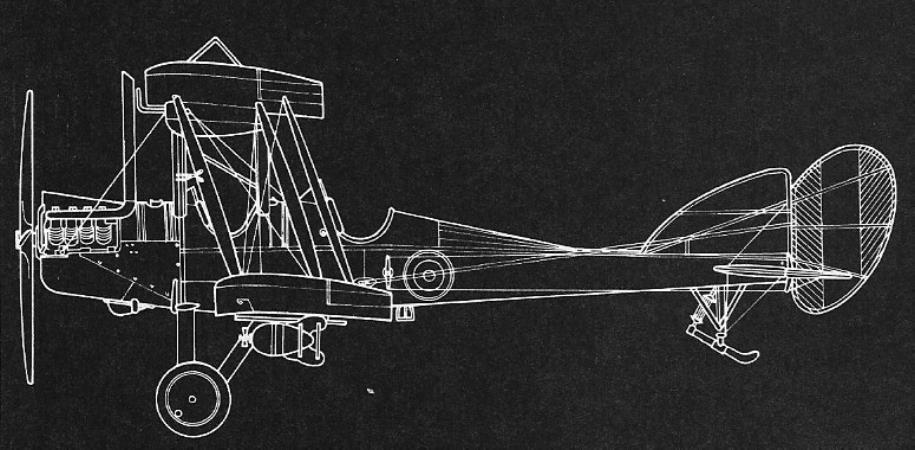
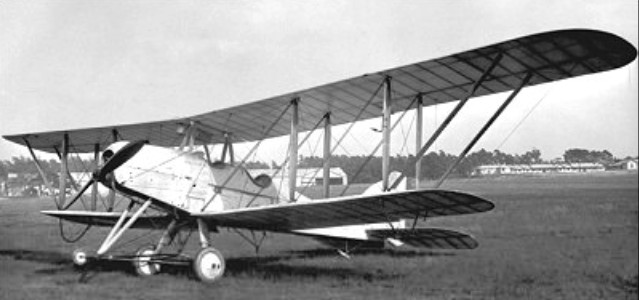
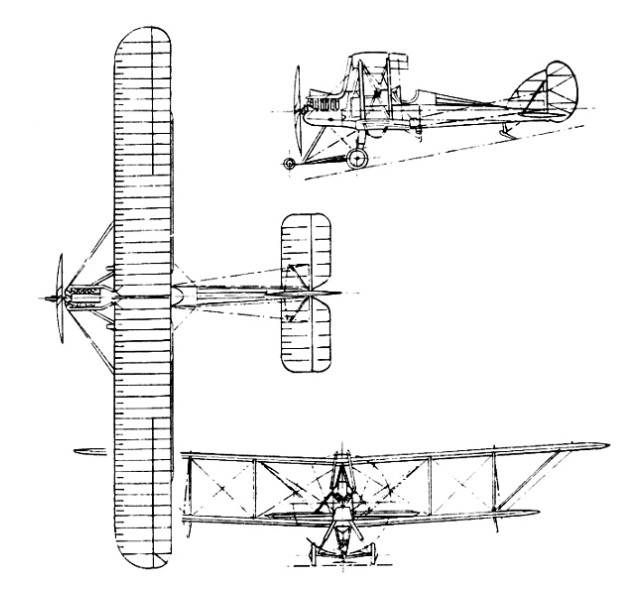
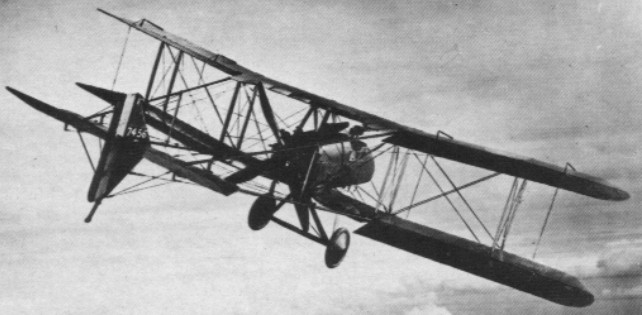
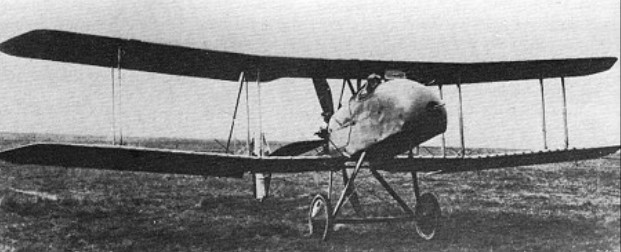
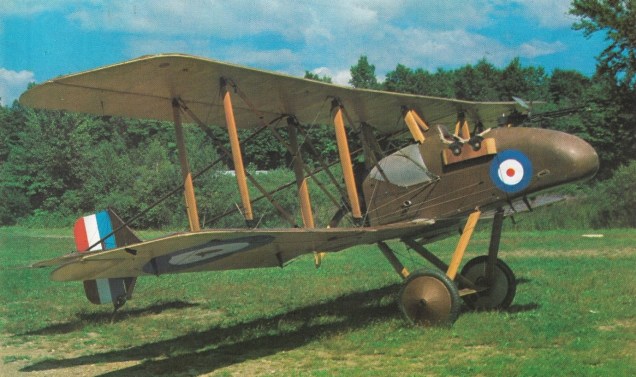
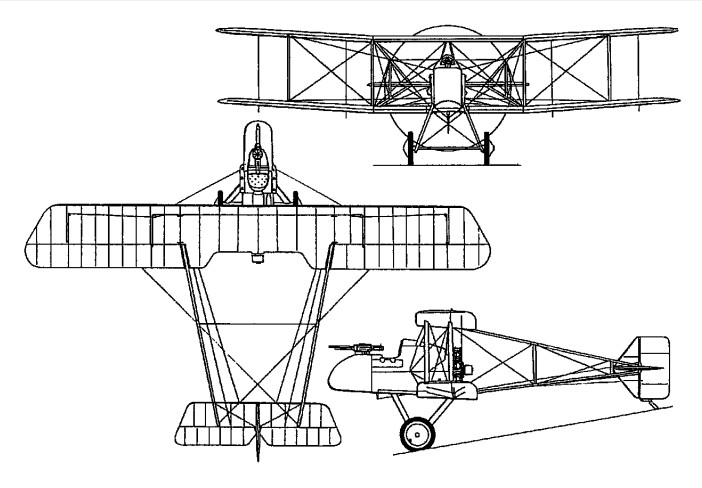
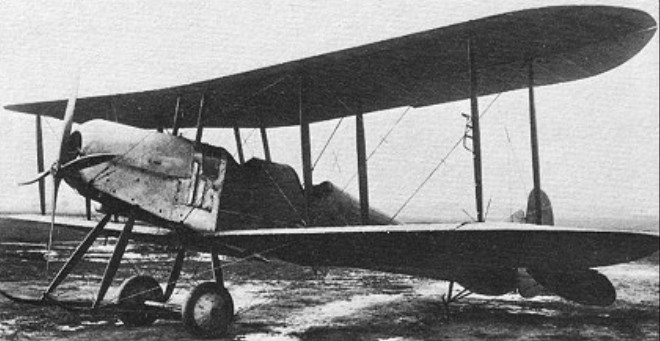
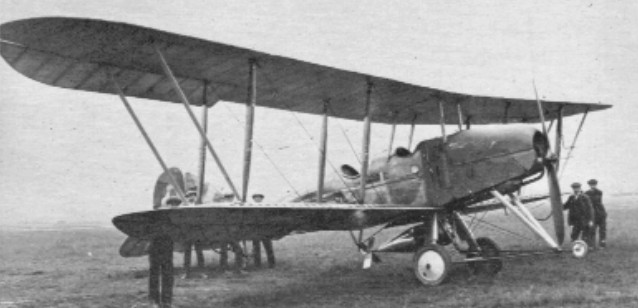
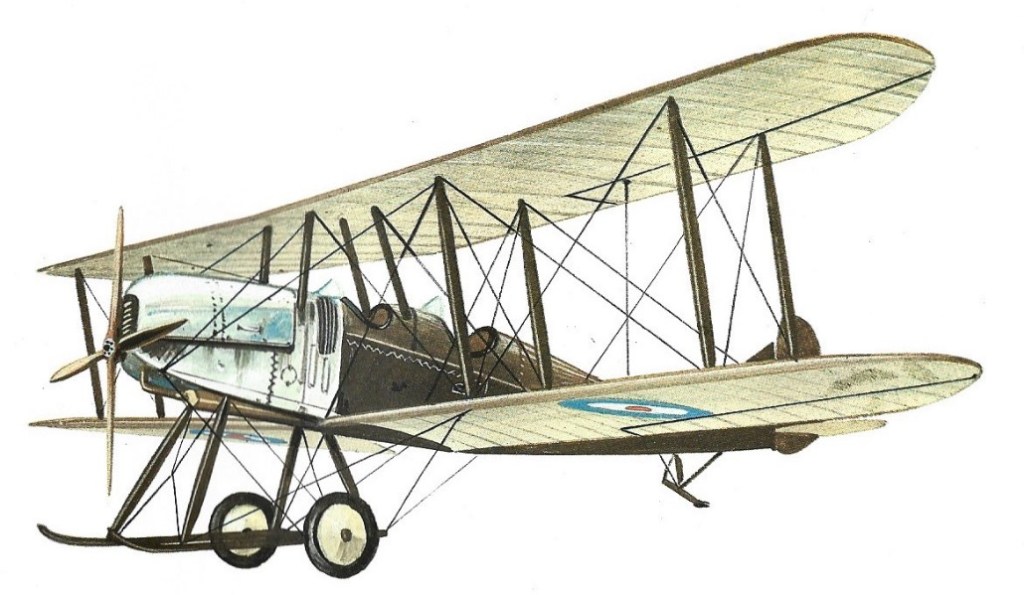
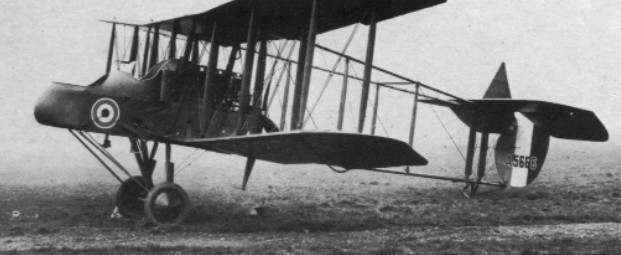
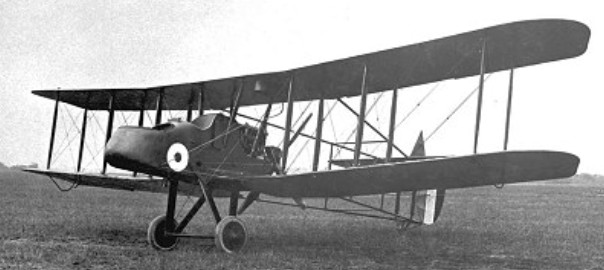
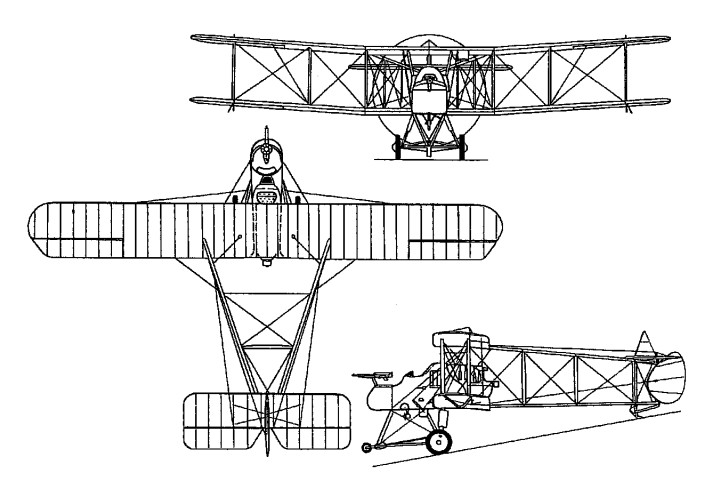
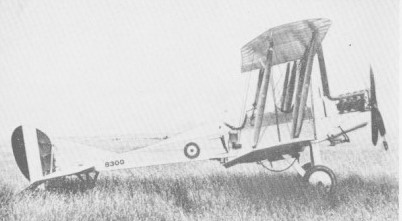
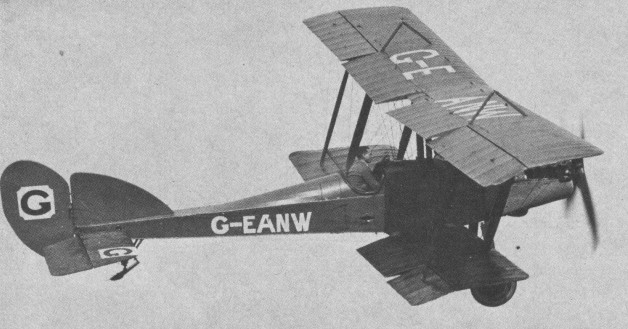
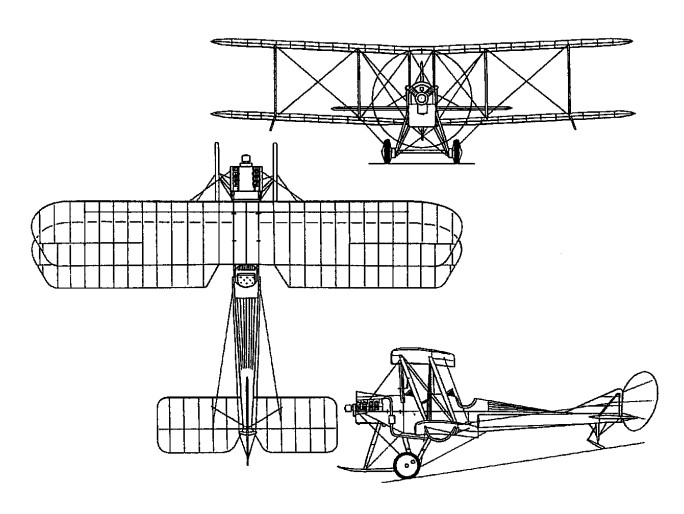
Designed as a replacement for the BE2c in the reconnaissance and light bomber roles, the prototype RE8 was first flown on 17 June 1916.
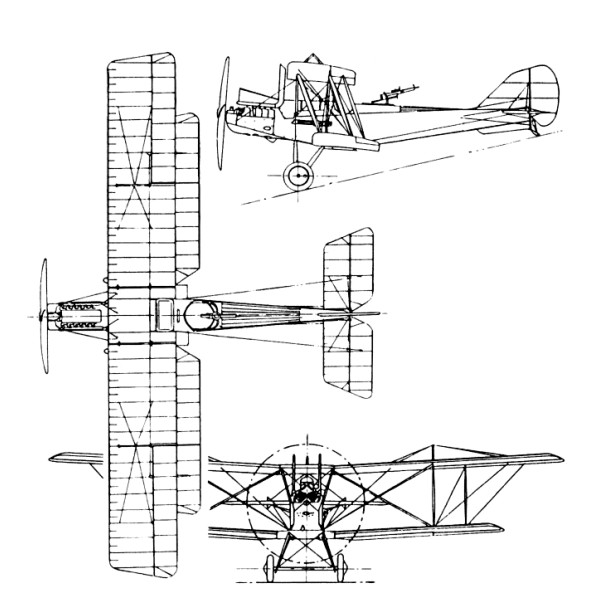
It was a single-bay biplane with two-spar wooden wings and wooden fuselage. The entire airframe was fabric covered. Conventional control surfaces with ailerons on all four wings. There was an adjustable incidence tailplane.
The RE8 was not a very manoeuvrable machine but it made up for this with two or three machine gun armament. Various engines were fitted in place of the original 150hp RAF 4A, including a 200hp Hispano-Suiza.
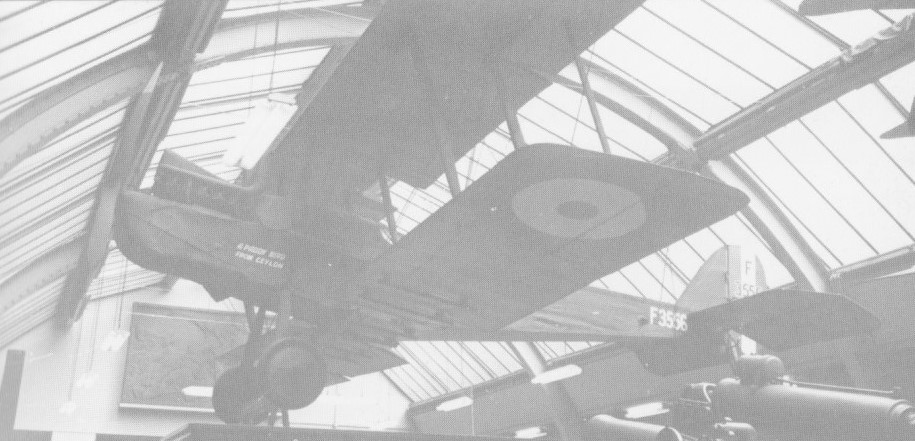
1918 Daimler Motor Co built RE.8 F3556
During the course of the latter half of World War I, 4,077 R.E.8 were built for the RFC/RAF and a few for Belgium. R.E.8s for British service standardised on the 112kW RAF 4a engine with a variable-pitch airscrew and were known as the ‘Harry Tate’. During a brief spell on the Western Front in late 1916 several were lost through accidents, resulting in their temporary withdrawal. The tendency to spin was reduced by fitting a ventral fin at the base of the tail. This further reduced what little agility the RE.8 had.
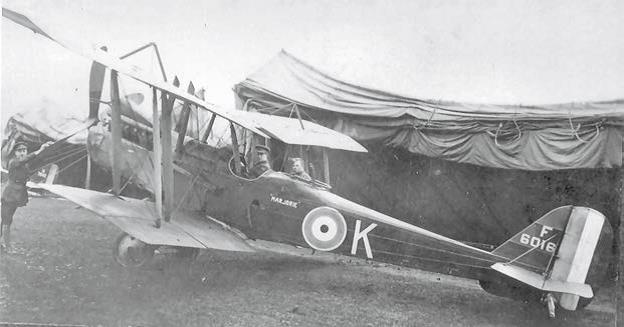
The RE.8 reconnaissance machine performed well as the equipment of the Australian 3 AFC, and one crew brought down the Albatros DVa on display in the Australian War Memorial.
RE8 ‘K’ of 3 AFC
Despite it faults and the loss of an entire flight of six R.E,8’s of No.59 Squadron to von Richthofen’s circus in April 1917, the R.E.8 served until the end of the war. After the war RE8s served with the RAF overseas and equipped Nos 6, 30 and 208 Squadrons until the end of 1919.
RE.8 Engine: 1 x R.A.F.4a, 150 hp / 112kW Span: 42ft 7in upper Span: 32 ft 7.5in lower Length: 8.5 m / 28 ft 11 in Height: 3.47 m / 11 ft 5 in Wing area: 35.07 sq.m / 377.49 sq ft Max take off weight: 1300 kg / 2866 lb Empty weight: 717 kg / 1581 lb Speed: 98 mph Endurance: 4 hr 30 min ROC: 340 fpm to 6500ft Ceiling: 4115 m / 13500 ft Armament: 1 x Vickers mg, 2 x 7.7mm Lewis machine-guns Bombload: 100kg Seats: 2
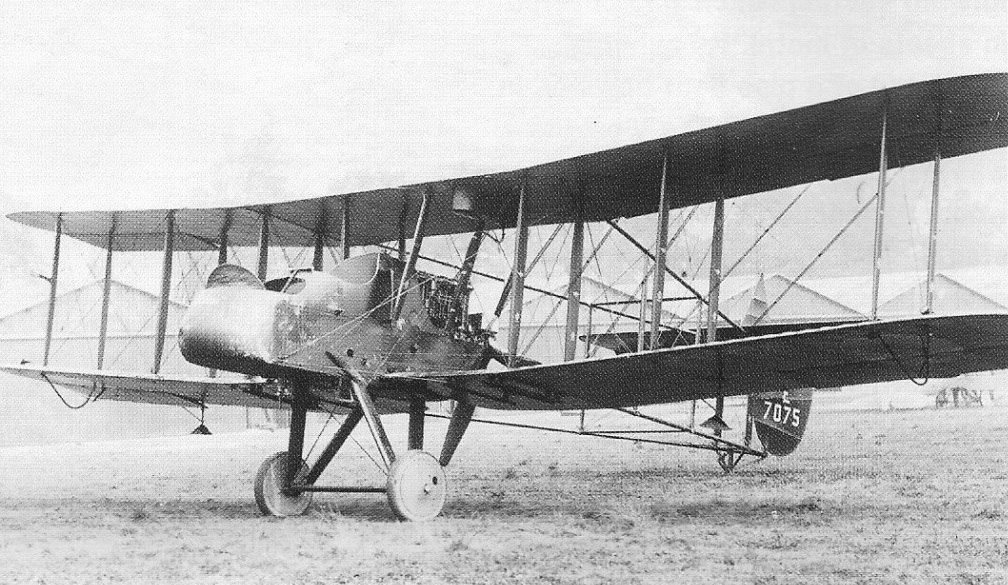
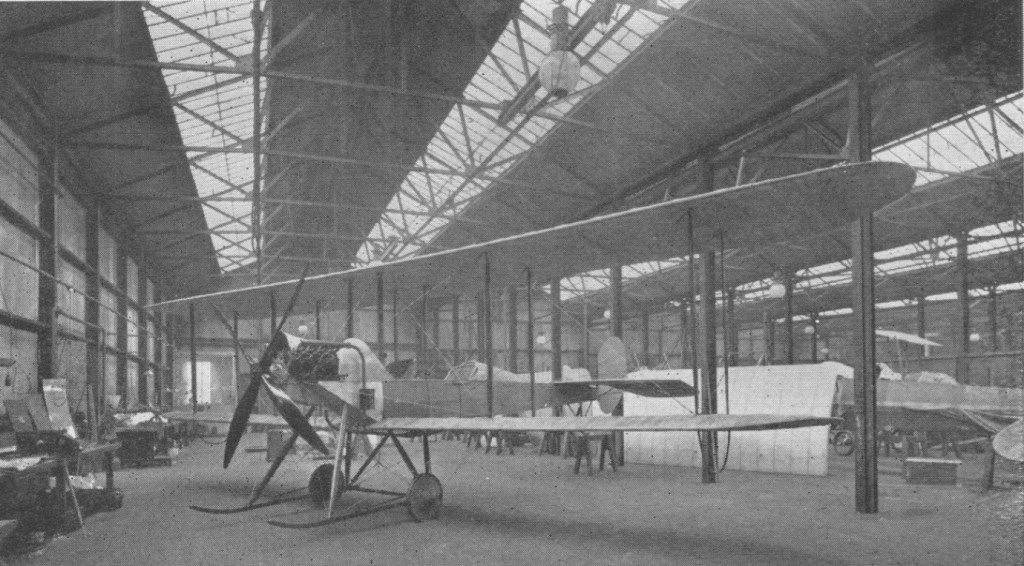
Evolved at Farnborough during 1915 as a marriage of the B.E.2c airframe with the then-new R.A.F.4 air-cooled 12-cylinder Vee-type engine of 140hp, the B.E.12 prototype began test flying at the end of July that year. Although flown from the start as a single-seater, it was at first unarmed and was intended for such roles as bombing and photography rather than as a fighter.
The prototype was tested in France in September 1915 and its generally satisfactory performance encouraged the War Office to order production of the B.E.12 in that same month. Delivered from March 1916 onwards, production aircraft had the R.A.F.4a engine (with increased stroke), twin upright exhaust stacks, an auxiliary gravity fuel tank under the port upper wing and, after the first few, an enlarged rudder with curved leading edge. At first serving with RFC squadrons in France for general duties, the B.E.12 was fitted with a 7.7mm Lewis machine gun on an oblique mounting on the fuselage side, or over the wing centre section, but several other experimental installations were tried at Farnborough before the decision to adopt the newly-available Vickers-Challenger interrupter gear, using a Vickers gun firing through the propeller disc. Difficulties with the gear, combined with the excessive stability of the B.E.12 (to overcome which the B.E.2e-type tailplane and elevators were used on some B.E.12s), made the type ineffectual as a fighter, however, and it was soon withdrawn from France, having served with only two squadrons. B.E.12s remained in service with Home Defence squadrons through 1917, many alternative armament installations being tried, including a quartet of Lewis guns, and sets of Le Prieur rockets on the interplane struts. One Zeppelin was shot down by a B.E.12, in June 1917. At Farnborough, one was tested with a Davis six-pounder recoilless gun, firing upwards at 45° for anti-Zeppelin use, but this was not adopted for production. Contracts were placed with two companies for B.E.12 production, Daimler building 200 and Standard Motor Co, 50, against the original orders placed in 1915, and Daimler receiving a contract for 200 more in August 1917. Many of the latter, however, were completed as B.E.12b’s.
With the B.E.12 established in production in 1916, based on the B.E.2c airframe with its equi-span two-bay wing and massive horizontal tail surfaces, a further marriage was arranged to combine the R. A.F.4a engine with the newer B.E.2e airframe. This introduced the single-bay cellule with overhanging upper wing and a smaller tailplane/elevator combination, together with the larger, rounded fin of the B.E.12. Designated B.E.12a in this form, the type was ordered from Coventry Ordnance Works and Daimler, each of which received contracts for 50 during 1916 (some of the Daimler batch being completed as B.E.12s). The B.E.12a’s served briefly with Home Defence units and more extensively in Palestine, with the Australian-manned No 67 Squadron. Used as escort scout by 1 AFC, the only recorded victory by the BE.12a was scored by Lt L.T.E. Taplin in 1918.
In an attempt to improve the performance of the B.E.12, primarily for the benefit of Home Defence squadrons, a 200hp Hispano-Suiza water-cooled eight-cylinder Veetype engine was substituted for the 150hp R.A.F.4a. The first such installation was completed in September 1917 by the Southern Aircraft Repair Depot at Farnborough and demonstrated a dramatic improvement in speed and climb performance. Consequently, it was decided that 150 of the 200 B.E.12s ordered from Daimler in August 1917 should be completed with the Hispano engines as B.E.12b’s. Airframes built by Daimler were fitted with these engines at the Northern Aircraft Repair Depot at Aston, near Sheffield, and deliveries began late in 1917. As Zeppelin raids on the UK had by this time virtually come to an end, many B.E.12b’s went straight into store, their urgently-needed engines being removed for use in other aircraft types, such as the S.E.5a. It is believed that production of B.E.12b’s ended some 12-20 short of the intended total. The standard armament of the B.E.12b comprised a 7.7mm Lewis gun above the centre section, firing over the propeller disc. Dimensions similar to those of the B.E.12.
BE.12 Engine: 1 x 150-h.p. R.A.F.4a Wingspan: 11.3 m / 37 ft 1 in Length: 8.31 m / 27 ft 3 in Height: 3.39 m / 11 ft 1 in Wing area: 34.47 sq.m / 371.03 sq ft Max take-off weight: 1067 kg / 2352 lb Empty weight: 742 kg / 1636 lb Max. speed: 164 km/h / 102 mph Ceiling: 3810 m / 12500 ft Seats: 1
BE.12 Engine: 1 x 150-h.p. R.A.F.4a Wingspan: 37 ft 0 in Length: 27 ft 3 in Max take-off weight: 2352 lb Max. speed: 169 km/h / 105 mph Ceiling: 12,500 ft Armament: 1-2 Lewis machine guns Bombload: 2 x 20 lb Seats: 1
BE.12A Engine: Renault, 70 hp Maximum speed: 73 mph
BE.12a Engine: 1 x 150-h.p. R.A.F.4a Wingspan: 12.19 m / 40 ft 0 in Length: 8.30 m / 27 ft 3 in Height: 3.66 m / 12 ft 0 in Wing area: 33.44 sq.m / 359.94 sq ft Max take-off: weight: 1056 kg / 2328 lb Empty weight: 730 kg / 1609 lb Max. speed: 169 km/h / 105 mph Seats: 1
Used mainly by the RFC during 1916, the R.E.7 was a two-seat (later occasionally three-seat) bombing biplane powered by a 112kW RAF 4a engine. Other engines were also fitted.
Two hundred and fifty were completed. Maximum level speed was 137km/h.
Engine: 1 x. R.A.F.4a, 150-h.p / 112kW Wingspan: 17.37 m / 57 ft 0 in Length: 9.72 m / 32 ft 11 in Height: 3.84 m / 13 ft 7 in Wing area: 50.91 sq.m / 547.99 sq ft Max take-off weight: 1565 kg / 3450 lb Empty weight: 1036 kg / 2284 lb Max. speed: 135 km/h / 84 mph Ceiling: 1980 m / 6500 ft Bombload: 150kg Seats: 2
The next fighter after the F.E.2 in the F.E. line was the F.E.8 of 1915. Resembling the D.H.2, but designed before the de Havilland fighter, the F.E.8 was another two bay pusher biplane. Designed under the direction of John Kenworthy, the F.E.8 was the first single-seat fighter evolved at Farnborough.
Of pusher configuration to allow an uninterrupted forward field of fire for the 7.7mm Lewis gun, the F.E.8 was a two-bay equi-span biplane with a short fuselage nacelle to accommodate the gun, the pilot and a 100hp Gnome Monosoupape nine-cylinder rotary engine, and four slender booms to carry the cruciform tail unit. Construction of the nacelle was of welded steel-tube with aluminium sheet covering; the wings and tail unit used conventional wooden spars and ribs with fabric covering.
The prototype F.E.8 had a 100 hp Gnome Monosoupape engine and was armed with a remote¬ controlled Lewis firing through the nose of the all metal nacelle. This installation proved troublesome, however, and production of F.E.8s had the gun mounted at eye level. The first of two prototypes was flown on 15 October 1915 at Farnborough.
The prototype’s service trials, beginning in December 1915, were successful, but produc¬tion F.E.8s did not appear until May 1916. Trials with the second prototype in France in late 1915 led to a change in the gun installation, which was mounted within the nacelle nose and could be moved through a limited range by means of a control in the cockpit. Production F.E.8s, which began to appear in May and June 1916 from the factories of Darracq Motor Engineering at Fulham and Vickers at Weybridge, had a more practical gun mounting on the nose immediately ahead of the cockpit.
Production totalled 220 by Darracq and 50 by Vickers.
147 were sent to France from August 1916 and only two RFC squadrons, 40 and 41, were fully equip¬ped with F.E.8s. The second of these did not arrive in France until October 1916, by which time, in spite of some early successes, the type was completely outclassed by contem¬porary German fighters: the first production F.E.8 was shot down within a week of its arrival on June 22.
Trial installations of the 110hp Le Rhone and 110hp Clerget engines were made, but the Monosoupape remained the standard fit.
On March 9, 1917, nine F.E.8s of 40 Squadron were attacked by Manfred von Richthofen’s Jasta 11. Four were shot down, another four forced to land, and the pilot of the ninth was wounded and crash landed. In spite of this disaster, the last F.E.8s were not withdrawn until July 1917, one of their final operational uses being in ground strafing during the battle of Messines in June of that year.
Engine: 1 x 100-h.p. Gnome Mono Span: 9.6 m (31 ft 6 in) Length: 7.21 m / 24 ft 8 in Height: 2.79 m / 9 ft 2 in Wing area: 20.25 sq.m / 217.97 sq ft Gross weight: 610.5 kg (1346 lb) Empty weight: 406 kg / 895 lb Maximum speed: 151 kph (94 mph) Ceiling: 4636 m / 15200 ft
The R.E. designation indicated ‘Reconnaissance Experimental’ and the R.E.5, only 24 of which were built for the RFC, was operated successfully as a reconnaissance and light-bombing biplane during the early stages of World War I. Power was provided by an 89kW engine, giving a maximum speed of 125km/h.
Engine: 1 x 120-h.p Beardmore Span: 44ft 6in / 13.56 m Length: 26 ft 2 in / 7.98 m Height: 9 ft 9 in / 2.95 m Max speed: 78 mph / 126 kph at SL Bombload: 60 lb / 27.2 kg Seats: 2
The first aircraft to carry the F.E. designation was the F.E.1 (Farman Experimental No. 1), designed by Geoffrey de Havilland in 1910 and named Farman Experimental because of its resemblance to contemporary Farman pusher biplanes. The F.E.1 was rebuilt as the F.E.2 after a crash in 1911 with a Gnome instead of its original 45 h.p. de Havilland Iris engine, and the F.E.2 was itself rebuilt, to a different design but with the same designation, in 1913.
The first of the Royal Aircraft Factory’s series of F.E. fighters, the F.E.2a designed in the summer of 1914, had nothing but the basic fact of being a pusher propelled biplane in common with the earlier machines, notwithstanding the similarity of the designations.
Twelve F.E.2as were ordered from the Royal Aircraft Factory in August 1914, and the first machine emerged in January 1915 as a large two bay biplane with accommodation for the pilot and observer in an armoured nacelle forward of the wings and a 100 hp Green engine mounted above the lower wing driving a two blade wooden pusher propeller. The centre section of the upper wing was hinged aft of the rear spar and could be lowered to act as an air brake, while an even more radical innovation was a small tail¬braking parachute tried on the first 2a. The tail assembly, with distinctive triangular fin, was mounted on converging booms extending aft from the upper and lower wing spars, while the oleo undercarriage incorporated a small nosewheel. A mounting for a 7.7mm Lewis machine gun was provided in the observer’s front cockpit, and it was the unobstructed forward field of fire provided by the pusher configuration and cockpit arrangement that was to make the later F.E.2s so successful over the Western Front.
The Green engine proved to have a poor power to weight ratio and later F.E.2as were modified to take the 120 hp Beardmore engine. This modification delayed completion of the remaining aircraft, and the last of the 12 was not finished until November 1915, by which time the first F.E.2bs had begun to appear.
The early 2b was essentially a simplified version of the 2a, having the same two-spar wings, identical to the B.E,2, but without the centre section air brake, and a somewhat smaller nacelle mounting the same engine and armament as the earlier type.
FE.2b
Later 2bs had modified wings of the same section as those fitted to the F.E.2c, and the 160 hp Beard¬more was fitted in place of the 120 hp in order to improve performance, while other engines were fitted experimentally.
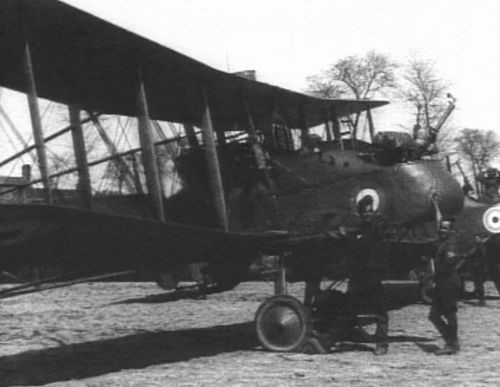
The first F.E.2a flew on 26 January 1915 with a 100hp Green six-cylinder inline water-cooled engine but proved underpowered and the 120hp Austro-Daimler built under licence by Beardmore became the standard for 11 more F.E.2a’s and early production examples of the F.E.2b. The latter was the “productionised” version with the Beardmore engine, trailing-edge flap deleted, simplified fuel system and other changes to facilitate large-scale production by inexperienced companies. These comprised, apart from the RAF itself (which built only 47 F.E.2b’s): Boulton & Paul (250); Barclay Curie (100); Garrett & Sons (60); Ransome, Sims & Jefferies (350); Alex Stephen and Sons (150) and G & J Weir (600). A 160hp Beardmore engine was adopted later, and the oleo u/c with nose wheel gave way to a simplified form without the nosewheel or, later, a non-oleo V-strut arrangement. All 12 F.E.2a’s and almost a thousand F.E.2b’s went to RFC squadrons in France, where they engaged in offensive patrols over the enemy lines in the role of fighter escort for unarmed reconnaissance aircraft. Over 200 were issued to Home Defence units, some of these flying as single-seaters, and service use of the F.E.2b continued until the Armistice in November 1918.
In 1916, the War Office in the UK arranged for “a 120 hp Beadmore-engines Gun Biplane (Type F.E. 2B) together with Gun and proportionate spare parts…” to be provided, at a cost of £3,175. The aircraft was packed and shipped (at extra cost), and before arriving in Australia, caused some concern as it was noted as being too great a wingspan to fit in the existing hangers at the Central Flying School, Point Cook, Australia. The aircraft had arrived by mid March, but sans gun, and bomb.
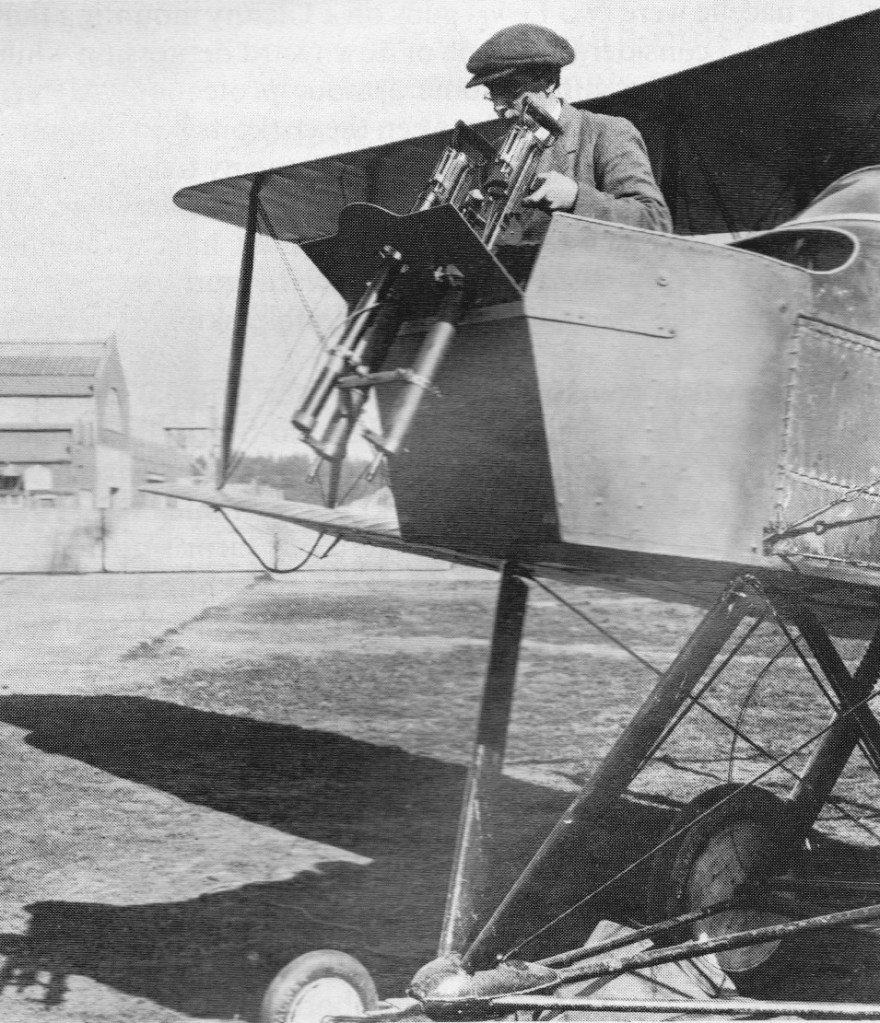
Many experimental armament installations were made in F.E.2bs, including a 1 pdr Vickers quick firing gun in a raised cowling, twin Lewis mountings, additional Lewis mountings between the cockpits to give a rearward field of fire and a 0.45 in (11.43 mm) Maxim, and some examples were modified for home defence with a single cockpit and two internal Lewis guns firing through the nose. As the 2b became obsolescent as a fighting scout by early 1917 it was developed as a night bomber and antisubmarine aircraft, with the result that it remained in production until the end of the war. Bombload of the fighter/reconnaissance version was up to eight 9k kg (20 lb) bombs; for night-bombing missions the 2b could carry a variety of bombs in combinations ranging from 14 11.4 kg (25 lb) to a single 104 kg (230 lb).
The Glenny armoured mounting for two Lewis guns, designed for the A.E.3, were evaluated on the FE.2b No.4256 – 26 March 1916
Many F.E.2bs were built by contracting firms with little or no previous experience of building aircraft, notably Boulton & Paul, G & J Weir and Ransome, Sims and Jeffries, and at least 1000 were produced, the official total of 19 39 probably including conversions of earlier aircraft for bombing, experimental and training purposes.
Royal Aircraft Factory F.E.2b of the Royal Flying Corps
Among the 12 F.E.2a’s sent to France in 1915, where they were flown by No 6 Squadron RFC and sometimes known by the alternative official designation of Fighter Mark I, one had its seating arrangement reversed. The pilot occupied the front cockpit – located a little farther aft than in the F.E.2a and 2b – and the gunner was in an elevated aft position. An additional Lewis gun was fitted in the nose, remotely controlled by the pilot. In this form, the aircraft was designated F.E.2c. Conversion of a small number of F.E.2b’s to 2c configuration was put in hand at the RAF, Farnborough, but only two are thought to have been completed as the F.E.2c was found to offer no advantage over the F.E.2b. Six more 2b’s were converted to 2c’s in late 1917, however, to serve as night bombers with No 100 Squadron, for which role the improved view for the pilot outweighed the difficulties posed for the gunner.
On 7 April 1916, a version of the F.E.2b was flown at the RAF Farnborough, fitted with a 250hp Rolls-Royce Mk I (later, Eagle I) 12-cylinder water-cooled V-type engine, becoming thus the prototype F.E.2d. Compared with the 160hp F.E.2b, the Rolls-Royce-engined version had better rate of climb and ceiling and slightly improved speed performance, and although the heavier engine adversely affected manoeuvrability and field performance, the F.E.2d was ordered into production as an interim supplement for the F.E.2b. Eighty-five were built at Farnborough and 270 by Boulton & Paul, although many of these were completed, in the event, with Beardmore engines as F.E.2b’s. In those F.E.2d’s completed, several versions of the Rolls-Royce engine were fitted; as well as the Mk I these comprised the 250hp Marks III and IV (later, 284hp Eagle III and IV) and the 275hp Marks I and II (later, 322hp Eagle V and VI). The first few F.E.2d’s had the oleo undercarriage with nosewheel extension, but the modified oleo type without the nosewheel was soon adopted. The F.E.2d was in service in France by July 1916, and the type also served with Home Defence units, although its low speed performance made it an ineffective Zeppelinchaser.
The additional power also permitted increased armament, and 2ds were equipped with various arrangements of Lewis guns, some having one or two fixed guns in the nose in addition to one or two free guns fired by the observer. Most F.E.2d’s were armed with two Lewis guns, one on a flexible mounting in the nose and another fixed forward-firing for the pilot; in some cases a third gun, on a telescopic pillar mounting, was also provided between the two cockpits.
The F.E.2a had been designed from the outset as a fighting aircraft, and the distinguished record of the series over three years of war in a number of roles testifies to the soundness of the basic design. The first operational unit to fly 2as in France was 6 Squadron RFC, which had four on its strength by September 1915.
F.E.2bs continued to more than hold their own, but the effect of the introduction of the F.E.2d in June 1916 was adversely affected when the first machine to go to France was landed by mistake on the German airfield at Lille after the pilot had lost his way in fog. Nevertheless, the fixed forward firing guns enabled 2ds to be flown as true fighters and they gained a number of successes. By the spring of 1917 F.E.2s were clearly becoming outclassed as fighters and the 2bs were withdrawn from offensive duties in April, though the 2d continued in front line service until the following autumn.
Towards the end of 1916 the first night-bombing expeditions were being mounted, and F.E.2bs carrying bombs or heavy guns proved eminently successful in attacks on such targets as enemy airfields, railway stations and trains. Bombing raids were continued through 1917, and from mid 1917 onwards the number of F.E.2b equipped night bomber squadrons in France was steadily increased. Frequent raids against enemy communications and other targets continued until almost the end of the war.
The type was not so successful at home defence, since its ceiling of 3350 m (11000 ft) was too low to permit the interception of enemy aircraft and airships. However, another use was found for the 2b in early 1918, when two flights were based on the north-eastern coast of England to carry out coastal patrols. On the evening of May 31, one of these aircraft spotted the German submarine UC49 moving submerged near Seaham, Co Durham, and dropped his two 45 kg (100 lb) bombs near the vessel. The destroyer Locust, attracted by the explosions, was guided by the F.E.2b, and depth charged and sank the submarine.
When the RAF was formed on 1 April 1918, there were seven squadrons of F.E.2s serving as night bombers and a further four squadrons of the type used for night flying training. The last of the type in front-line service served with occupation forces in Germany until March 1919. Used in offensive patrols over enemy lines to escort unarmed reconnaissance aircraft, with a 160hp Beardmore engine giving a maximum speed at sea level of 147km/h/91.5 mph the F.E.2s were generally outperformed by German fighter aircraft by late 1916 which led to their night-time rather than daytime use.
Eventually 1939 F.E.2b’s and at least 250 F.E.2d’s, with 250 hp Eagle engines, were built.
F.E.2 Engine: 1 x 50-h.p. Gnome Span: 33 ft 0in Loaded wt: 1,200 lb Speed: 47 mph Seats: 2
FE.2a Engine: 1 x 100-h.p. Green Span: 47ft 9in Loaded wt: 2,680 lb Speed: 75 mph Seats: 2
FE.2b Engine: 1 x 160-h.p. Beardmore Prop: 4 blade Span: 47 ft 9 in Wing area: 494 sq.ft Length: 32 ft 3 in Height: 12 ft 7.5 in Empty weight: 2061 lb Loaded wt: 2,967 lb MTOW: 3037 lb Fuel capacity: 50 Imp.Gal Max speed: 91 mph at SL Service ceiling: 11,000 ft Endurance: 2 hr 15 min Seats: 2 Armament: 3 x Lewis guns Bombload: 1 x 230 lb or 2-3 x 112 lb bombs
F.E.2b Engine: 1 x 160-h.p. Beardmore Max take-off weight: 1378 kg / 3038 lb Empty weight: 935 kg / 2061 lb Wingspan: 14.56 m / 47 ft 9 in Length: 9.83 m / 32 ft 3 in Height: 3.84 m / 13 ft 7 in Wing area: 45.89 sq.m / 493.96 sq ft Max. speed: 147 km/h / 91 mph Ceiling: 3353 m / 11000 ft
F.E.2d Engine: 1 x 250-h.p. R.-R. Eagle 1e Max take-off weight: 1574 kg / 3470 lb Empty weight: 1138 kg / 2509 lb Wingspan: 14.55 m / 48 ft 9 in Length: 10.13 m / 33 ft 3 in Height: 3.85 m / 13 ft 8 in Wing area: 45.89 sq.m / 493.96 sq ft Max. speed: 151 km/h / 94 mph Ceiling: 5334 m / 17500 ft
About two years after it dispensed with the services of Dunne and Cody, the War Office began to realise that it might be cheaper to build its own aeroplanes than to buy them. So it renamed the Balloon Factory the Army Aircraft Factory (later Royal Aircraft Factory) and began by rebuilding crashed aircraft. Some of the “rebuilds” were rather ex¬tensive, under the influence of young designers like Geoffrey de Havilland. From the B.E.1 in 1912, was developed the very similar B.E.2, with 70 h.p. Renault.
Several were built and Geoffrey de Havilland took one along to Salisbury Plain to measure its performance against the machines entered for the Military Trials. It was clearly the best aircraft there, but was not allowed to compete officially, being an official product. This made little difference, for it was ordered just the same and led to the whole B.E.2 series.
Vickers built B.E.2
The B.E. designation at first indicated ‘Bleriot Experimental’, Louis Bleriot being credited with having originated the tractor-engined aeroplane. With the appearance of aircraft from the Royal Aircraft Establishment it was taken to mean ‘British Experimental’.
The original B.E. was designed by and built under the supervision of Geoffrey de Havilland, later Capt de Havilland of the RFC and chief designer for the Aircraft Manufacturing Company. A later type of the same general design was the B.E.2, a tandem two-seat biplane with incredibly stable flying characteristics which, in several versions, was employed throughout World War I as a reconnaissance aircraft.
Established a British altitude record of 10,560 ft at Lark Hill (Salisbury Plain) piloted by de Havilland. In August 1912 de Havilland’s BE.2, basically the B.E.1 with a more powerful engine, bettered the performance of Cody’s 120 h.p. Austro Daimler-engined biplane, the official winner of the War Office Military Aeroplane Competition.
At Castle Kennedy 1912
It was ordered into production as the BE.2a for the RFC.
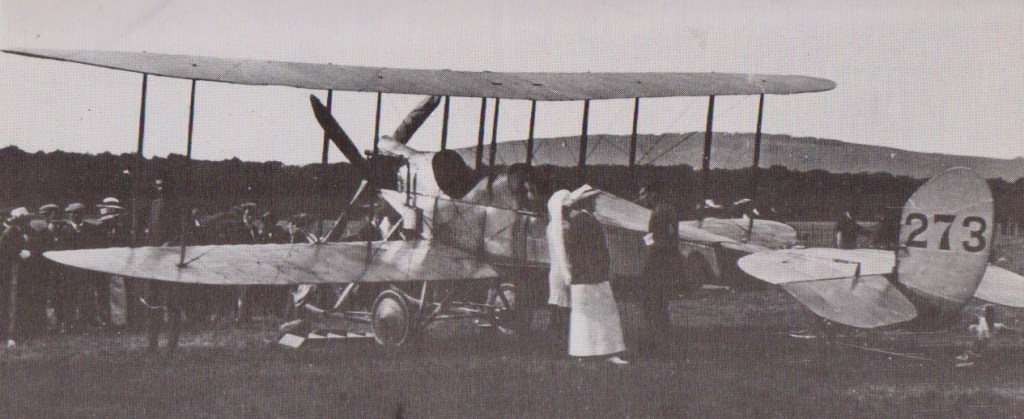
The first version built in reasonable numbers was the B.E.2b. It was produced by outside contractors from 1914. It had an improved fuselage giving the crew a little more ‘comfort’ and the arrangement of the elevators and rudder controls was revised. Wing warping was retained for lateral control and the 70hp Renault engine was kept as standard. Development continued and eventually wing warping was replaced by ailerons.
B.E.2b
In August 1914 three squadrons equipped with this reconnaissance and light bomber were immediately sent to France on the outbreak of the First World War. The early BE2a and 2b aircraft remained in operational service into 1915. Lacking any defensive armament it soon became an easy target. When withdrawn from squadron service they were transferred to flying training establishments.
It is impossible to say how many BE2, 2a and 2b aircraft were built because of the early practice of rebuilding damaged aircraft but it is thought to be in the order of 150.
With modifications to enhance the inherent stability of the basic design, the B.E.2c was developed in 1914, first flying in June 1914, and many of the 1,216 of this variant built were to serve with various ad hoc armament installations from April 1915. The B.E.2c was a two-bay biplane with unstaggered equispan wings, a conventional tail unit with separate fin, rudder, tailplane and elevators, and an undercarriage incorporating skids to help prevent nose-overs. Wing dihedral was introduced. The 70hp Renault eight-cylinder Vee-type engine powered early production aircraft, but the 90hp RAF la eight cylinder Vee-type soon became standard. Construction of the B.E.2c was of wood throughout, with fabric covering. A variety of mounts was evolved for a single 7.7mm Lewis machine gun in the observer’s (front) cockpit, primarily for self-defence.
More specifically to serve as a fighter with Home Defence squadrons of the RFC and the RNAS, numerous B.E.2c’s were modified as single-seaters, armament comprising a single Lewis gun mounted to fire upwards behind the wing centre section or, in some cases, on the side of the fuselage alongside the cockpit, angled outwards to clear the propeller disc. By 1915 the BE.2c had replace earlier aircraft and at least 12 RFC Squadrons were equipped with it, as well as a Royal Naval Air Services Wing. The BE2c continued to serve until 1917 when it was finally replaced in the front line squadrons. The last BE.2c was delivered from Blackburns on 3 July 1917, to be used for training purposes.
BE.2c 2699
Flying by night, despite a lack of nocturnal flight aids, B.E.2c’s shot down five raiding Zeppelins over the UK during 1916. B.E.2c’s were also used for a number of armament experiments.
BE.2c
About 1300 B.E.2c were built, including under sub-contract to Grahame-White Aviation, and 111 sub-contracted to Blackburn in Leeds.
BE.2e
First flown in February 1916 and destined to be built in larger numbers than the B.E.2c, the B.E.2e differed from the former in having single bay wings of unequal span and a new tailplane. Provision was made for extra fuel in a tank under the port upper wing and for dual controls, but the former was seldom fitted. The large upper wing overhang was braced from inverted-Vee kingposts above the interplane struts, and the standard engine remained the 90hp RAF la, as the 105hp RAF lb that was intended to be used in the B.E.2e did not reach production. From production totalling 1,320 aircraft (plus some B.E.2c and 2d conversions), B.E.2e’s were issued to 11 Home Defence squadrons of the RFC (as well as many units on the Western Front and elsewhere). Like the B.E.2c, the 2e often carried a single Lewis gun in the front cockpit, for which assorted mountings were available. An alternative armament tried by some of the Home Defence aircraft for anti-Zeppelin patrols comprised a quartet of Le Prieur rockets, the launching rails for which were attached to the interplane struts, two each side and angled upwards.
With the B.E.2d/e in service, the B.E.2c (and earlier versions) was flown as a training aircraft, and a number were employed successfully at home in attacking airships and used on other fronts.
BE.2c
Little success was achieved by the B.E.2e as a fighter, its performance being inadequate for aerial combat by 1916, and heavy losses were suffered by the RFC squadrons flying the type in France. Retroactively, the designations B.E.2f and B.E.2g were applied to distinguish, respectively, between those B.E.2e’s converted from 2c’s and those built as 2e’s or converted from 2d’s, as their fuel systems and capacities were significantly different.
1,793 B.E.2a, b, c and d and 1,801 B.E.2e aircraft were built by over 20 contractors including Vickers and Ruston, Proctor & Co Ltd, in a variety of models with few visible differences. The last model was about 5km/h faster than the first. They were, used for reconnaissance and bombing throughout most of the 1914 18 War. Unfortunately, the quality that made them safe and easy to fly their inherent stability helped to make them death ¬traps for their crews, because they lacked the manoeuvrability to dodge enemy fighters. It proved a sitting duck and was the main victim during the so-called ‘Fokker Scourge’ which lasted the winter of 1915-16 and again during ‘Bloody April’ in 1917.
Two examples of the BE.2 were used as trainers at CFS Point Cook, Australia, during WW1.
Replica: The Vintage Aviator Ltd / TVAL Be.2 Boddington BE.2
BE.2 Engine: 1 x 70-h.p. Renault Span: 38 ft 7.5in Length 29 ft. 6.5 in. Wing area 374 sq. ft Weight empty about 1,300 lb Loaded wt: 1,650 lb Speed: 72 mph Seats: 2 Endurance: 3 hrs
BE.2a 1912 Engine: 1 x 70-h.p. Renault Span: 38 ft 7.5in (o 35 ft 0.5in/10.68m) Length: 29 ft 6.5 in / 9 m Height: 10 ft 2 in / 3.1 m Loaded wt: 1,600 lb / 725.75 m Speed: 70 mph / 112.6 kph at SL Ceiling: 10,000 ft / 3048 m Endurance: 3 hr Bombload: 100 lb / 43.35 kg Seats: 2
BE.2b 1914 Engine: 1 x 70-h.p. Renault Span: 35 ft 0.5in Wing area: 352 sq.ft Length: 29 ft 6.5 in Height: 10 ft 2 in Empty weight: 1274 lb MTOW: 1600 lb Max speed: 70 mph at SL Service ceiling: 10,000 ft Endurance: 3 hr Seats: 2 Bombload: 100 lb
BE.2c 1914 Engine: 1 x 90-h.p. R.A.F. la. Wingspan: 11.23 m / 37 ft 10 in Wing area: 36.79 sq.m / 396.00 sq ft Length: 8.30 m / 27 ft 3 in Height: 3.45 m / 11 ft 4 in Max take-off weight: 972 kg / 2143 lb Empty weight: 621 kg / 1369 lb Max. speed: 116 km/h / 72 mph at 6500 ft Service ceiling: 10,000 ft Climb to 6500 ft: 20 min Endurance: 3 hr 15 min Armament: 1 x Lewis gun Seats: 2
BE.2e 1916 Engine: 1 x 90-h.p / 67kW R.A.F.la. Max take-off weight: 953 kg / 2101 lb Empty weight: 649 kg / 1431 lb Wingspan: 12.42 m / 41 ft 9 in Length: 8.31 m / 27 ft 3 in Height: 3.66 m / 12 ft 0 in Wing area: 33.44 sq.m / 359.94 sq ft Max. speed: 145 km/h / 90 mph Ceiling: 2745 m / 9000 ft Armament: 1 x 7.7mm machine-gun Seats: 2









 All Aero