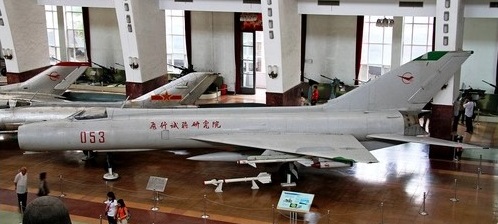
The J-8 began development in the mid 1960s as a fairly late response to new high-speed, high-altitude threats from NATO aircraft. The J-8 was an entirely new design, developed from the J-7 (itself a MiG-21 copy). The basic configuration of the MiG-21 was carried over, while a second Chinese-built Tumansky R-11 engine was mounted in the airframe. Initial variants would retain the nose-mounted intake, giving the J-8 the appearance of a larger, fatter MiG-21. Despite the design calling for a solid nose to house a radar, Shenyang’s unfamiliarity with such designs meant that these initial J-8s would be vastly less capable than what was required.
The first J-8 took flight on 5 July 1969, demonstrating performance similar to the Su-15. While the initial J-8 design continued testing and prepared for production, Shenyang continued to develop the design into the more capable interceptor China was in need of.
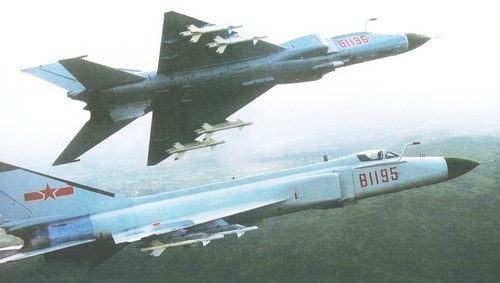
Developments eventually led to the J-8II, with a nose-mounted radar and side-mounted intakes, giving the design an appearance nearly identical to the Su-15. Meanwhile, the J-8I, the initial variant, entered service in 1980, with disappointing performance. It was limited to short-ranged IR missiles, and demonstrated performance comparable to decade-old Soviet designs. Production of the J-8I was cut short, and the aircraft were replaced as soon as the newer J-8IIs became available. About 200 were built before attention switched to the more capable J-8-II.
Early in 1986 US Government approval was given to an unprecedented agreement, under which $500m worth of modern avionics would be sold to China for use in its next-generation interceptor, the J-8-II. Fifty-five sets of equipment will be supplied, each including an interception radar, an inertial navigation system, a headup display, and mission and air data computers.
In May 1984, the first J-8II took flight, marking a major improvement over the J-8I. Changes to the forward fuselage not only included radars and intakes, but also the cannon armament and weapon systems. It has relocated fuselage intakes, a ventral fin which folds to starboard for landing, and twin Wopen 13A-II powerplants probably developed from the Soviet Tumansky R-13-300 engine. Systems aboard the J-8II provided the PLAAF with a much more capable interceptor, while it still lagged behind contemporary western designs. The J-8II was rushed into service as soon as possible, replacing the obsolete J-8I. Shenyang continued to develop the systems of the J-8II, with hopes of eventually mounting an American AN/APG-66 radar on the design. However, when the backlash from the 1989 Tiananmen Square incident hurt Sino-American relations, less capable domestic systems were used.
The J-8II fully replaced the J-8I by the 1990s with a production run of over 300 aircraft. While performance leaves much to be desired, it has proved more than capable for the few interceptions they have had to make since the end of the Cold War. Shenyang has continued to upgrade the J-8II’s systems, attempting to make the design as competitive as possible. However, fire control systems and radars still seem to lag behind the West. The only notable incident involving the J-8 was the 2001 Hainan Island incident, where a J-8II intercepted a US EP-3 just outside Chinese airspace, colliding with the aircraft. While the Chinese pilot was killed, the EP-3 survived the collision, and was forced to make an emergency landing in China. The J-8II was slated to be replaced by the more modern J-10 and J-11 fighters.
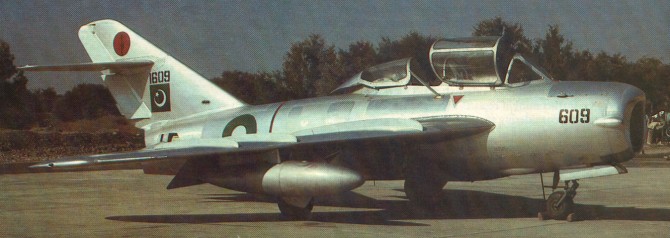
The two seat Shenyang development of the MiG-19SF, the FT 6, is not widely known, despite service with Egypt as well as Pakistan.
Although the Soviet Union built a small number of MiG¬-19UTI two seat trainers, the V VS concluded that a two seat MiG 19 conversion trainer was unnecessary for transitioning and production was terminated, and the Shenyang built FT 6 appears to owe little or nothing to its Soviet predecessor.
Whereas the Russian tandem two seat modification was accommodated within the existing fuselage, the forward section of the FT 6 was lengthened by some 33 in (84 cm) over the original 41 ft 4 in (12,6 m), (without the long nose pitot) by the Shenyang design team to allow room for the second occupant.
This necessitated the addition of two more ventral strakes beneath the rear fuselage as compensatory side area to prevent snaking, giving the FT 6 a total of three strakes in all.
Other differences from the standard F 6 are few, although, in view of the already very limited endurance, to make up for the loss of fuel capacity resulting from the second cockpit, extra tankage had to be provided. A prototype two seater appeared with small tip tanks to rectify this deficiency, but these apparently proved unacceptable on a 58 deg (leading edge) swept wing. The solution adopted on production FT 6s was to remove the two 30 mm NR 30 wing root cannon and insert extra fuel tanks in their bays, leaving only the single similar weapon under the nose for armament training. This leaves the FT 6 with only 150 or so litres (33 Imp gal) less fuel than the single seat version and allows a safe average training sortie time of about 45 minutes.
With the same twin Tumansky RD 911 811 (WP 6) axial flow turbojets as the single seat F 6, with a military rating of 5,732 lb (2600 kg) each, or 7,165 lb (3 250 kg) with reheat, the FT 6 offers virtually identical performance and handling to the F 6, with a maximum limit speed of around Mach 1.25 1.4, and a nominal low level supersonic capability in the clean configuration of some 723 knots (1340 km/h). At a gross weight of around 19,274 lb (8 742,5 kg), with two 167 Imp gal (760 lt) drop tanks, the F 6 has a thrust/weight ratio of 0.86:1. The F 6’s low speed stability and handling are somewhat critical, particularly for inexperienced pilots, and the requirement for a two seat version for conversion training is therefore logical.
Pakistan received its first FT 6s in September 1980. Transitioning pilots complete 20 dual landings in the FT 6 before going solo, plus about 66 sorties in the F 6 to complete the OCU course.
In the opinion of the PAF, the F 6 is probably the cheapest combat aircraft to operate of any in its class, and costs about one sixth as much as the Mirage III or 5 per flying hour. Both types have about the same manpower requirements, at around 50 60 maintenance man hours per flying hour, but spares for the F 6 from China are very considerably cheaper. The F 6 has suffered from the limitations of very short component lives engine TBO, for example, is only 100 flying hours, and 600 hours for the airframe.
The Chinese developed two seat version of the MiG-17, built at Shenyang and designated the FT 5, emerged from complete obscurity. The FT 5 appears uniquely Chinese, in that no similar two seat conversion of the MiG 17 ever appeared in the Soviet Union.
The FT 5 is based on the two seat MiG-15UTI, or FT-2, built in very large numbers in both the USSR and the People’s Republic of China, and as a modification of the early MiG 17, with a non afterburning Klimov VK 1 centrifugal turbojet derived from the Rolls Royce Nene (designated TJ 5D by the Chinese), and developing only 5,952 lb (2700 kg) thrust for take off, offers little more in the way of performance. It remains firmly subsonic, with no transonic capability limiting speed is around Mach 0.92 and has a fixed rather than all moving tailplane.
Although the forward and centre (ie, forward of the rear frame of the engine plenum chamber) fuselage of the FT 5 remains essentially similar to that of the MiG 15UTI, the rear fuselage of the MiG 17 is lengthened 35.4 in (90 cm), the tailplane sweep is increased and the wing is substantially different, with a consequent major improvement in handling.
The thinner and almost crescent wing of the MiG 17, with inner leading edge sweep of 45 deg reducing to 42 deg on the outer panels, plus three large and strategically placed fences appears to result in much “softer” and less critical handling characteristics.
Cockpit arrangement, both internally and externally, seems basically similar to that of the MiG 15UTI alias FT 2, a few of which remain in PAF service for instrument training. In Pakistan, the FT 5 began replacing the Lockheed T 33 and F¬-86F Sabre for advanced training in early 1975.
The FT 5 is equipped with a single 23 mm Nudelman Rikhter cannon under the starboard nose for air to ground gunnery, apparently in conjunction with a radar ranging sight through a di electric antenna in a small radome above the intake.
Although so far identified in foreign service outside China only in Pakistan, the FT 5 has been built in substantial numbers. The JJ-5 is the export derivative.
Wing span: 31 ft in (9,63 m) Length: 37 ft 7.2 in (11,46 m) Height: 12 ft 5.5 in (3,8 m) Max level speed: 486 kts (902 km/h) at 32,000 ft (9753 m) Service ceiling: 45,000 ft (13715 m) Max endurance @45,000ft: 2 hr 38 min with two 88 Imp gal (400 lt) drop tanks
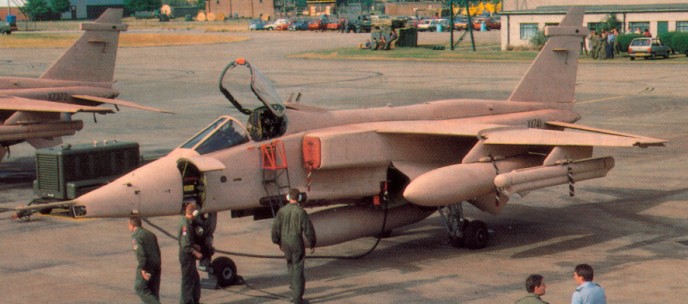
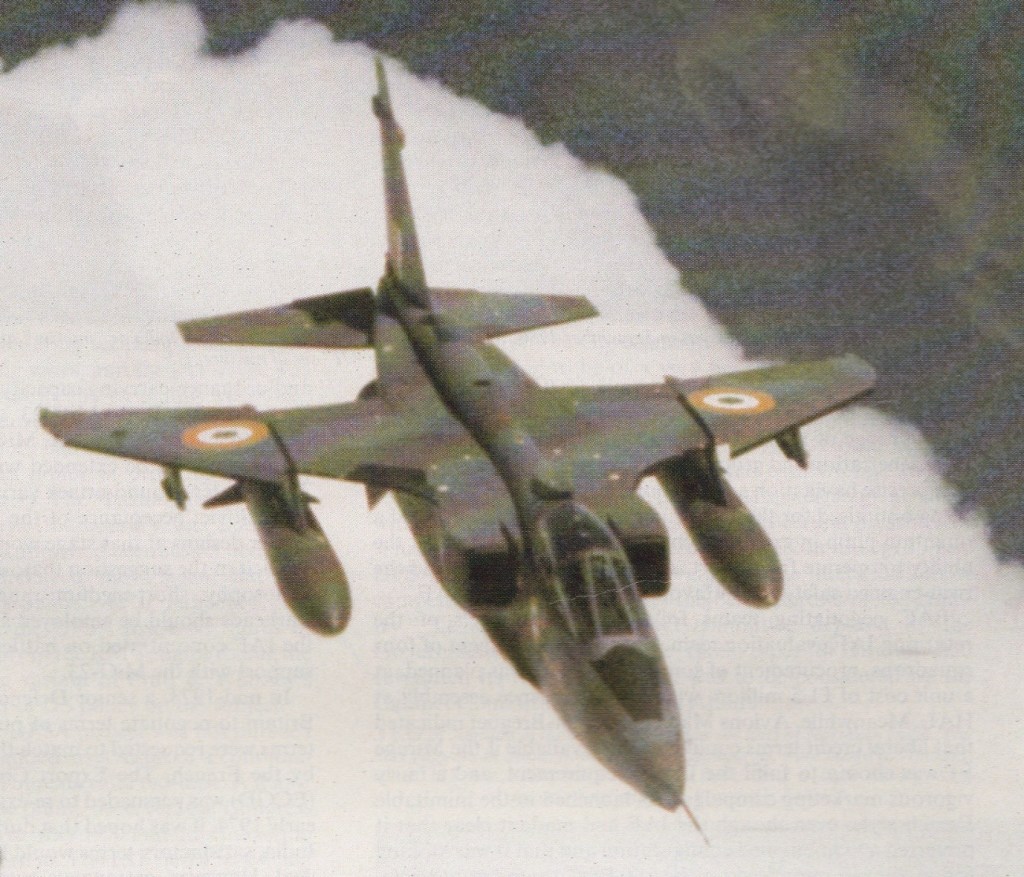
Bréguet 121 is the prototype, on which the SEPECAT (acronym for Société Européenne de Production de l’Avion d’Ecole de Combat et d’Appui Tactique) Jaguar is based. The Sepecat Jaguar, an Anglo-French joint venture by the British Aircraft Corporation and Breguet Aviation for a supersonic strike-attack and reconnaissance aircraft, plus a two-seat operational trainer, first flew on 12 October 1969.
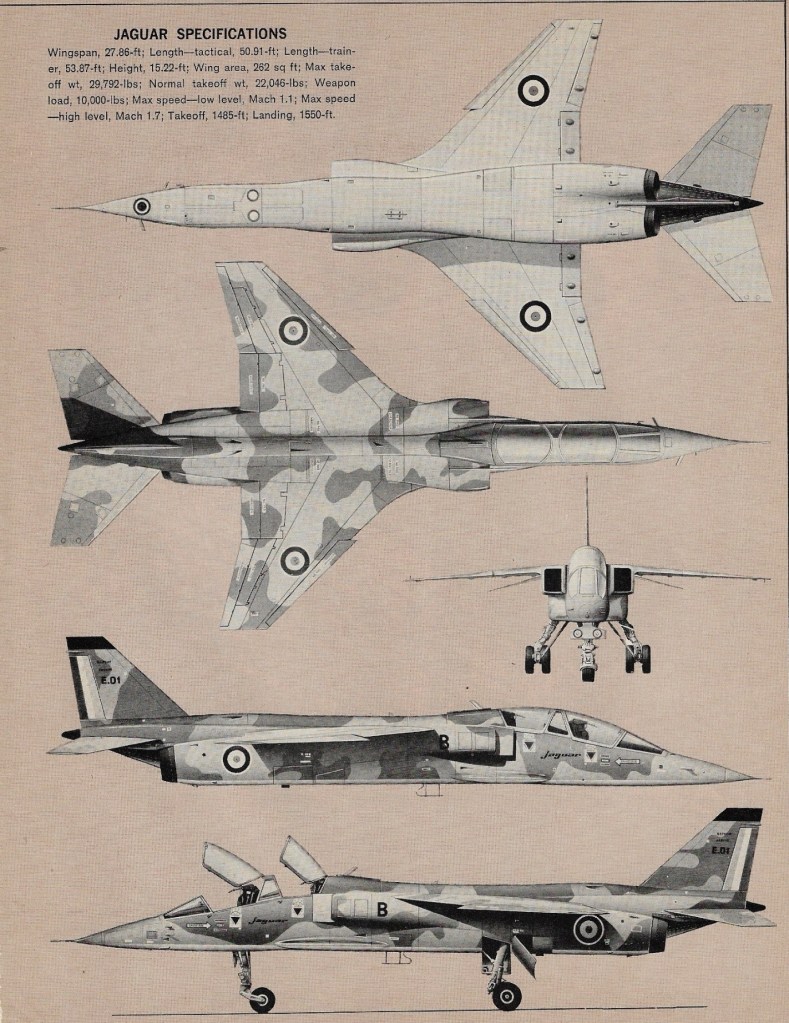
Developed cooperatively by the United Kingdom and France, the Jaguar. The Jaguar is a light but capable strike aircraft, having two afterburning turbofan engines. It is used in the reconnaissance, advanced training, close air support, maritime attack as well as in the strike and interdiction role. Powered by two Rolls-Royce Turbomeca Adour turbofan engines of, according to engine mark, these aircraft have a maximum speed of Mach 1.5 at optimum altitude, and Mach 1.1 at sea level. A maximum external load of 10,000 lb (4,500 kg) of stores which can include nuclear and conventional weapons can be carried.
There followed a production of some 203 examples for the Royal Air Force, which included 38 two-seat variants, and 200 for the French Air Force. The Armee de l’Air’s first SEPECAT Jaguars became operational in January 1975. They had been modified to carry the French AN 52 tactical nuclear weapon.
Jaguar A is the original prototype and the French single-seat attack version. Jaguar E is the French tandem two-seat trainer variant with dual controls. Both were equipped with Adour Mk 101 engines of 7,305 lb thrust (with afterburning), although they were quickly replaced by the Adour Mk 102 of 8,600 lb thrust (with afterburning). The French Jaguars saw combat in Africa and the Balkans, before the last squadron (EC.01.007) retired its final examples from operational use on July 1, 2005.
Jaguar S designated GR.Mk1 (GR.1) by the Royal Air Force is the British equivalent of the Jaguar A with a laser in the nose. The Jaguar B is the RAF’s advanced trainer designated T.Mk2 (T.2) and has a more advanced full suite nav/attack system. Although originally delivered with the Adour Mk 102 engines, they were quickly retrofitted with the more powerful Rolls-Royce/Turbomeca Adour Mk 104 turbofans. GR.1A is an upgraded GR.1 aircraft with the nav/attack system from the T.2 and self defense systems, which were also added to the T.2A upgrade. Reconnainssance aircraft are equipped with a centre-line pod housing five cameras and an IR linescan.
Armament of the A and S versions consists of two 30 mm cannon, and, rockets and missiles. Jaguar A and S production aircraft entered service with the Armee de l’Air and the RAF respectively in 1973.
Entering RAF service with No 226 Operational Conversion Unit on 13 September 1973, and front-line service with No 54 Squadron since 29 March 1974, the Jaguar has at one stage equipped eight RAF front-line squadrons based in the UK and, the then, West Germany.
Only the Royal Air Force employed the type in the reconnaissance role, equipped with the Jaguar GR.Mk 1 carrying a large pod on the centreline stores station, containing cameras and infra-red linescan equipment. Reconnaissance cameras are located in a pair of rotating drums within the pod, swivelling to expose the camera ports during photography. Two side-mounted and one forward-looking camera are positioned in the forward drum whilst the second can contain a pair of oblique cameras for low-level work or a solitary vertical camera best suited for photography from medium altitudes. This combination offers quite comprehensive coverage, one particularly useful facility being a data conversion unit which automatically annotates the aircraft’s position on the film, details of this being obtained from the onboard navigation computer. IR-linescan film is similarly marked.The type is being continually upgraded into variants as the GR. 1A and lB. These upgrades, known as Jaguar ‘96 and ‘97, include the ability to carry the TIALD pod (thermal imaging and laser designator), new-generation reconnaissance equipment, an improved cockpit lay-out and an enhanced mission planning system and terrain reference navigation equipment.
The GR.3 and T.4 are the last RAF standards of RAF GR.1s and T.2s respectively. The upgrade program included new cockpit displays, helmet-mounted sights, the ability to carry the new Advanced Short Range Air-to-Air Missile (ASRAAM) and other system improvements to further extend the life of the aircraft into the 21st century. Finally, in the twilight of their career with the RAF, 60 GR.3/T.4 aircraft were fitted with the Adour Mk 106 engine, a rebuild and enhanced version of the Mk 104 offering better reliability, maintainability and slightly more thrust.
Despite the upgrades, it was decided the Jaguar would ultimately leave RAF service in 2007. The last RAF Jaguar squadron, 6 Sqn, was planned to disband in October 2007, retiring its aircraft. However the date was brought forward by some six months to 30 April 2007, a decision which had been announced only six days earlier by the UK MOD. Only one GR.3A and one T.4 aircraft remained active for trials with QinetiQ at Boscombe Down, Wiltshire, UK.
The Jaguar had somewhat limited export success, but the international variant was sold to the Ecuadorean Air Force (12), India, Nigeria, and the Royal Air Force Oman (24), as well as the Nigerian Air Force (18 these are currently (1999) stored and have not been operational for many years). The first of 10 SEPECAT Jaguar International fighters (the export version) was delivered to the Sultan of Oman’s air force in March 1977. All export Jaguar Internationals are based on the RAF’s Jaguar B/S airframe.
In March 1969, the Indian Minister of Defence Production stated in Parliament that BAC had proposed collaboration in the manufacture of the Jaguar in India, but did not elaborate. Ten days earlier, the first strike Jaguar prototype (A-03) had flown. By the autumn of 1971, eight development Jaguars in France and Britain were going flight tests and armament trials.
Although the Jaguar flew well, the dry thrust of its Adour Mk 101s was considered inadequate. Also at this stage of development, the part-throttle reheat system for the engine was being developed to provide for smooth augmentation and making it possible to select any thrust from minimum dry to maximum reheat. Subsequently, BAC offered the Adour Mk 102 with the PTR system, the engine now developing a dry thrust of 5,165 lb / 2343 kgp, increasing to 7379 lb / 3347 kgp with reheat, a 50% increase over the Mk 101.
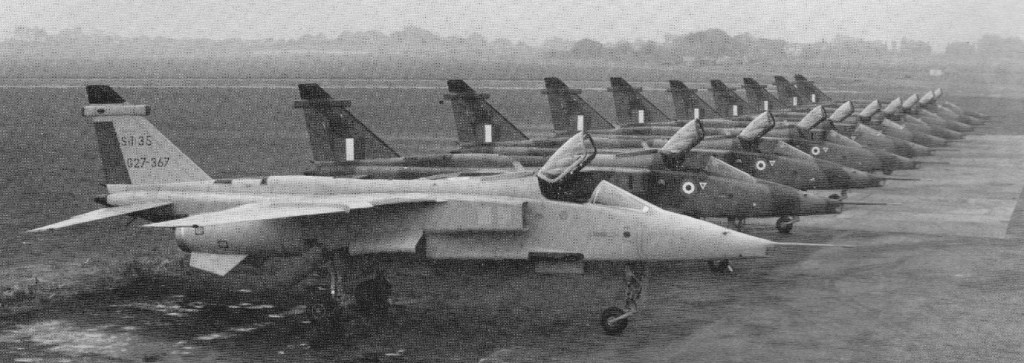
The 18 Jaguars from RAF reserve stocks were from various units, but largely ex-No 6 Sqn, and BAe Warton prepared the aircraft to the “interim” standard. The first two aircraft were two-seaters XX138(RAF)=B 3(BAe)=J1001I(IAF) and XX720(RAF)=B 8(BAe)=J1002(IAF), followed by the single-seaters including ex-No 6 Sqn RAF Nos XX738, XX729 and XX734. The “interim” Jaguars were painted in the standard RAF camouflage scheme but with IAF roundels and fin flashes. The first two were formally handed over at Warton on 19 July 1979.
The Indian Air Force received 40, where the type is known as the Shamsher (assault sword). An additional 45 were supplied and assembled in India and a further 46 followed, being produced in India by Hindustan Aeronautics. The first of 45 HAL-assembled Jaguars flew in March 1982, and production ended in 1998. India was the biggest Jaguar operator today, with Jaguar IS strike , IT trainer and IM maritime strike aircraft. The latter have the Agave radar in a reprofiled nose and are armed with BAe Sea Eagle anti-ship missiles. While the original manufacturing countries of the Jaguar, France and the United Kingdom, had retired the Jaguar from air force service, India was still producing new aircraft of the type for the Indian Air Force (IAF). HAL’s Bangalore production line assembled the last batch of 20 single-seat Jaguars complete with the DARIN (Display Attack Ranging Inertial Navigation) II upgrade, including HOTAS, MFD, and new INS/GPS nagivation system. At Aero India 2007, February 2007, it was revealed that five of the 20 new Jaguars were ready for delivery with another three in final assembly. The eight were scheduled for delivery to the IAF before March 31, 2007, with the remaining 12 aircraft to be delivered within a year.
Latest versions have uprated Adour Mk.811 engines and overwing air-to-air missiles, while optional equipment includes multipurpose radar, Sea Eagle, Harpoon, Exocet, or Kormoran anti-shipping missiles, and a system such as low-light TV for enhanced night oper¬ations.
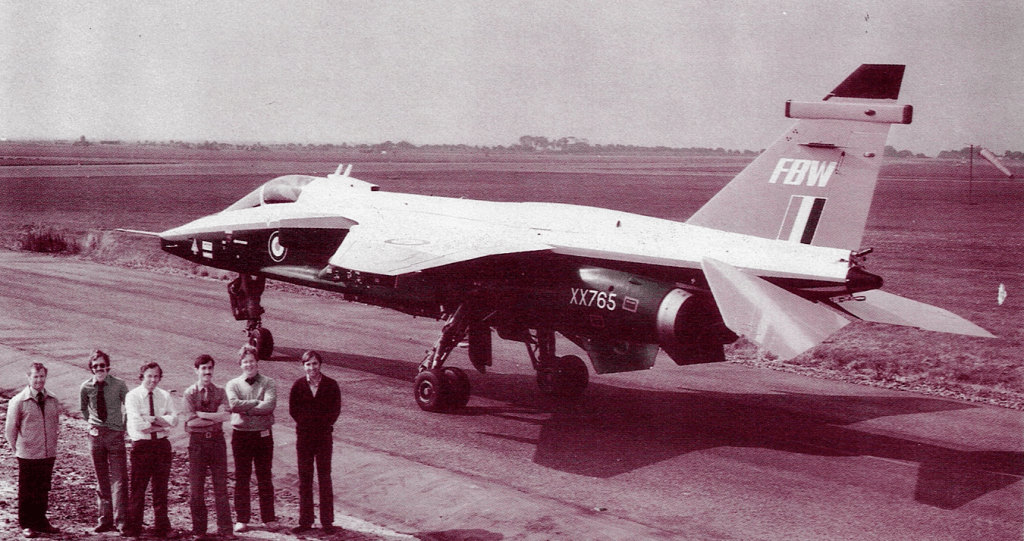
During the 1970s and early 1980s considerable research was undertaken into a host of aeronautical fields but this was generally performed with conversions of existing aircraft such as the SEPECAT Jaguar converted by British Aerospace for fly-by- wire control development.
Jaguar Engine: 2 x R-R / Turbomeca Adour. Installed thrust (dry / reheat): 50 / 75 kN Span: 8.7 m Length: 15.5 m Wing area: 24.2 sq.m Empty wt: 7700 kg MTOW: 15,430 kg Warload: 4760 kg Max speed: 1350 kph, M1.4 Initial ROC: 1.5 min to 9150 m Ceiling: 14,000 m T/O run: 880 m Ldg run: 470 m Combat radius lo-lo-lo: 535 km Fuel internal: 4200 lt Air refuel: Yes Armament: 2 x 30 mm Hard points: 5
Jaguar GR.Mk.1 Powerplant: two Rolls-Royce/ Turbomeca Adour Mk 104 turbofans, 3647-kg (8,040-1b) afterburning Maximum speed at 10.975m (36,000 ft) 1700 km/h (1,055 mph) or Mach 1.6 Service ceiling 14,020m (46,000 ft) Ferry range 4205 km (2,614 miles) Weight empty about 7000 kg (15,432 lb) Maximum take-off 15700 kg (34,612 lb) Span 8.69 m (28 ft 6 in) Length 15.52 m (50 ft 11 in) Height 4.89 m (16 ft ½ in) Wing area 24.18 sq.m (260.27 sq.ft) Armament: two 30mm Aden Mk.4 cannons / 150 rounds per gun External load: 4763 kg (10,500 lb) Hardpoints: five + wingtips
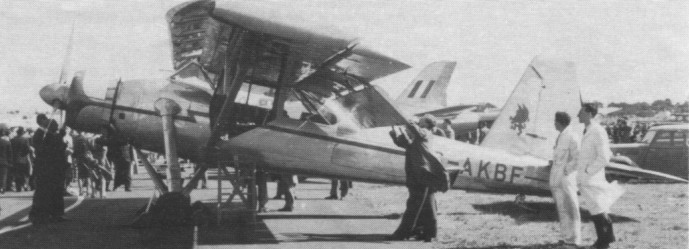
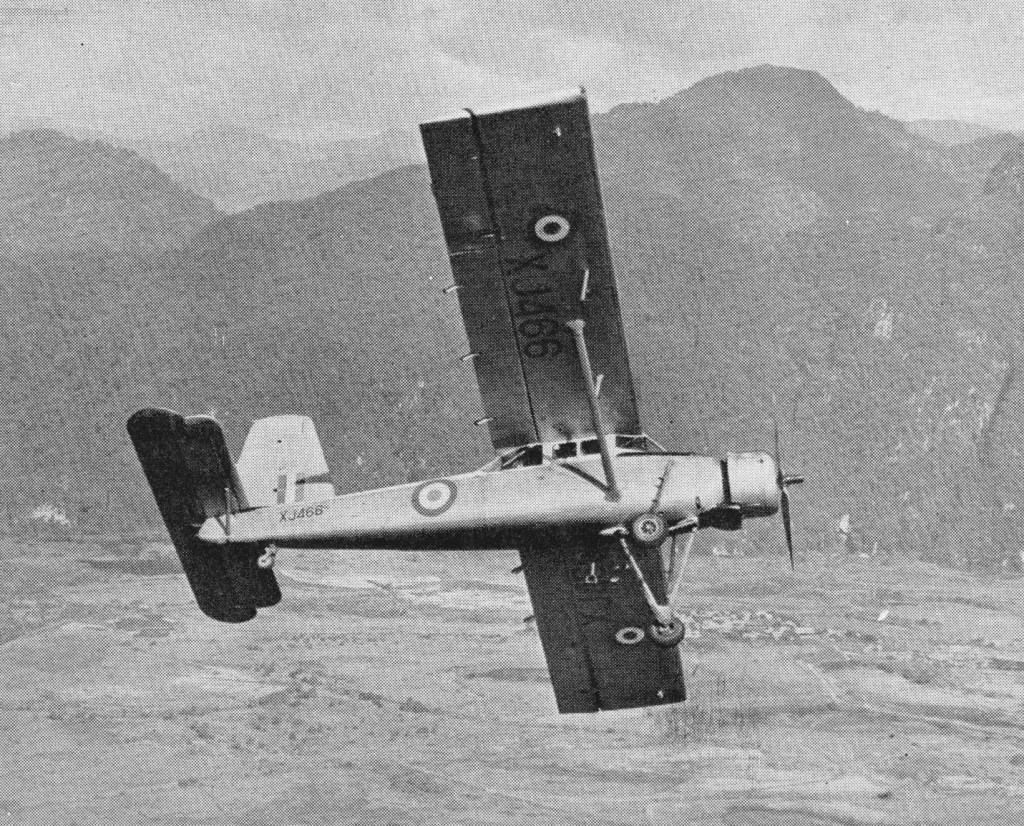
First aircraft produced by Scottish Aviation was the Prestwick Pioneer single-engined five-seat STOL monoplane, first flown 1950. For counter insurgency the Scottish Aviation A.4/45 Prestwick Pioneer 2 was to fill the niche. It came about via the Pioneer 1 and was re engined with the more powerful Alvis Leonides engine.
RAF Malaya, 1959
In service with the RAF as the CC.Mk.1, the Pioneer was in Malaya, Aden, and the UK.
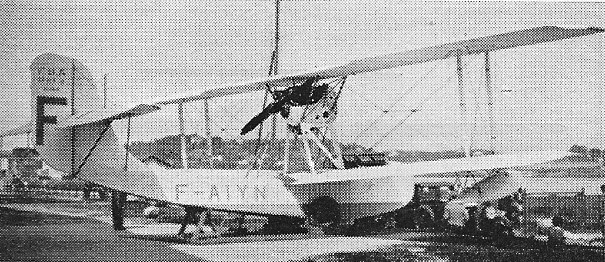
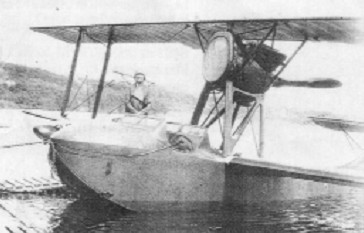
The FBA 17 was a utility type which established a seaplane height record in December 1923.
Two hundred were built, mainly for the French Navy. A development was brought by US Coast Guard in 1931.
17HL2
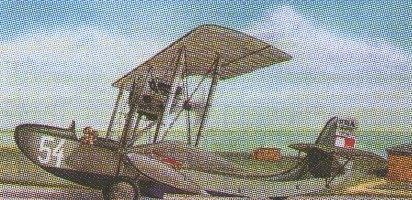
FBA-17 was a two-seat trainer flying boat HE.2,developed in many categories,HT.2 two seat tourer,HMT.2 military seaplane,HMB.2 also a military seaplane, HT.4 a four-seat tourer, HMT.4 a four-seat amphibian version, HL.1 & HL.2 recce seaplane with single and two seats and HMT.2 amphibian version of Type-172.
FBA-172 was the same as Type-17, developed in three versions, HE.2, HTM.4 & HMT.2 with different engine kinds
Developed from the HE2 and HMT2 variants, twenty FBA 17HL2 were built for the French Navy in 1927 and served on Cruisers until 1937.
FBA-173 was a version fitted with 230 hp Gnome-Rhone engine
262 built.
Variation: Viking Flying Boat Co V-2
Engine: 180 hp Hispano-Suiza 8Ab Span: 42 ft 4 in Top speed: 100 mph
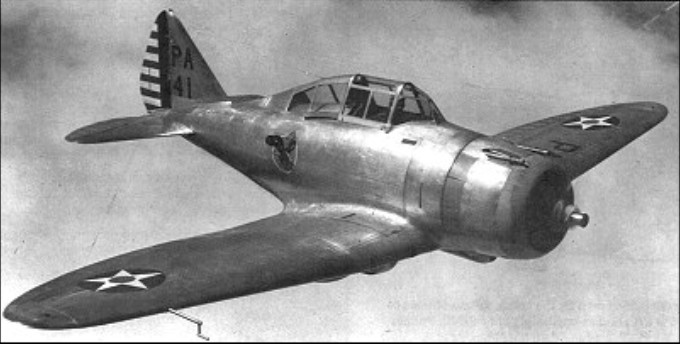
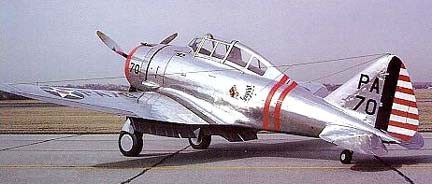
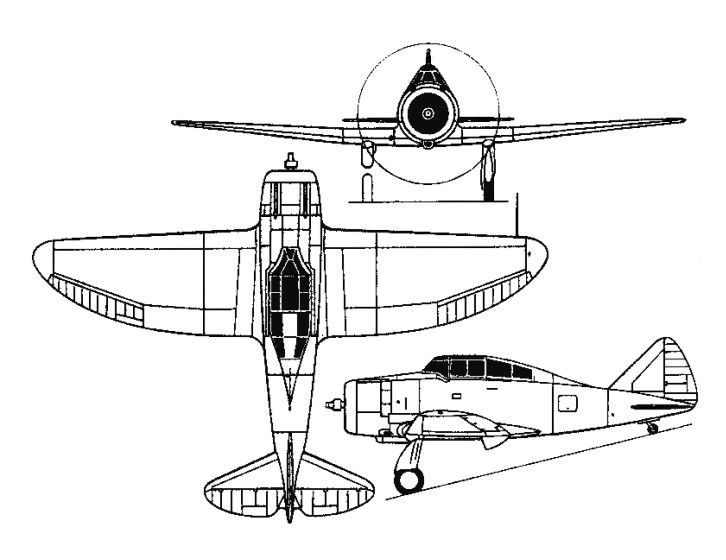
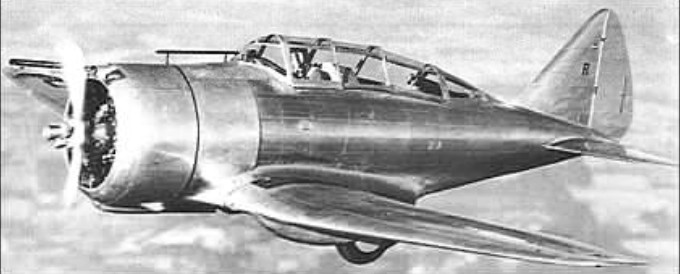
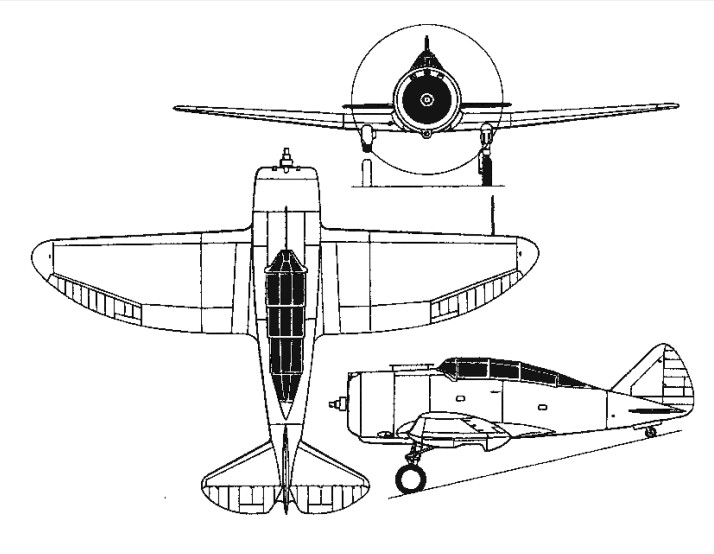
The type began as the company SEV-1XP, one of several machines flown as pursuit prototypes and racers in the 1930s by Major Alexander P. de Seversky, Jacqueline Cochran and others. The P-35 won out over the Curtiss Hawk Model 75 (later P-36) for a 16 June 1936 US Army contract for 77 airframes (36-354 to 430), powered by the 708kW Pratt & Whitney R-1830-9 Twin Wasp 14-cylinder radial engine. The first unit was rejected and modified as the AP-1 and the final airframe in this batch was diverted to become the sole Seversky XP-41.
Seversky P-35
The Seversky P-35 was the first single-seat all-metal pursuit plane with retractable landing gear and enclosed cockpit to go into service with the US Army Air Corps. It was a major step forward, albeit one which was short-lived as war approached.
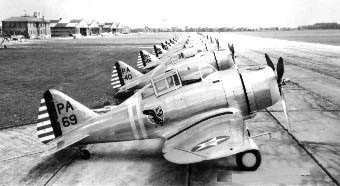
The P-35 marks the debut of Seversky (later Republic) of Farmingdale, Long Island, as a major builder of fighters and introduces the work of the firm’s chief designer, Alexander Kartveli. The first P-35 was delivered to Wright Field, Ohio, for tests, and the remaining 75 went initially to the 1st Pursuit Group at Selfridge Field, Michigan. There, the type was received with considerable enthusiasm which lingered even after six machines had been lost in accidents during 1938. Only by later, wartime standards would it become evident that the P-35 was unstable, underarmed, and lacking both armour protection for the pilot and self-sealing fuel tanks.
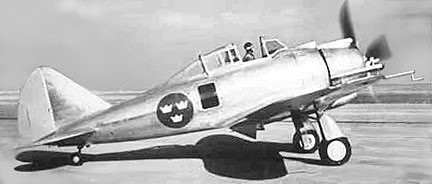
The company EP-106 export variant attracted Sweden’s attention and 120 machines were ordered with the Flygvapen designation J9. These were powered by the 783kW Pratt & Whitney R-1830-45 Twin Wasp radial. When President Roosevelt announced his 10 October 1940 embargo on fighter shipments to Scandinavia, only half had been delivered. Sixty were seized by the US Army as the P-35A (41-17434 to 17493).
Seversky EP-106 Swedish test
P-35A pursuit ships served with various USAAC units, but by late 1941 about 50 were with First Lieutenant Joseph H. Moore’s 20th Pursuit Squadron, 24th Pursuit Group, at Clark Field in the Philippines. Second Lieutenant Max Louk wrote to his parents in mid-1941 that the squadron was undergoing ‘a very strenuous programme’ of flying ‘up to eight hours a day’ in the P-35A. Incredibly, some P-35As arrived at Clark still painted in Swedish markings and still wore them during the 8 December 1941 Japanese assault, which was synchronised with the attack on Pearl Harbor.
Seversky P-35A
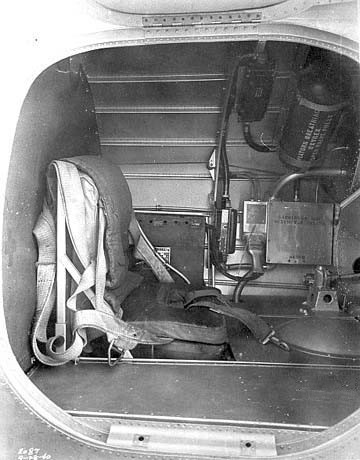
Seversky P-35A “Buddy” seat
The P-35 was flown by a few memorable pilots, including First Lieutenant ‘Buzz’ Wagner, commander of the 17th Pursuit Squadron, Nichols Field, Philippines, the first American ace of the war. But by December 1941 the type had become dated and inadequate. Pilots of the P-35 started with the disadvantage of an unforgiving mount. 1939 Technical Order No. 01-65 BA-1 had imposed mind-boggling limitations on the P-35, proscribing inverted flight, inverted spins, and outside loops, and similar caveats applied to the slightly more powerful P-35A. Group Captain Christopher Clarkson, the UK’s Royal Air Force test pilot on the US east coast in 1940, logged six hours on P-35 variants and utterly rejected the machine for the RAF. Americans in P-35As in the Philippines simply could not stay with or effectively fight the Mitsubishi and Nakajima fighters that swarmed down on them. Some died ignominiously: First Lieutenant Samuel W. Marrett, commander of the 34th Pursuit Squadron at Del Carmen Field, Philippines, was killed 10 December 1941 when an ammunition barge he was strafing exploded beneath him over Lingayen Gulf, Northern Luzon.
Swedish pilots guarding their nation’s neutrality faced a different problem. Hans Westerberg, flew the J9 (P-35A) and, in 1944, intercepted a crippled American B-24 Liberator struggling away from a target in Germany. “I could just keep speed with the bomber. I closed in to use hand signals to tell him that his crew could land and be interned in Sweden. All of his guns turned towards me and he was an instant away from opening fire before he understood. The problem was that from some angles my P-35A looked exactly like a Focke-Wulf Fw 190.”
P-35A Wingspan: 10.97 m / 36 ft 0 in Length: 8.18 m / 27 ft 10 in Height: 2.97 m / 10 ft 9 in Wing area: 20.44 sq.m / 220.01 sq ft Max take-off weight: 3050 kg / 6724 lb Empty weight: 2075 kg / 4575 lb Max. speed: 499 km/h / 310 mph Ceiling: 9570 m / 31400 ft Range: 1529 km / 950 miles Armament: 2 x 12.7mm + 2 x 7.62mm machine guns Bomb load: 160kg
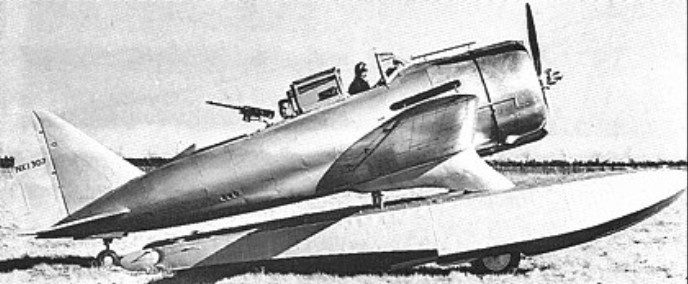
Evolved in parallel with the P-35, the 2PA was a two-seat fighter and fighter-bomber with a fundamentally similar airframe and offered with either a similar undercarriage to that of the single-seater as the 2PA-L (Land) or with an amphibious float undercarriage as the 2PA-A (Amphibian). Dubbed “Convoy Fighter” by the manufacturer, the 2PA was powered by a Wright R-1820-G2 or G3 Cyclone nine-cylinder radial engine, the former rated at 1,000hp for take-off and the latter at 875hp.
One 2PA in 1937 first flew on 8 July 1937 piloted by Frank Sinclair. Powered with an 875hp Wright R-1820-G3 Cyclone engine, it was registered NX/NR189M c/n 6 (1938 registration conflict with SEV-X-BT; possibly a transfer). Demonstrated in South America, it was reportedly abandoned in Brazil after engine failure.
Armament comprised two wing-mounted 7.62mm or 12.7mm Browning guns, one 7.62mm Browning on a flexible mount in the rear cockpit, plus two forward-firing fuselage-mounted 7.62mm or 12.7mm Browning guns. Provision was made for a bomb load of up to 227kg on internal wing racks.
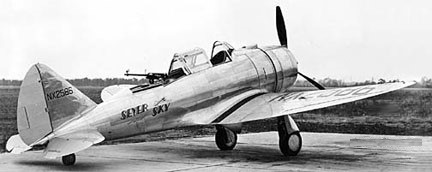
Two 2PA-BX, NX2586 c/n 146 and NX2587, were used as European demonstrators, which brought a substantial order from Sweden. First flown on 23 October 1938 piloted by Frank Sinclair, early in 1939, Major Seversky embarked upon a European sales tour in a 2PA-202 or 2PA-BX which was fitted with a 1,100hp Pratt & Whitney R-1830-S3C Twin Wasp. This aircraft was tested at the A&AEE Martlesham Heath, in March 1939, at the instigation of the Air Ministry.
Fifty-two 2PA-BXs were ordered by Sweden as dive-bombers (the Seversky company having meanwhile become the Republic Aviation Corporation), but only two of these were delivered to Sweden, the remainder being taken over by the USAAC as AT-12 Guardsman advanced trainers.
Seversky 2PA-BX NX2586
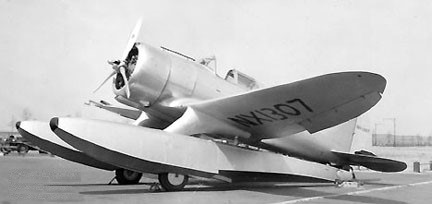
The one amphibian 2PA-A, NX1307, and one 2PA-L were procured by the Soviet Union in March 1938, together with a manufacturing licence, which, in the event, was not to be utilised. The 1937 2PA-L was built from SEV-X-BT components as a potential military export and first flown on 2 November 1937, by C H Miller. Refitted with 850hp R-1820-G2 engine, it was unregistered and ended up in the Spanish Civil War.
Seversky 2PA-A NX1307
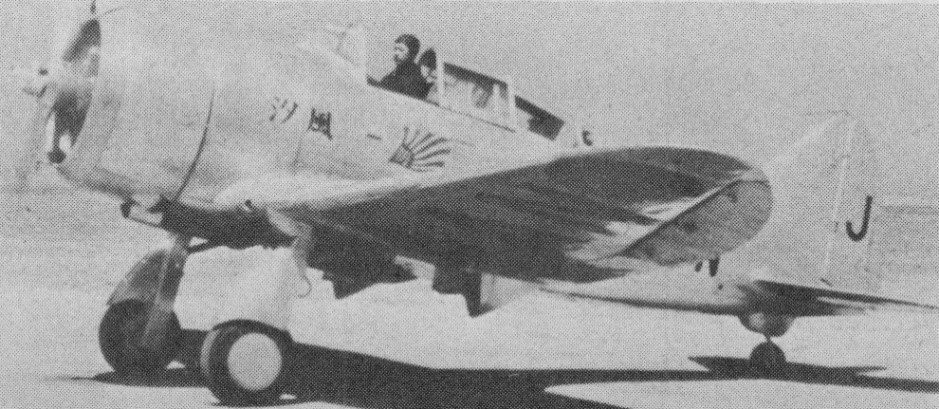
Twenty R-1820-G2-powered examples were ordered clandestinely by the Japanese Imperial Navy for use over China as long-range escort fighters. Designated 2PA-B3, these received an armament of two fuselage-mounted 7.62mm machine guns and a similar weapon in the rear cockpit. Assigned the Japanese designation A8V1, the 2PAs were found to possess unacceptable levels of manoeuvrability and climb rate for the escort fighter role and were therefore relegated to reconnaissance missions in Central China, two later being passed to the Asahi Shimbun newspaper group. The c/ns were 122 to 141. Found US regs were NX1321=J-BAAN c/n 126, NX1391 c/n 64-1, NX1388 c/n 64-2 and c/n 64-3, which flew to the West Coast for overseas shipment and left no tracks. The “64-” c/ns seen in some reports likely were Japanese registations.
Seversky 2PA-B3 Export to Japan
It was incorrectly thought the type was later produced in Japan as a Kawasaki or Mitsubishi Type 98 and given the allied code ‘Disk’ on that basis.
SEV-2PA Engine: 1,100hp Pratt & Whitney R-1830-S3C Twin Wasp Max take-off weight: 3474 kg / 7659 lb Empty weight: 2078 kg / 4581 lb Wingspan: 10.97 m / 36 ft 0 in Length: 8.20 m / 27 ft 11 in Height: 2.99 m / 10 ft 10 in Wing area: 20.44 sq.m / 220.01 sq ft Max. speed: 508 km/h / 316 mph Range: 3138 km / 1950 miles Seats: 2
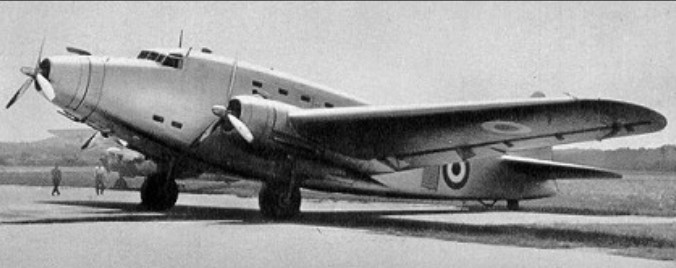
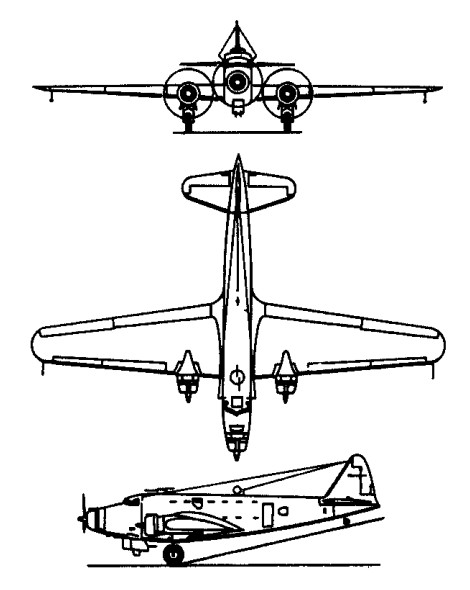
The S.M.82 of 1938 was a development of the S.M.75, from which it differed by having a deeper fuselage, greater loaded weight, redesigned fin and rudder, and the addition of a hydraulically operated retractable gun turret on top of the fuselage to the rear of the pilot’s cockpit. Initially powered by three 633kW Alfa Romeo 128 engines, it could accommodate up to 40 fully armed troops or be used as a long-range heavy bomber. It was widely used by the Regia Aeronautica and some were operated by the Luftwaffe from 1943.
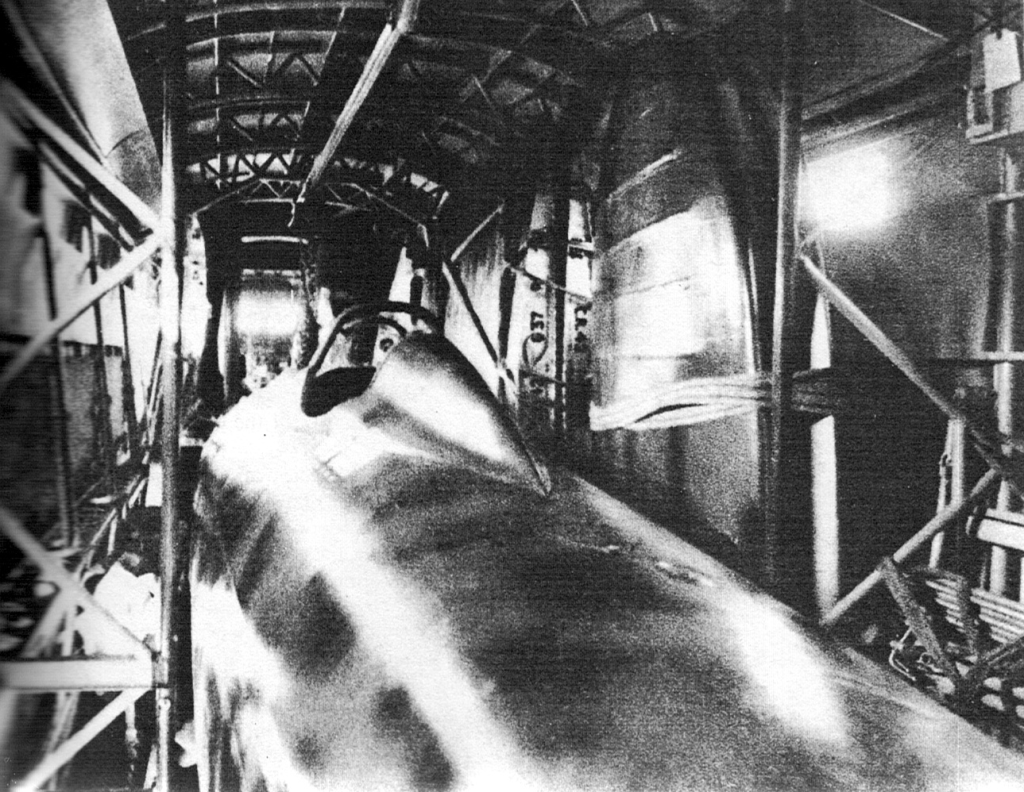
In their 1941 battles against the advancing British and their allies in East Africa, the numbers of Italian fighter planes equipped to ward off bombing raids was melting away day by day. The dense sea and land blockade surrounding Italian East Africa made it impossible for the Italians to supply their troops with fresh aircraft from Italy. Soon they had no fighters left except for a dozen Fiat CR.42 Falco biplanes which although they had outstanding flight characteristics were powerless against superior numbers oft the British Gladiator fighters. In this desperate situation they seized on an inspiration of Colonel Galante, and transported the needed fighter planes in dissembled pieces inside the fuselage of Savoia-Marchetti SM.82 Canguro (Kangaroo) transport planes whose range made it possible for them to ferry their cargo to East Africa from Libya. By the Spring of 1941, over 50 Falco fighters had landed in Ethiopia by this method.
Fiat CR.42 inside a Savoia Marchetti SM.82 on the way to East Africa
Engines: 3 x Alfa Romeo 128 RC.21, 708kW / 937 hp Wingspan: 29.68 m / 97 ft 5 in Length: 22.9 m / 75 ft 2 in Height: 6.0 m / 20 ft 8 in Wing area: 118.6 sq.m / 1276.60 sq ft Max take-off weight: 18020 kg / 39728 lb Loaded weight: 10550 kg / 23259 lb Wing loading: 31.16 lbs/sq.ft / 152.0 kg/sq.m Max. speed: 200 kts / 370 km/h / 230 mph Cruising speed: 162 kts / 300 km/h Service ceiling: 19685 ft / 6000 m Range: 1620 nm / 3000 km / 1864 miles Armament: 1 x 12.7mm machine-guns, 4 x 7.7mm machine-guns Bombload: 4000kg Crew: 5-6
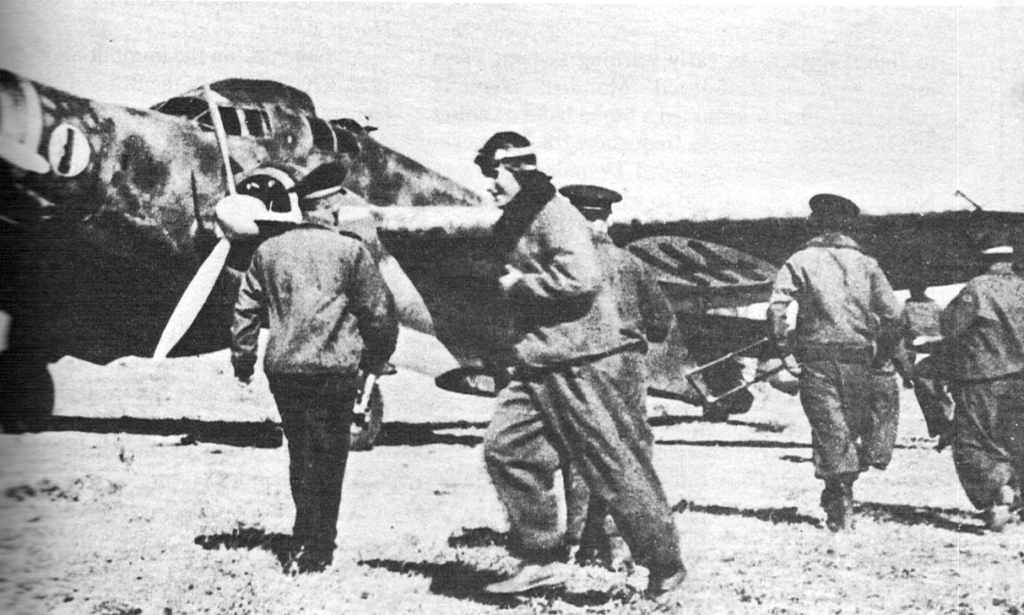
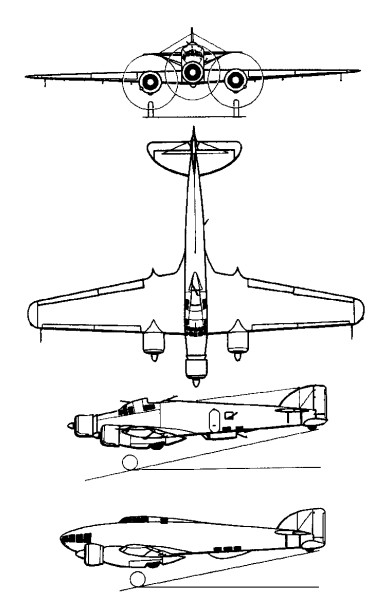
Developed from an eight-seat commercial airliner of 1934, the three-engine Savoia-Marchetti S.M.79 Sparviero entered service as a conventional medium bomber with the Regia Aeronautica in 1937, and served operationally with the Aviacion del Tercio alongside the Nationalist forces during the Spanish Civil War.
In 1937 the S.M.79 embarked on trials at Gorizia as a torpedo bomber, being equipped to launch a single 450mm naval torpedo from an offset rack under the fuselage. The following year trials with paired torpedoes led to the adoption of the S.M.79-II aircraft as standard torpedo bomber equipment. Following Italy’s entry into the war in June 1940, when Sparvieri (Sparrowhawks) equipped 14 stormi based in Italy, Sicily, Sardinia and Libya, the aircraft was constantly in action in the anti-shipping role, its first action being an attack by 19 S.M.79s of the 9° and 46° Stormi on French shipping off the Riviera coast on 13/14 June.
During the invasion of Crete S.M.79s of the 92° Gruppo and the 28la Squadriglia were active against Allied shipping in the Aegean, after which most aircraft were redeployed to Libya for operations against British naval forces and convoys in the Central Mediterranean as well as the naval base at Malta. Among the ships of the Royal Navy sunk by S.M.79s in the Mediterranean were the destroyers HMS Husky, HMS Jaguar, HMS Legion, and HMS Southwall, while the battleship HMS Malaya and the carriers HMS Indomitable and HMS Victorious were all struck by torpedoes launched by the Italian torpedo bombers; the majority of these ships were hit during the attacks on the Operation ‘Pedestal’ convoy which sailed with 14 merchant ships and heavy escort for the relief of Malta. Among the famous Italian pilots of the Sparviero were men such as Capitani Buscaglia, Cimicchi, di Bella and Melley, An improved version was the S.M.79-III without the ventral gondola but with a forward-firing 20mm cannon.
Savoia Marchetti SM.79 10 October 1942
The SM.79 was blooded in the Spanish Civil War as a level bomber with four gruppi of the Italians’ Aviazione Legionaria and 3-, 4-, 5- and 6-G-28 of the Nationalists’ Agrupacion Espanola. Total deliveries to Spain were some 135 SM.79-ls, and as they pulled out at the end of the war the Italians donated 80 of their surviving aircraft to the victorious Nationalists. In the war the SM.79-ls had proved decisive, for they comprised one of the few homogeneous forces able to undertake an effective offensive role, in this instance long-range bombing without the need for fighter escort because of their performance and good defensive firepower. The Sparviero also proved reliable, and remained in service with the Spanish air force for many years after World War II.
The aircraft suffered from poor servicing facilities, and it was unusual for even as much as half the available strength of Sparvieri to be fit for operations at any given time. Nevertheless the S.M.79 was acknowledged as being among the best torpedo aircraft to serve in the Mediterranean theatre during World War II.
Savoia Marchetti SM 79 Sparviero Engines: 3 x Piaggio P XI R C 40, 986 hp Length: 53.15 ft / 16.2 m Height: 13.451 ft / 4.1 m Wingspan: 69.554 ft / 21.2 m Wing area: 664.139 sq.ft / 61.7 sq.m Max take off weight: 24916.5 lb / 11300.0 kg Weight empty: 16758.0 lb / 7600.0 kg Max. weight carried: 8158.5 lb / 3700.0 kg Max. speed: 234 kt / 434 km/h Cruising speed: 173 kt / 320 km/h Service ceiling: 22966 ft / 7000 m Wing loading: 37.52 lb/sq.ft / 183.0 kg/sq.m Range: 1890 nm / 3500 km Range (max. weight): 1075 nm / 1990 km Crew: 5 Armament: 4x MG Bombload: 2200kg
SM.79-l Sparviero Type: four/five-seat medium bomber Powerplant: 3 x Alfa Romeo 126 RC 34, 582 kW (780 hp) Span: 21.2m (69ft 6.7 in) Length: 15.80m (51ft l0in) Height: 4.3 m / 14 ft 1 in Wing area: 61.7 sq.m / 664.13 sq ft Empty weight: 6800 kg / 14992 lb Max T/O weight: 10480 kg (23,100 lb) Max speed: 267 mph at 13,125 ft Ceiling: 6500 m / 21350 ft Operational range: 1,180 miles Armament: 1 x 7.7-mm (0.303-in) and 3 x 12.7-mm 0.5-in) m¬g Bombload: 1250 kg (2,756 lb) internally Crew: 5







 All Aero