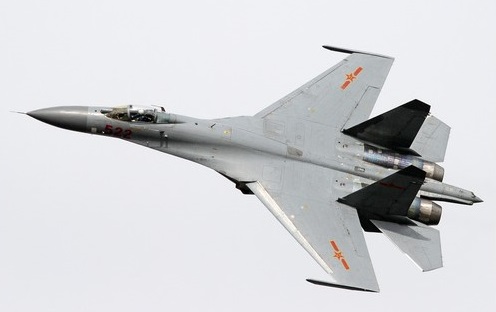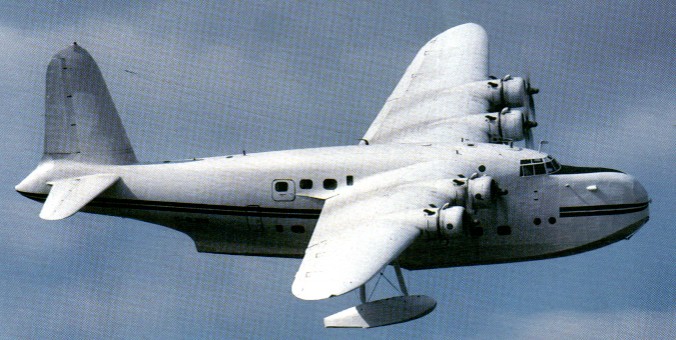
Short S.25 Tasman Class Sandringham / Sunderland

MR.5

The Sunderland maritime-patrol and reconnaissance flying-boat was designed to meet the requirements of Air Ministry Specification R.2/33 and was virtually a military version of the Empire boat. The prototype flew for the first time on 18 October 1937, just over a year after the first Empire began its trials.

Entering service in June 1938, by the outbreak of war there were three squadrons of RAF Coastal Command operational with it and others in the process of re-equipping or forming. The Sunderland was notable for being the first flying-boat to be equipped with power-operated gun turrets.

Short Sunderland Article

The first production version was the Sunderland I powered by Bristol Pegasus 22 engines and armed with eight 7.7mm machine-guns: two in a Fraser-Nash nose turret, four in a Fraser-Nash tail turret, and two on hand-operated mountings in the upper part of the hull aft of the wing trailing edge.

French Navy Sunderland

The Sunderland II had Pegasus XVIII engines, but was otherwise similar to the Mk I, although late models were fitted with a two-gun dorsal turret in place of the manually operated guns.

The Mk III used the same power plant as the Mk II, but had a modified hull with a stream-lined front step and a dorsal turret as standard.

The final military version was the Sunderland V, the IV having become the Seaford. The Mk.5 was used mainly as a maritime reconnaissance flying boat they were powered the more powerful l200hp Pratt & Whitney R-1830 Twin Wasp. Wing span remained the same, however, the aircraft was slightly longer at 85’ 4”. Due to the increased power, the MAUW was 65,000lbs, but the maximum speed remained relatively unchanged. Armed with six Browning .303 machine-guns carried in two turrets (four in the rear and two in the forward), and four .303s fixed, that were controlled by the pilot. There were also two 0.5 Browning, which were manually operated, positioned in the beam hatches. Eight depth charges were carried on racks which were run out from the bomb room, along rails which extended under the wings. As with all the guns, these could be reloaded in flight.
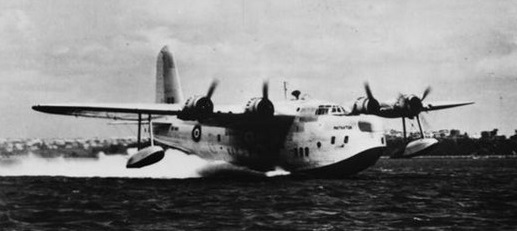
Production continued until October 1945 and seven hundred and forty-nine Sunderlands were built, and they served throughout the war. The final Coastal Command Sunderland operational mission was in June 1945 over four weeks after the German surrender. Long-range Sunderland operations also took place overseas from bases in Africa and the Far East.

In 1943 a number of Sunderlands were de-militarised, equipped to carry 20 passengers and turned over to BOAC. The Short S.25 Sandringham was produced during the Second World War by the demilitarized conversions of Short Sunderland military flying boats previously operated by the Royal Air Force.

Sandringham ZK-AMD

Post-war the type took part in the Berlin Airlift carrying 4920 tonnes (4847 tons) of freight. During the Korean War Sunderlands based in Japan undertook nearly 900 operational sorties totally over 13350 hours of flying. The Sunderland finally retired from RAF service in 1959 when the last aircraft were scrapped at RAF Seletar, Singapore.

Gallery

Sandringham
Engines: 4 x Bristol Pegasus XVIII
Cruise: 200 mph
Pax capacity: 16-24

Sunderland Mk. III
Engines: 4 x 1065hp Bristol Pegasus radials
Wing span: 112 ft 10 in
Length: 84 ft 4in
MAUW: 58, 000 lb
Top speed: 210mph at 7,000ft

Sunderland Mk V
Engines: 4 x Pratt-Whitney R-1830-90B Twin Wasp, 895kW / 1200 hp
Max take-off weight: 29480 kg / 64993 lb
Empty weight: 16740 kg / 36906 lb
Wingspan: 34.38 m / 113 ft 10 in
Length: 26 m / 85 ft 4 in
Height: 10.52 m / 35 ft 6 in
Wing area: 156.72 sq.m / 1686.92 sq ft
Max. speed: 185 kt / 343 km/h / 213 mph
Cruising speed: 116 kt / 214 km/h
Service Ceiling: 5455 m / 17900 ft
Range: 2337 nm / 4300 km / 2672 miles
Armament: 2 x .5in / 12.7mm Browning machine-guns, 10 x .303in / 7.7mm machine-guns
Bombload: 2250kg / 8 x depth charges
Crew: 13

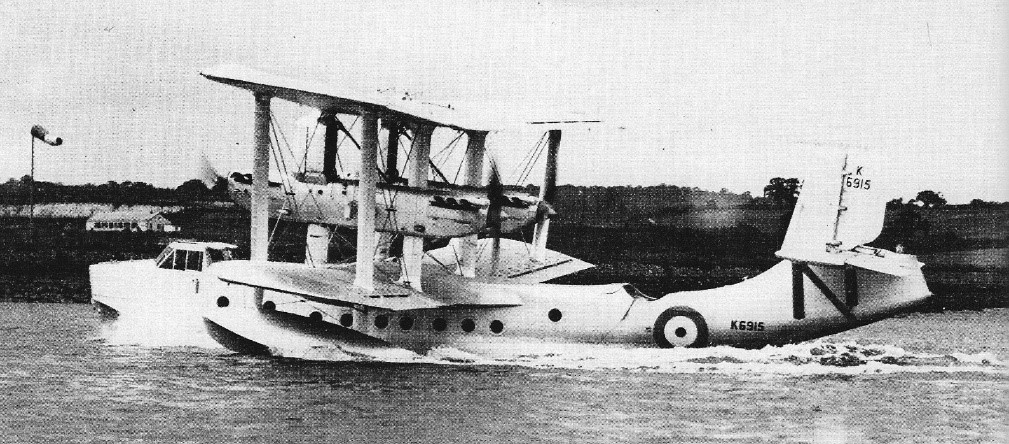
Short S.5 Singapore I / S.19 Singapore III

Singapore I

The Singapore III reconnaissance and coastal patrol flying-boat was basically the production version of the earlier Singapore II, itself developed from the twin Buzzard-engined Singapore I of 1926.

Singapore III

The huge biplaned Singapores entered service with the RAF in 1934. Built with a deep, well faired beamy hull constructed of duralium, the boat had a good seaworthy reputation and was quite maneouvrable on the water. While the book claimed a cruise of 105 knots, RNZAF crews seldom watched the wave tops go past at more than 80 knots. The endurance was some six and half hours at around a thousand feet, the low altitudes being little hindrance as the primary observation device in those early days was the Mark One eyeball.

Singapore III

Thirty-seven Singapore IIIs were delivered to the RAF, entering service in the spring of 1935. The last few aircraft were withdrawn in late 1941, when they were transferred to the Royal New Zealand Air Force. Powered by four 730 hp Roll Royce Kestrel VIII/IX glycol cooled engines mounted in two tandem pairs between the fabric covered wings.

Gallery

Short S 19 Singapore III
Engines: 4 x Rolls-Royce Kestrel VIII/IX, 418kW/ 560 hp
Wingspan: 27.43 m / 90 ft 0 in
Length: 23.16 m / 76 ft 0 in
Height: 7.19 m / 24 ft 7 in
Wing area: 170.38 sq.m / 1833.95 sq ft
Max take-off weight: 12475 kg / 27503 lb
Empty weight: 8355 kg / 18420 lb
Max. speed: 126 kt / 233 km/h / 145 mph
Cruising speed: 91 kt / 169 km/h Ceiling: 4570 m / 15000 ft
Range: 869 nm / 1610 km / 1000 miles
Crew: 6
Bomb load: 2000 lb / 907kg
Armament: 3 x .303 MG (7,7mm) Lewis mg

Short S.19 Singapore III

Short Bomber

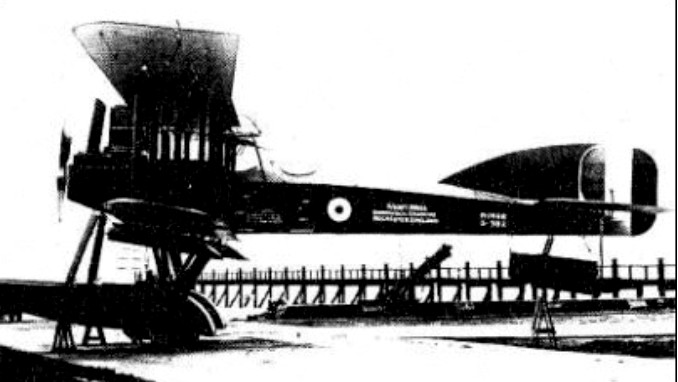
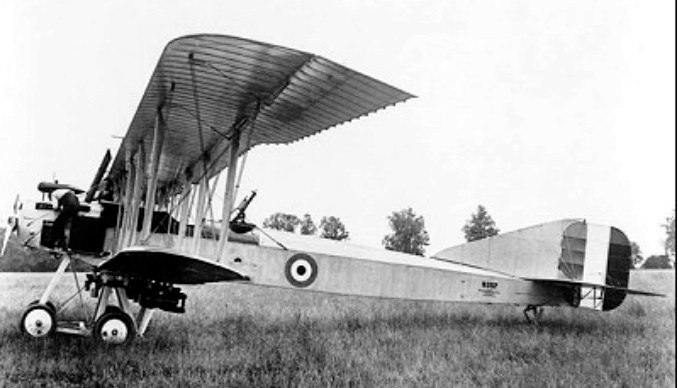
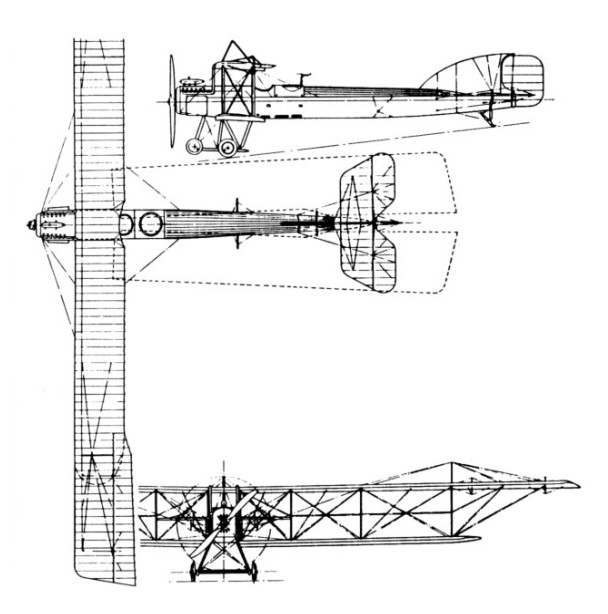
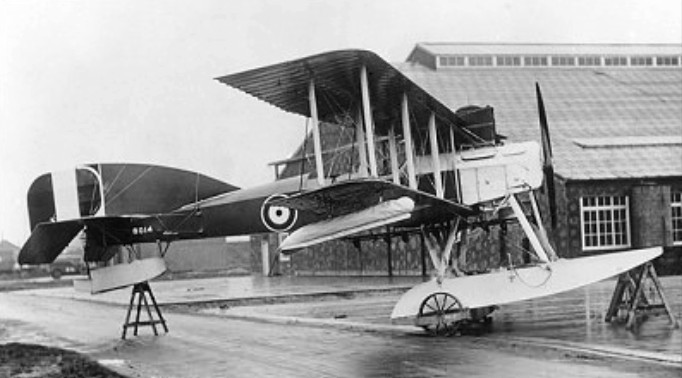
Basically a 1915 landplane version of the Short 184 powered normally by a 186kW Rolls-Royce Eagle III engine and featuring a four-wheel main landing gear.

Eighty-two production aircraft were built for the RNAS out of 110 ordered, some of which were later transferred to the RFC and one was presented to the French government.

Engine: 1 x 225hp Sunbeam or 1 x 250hp Rolls-Royce (Eagle)
Max take-off weight: 3087 kg / 6806 lb
Empty weight: 2270 kg / 5005 lb
Wingspan: 85 ft 0 in
Length: 13.72 m / 45 ft 0 in
Height: 4.57 m / 15 ft 0 in
Wing area: 80.83 sq.m / 870.05 sq ft
Max. speed: 124 km/h / 77 mph
Ceiling: 3231 m / 10600 ft
Armament: 1 x 7.7mm machine-gun, 6 x 30kg bombs

Short 184 / 225

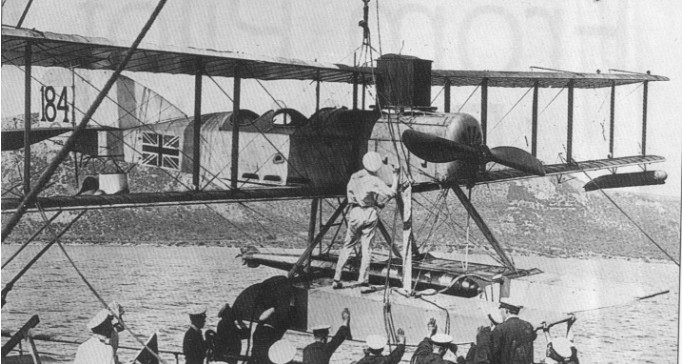
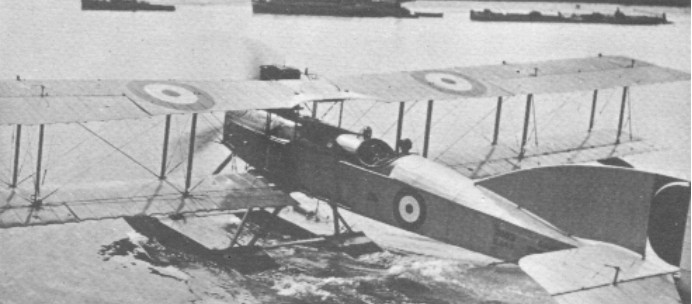
A three bay biplane with two spar wooden wngs and wooden fuselage, all fabric covered. Conventional control surfaces with ailerons on all four wings. There were two main, flat bottomed, floats with a small float at each wingtip and under the tail. The wings folded for storage.

First entering service with the RNAS in early 1915, the Short 184 had a long career and remained fully active until the Armistice – more than 900 being completed. Its initial power plant of a 167kW / 225 hp Sunbeam gave rise to the often quoted designation Short 225. Several different engines were fitted during the production run.

The 184/225 was the first aircraft to sink a ship by torpedo when it attacked a Turkish troopship during the Gallipoli campaign.

This naval aircraft was the only floatplane to take part in the battle of Jutland in 1916, when one was used for reconnaissance. An official letter written to Messrs Short Bros with regard to the work performed by a Short 184 in spotting enemy ships during the Battle of Jutland in May 1916 stated: ‘ . . . the flight made by Flight Lieut Rutland, with Assistant Paymaster Trewin, as observer, which Sir David Beatty praises so highly, was carried out on a 225hp Short Seaplane.’

A number of Short 184s were taken on charge post-war by other countries.

At its Norwich factory Mann, Egerton & Co built 12 Short 184 or Mann, Egerton Type A seaplanes

Gallery

Engine: One 225 hp / 194kW Sunbeam Maori
Length 40.6 ft. (12.37 m)
Wing span 63.5 ft (19.35 m)
Height: 4.11 m / 14 ft 6 in
Wing area: 63.92 sq.m / 688.03 sq ft
Weight empty 3,703 lb (1,679 kg)
Max take-off weight: 2433 kg / 5364 lb
Max speed: 88 mph (142 kmph)
Ceiling 9,000 ft (2,740 m) fully loaded
Endurance 2.75 hr
Seats: 2
Armament: One 7.7mm machine gun, in rear cockpit
Bombload: One 14 in: (35 cm) torpedo, or 520 lb. (240 kg.) bombs

Engine: One Sunbeam 260 hp
Wing span 63 ft 6 in (19.35 m)
Wing area: 63.92 sq.m / 688.03 sq ft
Length 40 ft 7.5 in (12.37 m)
Height: 4.11 m / 13 ft 6 in
Weight empty 3,703 lb (1,679 kg)
Max take-off weight: 2433 kg / 5364 lb
Max speed: 88 mph (142 kmph) at 2000 ft
Service ceiling 9,000 ft (2,740 m) fully loaded
Endurance 2.75 hr
Armament: One 7.7mm machine gun, in rear cockpit
Bombload: One 14 in: (35 cm) torpedo, or 520 lb. (240 kg.) bombs
Seats: 2

Shinn Meiwa PS-1 / US-1

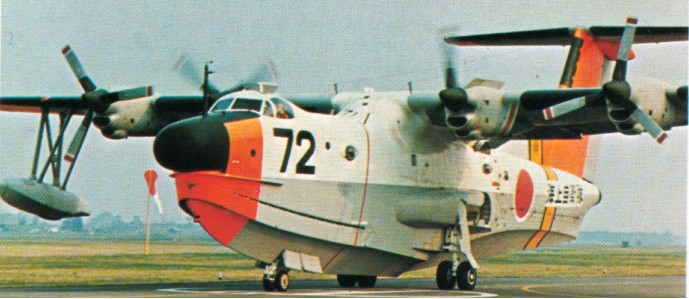
After January 1966, directed attention was put into a new marine aircraft. A Grumman Albatross was rebuilt as a dynamically similar flying model for a projected very large STOL ASW flying-boat for the Japanese Maritime Self Defense Force. The type was developed as the four-turboprop PS-1, but later as the US-1 amphibious search-and-rescue aircraft.

The Shinn Meiwa PS 1, a four turboprop STOL amphibian with an auxiliary engine driving a boundary -layer control pump, has a speed range from 295 knots maximum to a 40 knot stall. PS 1s carry search radar, sonobuoys, MAD and ECM equipment to aid in the search for submarines, and against which they can deploy anti submarine bombs, homing torpedoes, and rockets for surface attack.

Shinn Meiwa PS-1 / US-1 Article

Designed for long-range ASW, the four-turboprop PS-1 flying boat first flew in October 1967, entered service in 1973, and was followed by the US-1 amphibious variant in October 1974.

The first prototype PS-1 was converted later as waterbombing test vehicle.

Production of the PS-¬1 was completed with the 23rd aircraft in 1979. The seventh and subsequent US-1s are fitted with uprated T-64 IHI-10J turboprops and are designated US-lAs. Earlier aircraft are being progressively retrofitted with these engines.

The JMSDF intended to purchase one US-1A SAR amphibian every two years, the next funding was being sought in FY1988.

PS-1
Engines: 4 x T64-IHI-10 turboprop, 3060 shp
Wing span: 108 ft 8.75 in (33.14 m)
Max speed 340 mph (547 km/h)
Crew: 10

Shenyang J-31

The second product of the J-XX program to be revealed to the public was the J-31. Revealed to the public in 2012, it clearly incorporates some stealth aspects, especially towards the front of the aircraft.

Testing began in October 2012, and in late 2014, the J-31 was displayed publicly at an airshow for the first time. The prototype mounts two Russian-designed RD-93 turbofans (the same engines as the MiG-29). The mockup shown at that same event seems to show that several changes to the design are in store. While the intended role of the J-31 within China is unclear, it does seem to be slated for export, with Pakistan reportedly planning to purchase up to 40 J-31s.

Shenyang J-16

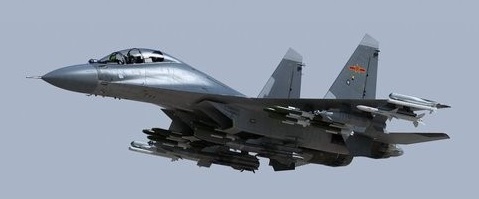
In 2000, China purchased an Su-30MKK from Russia, which formed the basis for development of two-seat J-11 variants. The Chinese developed the two-seat J-11BS into a dedicated strike fighter under the designation J-16.

Just as its predecessor, it extensively employs composites to lower airframe weight, while new materials and design elements were used to lower RCS. The J-16 first took flight in 2011 and was accepted into service two years later.

A small production of only 25 aircraft built. While still in production, priority seems to be placed on development and production of the fifth-generation J-20 and J-31 fighters.

Shenyang J-15

Soon after development of the J-11B began, Shenyang began to develop a navalized version of the aircraft to operate from the recently purchased carrier Varyag. In 2001, China purchased an unfinished Su-33 prototype from the Ukraine, allowing Shenyang to work with the design to develop a carrier aircraft. Meanwhile, the Chinese government made repeated attempts to acquire Su-33s directly from Russia. Negotiations fell apart in 2006 when the J-11B was revealed, and thus Shenyang was forced to develop a domestic solution. The resulting aircraft was almost identical in appearance to the Su-33, but is considerably lighter and more capable thanks to extensive use of composites and newer onboard systems.

The J-15 first flew in 2009, powered by the same AL-31F turbofans that powered the Su-33. Carrier trials began in late 2012, and as of late 2013 the J-15 has began operational testing.

Shenyang J-11

J-11B

In 1995, China secured the rights for domestic production of the Su-27SK by Shenyang under the designation J-11. As originally conceived, the J-11 was to be merely a Chinese-built Su-27SK – complete with Russian engines and systems. While the J-11 took flight in 1998 and quickly entered service alongside Russian-production Su-27s, Shenyang went to work on the development of an indigenous improvement to the design. Designated the J-11B, the new aircraft used domestically-designed WS-10 engines, domestically-designed onboard systems, and extensively employed composites to lower the empty weight by 700kg. The J-11B added the capability to mount a variety of Chinese-designed ordnance, including anti-ship missiles.

J-11B

The J-11B has had its share of controversy. Its legitimacy has been called into question, as concerns have been raised over unlicensed production of the Su-27 design. Production has stopped of the original J-11s, apparently shifting to J-11B production, but, as is common with the Chinese, the domestically designed WS-10 engine has had many teething issues. Shenyang has looked to Russia for alternatives – the AL-31 series engines used on SU-30MKIs were a top choice for an alternative powerplant. At least one squadron did operate WS-10-powered J-11Bs briefly, but the aircraft were quickly grounded after the engines proved to have impractically short lives (30 hours compared to 400 for Russian engines). In spite of the issues, however, the J-11B has gone on to form the basis for further Chinese Flanker variants.