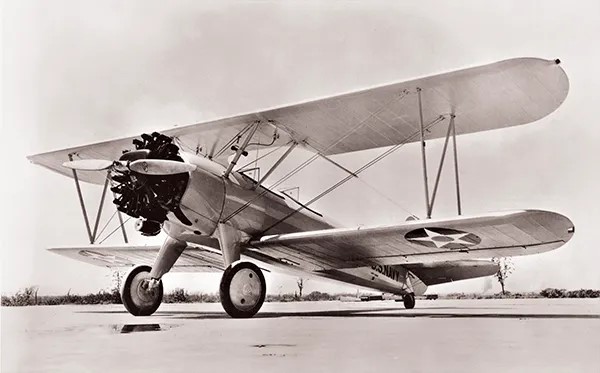
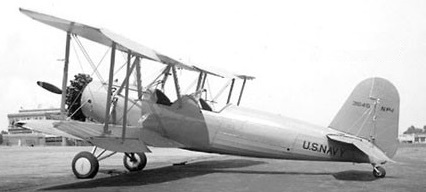
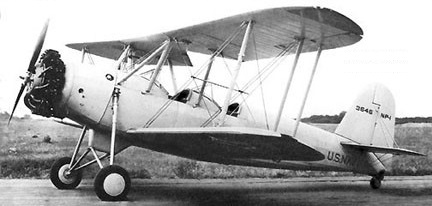
The Model 70 first flew in December 1933 and was put forward as a contender for a USAAC contract for a primary trainer. Testing by the US Army and Navy took place shortly after this, and although pleased with the aircraft as a whole, they found the stall far too gentle for a military trainer. In order to remedy this, small spoilers (or stall strips) were added to the leading edges of the upper wings to make the stall more abrupt. Further testing followed before an initial order of 61 aircraft was placed by the US Navy in 1923. These went into production as the Model 73.
Model 73 Sportster civil production version of Model 70 flew first on November 26, 1934.
These were fitted with a 220hp Wright R-790-8 at the Navy’s request, with the US Navy designation NS-1.
Model 73L3
Seven 1936 Model 73L3 went to the Philippines.
Seven of the 1939 A73B1 export version went to Cuba. They were delivered 1939–1940.
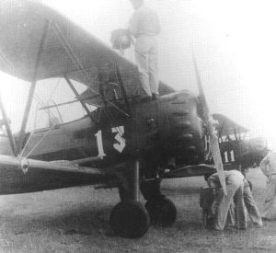
The Model 75 was powered by a 215 hp Lycoming and was designated by the military as the PT-13.
The Model 75 was soon replaced by the 220hp Lycoming R-680-7 powered Model A75, which became the PT-13A, B and C with the army, then in order to avoid a shortage of Lycoming engines the army requested the 220hp Continental R-670-5 be fitted in 1940. The repowered aircraft on to become the PT-17.
Three of the 1938 new production of L73L3 were built.
A73B1 Engine: Wright R-790-8 Whirlwind, 235hp (175 kW) Length: 25 ft 1 in Height: 9 ft 7 in Wing span upper: 32.2 ft Wingspan lower: 31.2 ft Max weight: 2699 lb Ceiling: 12,200 ft Max speed: 118 mph
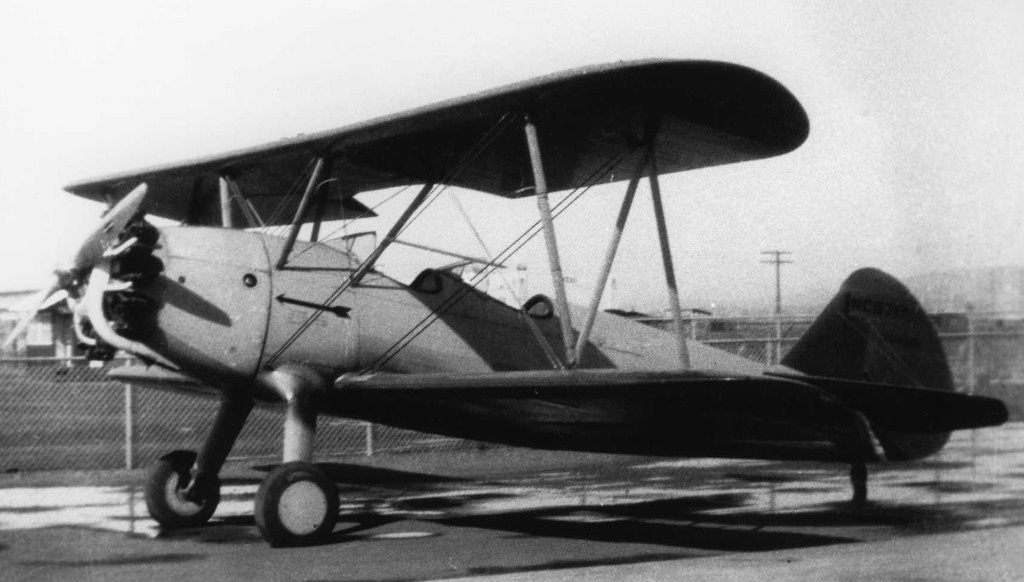
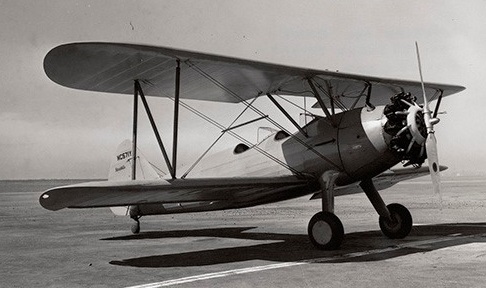
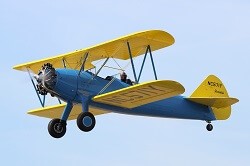
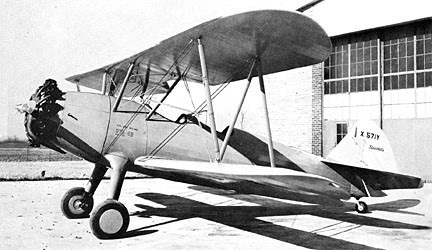
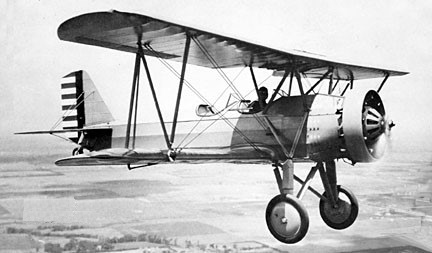
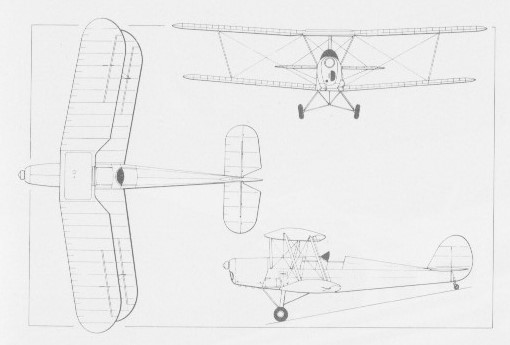
Designed by Mac Short and Jack Clark, one prototype of the 1933 Stearman 70 aka X-70 (Model XPT-943) was built, registered NX571Y with ATC 2-516.
The design was essentially based on the Model 6-A, retaining the same basic proportions and had a similar fabric-covered welded-steel fuselage and fabric covered wooden wings. Differences included a rounder fuselage, with the addition of aluminium-frame stringers, as well as more rounded wingtips and tail.
New features incorporated included pilot-controlled trim tabs on the elevators and single-strut landing gear.
Designed and built in 60 days, the Model 70 first flew in December 1933 and was put forward as a contender for a USAAC contract for a primary trainer.
Testing by the US Army and Navy took place shortly after this, and although pleased with the aircraft as a whole, they found the stall far too gentle for a military trainer. In order to remedy this, small spoilers (or stall strips) were added to the leading edges of the upper wings to make the stall more abrupt. Further testing followed before an initial order of 61 aircraft was placed by the US Navy in 1923. These went into production as the Model 73.
Stearman 70 NX571Y
The Model 70 evolved into Model 73, 75, USN NS-1, and USAAC PT-13.
In 1931 the model 6A (ATC 365) sold for $8500, increasing to $10,250 in 1931. Seven were built in total. Four evaluation models for Army military trials as YPT-9, and three civil; NX786H later modified as 6-D, -F and -L, NC787H later as 6-P, and NC795H later as 6-L.
The 1933 6-C Cloudboy (ATC 2-457) was a modification of N2143 c/n 6010 with a canopied cockpit and repowered with a 330hp Wright J-6.
The 1931 model 6D Cloudboy (ATC 402) sold for $10,500, increasing to $12,750. One was built from 6-A as NC786H, later repowered with a 210hp Kinner (as 6-H) and then 215hp Lycoming (as 6-L), and finally converted into Army YBT-5.
Seven of the 6-F Cloudboy (ATC 371) were built. Four went to the USAAC as YPT-9 and YBT-5, and three converted to 6-H and 6-L (NC786H-788H]). YPT-9 31-462 was repowered with a 300hp P&W R-985-1 as YBT-5 and two other YPT-9s, 31-459 and 31-460, were converted.
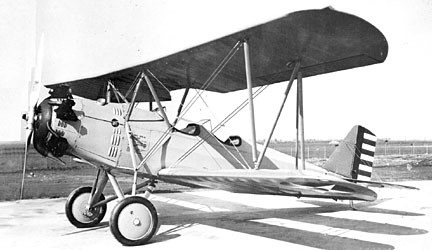
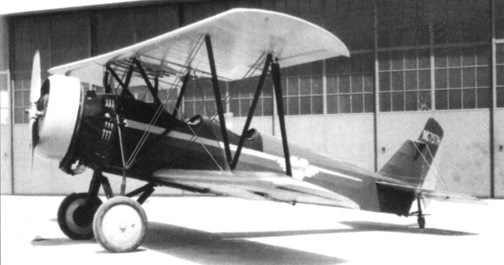
Stearman YBT-5
In 1930 the model 6F sold for $7945, increasing to $9460 in 1931.
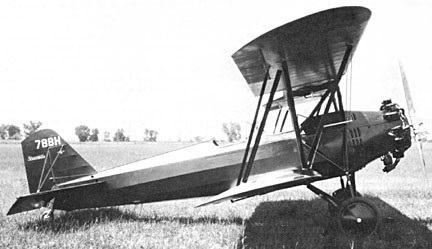
Stearman 6-F N788H
There were two conversions to the 1932 6-H Cloudboy (ATC 458) from older models (NC564Y and NC786H).
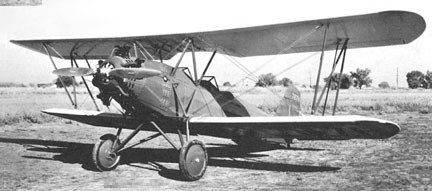
Stearman 6-H NX564Y
In 1932 four conversions from 6-A (NC795H) and -F (NC786H-788H) were made as 6-L Cloudboy (ATC 459), powered by a 215hp Lycoming R-680 engine. They were Army version YPT-9B.
One model 6-F, NC797H, was converted to the 1931 model 6-P (ATC 2-520) powered with a 220hp Wright J-5 engine.
Stearman 6-P NC797H
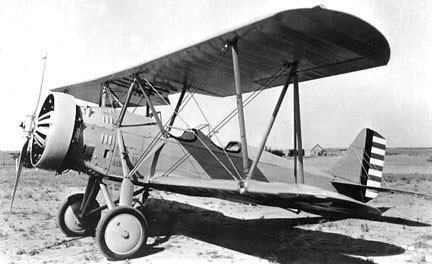
The 1932 PT-9 primary trainer was adapted from civil Model 6 Cloudboy series with a 210hp Kinner engine. Four YPT-9 were built – 31-459 to 31-462 – testing various engines.
31-459 became YPT-9A, then -9B. 31-461 became YBT-3 and YPT-9C. 31-459 and 31-460 ultimately became BT-5.
Stearman YBT-3 31-461
The 1932 YPT-9C 31-461, first designated YBT-3, then YPT-9C, was powered with a 170hp Kinner R-720 and had the same specifications as the model 6-H.
6A Cloudboy Engine: Wright J6-5, 165hp Length: 24 ft 8 in Height: 9 ft 6 in Wing span upper: 32 ft Wingspan lower: 28 ft Chord: 60 in Wing area: 272 sq.ft Airfoil: N-22 Empty wt: 1733 lb Max weight: 2400 lb Useful load: 667 lb Fuel capacity: 37 USG Oil cap: 2.5 USG Ceiling: 12,300 ft Range: 350 sm Max speed: 110 mph Cruise: 90 mph Stall: 45 mph Seats: 2
6-C Cloudboy Engine: 330hp Wright J-6 Seats: 2
6D Engine: Pratt & Whitney Wasp Jnr, 300hp Length: 24 ft 8 in Height: 9 ft 7 in Wing span upper: 32 ft Wingspan lower: 28 ft Wing area: 248 sq.ft. Airfoil: N-22 Empty wt: 1952 lb Max weight: 2814 lb Useful load: 862 lb Payload: 257 lb Fuel capacity: 65 USG Oil cap: 6 USG Max speed: 137 mph Cruise: 117 mph Stall: 55 mph Ceiling: 18,100 ft Range: 450 sm Seats: 2
6F Engine: Continental A-70, 165hp Length: 24 ft 8 in Height: 9 ft 6 in Wing span upper: 32 ft Wingspan lower: 28 ft Chord: 60 in Wing area: 272 sq.ft Airfoil: N-22 Empty wt: 1727 lb Max weight: 2400 lb Useful load: 673 lb Fuel capacity: 37 USG Oil cap: 2.5 USG Ceiling: 12,300 ft Range: 350 sm Max speed: 110 mph Seats: 2
6H Engine: Kinner C5, 210hp Length: 23 ft 11 in Height: 9 ft 7 in Wing span upper: 32 ft Wingspan lower: 28 ft Chord: 60 in Wing area: 272.2 sq.ft Airfoil: N-22 Empty wt: 1810 lb Max weight: 2476 lb Useful load: 666 lb Payload: 230 lb Fuel capacity: 66 USG Oil cap: 5 USG Ceiling: 15,200 ft Range: 300-500 sm Max speed: 119 mph Cruise: 100 mph Stall: 47 mph Seats: 2
6L Engine: Lycoming R-680, 215hp Length: 23 ft 8 in Height: 9 ft 7 in Wing span upper: 32 ft Wingspan lower: 28 ft Chord: 60 in Wing area: 272 sq.ft Airfoil: N-22 Empty wt: 1880 lb Max weight: 2551 lb Useful load: 671 lb Payload: 235 lb Fuel capacity: 38 USG / 63 USG opt. Oil cap: 5 USG Ceiling: 15,000 ft Range: 300-500 sm Max speed: 120 mph Cruise: 100 mph Stall: 47 mph Seats: 2
6P Engine: Wright J5, 220hp Length: 23 ft 8 in Height: 9 ft 7 in Wing span upper: 32 ft Wingspan lower: 28 ft Chord: 60 in Wing area: 272 sq.ft Airfoil: N-22 Max weight: 2500 lb Fuel capacity: 37 USG
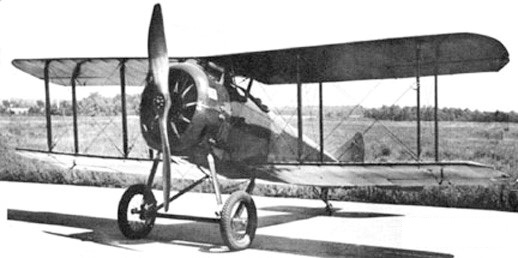
Standard Aircraft Corp made to own designs SJ trainers; E-1 single-seat fighters, used for advanced training; H-3 landplane reconnaissance biplanes and H-4-H floatplanes.
One hundred and twenty-eight Standard E-1 Pursuit Trainer were built, up to 30 with Gnôme Rhône engines (AS33769 to 33770, AS44542 to 44574, and AS47515), the 80hp LeRhône powering most (AS49133 to 49207).
Three LeRhône powered were retitled M-Defense (44575 to 44577).
AS49156 to 49212 are also seen in some records as M-Defense, but those conflict with E-1 s/ns. Underpowered, none saw combat service. Three were converted in 1919 with lengthened fuselages as MAT experimental radio-controlled aerial torpedoes and reregistered (64228 to 64230).
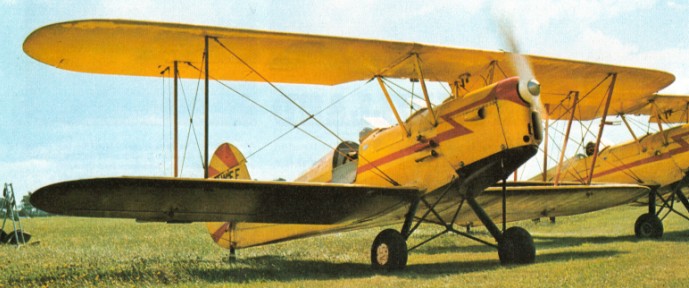
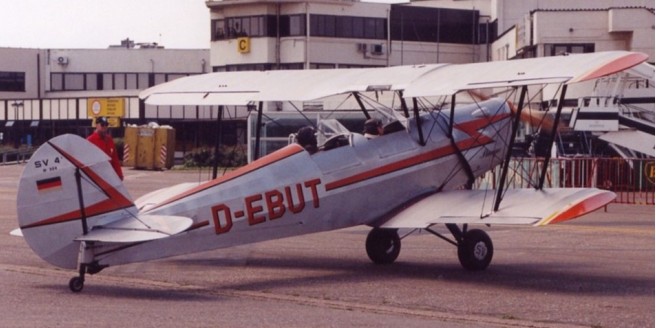
Georges Ivanow was asked in 1932 to study a new aircraft, which resulted in the SV4, an open-cockpit 2-seat training biplane of wood and fabric construction. The prototype flew first on May 13, 1933 and the aircraft entered production. May 10, 1940 the factory was bombed by the Luftwaffe and destroyed.
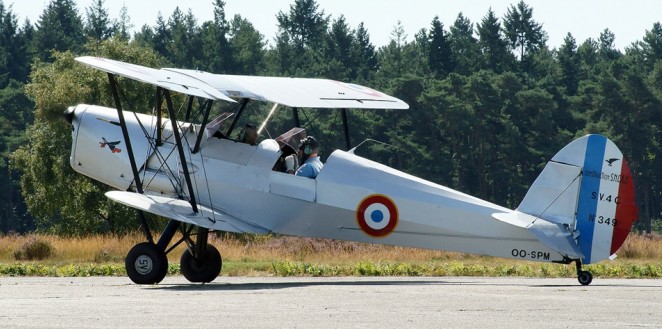
The SV-4 was redesigned and produced in France from 1945 till 1950, under licence by SNCAN – Société Nationale de Constructions Aéronatiques du Nord.
The SV 4C is a French license built version of the Belgian primary trainer also manufactured in Algeria. More than 900 were built, with a 140¬hp Renault engine.
Rollason started importing former military Stampe SV-4Cs (Renault-powered), restoring and converting them to SV-4B status by replacing the Renault with the Gipsy Major of the Tiger.
Stampe et Vertongen SV.4 Engine: de Havilland Gipsy III, 120 hp
SV.4B Engine: de Havilland Gipsy Major I, 130 hp
SNCA du Nord SV.4C Engine: Renault 4 Pei, 140 hp Wingspan: 27 ft 6 in / 8.38 m Length: 22 ft 10 in / 6.96 m Empty weight: 1106 lb / 502 kg MTOW: 1720 lb / 780 kg Max cruise SL: 95 kt / 109 mph / 175 kph ROC SL: 1080 fpm / 330 m/min Service ceiling: 16,400 ft / 5000 m Seats: 2 Baggage capacity: 110 lb / 50 kg No built: 700
Stampe et Renard SV-4D Engine: Rolls-Royce Continental IO-346-A, 165 hp No built: 1 First flight: 1967
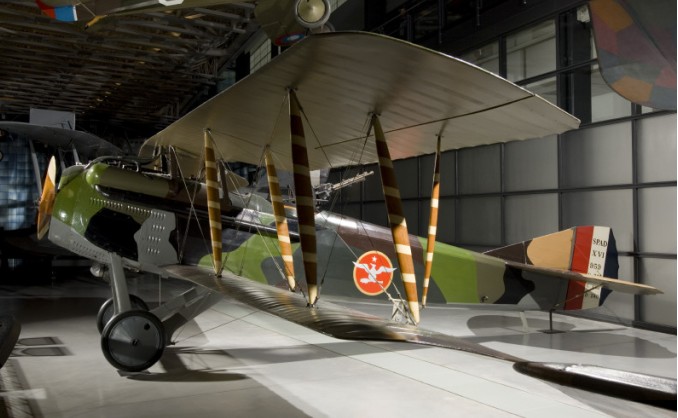
The Spad XVI was a two-seat version of the very successful single-seat Spad fighters of World War I, the Spad VII and the Spad XIII. The first Spad two-seater design to see front-line service was the Spad XI. The Spad XVI was an attempt to improve upon it by replacing the Spad XI’s 220-horsepower Hispano-Suiza engine with a 240-horsepower Lorraine-Dietrich 8Bb. The Spad XVI appeared in January 1918. It was slightly faster than the Spad XI, but had a lower ceiling and the same poor handling qualities. It offered no overall improvement. Nevertheless, approximately 1,000 Spad XVIs were built, ultimately equipping 32 French escadrilles.
Wingspan: 11.2 m (36 ft 9 in) Length: 7.8 m (25 ft 7 in) Height: 2.8 m (9 ft 2 in) Weight: Empty, 906 kg (1,994 lb) Gross, 1,140 kg (2,508 lb) Materials: Airframe: Wood Covering: Fabric Physical Description: Single-engine, two-seat, French-built World War I reconnaissance and bomber aircraft; 240-horsepower Lorraine-Dietrich 8Bb engine.
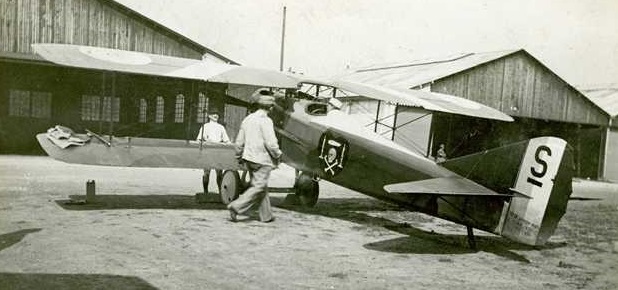
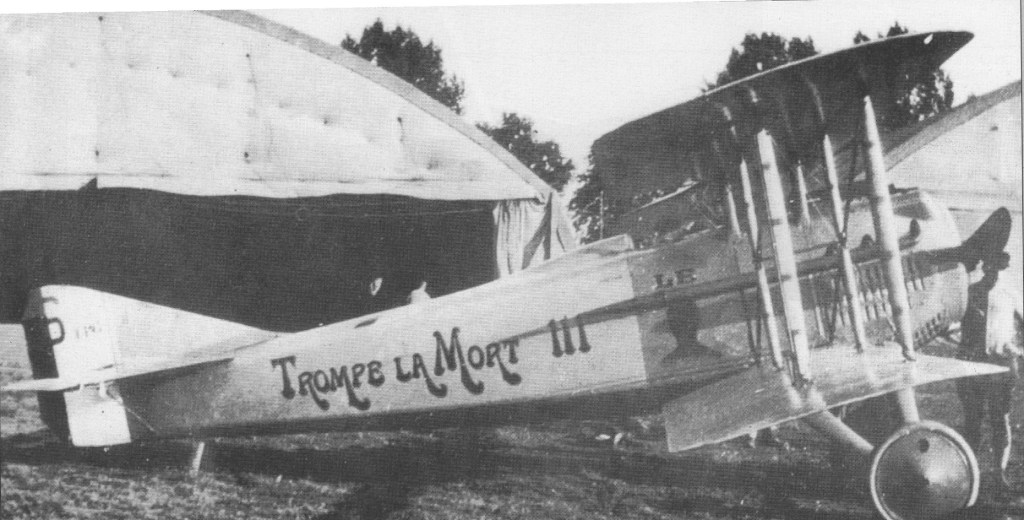
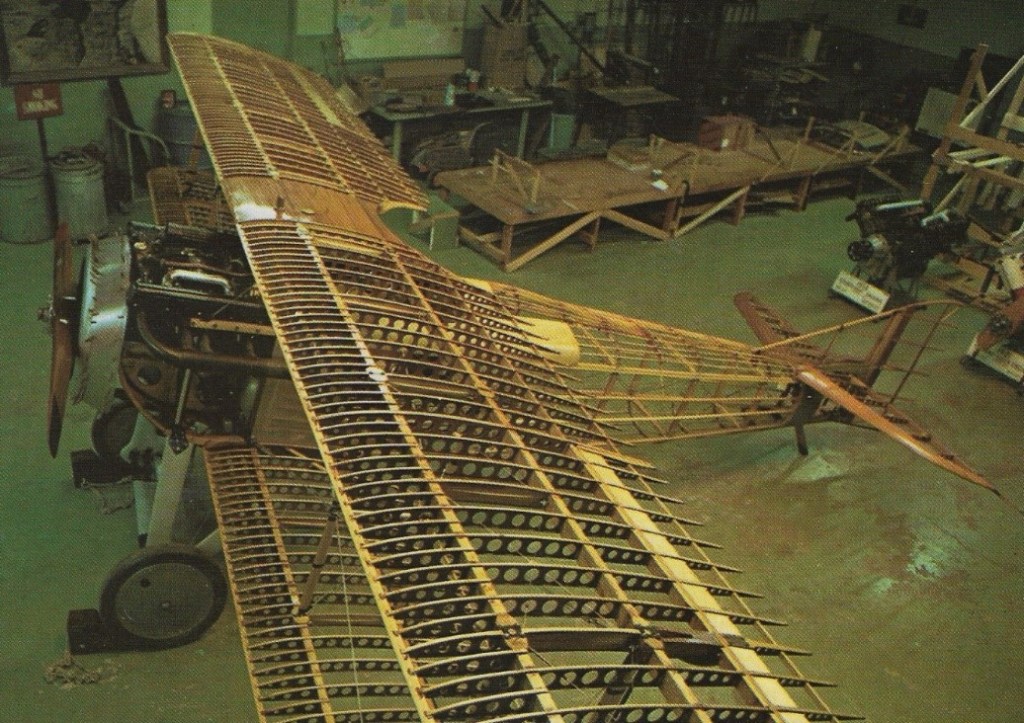
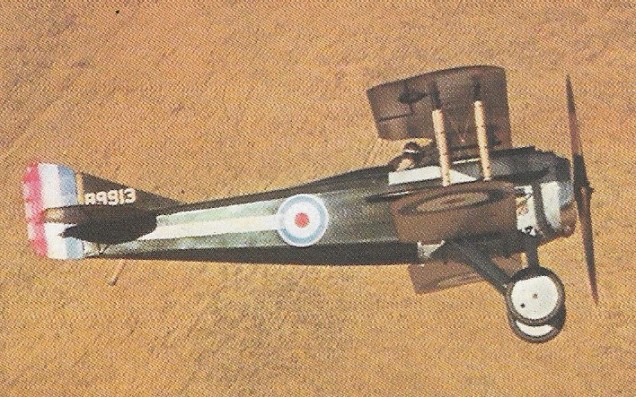
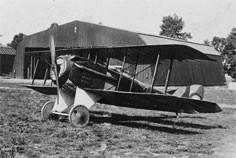
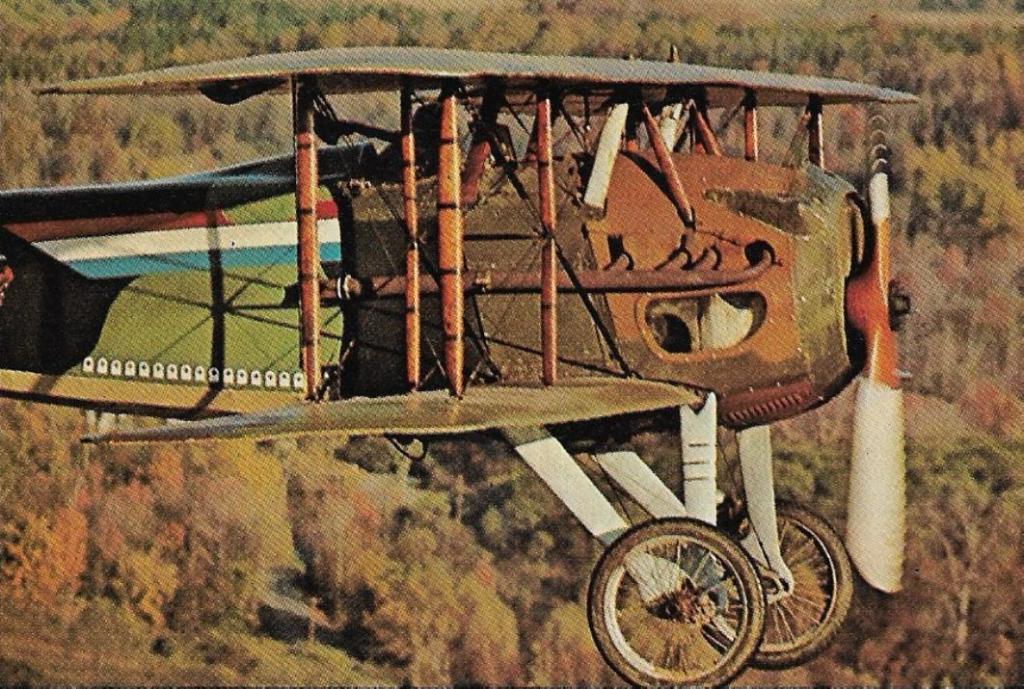
The SPAD XIII designed by M.Béchereau replaced the S.VII from mid-1917 with more power and double the armament. A two bay biplane, the two spar wooden wings and wooden fuselage are fabric covered. Conventional controls are fitted with ailerons are on the top wing only. Wings and control surfaces all have wire trailing edges giving the scalloped look.
The SPAD XIII had an exhaust-driven supercharger mounted vertically behind the cockpit. But this early development was hampered by lack of suitable alloys for the supercharger rotors.
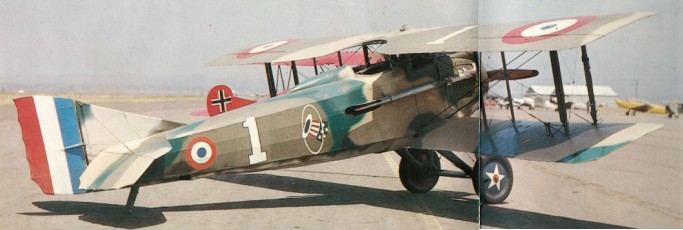
It was the Spad S.XIIIC.1 which was used almost exclusively by US and French squadrons in France in 1918. It was built initially with a 200 hp Hispano engine, but later models had a 235 hp Hispano, which made them very fast indeed. Standard armament was twin Vickers guns, but some, re designated S.17, carried cameras for high speed photo-reconnaissance duties.
Spad XIII C 1 of Czech Agustin Kharvaht (centre) SPA 315 Sqn, Les Mores AF, September 1918
There were flown about sixty Spad VII and XIII in Czechoslovakia after the Great War.
Czechoslovakia
The Spad XIII was produced and deployed in great numbers. By the end of 1918, the parent company and eight other French manufactures had built 8,472. Almost every French fighter squadron was equipped with them by the end of the war, as well as the American units that were part of the American Expeditionary Force. Spads were also used by the British, the Italians, the Belgians, and the Russians.
Ultralight replica: Squadron Aviation SPAD XIII Loehle Aviation Spad XIII Early Bird Aircraft Spad XIII
Light Sport Replica: R.A.D. Inc Spad XIII
Engine: Hispano Suiza Model E, 180hp.
Engine: Hispano Suiza 8BA 8 cylinder, 220 hp Length: 20 ft 4 in Wingspan: 26 ft 4 in Speed: 133 mph Ceiling: 22,300 ft Range: 200 miles
Engine: 220-horsepower Hispano-Suiza 8Be Wingspan: 8.2 m (26 ft 11 in) Length: 6.3 m (20 ft 8 in) Height: 2.4 m (7 ft 11 in) Weight: Empty, 566 kg (1,245 lb) Gross, 820 kg (1,808 lb) Max speed: 130 mph at 6000 ft Service ceiling: 22,300 ft Endurance: 2 hr Seat: 1 Armament: 2 x Vickers mg
S.XIIIc.1 Span 20 ft. 4 in Length 20 ft. 8 in Height 7 ft. 6 in Wing area 215 sq. ft Max. speed 138.5 mph Service ceiling 22,350 ft
S.XIIIc.1 Engine: Hispano Suiza, 220 hp Span: 8.08 m Length: 6.22 m Empty weight: 570 kg Top speed 215 km.p.h Climb to 2000 m: 4 min 24 sec Service ceiling: 6650 m Range: 295 -400 km Armament: two synchronized machine guns over the engine
During the fall of 1916 French ace Georges Guynemer had to face too much jamming of his machine guns during combat and noted that the Hispano-Suiza 8 Aa 150hp was lacking of power to face the new German adversaries. He began (probably circa October 1916) to envisage the creation of a development of the SPAD VII, more powerful and having a better armament thanks to a cannon. He contacted Louis Bécheraut, the technical director of SPAD (Société anonyme Pour l’Aviation et ses Dérivés) with who he was a friend, asking him to realize the drawings of such an aircraft. The first time it is spoken about the aircraft is in a report of 10 December 1916 and designation was SPAD XII Canon 1 or Ca 1 (Ca from Canon). The French mounted 37mm and 47mm on Voisin Type 4 and type 8 bomber aircraft.
The placing of armament in the prop shaft removes the need for synchronization and therefore this design has a faster rate of fire. The very first one to use this in combat was the French fighter SPAD XII from WW1.
A 37mm S.A.M.C. cannon was positioned in the V formed by the cylinders and firing through the propeller shaft. It was 40 to 45 kilograms weight and it included 10 to 12 cannon shells. A synchronized 7,65mm Vickers machinegun with 400 rounds was fixed on the right of the engine cover.
Tests revealed the great performance of the aircraft, excellent for the period with a maximum speed near to 220km/h but they revealed also problems. The gun system was a problem because only one fired at a time. The pilot was obliged to recharge manually, in a very breezy cockpit with big smoke after each fire. Another problem was that the SPAD XII’s used a gear drive for the prop. Similar to troubles with the SE 5, the gears weren’t of the best quality manufacture and drive train vibration resulted.
The production in series of the SPAD-Canon was initiated after a first order of 300 aircraft. The beginning of the SPAD-Canon was marked with numerous problems due to the Hispano-Suiza 200hp engines. Those problems were finally corrected by mid-1918. The fighter was later equipped with a more powerful version of that engine, the 8Cb model delivering 220 hp thanks to a better compression.
At the end of November 1917 it was decided to modify the wings to obtain better control. That problem was resolved by the adoption of square wing extremities. Those wings were not available during some months so a temporary solution was applied in January-February 1918. New wings were adopted during the spring of 1918. Finally there were no other ordering because the production effort was concentrated on the SPAD VII and XIII, more classics and more easy to master.
The first combat mission was of course made by the “S” prototype piloted by Georges Guynemer that attacked with lieutenant Battesti (SPA 73) a group of DFW two seaters on 5 July 1917. Unfortunately Guynemer was unable to fire due to his misplaced visor; the German aircraft opened fire and the two French were obliged to run away. Hit by 5 bullets (two of them in the radiator and the engine), the SPAD-Canon had to be sent back to the factory to be repaired. Guynemer recovered the aircraft on the 23 of July. “Pétadou” (nickname given to the aircraft by Guynemer) gave the opportunity for the ace to obtain his 49th and 50th kills on 27 and 28 of July: DFW single seater and two seater. Those two successes confirmed the power of the 37mm gun: one hit was resulting in the automatic destruction of the enemy. But the last victim struggled valiantly and the “S 832”, seriously hit, was again sent to Paris for repair. It came back to the front on 15 of August but for a short time. Guynemer obtained his 51th and 52nd kills (Albatros and DFW two seaters) on the 17 August but the aircraft was damaged on the next day during another probable kill on a DFW. That was the end of the aircraft because it was not repaired yet when Guynemer was missing in action on the 11 of September 1917, flying the SPAD XIII “S 504”. It seems that after that one or two SPAD XII were delivered to some squadrons equipped with SPAD VII and XIII.
It seems that a total of 30 samples served in operation until the end of the war (one source state 44 samples delivered up to July 1917). Five SPAD XII were on the front on 1st of April 1918; eight on 1st of November. The aircrafts were reserved in each squadron for the best pilots. The Allied ace of aces René Fonck flew during the first part of 1918 on the “S 445” and “S452”. He obtained with those aircraft 7 confirmed kills and 4 probable. On the 19th May, his 43rd and 44th victories could have been dramatic with blocked flying controls and it’s only after a dive of 3000 meters that Fonck managed to control the aircraft again. René Fonck became history’s most successful SPAD XII pilot, scoring 11 kills in the type while flying it as a transitional airplane between the VII and the XIII. At least one of those kills was scored purely through the use of the Vickers machine gun with no cannon shots at all. Georges Madon (41 kills) flew the “S 434” with the fuselage completely red painted; Gabriel Guérin (23 kills) was probably the owner of the “S 444”; Albert Deullin (20 kills) received one of the first SPAD XII, in August 1917. Other squadron leaders like Henry Hay de Slade (SPA 159, 19 kills) were also given a personal aircraft. Wingman of Guynemer during the first fight of the SPAD-Canon, François Battesti received his machine in October 1918 only. He loved the aircraft and it’s probably flying with him when he obtained his 7th and last kill on 29 of October. A second SPAD XII was delivered to the SPA 3 in 1918; it was piloted by one of the aces of the squadron, probably Georges Raymond (6 kills) or Jean Bozon-Verduraz (11 kills). One SPAD d XII was lastly delivered at the SPA 112 from which the two best pilots were Fernand Chavannes and Lionel de Marmier (both having 7 kills).
It seems that only two SPAD XII were exported. The first one (“S 449”) was provided to the Royal Flying Corps in January 1918. It got the British serial number “B6877” and was tested at Martlesham Heath. Like the French one, British test pilots found it was not well balanced due to a heavy nose. It’s career amongst the RFC was very short because it crashed on 4 of April en route to the Grain island for new tests.
The second SPAD XII sent to another country was taken in charge by the US Army Air Service (USAS). Ordered in July 1918 it was handed to the leader of the 139th Aero Squadron, the 1/Lt David Putnam. He was killed on the 12 of September without having received his aircraft yet. The aircraft was then given to Capt Charles Biddle (6 kills at that time), leader of the 13th Aero Squadron.
Swiss-born Mare Birkigt, chief designer of Hispano-Suiza, who had foreseen that the rotary engine was dose to its limit in development, embarked on the design of a new water-cooled V-8 engine. Designated Hispano-Suiza 8A, it produced 140hp; but even more important was Birkigt’s own design for a synchronising gear. Bechereau, therefore, found awaiting him a unique opportunity, of designing a completely new scout around the new engine and gun synchronising mechanism. This evolved into the SPAD V, which though conventional in layout, retained many of the A2 and A4 features, such as the triangular fin, much of the rear fuselage, and particularly the unusual interplane bracing and method of actuating the ailerons, which were fitted to the upper wing only.
The first flight of the SPAD V was performed in the first half of April, 1916, by the company’s chief test pilot Bequet, when a top speed of 215km/h was claimed to have been readied. By April 19, the Royal Flying Corps (RFC) had recorded a more sober 170km/h, although both figures are devoid of details regarding the conditions or altitude in which they were attained. Still, the aircraft promised an excellent performance, a substantial advantage over that of Nieuport scouts then in service, and a production order for 268 examples was awarded to SPAD on May 10, 1916. For some unknown reason, the production version was designated SPAD VII.Cl, probably so that the original’V’ designation would not be confused with the company’s own A5, a further refinement of the A4 powered by a Renault 8 Fg engine.
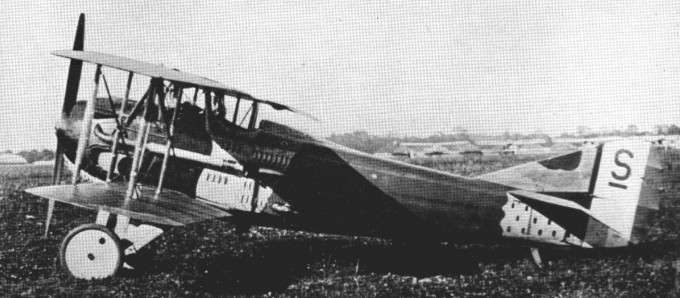
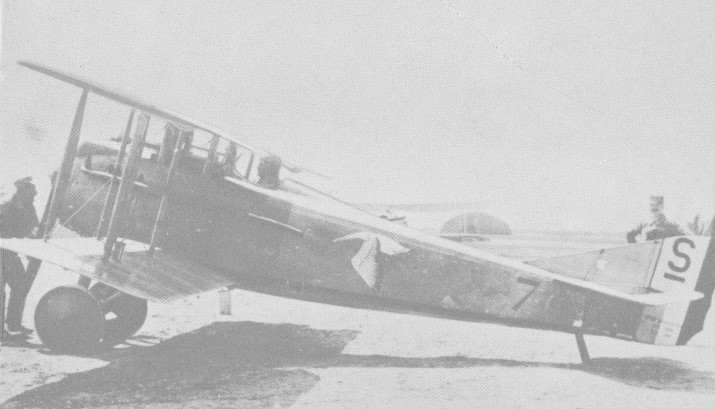
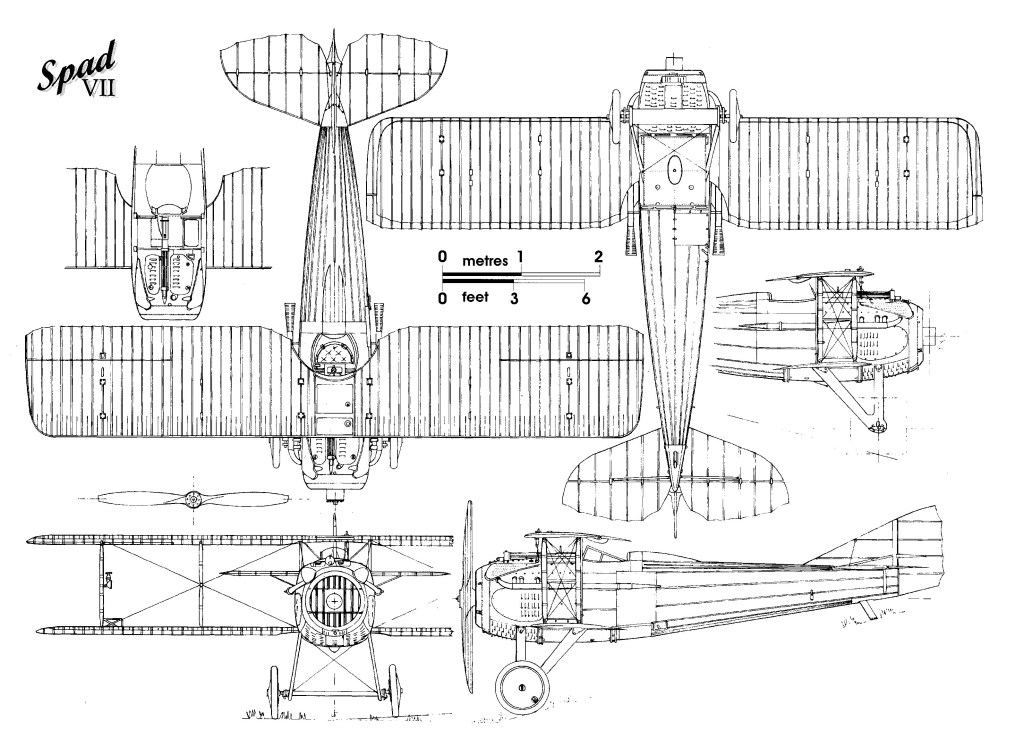
SPAD VII
The SPAD VII, powered by a 150hp V-8 engine, was armed with a forward-firing Vickers 0.303 (7.7m) machine gun, offset to starboard firing through the airscrew arc. 500 rounds of ammunition were carried in canvas belts, wound onto drums. Exhaust from the engine was ducted through long pipes on either side of the fuselage, the port side exhaust also doubling as a step to enable the pilot gain access to the cockpit. Fuel was stored in a tank located in the upper wing centre section, and a much larger one mounted under the cockpit floor, Of interest is the fact that this was probably the first fuel tank with an emergency jettison system to see operational use.
SPAD immediately embarked on the production of its new fighter, met a number of supply problems, and by the end of September only half the estimated production rate had been met. First delivery dates are uncertain, although the first SPAD VII victory is recorded on August 23, 1916, by Lt Armand Pinsard of Escadrille N.26. By early the following month, well-known aces such as Sgt Paul Sauvage and Lt Georges Guynemer of Esc N.3 had started flying the SPAD, the latter gaining his first victory on the type on his second flight. Guynemer, who had started his SPAD career with a tally of 14 victories, raised his total to thirty by the end of January 1917, bestowing upon his aircraft the nickname of mitrailleuse volante (flying machine gun). His unit was the first to be completely equipped with the new & scout, and later redesignated SPA.3.
One major problem which continued to afflict the new scout was its cooling system, with SPAD undertaking a long period of experimentation in an effort to find a solution. As production gained momentum, various other small modifications to the airframe were introduced, including a simplified fuselage bracing system and reinforcement of the engine bearers, the latter in an effort to solve vibration problems experienced with the HispanoSuiza. SPAD seems to have born the brunt of the VII’s production, together with Construction Aeronautique E. de Marcay where 1800 examples were built, while subcontracted orders were passed onto Bleriot Aeronautique, Les Ateliers d’Aviation L. Janoir, Kellner et ses Fils, EAtelier de Construction d’Appareils d’Aviation R. Sommer, Les Ateliers de Construction Regy Freres, Gremont and Societe d’Etudes Aronautiques.
By the autumn of 1916, the 150hp SPAD began to find it difficult to match some of the opposition. Guynemer informed Bechereau in December 1916 that “the Halberstadt [while] not faster, climbs better, consequently it has the overall advantage”. In the quest for more power, Marc Birkigt increased the compression ratio of the 8A engine from 4.7 to 5.3, which in turn raised its revolutions from 1500 to 1800 per minute. This resulted in a power output of 180hp, enabling a significant improvement in the SPAD VII’s performance to be achieved. Apart from the extra power, the new Hispano-Suiza 8Ab proved extremely reliable: Guyricnier obtained 19 victories during which time the engine on his aircraft was never changed. SPA.3 became the elite French fighter unit, with the SPAD becoming the favourite mount of such aces M Cpt Armand Pinsard (27 victories), S.Lt Rene Dorme (23), Cpt Alfred Hertaux (21) and Cpt Albert Deullin (20), among others.
At least one example had been handed over to the RFC by early September 1916. Delivered as S.126, this example received the British serial A253 at No.2 Aircraft Depot at Candas, and on September 20 was passed on to No. 60 Squadron for operational evaluation. Barely a week later, Cpt E. L. Foot shot down an enemy aircraft while flying the SPAD, Meanwhile two more examples had been delivered, these becoming A262 and A263.
There remained no doubt as to the superb qualities of this scout, for on September 20 Major General H.M. Trenchard, General Officer Commanding RFC, requested in writing 30 examples from Colonel Bares; with SPAD facing difficulties, Bares suggested that a sub-contractor be engaged to supply the British machines. Originally Janoir had been mentioned as a possible source, but eventually these were built by Bleriot, possibly on the suggestion of Captain Lord Innes-Ker of the British Aviation Commission. This deal had been approved by the French Ministry of War on October 5, 1916, on condition that the Hispano-Suiza engines were to be taken from stocks already allocated to the RFC.
Considering the supply situation, the French authorities responded most generously for continued supply of SPAD scouts. While the initial BIeriot-built SPADs were being delivered early in 1917, Trenchard requested further supplies; he received 10 of the 12 he had asked for.
Orders with Bleriot were increased, while a major order for 120 examples was placed with Kellner, the first of`which did not materialise before May 21. The first British unit to receive the SPAD was No.19 Squadron RFC in October 1916, but so slow was the delivery of these aircraft that full complement was only reached in February 1917. This was followed by No. 23 Squadron, which re-equipped between February and April, The installation of an additional Lewis gun on the upper wing was tested by this squadron, but was abandoned as performance apparently suffered badly.
By early June 1917, the RFC was receiving French-built SPADs fitted with the 8Ab 180hp engine; apparently these were labelled SPAD II to distinguish them from the earlier version in British service. However, this seems to have remained an unofficial designation. Such distinction would have been impossible, anyway, as both 150 and 180hp engines were interchangeable, and maintenance units fitted whichever was available. Some other refinements had appeared on machines used by the RFC, such as the use of Prideaux disintegrating-link ammunition belts housed in special boxes, instead of the clumsy drum-wound French versions. The British Aldis optical gun sight was specified in place of the Le Chretien sights; however a number of French-built examples in British service could be seen still fitted with the original French sight.
The Admiralty, too, showed early interest in the SPAD for the Royal Naval Air Service (RNAS), providing for their manufacture in England. By mid-December 1916, 100 examples had been ordered, equally divided between Mann, Egerton & Co Ltd of Norwich and the British Nicuport Co of Cricklewood. While the Nieuport order was changed in favour of S.E.5s, Mann’s order was first raised to 75, and then to 95, the first of which was delivered to Martlesharn Heath in April 1917. However, it had been decided in February that all RNAS SPADs were to be transferred to the Army, while the latter would surrender all its SopwithTriplanes to the Navy. During this period serial batch allocations and numbers ordered were continuously changed, until they were settled to read as follows: N6210-6284 (75), B1364-1388 (25), B9911-9930 (20), totalling 120 examples. Aircraft from these batches proved to be structurally defective and it would appear that none were ever dispatched to France. After a series of fatal accidents, the Technical Department embarked on an investigation in April 1917, and it wasn’t until August that Mann Egerton’s SPAD were cleared as operationally acceptable.
Another batch of 100 SPAD VIIs to be built in England were ordered from Bleriot (Aeronautics) Ltd of Brooklands, allocated serial numbers A8794-8893 in December 1916. In February of the following year, the company changed its name to Bleriot & Spad on its move to Addlestone. Notwithstanding the considerable amount of SPADs available, the RFC limited its use in France to Nos 19 and 23 Squadrons, while others were shipped for service in Mesopotamia (Nos 30, 63 Sqn) and Palestine (No 72 Sqn).
SPAD VII
Among the first SPADs to be exported were 15 examples (Sp.1-Sp.15) for the Aviation Militaire Belge in spring 1917. These went to the 5e Escadrille (later renumbered 10e Esc), with the first being allocated to Edmond Thieffry, who shot down the first Belgian SPAD victory three days later, on May 12, 1917; it was his third kill.
Italy began to receive SPAD VIIs for its Aeronautica dei Regio Escreito at about the same time, with the 91a Squadriglia acquiring a pair of examples on March 15, 1917. Delivery of these aircraft was rather slow, for a second batch of three only reached the same unit on May 1, at the time when Maggiore Francesco Baracca took over command. Most Italian fighter units to receive this type, which also included the 71a, 72a, 75a, 76a, 77a, 78a Squadrighe, were never fully equipped, thus retaining a mixed complement of SPADs and Nieuport scouts. Baracca was certainly the most brilliant Italian exponent of the SPAD VII, shooting down his first victim (an Austrian Albatros D.III) whilst flying the type on May 13, 1917. His tally stood at 34 when he was shot down and killed in action on June 19,1918, of which 23 had been achieved on SPAD fighters (VII and the later XIII).
Another country to produce the SPAD VII was Russia, where 100 examples were on the production line at Aktsionyernoye Obshchestovo Duks, in Moscow, before the October Revolution of 1917. Russia had already received 43 SPADs from France in spring of 1917, which saw action within the No.1 Fighter Group.
Although the first official purchase of 189 SPAD VIIs by the United States Expeditionary Force materialised in December 1917, American pilots had flown operationally over the Western Front within SPA.124 Escadrille Lafayette some nine months earlier. This unit was transferred to the United States Air Service (USAS) in February 1918 becoming the 103rd Aero Squadron. Although it had been earmarked for re-equipment with the later SPAD XIII, teething troubles with the new fighter meant that the older VIIs soldiered on for quite some time. Apart from acquisition from French sources, the USAS also saw the delivery of a number of British-built SPAD VIIs, 19 of which survived the war and were transferred to the States.
After the Armistice, which brought the First World War to an end, the type remained on strength with the French air force for over a decade. SPAD VIIs considered surplus at the end of hostilities, were passed on to a number of foreign air lorces, including Brazil, Czechoslovakia, Greece, Peru, Poland, Portugal, Rumania, Siam and Yugoslavia; a sole Russian-built example was also used by the Finnish air force.
Czechoslovakia
The Czechoslovak Republic received Spad Mk VII in 1918. There were flown about sixty VII and XIII in Czechoslovakia after the Great War.
Czechoslovak Spad Mk VII
Carl Swanson built a reproduction SPAD VII, passing away shortly before it was completed in 2000. It is powered by a 150 HP Lycoming 0-320-E2D engine.
Engine: Hispano-Suiza, 180 hp Wing span: 7.77 m Length: 6.12 m Empty weight: 535 kg Max. speed: 191 kph Service ceiling: 5334 m Endurance: 2 hrs 15 min Armament: one forward firing synchronized machine gun
Engine: One Hispano-Suiza 8A, 150hp Propeller: Ebora, Integrale or AB.723 (2 450mm dia) or Mann, Egerton P.211 (2 464mm dia) Span (upper): 7.822m Span (lower): 7.573m Length: 6.080m Height: 2.200m Wing area: 17.85sq.m Empty weight: 499kg Loaded weight: 705kg Maximum speed: 179km/h at 3000m Climb to 3000m: 11min 50sec Ceiling: 5500m Endurance: 2 hrs Armament: One 7.7mm (0.303n) Vickers machine gun / 500 rounds; some carried two 10kg Anilitie bombs on rear undercarriage legs, Le Prieur rockets could be carried on interplane struts
Engine: One Hispano-Suiza 8Ab, 180hp Propeller: Ebora, Integrale or AB.723 (2 450mm dia) or Mann, Egerton P.211 (2 464mm dia) Span (upper): 7.822m Span (lower): 7.573m Length: 6.080m Height: 2.200m Wing area: 17.85sq.m Empty weight: 499kg Loaded weight: 705kg Maximum speed: 204km/h at 3000m Climb to 3000m: 8min 10sec Ceiling: 6550m Endurance: 1.5 hrs Armament: One 7.7mm (0.303n) Vickers machine gun / 500 rounds; some carried two 10kg Anilitie bombs on rear undercarriage legs, Le Prieur rockets could be carried on interplane struts


 All Aero