Derived from the swept-wing Su-7 Fitter A (NATO code name), essentially by fitting variable-sweep outboard wing panels, the Su-17 was first revealed in 1967, and labelled ‘Fitter-B’ by NATO but dismissed as a research version.
Under the leadership of Nikolai Zyrin, the Sukhoi OKB adapted an Su-7BMK as a low risk, low cost variable wing geometry demonstrator. Mid-span pivot points were introduced so that the outer wing panels could be sweptback from 28 degrees to 45 degrees and 62 degrees positions. As the Su-7IG (Izmenyaemaya Geometriya, or variable geometry), or S-22I, the demonstrator flew on 8 August 1966, proving the efficacy of the variable-geometry arrangement and providing the basis for a production aircraft, the Su-17. This entered the VVS-FA inventory in 1970.
The Su-17 was powered by the Lyulka AL-21F-3 turbojet with a military power of 7800kg and 11200kg with afterburning. Maximum external stores load was 4000kg distributed between nine external stations, and built-in armament comprised two 30mm cannon.
Not until the mid-1970s did it dawn on the West that the modification, together with a more powerful but fuel efficient engine and new avionics, had resulted in a vastly improved aircraft with doubled weapon load, 30 per cent greater range and substantially better short-held take-off characteristics. So successful has been the aircraft that numerous versions are in service with Frontal Aviation, the Soviet naval air arm, Warsaw Pact and left-leaning countries abroad.
An upgraded version, the Su-17M (S-32M), entered production in 1974, this having a drooped and lengthened – by 38cm –fuselage nose with ventral Doppler navaid pod. This, like the preceding Su-17, was exported as the Su-20 (S-32MK), recipients including Algeria, Egypt, Iraq, North Korea, Vietnam and Poland.
By 1972 the initial Fitter B version was in limited service. Sukhoi Su-17 variants based in eastern Europe and the USSR have been progressively improved from the basic Fitter-C.
Whereas the Fitter B had been a straightforward adaptation of the Fitter A airframe, the Fitter C took the process of incremental design development a stage further. The wing remained basically similar to that of the v g prototype but was now mated with a derivative engine of the original AL 7F series turbojets. This, the similarly dimensioned AL 21F, offered a respectable increase in power and a modest improvement in SFC. A nominal increase in internal fuel capacity was acquired by adopting the deeper fuel housing dorsal spine that had been introduced by the two seat Su 7U as a means of compensating for some of the ill afforded loss in tankage that had inevitably accompanied the introduction of a second seat in a dimensionally barely lengthened (by 12 in/30cm) fuselage.
Su-17
The result was a tactical fighter capable of lifting from much shorter airstrips almost double the ordnance load and carrying it some 25 30 per cent further. A multi role warplane toting respectable payloads over reasonable radii. This was more than could be claimed for the preceding fixed geometry Fitter¬ A, the good low level gust resistance and manoeuvrability, and highly regarded handling qualities of which the Fitter C reputedly retained. Within little more than two years of its FA debut, Fitter C was being exported to WarPac countries and Middle Eastern recipients of Soviet military aid.
The export version of Fitter C was referred to by its recipients as the Su 20, and there is some evidence to suggest that this designation is also used by the V VS. Su 20s were in service with the air forces of Algeria, Czechoslovakia, Egypt, Iraq, Libya, Syria and Poland.
Su-20
Fitter C was the first series production model, with the Lyulka AJ-21F engine. The Fitter C was supplied to Warsaw Pact and other allies as the Su-20. Replacing the Fitter C was the ‘Fitter D’, appearing in 1976, with its undernose terrain avoidance radar and a marked-target seeker in the inlet centre-body. The laser ranger was accommo¬dated within the lower half of the intake centrebody and the fuselage nose was lengthened 1.25 ft (38 cm) to permit a flat, elongated lozenge shaped avionics housing to be mounted beneath the nose, ahead of the nosewheel bay, the aft end of this housing apparently accommodating doppler. No attempt would seem to have been made on Fitter D to compensate for the inevitable destabilising effect resulting from this longer and deeper forebody.
6138 Sukhoi Su-20 R 74828
A design change introduced with Fitter F and to be retained by succeeding variants of the Sukhoi ground attack fighter was an increase in the diameter of the rear fuselage, this increase being vertically asymmetric. A conversion trainer, the ‘Fitter-E’, parallels the Fitter-G except for a slightly drooped forward fuselage and lack of a port wing root gun, whilst the ‘FitterG’ operational trainer has a taller, straight-topped fin and a marked-target seeker. Newest of the single-seat variants is the ‘Fitter-H’ which has the revised fin and a deep dorsal fairing behind the canopy, presumably for extra fuel tanks.
A further export derivative using the basic Su-17M airframe, but re-engined with a Tumansky R-29BS-300 augmented turbojet with a max thrust of 11500kg, received the designation Su-22 and was supplied to Angola, Libya and Peru. Featuring a deeper forward fuselage and enlarged spine, and a redesigned tail to restore yawing stability, yet a further single-seat version, the Su-17M-1, appeared in mid-1979. The Su-17M-2, which appeared almost simultaneously, differed in equipment fit, with the export version, the Su-22M-2, supplied to both Libya and Peru, having the Tumansky engine. The definitive single-seat production versions were the Su-17M-3 and M-4, the former supplied to Hungary as the Su-22M-3 and the latter to Afghanistan, Czechoslovakia, East Germany and Poland as the Su-22M-4. These AL-21F-powered models embodied much improved avionics and introduced extra stations for R-60 or R-73 close range AAMs.
Su-22M-4
Export versions of the Su-17 ‘Fitter-C have a reduced avionics fit and are designated Su-20, but when the Su-22 ‘Fitter-F’ appeared as a ‘Fitter-D’ counterpart, its bulged rear fuselage revealed a change of engine to the 11500-kg (25,353-lb) thrust Turnansky R-29B afterburning turbojet for even better performance. A ‘Fitter H’ counterpart, the Su-22 ‘Fitter-J’, is similarly powered and identified by a more angular dorsal fin. Su-22s are also employed as interceptors with AA-2 ‘Atoll’ AAMs. A Tumansky-powered two-seater has been noted in Soviet service, the Fitter E is a two-seat Su-17 with a drooped nose, a feature retained by the Fitter G trainer, which also introduced a deeper fuselage spine. Fitter H, a single-seater distinguished by its dorsal fairing and drooped nose, can carry two AS-7 Kerry radio-command air-to-surface missiles. The twin wing root mounted 30 mm NR 30 cannon are retained by Fitter H, which, like preceding variable geometry Fitters, has four fuselage and four wing stores stations. Two of the fuselage stations – at least, on export examples (eg, Libya) – are “wired” for Atoll IR homing AAMs, providing some defence capability. The inboard wing and the fuselage stores stations can each lift “iron” bombs of up to 1,102 lb (500 kg), and the former and two of the latter may be fitted with adaptor shoes for radio command guidance AS 7 Kerry ASMs, or the various anti radiation missiles, such as AS 9.
Peru purchased its first Su-22s in 1976, comprising 32 single seat Su-22s and 4 two seat Su-22Us.
The latest version of the Su-17 ground-attack aircraft appeared in 1984. The Fitter K is distinguished by an intake extending forward of the fin root.
With more than 3,000 built, including two-seat training variants, production of the Su-17 terminated in 1984.
Poland received a total of 90 single-seat Su-22M4s and 20 two-seat Su-22UM3Ks, which were deployed within four tactical bomber regiments based at Piła, Powidz, Mirosławiec, and Swidwin. The first example arrived in Poland in August 1984.
Su-22
After Poland joined NATO in 1999, its Su-22s underwent limited upgrades, the air force deciding to continue flying the Soviet-type, as well as the MiG-29 Fulcrum fighter. Among others, the Fitters received NATO-standard avionics and more modern VHF/UHF communication systems. Also, service life was extended by 10 years on 18 of the aircraft, with work performed in-country, at Bydgoszcz, from 2014. In the process of modernization, the jets traded their former green and brown camouflage for a low-visibility two-tone gray scheme.
While the Su-22’s original role was as a low-level strike specialist, with a secondary reconnaissance mission, toward the end of its Polish service, it was also used for adversary work.
The retirement of the last Polish Su-22s was finally enabled by the arrival of the Korea Aerospace Industries FA-50 light combat aircraft, acquired as part of a multi-million-dollar South Korean arms package. The initial 12 FA-50GFs (representing the initial Block 10 configuration) were delivered to Poland between July and December 2023. Another 36 of the more advanced FA-50PL (Block 20) aircraft were also on order.
In terms of crewed combat aircraft, the Polish Air Force donated 14 of its MiG-29s to Ukraine, leaving 14 more based at Malbork, where they are expected to serve until 2027.
Su-17 Fitter C Engine: 1 x Lyuika AL-21F-3, 11,200 kg / 24,691 lb thrust Installed thrust (dry / reheat): 76.5 / 110 kN Span: 14.0 m / 45 ft 11.25 in spread Span: 10.60 m / 34 ft 9.5 in swept Length: 19.2 m / 63 ft 0 in Height: 5.35 m / 12 ft 6.5 in Wing area: 40.10 sq.m / 431.65 sq.ft spread Wing area: 37.20 sq.m / 400.4 sq.ft swept Empty wt: 10,900 kg / 24,030 lb MTOW: 17,700 kg / 39,020 lb Max speed: 2305 kph / 1432 mph Initial ROC: 13,800 m / min Ceiling: 18,000 m / 59,055 ft T/O run: 1000 m Ldg run: 600 m Range: 1255 km / 780 mi Combat radius: 700 km Fuel internal: 4000 lt Air refuel: no Armament: 2 x 30 mm NR-30 cannon Hard points: 8 Bombload: 4000 kg / 8818 lb Seats: 1
Su 17M Fitter D
Su-17M-4 Fitter K Max take-off weight: 19500 kg / 42990 lb Wingspan: 10.04-13.66 m / 33 ft 11 in-45 ft 10 in Length: 19.10 m / 63 ft 8 in Height: 4.86 m / 16 ft 11 in Max. speed: 2220 km/h / 1379 mph Range: 2300 km / 1429 miles Crew: 1
Su-17 ‘Fitter-G’ Type: single-seat variable-geometry ground-attack fighter Armament: two 30-mm NR-30 cannon (with 70 rpg) in wing roots Hardpoints: four underwing and four underfuselage weapon pylons for up to 4000 kg (8,818 lb) Powerplant: one 11200-kg (24,691-lb) thrust Lyulka AL-21F-3 afterburning turbojet Maximum speed 2300 km/h (1,429 mph) or Mach 2.17 at altitude Maximum speed 1285 km/h (798 mph) or Mach 1.05 at sea level Initial climb rate 13,800 m (45,275 ft per minute) Service ceiling 18000 m (59,055 ft) Combat radius with 2000 kg (4,409 lb) of stores 630 km (391 miles) on a hi-lo-hi mission Combat radius with 2000 kg (4,409 lb) of stores 360 km (224 miles) on a lo-lo-lo mission Wingspan, extended (28 deg sweep) 14. 00 m (45 ft 11 in), fullyswept (62 deg) 10. 60 m (34 ft 9.5 in) Length 18.75 m (61 ft 6.25 in) Height 4.75 m (15 ft 7 in) Wing area, extended 40.1sq.m (432 sq ft)
A forward swept wing research aircraft. The S-37 uses some Su-27 parts, including the undercarriage and vertical tails. Sukhoi uses up to 90 percent composite materials in the wing’s structure, and these have proven able to cope with the considerable bending and structural loading on this type of wing during close-in maneuvering across a wide speed range.
The first prototype flew on September 25, 1997 at the Russian experimental base at Zhukovsky near Moscow. The S-37 fighter is intended to be more than just a technology demonstrator, as OKB Sukhoi is pushing this aircraft to become Russia’s fifth generation fighter.
S-37 Engines: 2 x Aviadvigatel (Perm) D-30F6 turbofans, 34,177 lbs thrust Max take-off weight: 26000 kg / 57320 lb Wingspan: 15.16 m / 50 ft 9 in Length: 22.20 m / 73 ft 10 in Height: 6.36 m / 21 ft 10 in Max. speed: 2500 km/h / 1553 mph Range w/max.fuel: 3880 km / 2411 miles Armament: 1 x 30mm cannon Crew: 1
In second quarter of 1960 Sukhoi proposed the Su-15-40 interception system, consisting of the Su-15 aircraft, Vikhr-P radar (reduced version of the Smerch radar of the Tu-128) and K-40 (AA-6 ‘Acrid’) missiles. Compared to the Su-11-8M complex, the new system offered better range, maximum launch distance and could launch from any direction including head-on. Construction of five Su-15 (designated T-58) prototypes began in mid-1960, equipped with a single AL-7F2 engine and rectangular side air intakes, based on experience with the P-1 and T-49.
On 5 February 1962, the resolution approving the Su-15 construction passed, but required it to be a modernised Su-11. The ‘first stage’ Su-15 aircraft were to be equipped with modernised armament system from the Su-11, consisting of the Oryol-D58 radar and K-8M1 missiles. ‘Second stage’ aircraft were to be equipped with the new Smerch-AS (Taifun) radar and K-8M2 (R-98) missiles.
Development of a single-seat interceptor fighter providing better supersonic performance while (initially) preserving a fundamentally similar wing was begun as the T-5 in the late ‘fifties. This was a larger aircraft than the preceding T-43 and was powered by paired Tumansky R-11 turbojets with lateral air intakes. Retaining the tailed-delta configuration and 57 degree sweepback at wing quarter chord, the interceptor was built as the T-58 prototype and flown on 30 May 1962
Sukhoi failed to retain its place in the work schedule of the Novosibirsk factory. Yakovlev’s Yak-28P ‘Firebar’ replaced the Su-11 on the production line at Novosibirsk. 443 aircraft were built between 1962 and 1967. The Su-15 needed to be largely superior to the Yak-28P in order to have it enter series production. The Su-15 proved much better with the exception of its range. The Yak-28’s configuration of engines in underwing nacelles limited its performance and flight handling. In 1964 Yakovlev introduced the Yak-28-64 with a configuration similar to the Su-15, but to no avail.
State acceptance tests of the T-58-8M1 interception complex started in August 1963, later the K-8M1 missiles were followed by the K-8M2. On 3 April 1965 the T-58-8M2 was officially commissioned and designated Su-15-98 consisting of the Su-15, RP-15 (Oryol-D58) radar and R-98 (K-8M2) missiles. In 1966 series production at Novosibirsk began, the first pre-series Su-15 made its first flight from Novosibirsk on 6 March 1966. The superiority of the Su-15 over the Yak-28P was obvious and the production line was cleared.
As the Su-15, 10 examples participated in the July 1967 air display at Domodedovo. Flagon B was an experimental derivative exhibited at Domodedovo in 1967, but not seen since. Three lift jets mounted in the centre fuselage conferred STOL (short take¬off and landing) performance, and the outer 40% of each wing was of reduced sweep, thereby increasing area without extending the tips.
The initial version, effectively confined to a large pre-series for service evaluation, possessed a wing similar to that of the Su-9 and Su-11, with some 30cm removed adjacent to the fuselage each side. The Oryol-D Al radar and two R-8 AAMs were fitted, and power was provided by two R-11F2S-300 turbojets each rated at 3900kg and 6200kg with max afterburning. The virtually pure delta wing gave place on the next version, the Su-15T (the suffix signifying introduction of Taifun radar), to a cranked leading edge with outboard sweepback reduced to 47 degrees, overall span remaining unchanged. Su-15T production was limited to 10 aircraft delivered during 1969.
The Su-15 Flagon A has a classic mid-wing monoplane layout with a highly swept 57 degree delta-shaped wing and tailplane. This layout is very similar to that of its predeccessors Su-9 and Su-11 as well as the contemporary MiG-21. The Su-15 different from these designs by having two engines and lateral air intakes. This arrangement of the air intakes was needed to enable the use of a larger antenna for the radar, needed to increase the detection range of the radar. The Lyulka AL 21F 3 turbojets, each producing 7800 kg (17200 lb) of dry thrust and 11200 kg (24700 lb) with afterburning were arranged side-by-side, being fed from ram¬type intakes with splitter plates mounted on the fuselage sides. Variable area nozzles are used.. The tricycle landing gear consisted of a front leg with a single wheel retractable into the fuselage and main carriage consisting of single wheels, which retract inwards into the wing compartments.
Late production series Su-15 received a number of aerodynamic changes to improve handling characteristics during take-off and landing. The new wing features a greater surface area and the other sweep angle was decreased to 45 degrees, resulting in the so called ‘cranked-delta’. The new wing reduced the landing and take-off speeds as well as the induced drag in flight. NATO recognised the rewinged aircraft as ‘Flagon-D’.
The aircraft also received a UPS boundary layer control system and R-11F2SU-300 engines adapted to the UPS. The UPS system blowns air from the engine compressor to the surface flaps, enabling higher deflection angles of the flaps, 45 for landing and 20 degrees for take-off. However the engine compressors delivered insufficient power, and deflection remained limited to 25 and 15 degrees respectively.
Apart from new weapons and avionics, the ‘second stage’ Su-15T/TM received also the new R-13-300 turbojects. The R-13-300 was more poweful and slightly improved acceleration and range. It also enabled full use of the UPS system. The air intakes were slightly bigger to accodomate the greater airflow required for the R-13s. The aircraft also received a longer front undercarriage leg to improve wing incidence at take-off and reduce the danger of foreign objects damage (FOD).
Late production Su-15TM received ogive shaped radome (bullet shaped) replacing the more aerodynamic cone design. The cone shape caused the more powerful Taifun-M radar to produce inner reflections of the radar pulse in the nose.
The basic Su-15 was fitted with the RP-15M Oryol-D58M radar (NATO ‘Skip Spin’), a modernised variant of the Oryol-D58 radar with better resistance to jamming. The Oryol-D58 was developed from the Oryol radar of the Su-11 and was fitted with a larger antenna. ‘Second Stage’ Su-15T aircraft were equipped with the more powerful Taifun radar, based on the Smerch-A radar of the MiG-25P. It was only fitted to 10 Su-15T aircraft, all subsequent Su-15 production aircraft (Su-15TM) features the improved Taifun-M (NATO ‘Twin Scan’). The Taifun-M was the last of the first generation of Russian fighter radars.
The Su-15 was equipped with the Lazur-S (ARL-S) command datalink, the onboard component of the Ground Controlled Intercept (GCI) system. The ground based operator could transmit commands via UHF radio or via the encoded datalink. In case of the datalink, the Lazur-S would receive, decode and transmit the commands to the pilot in the form of course, speed and altitude indicators as well as single message as ‘afterburner on’, ‘radar on’ etcetera. After having been guided to the target by GCI commands, the target could then be engaged using the Su-15’s onboard radar.
The Su-15TM was equipped with the Lazur-SM and SAU-58 automatic control system enabling fully automatic mode in which the modernised Vozdukh-1M GCI system directly transmitted commands to the aircraft’s control, without pilot intervention. The automatic system could guide the interceptor to the target, engage the radar, launch the missiles at the target, exit from the attack, return to base and enter landing approach to an altitude of 50-60 meters.
Late production Su-15TM were fitted with the modified SAU-58-2, which was able to read low-altitude radio altimeter data. The Vokdukh-1M GCI system could now guide the Su-15TM at low altitude (200 meters) and intercept low-flying targets, which could not be tracked by the Taifun radar because it could not distinguish targets against the ground background. But pilots refused these low level flights with the Su-15TM. By now the MiG-23 with Doppler radar had become available and developement ceased.
Other avionics included IFF, Sirena-2 (Sirena-3 on Su-15TM) Radar Warning Receiver (RWR), and navigation equipment.
The cockpit is fitted with the KS-4 ejection seat designed by Sukhoi. In the top center of the instrument panel a single hooded display is located for the radar. A simple K-10T sight is installed to aim the R-69 missiles and cannons.
The Su-15UT and Su-15UM are two trainer variants, with the cockpits placed in tandem, although with seperate canopies. For communication between the cockpits an intercom is used. The instructor cockpit also features a retractable periscope providing forward vision for the instructor during landing.
The Su-15 carried two medium range air-to-air missiles of the K-8 (AA-3 ‘Anab’) family on underwing PU-1-8 (later PU-2-8) launchers. The K-8 range of missiles were developed as part of the interception system aimed at destroying enemy bombers. Although the Su-15 as part of the Su-15-98 was originally intended to carry the R-98 (K-8M2) missile, initially the R-8M1 (K-8M1) was also used. With the Taifun-M radar, the Su-15TM was equipped with the improved R-98M (K-8M3). All of these missiles were available with IR or semi-active radar seeker, normally the Su-15 is seen carrying one of each variant.
Later the IR-guided R-60 short-range missile was added to the Su-15s inventory by adding two small innerwing pylons. The underfuselage pylons were replaced by the BD3-59FK type, enabling carriage of the UPK-23-250 gun containers as well as a number of unguided air-to-ground weapons. The new PU-2-8 pylons could also carry unguided air-to-ground weapons. However the Su-15 lacked the fire control systems needed for effective delivery of these against ground targets.
In 1967 the first Su-15 entered service with the 148th Pilot Combat Training Centre of the Soviet Air Defence Forces ( Protivo Vozdushnaya Oborona – PVO) at at Savasleyka. 611th IAP at Dorokhovo, near Moscow, was the first operational unit to receive the Su-15 and began military operational tests in September 1967 with 10 series production aircraft which continued until July 1969. The Su-15 gradually replaced the Sukhoi Su-9 and Su-11 and Yakovlev Yak-25M and Yak-28Ps.
While the Su-15 was in series production, a number of improved design features were developed, tested and subsequently introduced with a new production series. The most important change in the basic Su-15 variant was the new cranked wing design, and later the addition of short range weapons. Another improvement was the new ogival radome on late production Su-15TMs, as discussed earlier as well. Unlike the West, the Soviets did not perceive these improved production series aircraft as new variants.
Development of a two-seat training version of the Su-15 began in 1965 as soon as the Su-15 was approved for serial production. In 1965 the PVO preferred a combat capable trainer, and in October that year the committee approved the U-58 design which only differed in having a two-seat cockpit. A U-58 prototype was planned to be built in 1967, but the choice of radar delayed the production. The U-58 had originally be planned with the Korshun-58, a development of the Oryol radar. However in 1967, the Taifun radar was favoured.
A two-seat trainer was desperately needed, since the single-seat Su-15s were rolling of the production line. Development of the trainer was divided in a simple U-58T training version without radar and reduced avionics and a fully capable U-58B. Flagon C is a two seat trainer with secondary combat capability.
The U-58T featured a lengthened fuselage, two-seat cockpit, slightly reduced internal fuel capacity, and lacked the radar and weapons. The U-58T prototype made its first flight on 26 August 1968 and completed state acceptance tests on 3 July 1970 receiving the Su-15UT designation. Series production was started in the same year and continued until 1972.
The definitive wing appeared on the Su-15TM (Taifun modifikatsiya) which became the major production version in 1972 and achieved operational status in the second half of 1973. This introduced a further variation of the cranked planform with a span extension of 60cm, the improved Taifun-M radar, and Gavrilov-developed R-13F-300 turbojets rated at 4237kg and 6600kg with afterburning. Armament, too, was upgraded, two additional wing pylons being introduced inboard and a pair of IR-homing R-23TE and two radar-guided R-23RE AAMs normally being carried. Twin pods each containing a twin-barrel 23mm cannon could be carried side-by-side on fuselage pylons. From 1975, the conical radome was replaced by one of ogival shape, production of the Su-15TM ending in the late ‘seventies after manufacture of some 1,500 interceptors of this type.
The U-58B prototype with Taifun radar made its first flight on 24 June 1970, but tests were stopped soon because of the forward shift in gravity caused by the radar.
Since the second half of 1973, the Flagon-D has been joined in the ranks of the IAP-VO Strany by an appreciably more effective model, the Flagon-F, with uprated avionics signified by an appreciably larger radome and more powerful turbojets indicated by enlarged intakes and intake ducting. It would seem probable that, whereas the Flagon-C and -D are powered by a pair of Lyulka AL-7F engines, the Flagon-F has two Lyulka AL-2lFs. Flagon D and E have compound sweep wings similar to those adopted for Flagon 13, and Flagon E which has been in service since the second half of 1973 additionally has more powerful engines and uprated avionics. The larger radar dish results in an original nose radome.
The Su-15-98 system was named the first stage of the Su-15 interceptor programme. With the new Taifun radar and R-98M missile, the new Su-15TM would create the Su-15-98M interception system to operate with the modernised Vozdukh-1M CGI system. On 31 Janary 1969 the first T-58T modernised interceptor with Taifun radar started its test programme. Before testing had been finished, series production began and 10 Su-15T aircraft were produced in 1970-1971, before it switched to the T-58M with Taifun-M radar, designated Su-15TM for service. This new version of the Taifun corrected some problems encountered during testing. The Taifun-M was far more powerful than the Oryol radar which resulted in a longer range, but also neccessary adjustments to the radome shape.
The last variant to enter series production was the Su-15UM trainer. This new combat capable trainer was based on the Su-15TM. This time the fuselage length and internal fuel tanks remained unchanged from the Su-15TM and only the radar and some avionics were removed to accomodate the instructor cockpit. Although just like the Su-15UT, it did not carry the radar, it was combat capable using the heat-seeking R-98MT and R-60 missiles as well as the gun pods. The last two were introduced to all Su-15s versions by now. The U-58TM prototype was first flown on 23 April 1976 and state acceptance tests had been completed by 25 November 1976. A small number of Su-15UM were produced between 1976 and 1979.
Standard armament is a pair of AA 3 Anab air to air missiles, one fitted with an infrared seeker and the other employing semi active radar guidance; the missile pylons are mounted beneath each outer wing panel. Twin side by side fuselage pylons are pro¬vided for 600 litres (132 Imp gal) auxiliary fuel tanks and some aircraft carry twin 23¬mm (0.90 in) GSh 23 cannon forward of these pylons. Fire control and illumination for the radar guided A A 3 are provided by an X¬band Skip Spin radar, with an effective range of 40 km (25 miles), mounted in the Su 15’s nose. Later versions may be fitted with the AA 6 Acrid or AA 7 Apex air to air missiles, possibly in conjunction with a derivative of the MiG 25’s Fox Fire radar.
The introduction of transistors meant the end of the Su-15 development as well as the production of armed variants. Production stopped in 1975 with only the Su-15UM trainer being produced until 1979. In the 1970s the Sapfir-23 radar had been developed for the MiG-23 ‘Flogger’ using transistor technology and Doppler effect. The MiG-23 radar could distinguish low flying targets against the ground, such a look-down/shoot-down capability was impossible for the Su-15TM. Sukhoi attempted to make the Su-15TM more capable against low flying targets by introducing the SAU-58-2 flight control system, enabling very low-level flight. However the MiG-23 also proved to have much better performance. From the MiG-23ML the MiG-23P interceptor version was developed for the PVO by integrating it systems with the Vozdukh-1M CGI system.
The Su-15 aircraft combined with its Oryol-D58 radar and R-98 missiles formed the Su-15-98 interception complex and was operated within the Vozdukh-1 ground controlled incept (GCI) system of the Soviet Air Defence forces (PVO). Entering service in the 1970s the modernised Su-15TM version was equipped with the Taifun-M radar and R-98M missiles, forming the Su-15-98M complex. The Su-15 together with its bigger brother the MiG-25 guarded the Soviet airspace throughout the 1970s and 1980s until gradually replaced by the more capable Su-15TM and later the MiG-23P, which also meant the end of further Su-15 developments. By the end of the 1980s all older Su-15 and Su-15UT versions had been withdrawn from service, by then also the MiG-31 and Su-27 advanced interceptors had entered service. However most of the Su-15TM fleet were not replaced but scrapped in the early 1990s as required by the Conventional Forces in Europe (CFE) treaty.
A total of 1290 aircraft were produced between 1966 and 1979 at the state aircraft production plant in Novosibirsk, a small number continued service in the Ukrainian Air Force until 1996.
The aircraft was liked by its pilots for its safety, resulting from its two engines, automatic landing approach system and light handling. However it became also infamous because of its involvement in dubious shoot-downs of several civil airliners, in particular KAL007 which killed 269 civilians.
Events: 10 Jan 1960 – First flight of T-49 experimental prototype, by Anatoliy Koznov Spring 1960 – Su-15 name first appears in Su-15-40 interception system proposals 5 Feb 1962 – Resolution on building the Su-15 (T-58) passed 30 May 1962 – First flight T-58D-1 prototype from Zhukovskiy field, by Vladimir Ilyushin 4 May 1963 – First flight T-58D-2 prototype, by Vladimir Ilyushin Aug 1963 – State acceptance trials for T-58-8M1 interception complex started 2 Oct 1963 – First flight T-58D-3 prototype 3 Apr 1965 – T-58-8M2 interception complex commissioned, designated Su-15-98 6 Sept 1965 – First flight T-58L (converted from T-58D-2) with skids, by Vladimir Ilyushin 1966 – Start Su-15 Series production at Novosibirsk factory 1966 – T-58D-1 and pre-series Su-15 test new cranked wing design. 6 June 1966 – First flight T-58VD (converted from T-58D-1) STOL prototype, by Yevgeniy Solovyov 1967 – Service entry Su-15 with PVO Sept 1967 – Start military operational tests with 10 series aircraft from 611th IAP 26 Aug 1968 – First flight U-58T (Su-15UT) trainer, by Yevgeniy Kukushev 31 Jan 1969 – First flight T-58T (Su-15T) with Taifun radar, by Vladimir Krechetov Jul 1969 – End military operational tests 1969 – From 11th series onwards, production aircraft receive new wing and UPS system. NATO ‘Flagon-D’ 24 June 1970 – First flight U-58B combat trainer, by A. Gribaschev 3 July 1970 – U-58T completes state acceptance tests and is designated Su-15UT. NATO ‘Flagon-C’ 18 Aug 1970 – Start of state acceptance tests for T-58TM (Su-15TM) with Taifun-M radar. 1970 – Start of series production Su-15T and Su-15UT at Novosibirsk Dec 1971 – Su-15T production switched to Su-15TM. May 1972 – First flight experimental T-58R with TFR. 3 July 1972 – First flight Su-15bis (converted series Su-15TM) at Novosibirsk 20 Dec 1972 – Su-15bis completes tests successfully. 1973 – Start of fitting new-build and existing Su-15 aircraft with small inner-wing pylons for R-60 5 Apr 1973 – End of state acceptance tests Su-15TM. NATO ‘Flagon-E/F’ 22 Jan 1974 – T-58D-2 on display at the Monino Museum 21 Jan 1975 – Government resolution for commissioning of the Su-15-98M interception complex finally passed. 15 Feb 1975 – Military tests of Su-15TM start at 148th PVO Pilot Combat Training Centre at Savasleyka. 1975 – End of Su-15TM serial production. 2 Apr 1976 – Su-15 intercepted a Japanese P-2V Neptune patrol aircraft when it penetrated Soviet airspace near Sakhalin Island. The Su-15 fired two missiles, but missed the target. 23 Apr 1976 – First Flight U-58TM combat trainer at Novosibirsk, piloted by Vladimir Vylomov and V. Belanin 25 Nov 1976 – State acceptance tests for U-58TM completed, designation Su-15UM assigned. NATO ‘Flagon-G’ 1976 – Peak year, Su-15s account for 98.700 flying hours this year 20 Apr 1978 – Two Su-15TM (431st IAP, Afrikanda) piloted by Captain A. Bosov and Captain Gromov intercept Korean Air Lines (KAL) Boeing 707 when it entered Soviet airspace near Murmansk, flying from Paris to Canada. After signalling failed, Bosov was ordered to shoot it down. He fired a R-60 missile, destroying the left outer engine and wingtip. The 707 made a forced landing on frozen Lake Korpiyarvi, 30km from the border with Finland. Among 110 passengers and crew, two had been killed. 20 Jul 1978 – Military tests of Su-15TM completed. 1979 – End of Su-15UM series production, last Su-15 made, a total of 1290 Su-15 aircraft were produced. 18 Jul 1981 – Su-15TM (166th IAP, Sandar) piloted by Captain V. Kuliapin intercepts Argentine Canadair CL-44 transport coming from Iran over Georgia. Kuliapin rammed the target crashing both aircraft. Kuliapin ejected and survived. (also reported to have been Su-15T) 8 Aug 1981 – According to ACIG.org, Su-15TM piloted by Captain O. Terbanov shoots down Argentinian DC-8 using R-98 missile. 31 Aug 1983 – Su-15TM ‘Red 17’ (41st IAP, Sakhalin) piloted by Major G. Osipovich intercepted Korean Air Lines flight KAL-007 en route from Canada to Korea, having strayed from its route several hundred kilometres entering Soviet airspace. The Boeing 747-200 was shot down by two R-98 missiles killing all 269 passengers and crew. 1990 – According to official CFE data, the PVO had 230 Su-15s based in the European and 90 more in the Asian part of the USSR. 2 Sept 1990 – Last known combat action. Su-15TM, piloted by Captain I. Zdatchenko, shoot down a reconnaissance balloon at 12000m (39,140ft) over the Kola Peninsula. 19 Nov 1990 – CFE treaty signed, Soviet combat aircraft in Europe had to be reduced to 5150, 1461 aircraft had to be withdrawn. 17 July 1992 – CFE treaty goes into force, remaining Su-15s are scrapped 17 Mar 1993 – At Samara AB, the first four Su-15s are scrapped in the presence of Western representatives for the CFE treaty 1996 – Remaining Ukrainian Su-15TM of the 62nd Air Defence Fighter Regiment, based at Belbek, are mothballed.
Variant Overview
Development/Pre-Production Prototypes:
T-58 (1) Original Su-15 (T-58) aircraft for the Su-15-40 interception system powered by a single Lyul’ka AL-7F2 turbojet. The aircraft was based on the Su-11, but had rectangular side intakes, drawing on experience with the experimental P-1 and T-49. The front air intake of the Su-11 design was not suitable because of the large Oryol radar. Construction of prototypes not completed, but airframes used for T-58D.
T-58 (2) Alternative T-58 design with two Metskhvarishvili R-21F-300 turbojet engines, uprated version of the R-11F-300 engine (MiG-21).
T-58D-1 First prototype adapted for two engined layout. Received less powerful R-11F2S-300 engines, since R-21 engine was not ready yet. Air intakes were increased in size for greater air flow required by the R-11 engines, giving the aircraft a slim waist. It was not yet equipped with radar and thus had a shorter nose. First flight 30 May 1962. Several improvements were introduced in 1963-64. In January 1965 the T-58D-1 received new cranked wings and eventually transformed into the T-58VD STOL testbed.
T-58D-2 Second prototype. First flight on 4 May 1963. It was equipped with the Oryol-D58 radar resulting in a longer and wider nose than on the T-58D-1. Later, the T-58D-2 was used as testbed, T-58L.
T-58D-3 Third prototype, first flown on 2 October 1963. Revised fuselage shape. Central part (waist) of the aircraft was straightened adding space for additional fuel tanks. In 1965-1967, the T-58D-3 was used for testing the modernised Oryol-D58M radar and SAU-58 flight control system.
T-59 Parallel development for an interceptor fighter configuration. T-59 has the TsP radar and engine intake similar to that of the T-49.
T-60 Another development similar to the twin-engined T-58 but with oblique rectangular air intakes similar to those of the MiG-25.
Basic Su-15:
Su-15 (T-58D) T-58D was the first version to enter series production. Being designated Su-15 it entered service in April 1965, ASCC NATO designation Flagon-A. Full-scale production began in 1966 and continued until the end of 1970. Initially operated with R-8M1 missiles. It was equipped with the RP-15M Oryol-D58M radar and Tumanskiy R-11F2S-300 turbojets.
T-58M Project based on the modification of the Su-15 into a tactical bomber with vertical lift engines. The design extensively changed the fuselage design with additional air intakes on top and exhausts under the fuselage. The project ultimately resulted in the Su-24.
T-58VD T-58VD (vertikal’nye dvigateli, or vertical engines), NATO Flagon-B, was a testbed for the vertical engine configuration for the T-58M. Converted from T-58D-1 prototype, three small 2350kg Koliesov RD36-35 engines were placed vertically inside the fuselage for short take off and landing. First flight 6 June 1966 by Yevgeniy Solovyov. Tests ran until June 1967. Demonstrated at Domodedovo in July 1967, because of reduced room for fuel in the fuselage because of the engines, range was unsufficient for further development.
Su-15UT (U-58T) Trainer resulting from the U-58 project for a two-seat training version of the Su-15. To speed up development of a trainer, it was decided to remove radar, datalink and RWR. The prototype maiden flight took place on 26 August 1968. Series production started in 1970 and continued until 1972. The fuselage was lenghtened by 45cm and the front fuel tank was reduced by 900 litres, to make room for the instructor cockpit behind the front cockpit. This was somewhat compensated with an additional 190 litre tank in the rear fuselage. A retractable periscope provided forward vision for the instructor. Often Su-15UT can be seen fitted with dummy R-98 missile. NATO ‘Flagon-C’.
U-58B Designation for the armed version of the U-58 trainer, as requested by the PVO back in 1965. One prototype of the two-seat combat trainer was built, fitted with Taifun radar. First flight 24 June 1970 by A. Gribachev. Tests stopped because of unacceptable forward shifted centre of gravity caused by the radar.
Su-15 1969 onwards From the 11th production series in 1969, the Su-15 was fitted with a new wing to reduce take-off and landing speeds and inflight induced drag. The cranked wing with the outer panel swept at 45 degrees was tested on the T-58D-1 prototype in 1966. The aircraft was also fitted with a UPS system, which uses blown air from the engine compressor to enable higher flap deflection. Engines adapted for UPS were designated R-11FSU-300. However the compressors delivered insufficient airflow to make the system effective. NATO designation for rewinged aircraft was ‘Flagon-D’, Soviet designation remained Su-15.
Su-15 1973 onwards From 1973/1974 all new-build and existing aircraft were fitted with K-10T sight and small inner-wing pylons to enable armament of R-60 missiles.
Su-15-30 (T-58D-30) Project in 1966-67 proposing fitting the Su-15 with Smerch-A radar and K-40 missiles of the MiG-25P. The aircraft would also be fitted with two D-30 turbofan engines.
Su-15Sh (T-58Sh) Design proposal for a supersonic ground-attack aircraft in 1969-1970 based on the Su-15. The MiG-27 won the competition.
T-58N Designation used for the proposal of a modernised Su-15 capable of deploying nuclear tactical weapons.
Second Stage Su-15:
Su-15T (T-58T) Su-15 fitted with the Taifun (Typhoon) radar, a variant of the Smerch-A radar from the MiG-25P modified for the reduced space and electrical power of the Su-15. The Su-15T was also fitted with more powerful R-13-300 engines, adjusted air intakes, a longer front leg, SAU-58 automatic flight control system, and some new and upgraded navigation, communication, datalink and RWR. The new engine resulted in slight improvement of acceleration, range, and enabled proper operation of the UPS system. First flight 31 January 1969 by Vladimir Krechetov. Ten Su-15T were built in 1970-71 when defects in the Taifun were revealed.
Su-15U (T-58U) Alternative proposal to Su-15T, fitting the aircraft with the Korshun-58 radar. Work started in 1965 but was cancelled in favour of the Su-15T in 1967.
Su-15TM (T-58TM) (early) Fitted with the modernised RP-26 Taifun-M radar, series production of the Su-15TM was started in Late 1971. The Su-15TM was part of the modernised interception complex designated Su-15-98M, together with the R-98M (K-98M) missiles. The Su-15TM also had the modifications of the Su-15T and late production Su-15 aircraft, including provision for underbelly gun pods and the additional wing pylons for R-60 missiles. NATO ‘Flagon-E’.
Su-15TM (T-58TM) (late) The cone shaped radome was unsuitable for the more powerful Taifun-M radar and resulted in unwelcome radar pulse reflections inside the aircraft nose. Late production models, starting with the 8th series, were therefor fitted with an ogival shaped radome. The underfuselage pylons were replaced with a type capable of the UPK-23-250 gun pods as well as boms, rockets, or tanks. Also the underwing pylons were replaced and made capable of these weapons. Late production aircraft fitted with the SAU-58-2 flight control system and Vozdukh to intercept low-attitude targets. NATO recognised the Su-15TM with ogival nose, as a new variant, and designated it ‘Flagon-F’. Also western sources reported the designation Su-21 for this variant, but this was never used by Russian sources. Production ceased in 1975.
Su-15UM (U-58TM) Two-seat combat trainer developed from the late production Su-15TM. Length of the fuselage and internal fuel tank capacity remained the same this time. Although the Su-15UM has no radar, it was fitted with the ogival shaped radome anyway. But it lacked the SAU-58, datalink, RWR and navigiation system of the Su-15TM. It could be armed with R-98MT and R-60 IR-guided missiles as well as gun pods. First flight U-58TM prototype 23 April 1976 by Vladimir Vylomov and V. Belanin. Small number produced between 1976 and 1979, last series produced Su-15. NATO reporting name ‘Flagon-G’.
Su-15bis (T-58bis) Converted Su-15TM aircraft with R-25-300 engines. The additional thrust resulted in improved acceleration and speed at low altitude. Also ceiling and range were improved. Testing took place from 3 July until 20 December 1972. The Su-15bis passed the tests, but never entered series production because of an insufficient rate of production of the R-25-300 engine for both Su-15bis and MiG-21bis, the latter was considered more important.
Su-15 Flying Testbeds:
T-58L L stands for Lyzhnyi = skid. T-58D-2 with lubricated skid landing gear and longer front leg installed. First flight 6 September 1965, tests continued until 1973. Landing skids were abandoned but the longer front leg entered production on Su-15T produced since 1969.
T-58R Designation used for a series produced Su-15 with Relyef terrain-following radar installed in the nose instead of the radar. First flight in May 1972. Relyef was destined for the Su-24.
LLSu-15 Su-15 with bort number 16 used by the Flight Research Institute at Zhukovsky for testing Soviet chaff and flare dispensers for self defence of aircraft of various classes. Later also used for electronic warfare devices. In 1981-82 the LLSu-15 tested changeable inflight stability and steerability, and a side control stick.
Su-15 IFR First pre-series aircraft (c/n 0015301) was used in 1974 for testing an inflight refuelling system for tactical aircraft within the Sakhalin-6A programme carried out for the Su-24 (T-6). The aircraft carried a refuelling UPAZ pod suspended under the fuselage. Su-15TM (c/n 0215306) was equipped with a fixed refuelling probe on the right of the nose. The Sakhalin system is now common on Russian aircraft, although it was not used by the Su-15.
Notes:
Su-15 designation was also used for Sukhoi’s earlier twin-engines swept-wing interceptor design, which was designated ‘P’ internally. The prototype first flew on 11 January 1949 and was lost on 3 June 1949. A second prototype was never finished.
Su-21 is an incorrect designation for late production Su-15TM, given by Western press.
Specifications:
Su-15 (early) Overall length: 21.44 m Length excl probe: 20.54 m Wing span: 8.616 m Height: 5.00 m Wing area: 34.56 sq.m Empty weight: 10,220 kg Internal fuel: 5,600 kg Normal take-off weight: 16,520 kg Max take-off weight: 17,350 kg Max speed high alt: 2,230 km/h Max speed SL: 1,200 km/h Max cruise speed: 1,550 km/h Service ceiling: 18,500 m Range without aux. tanks:1,260 km Range maximum range: 1,540 km Range intercept radius: 560 km Take-off speed: 395 km/h Landing speed: 315-320 km/h Take-off run: 1,150-1,200 m Landing roll: 1,000-1,100 m G-limit with missiles: 5.0
Su-15UT Length excl probe: 20.99 m Wing span: 8.616 m Height: 5.00 m Wing area: 34.56 sq.m Empty weight: 10,740 kg Internal fuel: 5,010 kg Normal take-off weight: 16,690 kg Max take-off weight: 17,200 kg Max speed high alt: 1,850 km/h Max speed SL: 1,200 km/h Max cruise speed: 1,290 km/h Service ceiling: 16,700 m Range maximum range: 1,700 km Landing speed: 330-340 km/h Take-off run: 1,200 m Landing roll: 1,150-1,200 m G-limit with missiles: 5.0
Su-15 (late) Overall length: 21.44 m Length excl probe: 20.54 m Wing span: 9.340 m Height: 5.00 m Wing area: 36.60 sq.m Empty weight: 10,350 kg Internal fuel: 5,600 kg Normal take-off weight: 16,650 kg Max speed high alt: 2,230 km/h Max speed SL: 1,200 km/h Service ceiling: 18,500 m Range without aux. tanks:1,305 km Range maximum range: 1,600 km Range intercept radius: 560 km Landing speed: 285 km/h Take-off run: 1,100-1,150 m G-limit with missiles: 5.0
Su-15TM ‘Flagon-E’ Length excl probe: 19.56 m Length overall: 21.41 m / 70 ft 3 in Wing span: 9.340 m / 31 ft 8 in Height: 4.843 m Wing area: 36.60 sq.m / 393.96 sq ft Empty weight: 10,874 kg Internal fuel: 5,550 kg Normal take-off weight: 17,200 kg / 37920 lb Max take-off weight: 17,900 kg Max speed high alt: 2,230 km/h Max speed SL: 1,300 km/h Max cruise speed: 1,700 km/h Service ceiling: 18,100 m – 18500m (60,965 ft) Range without aux. tanks:1,380 km Range maximum range: 1,780 km Range intercept radius: 590 km Take-off speed: 370 km/h Landing speed: 285-290 km/h Take-off run: 1,000-1,100 m Landing roll: 850-950 m G-limit with missiles: 5.0
Su-15UM Length excl probe: 19.56 m Wing span: 9.340 m Height: 4.843 m Wing area: 36.60 sq.m Empty weight: 10,635 kg Internal fuel: 5,550 kg Normal take-off weight: 17,200 kg Max take-off weight: 17,900 kg Max speed high alt: 1,875 km/h Max speed SL: 1,250 km/h Max cruise speed: 1,700 km/h Service ceiling: 15,500 m Range maximum range: 1,150 km Take-off speed: 340-350 km/h Landing speed: 260-280 km/h Take-off run: 1,160 m Landing roll: 1,120 m G-limit with missiles: 5.0
The Su-9 ‘Fishpot-B’ developed in the late 1950s was a successful fighter with just over 1,000 aircraft produced between 1957 and 1962. The limited range of the TsD-30T radar and K-5MS led Sukhoi to develop the Su-11 with new Oryol radar and K-8M missile.
Within a short timescale, the Pavel Sukhoi OKB succeeded in developing a successful limited all-weather single-seat interceptor fighter from the T-3 and its immediate derivatives. Assigned the designation Su-9, this interceptor was available to enter IA-PVO Strany service from 1961. The Su-9 was directly evolved from the T-4 series of prototypes, which, sharing the 57 degree delta wing and Lyulka AL-7F turbojet with the preceding prototypes, differed from one another in detail design, systems and equipment. With a single exception, the T-4 prototypes featured a circular nose intake with a translating centrebody to accommodate the S-band R1L search-and-track radar. The exception, the T-49, had a unique arrangement of box-type intakes flanking a slim, ogival nose radome.
The first T-4 series prototype, apparently designated T-401, entered flight test during 1957, and, in May 1960, an essentially similar aircraft, the T-405, established a new 100km closed-circuit record of 2092km/h. The definitive fighter development, the T-43, was first flown on 10 Sept 1957 as the T-431, and established a zoom climb altitude record of 28,850m on 14 July 1959. Three years later, the T-431 set both a sustained altitude record of 21,170m and a 500km closed-circuit record of 2337km/h.
Revealed at the 1956 Aviation Day at Tushino were large Sukhoi fighters; one with a swept wing (called Fitter by NATO) and the other a tailed delta (called Fishpot). Both were refined into operational types, losing some of their commonality in the process. The delta Su-9 fighter was used in large numbers as a standard Soviet (P-VO Strany) defensive fighter, replaced from 1968 by the Su-11 with long nose, large radar and inlet and new missiles. Code names of tandem trainers are Su-7U Moujik and Su-9U Maiden.
An all weather fighter aircraft. NATO code name ‘Fishpot-B’.
Series production of the T-43 as the Su-9 was launched in 1959, standard armament comprising four beam-riding K-5 AAMs on underwing pylons. Production of the Su-9 is believed to have exceeded 1,000 aircraft, and this type remained in Soviet service until the beginning of the ‘eighties.
Su-9 Type: single seat all weather interceptor Engine: 1 x Lyulka AL-7F single-shaft afterburning turbojet, 22,046 lb (10.000 kg) thrust Wingspan: 8.43 m / 28 ft 8 in Length: 16.70 m / 55 ft 9 in Wing area: 26.25 sq.m / 282.55 sq ft Height: 16 ft (4.88 m) Max take-off weight: 12000 kg / 26456 lb Empty weight: 8750 kg / 19291 lb Max. speed: 1915 km/h / 1190 mph Range with twin drop tanks: 900 miles (1450 km) Armament: four Alkali-air-to-air missiles on wing pylons: no guns
Su-9U Type: dual control trainer Engine: 1 x Lyulka AL-7F single-shaft afterburning turbojet, 22,046 lb (10.000 kg) thrust Range with twin drop tanks: 900 miles (1450 km)
The S 1, created by the newly resuscitated design bureau of Sukhoi and to demonstrate M = 2.05 early in its test programme, was the first dedicated interdiction and close air support fighter developed in the Soviet Union since WW2. While a small pre series was being built for service evaluation by the V VS TacAir component, the Frontovaya Aviatsiya (FA), as the Su 7, a second prototype embodying some aerodynamic refinement, the S 2, joined flight test, and it was this, in productionised S 22 (or S 2 2) form, that was to be ordered into large scale production in 1958 as the Su 7B.
With the change in the VVS FA heavy fighter requirement from a primary air-to-air role to that of ground attack, the Sukhoi OKB undertook revision of the basic S-2 “frontal” fighter as the S-22. Embodying some structural changes to cater for the primarily low-level mission, together with equipment and armament changes, the S-22 retained the highly sweptback (60 degrees at quarter chord) wing, circular-section fuselage and Lyulka AL-7F turbojet of the S-2 (Su-7). The first prototype of the ground attack fighter flew in April 1959. Preparations for series production of the S-22 as the Su-7B (the suffix letter signifying Bombardirovshchik) at Novosibirsk had begun prior to the prototype testing, thus allowing this ground attack fighter to enter the VVS FA inventory early in 1960.
The Su-7B possessed a gun armament of twin 30mm cannon, and four external stores stations (two fuselage and two wing) had a theoretical maximum ordnance load of four tonnes. The Su-7B was succeeded in 1961 by the Su-7BM (Modifikatsirovanny) with an AL-7F-1 turbojet, this engine, standardised for all subsequent versions, being rated at 7000kg boosted to 10110kg with afterburning.
The Su-7BM (S-22M) also introduced a revised fuel system with prominent external piping ducts along the upper rear fuselage. To improve rough field capability in a version designated Su-7BKL (S-22KL) the flaps were redesigned, provision made for ATO rockets and twin braking chutes, and a unique wheel-skid (kolyosno-lyzhnyi) undercarriage introduced. The main undercarriage members embodied small, extensible steel skids for use on soft ground and were accommodated, when retracted, in bulged bays.
Su-7BM
The definitive series model introduced in the mid ‘sixties and remaining in production into the early ‘seventies was the Su-7BMK – the suffix letters signifying modifitsirovanny kolyosny – with new mainwheel members (from which the skids had been eliminated) retracting into flush wheel wells. This modification was accompanied by upgrading of the avionics fit, provision of zero-zero ejection seat and standardisation on a further pair of wing stores pylons as introduced by late Su-7BKLs.
Revealed at the 1956 Aviation Day at Tushino were large Sukhoi fighters; one with a swept wing (called Fitter by NATO) and the other a tailed delta (called Fishpot). Both were refined into operational types, losing some of their commonality in the process. The highly swept Su-7B became the standard Soviet bloc attack aircraft, some thousands being supplied to all Warsaw Pact nations and to Egypt, Cuba, India, Syria, Hungary, Iraq and North Vietnam. There are many sub-variants, the -7BM being a STOL roughfield version. Code names of tandem trainers are Su-7U Moujik and Su-9U Maiden.
Su-7B
Though criticized for its poor payload/range capabilities, the Sukhoi Su-7 possessed the saving graces of excellent handling qualities, good low-level gust response and manoeuvrability. Remaining in service with 15 air arms in 1984, although almost replaced within Soviet front-line units, it has seen action on several occasion during wars in the Middle East and Indian sub-continent. First flown in 1955, the aircraft entered service four years later in its Su-7B form, under the NATO reporting name ‘Fitter-A’, and rapidly established itself as the standard fighter-bomber of the Soviet air force and some Warsaw Pact allies. Three progressively improved models followed, but featured insufficient changes to warrant a change of Western designation. In the Su-7BM, underwing stores pylons were doubled to four; the muzzle velocity of the internal cannon was increased; and an uprated engine was fitted, take-off power being further boosted, if required, by two JATO bottles, The aircraft also introduced a radar warning receiver in the tail and two duct fairings running long the spine. Rough-field operation was provided in the Su-7BU, whose large, low-pressure nosewheel tyre is betrayed by a blistered floor to its bay. Further changes of detail were incorporated in the later Su-7BMK, but little could be done to moderate the demands of the thirsty AL-7F engine, which on full afterburner at sea level would consume the entire 2940 litres (647 Imp gal) of internal fuel in a little over eight minutes, Even so, fuel capacity is reduced in the operational trainer versions (Su-7UM and Su7UMK, known to NATO as ‘Moujik’) to make way for a second seat, despite a slight lengthening of the fuselage.
Egyptian air force Su-7BMKstrike aircraft have been refitted with a British nav/attack system.
The Sukhoi bureau opted to consider variable geometry for an evolutionary development of the classic Su-7 ground-attack fighter, whose poor payload/range performance could perhaps be transformed by a limited form of variable geometry. It was clear that provision of full variable-geometry wings would require a structural redesign of the fuselage as well as the wings, and was thus impractical. The bureau therefore selected a partial variable-geometry layout in which only the outer wings were pivoted, and this arrangement was used on the S-221 prototype, which was evaluated as the Su-7IG. The modification radically improved the type’s payload/range equation, and the type entered production as a type known variously as the Su-17, Su-20 and Su-22 according to model and engine.
Finally withdrawn from VVS-FA first-line service in 1986, the Su-7B was supplied to Afghanistan, Algeria, Czechoslovakia, Egypt, Hungary, India, Iraq, North Korea, Poland, Romania, Syria, Vietnam and South Yemen.
Su-7B Type: single-seat close-support and attack Engine: 1 x Lyulka AL-7F single-shaft afterburning turbojet, 22,046 lb (10.000 kg) thrust Wing span: 29 ft 3.5 in (8 93 m) Length (including pitot boom): 57 ft (17.37 m) Height: 15 ft 5 in (4.70 m) Range with twin drop tanks: 900 miles (1450 km) Armament: two 30 mm NR-30 cannon, 70 rounds in wing roots, four wing pylons, inners rated at 1,653 lb (750 kg) and outers at 1,102 lb (500 kg), but when two tanks are carried on fuselage pylons total external weapon load is reduced to 2.205 lb (1000 kg)
Su 7BKL
Su-7BM Type: single-seat close-support and attack Engine: 1 x Lyulka AL-7F single-shaft afterburning turbojet, 22,046 lb (10.000 kg) thrust Wing span: 29 ft 3.5 in (8 93 m) Length (including pitot boom): 57 ft (17.37 m) Height: 15 ft 5 in (4.70 m) Empty wt: 19,000 lb (8620 kg) Max loaded wt: 29,750 lb (13,500 kg) Max speed at alt. clean: 1055 mph (1700 km/h, Mach 1.6) Initial climb: 29,900 ft (9120 m)/min Service ceiling: 49,700 ft (15.150 m) Range with twin drop tanks: 900 miles (1450 km) Armament: two 30 mm NR-30 cannon, 70 rounds in wing roots, four wing pylons, inners rated at 1,653 lb (750 kg) and outers at 1,102 lb (500 kg), but when two tanks are carried on fuselage pylons total external weapon load is reduced to 2.205 lb (1000 kg).
Su-7BMK ‘Fitter-A’ Type: single-seat ground-attack fighter Powerplant: one 10000-kg (22,046-1b) thrust Lyulka AL-7F7-1 afterburning turbojet Wingspan 8,93 m (29 ft 3.5 in) Length, including probe 17,37 m (57 ft 0 in) Height 4.57 m (15 ft 0 in) Wing area 27.60 sq.m (297 sq ft) Empty weight: 8620 kg (19,004 lb) Normal take-off weight: 12,000 kg (26,455 lb) Maximum speed at sea level 850 km/h (528 mph) without afterburning, or 1350 kph (839 mph) with afterburning Initial climb rate 9120 m (29,920 ft) per minute Service ceiling 15150 m (49,705 ft) Range: 430 mi / 690 km Maximum take-off 13500 kg (29,762 lb) Armament: two 30-mm NR-30 cannon (with 70 rpg) in wing roots; six weapon pylons: two under fuselage and two under the inner wings, each carrying up to 500 kg (1,102 lb) of stores, plus two under the outer wings each carrying up to 250 kg (551 lb); weapon load reduced to 1000 kg (2,205 lb) when two 600-litre (132-Imp gal) droptanks are carried on fuselage pylons Seats: 1
Su 7IG
Su-7U Type: dual control trainer Engine: 1 x Lyulka AL-7F single-shaft afterburning turbojet, 22,046 lb (10.000 kg) thrust Wing span: 29 ft 3.5 in (8 93 m) Length (including pitot boom): 57 ft (17.37 m) Height: 15 ft 5 in (4.70 m) Range with twin drop tanks: 900 miles (1450 km) Armament: two 30 mm NR-30 cannon, each with 70 rounds in wing roots, four wing pylons, inners rated at 1,653 lb (750 kg) and outers at 1,102 lb (500 kg), but when two tanks are carried on fuselage pylons total external weapon load is reduced to 2.205 lb (1000 kg)
After the cancellation of the SO.4000, the Sud-Ouest design team turned to a more refined type, the SO.4050 Vautour that eventually entered service in three versions optimized for MK.IIN all-weather interception, Mk.IIA close support, and Mk.IIB bombing from medium and high altitudes.
The SNCASO SO.4050 Vautour (Vulture) was first flown on 16 October 1952. Midway in size between small fighters and jet medium bombers, it had the same layout as the much bigger Boeing B 47, with a mid-high 35 degree swept wing, under-slung engines, a fighter type nose cockpit and so-called bicycle landing gear. The front wheels retract forward and the rear wheels rearward. Small balance wheels were under each engine nacelle. Fitted with conventional ailerons, rudder, all-moving tailplane, split flaps, and an air brake on each side of the rear fuselage.
Each engine was fed from its own set of fuel tanks. The inner 17 fuel tanks had an automatic system to “isolate” cells which caught fire or to neutralize leaks in the passages. The pilot could direct or divert flow of fuel in case of damaged pipes or engine malfunction. The Vautour didn’t have inflight refuelling devices. Only the experimental (FR-AF) IIA(R) s/n 8, was tested as an air tanker for the Mirage-4.
The Vautour prototype was the first French twin-jet aircraft to exceed the speed of sound in a shallow dive. Various engines were fitted in the three prototype and six pre-production models but all production Vautours had Atar turbojets.
Produc¬tion took place later in three versions. The Vautour IIA is a single seat tactical fighter, of which 30 were built, the first production machine flying on 30 April 1956. Twenty-five Vautour II-As were supplied to Israel.
Vautour IIA
Vautour IIB
Only one of the six pre-production Vautours was a bomber, the others consisting of two tactical support aircraft and three all-weather fighters. The Vautour IIB had a single seat pilot cockpit similar to that of the Vautour IIA attack version, but added a glazed nose for a navigator/bombardier who could use a conventional bombsight. Navigation was mainly by a twin gyro platform and Doppler radar, and considering the small dimensions of the aircraft an excellent bombload could be carried both internally and externally. The first production aircraft of this IIB sub type flew on 31 July 1957 and eventually 40 were delivered to equip the Armee de l’Air’s 92e Escadre, which was the original operating ele¬ment of the Commandement des Forces Aeriennes Strategiques (strategic air command). Special bomb-dropping gear was developed for them in which the weapons were extended below the bomb bay prior to release, to make possible attack a transonic speeds from all altitudes. The Vautour IIB (redesignated Vautour IIAB after fitting one piece tailplanes in the early 1960s) was replaced by the Dassault Mirage IVA from 1965.
The first of 70 Vautour II-N all weather fighters flew on 10 October 1956.
SO.4050 Vautour II-N
It was in service with the air forces of France (II-Bs and II-Ns) and Israel (25 II-As).
Mk.IIA Engine: 2 x SNECMA Atar 101F-3, 34.3kN, 7716 lb Wingspan: 15.09 m / 49 ft 6 in Wing area: 484.4 sq.ft Length: 15.57 m / 51 ft 1 in Height: 4.5 m / 15 ft 9 in Max take-off weight: 20000 kg / 44093 lb Empty weight: 10000 kg / 22046 lb Internal fuel: 5,364 lt / 17 tanks Weapon bay fuel capacity: 3,000 lt (2 x 1,500 lt tanks) External fuel: 2 drop tanks of 1,300 lt or 600 lt Max fuel capacity: 10,964 lt / 8,771 kg Max. speed: 1105 km/h / 687 mph at SL Ceiling: 15000 m / 49200 ft Armament: 4 x 30mm cannons, 1850kg / 6000 lb of bombs Seats: 1
Mk.IIB Type: two seat bomber Engines: 2 x Powerplant: 2 x SNECMA Atar 101 E 3 turbojets, 3500 kg (7,720 lb) Wing span: 15.1 m (49 ft 6.5 in) Length: 15.55 m (51 ft 0.25 in) Height: 4.32 m (14 ft 2 in) Wing area: 45.00 sq.m (484.4 sq ft) Empty wt: 10470 kg (23,082 lb) MTOW: 21000 kg (46,300 lb) Max speed: 1100 km/h (685 mph) at low level and 950 km/h (590 mph) at 12190 m (40, 000 ft) Radius with max bombload: 930 km (580 miles) Max range: 5950 km (3,700 miles) Armament: internal six bombs of 340 kg (750 lb) Hardpoints: four – 500 kg (1, 102 lb) each Weapon bay fuel capacity: 3,000 lt (2 x 1,500 lt tanks) External fuel: 2 drop tanks of 1,300 lt or 600 lt
Mk.IIN Engines: 2 x SNECMA Atar 101E-3 turbojet, 7716 lb Wingspan: 49 ft 6.5 in Length: 14 ft 1.75 in Wing area: 484.4 sq.ft Empty weight: 23,150 lb MTOW: 45,635 lb Internal fuel: 4426 lt Weapon bay fuel capacity: 3,000 lt (2 x 1,500 lt tanks) External fuel: 2 drop tanks of 1,300 lt or 600 lt Max fuel capacity: 10,026 lt / 8,021 kg Max speed SL: 685 mph Max ROC: 11,800 fpm Service ceiling: 50,000 ft Armament: 4 x DEFA cannon Hardpoints: 4 Seats: 2
IIBR Engines: 2 x Powerplant: 2 x SNECMA Atar 101 E 3 turbojets, 3500 kg (7,720 lb) Max speed: 1100 km/h (685 mph) at low level and 950 km/h (590 mph) at 12190 m (40, 000 ft) Radius with max bombload: 930 km (580 miles) Max range: 5950 km (3,700 miles) Empty wt: 10470 kg (23,082 lb) MTOW: 21000 kg (46,300 lb) Wing span: 15.1 m (49 ft 6.5 in) Length: 15.55 m (51 ft 0.25 in) Height: 4.32 m (14 ft 2 in) Wing area: 45.00 sq.m (484.4 sq ft) Weapon bay fuel capacity: 1 x 1,500 lt tank External fuel: 2 drop tanks of 1,300 lt or 600 lt Max fuel capacity: 9,464 lt
The pre-war civilian Stinson HW-75 (ATC 709) was a 75-horsepower civilian high-wing design built by Peter Altman, William Mara, Maurice A Mills, and Lewis E Reisner at the Stinson Aircraft Company at Wayne, Michigan and marketed as the Model 105. The “105” designation was unofficial, indicating cruising speed and used for publicity when first introduced at NY World’s Fair, priced at $2,995. The prototype HW-75, NC21121 c/n 7000, first flew on 3 February 1939 (piloted by Al Schramm) with a 50 hp engine but the production Model 105 airplanes were fitted with either the standard 75 hp engine, or an optional 80 hp Continental for $3,375. The Stinson 105 featured two side-by-side seats up front and a third “jumpseat” in the rear of the small cabin on which a child or small adult small could sit sideways. Featuring aerodynamic Handley-Page style slots on the outer third of the wings, the design was easy to fly, difficult to stall aerodynamically, and nearly impossible to spin.
Stinson HW-75 NC26222
275 HW-75 were built, including 20 to the RCAF. The design was modified in 1941 as the Stinson-Vultee V76 with a 185hp Lycoming O-435 engine.
Stinson V76 First flight NX27772
The Model 76, NX27772, first flew on 28 June 1941, piloted by Al Schramm.
In 1940, the Model 105 saw some minor improvements and was marketed as the “New 105”. Four months later, in keeping with the automobile industry practice of introducing a new model in the spring each year, Stinson came out with the Model 10 Voyager that had a slightly wider cabin and some cosmetic changes but was essentially still a Model 105 with a new look. The engineering designation was HW-80, but the 75 hp engine was also offered as a cheaper option. The 80 hp engine was now standard and they called it the “Voyager”. In early 1940, Stinson moved production from Michigan to a new factory built in Nashville, Tennessee where the Model 10’s were built. Shortly after this move, the company became a subsidiary of the Vultee Aircraft Corporation.
For the 1941 model year, more cosmetic changes and interior refinements were made and a 90 hp Franklin 4-cylinder engine was fitted. This version was sold as the Model 10A Voyager. In the postwar era, the fuselage of the 10A was enlarged to accommodate four seats, and the four-cylinder powerplant was replaced with a Franklin 125 hp six-cylinder engine, and eventually a 150hp and 165 hp “heavy case” version. This 4-seat conversion became the Stinson Model 108 Voyager and was the only civilian plane commercially produced by Stinson after WWII. The prototype first flew in December 1944.
Six examples of the Model 10 Voyager equipped with 80 horsepower Continental A-80 engines, Lear radios and wind-driven electric generators were purchased by the military for testing under the experimental designation YO-54 41-143 to 41-148.
Stinson YO-54
The Stinson 75, or Vultee-Stinson V75, of 1940 was the first prototype of L-5, militarized from the Model 10 with a 100hp Lycoming engine. Designed by A P Fontaine, it was first flown on 19 June 1940, piloted by Al Schramm. Evaluated in September 1940 by the Air Corps for potential use as a low-cost off-the-shelf replacement for the complex, expensive and much larger O-49 Vigilant that Stinson had designed in 1939, the YO-54 failed to meet performance requirements and other military criteria. The only addition not found on the stock Model 10 was a wind generator used to run a radio set specified in the contract. Four of the six were passed to the Civil Air Patrol. The other two were scavenged for parts.
The sole 75C, NX27711, was a 75B modified with a 125hp Franklin engine.
The US Army Air Corps used at least six 1940 V-75 for observation and liaison in 1942. They were 10-A (Model HW-90 ATC 738) powered by 90 hp Franklin O-200 engines and designated L-9A and YO-54. About 500 of the 10A were built, priced at $3,355. Eight civilian Model 10-A with 90 hp Franklin 4AC engines were used designated O-49/L-9B with Franklin O-200 engines. A few of 600 ordered by France were operated in France. One went to the RAF. One -75B was modified with a 125hp Franklin as the -75C, NX27711.
Stinson 10 NC26222
Stinson 10-A
The Stinson 10-A, also known as the Voyager 90, was a three place high wing monoplane, powered by a four cylinder, 90 hp Franklin 4AC engine, with a fixed pitch, wooden propeller. It received ATC #738 in early March 1941. The Voyager was a new version of the Model 105. It had improved attributes and performance, the cowling had been redesigned and shortened, and along with a newly contoured windshield, provided better visibility. Over 700 of those Voyagers were built in 1941.
The 10-A was equipped with ball-bearing mounted flight controls and leading edge slots. Three position flaps, shock absorbing oleo spring gear struts, 48 inch tread main gear, hydraulic brakes and a steerable tail wheel suited short field work.
The 10-A wings had spruce spars, and the fuselage was welded steel tube. A 20 USG fuel tank was installed in the right wing and another 20 USG tank could be installed in the left wing. The vertical stabiliser was steel, while the horizontal stabiliser was built up from spruce and covered with poplar plywood.
The aircraft had a fly away price of US$3355. The plane was available as a Standard or Deluxe model. The Deluxe having navigation lights, an electric starter and a generator, and bonding for a radio that could be later mounted in its walnut finished instrument panel.
Stinson 10As on the assembly line 6 March 1941
The 10-B of 1941 (ATC 738) was a conversion of 10-A NC27714 c/n 7761 to 75hp Lycoming GO-145-C3 engine.
In 1948 Piper took over the Stinson Division of Consolidated Vultee Aircraft Corporation and acquired the Stinson Voyager production rights, but production of this type was soon halted.
10-A Voyager / L-9B Engine: Franklin 4AC, 90 hp Height: 6 ft 6 in TO dist: 550 ft ROC: 600 fpm Max speed: 115 mph Cruise range; 330 miles Landing speed: 47 mph Landing roll; 150 ft
The 1940 L-1 Vigilant liaison aircraft is the military variant of the Stinson model V-74. The prototype L-1 with full-span automatic slots and slotted flaps for Army evaluation first flew on 15 July 1940, piloted by Al Schramm. It operated in and out of a 200′ circle.
Originally designated the O-49, redesignated from O-49 to L-1 in April 1942, with early ones briefly designated L-49, the 334 O-49s were designated L-1C for the air ambulance role, L-1D as trainers in glider pick-up techniques, and the L-1E and L-1F air ambulances with floats. Designations for those in ambulance duties were appended with suffix -VW.
Stinson O-49
First flying on 15 July 1940, piloted by Al Schramm, priced at $21,000, one hundred and forty-two were built; 40-192 to 40-291, and 40-3101 to 40-3142, of which 14 went to the RAF as Vigilant IA.
One hundred and eighty-two L-1A / O-49A were built; 41-18900/19081, plus 54 to the RAF as Vigilant I.
Stinson L-1A 41-19039
Four L-1A were converted to L-1B / O-49B Ambulance version in 1942.
Stinson O-49B Ambulance
The L-1C of 1942 were L-1A 113 converted as ambulances
Twenty-one L-1A were converted to glider tug trainers as L-1D.
The 1943 L-1E were seven L-1 converted to amphibious ambulance, equipped with twin-EDO floats.
Stinson L-1E
The L-1F of 1943 is similar to L-1E with minor modifications. Four conversions from L-1A and 1 from L-1C were made, plus a few converted to CQ-2 target controllers.
The L-1T was a glider tug conversion of L-1.
105 L-1s were received by the RAF as the Vigilant I.
A few L-1F were used as aerial target controller late in the war, designated CQ-2.
Professor E A Stalker conducted numerous wind tunnel and aeroplane design studies in the late 1930s and in 1942 was given a $50,000 contract by the USAAF to modify Stinson-Vultee L-1 40-255 with a suction flap arrangement. The contract was actually to the Dow Chemical Co of Bay City MI, where Stalker was employed.
Modifications consisted essentially of a new plywood wing that contained full-span, double-segment flaps together with full-span suction slots and ducts, plus addition of a suction blower in the fuselage driven by an auxiliary 80hp Franklin O-180-1.
Stinson L-1 Dow Co experiment in BLC 40-255
The two-section flap covered 40 percent of the chord—the front section deflecting to 35 degrees and the rear to 82 degrees in the fully down position. The outboard section of the aft flap had an additional independent travel of 22 degrees and 33 degrees in the flap’s down and up positions, respectively, which provided lateral control. A large hump in the fuselage housed the blower, and louvres on the rear of the hump controlled the pump’s exit flow.
Its first flight was made on 6 Mar 1944 at Tri-City Airport (p: Maj R E Horner), followed by 19 flights by Dow test pilot R B Gorrill. After a limited amount of testing by Stalker’s group, the L-1 was transferred to Wright Field for additional tests. During early stall tests it entered an uncontrollable spin and crashed, killing pilot Lt P A Hobe.
This first effort was something of a state-of-the-art experiment. The mechanism for boundary layer control was bulky and complicated and, although it worked satisfactorily (a maximum lift coefficient of 3.6 was obtained), the benefit to aircraft performance was difficult to measure—indeed, the gain was practically cancelled by the increased weight of the special wing, engine, and ducting.
Besides, the L-1 was perhaps an unfortunate choice for this experiment since the standard model itself had slotted leading edges, flaps, and an unusually large wing area, all of which made it a high-lift aircraft in its original configuration. When Stalker on 20 Jan 1945 reviewed the L-1 programme, he noted that ‘mechanical, structural, and weight difficulties have thus far prevented successful application to military or commercial airplanes,’ despite the general acceptance of laboratory and theoretical demonstrations of boundary layer control. He felt that the major drawbacks made evident by the L-1 modifications were very poor lateral control and restrictive weights of wing and blower. He also forecast future problems from lack of internal wing space for fuel, guns, or wheels, as well as structural difficulties in adapting boundary layer control to thin wings.
L-1A / O-49 Engine : Lycoming R-680, 295 hp Length : 36.844 ft / 11.23 m Height : 10.531 ft / 3.21 m Wingspan : 54.724 ft / 16.68 m Max take off weight : 3384.7 lb / 1535.0 kg Max. speed : 106 kts / 196 km/h Cruising speed : 94 kts / 175 km/h Service ceiling : 19373 ft / 5905 m Range : 244 nm / 451 km
Engine: Pratt & Whitney R-1340, 450 hp Length: 29 ft 10 in Wing span upper: 36 ft Wingspan lower: 35 ft Wing area: 378 sq.ft Empty wt: 3440 lb Max weight: 5026 lb Ceiling: 17,200 ft Range: 832 sm Max speed: 168 mph
In 1934, the Stearman Aircraft Company became a Boeing subsidiary and placed its Model 73 into production. It was a variation of both the Stearman Model C series that was produced between 1926 and 1930 and the Model 70 prototype that was completed in 1933. Out of this biplane grew a family of primary trainers, of which more than 2,000 were produced by 1945. The Model 76 was simply a larger version of the Model 75, which was the most prominent member of the family.
The 1934 Model X75 prototype was built for Army evaluation powered by a 225hp Wright engine.
Stearman X75L3 prototype NX14407
Similar to the X75, the 1937 Mac Short and Harold Zipp designed X75L3 (A75-N1) NX/NC14407 (ATC 2-536) prototype for PT-13 was powered with a 225hp Lycoming R-680 engine. They were priced at $7,710-10,412.
Boeing-Stearman A75-N1 N57173
The Model 75 was powered by a 215 hp Lycoming and was designated by the military as the PT-13.
The Model 75 was soon replaced by the 220hp Lycoming R-680-7 powered Model A75, which became the PT-13A, B and C with the army, then in order to avoid a shortage of Lycoming engines the army requested the 220hp Continental R-670-5 be fitted in 1940. The repowered aircraft on to become the PT-17.
Stearman A75J1
Designed by Mac Short and Harold Zipp, the PT-13 was priced at $7,710-10,412. Twenty-six were built; 36-002 to 36-027.
Stearman PT-13
Ninety-two of the 1937 PT-13A were built, powered by a 220hp R-680-7 engine; 37-071 to 37-114, 37-232 to 37-259, and 38-451 to 38-470.
Two hundred and fifty-five of the 1940 PT-13B, were built, powered by a 280hp R-680-11 engine; 40-1562 to 40-1741, and 41-787 to 41-861.
PT-13B Final assembly
In 1942 six PT-13A were repowered with 280hp R-680-11 engines as PT-13C.
The PT-13D of 1943 were the first of the standardized Army-Navy trainers. Three hundred and fifty-three were built; 42-16846 to 42-17163, 49-1458 to 49-1490, and 51-16084 to 51-16085.
The 1940 A75L3 was an export version of the PT-13 with a 220hp Lycoming R-680 engine. Forty-three were sold to Parks Air College, Brazil, the Philippines, and five of the similar 1941 A75B4 were sold to Venezuela.
The 1947 A75L5 were modified from N2S-4 with a 190hp Lycoming engine. Two were sold to China, along with manufacturing license for that country.
Stearman A75L5
The series that was produced in the largest numbers was the Model A75NI. It was similar to the PT-13 but was powered by a 220 hp Continental radial engine; its military designation was PT-17. The Navy named the Boeing 75 the NS-1, later evolved into the N2S series.
The 1940 PT-17 was basically a PT-13 with a 220hp Continental R-670 engine. 3,519 were built; 40-1742 to 40-1891, 41-0862 to 40-1068, 40-7867 to 40-9010, 40-25202 to 40-26251, and 42-15896 to 42-16845, of which the 42- batch became export PT-27, plus USN models and exports.
Boeing-Stearman PT-17 41-25453
The PT-17A of 1941 had blind-flying equipment. Eighteen were modifications of PT-17.
The 1943 PT-17B were three modifications to single-place crop-sprayer with hopper.
The Royal Canadian Air Force ordered 300 winterized versions of the PT-17 and unofficially changed the name to Kaydet, a name that has come to apply to the entire family of Stearmans. These aircraft were modified to PT-27 standard, which included an engine crankcase cowl with movable temperature louvres and a cockpit canopy and heating system for winter flying conditions. A full electrical system, landing lights in the lower wings and the addition of night flying equipment and full instrumentation were also requested.
Production delays with the modifications meant that almost all the aircraft delivered were produced to the basic PT-17 standard. Although they were accepted by the RCAF and introduced into service, the lack of the necessary modifications meant they were unsuitable for the task and in November 1942 the decision was made to withdraw them from service. Over a period of six months in 1943 they were returned to the United States for use by the US Army and Navy.
The last of the 75 series to be produced was the Model E-75 powered by a 220 hp Lycoming engine. When production was terminated on V-J Day, its production totaled more than 1,700 as both the PT-13D and the N2S-5.
E75 ZK-XAF
The Stearman Model 75 design evolved out of the X-70 prototype produced in 1934 and the Model 73 (the US Navy NS-1). A prototype X-75 was built, and this was soon followed by an order for 32 as the PT-13, known as the Stearman Kaydet, in 1936. This aircraft was powered by a 215-hp Continental R-680-5. The Model A-75 appeared in 1937 as the PT-13A (92 ordered) and fitted with an R-680-7 of 220 hp.
Boeing-Stearman Model 75 PT-17
The Model A-75N1 appeared in 1940 as the PT-17BW, of which 3,064 were delivered to the USAAF. This model was powered by a 220 hp Continental R-670-5. Even in wartime the aircraft had an agricultural role – three were converted to PT-17B-BW and fitted with hoppers and spray booms for mosquito control.
Then came 220 PT-13Bs with the 209-kW (280-hp) R-680-11s of which six became blind-flying PT-l3Cs, and 895 PT-13Ds with R-680-1 engines.
A change to the R-670 engine produced the PT-17, of which 2,942 were built including 136 blind-flying PT-17As.
Boeing-Stearman PT-17A Kaydet
The PT-18, the model A-75J1, was fitted with a Jacobs R-755-7 of 225 hp, and these 150 aircraft, 40-1892 to 40-2041, included six blind-flying PT-18As.
PT-18
The US Navy also operated over 4,500 Kaydets as trainers and they were designated N2S-1 through to N2S-5: the X70 with the Wright R-790-8 became the NS-1, sixty-one of which were used.
Stearman NS-1 9681
The propellers generally in use on Stearmans are the Sensenich wooden prop; the ground adjustable McCauley steel blade prop and the fixed pitch Hamilton Standard propeller.
Following the NS-1 were 50 N2S-1s, 3145-3394, with the R-670-14 engines. The N2S were dubbed “Midshipman,” but the name never caught on.
Stearman N2S-1
The 125 N2S-2 of 1941, 3520-3644, were the same as PT-13A with 220hp Lycoming R-680-8 engines, night- and blind-flying equipment, and taken from Army production.
Stearman N2S-2
1,875 N2S-3 were purchased in 1942 with R-670-4 engines; 3395-3519, 4252-4351, 05235-05434, 07005-08004, and 37988-38437.
Stearman N2S-3
The 455 1942 N2S-4, 27960-28058, 29923-30146, 34097-34101, 34107-34111, and 55650-55771, were the same as the PT-17 and taken from Army production.
Stearman N2S-4
The 1,618 N2S-5 from 1943 were the same as PT-13D, 43138-43637 and 38438-38610, and from AAF PT-17D, 42-109026-109775, and 52550-52626 and 61037-61904 with the R-680-17 engine.
Stearman N2S-5
The primary difference between the Army and Navy airplanes, other than engines installed, was the tail wheel. Army airplanes had a fully steerable tail wheel while the Navy airplanes were equipped with a full swivel type with a lock. Most Stearmans today have subsequently been modified with the steerable tail wheel.
Three hundred PT-27s (Model D-75N1s) were built for Royal Canadian Air Force with enclosed cock¬pits. A A winterised version of PT-13 with canopied cockpits and 220hp Continental R-670-5 and -6 engines.
Boeing-Stearman PT-27
The RCAF’s 300 Model PT-27’s, 42-15570 to 42-15869, were ordered with special modifications for air training, particularly in Canada’s winter weather conditions. The PT-27 required navigation lights, an enclosed, heated cockpit and a blind-flying hood; however, only one Stearman arrived with the enclosed cockpit. After four months of active service with the BCATP, the PT-27s were traded to the US for Fairchild Cornells because of the unsuitability of the open cockpit for winter training.
Boeing-Stearman PT-27 Ag conversion NX57374
Exports of a PT-16 batch as PT-26 were 150 to China; 42-15896 to 42-16045, 3 to Cuba 42-16274 to 42-16276, 2 to Guatemala 42-16375 to 42-16376, 2 to Colombia 42-16496 and 42-16497, and 3 to Dominican Republic 42-16648 to 42-16650.
The first production Model 75s were built by the Stearman Aircraft Company, but most were built by Boeing at their Wichita plant in the state of Kansas until 1943. 8,428 aircraft were produced at Wichita, purchased by the US Government for around US$8,600 each until produc¬tion ended in 1943.
The final version of the Stearman was the E75, designated PT-13D/N2S-5. It was the only complete standardization of an Army and Navy production design during WWII and was totally the same for both services. The last Stearman built (c/n 755963, USAAC serial 42-17794) was a modified E75 that was fitted with additional instrumentation, an electrical system and radio at the request of the US Army. After a production run of 10,346 aircraft, a special factory roll-out ceremony for 42-17794 was held in February 1945 before it was delivered to Headquarters personnel of the Army’s Midwest Procurement District. Following the end of the second world war effort was made by Boeing to obtain this particular aircraft for company use at the Srearman plant. The aircraft returned to the plant and was given the civil registration N41766 in June 1946. It was used for publicity and utility purposes until 28 September 1958 when it was donated to the US Air Force Museum in Dayton, Ohio.
This tandem two seat biplane was of mixed construction with fabric covering over wooden wings and fuselage of welded steel tube.
The Stearman 76 primary trainer was based on the Model 73. Five of the 1941 model 76B4 export version powered by a 320hp Wright engine, were exported to Venezuela.
Thirty of the 1938 model 76C3 two-place open/cabin armed conversion with 320hp P&W Wasp engine were exported to Brazil.
Nineteen of the 1937 float-equipped model S76D1 armed trainer, powered by a 320hp P&W Wasp engine, were exported the Argentina and the Philippines.
Stearman S76D1
The 1938 model 76D3 was an armed advanced trainer powered by a 400hp P&W Wasp engine. Twenty-four went to Cuba, plus 15 as A76DC3 and 15 as B76DC3 (with 420hp Wright Cyclone) to Brazil.
In 1946, the surplus trainers were sold at prices between US$250 and US$875, many in new condition with zero-timed engines. They were soon modified for agricultural use, retaining the Continental engines but the following year an operator fitted a PT- 17 with a 300-hp R-680 Lycoming and a 140 US gallon hopper. During the 1950s the Stearman began appearing with the 450-hp Pratt & Witney R-985s, and various changes in the wings and fuselage also started to appear. The traditional open cockpit was replaced with a windshield and support structure, and some aircraft had an enlarged rudder. The wings came in for change as well, with extensions or end plates. The late 1960s saw further modifications with the original top wing fitted with ailerons. Into the ‘70s, an en¬closed cockpit was installed. This did not have side doors – the whole canopy was lifted up and slid rearwards. All these modifications were local STCs, and it was apparent travelling around California that not only were some modi¬fications strictly within the company, but some mods were also confined to within a few counties, and moving on to another county the aircraft would return to stock standard configuration.
Post-war civil requirements for surplus military Stearmans is covered by Aircraft Specification A-743. This document lists all the approved equipment allowed on a standard category Stearman and the items that must have been removed, replaced or modified when the military surplus Stearman was first licensed as a civilian airplane. It was required that all Continental R-670 engines, when transferred to civilian use, be re-designated and have the engine identification plate changed to show the civilian designation.
Boeing built 8584 Kaydets in all versions, plus the equivalent of 2000 more in spares. It was manufactured by the Stearman Aircraft Company in Wichita, Kansas from 1934 through 1945. The actual total of Model 75’s that were completed from the prototype X-75 to the final E75 built in 1945 was 8,428.

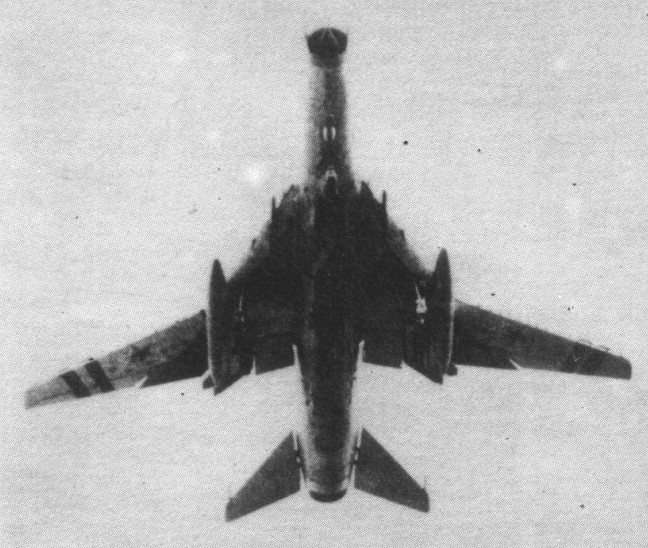

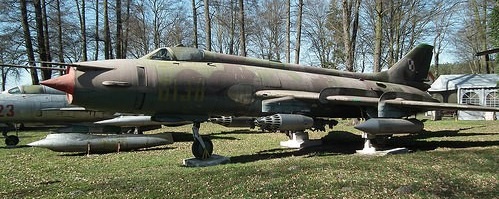


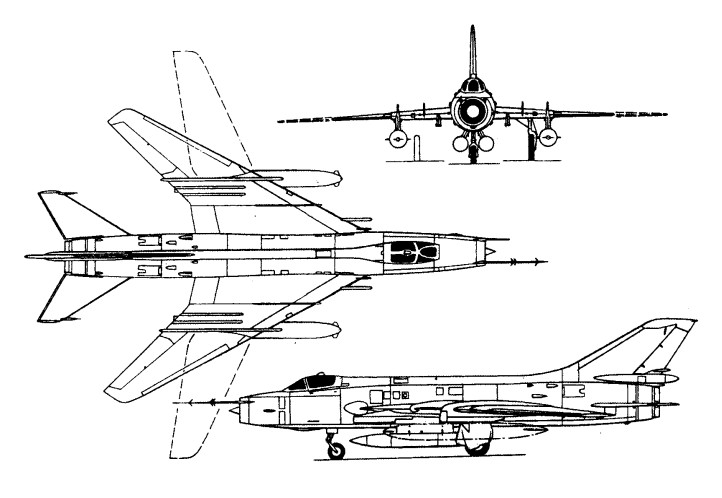


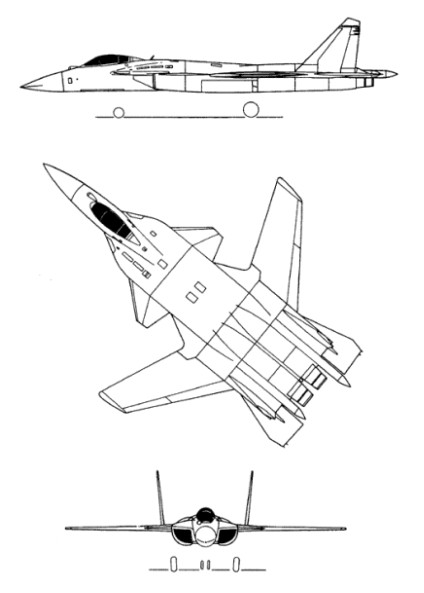


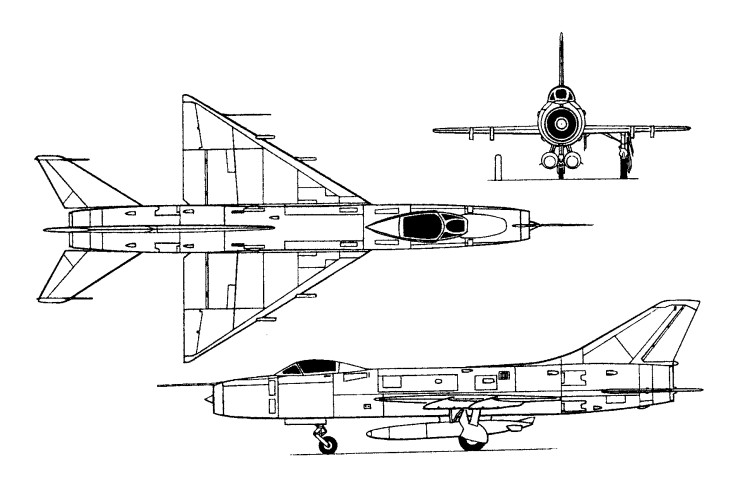
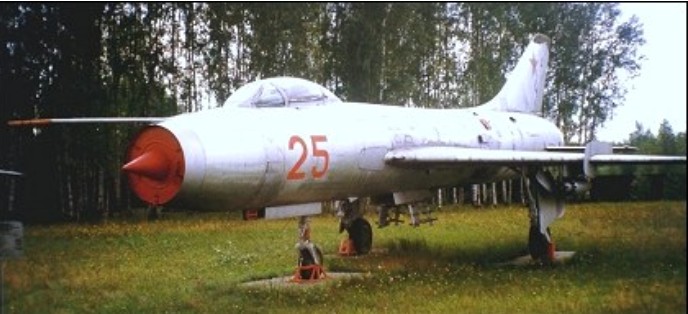
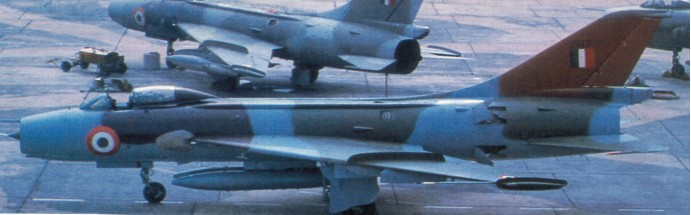


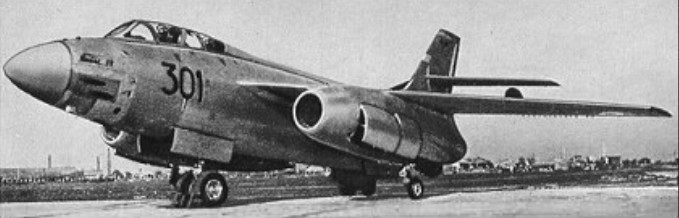


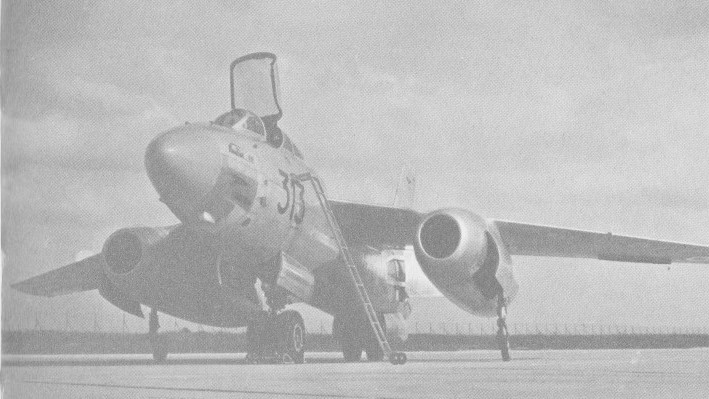

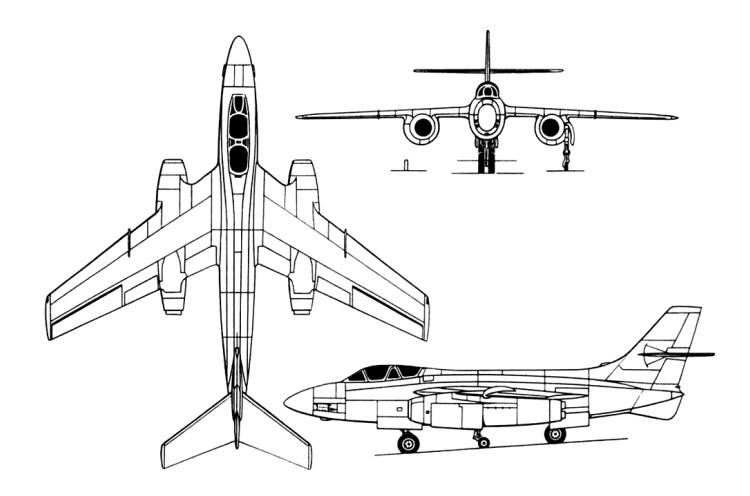
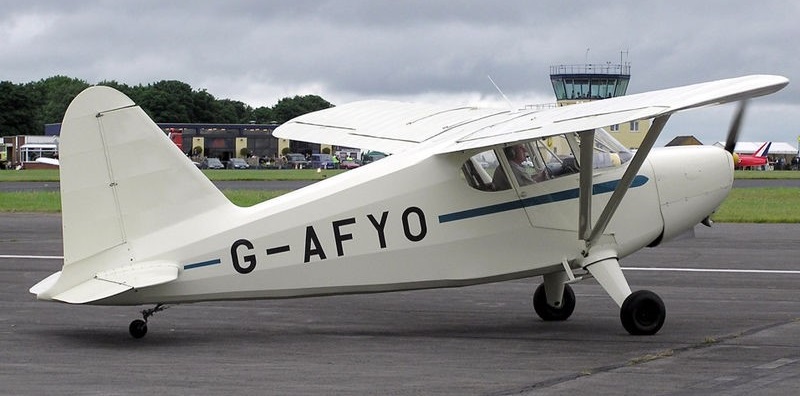
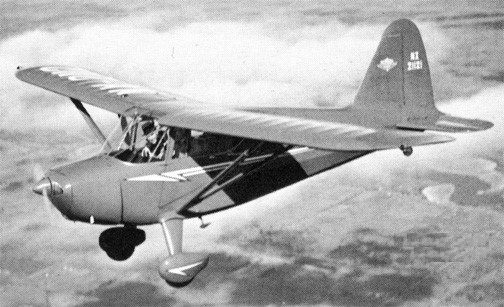
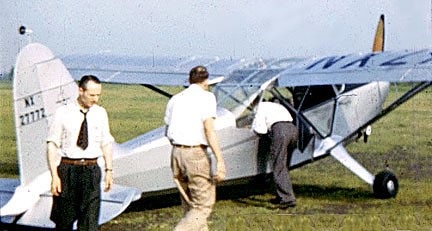
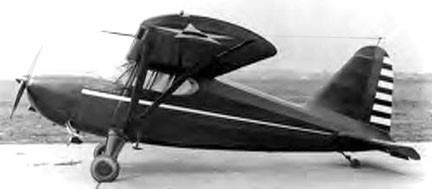
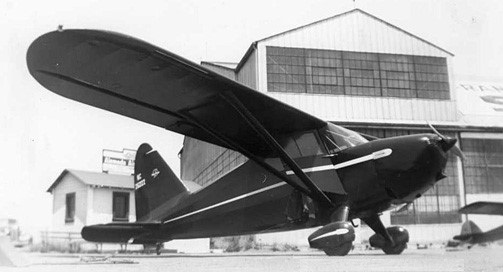
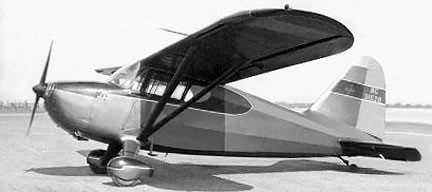
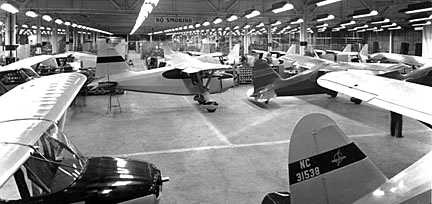
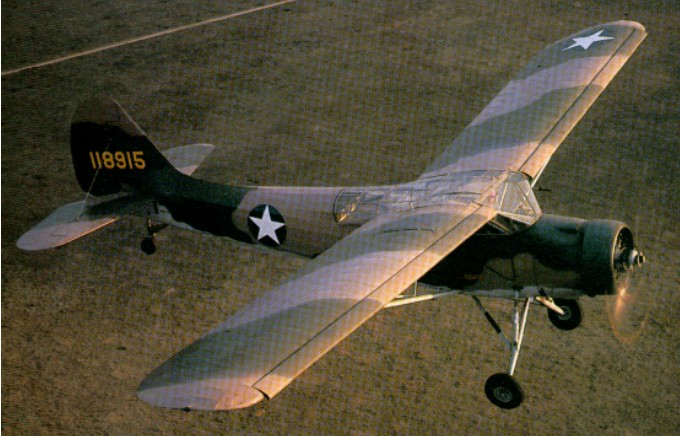
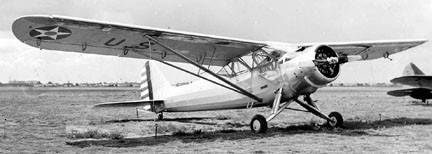
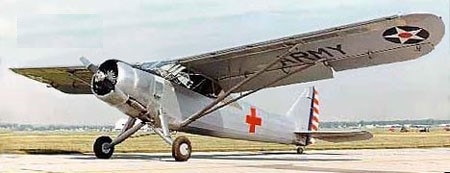
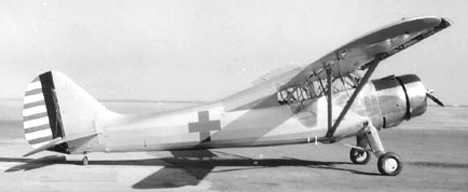
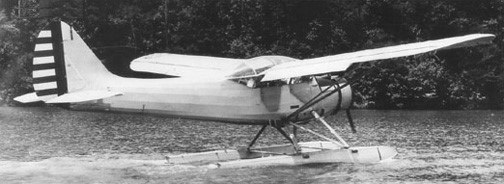
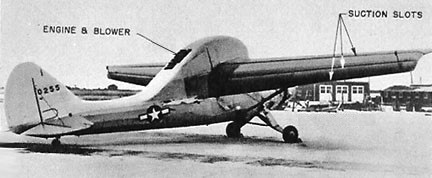

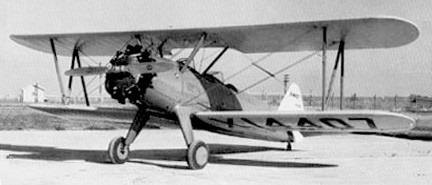

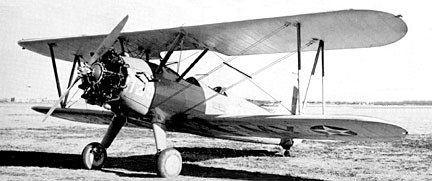
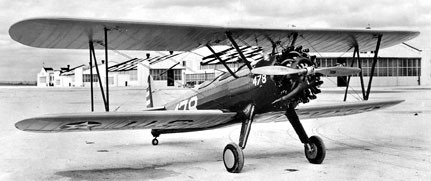
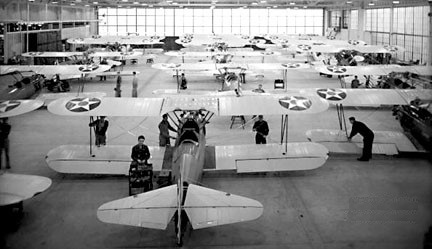
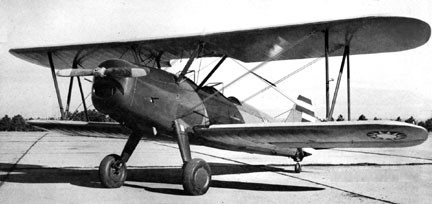
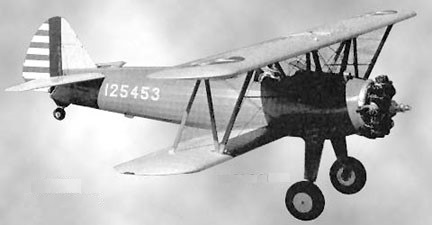
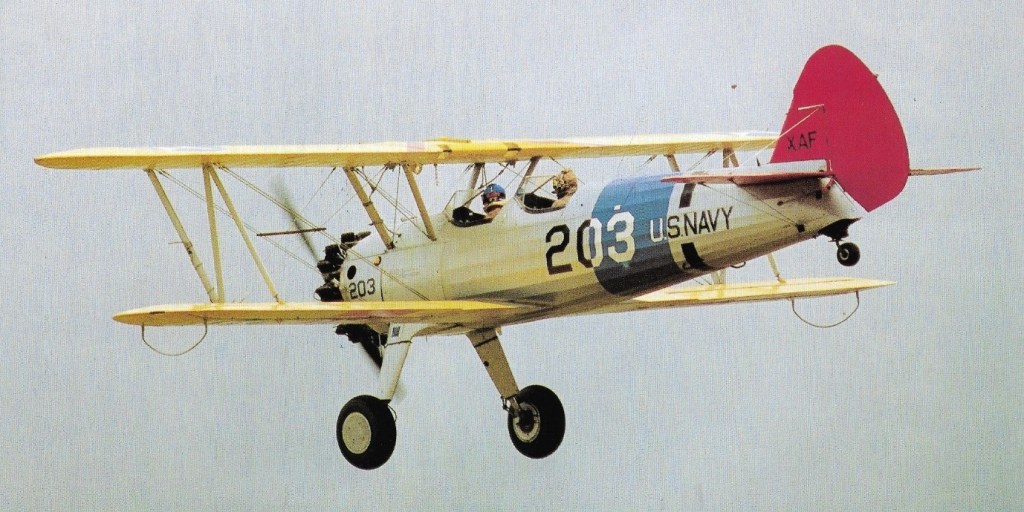
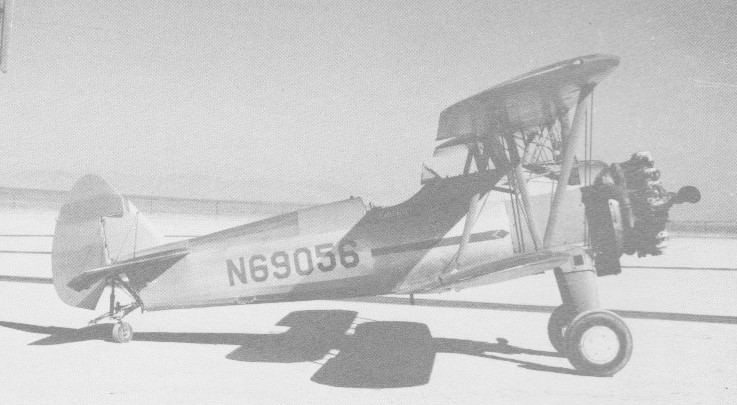
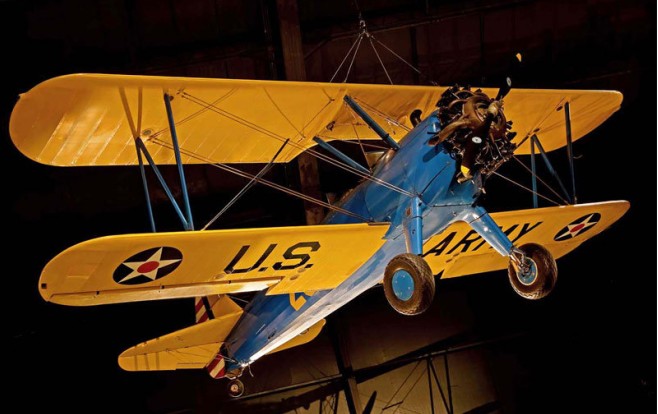

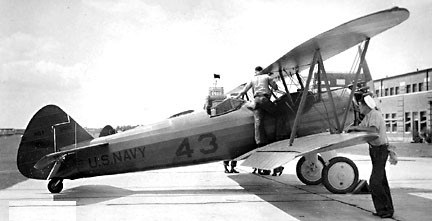
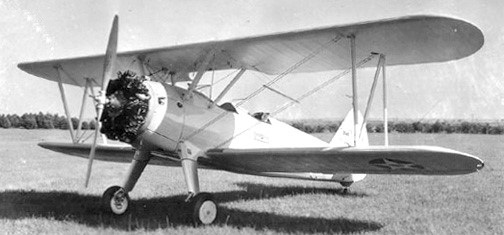

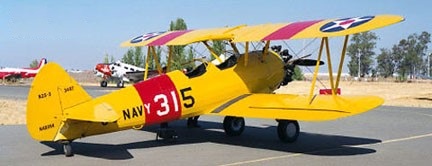
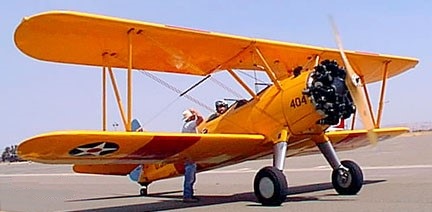
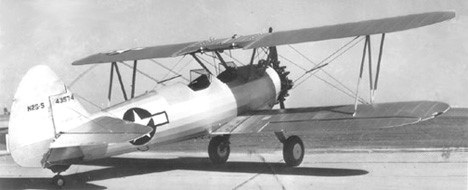

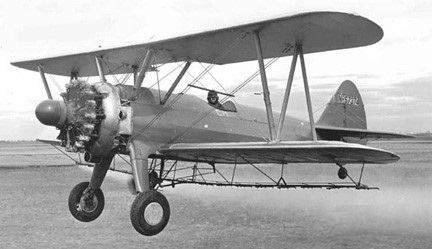
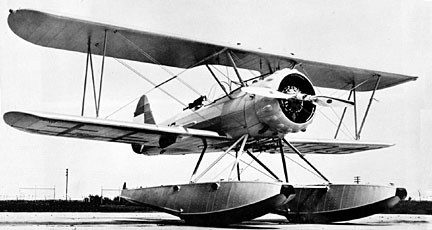
 All Aero