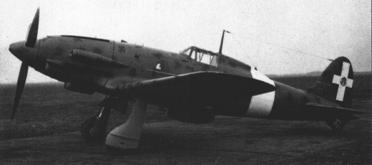
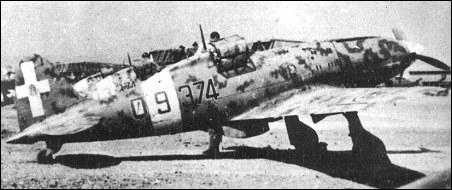
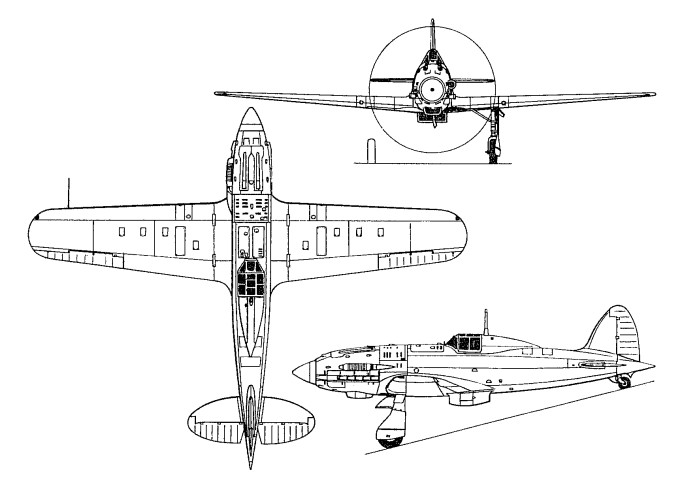
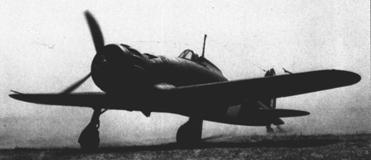
Mario Castoldi’s Macchi C.202 Folgore (thunderbolt) was developed from the radial-engined C.200, and powered by a Daimler- Benz DB 601A-1 produced under licence as the Alfa Romeo RA 1000 RC 411.
First flown by Carestiato on 10 August 1940, the C.202 Series 1 production version entered service with the 1° Stormo at Udine in the summer of 1941, this unit arriving in Libya in the following November. The Folgore was a low wing monoplane with inward retracting undercarriage and two 12.7mm Breda-SAFAT machine-guns in the nose; there was also provision for two 7.7mm guns in the wings.
The aircraft was developed and produced in 11 series with imported or licence-built engines. Later aircraft featured increased armament with the addition of two rifle-calibre wing machine-guns. Variants used in small numbers were the tropicalised MC.202AS and the dual-role MC.202CB that could be used as a fighter-bomber with 320 kg (706 lb) of bombs under the wings or as a long-range escort fighter with underwing drop tanks. The type was also trialled as the MC.200D with a chin radiator. It served with 45 Squadriglie of the 1°, 2°, 3°, 4°, 51°, 52°, 53° and 54° Stormi in North Africa, Sicily, Italy, the Aegean and Russia. Production totalled about 1,500, of which 392 were produced by the parent company and the remainder by Breda.
Ultimate wartime development of the C.200/202 series of Italian fighters was the Daimler Benz-powered C.205.
Engine: l x Alfa Romeo AR.1000 PC 41-1 Monsone, 876kW (1,175 hp) Span: 10.58m (34 ft 8.7 in). Length: 8.85m (29 ft 0.5 in). Normal T/O weight: 2937 kg (6,475 lb). Max speed: 370 mph at 16,405 ft. Operational range: 475 miles. Armament: 2 x 12.7-mm (0.5-in) mg and (later aircraft) 2 x 7.7-mm (0.303-in) mg.
Engine: Alpha Romeo RA.1000 RC.41 Monsone, 1159 hp Length: 29.035 ft / 8.85 m Height: 9.974 ft / 3.04 m Wingspan: 34.711 ft / 10.58 m Wing area: 180.835 sq.ft / 16.8 sq.m Max take off weight: 6637.1 lb / 3010.0 kg Weight empty: 5181.8 lb / 2350.0 kg Max. speed: 321 kts / 595 km/h Service ceiling: 37730 ft / 11500 m Range: 413 nm / 765 km Wing load: 36.7 lb/sq.ft / 179.0 kg/sq.m Crew: 1 Armament: 2x MG 12,7mm Breda-SAFAT, 2x MG 7,7mm Breda-SAFAT
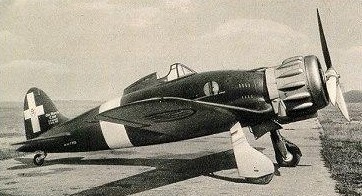
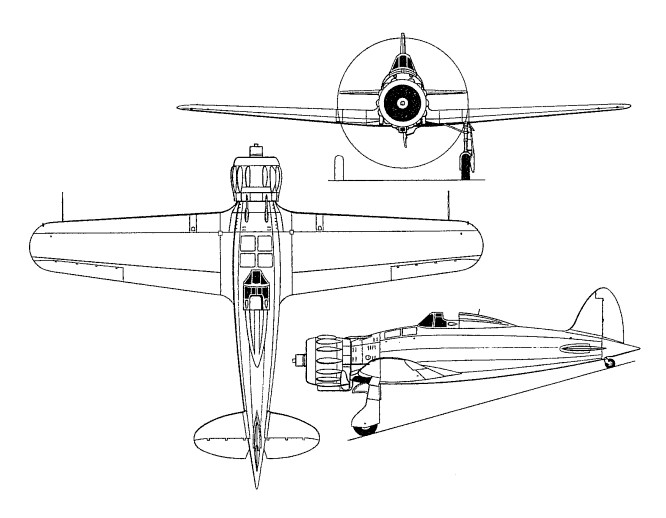
First flown on 24 December 1937 by Giuseppe Burei, the prototype featured an enclosed cockpit and retractable tailwheel, both features being disliked by most service pilots and were eliminated from the MC.200A1 initial production model.
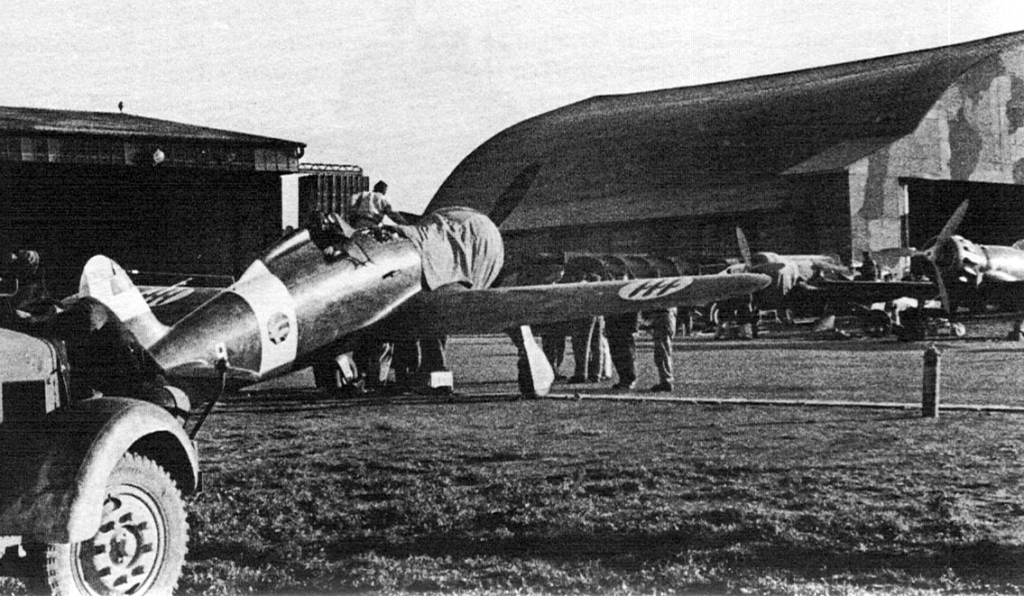
The Mario Castoldi designed radial-powered Fiat C.200 Saetta (lightning) arrived in service in 1939. The first C.200 unit, the 4° Stormo, expressed a preference for the CR.42 and reverted to the biplane in 1940.
The MC.200A2 was equipped two 7.7-mm (0.303-in) machine-guns in the wings.
When Italy entered the war on 10 June 1940, two home-based stormi were combat-ready with the C.200, being first flown in action over Malta in September that year.
The C.200, named the Saetta (lightning), equiped the 1°, 2°, 3°, 4° (in mid-1941) and 54° Stormi, and the 8°, 12°, 13°, 21″ and 22° Gruppi.
The attrition suffered by all Italian air force units quickly reduced the number of C.200s. Some 51 Saettas of the 22° Gruppo operated in the Odessa zone of the Eastern Front from August 1941 onwards, proving capable of matching the older Soviet fighters in the early stages of that campaign. By the time of the Italian armistice in September 1943 the Regia Aeronautica’s total inventory of serviceable C.200s stood at only 33. Production by Macchi, Breda and SAI Ambrosini totaled 1,153 aircraft in 25 series, and other variants were the MC.200AS tropicalised fighter and the MC.2000B able to operate as a fighter-bomber with 320 kg (706 lb) of bombs or as a long-range escort fighter with drop tanks. The MC.201 variant was to have had the 746-kW (1,000-hp) Fiat A.76 RC 40 in a modified fuselage.
Because all three Aeroplane Works within a range of German bombers were, a new plant was built at the village of Kunovice in South Moravia. There were 70 production MB-200s built there.
Macchi MC 200 Saetta Engine: Fiat A. 74 RC.38, 858 hp Length: 26ft 10.5 in / 8.19 m Height: 11.483 ft / 3.5 m Wingspan: 34 ft 8.7in / 10.58 m Wing area: 180.835 sq.ft / 16.8 sq.m MTOW: 5711.0 lb / 2590.0 kg Normal T/O weight: 2200 kg / 4,850 lb Weight empty: 4178.5 lb / 1895.0 kg Max. speed: 271 kt / 502 km/h at 14,765ft Cruising speed: 246 kt / 455 km/h Service ceiling: 29199 ft / 8900 m Wing load: 31.57 lb/sq.ft / 154.0 kg/sq.m Max range: 470 nm / 870 km Crew: 1 Armament: 2x MG 12,7mm Breda-SAFAT, 2x MG 7,7mm
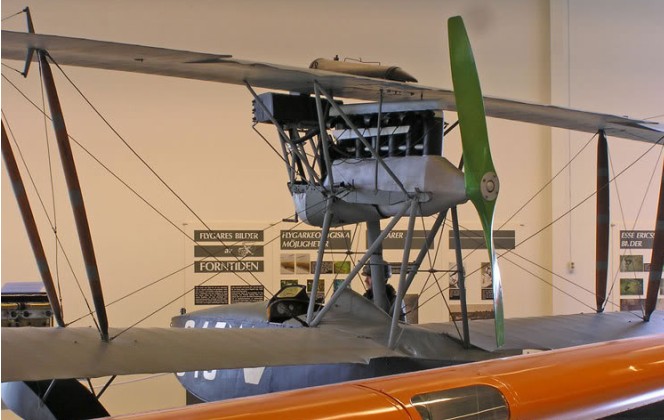
The Macchi M.5 was Italy’s first flying-boat fighter and first single-seat aircraft. A total of 244 M.5s were built, equipping five Italian maritime patrol squadrons from early 1918 until after the Armistice. The M.5mod was equipped with a 250hp engine.
Replica: Petroelje Macchi M.5
Macchi M.5mod Engine: 1 x 250hp Isotta-Fraschini V6B liquid-cooled Take-off weight: 1080 kg / 2381 lb Wingspan: 9.95 m / 32 ft 8 in Length: 8.10 m / 26 ft 7 in Height: 2.95 m / 9 ft 8 in Max. speed: 209 km/h / 130 mph Ceiling: 5000 m / 16400 ft Climb to 4000m: 20 min Armament: 2 x 7.7mm mg Crew: 1
In 1977 the Italian Air Force (AMI) issued a requirement for a multi-role strike/recce aircraft to replace its Fiat G-91R/Ys and F-104G/Ss.
Mid-1978 Aeronautica Macchi concluded an agreement with Aeritalia for the joint design, development and production of what became the AMX (Aeritalia-Macchi-eXperimental). This agreement provided for assembly lines in both countries and single-sourced sub-assemblies.
Alenia and Aermacchi started development of the AMX and in 1980 Embraer joined the project, the Brazilian Air Force (FAB) also having issued a requirement for a similar aircraft to replace its AT-26 Xavantes. The consortium was based in Rome, Alenia 46.5%, Aermacchi 23.8%, and Embraer 29.7%.
The basic single-seat aircraft is designed for daytime low-level attack and tactical reconnaissance. Work was split 70:30 between Italy and Brazil, and 70:30 between Aeritalia and Aermacchi in Italy. Embraer was responsible for the wings, flaps, intakes, and tailplane, Aermacchi for the forward and rear fuselage sections, and Aeri¬talia for the centre fuselage and fin. Italy built four prototypes and Brazil two. Final-assembly lines were located in both countries.
In May 1984 the AMX made its first flight, and in February 1987 Embraer’s first prototype flew with the purpose-designed reconnaissance pallet, and by May the aircraft was undertaking static test firing of the Brazilian versions twin 30mm DEFA cannon. A second Brazilian prototype joined the test programme in December 1986.
The AMX International AMX has high-mounted monoplane wings, twin intakes and a single engine exhaust under the single tail rudder. Crew accommodations vary with model and can either be a single pilot or pilot and rear-cockpit operator in tandem. Standard armament varies between the Italian and the Brazilian models, with the Italian version receiving a single 20mm General Electric cannon and the Brazilian version being fielded with twin 30mm DEFA cannons. Four underwing hardpoints, a centerline hardpoint and wingtip hardpoints are fitted. Wingtip mounts are reserved for short-range air-to-air missiles.
Final assembly of the first Italian production AMX began on schedule in January 1987 and was delivered to the Italian Air Force in January 1989 and to the Brazilian Air Force in 1990.
The AMX were assembled in both Italy as Brazil. Planed build was for 317 aircraft of both types (238 for Italy and 65 for Brazil). The initial order was later cut to 136 due to budgetary constraints to defences in both countries. Production continued with little in the way of developmental setbacks. Production of the AMX series broke down with Alenia (Aeritalia) handling up to 46.7% whilst Embraer took 29.7% and Aermacchi 23.6%. Final production would be handled in their respective countries.
A single-seat multi-role strike fighter aircraft, designed to fly low-altitude missions at high-subsonic speeds in day or night and in poor visibility, it is capable of operating from damaged or unprepared runways. It has a limited air-to-air capability and integrated ECM for self defense.
AMX-T is the twin-seat variant of the AMX and is used as advanced trainer. The AMX-T retains the operational capabilities of the single-seat version.
The aircraft for the Brazilian Air Force (FAB) are designated A-1 (single-seat) and TA-1 (two-seat), and are equipped with two DEFA 544 30mm cannons, while the Italian variant is fitted with one M61A1 multi-barrel 20 mm canon.
The Brazilian A-1/TA-1 fleet underwent an upgrade, the aircraft designated A-1M in FAB service, The A-1M upgrade is based on the Brazilian AT-29 and the F-5M upgrade program, giving the aircraft many simularities in avionics and capabilities. The new cockpit includes three colored MFDs, HOTAS, new multimode radar (the Italian Grifo F) and the capability to use smart weapons.
The Italian AMX and AMX-Ts went through the ACOL upgrade program. Alenia Aerospace upgraded 43 single-seat and 12 two-seat AMX aircraft as the AMX-ATA extending the operational life to 2015 and giving the AMX improved combat capabilities. It includes a new inertial navigation system/GPS, GPS-guided weapons integration, new colour MFDs, updated communications and IFF, and a new computer symbol generator with digital map functions.
The AMX aircraft under the Italian banner saw extensive service in the war against Serbia in Operation Allied Force, accounting for over 250 sorties all its own. The system was fielded with advanced Israeli Elbit Opher imaging infra-red guided bombs, Mk 82, Mk 83 and Mk 84 conventional bombs and Paveway II laser-guided bombs.
Variants: AMX A-1 TA-1 AMX-T AMX-ATA
AMX International AMX (Ghibli) Engine: 1 x R-R Spey 807 non-afterburning turbofan, 49.1 kN (11,030 lb st) Length: 44.521 ft / 13.57 m Height: 15.026 ft / 4.58 m Wingspan: 29.101 ft / 8.87 m Wing area: 226.044 sqft / 21.0 sqm Max take off weight: 28665.0 lb / 13000.0 kg Weight empty: 14773.5 lb / 6700.0 kg Wing load: 126.9 lb/sq.ft / 619.0 kg/sq.m Max. speed: 493 kts / 913 km/h Initial ROC: 10236.22 ft/min / 52.0 m/s Service Ceiling: 13,000 m / 42,650 ft Maximum Range int. fuel: 345miles (556km) Max range: 1801 nm / 3336 km T/O run: 950 m Ldg run: 1525 m. Crew: 1 / 2 Hard points: 5 + 2 wing tips. Armament: 1 x 20mm General Electric GE M61A1 Vulcan cannon (Italian AMX) with 350 rounds 2 x 30mm DEFA cannons (Brazilian AMX) Bombload: 3800 kg (8,377 lb)
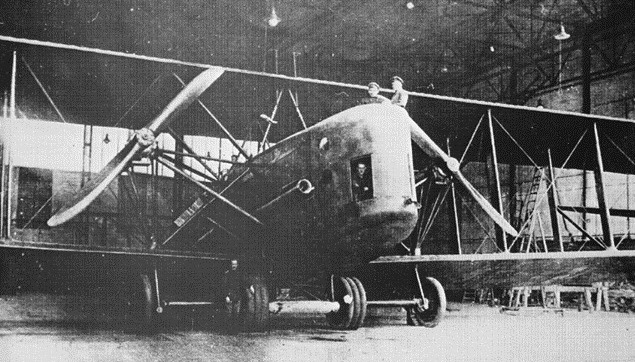
During 1916 AEG received an order for two R.I Giant four engine heavy bombers. R was an abbreviation of “Riesenflugzeug” (giant aircraft). All four engines were grouped inside the fuselage and drove four blade propellors at 750 rpm via shafts and gearboxes; a combination leather cone and dog clutch. Two blade propellors were installed later.
One R.I was completed (R.I 21/16) and made its first flight in 1916. During a trial night flight on 3 September 1916 this aircraft broke up in the air with a loss of all seven crew. This crashed was caused by propellor delaminating because of insufficient hardening of the glues. A second machine, R.I 22/16, was still incomplete at the end of World War 1 and eventually scrapped.
Engine: 4 x Mercedes D.IVa, 260 hp Wing span: 118 ft 1.5 in Length: 63 ft 11.5 in Empty weight: 19845 lb / 9000 kg Loaded weight: 28,003 lb / 12,500 kg
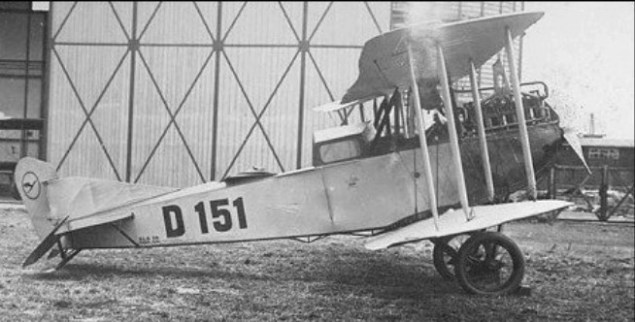
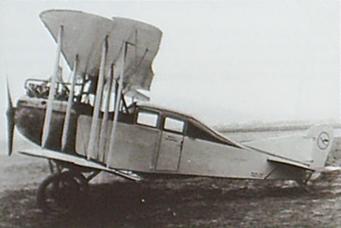
The J.II was similar to the J.I but introduced an improved control system and horn-balanced control surfaces. To to improve directional stability the fin area was also increased. These improvements increased the weight by 55 lb / 25 kg. After the armistice a number of J.IIs were used as transports (with the armour removed) by Deutsche Luft-Reederei. The J.II civil cabin biplane built 1918 had a two-seat cabin in place of the gunner’s position, as well as a door and steps.
AEG built more than 600 J.Is and J.IIs.
Passenger conversion Crew: 1 Pax cap: 2
Engine: 1 x 220hp Benz Bz.IV Length: 7.92 m / 26 ft 0 in Height: 3.35 m / 11 ft 0 in Wing area: 34.50 sq.m / 371.35 sq ft Max take-off weight: 1819 kg / 4010 lb Wingspan: 13.46 m / 44 ft 2 in Max. speed: 152 km/h / 94 mph Cruise speed: 140 km/h / 87 mph Ceiling: 4500 m / 14750 ft Rate of climb: 170 m/min / 550 ft/min Range: 590 km / 367 miles Armament: 3 x 7.92mm mg Crew: 2
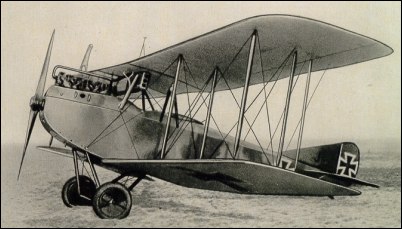
Late 1915 the German army air service introduced what could be called ground support units. Proving effective on a small scale during the Battle of Verdun in early 1916, a high priority expansion programme began. The AEG J.I was developed to meet this task until more suitable aircraft became available.
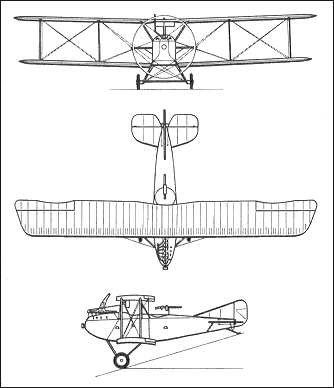
The J.I was essentially a C.IV with a more powerful Benz Bz.IV of 200 hp to offset the weight of 860 lb 390 kg) of armour plate crew and engine protection. This 2 in (51mm) thick steel sheet protection extended from the nose to the rear of the cockpit. Armament was 2 LMG 08/15 mounted in the rear cockpit floor pointing downward and forward at about 45 degrees. These could be used to strafe trenches or columns of troops. The observer had also a trainable LMG 14 on a ring mounting.
The increased weight caused ailerons to be added to the lower wings to improve lateral control.
AEG built more than 600 J.Is and J.IIs.
Engine: Benz Bz.IV, 200 hp Wingspan: 44 ft 2 in / 13.46 m Length: 23 ft 7.5 in / 7.2 m Height: 10 ft 11.5 in / 3.3m Wing area: 357.16 sq.ft / 33.18 sq.m Empty wt: 3280 lb / 1455 kg MTOW: 3836 lb / 1740 kg Max speed: 94 mph / 150 kph Climb to 3280 ft / 1000m; 6 min Service ceiling: 14,765 ft / 4500 m Max range: 233 sm / 375 km Max endurance: 2.5 hr Crew: 2 Armament: 2 x fixed forward/downward firing 7.92mm MG 08/15 machine guns / 1 x trainable 7.92mm LMG 14 Parabellum
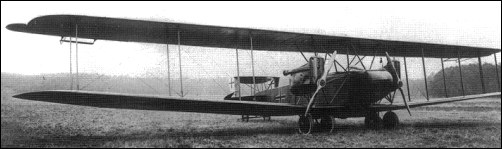
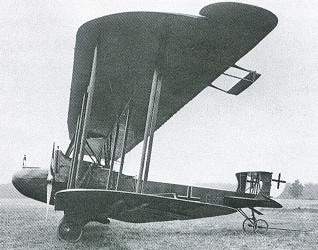
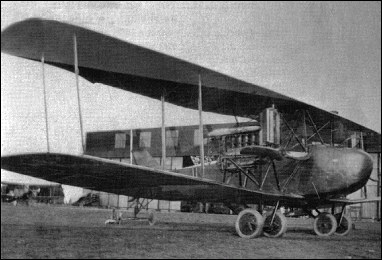
A larger three-bay design and carrying three times the bomb load of the G.II, the G.V entered service in 1918. The G.V was AEG’s last bomber, the end of the war prevented the G.V from becoming operational and it was after the war that a number were operated as six-passenger civil transports by Deutsche Luft-Reederei – an airline company financed by and connected with AEG.
In 1919 the G.V was the only large German 1914-18 aircraft employed commercially to any great extent. As a makeshift transport (with an open cockpit for passengers) a Limousine version was developed. This had a new cabin fairing attached to enclose the passenger area, a downward-hinging fuselage nose to provide a baggage locker (which could also act as a buffer if the aircraft overturned) and a toilet aft of the cabin. One was recorded as flying from Berlin to Eskjo, Sweden in 4 hours and seven minutes.
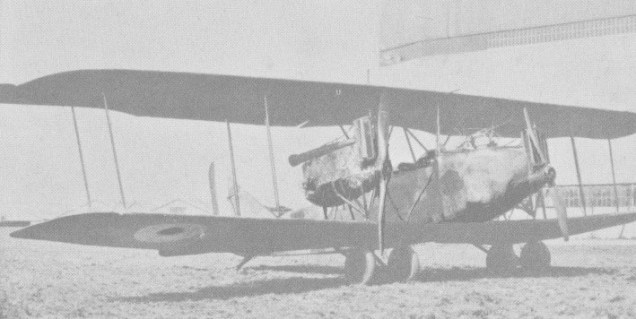
The twin-engine, three-man aircraft was of a biplane design with two steel tube spars, wooden ribs, and wooden leading edge and wire trailing edge. Ailerons were on the top wing only. Of welded steel tube construction and covered in fabric except the plywood skinned nose section, the crew of four could change positions through connected cockpits.
Up to 882lbs of ordnance was carried on the aircraft and this was complimented with two defensive machine gun positions at fore and aft of the pilots mid-position.
The G.IV served the German air force in an offensive capacity but was limited by the short range when carrying a crew of three and full bomb load it was used mainly as a tactical bomber between allied lines on the Western Front. Without a bomb load, it was able to be used for long range reconnaisance and aerial photography. The units equipped with the G.IV fought against the Italians on the Southern Fronts to good effect and would even be called upon to complete night bombing missions. About 50 G.IVs were being used for night bombing behind Allied lines in August 1918.
Small numbers were built for assessment by the Schistas at the front. These included the G.IVb with a three bay wing cellule of increased span, and the G.IVK with a 20mm Becker cannon in the nose.
An example was captured almost intact by the Allied forces and evaluated in flight in the UK, where it was found to be deficient in elevator control and extremely difficult to land. The absence of a passenger in the front gunner’s cockpit apparently made the machine almost uncontrollable.
About 500 of the 542 AEG G bombers built were of G.IV type. Fifty were still in use in France in August 1918.
G.IV Engines: 2 x Mercedes D.IVa, 260hp Prop: 2 blade wooden Wingspan: 60 ft 4.5 in / 18.4m Length: 31 ft 9.5 in / 9.7m Height: 12 ft 9.5 in / 3.9m Wing area: 721.21 sq.ft / 67 sq.m Empty wt: 5291 lb / 2400 kg MTOW: 8003 lb / 3630 kg Fuel capacity: 123 Imp Gal Climb to 3280 ft / 1000m; 5 min Max speed: 103 mph / 165 kph / 89kt Service ceiling: 14,765 ft / 4500 m Time to 9000ft: 24 min Max endurance: 4-5 hr Maximum Range: 466miles / 750km Max bomb load: 882 lb / 400 kg Crew: 3 Armament: 2 x trainable 7.92mm LMG 14 Parabellum



 All Aero