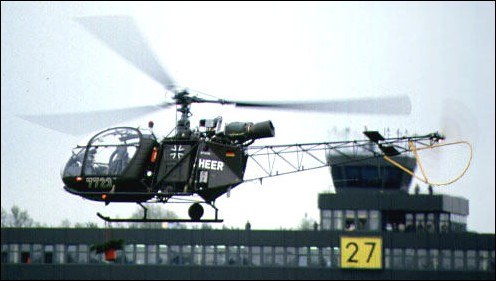
Sud-Est SE 3140 / Aerospatiale SE-313B / SA-316 Alouette III / SA-318C Alouette II / SA-319 Alouette III / SA-3180

Alouette II

The SE.3120 Alouette I three-seat utility helicopter was designed primarily as an agricultural aircraft, but external panniers could be fitted. Powered by a 200 hp Salmson 9 NH engine, it first flew on 31 July 1951.
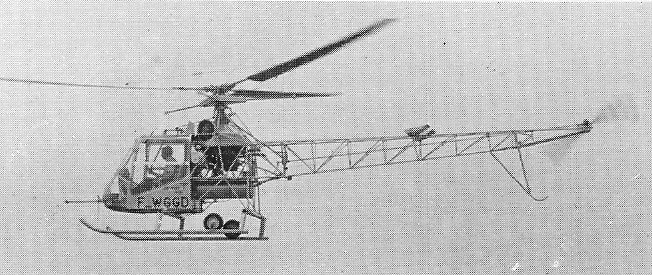
SE.3120 Alouette I

The basic airframe of the Sud-Est SE-3120 Alouette was completely redesigned to take the 269kW Turbomeca Artouste II turboshaft, and the first of two prototypes, designated SE 3130, was flown on 12 March 1955.

Following were three pre-production aircraft in 1956 as the Alouette II. This was granted a French Certificate of Airworthiness on 2 May 1956. Three months after the first flight the Alouette II set a new helicopter altitude record of 8209m. In 1957 Sud-Est merged with Sud-Aviation, at which time the designation of the Alouette II was altered to SE 313B, remaining unchanged after Sud’s take-over by Aerospatiale.
It has three blade rotor with three degrees of freedom, pitch, in-plane motion and vertical flapping. Pitch is controlled by means of a stabilizing gyroscope.
Even before flight testing had been completed, the Alouette II was showing its abilities as a mountain rescue aircraft. The second prototype Alouette II was in the Alps for performance tests in July 1956 when the test team learned that a climber was dying after having a heart attack in the Vallot Mountain refuge, one of the highest in Europe at 4362m.
The first attempt at a rescue was unsuccessful, but the second worked: within five minutes of landing the helicopter had transported the climber to hospital in Chamonix, thereby saving his life.
During the period 9-13 June 1958, an Artouste-powered Alouette II set up a helicopter altitude record of 10981m for all classes, and a height record of 9583m in the 1000/1750kg category. By September 1960 598 Alouette IIs had been ordered by customers in 22 different countries and the type was being assembled by Republic in the USA and Saab in Sweden although few were built.

SE 313 Alouette II

Production aircraft were delivered initially to fulfil orders from the French forces and civilian customers, but when production ended nine hundred and twenty-three of the Artouste-powered Alouette II’s had been built for customers in thirty-three countries. Three-hundred and sixty-three of these were built for the French services — particularly the Aviation Legere de I’Armee de Terre – and a further two hundred and sixty-seven were built for the Federal German Heeresfliegerei. Other large military operators of the Alouette II include the Belgian Army (thirty-nine), Swiss Army (thirty), all three Swedish air arms (total twenty-five), and Britain’s Army Air Corps (seventeen) as Alouette AH.2. Alouette II’s were also delivered to the air forces of Austria (sixteen), Cambodia (eight), Congo Leopoldville (three), Dominican Republic (two), Indonesia (three), Israel (four). Ivory Coast (two), Laos (two), Lebanon (three), Mexico (two), Morocco (seven), Netherlands (eight), Peru (six), Portugal (seven) and South Africa (seven). In all, at least 1,305 Alouette II were built.
Alouettes of the ALAT have carried out firing trials using Nord AS.10 or AS.11 anti-tank missiles, while some of the Aeronavale’s machines have been used to carry homing torpedoes.
A development of the Alouette II with a 298kW Turbomeca Turmo II engine, with the designation SE 3140, was announced in May 1957 and flown on 16 May 1957 but did not reach the production stage.
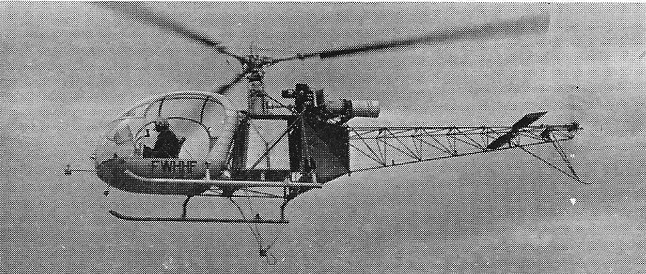
SE.3130 Alouette II

The SE.3150 an Artouste-powered development of it of which two were built.
From the Alouette II, the SE.3131 Gouverneur executive version was derived.

The first version of the Alouette III, the SE 3160 prototype flew in 1959. Production of the SA 316A (SE 3160) began in 1960 and remained in production until 1968. It was replaced by the SA 316B.

Sud Aviation / Aerospatiale Alouette Article

The Turbomeca Artouste IIIB turboshaft engine was the original variant produced, the Alouette III is recognized for its mountain rescue and adaptability for land and ship based applications. The Argentine Navy purchased 14 helicopters, 3 of the original design SE3160, 7 with the more powerful engine and strength upgrades in the SA316B and 4 machines of the SA319B with more power than the other two versions.

The Alouette III entered in service with the French Armed forces in 1960. Many were used by the Foreign Legion from 1964-1967. Three machines were delivered from France for local assembly in Australia, and were used by Royal Australian Air Force (RAAF).

Pakistan purchased 35 machines and used them in the Indo-Pakistani War of 1971. Two planes of the PAF were shot down in the war, and the Portuguese Colonial War, during 60’s and 70’s used large numbers of helos in Angola, Mozambique and Guinea, where it proved its qualities for use in dusty and hot flying conditions. One SA316B purchased by Argentina was on board the ARA General Belgrano when she was sunk by the HMS Conqueror S48 during the Falklands War with Great Britain in 1982.

Basically, the SE.3160 Alouette III is an enlarged and more powerful development of the Alouette II, with an Artouste IIIB turboshaft engine of 870/550shp and a strengthened transmission system. The cabin is enlarged to accommodate a pilot and 6 passengers, and the tailboom is an enclosed, all-metal semi-monocoque fuselage. The prototype, F-ZWVQ, first flew on 28 February 1959. The SE.3160 was revised in 1968 and redesignated SA.316A Alouette III for the first production series.

In 1963 Ireland ordered three Alouette III’s, two for delivery in 1963 and one in 1964.

A close-support version, the SA.3164 Alouette III Armee with a stepped windshield, was flown on 24 June 1964. This carried a 20mm cannon in front of the left-hand seat, and can be armed with 7.92mm machine-guns, pods of 18 or 36 HVAR rockets or Nord AS.11 or AS.12 anti-tank missiles on mountings on each side of the cabin. A naval version with a mooring harpoon and all-weather capability is being developed for anti-submarine and other shipboard roles.
Various experimental developments followed, including an all-weather variant which made its initial flight on 27 April 1964. The SA.319 Alouette III prototype, F-ZWVQ, was basically an SA.316 fitted with a 600shp Turbomeca Astazou XIV turboshaft.
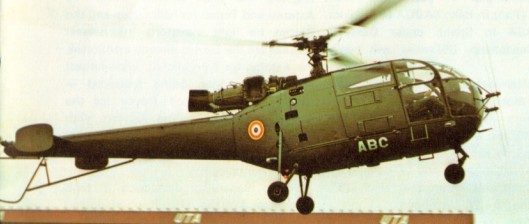
SA.319B Alouette III

The subsequent SA 316B, first flown on 27 June 1968, featured strengthened main and tail rotor transmissions and was generally slightly heavier, but could carry more payload. It became the principal production version, with first deliveries made in 1970, and was an immediate export success.
Two versions have been built, the SA 316B with one 870 shp Turbomeca Artouste IIIB turboshaft engine derated to 570 shp, and the SA 319B with one 870 shp Turbomeca Astazou XIV turboshaft derated to 600 shp. The first experimental SA 319B prototype was completed and flown in 1967, but full production did not start until 1973. Those in service in an anti-armour role can carry a variety of cannon, machine-guns, rockets, and wire-guided missiles. Naval versions can deploy wire-guided missiles, but those intended specifically for an ASW role carry two homing torpedoes, or one torpedo and MAD equipment. The Alouette III has an external sling for loads up to 750kg or a rescue hoist which can lift 175kg.
Another derivative, powered by the more economical Astazou IIA turboshaft engine and featuring a new centrifugal clutch, was far more successful. The first prototype, designated SA 3180, was flown on 31 January 1960 and after thorough trials an extension of the Alouette II French Certificate of Airworthiness was granted on 18 February 1964. Production, as the SA 318C with the Artouste IIID derated to 600shp, commenced in the same year, with first deliveries taking place in 1965.
The SA 318C had a slightly higher level speed, longer range and was capable of lifting heavier loads, but is less suitable for operations in higher altitudes. The success of the basic Alouette II design was reflected in the growing number of civil and military customers: by 1 June 1967 a total of 988 Alouette IIs (including those with Astazous engines) had been ordered (and 969 delivered); by 21 May 1970 the total had increased to 1,200 (923 with Artouste and 277 with Astazou engines); this total included 450 Alouette IIs delivered to the French air force, army and navy as well as private customers. By the spring of 1975, when the production of this helicopter was terminated, the number of Alouette IIs sold had reached 1,300, and it was used by 126 civil and military operators in 46 countries.
Production of the SE.3130 (which was redesignated SE.313B in 1967) has been gradually running down since about 1964, but output is still maintained of the SA.318C (originally SE.3180) which first flew on 31 January 1961 and received domestic type approval on 18 February 1964. This is basically the same airframe, but with a 550shp Astazou IIA shaft turbine (derated to 360shp) and the strengthened transmission system of the Alouette III. An initial fifteen Alouette II Astazou’s were built for the ALAT; by September 1967 orders had reached seventy-eight, for the Gendarmerie, the Federal German police force and other customers. A lighter-weight ‘long-life’ version was being developed during 1967, and one Alouette II Astazou was testing the Bolkow rigid-rotor system. It flew in this configuration on 24 January 1966.
Production ended in 1975, by which time over 1300 had been built.

The SA 316B and the SA 319B both remained in series production up to the early 1980s, when the main production line in France was closed down. However, HAL of India continued to licence-build Alouette IIIs as the Chetak. In 2004, most of the Alouette III were retired from the French Air Force after 32 years of successful service, to be replaced by the Eurocopter EC 355 Ecureuil 2. In the same year, the Swiss Armed Forces announced the retirement of the Alouette III, from the front line by 2006, and entirely by 2010. Venezuelan Air forces retired their Alouette IIIs in the late 90s.

Hindustan Licence-manufactured SA-315B Lama and SA-316B Alouette III helicopters at Bangalore as Cheetah and Chetak respectively up to 1998 under a licence agreement finalised in 1962. Production gave way to the indigenously developed Advanced Light Helicopter (first flown August 1992).
The first Indian-assembled Alouette III was flown on 11 June 1965.
More than 250 had been completed at Bangalore in India for civil and military use.
In addition to a number of military export customers, the USSR purchased eight Chetaks for civil use. A version for the Indian Navy is armed with two Mk.44 torpedoes and has a harpoon moor¬ing system and folding rotor blades for ship¬board operations. A podded magnetic anomaly detector may also be carried in place of one of the torpedoes. An armed variant for the Indian Air Force is equipped with four air-to-surface missiles, and has a roof mounted periscope sight.

Also built under licence in Roumania by CNIAR were the IAR-316 and IAR-317 Airfox. The IAR-316B Allouette III first flew on 13 November 1971. Production of the Alouette III continued in Romania for domestic and export customers in 1987.
The IAR-317 Airfox is a Romanian developed light attack/training version of the Aérospatiale Alouette III helicopter. Its recon¬figured front fuselage has two seats in tandem, the rear seat raised for improved visibility; a hard nose; a fixed forward firing armament of two 7.62mm machine-guns in the lower front fuselage; six external weapons pylons; and armour protection for the crew and fuel tanks in the combat variant. The IAR-317 was due to enter production for the Romanian armed forces in 1986.
The first flight took place in 22 September 1983, and two more prototypes were completed by the end of 1985. To the rear of the main rotor mast the Airfox is essentially an Alouette III, retaining the latter’s tail rotor and Turbomeca Artouste IIIB power plant. Performance is improved by the lighter, more streamlined nose, with a maximum cruise speed of 190km/hr (102kt) at maximum take-off weight, a 525km range on internal fuel, and 810km with two external tanks fitted. Service ceiling is more than 6,200m (20,350ft).
Licence production in Switzerland by FFA totalled 60.

Designations:
SE 3130 Alouette II
SE 3140
SE.3150
SE.3160 Alouette III
SA.3164 Alouette III Armee
SA.3180 Alouette
SE.3180
SE 313B Alouette II
SA.316A Alouette III
SA.316B Alouette III
SA.316C Alouette III
SA 318C
SA.318C Alouette Astazou
SA.319 Alouette III
SA.319B Alouette III
Alouette AH.2
Hindustan Aeronautics Ltd. HSA.316B Alouette III
Hindustan Aeronautics Ltd. HSA.316B Chetak
IAR-316B Alouette III
IAR-317 Airfox

Gallery

SE.3120 Alouette I
Engine: 200 hp / 150kW Salmson 9 NH
Rotor diameter: 38 ft / 11.60m
Length: 34 ft 3 in / 10.45m
Height: 9 ft 6 in
Empty weight: 1650 lb / 750kg
Loaded weight: 2750 lb / 1150kg
Max speed: 78 mph / 125km/h
Cruise: 62 mph
ROC: 500 fpm
Service ceiling: 4000m
Range: 225km

Sud-Est SE 3130 B Alouette II / SA.313B
Engine: Turboméca Artouste II C 6, 400 shp
Length: 31.824 ft / 9.7 m
Width of hull: 6.824 ft / 2.08 m
Height: 9.022 ft / 2.75 m
Rotor diameter: 33.465 ft / 10.2 m
MTOW: 3307.5 lb / 1500.0 kg
Weight empty: 2149.9 lb / 975.0 kg
Max. weight carried: 1157.6 lb / 525.0 kg
Max. speed: 92 kts / 170 km/h
Initial climb rate: 826.77 ft/min / 4.20 m/s
Service ceiling: 12959 ft / 3950 m
Range: 302 nm / 560 km
Endurance: 3 h
Crew: 1
Payload: 4 Pax

SE 313 Alouette II Artouste
Engine: Turbomeca Artouste IIC6, 530shp(derated to 360shp)
923 built

Aerospatiale SE-313B Alouette II
Engine: 1 x Turbomeca Artouste II C6 turboshaft, 395kW
Main rotor diameter: 10.2m
Length blades folded: 9.7m
Height: 2.75m
Take-off weight: 1600kg
Empty weight: 895kg
Max speed: 185km/h
Cruising speed: 165km/h
Service ceiling: 2150m
Range with max fuel: 565km
Range 390kg payload: 300km
Crew: 1
Passengers: 2

SA316B
Engine: Astazou IV, 600 shp
Fuselage length: 10 m / 33 ft
Rotor dia: 36 ft 1.25 in / 11.02 m
Max speed: 130 mph / 210 km/h

SA 316 Alouette III
Engine: 1 x Turbomeca Artouste IIIB turboshaft, 570shp
Length: 42.13ft (12.84m)
Width: 36.15ft (11.02m)
Height: 9.84ft (3.00m)
Maximum Speed: 130mph (210kmh; 113kts)
Maximum Range: 298miles (480km)
Rate-of-Climb: 885ft/min (270m/min)
Service Ceiling: 7,379ft (2,249m)
Accommodation: 2 + 5
Hardpoints: 2
Empty Weight: 2,474lbs (1,122kg)
Maximum Take-Off Weight: 4,850lbs (2,200kg)

Aerospatiale SA.316B Alouette III
Engine: 1 x Turbomeca Artouste IIIB turboshaft, 649kW
Main rotor diameter: 11.02 m
Length rotors turning: 10.03 m
Height: 3.0 m
Take-off weight: 2200 kg
Empty weight: 1143kg
Max speed: 210km/h
Cruising speed: 185km/h
Service ceiling: 3200m
Range max fuel: 540km
Crew: 1
Passengers: 7

Aerospatiale SA 316B Alouette III
Engine: Turbomeca Artouste IIIB, 850 hp (derated to 570 shp)
Main rotor dia: 36 ft 1.75 in / 11.02 m
Length rotors turning: 42 ft 1.5 in / 12.84 m
Disc loading: 4.74 lb/sq.ft
Pwr loading: 5.65 lb/hp
Max TO wt: 4850 lb / 2200 kg
Empty wt: 2474 lb 1122 kg
Equipped useful load: 2321 lb
Payload max fuel: 1322 lb
Range max fuel/ cruise: 191 nm/ 1.9 hr
Range max fuel SL: 258 nm / 298 mi / 480 km
Service ceiling: 13,125 ft / 4000 m
Max cruise SL: 101 kt / 115 mph / 185 kph
Max range cruise: 96 kt
Max ROC SL: 885 fpm / 270 m/min
HIGE: 9510 ft
HOGE: 4920 ft
Max sling load: 1650 lb / 750 kg
Fuel cap: 999 lb
Seats: 7

SA318C Alouette II Artouste
Engine: Turbomeca Astazou IIA turboshaft, 530shp derated to 360 shp
Main rotor diameter: 33 ft 5 5/8 in / 10.20m
Fuselage length: 32 ft 0 in / 9.75m
Empty weight: 1961 lb / 890 kg
MTOW: 3630 lb / 1650 kg
Max cruise SL: 97 kt / 112 mph / 180 kph
ROC SL: 1300 fpm / 396 m/min
Service ceiling: 10,800 ft / 3300 m
Range max fuel SL: 388 nm / 447 mi / 720 km
Range with 1058 lb / 480 kg payload: 161 nm / 186 mi / 300 km
Seats: 5
External load capacity: 1322 lb / 600 kg

SE 3160 Allouette III / Aerospatiale SA 319B Alouette III
Engines: Turbomeca Astazou XIVB, 858 hp derated to 600 shp
Rotor diameter: 36.155 ft / 11.02 m
Length: 32.841 ft / 10.01 m
Width of hull: 8.497 ft / 2.59 m
Height: 9.744 ft / 2.97 m
Max TO wt: 4960 lb
Empty wt: 2486 lb
Equipped useful load: 2412 lb
Payload max fuel: 1413 lb
Disc loading: 4.8 lb/sq.ft
Pwr loading: 5.78 lb/hp
Range max fuel/ cruise: 264 nm / 2.4 hr
Service ceiling: 13,125 ft
Max. speed: 113 kts / 210 km/h
Max cruise: 107 kt
Max range cruise: 90 kt
ROC: 900 fpm
HIGE: 10,400 ft
HOGE: 5900 ft
Max sling load: 1800 lb
Fuel cap: 999 lb
Seats: 7

HAL SA-315B Cheetah
Engine: 1 x Hindustan Aeronautics/Turbomeca Artouste IIIB
Instant pwr: 420 kW
Rotor dia: 11.02 m
MTOW: 2200 kg
Payload: 325 kg
Useful load: 780 kg
Max speed: 113 kts
Max cruise: 104 kts
Max range: 560 km
HIGE: 20,010 ft
HOGE: 19,026 ft
Service ceiling: 20,993 ft
Crew: 2
Pax: 3

HSA.316B Alouette III
Engine: 1 x Hindustan Aeronautics/Turbomeca Artouste IIIB
Instant pwr: 420 kW
Rotor dia: 11.02 m
MTOW: 2300 kg
Payload: 465 kg
Useful load: 920 kg
Max speed: 113 kts
Max cruise: 100 kts
Max range: 500 km
HIGE: 12,136 ft
HOGE: 8036 ft
Service ceiling: 15,580 ft
Crew: 2
Pax: 5/6
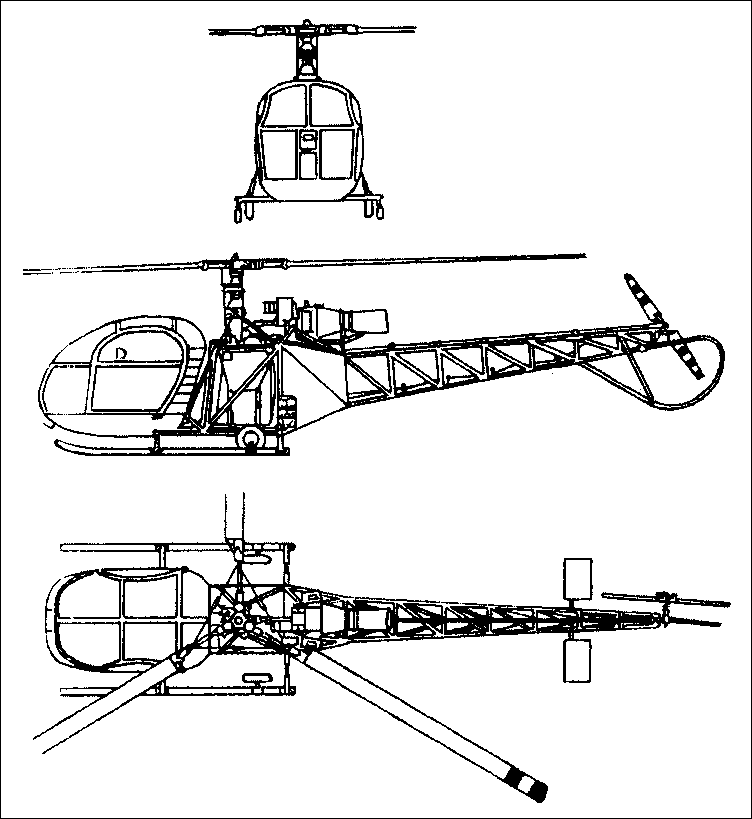
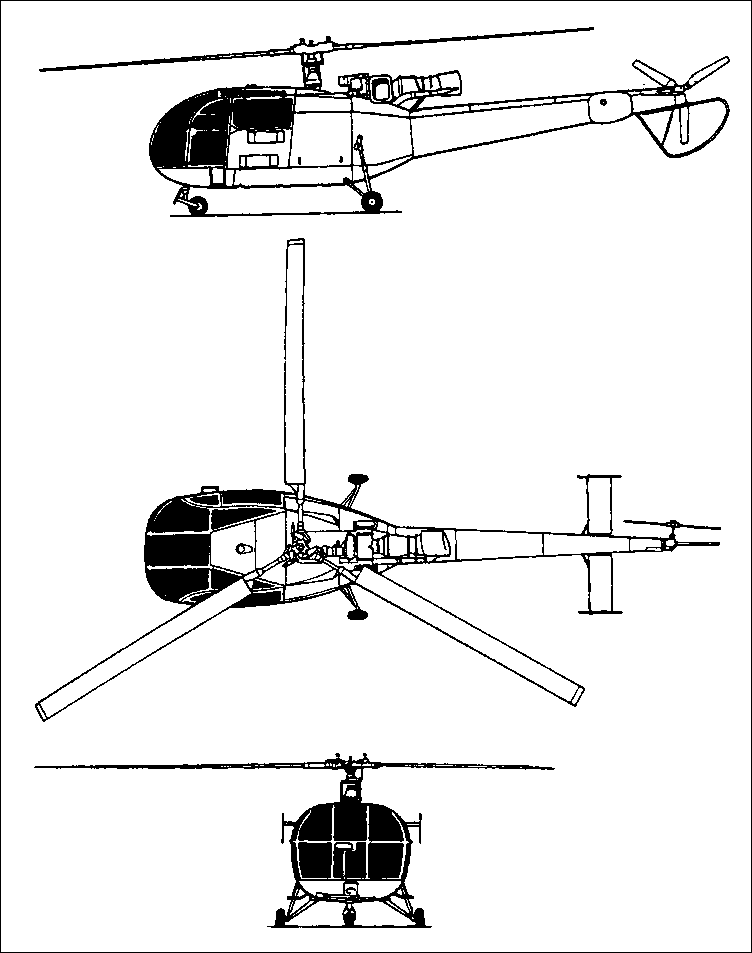
Alouette II
Alouette III

Aeronca 50 / K Srs / 60 / 65 / L-3 Grasshopper / TG-5 / O-58 / LNR-1

L-3B (O-58B)

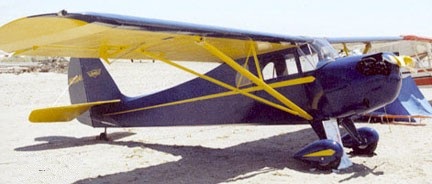
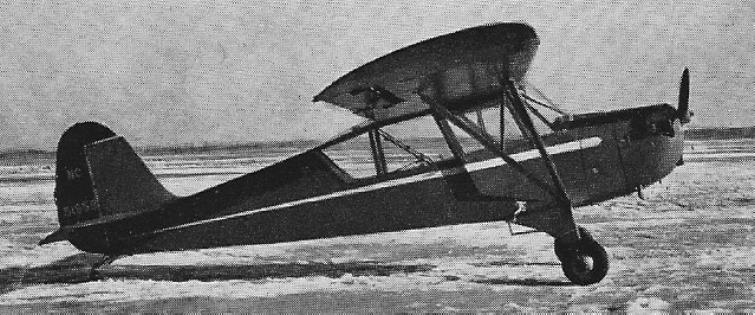
The Aeronca C-3 evolved into the Aeronca K Scout (ATC 634) in 1937, designed by Roger Schlemmer, the prototype being NX17440. A total of 344 were built, priced at $1,480, and $1,745 in 1938.

The 1937 KC Scout (ATC 655) sold for $1,590, and $1,295 in 1939. Thirty-four were built, and the float version was the two-door KC Sea Scout.

Aeronca KC

The 1938 KCA Chief (ATC 675) was priced at $1,695, and with65hp, $1,795. Sixty-two were built, the KCA evolving into the wide-cabin 50C Chief.

Aeronca KCA

The model 50C Chief was the first lightplane to fly non-stop from Los Angeles to New York City, on 19-39 November 1938, covering 2,785 miles in 30h 47m, avg: 90mph (registration NX21300 and piloted by Johnnie Jones).

The 1941 L-3 and O-58 Grasshopper was the military version of 65 with a greenhouse cabin and 65hp Continental YO/O-170-3. There were fifty-four; 42-456 to 42-459, and 43-2809 to 42-2858. These were followed by twenty L-3A (O-58A), 42-7793 to 42-7812, and 875 L-3B (O-58B), 42-14713 to 4214797, 42-36075 to 42-36324, 42-38458 to 42-38497, and 43-26754 to 43-27253.

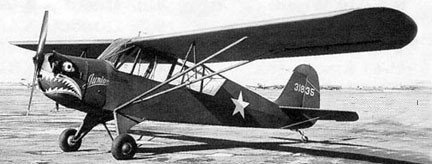
The L-3C had no radio and weight reduction. 490 were built, three to the US Navy as XLNR-1; 36422 to 36424.

Aeronca L-3C 43-1835

Others were;

L-3D = Impressed 65TF with Franklin AC-167. POP: 11.
L-3E = Impressed 65TC with Continental A-65-8. POP: 12.
L-3F = Impressed Super Chief with A-65-8. POP: 19 including 42-78044
L-3G = Impressed Super Chief with Lycoming O-145-B1. POP: 4.
L-3H = Impressed 65TL with O-145-B1. POP: 1.
L-3J = Impressed 65TC with A-65-7. POP: 1.

The original model, the YO-58, was a conversion of the civil 65TAC Defender. Production models were the O-58, O-58A and O-59B, later designated L-3, L-3A and L-3B in 1942. L-3D to -3J were impressed by USAAF.

The O-58B differs primarily in having a more extensively glazed cabin.

Performance and specifications were similar to the civil models.

The difference between the 1938 L and LA Chief models (ATC 702) was that the 50L Lycoming O-145 had exposed cylinders, while the 50LA had a closed cowling. Priced at $1,695, there were 65 50L and 20 50LA models built, some for the USAAF as the L-3.

The 50C Chief of 1938 (ATC 675) was an improved KCA with a wider cabin. Priced at $1,795; $1,695 in 1939, 248 were sold. A 50C was the first lightplane to fly non-stop Los Angeles-New York City, on 29-30 November 1938, covered 2,785 miles in 30h:47m, avg: 90mph. NX21300 piloted by Johnnie Jones had a fuel cost-per-mile of about one cent was most impressive, even in 1938 dollars.

Forty of the 1938 50F Chief (ATC 688) were built, powered by a 50hp Franklin 4AC engine.

The 1938 KF Chief (ATC 688) was powered by a 50hp Franklin 4AC engine. Selling for $1,595, five were built, including; NC21067, NC21063, and NC21092. The KF Chief evolved into 50F Chief.

The 1938 KM Chief (ATC 676) was powered by a 50hp Menasco M-50 engine. Priced at $1,590, nine were built. The KM Chief evolved into the one 50M Chief built, NC21070.

The 1937 KS Sea Scout (ATC 634) was a floatplane version of the model K; thirteen were built.

The 50TC and 50TL Tandem (T-series) of 1939 were the first tandem Aeronca as competition for the Piper Cub. A total of 16 were built.

50C

In turn, the K evolved into the SOC Chief in 1938.

The 1940 60TF Tandem (ATC 728) was the same as 50TC, with 60hp Franklin and slightly increased performance. 60TL with 60hp Lycoming. Priced at $1,695, 118 were built, going to USAAF as O-58B with 65hp Continental A-65.

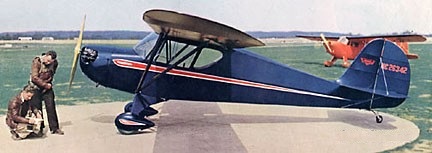
In 1939, the 65-series appeared and featured the 65 hp Continental option. The 65TC Defender (112 built), a tandem two-seat trainer, was widely used throughout the war, particularly in the Civilian Pilot Training Program. The CPTP and CAP versions were the 65TAC of which 154 were built. The Model L-3, the military version of the same airplane, featured a wider fuselage and larger window area to facilitate its role as an observation plane. Although provided with dual controls, the L-3 was designed to be flown from the front seat. The observer’s seat might face forward or aft. Many of the planes reached civilian hands after World War II.

The 1938 65C Chief and 65CA Super Chief (ATC 675) differed by the 65CA having an optional 8-USG auxiliary fuel tank and other deluxe appointments. The 65C price was US$1,795, and the 65CA US$1,895. Of the 279 model 65C built, many were impressed by USAAF as the O-58/L-3 in 1942. A total of 655 65CA models were built.

87 of the 1939 65LA Chief and 199 of the 65LB Super Chief (ATC 702) model were built. The 65LB with 65hp Lycoming O-145 in 1940.

One 50M Chief was built, 1938 (ATC 676), NC21070, priced at $1,695.

65TAF NC36817

65TAF (ATC 728) was CPTP and CAP versions of the 65TF with 59 of the 65TF built, and 115 of the 65TAF during 1940.

The 65TF Tandem and 65TAF Defender of 1940 were powered by 65hp Franklin 4AC engines. Fifty-nine 65TF were built and 115 of the 65TAF CPTP and CAP versions.

Aeronca 65TL NC24362

299 of the 1940 65TL Tandem and 65TAL Defender (ATC 728) were built plus military versions: 4 YO-58, 20 O-58, 701 L-3B, and 499 L-3C, plus 253 TG-5 gliders to AAF. The 65TAL was CPTP and CAP version with 100 built.

TG-5

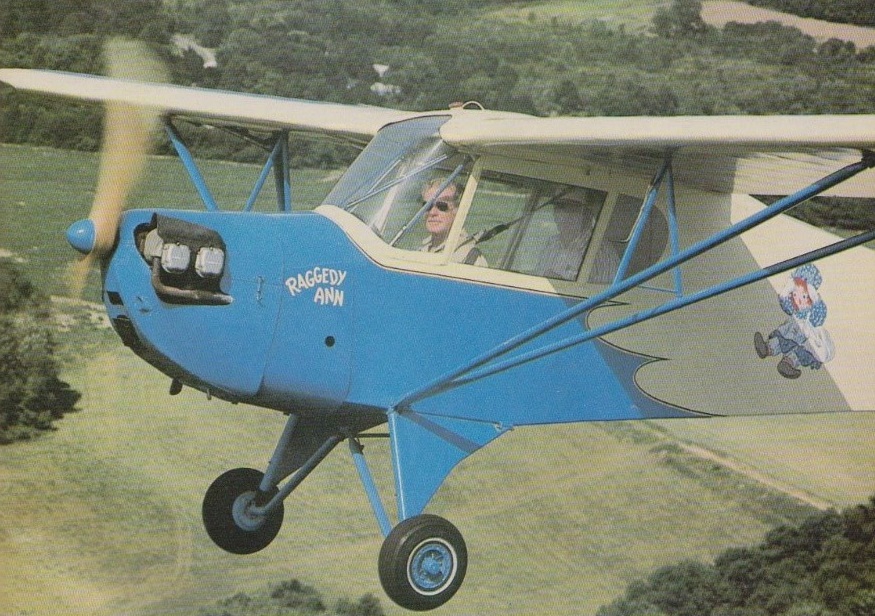
Aeronca L-3 Raggedy Ann 1983 Article

The 1939 models 50TC and 50TL Tandem (ATC 728) designed by James Weagle were the first tandem Aeronca, as competition for the Piper Cub. Sixteen 50TC (50hp Continental) were built, and 33 TL with the 50hp Lycoming engine.

Gallery

K
1937

Engine: Aeronca E-113C, 36 hp
Gross weight: 1040lb
Empty weight: 590lb
Fuel capacity: 10 USG
Top speed: 80 mph
Cruise speed: 70 mph
Stall speed: 35 mph
Initial climb rate: 400 fpm
Service ceiling: 12,500 ft
Range: 175 nm
Seats: 2

Engine: Aeronca E-113C, 42hp
Wing span: 36 ft 0 in
Length: 20 ft 7 in
Payload: 450 lb
Max speed: 93 mph
Cruise speed: 85
Stall speed: 38 mph
Range: 255 nm
Price 1937: US$1,480
Price 1938: US$1,745
Seats: 2
Number built: 344

KC Scout
1937
Engine: Continental A-40, 40hp
Wing span: 36 ft 0 in
Length: 20 ft 7 in
Payload: 452 lb
Max speed: 93 mph
Cruise speed: 85
Stall speed: 35 mph
Range: 225 nm
Price 1937: US$1,590
Price 1939: US$1,295
Number built: 34
Float version was the two-door KC Sea Scout

KCA Chief
1938
Engine: Continental A-50, 50hp
Wing span: 36 ft 0 in
Length: 21 ft 1 in
Payload: 450 lb
Max speed: 100 mph
Cruise speed: 90
Stall speed: 35 mph
Range: 250 nm
Price std: US$1,695
Price, 65hp: US$1,795
Number built: 62
Seats: 2
Evolved into the wide-cabin 50C Chief

KF Chief
1938
Engine: Franklin 4AC, 50hp
Wing span: 36 ft 0 in
Length: 20 ft 7 in
Payload: 452 lb
Max speed: 100 mph
Cruise speed: 90
Stall speed: 35 mph
Range: 225 nm
Price: US$1,595
Number built: 5
Seats: 2
Evolved into 50F Chief

KM Chief
1938
Engine: Menasco M-50, 50hp
Wing span: 36 ft 0 in
Length: 20 ft 7 in
Payload: 452 lb
Max speed: 100 mph
Cruise speed: 90
Stall speed: 35 mph
Range: 250 nm
Seats: 2
Price: US$1,590
Number built: 9
Evolved into 50M Chief

KS Sea Scout
1937
Engine: Continental A-40, 40hp
Wing span: 36 ft 0 in
Length: 20 ft 7 in
Seats: 2
Number built: 13
A float version of the KC model

50C Chief
1938 (ATC 675)
Engine: Continental A-50, 50hp
Wing span: 36 ft 0 in
Length: 21 ft 1 in
Payload: 460 lb
Max speed: 100 mph
Cruise speed: 90 mph
Stall speed: 36 mph
Range: 270 nm
Seats: 2
Number built: 248
Price 1938: US$1,795
Price 1939: US$1,695
Improved KCA with a wider cabin.

50F Chief
1938 (ATC 688)
Engine: Franklin 4AC, 50hp.
Number built: 40

50L, 50LA Chief / L-3
1938 (ATC 702)
Engine: Lycoming O-145, 50hp
Wing span: 36 ft 0 in
Length: 21 ft 1 in
Payload: 460 lb
Max speed: 95 mph
Cruise speed: 88 mph
Stall speed: 35 mph
Range: 275 nm
Price: US$1,695

50M Chief
1938 (ATC 676)
Engine: Menasco M-50, 50hp
Wing span: 36 ft 0 in
Length: 21 ft 0 in
Payload: 460 lb
Max speed: 100 mph
Cruise speed: 90 mph
Stall speed: 36 mph
Range: 250 nm
Price: US$1,695

50TC Tandem
1939 (ATC 728)
Engine: Continental, 50hp
Wing span: 35 ft 0 in
Length: 22 ft 4 in
Seats: 2

50TL Tandem
1939 (ATC 728)
Engine: Lycoming, 50hp
Wing span: 35 ft 0 in
Length: 22 ft 4 in
Seats: 2

60TF, 60TL Tandem, O-58B
1940 (ATC 728)
Gross weight: 1260 lb
Empty weight: 793lb
Fuel capacity: 12 USG
Top speed: 95 mph
Cruise speed: 87 mph
Landing speed: 42 mph
Range: 25 nm
Initial climb rate: 450 fpm
Service ceiling: 10,000 ft
Number built: 118

60TF Tandem
Engine: Franklin, 60hp
Wing span: 35 ft 0 in
Length: 22 ft 4 in
Seats: 2
Gross weight: 1260 lb
Empty weight: 793lb
Fuel capacity: 12 USG
Top speed: 95 mph
Cruise speed: 87 mph
Landing speed: 42 mph
Range: 25 nm
Initial climb rate: 450 fpm
Service ceiling: 10,000 ft

60TL Tandem
Engine: Lycoming, 60hp
Wing span: 35 ft 0 in
Length: 22 ft 4 in
Seats: 2
Gross weight: 1260 lb
Empty weight: 793lb
Fuel capacity: 12 USG
Top speed: 95 mph
Cruise speed: 87 mph
Landing speed: 42 mph
Range: 25 nm
Initial climb rate: 450 fpm
Service ceiling: 10,000 ft

O-58B
Engine: Continental A-65, 65 hp
Wing span: 35 ft 0 in
Length: 22 ft 4 in
Seats: 2
Gross weight: 1260 lb
Empty weight: 793lb
Fuel capacity: 12 USG
Top speed: 95 mph
Cruise speed: 87 mph
Landing speed: 42 mph
Range: 25 nm
Initial climb rate: 450 fpm
Service ceiling: 10,000 ft

65TC / 65TAC Defender
1940 (ATC 728)
Engine: Continental A-65, 65 hp
Wing span: 35 ft 0 in
Length: 22 ft 4 in
Gross weight: 1260lb
Empty weight: 793lb
Payload: 423 lb
Fuel capacity: 12 USG
Top speed: 94 mph
Cruise speed: 80 mph
Stall speed: 35 mph
Range: 225 nm
Initial climb rate: 450 fpm
Service ceiling: 10,000 ft
Seats: 2
Price: US$1,695

L-3J
Engine: Continental A-65-7, 65 hp
One impressed 65TC

L-3E
Engine: Continental A-65-8, 65
Twelve impressed 65TC

65C Chief, 65CA Super Chief
1938 (ATC 675)
Engine: Continental A-65, 65hp
Wing span: 36 ft 0 in
Length: 21 ft 0 in
Payload: 480 lb
Max speed: 105 mph
Cruise speed: 95 mph
Stall speed: 37 mph
Range: 260 nm
Seats: 2 side-by-side

L-3F
Engine: Continental A-65-8, 65 hp
Ninteen impressed Super Chief

65LA Chief
1939 (ATC 702)
Engine: Lycoming, 65hp

65LB Super Chief
1940 (ATC 702)
Engine: Lycoming O-145, 65hp

L-3G
Engine: Lycoming O-145-B1, 65 hp
Four impressed Super Chief

65TF Tandem, 65TAF Defender
1940 (ATC 728)
Engine: Franklin 4AC, 65hp

L-3D
Engine: Franklin AC-167, 65 hp
Eleven impressed 65TF

65TL Tandem / 65TAL Defender / O-58 / L-3C
1940 (ATC 728)
Engine: Lycoming O-145-B1, 65hp

L-3H
Engine: Lycoming O-145-B1, 65hp
One impressed 65TL

L-3C
No radio, weight reduction. 490 built; additionally 253 built as TG-5 gliders

TG-5 / XLNR-1
65TL Tandem / 65TAL Defender Army Air Force glider version.
Number built: 253
3 transferred to USN as XLNR-1 (36422/36424).

L-3 (O/YO-58)
Engine: Continental O-170-3, 65 hp
Length: 20.997 ft / 6.4 m
Height: 7.677 ft / 2.34 m
Wingspan: 35.07 ft / 10.67 m
Wing area: 158.016 sq.ft / 14.680 sq.m
MTOW: 1301.0 lb / 590.0 kg
Weight empty: 835.7 lb / 379.0 kg
Max speed: 76 kts / 140 km/h
Cruising speed: 40 kts / 74 km/h
Service ceiling: 10007 ft / 3050 m
Wing load: 8.2 lb/sq.ft / 40.0 kg/sq.m
Range: 174 nm / 322 km
Number built: 54 (42-456/459, 43-2809/2858).

L-3A (O-58A)
Number built: 20 (42-7793/7812)

L-3B (O-58B)
Engine: Continental O-170-3, 65 hp
Wing span: 35 ft
Length: 21 ft 10 in
Empty weight: 835 lb
Loaded weight: 1260 lb
Max speed: 87 mph
Cruise: 79 mph
Range: 218 mph
Number built: 875 (42-14713/14797, -36075/36324, -38458/38497, 43-26754/27253 )

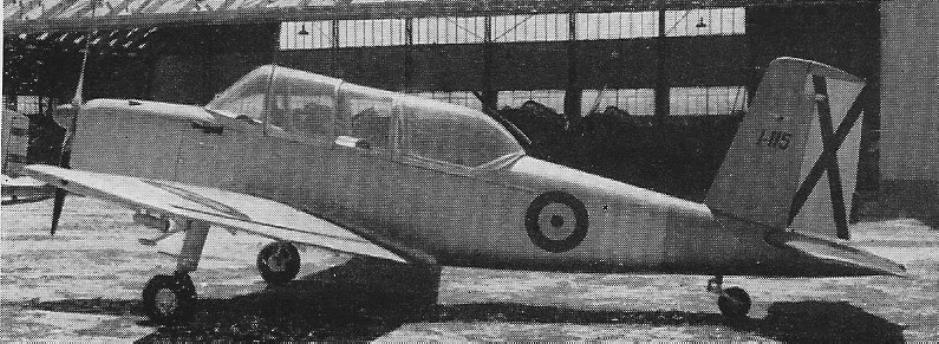
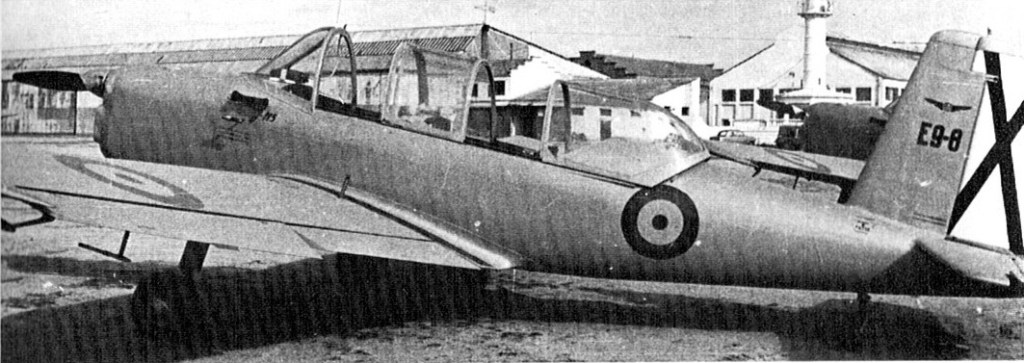
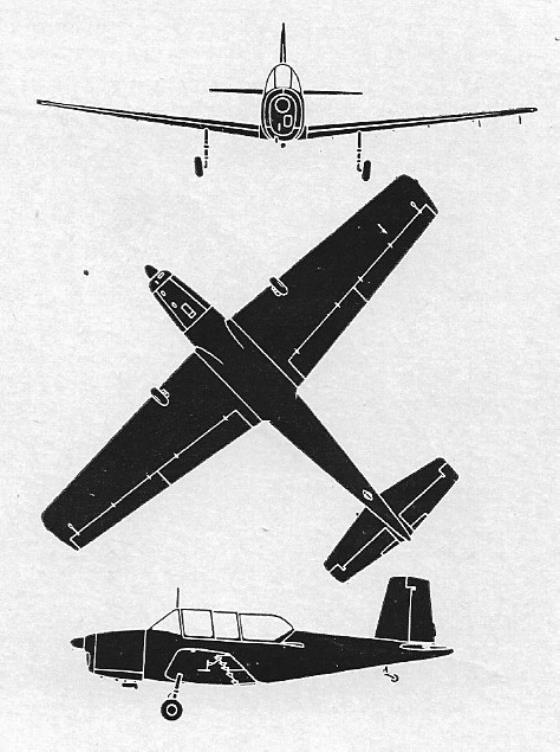
AISA I-115

The 1950 I-11 aircraft was followed by the I-115 basic trainer with revised fuselage. Originally designed by Iberavia S.A., series production was undertaken by Aeronautica Industrial S.A.

First flown on 16 July 1952, 450 were delivered overall. Construction is all wood. Full dual controls and instrumentation are fitted.

Two hundred were ordered for the Spanish Air Force during the mid-1950s, designated E.6, to replace the CASA-built Bucker Jungmann primary training biplane.

Engine: E.N.M.A. Tigre G-IVB, 150 hp
Wingspan: 31 ft 3 in
Wing area: 150.6 sq.ft
Length: 24 ft 1 in
Height: 6 ft 10 in
Empty weight: 1346 lb
Loaded weight: 1980 lb
Max speed: 149 mph
Cruise: 130 mph
ROC: 790 fpm
Service ceiling: 14,430 ft
Endurance: 3.5 hr
Seats: 2

Aeromarine PG-1

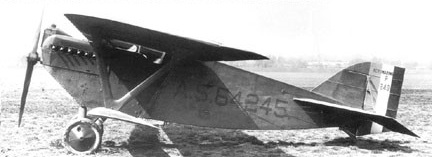
Aeromarine PG-1 AS64245

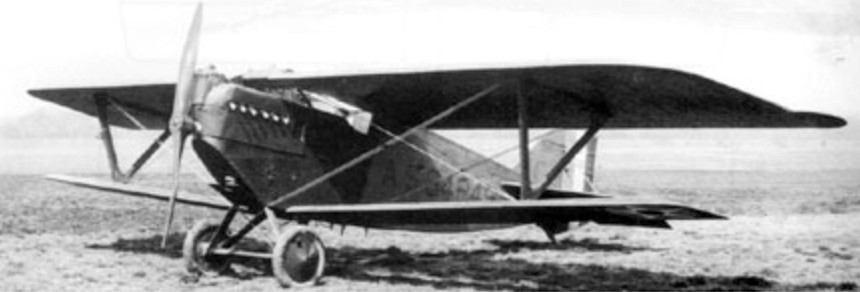
Built by Engineering Division and Boeing in 1922 as an army ground-attack pursuit aircraft, the PG-1 had a 37mm cannon in its propshaft and lots of armor plate. Ultimately it was rejected because of pilot’s lack of forward visibility. First flying on 22 August 1922, three were built (AS64245-64247). The first PG-1 went to McCook Field as project P-240. The only pursuit aircraft with a “PG” designation, which was later transferred to the Powered Glider category. A second type of engine was tried in the PG-1; the Packard 1A of 350 hp.

Aeromarine PG-1 AS64245

Engine: Wright K-2, 330hp / Packard 1A-1237, 350hp
Wing span (upper): 40 ft 1 in
Wing span (lower): 37 ft 2 in
Length: 24 ft 6 in
Payload: 888 lb
Max speed: 130 mph
Cruise speed: 124 mph
Stall speed: 58 mph
Range: 195 sm
Ceiling: 17,000 ft
Seats: 1

Aeromarine 40 / 41

40B

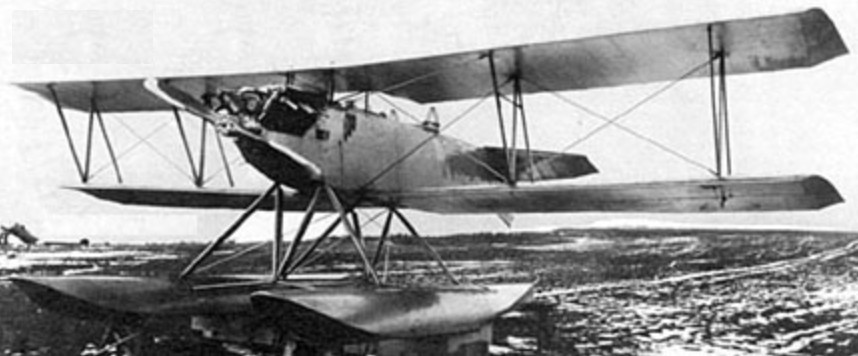
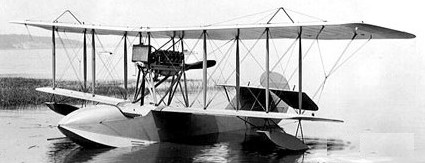
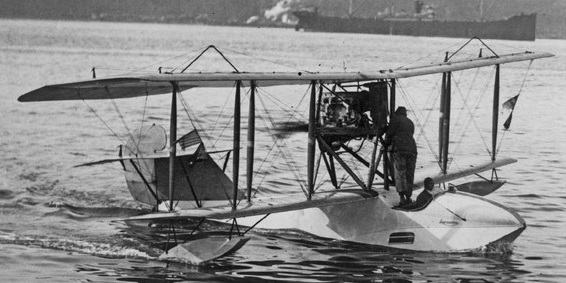
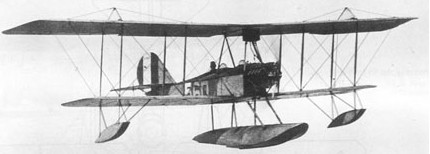
The Aeromarine Model 40 was a two-seat floatplane trainer aircraft serving the United States Navy. The aircraft was produced by the Aeromarine Plane and Motor Company of Keyport, New Jersey, and had already made a name for itself by supplying the US Navy with its first carrier-landed aircraft in the Aeromarine Model 39. Whereas the Model 39 could be utilized as a land-based and floatplane aircraft equally (requiring the conversion of the undercarriage to suit each task), the Model 40 was a dedicated flying boat using wing panels and struts of Model 39 on a new flying boat hull.

One or two 40-F may have been tested by the Coast Guard.

Design was conventional for the time, consisting of a contoured boat-like hull fitted to a boxy fuselage mounting a large unequal-span biplane wing configuration. Single pontoons were fitted as outrigger floats, one per each lower wing assembly. The upper and lower wing assemblies were joined by parallel struts making up two bays and fitting appropriate cabling. The student and instructor sat side-by-side just behind the nose and in front of the wing structure in an open-air cockpit. The view was superb from this position with their forward views protected by two simple curved windscreens. The empennage was adorned with a conventional large-area vertical fin and horizontal tailplane system showcasing rounded edges. The powerplant was placed within a strut configuration supporting the upper and lower wing assemblies at mid-span. The engine was situated well above and just behind the pilots, sporting a two-bladed pusher propeller system powered by a single Curtiss OXX-6 series V-8 water-cooled engine producing an output of roughly 100 horsepower (some later Model 40’s were known to fit a Hispano-brand engine in its place). Performance from this pusher arrangement allowed for speeds of up to 71 miles-per-hour with a service ceiling of nearly 1,900 feet. Endurance was listed at about 4.5 hours of flight time.

The Model 40 was designed and built in response to a 1918 Navy Department order for a two-seat seaplane trainer, 200 Model 40’s were initially ordered by the US Navy in 1918.

Very similar in general design to the Curtiss model MF trainer, which it was intended to augment, serialed A5040-5089, fifty 40-Fs were built.

Although the first civil model 40 may have flown in 1918 with a 150 hp Aeromarine U-8 engine, the first documented flight of the Navy model 40F occurred in 1919. When World War I ended, the original Navy order for 200 aircraft was reduced to 50, and all examples were delivered after the armistice. The model 40-F was operated by the US Navy as a trainer. The end of the war in November ultimately signified the end of the production contract, leaving only 50 Model 40 examples produced. Model 40’s still managed to see service in the post-war world solely with the United States Navy. Overall, their operational use proved the airframe too fragile for the constant rigors of water-born operations, to which these results helped in future American flying boat designs. During service, some model 40Fs were reportedly refitted with 150 hp Hispano-Suiza engines to improve performance and payload.

The civil versions (40 and 40B, 140 hp Hispano-Suiza engine; 40C, 150 hp Aeromarrine engine; 40L 130 hp Aeromarine L engine; 40T, 100 hp Curtiss OXX-6 engine; and 40U, 100 hp Aeromarine U-6 engine) were produced in 1919 and sold for around $9000 each. An estimated six civil models were built.

The Aeromarine Model 40 was further developed into the Model 41 to which some existing Model 40’s were converted to this newer design.

The Aeromarine 41 flying boat were conversions of Model 40s mentioned in 1922.

Gallery

40
1919
Engine: Hisso, 150hp
Span: 48 ft 4 in
Length: 28 ft 11 in
Seats: 2
Speed: 85 mph
New price: US$9,000

40
Engine: Curtiss OXX-6, 100 hp
Prop: 2 blade wooden fixed pitch
Upper wingspan: 48 ft 6 in
Length: 26 ft 11 in
Empty weight: 201 lb
Loaded weight: 2592 lb
Max speed: 71 mph at SL
Ceiling: 3500 ft
Range: 250 mi

40-B
1919
Engine: Hisso, 150hp
Span: 48 ft 4 in
Length: 28 ft 11 in
Seats: 2
Speed: 85 mph
New price: US$9,000

40-C
1918
Engine: Aeromarine U-8, 150hp
Seats: 2

40-F
1919
Engine: Curtiss OXX-6, 100hp
Wing span: 48 ft 6 in / 14.80m
Length: 28 ft 11in / 8.8m
Height: 11.48ft / 3.50m
Empty Weight: 2,061lbs / 935kg
Maximum Take-Off Weight: 2,590lbs / 1,175kg
Maximum Speed: 71mph / 114kmh / 62kt
Maximum Range: 314miles / 506km)
Service Ceiling: 1,903ft / 580m)
Seats: 2
New price: US$8,100

40-L
1918
Engine: Aeromarine L, 130hp
Seats: 2
Speed: 80 mph
Payload: 560 lb

40-T
1919
Engine: Curtiss OXX-6, 100hp
Seats: 2

40-U
1919
Engine: Aeromarine U-6D
Seats: 2

Aeromarine 39 / M / Sportsman

39a

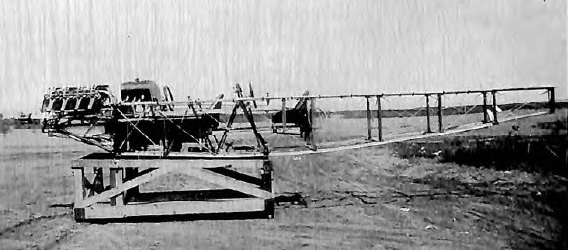
The Aeromarine 39 was a seaplane primary trainer version of the M-1 with the wingspan increased to carry the weight of twin floats. One was built.

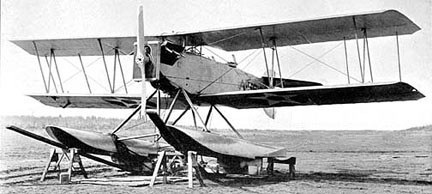
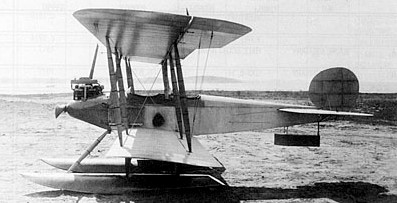
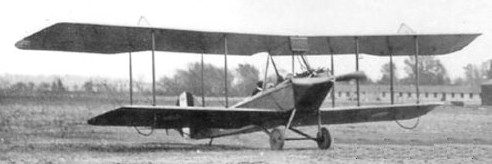
In 1917 the Navy placed with the Aeromarine Plane and Motor Company of Keyport, NJ, what was at that time the largest single order for Navy aircraft – 50 of the Model 39-A and 150 39-B trainers. These were conventional two-bay wood and fabric biplanes and could be fitted with wheels or floats. The 39-As used the four-cylinder Hall-Scott A-7A engine of 100 hp and the seaplane versions had twin wooden floats. The 39-B was powered by the 100 hp Curtiss OXX-6 engine, the seaplanes having the single main pontoon with small wingtip floats for stability which the Navy preferred for its training and service seaplanes and was to retain until seaplane trainers were dropped from the inventory in 1960.

39b

Fifty of the originally built designs were reassigned under the designation of 39A. The 39A models featured twin floats and the plane was powered by a Hall-Scott A-7 engine. Fifty were built with the 100hp Hall-Scott A-7 [A450/499]. The Hall-Scott A-7 was an early aircraft engine with a straight 4 configuration and could produce a maximum of 100 horsepower (75 kW). These engines suffered from consistency problems and many were prone to catch fire while in operation forcing the manufacturer to start using the Curtiss OXX powerplant. The Aeromarine 39-A was equipped with various engines: Aeromarine, Beardmore, Hisso, OX-5, OXX-6.

Model 39-B

Other redesigns increased the wingspan for more lift needed for those water take-offs. This became known as the 39B. Additional changes included a single pontoon with outrigger floats, plus an enlarged vertical tail surface.

The single Sportsman built in 1917 was a civil version of Aeromarine 39-B by Burnelli. Refitted with floats, it made the first aerial delivery of mail to a ship at sea on 14 August 1919.

In 1917 Aeromarine received from US Navy largest single order for aircraft then placed by that service: 50 Model 39-A and 150 Model 39-B biplane trainers (wheel or float undercarriage).

39-BL

In 1921 they cost US$9650 and 150 were built (A500-A649).

The Aeromarine 39 was purchased by the USN for $9,688, sold surplus in 1921 for $1,500, and reduced to $800 in 1928. About 30 of these received registration.

A number of the 39-Bs survived World War I, and two were used for the Navy’s early experiments in deck landing. Various types of arrester gear were tried on a dummy carrier deck at Langley Field, Virginia, in 1921. The aeroplane was fitted with the forerunner of the modern hook that engaged the cross-deck arrester cables, while alignment hooks were fitted to the undercarriage to engage longitudinal wires on the deck to keep the machine running straight. In anticipation of forced landings at sea in the course of later operations from shipboard, a hydrovane was fitted ahead of the wheels to prevent nosing over on alighting.

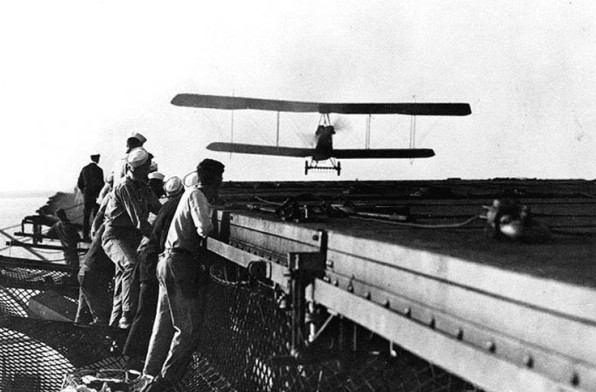
On October 26, 1922, a 39-B piloted by Lt Cdr Geoffrey DeChevalier, Naval Aviator No.7, made the first landing on the deck of the Navy’s first aircraft carrier, the USS Langley, a converted collier. De.Chevalier circled the USS Langley as the ship was underway at 10 knots. Chevalier successfully landed his plane on the moving deck of the Langley. The first such landing on an American carrier. This was nine days after the first take-off had been made in a Vought VE-7.

The 39-BL was also a two seat trainer.

The 1921 39-R sold for US$10,300 and 14 were built.

Aeromarine 39-B, USS Langley Oct 1922

Gallery

Aeromarine 39A
Engine: 1 x Hall Scott A-7, 100 hp
Length: 30 ft 4 in (9.25m)
Wingspan: 46.98ft (14.32m)
Height: 14.76ft (4.50m)
Empty Weight: 1,940lbs (880kg)
Maximum Take-Off Weight: 2,504lbs (1,136kg)
Maximum Speed: 73mph (117kmh; 63kts)
Maximum Range: 273miles (439km)
Service Ceiling: 8,202ft (2,500m)
Armament: None.
Accommodation: 2

39-B
Engine: Curtiss OXX, 100hp
Wing span: 47 ft 0 in
Length: 30 ft 5 in
Speed: 68 mph

39-BL
Seats: 2

Sportsman
Engine: Aeromarine V-8, 100 hp
Wing span: 47 ft 0 in
Length: 26 ft 8 in
Payload: 700 lb
Max speed: 78 mph
Stall speed: 48 mph
Seats: 2

39-R

AIDC F-CK / Ching Kuo

In the 1980s the United States of America tried to improve its relations with China, and part of this policy prevented the US government from delivering of the Northrop F-20 Tigershark or General Dynamics F-16 Falcon to Taiwan in 1982.
Taiwan decided to develop a fighter itself to supplement and replace its fleet of F-5E Tiger IIs and F-104s and develop a BVR capability.

AIDC F-CK / Ching Kuo Article

The program, Indigenous Defensive Fighter (IDF), was based on extensive cooperation between the Taiwanese aerospace industry and several US companies, including General Dynamics, Westinghouse, Honeywell and Lear. The Taiching based Aerospace Industrial Development Corporation (AIDC) was the main contractor. Formed for the development of the engine was the International Turbine Engine Corporation (ITEC), a joint venture between AIDC and Allied Signal.
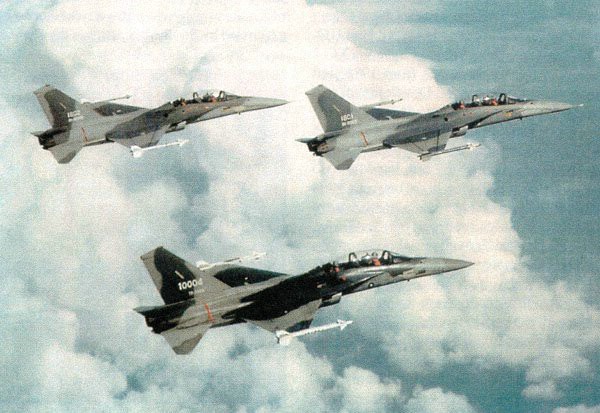
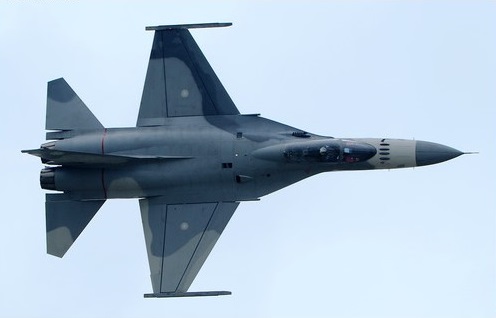
Commencing development in 1982 at the Aero Industry Development Center (AIDC) at Taichung, the Chiang Ching-Kuo indigenous air defence fighter was named F-CK-1 “Ching-Kuo” after a former president of Taiwan.
The aircraft’s primary mission is that of air defense carrying the indigenous Tien Chien (Sky Sword) I Sidewinder-equivalent and the Beyond Visual Range (BVR) Tien Chien II. The multi-role aircraft can also be used in the ground attack role or the martitime attack role using its multi-mode Golden Dragon GD-53 radar, which is a license built version of the Westinghouse AN/APG-67(V). For the martime attack role the aircraft can be equipped with up to three indigenous Hsing Feng II AShM. Internally the Ching-Kuo carries the M61A1 Vulcan 20mm cannon.

Three single-seat F-CK-1A and one two-seat F-CK-1B prototypes were ordered and on 10 December 1988 the first IDF prototype was rolled out. On 28 May 1989 the first, a single-seater, made its first flight. In total four prototypes were built, three single-seat and one two-seat variant. The first (A-1) incurring damage on a very public landing attempt. The second A-2 prototype was lost altogether in a Mach 1 speed trials test. After having completed another 10 pre-production aircraft, full production began and deliveries started early 1994. In December 1994 the first squadron of IDF or Ching-Kuo fighters was formed, achieving initial operational capability in 1995.
The Ching-Kuo fighter was powered by two Garrett TFE 1042-70 turbofans, produced in Taiwan by the International Turbo Engine Company and developed in afterburning form under the Yun Han (Cloud Man) programme, each providing 3783kg with maximum afterburning.
The airframe was developed in collaboration with General Dynamics under the Ying Yang (Soaring Eagle) programme; the avionics were acquired and integrated under the leadership of Lear Siegler under the Tien Lei (Sky Thunder) programme, and the primary missile armament was evolved under the Tien Chien (Sky Sword) programme. The cockpit is equipped with a wide angle HUD, two MFD, a side stick, HOTAS and has a 30 degree declined Martin Baker Mk.12 ejection seat.
Armament consisted of one 20mm M61A Vulcan rotary cannon and, for the intercept role, four Sky Sword I short-range and two Sky Sword II medium-range AAMs, the maximum external stores load being 4082kg. The first of 10 pre-production Ching-Kuos (a two-seater) flew in 1992, when production of up to a further 130 was being planned.

In 1998, in service F-CK-1s were rotated to AIDC for a limited post-production upgrade, including GEC-Marconi Combined Interrogator/Transponder (CIT), Litton Improved Radar Warning Receivers (IRWRs), and Rockwell Collins Instrument Landing System (ILS).

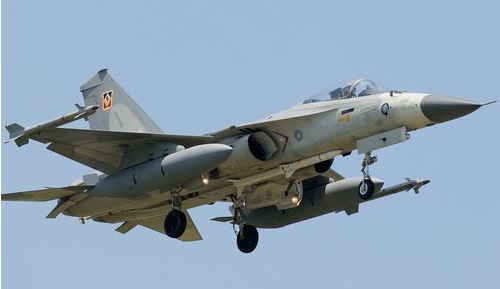
Production ended late 1999 at 130. Reportedly 102 single-seaters and 28 two-seaters had been produced. Taiwan had decided to purchase the F-16 when the Bush administration authorized the sale of more military technology to Taiwan. Having already acquired Mirage 2000 fighter from French to fill the gap, no more IDF aircraft were needed. Subsequently plans for more powerful engines were scrapped.
The 130th aircraft was delivered on 14 January 2000 and entered service in July. Taiwan operated two wings of Ching-Kuo fighters based at Ching Chuan Kang AB (Taicheng) and Tainan AB.
In 2001, AIDC started development of the upgraded F-CK-1C/D. On October 9, 2006, flight testing of the upgraded F-CK-1 IDF began when first single-seat F-CK-1C prototype (10005/958136) undertook its maiden flight from AIDC’s facility at Taichung. On March 27, 2007, the first two-seat F-CK-1D prototype (10006/96-8137) was also unveilled at a ceremony, attended by president Chen Shui-bian, who formally named the new variant Hsung Ying (Goshawk), instead of the earlier announced name of Shiang-Seng.
The F-CK-1C/D upgrade features a new BAE 32-bit flight control computer, improved mission computer and head-up display, advanced fire control radar system and improved weapons capability. Structural enhancements enable it to carry four instead of two Tianchien II (Skysword II) medium-range air-to-air missiles and strengthen the undercarriage. The upgrade also includes two additional fuel tanks in the form of conformal tanks mounted dorsally on the fuselage, first seen on the F-CK-1D prototype.

Gallery

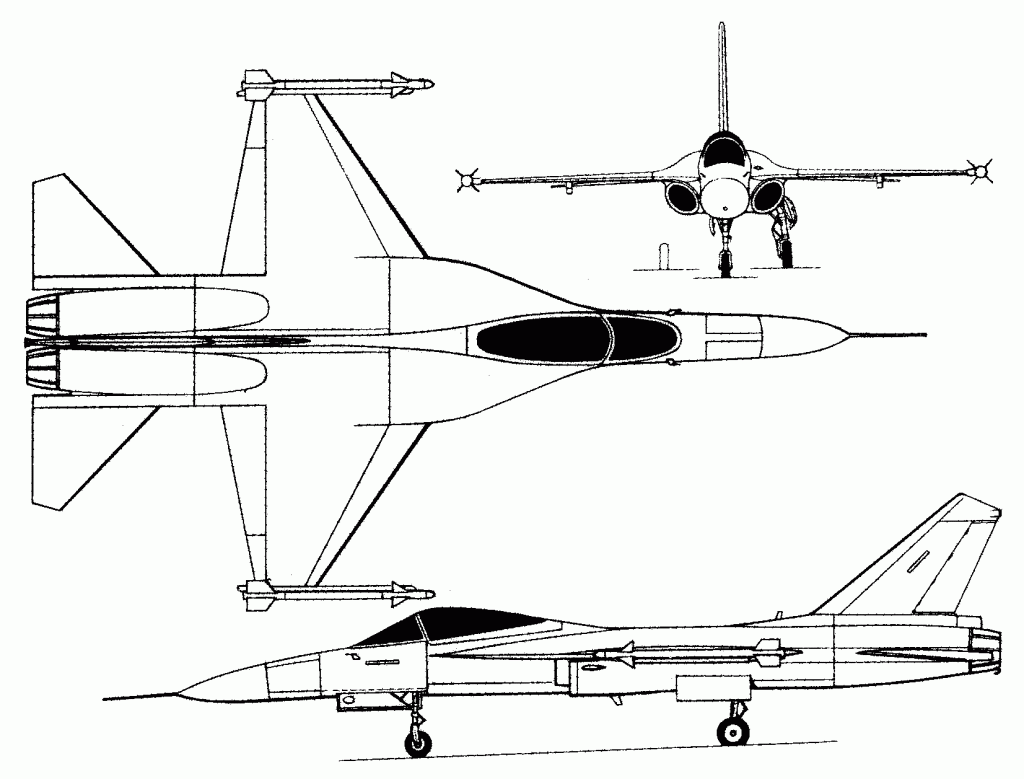
Variants: F-CK-1A, F-CK-1B, F-CK-1C, F-CK-1D

F-CK-1A Ching-Kuo
Engines: 2 x ITEC (Garrett/AIDC) TFE1042-70 (F125) afterburning turbofans, 42.08 kN /9,460 lb st
Length: 15.98m / 46 ft 7.75in
Height: 4.72m /15 ft 6 in
Wing span: 9.42m / 30 ft 10.25in
Wing area: 24.20 sq.m / 260 sq.ft
Empty weight: 6486 kg / 14,300 lb
Max Take-Off: 9.526 kg / 21,000 lb
Maximum Speed: 805mph (1,295kmh; 699kts)
Rate-of-Climb: 50,000ft/min (15,240m/min)
Service Ceiling: 50,000ft (15,240m)
Armament: one M61A1 Vulcan 20mm multi-barrel cannon
Pylons: 4 x underwing, 2 x wingtip, 1 or 2 fuselage stations
Accommodation: 1