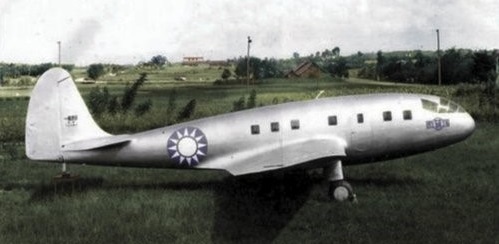
The XG-1 Glider was designed by the 1st, 2nd or 3rd AFAMF (Air Force Aircraft Manufacturing Factory)
The XG-1 Glider was designed by the 1st, 2nd or 3rd AFAMF (Air Force Aircraft Manufacturing Factory)
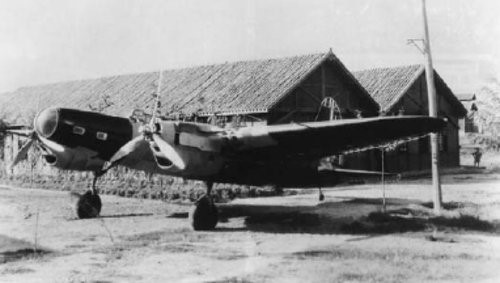
The XB-3 Bomber was designed by the 1st, 2nd or 3rd AFAMF (Air Force Aircraft Manufacturing Factory).
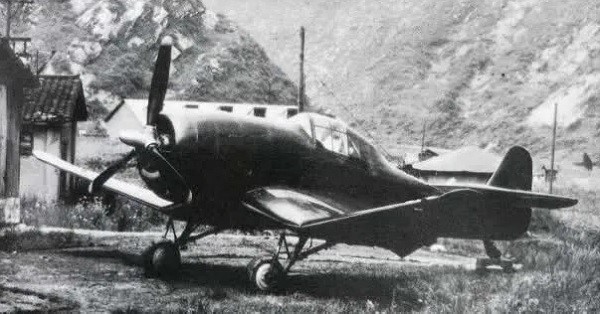
This aircraft seems to have drawn inspiration from the Vought Corsair and contemporary Japanese fighters. The XP-1 had the rear fuselage cut down, assumable to give a good all-round view for the pilot. It also had a rather peculiar wing, which was both bent and swept forward, to quite a strong degree apparently.
The XP-1 was designed in 1942 by Constantin Zakharchenko and built in Guiyang in 1944. with fixed undercarriage, The XP-1 was powered by one 1,200 hp Wright Cyclone R-1820-71 from A C-49D. It had wood/plywood inverted-swept wings, with automatic flaps, and the fuselage was built in steel tube/fabric.
Completed at some point in 1944, it reportedly first flew in January 1945.
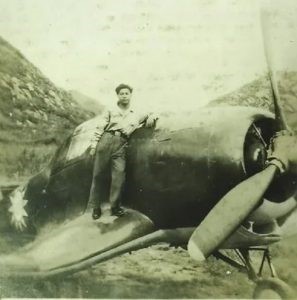
And on this first flight its engine, which was supposedly recovered from a crashed C-47, failed and the aircraft crashed. A second prototype is reported to have been under construction at the time but cancelled after this and the program scrapped.
The chaos of the Chinese Civil War seems to have destroyed most traces of the XP-fighters and all that remains of them are a few snippets.
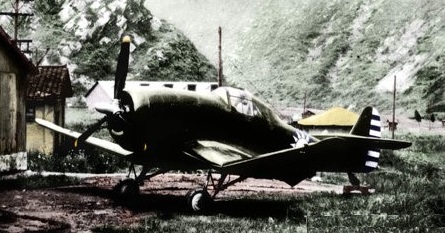
Engine: 1,200 hp Wright Cyclone R-1820-71
Wingspan: 12.10 m
Length: 8.72 m
Max weight: 2,930 kg
est.Max speed: 580 kph
Armament: two 12.7 mm machine guns
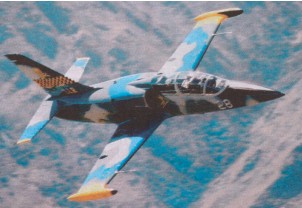
The Albatros, first flown on November 4, 1968, is the L 29’s successor as the standard trainer of all Warsaw Pact countries except Poland, and was in production in a light attack version, mainly for export. Designed three years after the L-29, the L-39 went through a series of prototype and development models before seeing production begin in 1972. The L-39 was designed with simplified and a more modular approach to engineering allowing the L-39 to be produced more efficiently and quicker than the L-28. The base powerplant allowed for a thrust upgrade when compared to the L-29 and avionics coupled with reinforced subsystems put the L-39 ahead.
Aero Vodochody L-39 Albatros Article
A tandem seater, with the instructor in the raised rear ejection seat, it is powered by the 1720 kg (3792 ¬lb) thrust Walter Titan, the Czech built Ivchenko Al 25TL turbofan also used in the Yak 40 STOL trijet. The name Albatros is used only for L 39 aircraft in service with the Czech air force, to which deliveries began in April 1974.
The basic aircraft is equipped with a camera gun and electrically controlled gunsight, but has no internal gun. Gun pods, bombs, rockets and missiles can be carried on two or four wing pylons along with a centerline-mounted 23mm GSh-23L twin-barrel cannon for close quarters work.
With production of 2,600 by 1990 it proved to be a very successful aircraft, with more than 2,900 built by 2005 with about 300 in civilian ownership around the world.
The aircraft is fully aerobatic stressed for +8G and 4G and can climb at the rate of about 3500 feet per minute.
Export numbers for the L-39 Albatross were roughly the same as the L-29. Thailand went on to purchase an export model designated with L-39 ZA/ART that featured Israeli-produced Elbit avionics. The most numerous in terms of production was the L-39 “C” model, which helped drive total production total past 3,000.
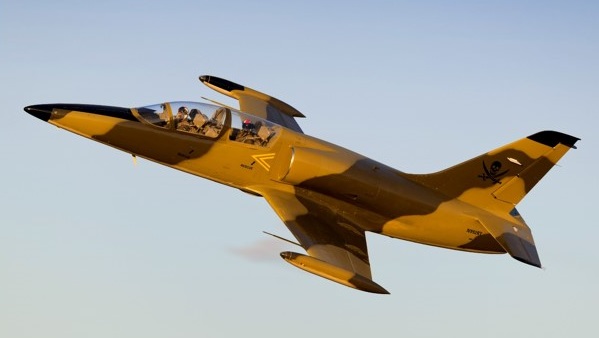
Earlier variants of the aircraft are the L.39ZO weapons trainer, the L.39ZA ground attack and reconnaissance aircraft, which has an under-fuselage gun pod and four wing hardpoints, and the L.39V target tug.
The L.39MS version of the Albatros was rolled out in mid-1986, but later designated the L-59.
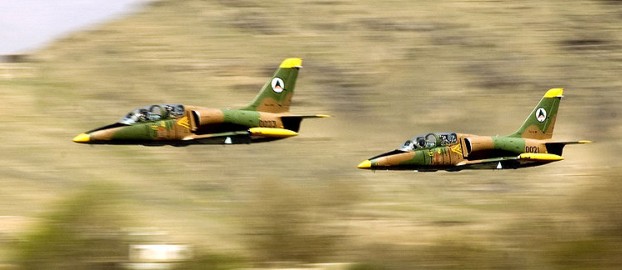
Aero L 39 Albatros
Engine: Ivtshenko AI 25 TL turbofan, 3,792 lb / 16873 N
Wingspan: 31.037 ft / 9.46 m
Length: 40.42 ft / 12.32 m
Height: 15.486 ft 4.72 m
Wing area: 202.363 sqft / 18.8 sqm
Aspect ratio: 4.4
Area of elevons: 18.299 sqft / 1.7 sqm
Area of flaps: 28.848 sqft / 2.68 sq.m
Empty weight: 7,340 lb
MTOW: 11,618 lb
Max. speed: 405 kts / 750 km/h
Landing speed: 92 kts / 170 km/h
TO distance: 1476 ft / 450 m
Landing dist: 2034 ft / 620 m
Initial climb rate: 4330.71 ft/min / 22.00 m/s
Service ceiling: 37730 ft / 11500 m
Wing load: 49.41 lb/sq.ft / 241.00 kg/sq.m
Range: 589 nm / 1090 km
Crew: 2
Armament: 1100kg ext. 4 pods., 23mm MK
L.39A
Engine: 1 x Walter Titan, 1720 kg / 3792 lb thrust.
Span: 9.4 m / 31 ft 0.5 in
Length: 12.25 m / 40 ft 5 in
Gross weight: 4535 kg / 9998 lb
Max speed: 750 km/h / 466 mph
L-39C
Engine: 3,800 lbs thrust turbofan.
Max wt: 4500 kg.
Speed: M 0.8 / 500mph / 600kph / 490 KIAS
Ceiling: 36,000 ft.
G-Limits: +8 / -4
Payload: 550 lb per pylon (2)
Endurance: 1.5+
L.39Z
Engine: 1 x Ivchenko AI-25TL, 16.9 kN.
Span: 9.5 m.
Length: 12.1 m.
Wing area: 18.8 sq.m
Empty wt: 3650 kg.
MTOW: 5600 kg.
Warload: 1100 kg.
Max speed: 755 kph.
Initial ROC: 1260 m / min.
Ceiling: 11,000 m.
T/O run: 480 m.
Ldg run: 600 m.
Fuel internal: 1255 lt.
Range: 1750 km.
Combat radius: 600 km.
Armament: 1 x 23 mm.
Hardpoints: 4.
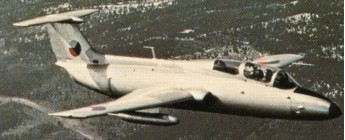
The Czech designed and produced Aero L-29 Delfin (translating to “Dolphin”; NATO designation of “Maya”) series was a highly utilized Cold War jet trainer aircraft for the Soviet Union and its satellite states. The twin-seat aircraft was capable of speeds over 400 miles per hour and a ceiling of over 36,000 feet.
Aero Vodochody L-29 Delfin Article
Early design studies for a two-seat jet trainer were conducted by K Tomas and Z Rubic in 1955. The L-29 features a T tail and can operate from grass, waterlogged, and dirt strips.
The single engine L-29 was built from two XL-29-designated prototypes – one fitted with a British Bristol Siddeley Viper turbojet engine and another fitted with an indigenous 1,960 lb thrust M 701c 500 turbojet, first flown on 5 April 1959. The XL-29 powered by an M 701 turbojet flew for the first time on April 5, 1960.
Further development saw a three-way competitive fly-off occur against the Yak-30 design and the PZL Mielec TS-11 Iskra with the L-29 coming out ahead (Poland would go on to utilize the TS-11 trainer however). Placed in production in 1963, it subsequently became a standard trainer with many Warsaw Pact and other countries.

The last of over 3,600 rolled off the production line in 1974. Almost all production was of the basic aircraft variant (codename Maya), although two other variants did appear.
The Soviet Union alone took over 2,000 Delfins, while significant numbers also served in Czechoslovakia, East Germany, and Hungary. In these countries the Delfin was used in all-through training from ab iniito to advanced stages.
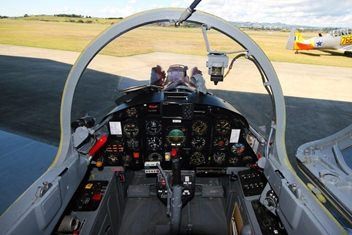
Small numbers of a single seat L-29A Delfin Akrobats were built for aerobatics while a prototype L-29R dedicated attack aircraft was also built.
With two available underwing hardpoints, a light attack strike aircraft was designed that could carry gun pods, drop bombs and rockets. Specialized aerobatic performers were also devised from the existing base L-29 airframe. 3665 were built until production ceased in 1974, superceded by the L-39. NATO name Maya.
Aero L-29 Delfin (Dolphin) / Maya
Engine: 1 x Motorlet M 701c 500 turbojet, 1,960lbs / 870 kgp thrust.
Length: 35ft 5.5 in (10.81m)
Wingspan: 33ft 9.5in (10.29m)
Height: 10.17ft (3.10m)
Wing area: 213.125 sq.ft (19.8 sq.m)
Empty wt: 5071 lb (2 360 kg)
Loaded weight: 6,834 lb (3100 kg)
Maximum Take-Off Weight: 7,804lbs (3,540kg)
Wing loading: 36.7 lb/sq.ft / 179.0 kg/sq.m
Maximum Speed: 407mph (655kmh; 354kts) at 16,400ft (5 000 m)
Cruise speed: 339 mph (545 kph)
Maximum Range: 398miles (640km)
Rate-of-Climb: 2,755ft/min (840m/min)
Service Ceiling: 36,089ft (11,000m)
Accommodation: 2
Hardpoints: 2
The Aero Aeroplane Works built A-304 monoplanes used for observing duties.
The A-304 attained the top speed of 325 kph. Fifteen were built before the German occupation on March 15, 1939. They were confiscated by the Germans and sent to aligned countries, above all to Bulgaria.
The Aero Aeroplane Works built A-101, Ab-101 recce-bomber biplanes.
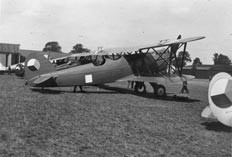
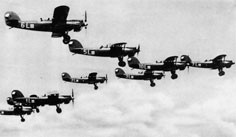
Aero succeeded in winning the Czechoslovakia Ministry of National Defence bid for a recce and bomber plane in 1932, this type was again a biplane. By early 1930s company was making A100 two-seat multipurpose aircraft and A102 fighter.
The wings were wood-framed, covered by fabric, and fuselage, elevator, rudder as well as tail-plane and fin steel-tube-framed, fabric-covered.
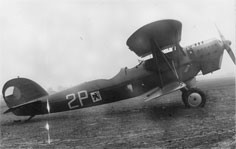
Engine: Avia Vr-36, 650 hp
Wingspan: 14.7 m
Length: 10.6 m
Empty weight: 2040 kg
Top speed: 270 kph
Service ceiling: 6500 m
Climb to 5000m: 20 min
Endurance: 4 hrs
Bombload: 600 kg
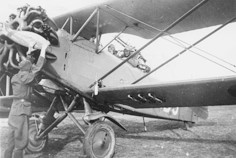
The Ap-32 light bomber was in production from 1930. Its forerunner was the A-32 type, whose span was by 40 cm narrower, length by 6 cm longer and empty weight by 26 kg lower. The powerplants were of the same 450 horsepower.
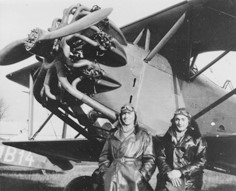
The Ap-32 type was used also as a recce aircraft. Its armament comprised two fixed and two ones flanking the cockpit incl. bomb racks under the lower wing for twelve pieces of 10 kg bombs.
Engine: Walter Jupiter 450 hp
Wingspan: 12.8 m
Length: 8.14 m
Empty weight: 1072 kg
Climb to 5000m: 26 min
Service ceiling: 6700 m
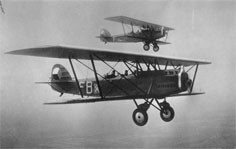
The A-30 two-seat reconnaissance biplane and A-130 had been forerunners of the Aero A-230.
Built from 1930.
A-230
Engine: Lorraine Ditrich, 490 hp
Wing span : 15.3 m
Length: 10 m
Empty weight: 1420 kg
Maximum speed: 198 kph
Climb to 5000 m: 27 min
Service ceiling: 5800 m
Endurance: 5 hr 30 min
 All Aero