Developed by CASA of Spain and IPTN of Indonesia, and marketed by the joint company of Aircraft Technology Industries (AirTech), the CASA/IPTN-designed, General Electric CT7-powered CN-235 first flew in I November 1983. In military configuration a 15,000kg payload may be carried, comprising 48 passengers, 41 paratroops, or 24 stretchers.
Orders to 1990 were nearing 200, with a majority for military operators, including the air arms of Spain Indonesia and those of France, Saudi Arabia, Ecuador, Botswana, Panama, Morocco and Turkey – where the CN-235 will also be assembled. Export deliveries began in February 1987, when the Royal Saudi Air Force received the first of four aircraft. Jordan ordered two in 1985, while the Indonesian armed forces will receive 50, comprising 32 for the Air Force and 18 for the Navy. At least six of the latter will be of the maritime surveillance version, with equipment including a 360 degree-scan search radar, AM.39 Exocet anti-shipping missiles, and Mk.46 torpedoes.
CN.235-100 Engine: 2 x GE CT7-9C turboprops, 1,870 shp (1 394 kW) Installed pwr: 2536 kW Span: 25.8 m Length: 21.3 m Wing area: 73 sq.m Empty wt: 8600 kg MTOW: 14,400 kg Payload: 5000 kg Cruise speed: 454 kph Initial ROC: 540 m / min Ceiling: 8110 m T/O run: 554 m Ldg run: 585 m Fuel internal: 5268 lt Range/payload: 600 km with 5000 kg Capacity: 38/40 pax
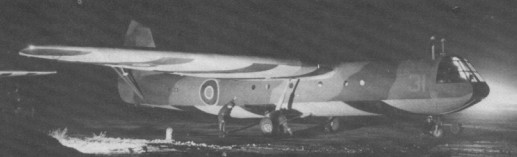
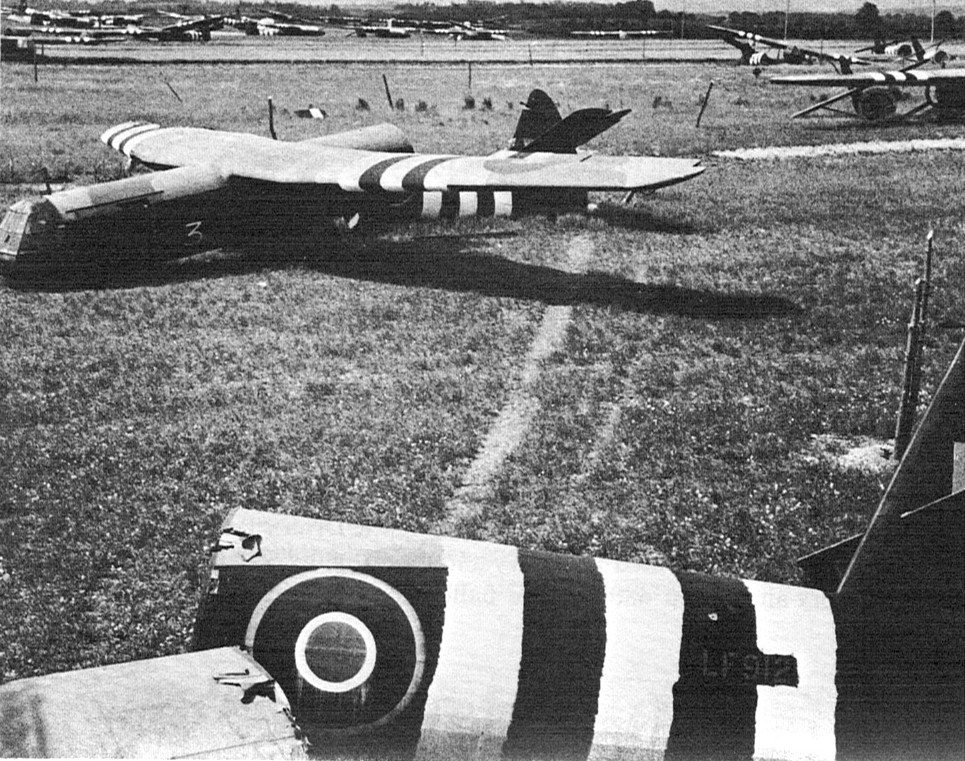
A high-wing military transport glider with accommodation for 25 troops or freight, including vehicles, of wooden construction. Designed by A.H. Tiltman to Air Ministry Spec. X26/40 The AS.51 Horsa I featured tricycle undercarriage with jettisonable main wheels, main central skid. The cantilever wing was in three pieces. Airbrakes were on the lower surfaces of the wings and pneumatically-operated split flaps were fitted.
The prototype first flew on 12 September 1941 at Great West Aerodrome and the production AS.51 Horsa I entered service in late 1942.
The AS.58 Horsa II differed from the Mk I by having a hinged nose section to allow ease of loading. The prototype Horsa II first flew in 1943.
The first operational mission with Horsas was the invasion of Sicily in 1943, but they were also used during the D-day landings, when Horsa gliders were towed by Whitley and C-47 aircraft.
6 June 1944 Orne Estuary, Normandy
The US forces also received several hundred of these gliders.
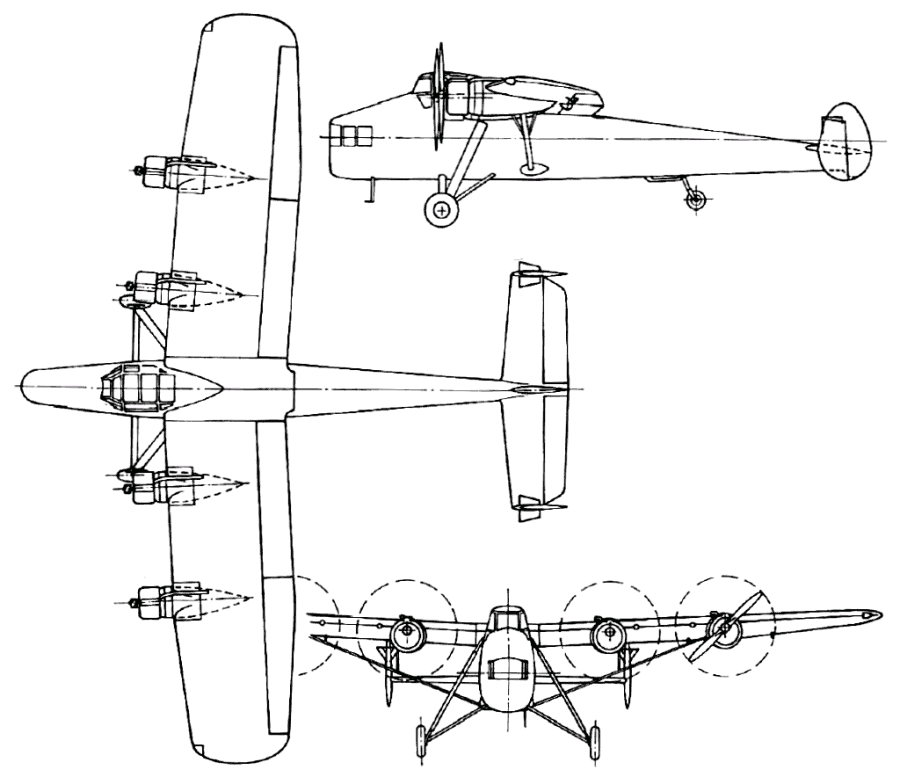
In 1937 the British Admiralty envisaged a need for an aircraft that could shadow enemy fleets at night and drafted Specification S.23/37 calling for a slow-flying silent aircraft with a long range, capable of operating from an aircraft carrier flight deck. The specified performance was to be a speed of 40 knots / 70kph at 500m for not less than 11 hours with accommodation for a pilot, observer and radio operator. Five companies showed interest – Percival, Short Brothers, Fairey Aviation, General Aircraft Ltd and Airspeed. Two prototypes were built, the Airspeed A.S.39 (serial N1323) and the General Aircraft G.A.L.38 (P1758). The A.S.39 design was a high-wing aircraft with four 130 hp Pobjoy Niagara V engines with fixed pitch propellers, extensive slats, flaps and drooping ailerons, fixed landing gear and an observer’s position in the nose. As for other aircraft carrier planes, the wings folded for storage. The Airspeed Fleet Shadower had a metal fuselage and three small fins. The two prototypes flew after the out break of the Second World War, the AS.39 flying on 17 October 1940. The aircraft met the requirement but the Admiralty changed their minds about the desirability of such an air¬ craft and scrapped this pro¬gramme in 1940 due to the introduction of radar.
Engines: 4 x 130hp Pobjoy Niagara V Max take-off weight: 3147 kg / 6938 lb Empty weight: 2083 kg / 4592 lb Wingspan: 16.25 m / 53 ft 4 in Length: 12.2 m / 40 ft 0 in Height: 3.17 m / 10 ft 5 in Wing area: 43.85 sq.m / 472.0 sq ft Max. speed: 201 km/h / 125 mph Ceiling: 1830 m / 6000 ft Crew: 3
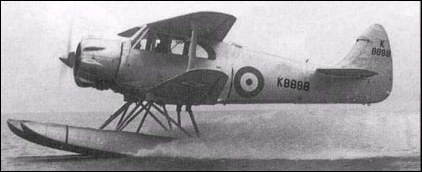
Designed as a radio-controlled and unmanned target aircraft, first flown as a piloted aircraft in 1937. A total of seven aircraft were built (including prototypes) of 65 production aircraft ordered.
Engine: Armstrong Siddeley Cheetah IX, 345 hp Length: 29.068 ft / 8.86 m Wingspan: 31.004 ft / 9.45 m Max take off weight: 3801.4 lb / 1724.0 kg Max. speed: 150 kt / 277 km/h Cruising speed: 131 kt / 243 km/h Service ceiling: 20013 ft / 6100 m Crew: 1
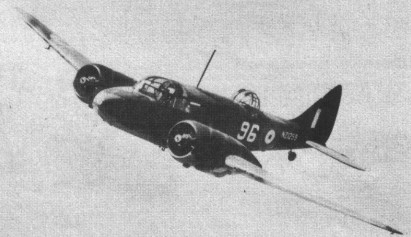
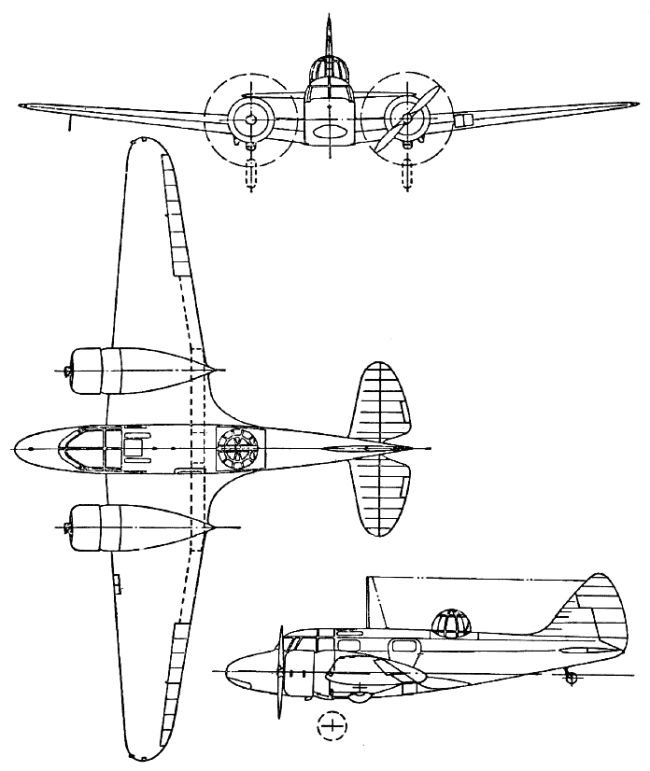
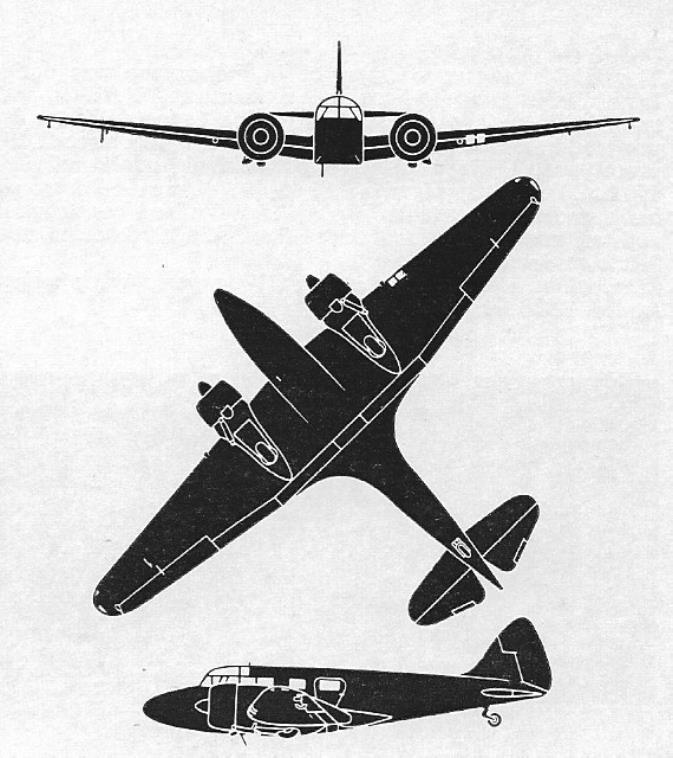
In 1936 Airspeed submited a proposal to meet Air Ministry Specification T.23/36, for a twin-engined trainer. Airspeed’s design for this was based on the AS.6 Envoy, which may have helped the Air Minis-try’s decision to order an initial quantity of 136 AS.l0s.
Sharing the AS.6 Envoy wooden construction, tailwheel type retractable landing gear and basic air¬frame, normal accommodation was for a crew of three at any one time, but in addition to seats for a pilot/pupil and co-pilot/instructor, there were positions for the training of an air-gunner, bomb-aimer, camera operator, navigator, and radio operator. Dual controls were standard, making the Oxford suitable for use as a twin-engined trainer; with the dual-control set removed from the co¬pilot’s position, a bomb aimer could take up a prone position and drop practice smoke bombs which were carried in the centre-section well; or the seat could be slid back and a chart table, hinged to the fuselage side, erected for use by a trainee navigator; an aft-facing seat behind the co-pilot position was available for a radio operator; and, in the Oxford 1, an Armstrong Whitworth dorsal gun turret was provided for an air-gunner’s training. The turret was removed from later versions and they were used mainly for pilot training. A hood was also available so that the Oxford could be used for instrument training.
Oxford
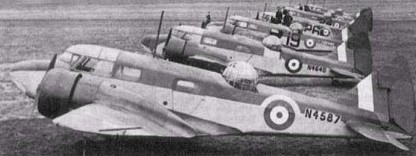
The prototype AS.10 Oxford made its first flight on 19 June 1937, and deliveries began in November of that year, with four of the first six going to the RAFs Central Flying School, the other two to No.11 Flying Training School.
One example of a Mk II aircraft was fitted experimentally with two 186-kW (250-hp) de Havilland Gipsy Oueen inline engines. Odd variants included an early Oxford I equipped with special McLaren landing gear, the main units of which could be offset to cater for a reasonable degree of crosswind at both take-off and landing, and one with a tail unit which included twin endplate fins and rudders, especially installed for a series of spin recovery tests.
The outbreak of World War II created a demand for these trainers, not only for use by the RAF, but also by those nations which were involved in the Commonwealth Air Training Scheme. These included Australia (nearly 400 Oxfords), Canada (200), New Zealand (300), Rhodesia (10), and South Africa (700). Examples went also to the Free French air force and, under reverse Lend-Lease, a number were used by USAAF units in Europe. A number were equipped to serve as air ambulances. The Fleet Air Arm also had one training unit, No. 758 Instrument Flying Squadron, equipped with Oxfords from June 1942.
The demand for Oxfords was beyond Airspeed’s productive capacity, the company building a total of 4,411 at Portsmouth, Hants, and 550 at Christchurch, Hants. Other construction was by de Havilland at Hatfield (1,515), Percival Aircraft at Luton (1,360), and Standard Motors at Coventry (750), to give a total of 8,586. Airspeed built its last example in July 1945, and the Oxford remained in service with the RAF at No. 10 Advanced Flying Training School, Pershore, until 1954. Many were supplied after the war to the Dutch air force.
Consul
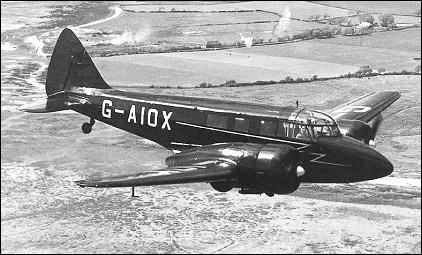
During 1946-1948 many were converted to Consul civil version status post-war as civilian six passenger aircraft. About 150 were sold worldwide, some conversions and some new builds.
Mk I – Weapons trainer, usually fitted with a Armstrong Whitworth dorsal gun turret Engines: 2 x Armstrong Siddeley Cheetah IX (335hp) or Cheetah X, 280-kW (375-hp). Propellers: Fixed-pitch Length: 34.48ft (10.51m) Wingspan: 53.31ft (16.25m) Height: 11.09ft (3.38m) Maximum Speed: 186mph (300kmh; 162kts) Cruise: 140 mph Maximum Range: 932miles (1,500km) Service Ceiling: 19,199ft (5,852m) Armament: 1 x 7.7mm (0.303-in) Vickers K machine gun in dorsal turret Bombload: 250lbs internal Accommodation: 3 Empty Weight: 5,379lbs (2,440kg) Maximum Take-Off Weight: 7,599lbs (3,447kg)
Mk II – Pilot, radio-operator and navigator trainer Engines: 2 x Armstrong Siddeley Cheetah IX (335hp) or Cheetah X, 280-kW (375-hp) Propellers: Fixed-pitch Top speed: 185 mph Cruise: 140 mph
Mk.II Engine: 2 x Armstrong Siddeley Cheetah 10, 395 hp Span: 43 ft 4 in Length: 35 ft 4 in Height: 10 ft 1.5 in Wing area: 348 sq.ft Empty weight: 6047 lb Loaded weight: 8250 lb Top speed: 185 mph Max cruise: 156 mph ROC: 1180 fpm Max range: 900 mi
Mk III – Radio and navigation trainer Engines: 2 x Armstrong Siddeley Cheetah XV 318-kW (425hp) Propellers: Rotol constant-speed Number built: 1
Mk IV – Testbed for the De Havilland Gipsyqueen IV (Gipsy-Six IIIS, Turbocharged, 6 cylinder inline engine).
Mk V – Radio and navigation trainer Engines: 2 x Pratt & Whitney R 985-AN6 Wasp Junior, 335kW (450-hp) Propellers: Constant-speed Wingspan: 16.26 m / 53 ft 4 in Length: 10.52 m / 34 ft 6 in Height: 3.38 m / 11 ft 1 in Wing area: 32.33 sq.m / 348.00 sq ft Max take-off weight: 3269 kg / 7207 lb Empty weight: 2572 kg / 5670 lb Wing load: 22.96 lb/sq.ft / 112.0 kg/sq.m Max. speed at 1250m (4,l00ft): 325 km/h / 175 kts / 202 mph Service ceiling: 6400 m / 21000 ft Range: 1127 km / 609 nm / 700 miles Seats: 3-4
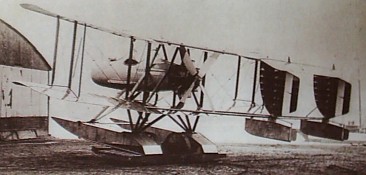
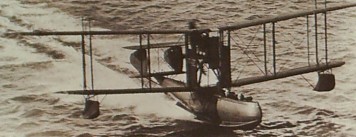
Designed by Harris Booth as a torpedo bomber in 1914, the A.D. Seaplane 1000 was a floatplane of wire braced, fabric covered wood construction. An unequal span biplane, the central glazed nacelle housed an engine and pusher propellor. Two tractor engines were mounted in the booms. The undercarriage was two main floats and two smaller rear floats. The outer wing panels had dihedral and were separated on each side by two sets of interplane struts. Overhanging ailerons, on the outboard trailing edges of the upper wing, were supported by kingposts and cables. Seven were ordered from J. Samuel White, but only one was completed. With poor performance further development was abandoned but the single type 1000 survived until 1916.
AD Type 1000 Seaplane Engine: 3 x Sunbeam Vee, 310 hp / 231vkW Wingspan: 115 ft / 35.05 m Crew: 5
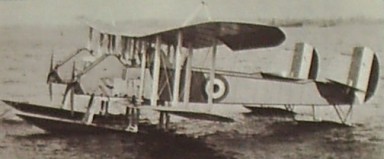
The A.D. Navyplane was designed by Harold Bolas as a two seat pusher floatplane. Two were ordered in January 1916 for the Royal Naval Air Service and serial numbers were allocated for seven (9095-9096, N.1070-N.1074) but only one prototype was completed (9095). It was originally fitted with an American Smith Static ten cylinder single-row engine, and flight tested in August 1916 by Lt.Cdr John Seddon. The engine was later replaced by an AR.1 rotary (later redesignated BR.1 for Bentley Rotary 1) and retested in May 1917. The performance was found to be poor and the aircraft was oficially deleted on 27 August 1917.
Engine: 1 x Smith Static, 150 hp / 112 kW Prop diameter: 8 ft 10 in / 2.69 m Max speed: 64 mph / 104 kph Climb to 2000 ft / 907 m: 30 min Service ceiling: 1300 ft / 396 m Endurance: 6 hr Empty weight: 2100 lb / 952 kg MTOW: 3102 lb / 1157 kg Wing span: 36 ft / 10.97 m Wing chord: 5 ft / 1.52 m Wing gap: 6 ft 6 in / 1.98 m Tailplane span: 15 ft 6 in / 4.72 m Length: 27 ft 9 in / 8.46 m Height: 12 ft 9 in / 3.89 m Wing area: 364.00 sq.ft / 33.80 sq.m Armament: 1 x 0.303 / 7.7 mm Lewis mg
Engine: 1 x Admiralty Rotary 1, 150 hp / 112 kW Wing span: 36 ft / 10.97 m Wing chord: 5 ft / 1.52 m Wing gap: 6 ft 6 in / 1.98 m Tailplane span: 15 ft 6 in / 4.72 m Length: 27 ft 9 in / 8.46 m Height: 12 ft 9 in / 3.89 m Wing area: 364.00 sq.ft / 33.80 sq.m Armament: 1 x 0.303 / 7.7 mm Lewis mg
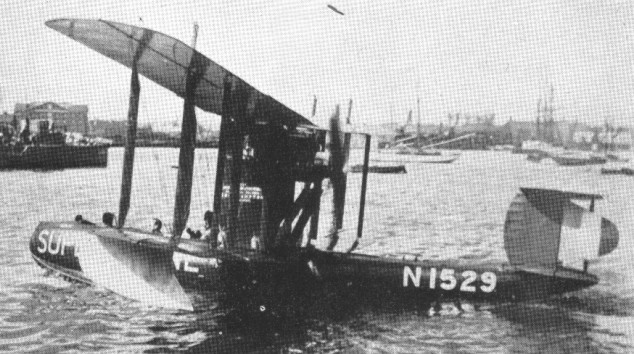
Designed in 1915 to serve in patrol and reconnaissance roles, the AD Flying-Boat was a two seat, single engined, unequal-span braced biplane. The wings could be folded for stowage, and a braced ailplane had twin fins and rudders. Construction of two prototypes was begun in May 1915, with May, Harden & May of Southampton building the first hull. The hull being designed by Lieutenant Linton Hope. The first was then completed at Southampton by Pemberton-Billing Ltd, who also built the second prototype and the 27 production aircraft. The first prototype was powered initially by a 200 hp / 149kW Hispano-Suiza with a four blade pusher prop. The original order was for 85 aircraft but after the first 27 the remaining contracts were cancelled in March 1918. The aircraft were used by the Royal Naval Air Service, armed with one forward firing 0.303 in Lewis gun and provision for eight light bombs. All 27 production aircraft were declared obsolete in late 1918. Nineteen were repurchased by Supermarine soon after the war and converted for civil use as the Supermarine Channel.
Engine: 1 x Hispano Suiza, 200 hp / 149 kW Max speed: 100 mph / 161 kph at 2000 ft / 610 m Cruise speed: 90 mph / 145 kph at 10,000 ft / 3050 m Service ceiling: 11,000 ft / 3355 m Endurance: 4 hr 30 m Empty weight: 2508 lb / 1138 kg MTOW: 3567 lb / 1618 kg Wing spar upper: 50 ft 4 in / 15.34 m Wing spar lower: 39 ft 7.25 in / 12.07 m Length: 30 ft 7 in / 9.32 m Height: 13 ft 1 in / 3.99 m Wing area: 479 sq.ft / 44.5 sq.m Armament: 1 x 0.303 / 7.7 mm Lewis mg
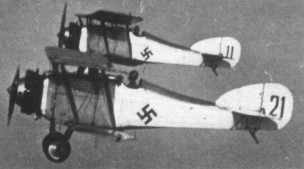
With the liquidation of the Martinsyde Company in February 1924, and the acquisition of its stores, stocks and goodwill by the Aircraft Disposal Company (A.D.C.), development of the Buzzard continued under the design leadership of John Kenworthy. This resulted in the A.D.C.1, which was fundamentally an F.4 Buzzard airframe with a 380 hp Armstrong Siddeley Jaguar radial engine. The prototype A.D.C.1 was first flown on 11 October 1924, subsequently participating in the 1925 and 1926 King’s Cup races, and considerable foreign interest was displayed in the type. In the event, only one order for the A.D.C.1 materialised, from Latvia and comprising eight aircraft which were delivered in 1926, at least two of these surviving until 1938.
Engine, Armstrong Siddeley Jaguar radial, 380 hp Span, 32 ft 9 in (9,98 m) Length, 25 ft 0 in (7,62 m) Wing area, 320 sq ft (29,73 sq.m) Empty weight, 1,865 lb (846 kg) Loaded weight, 2,650 lb (1202 kg) Max speed, 163 mph (262 km/h) at sea level Time to: 5,000 ft (1525 m), 2.42 min Time to 10,000ft: 5min 30sec Time to 15,000ft: 17min 30sec Service ceiling; 27,000ft Armament: two synchron¬ised 0.303-in (7,7 mm) Vickers guns
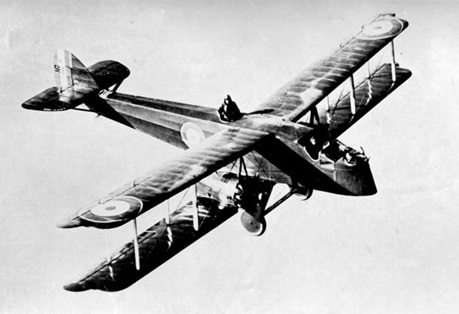
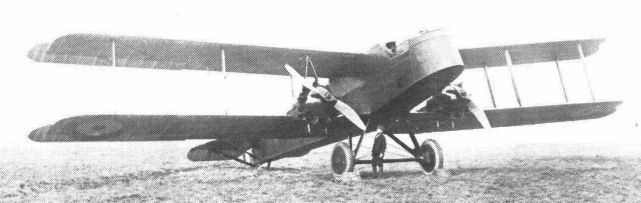
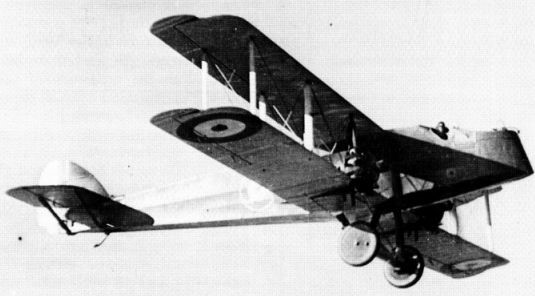
The DH.11 Oxford was designed by Geoffrey de Havilland for the Aircraft Manufacturing Company as a twin-engined day bomber to replace the Airco DH.10. It was designed (as required by the Specification) to use the ABC Dragonfly radial engine which promised to give excellent performance and had been ordered in large numbers to be the powerplant for most of the new types on order for the Royal Air Force.
Designs began early in 1918 when a contract was placed for three aircraft (Contract 35a/2150/C.2485) and by August the fuselage of the prototype, H5891, was well advanced in the Hendon factory. In September all work ceased because the Dragonfly engines were beset by problems and in November Siddeley Puma in-line, high compression engines were considered and the necessary engine bearer modifications were put in hand.
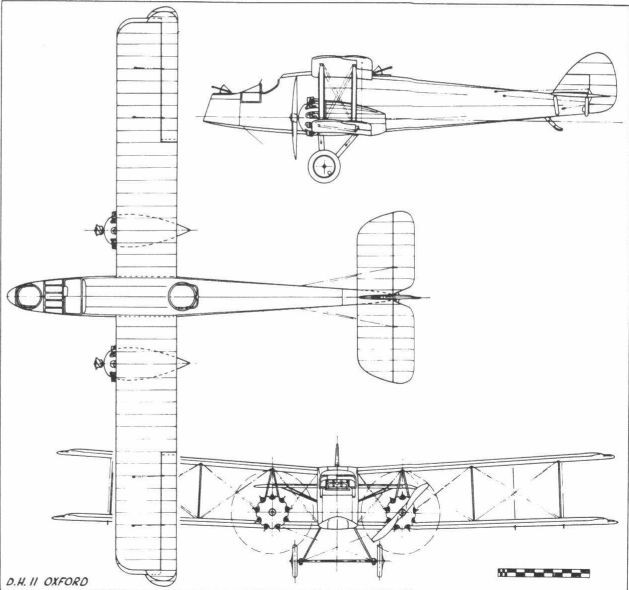
The D.H.11 had fabric covered, wooden airframes incorporating steel tubing for highly stressed or vulnerable members such as engine mountings, undercarriage and the empennage trailing edges. The type had horn balanced ailerons and the characteristic de Havilland rudder, and four degrees of dihedral on the upper mainplane compared with two degrees on the lower, gave the wings of the D.H.11 a diverging appearance and the fuselage filled the whole mainplane gap, making it possible to put the rear gunner on a raised floor in the mid upper position with a commanding field of fire in all upward directions.
A fuselage 6 ft. 0 in. deep and 4 ft. 0 in. wide enabled main fuel tanks of 170 gallons capacity to be slung from the top longerons of the centre fuselage with a walk way beneath. This gave the rear gunner access to the cockpit, in which the pilot sat on the starboard side, and thence to the front gunner. Entry to the aircraft was gained through a trap door between the spars of the lower wing which opened on to this catwalk. Armament consisted of a Scarff-ring-mounted Lewis gun fore and aft and approximately 1,000 lb. of bombs carried internally. Two 320 h.p. A.B.C. Dragonfly radial engines were housed in nacelles fixed directly to the lower mainplane but the eminently business-like and efficient divided undercarriage of the D.H.10 gave place to a narrow track.
By 1919 the machine, H5891, was ready and the mainplanes were being covered yet despite recurring magneto trouble it was decided to fit the Dragonflies after all. After the first few flights in January 1919 H5891 went back into the works for the engines to be repositioned but was short lived. Its last flight came when a connecting rod broke in one of the engines, which seized up just as the aircraft became airborne, but the pilot, F. T. Courtney, made a forced landing without damage.
Two further prototypes, Mk. IIs, H5892 and H5893, with Puma high compression engines, were cancelled in 1919, with no aircraft in the end being purchased to replace the DH.10. Serials later allotted to Sopwith Buffaloes.
Oxford Mk I Engines: 2 × ABC Dragonfly, 320 hp (239 kW) each Wingspan: 60 ft 2 in (18.34 m) Wing area: 719 ft² (66.8 m²) Length: 45 ft 2¾ in (13.79 m) Height: 13 ft 6 in (4.12 m) Empty weight: 4,105 lb (1,866 kg) Max. takeoff weight: 7,020 lb (3,191 kg) Maximum speed: 107 kn (123 mph, 198 km/h) Service ceiling: 14,500 ft (4,400 m) Power/mass: hp/lb (kW/kg) Climb to 10,000 ft: 13 min 45 sec Endurance: 3 hours Crew: three Armament: 2 × .303 in (7.7 mm) Lewis gun Bombload: 4 × 230 lb (104 kg) bombs carried internally




 All Aero