The A-40/Be-40 Albatross Mermaid turbofan-powered intermediate-range antisubmarine, search-and-rescue and patrol amphibian, first flown December 1986 and ordered for the Russian Navy in 1992 but not funded. The A-40 amphibian aircraft is intended for antisubmarine warfare in the near coastal zone at any time of the day and year, in VFR and IFR weather conditions. The aircraft is provided with an inflight refueling system. Its onboard equipment provides for automatic solution of flight/navigation problems, search, detection, tracking and destruction of hostile submarines both in surface and submerged positions and on the sea bottom. The equipment comprises a search/sighting system, a flight control and navigation complex, communications facilities, and other equipment. The search/sighting system consists of radar, sonar and magnetometric subsystems.
The engines are started by an auxiliary power unit and the cruise turbofans are equipped with a thrust reverser, thereby reducing the landing roll and the abortive takeoff distance.
The type first showed up in US reconnaissance photographs during 1988 satellite passes over Taganrog but the first “closeups” came with the amphibian’s surprise debut at an air show in August 1989. NATO dubbed the aircraft, christened Albatross by the G M Beriev Taganrog Aviation Scientific Engineering Complex, “Mermaid”.
A requirement for the two large 26,455 lb static thrust PERM Soloviev D 30KPV engines to be placed away from ingesting water saw an over wing configuration incorporated in the design. The rear part of the pylon ac¬commodates RD 60 booster engines providing an increase in thrust by 6065 lbs st apiece. In the SAR role the A 40 can cover 1240 nm (2000km) from its base and take on board up to 54 survivors. The crew usually totals five plus a rescue team of around four to six. An improved search-and-rescue variant became the Be-42 (sometimes referred to in the West as A-45).
Engines: 2 x PERM Soloviev D-30KPV turbofan, 117.7 kN (26,455 lb) and 2 x Klimov RD-36-35AFV, 24.5 kN Take-off weight: 86000 kg / 189599 lb Wingspan: 41.6 m / 136 ft 6 in Length: 43.8 m / 143 ft 8 in Height: 11.1 m / 36 ft 5 in Wing area: 200.0 sqm / 2152.78 sq ft Max. speed: 760 km/h / 472 mph Cruise speed: 720 km/h / 447 mph Ceiling: 9700 m / 31800 ft Range w/max.fuel: 5500 km / 3418 miles Range w/max.payload: 4100 km / 2548 miles Armament: 6500kg Crew: 8
The lessons learned in the design of the R-1 and Be-10 were incorporated in the design of a much improved flying-boat based loosely on the Be-6 and identified originally by NATO as a re-engined version of the older type.
The Be-12 Tchaika (Seagull), designated M-12 in AV-MF service, has the gull-wing layout and twin tail of its predecessor. The greater power and lighter weight of the turboprop engines have permitted a forward extension of the hull, with a new planing bottom. The prominent spray suppressor around the bows of the Be-10 is also a feature of the turboprop aircraft.
The addition of a retractable landing gear makes the Be-12 amphibious. MAD (magnetic anomaly detection) gear extends 15 ft behind the tail. The search and mapping radar projects far ahead of the glazed nose, and much of the hull is filled with equipment and there is a weapon and sonobuoy bay aft of the wing with watertight doors in the bottom aft of the step.
The Be-12 turboprop aircraft, first seen at the 1961 Moscow Aviation Day at the same time as the swept-wing Be-10, has fast become the Soviet Union’s standard large marine aircraft. The weight-lifting capability of the Be-12 was demonstrated in a series of class records for amphibians set up in 1964, 1968 and 1970, suggesting a normal weapons load as high as 5000kg. The Be-12 can load on the water through large side hatches in the rear fuselage, and stores can be dropped through a watertight hatch in the hull aft of the step. Be-12s have set many class records for speed, height and load-carrying. They were based all around the Soviet shores and in Egypt and, possibly, other countries. NATO code name ‘Mail’. It is also believed to have been used for mapping, geophysical survey and utility transport. By Soviet standards the type was not built in large numbers, only 95 being reported in service in the late 1980s.
Be-12 (M-12) Tchaika Engines: 2 x Ivchenko AI-20D single-shaft turboprops, 4,190 ehp / 2940kW Wing span: 97 ft 6 in (29.7 m) Wing area : 1030.007 sqft / 95.69 sq.m Wing load : 63.14 lbs/sq.ft / 308.00 kg/sq.m Length overall: 99 ft (30.2 m) Height on land: 22 ft 1½ in (7 m) Empty weight: approx 48.000 lb (21.772 kg) Max take off weight : 65047.5 lb / 29500.0 kg Max. speed : 329 kts / 610 km/h / 379mph Cruising speed 199 mph (320 km/h) Initial climb rate : 2992.13 ft/min / 15.20 m/s Service ceiling 38.000 ft (11582 m) Range with full equipment: 2160 nm / 2.485 miles (4000 km) Armament: at least 6600 lb (3000 kg) sonobuoys and AS bombs in internal weapon bay; one to three external hard points for stores under each outer wing. Crew: 6-10
Developed from the R-1, the Be-10 flew for the first time on 20 July 1956 and was first seen in public on the 1961 Soviet Aviation Day, when four of the type flew past in formation.
The Beriev Be-10 ‘Mallow’ has the distinction of being the only turbojet-powered flying-boat in the world to have attained true production status. During 1961, and under the designation M-10, the type established 12 world class records. Among them were a speed record over a 15/25km course of 912km/h, piloted by Nikolai Andrievskii, and a speed of 875.86km/h over a 1000km closed circuit with a payload of 5000kg and an altitude record of 12733m with a 10000kg payload, with Georgi Buryanov at the controls.
The all-metal Be-10 was a high-wing monoplane with sharply sweptback wings; these had considerable anhedral, and incorporated two wing fences and a fixed wing-tip stabilising float on each wing. Armament comprised two 23mm NS-23 cannon in the nose, plus two more operated under radar control in a tail barbette.
Engines: 2 x Lyulka AL-7PB turbojets, 6500kg each. Take-off weight: 46500 kg / 102515 lb Empty weight: 24100 kg / 53132 lb Wingspan: 22.3 m / 73 ft 2 in Length: 31.1 m / 102 ft 0 in Wing area: 111.8 sqm / 1203.40 sq ft Max. speed: 912 km/h / 567 mph Ceiling: 14962 m / 49100 ft Range: 4800 km / 2983 miles Armament: 4 x 23mm cannon, 2000kg of weapons
Development of a large maritime reconnaissance and bombing flying-boat was initiated by the Beriev design bureau in 1943, and the Beriev LL-143 prototype flew for the first time on 6 September 1945. An all-metal high-wing monoplane, it was powered by two 1492kW Shvetsov ASh-72 radial engines. Armament comprised twin NS-23 23mm cannon in a tail turret (behind the twin fins and rudders) and similar provision in a remotely controlled dorsal barbette. A single NS-23 cannon was installed in the bow turret.
The LL-143 was developed into the Beriev Be-6 production aircraft, the first example of which was flown by M. I. Tsepilov in 1949. It differed from the prototype by having more sophisticated equipment, which included a retractable radome aft of the second step, and a redesigned nose without cannon armament. At a later stage the tail gun position was replaced by MAD (magnetic anomaly detection) equipment. The Be-6, to which NATO allocated the code-name ‘Madge’, carried a heavy offensive load comprising various combinations of mines, depth charges or torpedoes on underwing pylons outboard of the engines.
Be-6
Be-6s operated patrol, maritime reconnaissance and anti-submarine duties until the early 1970s, and a few remained in service on transport or fishery patrol duties into the late 1970s.
LL-143 Take-off weight: 21300 kg / 46959 lb Empty weight: 15110 kg / 33312 lb Wingspan: 33.0 m / 108 ft 3 in Length: 23.0 m / 75 ft 6 in Height: 7.5 m / 24 ft 7 in Wing area: 120.0 sqm / 1291.67 sq ft Max. speed: 371 km/h / 231 mph Ceiling: 6000 m / 19700 ft Range: 5100 km / 3169 miles
Be-6 Engine : 2 x ASh-73TK, 1765kW, 2300 hp Take-off weight; 23400 kg / 51588 lb Empty weight: 18827 kg / 41507 lb Wingspan: 33.0 m / 108 ft 3 in Length: 23.7 m / 77 ft 9 in Height: 7.6 m / 24 ft 11 in Wing area: 120.0 sqm / 1291.67 sq ft Max. speed: 400 km/h / 249 mph Range: 4900 km / 3045 miles Crew: 8 Armament: 4 x 23mm machine-guns
The Be-2, originally designated KOR-1, was a shipboard reconnaissance seaplane. It was first flown on 4 September 1936 by P O Noman and entered service in 1938.
Engine: 1 x M-25A, 715hp Take-off weight: 2425 kg / 5346 lb Empty weight: 1640 kg / 3616 lb Wingspan: 11.0 m / 36 ft 1 in Length: 7.1 m / 23 ft 4 in Height: 4.4 m / 14 ft 5 in Wing area: 31.8 sq.m / 342.29 sq ft Max. speed: 277 km/h / 172 mph Ceiling: 6600 m / 1650 ft Range: 860 km / 534 miles
In March 1965, Bell initiated company-funded development of the proven Model 204 (UH-1B/-1C Iroquois) to produce an armed helicopter suitable for close-support/attack roles. Intended to provide the US Army with an interim AAFSS (advanced aerial fire support system) helicopter, it combined a new narrow, low-profile, tandem-seat fuselage with the rotor / transmission system / powerplant and tailboom of the UH-1C. First flown in prototype form on 7 September 1965, the new Bell Model 209 was evaluated by the US Army from December of that year, with orders for two pre-production and 110 production aircraft following during April 1966. Initially a 1400 shp Avco Lycoming T53 L 13 turboshaft engine was used to power the Army’s first production version, designated AH-1G, and named HueyCobra, the type was first delivered to the US Army in June 1967, and within two months the type was being used operationally in Vietnam. US Marine Corps interest in this helicopter resulted in 38 AH-1Gs being supplied from the US Army production line in 1969, pending initial deliveries of 49 of the AH-1J SeaCobra variant ordered by the US Marine Corps in May 1968. Examples generally similar to the US Army’s AH-1G have been supplied to the Spanish navy (eight, designated Z.14) and Israel (six). The HueyCobra has small stub-wings that serve the dual purpose of offloading the rotor in flight, and of carrying armament that, in the case of the AH-1G, can include folding-fin rockets or Minigun pods. Additionally, this version mounts beneath the nose an M-28 turret that can house two Miniguns, or two 40-mm grenade-launchers, or one of each. Armour protection is provided for the crew in the form of Noroc side panels and seats, with other vital areas of the helicopter protected by panels of the same mat-erial. The Cobra features Kaman composite blades, fitted from 67th AH-1P onwards, tolerate hits by 23mm shells, have tungsten carbide bearing sleeves and outer 15% of blade is tapered in chord and thickness; tailboom strengthened against 23mm hits; airframe has infra-red suppressant paint finish. IR suppression nozzle on AH-1F. Flat-plate canopy has seven planes of viewing surfaces, designed to minimise glint and reduce possibility of visual detection during nap of the earth (NOE) flying; it also provides increased headroom for pilot. Improved instrument layout and lighting, compatible with use of night vision goggles. Improved, independently operating window/door ballistic jettison system to facilitate crew escape in emergency.
The Cobra was armed with an M65 system with eight Hughes TOW missiles, disposed as two two-round clusters on each outboard underwing station. Inboard wing stations remain available for other stores. M28 (7.62/40mm) turret in earlier HueyCobras replaced by new electrically powered General Electric universal turret, designed to accommodate 20mm weapon and improve standoff capability, although only 20mm M197 three-barrel cannon (with 750 rounds) mounted in this turret. Rate of fire 675 rds/min. Turret position is controlled by pilot or co-pilot/gunner through helmet sights, or by co-pilot using M65 TOW missile system’s telescopic sight unit. Field of fire up to 110degs to each side of aircraft, 20.5degs upward and 50degs downward. Also equipped with Baldwin Electronics M138 wing stores management subsystem, providing means to select and fire, singly or in groups, any one of five types of external 70mm rocket store. These mounted in launchers each containing 7 or 19 tubes, additional to TOW missile capability.
A US Army production version of the Hueycobra attack helicopter is the TOW-armed AH-1F (Model 209) with flat-glass canopy, laser rangefinder and tracker, low airspeed sensor, fire-control computer, Doppler navigation, nap-of-the-earth and secure communications, and infrared suppression and jamming. The fully upgraded AH-1F entered production with the 199th new-build AH-1S, following 100 AH-1S and 98 Up-Gun AH-1S. A more advanced version of the single turbine Model 209, which has the military designation AH 1S, was in production for the U.S.Army. Power was provided by a 1,800 shp Avco Lycoming T53 L 703 turboshaft engine, and in addition to airframe improvements there are advanced avionics and equipment to enhance the flexibility and capability of the armament which is deployed.
Bell AH-1F HueyCobra
378 earlier AH-lGs were fitted with TOW mis¬siles and designated Mod AH-1S (Modified). The JGSDF received its first AH-1F in December 1984, from a requirement for 54. Fuji is assembling these Hueycobras under licence. First twin-engined Cobra was AH-1J SeaCobra, delivered from mid-1970. The AH-1J traded the single Lycoming T53 turboshaft for a Pratt & Whitney PT6T-3 TwinPac engine.
The AH-1W was substantially redesigned to take a pair of 3250shp General Electric T700 engines in which guise it was named “SuperCobra”. The USMC took delivery of the first of 44 new AH-1W SuperCobras in March 1986. The AH-1W SuperCobra is a version of the US Marine Corps AH-1 SeaCobra attack helicopter, itself a twin-engined develop¬ment of the US Army’s single-engined AH-1 HueyCobra that first flew in September 1965 in direct response to the requirements of the Vietnam War. In 1980 Bell was loaned an AH-1T Improved SeaCobra, and this was re-engined with two T700-GE-700 turboshafts with a combined output of 3,200 shp (2,386 kW) for improved performance with a heavier and more diverse warload. The AH-1T+ “production” version comprised 44 AH-1T conversions with slightly more power, a new combining gearbox, and revised electronics including a head-up display for the pilot and an improved defensive suite. The type entered service in 1987 with the revised designation AH-1W, and provides the USMC with an advanced capability for support of beach-head operations from landing ships lying offshore. The 65 per cent increase in available power allows up to eight TOW or Hellfire missiles to be carried.
Bell AH-1W
The Bell Model 249 was an AH-1S fitted with a four-blade rotor, and was offered with TOW or HOT missile installations. A proto¬type Model 249 flew in December 1979, using a Model 412 rotor system. The original Model 209 prototype first flew on September 7, 1965. Designations include Modified AH-1S, which covers 197 AH-lGs and the 93 AH-1Qs with upgraded gearbox, transmission, improved rotor, T53-L-703 engine, and TOW-capability; 100 generally similar Production AH-1S, being new production aircraft with advanced avionics, instrumentation, and systems; 98 Up-Gun AH-1S, generally as the Production AH-1S but with an improved turret and weapon management systems; and the Modernised AH-1S of which 126 new production aircraft have been ordered incorporating the improvements embodied in the other AH-1S aircraft, plus advanced nay/coin, avionics, and protection systems. These are now known as AH-1F to avoid confusion with other variants AH-1T Improved SeaCobra: generally improved version of the AH-1J, incorporating an uprated T400-WV-402 powerplant, the dynamic system of the Bell Model 214, and the fuselage lengthened by 1.09m (3ft 7 in); 57 built, and equipped for operation with TOW missiles AH-1W SuperCobra: new USMC version with two GE T700-GE-700 engines, producing 1260-kW (1,690-shp) each. Better protection and avionics are incorporated. Conversion applied to AH-1T aircraft Model 249: company designation of a Modernised AH-1S which was equipped and tested with an advanced four-blade main rotor as developed for the Bell Model 412. The first two of an initial batch of five AH-1W SuperCobra ordered for the Turkish Army Aviation were delivered in July 1990. They were powered by GE T700-GE-401 turboshafts.
Building a HueyCobra requires 38,500 hours of factory-worker time.
The Bell 209 Super Cobra features a stepped tandem seating and stub-wings for armament. Two-blade main rotor, similar to that of Bell 214, with strengthened rotor head incorporating Lord Kinematics Lastoflex elastomeric and Teflon-faced bearings. Blade aerofoil Wortmann FX-083 (modified); normal 311 rpm. Tail rotor also similar to that of Bell 214 with greater diameter and blade chord; normal 1,460 rpm. Rotor brake standard. Stub-wings have NACA 0030 section at root; NACA 0024 at tip; incidence 14degs; sweepback 14.7degs. AH-1Z will incorporate new four-blade rotor system and transmission. Main rotor blades have aluminium spar and aluminium-faced honeycomb aft of spar; tail rotor has aluminium honeycomb with stainless steel skin and leading-edge. Airframe conventional all-metal semi-monocoque. Non-retractable tubular skid type on AH- 1W. Ground handling wheels optional. Two General Electric T700-GE-401 turboshafts, each rated at 1,285kW. Transmission rating 1,515kW for take-off; 1,286kW continuous; AH-1Z transmission flat rated at 1,957kW, Fuel (IPS) contained in two interconnected self-sealing rubber fuel cells m fuselage, with protection from damage by 12.7mm ballistic ammunition, total usable capacity 1,128 litres; AH-1Z has larger stub-wings, containing 379 litres of additional fuel. Gravity refuelling point in forward fuselage, pressure refuelling point in rear fuselage. Provision for carriage on underwing stores stations of two or four external fuel tanks each of 291 litres capacity; or two 379 litre tanks; or two 380 and two 290 litre tanks; large tanks on outboard pylons only. Oil capacity 19 litres. Crew of two in tandem, with co-pilot/ gunner in front seat and pilot at rear in AH-1W; crew stations are interchangeable in AH-1Z. Cockpit is heated, ventilated and air conditioned. Dual controls; lighting compatible with night vision goggles, and armour protection standard. Forward crew door on port side and rear crew door on starboard side, both upward-opening. Inflatable body and head restraint system by Simula of Phoenix, Arizona, nearing end of development in mid-1995; retrofit provisions installed in 1996 production, with system incorporated in 1997 production. Electrically operated General Electric undernose A/A49E-7(V4) turret housing an M197 three-barrel 20mm gun. A 750-round ammunition container is located in the fuselage directly aft of the turret; firing rate is 675 rds/min; a 16-round burst limiter is incorporated in the firing switch. Either crew member can fire the gun, which can be slaved to a helmet-mounted sight/aiming device. Gun can be tracked 110degs to each side, 18degs upward, and 50degs downward, but barrel length of 1.52m makes it imperative that the M197 is centralised before wing stores are fired. Underwing attachments for up to four LAU-61A (19-tube), LAU-68A, LAU-68A/A, LAU-68B/A or LAU-69A (seven-tube) 70mm Hydra 70 rocket launcher pods; two CBU-55B fuel-air explosive weapons; four SUU-44/A flare dispensers; two M118 grenade dispensers; Mk 45 parachute flares; or two GPU-2A or SUU-11A/A Minigun pods. Provision for carrying totals of up to eight TOW missiles, eight AGM-114 Hellfire missiles, two AIM-9L Sidewinder or AGM-122A Sidearrn missiles, on outboard underwing stores stations. Canadian Marconi TOW/ Hellfire control system enables AH-1W to fire both TOW and Hellfire missiles on same mission.
AH-1W Upgrades: Following abandonment of the proposed Integrated Weapon System (IWS) project in July 1995 and the Marine Observation and Attack Aircraft programme which was intended to provide a replacement for both the AH-1W SuperCobra and the UH-1N Iroquois, the US Marine Corps has opted for a two-stage upgrade of the AH-1W, allowing it to be retained in the active inventory until about 2030. Phase 1 concerned installation of a Night Targeting System (NTS), under which USMC AH-1Ws fitted with the Israeli Tamam laser NTS for dual TOW/Hellfire day, night and adverse weather capability. Conversion of a prototype (162533) was authorised in December 1991, with an initial batch of 25 sets being built by Tamam for delivery from January 1993; joint production with Kollsman was approved in May 1994. A total of 250 sets was required by the USMC, with further sets produced for Turkey and Taiwan. Deliveries of modified aircraft to operational units of the USMC began in June 1994. A further improvement programme, involving installation of an Embedded Global Positioning System/ Inertial Navigation System (EGI), has been undertaken. Two prototype conversions (162532 and 163936) were delivered to test units for trials in November 1995 and March 1996, with EGI installed on new-build aircraft from Lot 9 onwards, as well as older AH-1Ws as a retrofit programme. Phase 2 entails installation of the Bell 680 four-blade rotor, offering a 70% reduction in vibration; formerly designated AH-1W, but now known as AH-1Z. Initial trials of the four-blade rotor system were undertaken with AH-1W 161022; bench testing of the new drive system began in second quarter of 1999 and was completed in first quarter of 2000. Bell also demonstrated 30-minute run-dry capability of new intermediate and tail rotor gearboxes in Match 2000. The AH-1Z will be fitted with a new four-blade, all-composites, hingeless/ bearingless rotor system; four-blade composites tail rotor; a new transmission rated at 1,957kW; endplates on horizontal tail surfaces and new wing assemblies able to carry twice the number of anti-armour missiles, as well as more fuel and additionally permitting concurrent carriage of two air-to-air self-defence missiles. Lockheed Martin selected to develop and manufacture AN/AAQ-30 Hawkeye advanced target sighting system (TSS), with work on US$8 million, 54 month, engineering development and integration programme beginning in July 1998. TSS features imaging technology by Wescam of Canada and Lockheed Martin’s Sniper third-generation FLIR, as well as colour TV camera, laser ranger, spottracker and designator. Also to feature on the AH-1Z are ‘glass cockpits’, Northrop Grumman (formerly Litton Industries) has been selected as prime contractor for this aspect of the upgrade. Digital transfer of information on tactical situation, weaponry and flight data will enable crew interchangeability and allow AH-1Z to be flown from either front or rear seat, Major subcontractors include Rockwell Collins, which will supply active matrix liquid crystal displays (AMLCDs); Smiths Industries (fire-control system); Meggitt Avionics (standby air data and inertial sensing devices); and BAE Systems (air data computers). Other elements of the upgrade include new stores management system, onboard systems monitoring, mission data loader, HOTCC (hands on throttle, collective and cyclic) controls, airborne target handover system and a new EW suite. A US$310 million cost-plus-fixed-fee contract was awarded to Bell in November 1996, for design, development, fabrication, installation, test and delivery of three engineering development AH-1W SuperCobra Upgrade Aircraft. Assembly of first AH-1Z begun at Hurst, Texas, in April 1999, by which time 85% of drawings had been released, with design work due for completion by end of 1999. Initial AH-1Z (162549, c/n 59001) completed final assembly in second quarter of 2000 and moved to Bell Flight Research Center at Arlington, Texas, for installation of instrumentation and functional testing that included restrained ground running which was completed in October 2000. Formal roll-out at Arlington on 20 November 2000, with first flight following on 7 December; subsequently redesignated as NAH-1Z and may eventually adopt new identity of 166477. Second development aircraft (163933/166478, c/n 59002) was due to fly in 2001, but handling quality problems that emerged early in flight test programme necessitated redesign of horizontal stabiliser assembly and caused delav; this eventually flew for first time on 4 October 2002, having been forestalled by third development aircraft (162532/ 166479, c/n 59003), which made its maiden flight on 26 August 2002. By mid-November 2002, all three aircraft had accumulated 390 flight hours, demonstrating 296km/h cruise and 407km/h maximum speed. Programme includes flight test and evaluation at Patuxent River, Maryland, to where first AH-IZ was airlifted by C-5 Galaxy on 31 March 2001. Weapons testing will take place at Yuma Proving Ground, Arizona with other trials at China Lake, California. Operational Test and Evaluation (OT&E) due to begin in fourth quarter of FY03 and will mostly be conducted at Patuxent River. Testing of full-scale AH-IZ structural test article at Arlington began in April 2000; on 22 November 2002, significant milestone passed with completion of 20,000 hour fatigue life demonstration, but further fatigue and static loads evaluation to follow, with airframe also earmarked for survivabiliry assessment on completion of test duty. Finalisation of the cockpit upgrade design occurred in FY99, with first order for remanufacture due to be placed in FY04. IOC scheduled for 2007, with peak production rate requiring 24 AH-1Ws to be upgraded annually. Initial deliveries will be to HMT-303 at Camp Pendleton, California. AH-1RO Dracula: Derivative of AH-1W for Romania, which intended to purchase initial batch of 96. Project abandoned by Bell in fourth quarter of 1999. AH-1Z King Cobra: Version for Turkey, which plans to acquire 145 attack helicopters at cost of US$4 billion; bids for initial batch of 50 (including two prototypes) submitted by end 1997. Announcement of winning contender was expected at start of 1999 but deferred to mid-2000, following delays in flight evaluations of competing types. AH-1Z selected, with announcement made at Farnborough 2000 in late July, when revealed that initial batch of 50 to be purchased at approximate US$1.5 billion cost; contract signature was due in first quarter of 2001, but was delayed because of difficulties over indigenous production of key systems such as mission computer; subsequent concerns over cost caused further delay and contract still not finalised by end of 2002, although Bell remains optimistic that sale will go ahead. Licensed production expected to be undertaken in Turkey by TAI at Ankara; current plan stipulates follow-on batches of 50 and 45 helicopters. ARH-1Z: Designation allocated to version unsuccessfully proposed for Australian Army Project Air 87 armed reconnaissance helicopter. MH-1W: In April 1998, Bell revealed a reconnaissance, armed escort and fire support ‘multimission’ version of the SuperCobra under this designation. Evolved in response to a perceived need for armed helicopters to undertake anti-drug operations, marketing efforts principally aimed at Latin American countries, with presentations to Argentina, Brazil, Chile, Colombia and Venezuela. Configuration includes a nose-mounted sighting system, with a FLIRStar Safire FLIR sensor, laser range-finder, video recorder and automatic target tracker. Proposed weaponry includes a 20mm cannon as well as 12.7mm gun pods and up to four 70mm rocket pods, but excludes anti-armour missiles and air-to-air missiles.
AH-1
Bell rolled out the first production AH-1Z Super Cobra for the US Marines on 20 November 2000. It carries a 20 mm Gatling gun with 750 rounds. An upgrade program involved converting AH-1Ws to AH-1Zs. The UH-1Y and AH-1Z feature zero-time airframes and 85% commonality, including two GE-T700 turboshafts, glass cockpits, four-blade all-composite main rotors and tail rotors, drive train, and hydraulic and electrical systems.
As of 2010, the United States Army retains 879 Cobras (models AH-1F, AH-1E, AH-1P, and AH-1S) whilst the United States Marine Corps utilizes 103 AH-1W SuperCobra models.
AH-1E / Up-gun AH-1S Formerly Enhanced Cobra Armament System or Up-gun AH-1S; with AH-1P improvements plus universal 20mm gun turret (invariably fitted with long-barrel 20mm cannon); improved wing stores management system for 70mm rockets; automatic compensation for off-axis gun firing; 10 kVA alternator for increased power. A total of 98 new build aircraft delivered 1978-79. All remaining upgraded.
AH-1F / Modernised AH-1S Fully upgraded TOW version, previously designated Modernised AH-1S; 149 manufactured for US Army in 1979-86, including 50 transferred to Army National Guard; also 378 AH-1Gs converted to full AH-1F standard between November 1979 and June 1982, including 41 TAH-1F trainers; improvements of AH-1P and AH-1E added, plus new fire-control system having laser range-finder and tracker, ballistics computer, low-airspeed sensor probe, Kaiser pilot’s head-up display, Doppler navigation system, IFF transponder, infra-red jammer above engine, hot metal and plume infra-red suppressor, closed-circuit refuelling, new secure voice communications, Kaman composite rotor blades.
AH-1G HueyCobra Original version for the US Army, powered by a single 1,044kW Avco Lycoming T53-L-13 turboshaft, derated to 820kW for T-O and maximum continuous rating. Development contract for two preproduction aircraft placed 4 April 1966, followed on 13 April by an initial order for 110 aircraft plus long-lead-time spares, deliveries of which began in June 1967. Total production, including small number of export units came to 1,127. All surviving aircraft converted to AH-1F standard.
JAH-1G HueyCobra one armament research aircraft which has been flown with the Hellfire air-launched missile, and multi-barrel cannon.
TH-1G HueyCobra Designation of dual-control trainer (all AH-1 Cobras had dual controls) conversions from AH-1G by modification to add 2 hydraulic control servos to the front seat (Instructors position) cyclic control System. This gave the instruction the ability to override the back seat Student inputs to the cycle System. The original front seat controls were arm chair type which did not provide the leverage to override the back seat controls.
AH-1J SeaCobra initial US Marine Corps version powered by a twin-turboshaft 1,342kW T400-CP-400 powerplant, a military version of the PT6T-3 Turbo Twin-Pac; this power unit incorporates two turbine engines, flat-rated to 820kW (1,100 shp) for continuous running, but with a take-off or emergency rating of 932kW (1,250shp); total of 69 delivered to USMC by early 1975 the last two being converted later as prototypes for the AH-1T, and 202 similar aircraft supplied to the Imperial Iranian Army Aviation from 1974, the US Army acting as purchasing agent. All USMC SeaCobras withdrawn.
AH-1P First batch of 100 new-production TOW Cobras (formerly called Production AH-1S), delivered 1977-78, two becoming AH-1F prototypes; improvements include flat-plate canopy, upturned exhaust, improved nap of the earth (NOE) instrument panel, continental US (CONUS) navigation equipment, radar altimeter, improved communication radios, uprated engine and transmission, push/pull anti-torque control and, from 67th aircraft onwards, Kaman composite rotor blades with tapered tips.
AH-1Q HueyCobra Interim anti-armour version for US Army, converted from AH-1G to fire Hughes TOW anti-tank missiles. Total of 92 converted; subsequently upgraded to Mod AH-1S standard.
AH-1R HueyCobra version similar to AH-1G with a more powerful T53-L-703 turboshaft engine
AH-1S HueyCobra / AH-1S(MOD) overall designation under which existing US Army AH-1 aircraft were updated to have TOW capability and incorporated other improvements, and of new production aircraft to the same or higher standard. current designations include Modified AH-1S, which covers 197 AH-1Gs and the 93 AH-1Qs with upgraded gearbox, transmission, improved rotor, T53-L-703 engine, and TOW-capability; 100 generally similar Production AH-1S, being new production aircraft with advanced avionics, instrumentation, and systems; 98 Up-Gun AH-1S, generally as the Production AH-1S but with an improved turret and weapon management systems; and the Modernised AH-1S of which 126 new production aircraft have been ordered incorporating the improvements embodied in the other AH-1S aircraft, plus advanced nav/com, avionics, and protection systems. All versions designated AH-1S until March 1987, when new-build AH-1s allotted dormant UH-1 Iroquois suffixes AH-1P, AH-1E and AH-1F. 92 AH-1Qs (early TOW-capable AH-1G) upgraded by 1979; 87 AH-1Qs upgraded in 1986-88 with Textron Lycoming T53-L-703 engines, Kaman rotor blades (see AH-1P) and TOW system, but retaining original curved canopies; total includes 15 in TH-1S Night Stalker configuration for training AH-64 crews to operate night vision system and Integrated Helmet and Display Sighting System (IHADSS). These are now known as AH-1F to avoid confusion with other variants AH-1T
AH-1T / Improved SeaCobra Generally improved version of the AH-1J for US Marine Corps, incorporating an uprated T400-WV-402 powerplant (1,469kW), the dynamic system of the Bell Model 214, and the fuselage lengthened by 1.09m; 57 built, and equipped for operation with TOW missiles. Last two AH-1Js modified as prototypes under a US Army Aviation Systems Command contract, with uprated components for significantly increased payload and performance. Incorporates features of AH-1J airframe, but embodies dynamic system of Bell Model 214, some technology developed for Bell Model 309 KingCobra, an upgraded power plant and transmission capable of transmitting the full rated engine power. Initial contract for 10 announced 23 June 1975; total of 57 built, of which 51 were subsequently modified to TOW configuration. First AH-1T flew 20 May 1976, and was delivered to US Marine Corps 15 October 1977. All have been converted to AH-1W SuperCobra standard.
AH-1W SuperCobra Bell flew AH-1T powered by two GE T700-GE-700; first flight of improved AH-1 T+, including GE T700-GE-401 engines, 16 November 1983. New USMC version with two GE T700-GE-700 engines, producing 1260kW each. Better protection and avionics are incorporated. Conversion applied to AH-1T aircraft USMC received 169 new-build examples as well as two maintenance trainers; 10 supplied to Turkey and 63 to Taiwan. Missions of AH-1W include anti-armour, escort, multiple-weapon fire support, armed reconnaissance, search and target acquisition.
Model 249 company designation of a Modernised AH-1S which was equipped and tested with an advanced four-blade main rotor as developed for the Bell Model 412
Specifications:
AH-1F Cobra Engine: 1 x Textron Lycoming T53-L-703 turboshaft, 1,800shp Main rotor: two-blade Length: 44.59ft (13.59m) Width: 44.00ft (13.41m) Height: 13.42ft (4.09m) Empty Weight: 6,598lbs (2,993kg) Maximum Take-Off Weight: 9,998lbs (4,535kg) Maximum Speed: 141mph (227kmh; 123kts) Maximum Range: 315miles (507km) Rate-of-Climb: 1,620ft/min (494m/min) Service Ceiling: 12,198ft (3,718m) HIGE: 12,200 ft Armament: 1 x General Electric nose mounted three barrel 20mm gun Accommodation: 2 Hardpoints: 4
AH-1G Huey Cobra Engine : Lycoming T53-L-13, 1381 shp Rotor dia: 44 ft 0 in (13.41 m) Length: 52 ft 11.5 in (16.14 m) Height: 13 ft 5.5 in (4.1 m) Max TO wt: 9500 lb (4309 kg) Max level speed: 219 mph (352 kph) Fuel capacity: 980 litres. Service ceiling: 12697 ft / 3870 m Range: 336 nm / 622 km Crew: 2 Armament: 2x Minigun(7,62)/GrenadeLauncher(40)], 4 St. 750kg
AH-1J SeaCobra Engine: one 1342-kW (1,800-shp) Pratt & Whitney Aircraft of Canada T400-CP-400 twin-engined turboshaft Maximum speed at sea level: 333 km/h (207 mph) Hovering ceiling in ground effect: 3795m (12,450 ft) Range with maximum fuel: 577 km (359 miles) Empty operating weight: 3294 kg (7,261 lb) Maximum take-off: 4535 kg (10,000lb) Main rotor diameter: 13.41 m (44ft ) Tail rotor diameter: 2.59m (8ft 6 in) Length rotors turning: 16.26m (53ft 4in) Height: 4.15m (13ft 8in) Main rotor disc area: 141.26 sq.m (1,520.53 sq ft) Armament: one M-197 three-barrel 20-mm cannon in undernose turret, and up to 998 kg (2,200 lb) of weapons (XM-18 Minigun pods, XM-157 seven ¬tube or XM-159 19-tube 70-mm/2.75-in rocket pods) on four underwing racks.
AH-1S Engine: 1 x Avco Lycoming T53-K-703 turboshaft, 1342kW Main rotor diameter: 13.41m No. Blades: 2 Length with rotors turning: 16.18m Fuselage length: 13.59m Width: 0.99m Height: 4.09m Empty wt: 2995 kg Max take-off weight: 4535kg Fuel cap: 1015 lt Max cruising speed with Tow misiles: 227km/h Max rate of climb: 8.22m/s Hovering ceiling, OGE: 3720m Range: 510 km Crew: 2
AH 1T SeaCobra Engine: Pratt & Whitney Aircraft of Canada T400 WV 402 twin turbine, 2,050 shp Rotor dia: 48 ft 0 in (14.63 m) Gross weight: 14,000 lb / 6350 kg Max speed: 207+ mph / 333+ kph
AH-1W SuperCobra Engines: 2 x General Electric T700-GE-401 turbo-shafts, 1,690 shp (1 260 kW) combined total of 3,250 shp (2,423 kW). Maximum speed 152 kt (282 km/h) at sea level Max cruising speed: 278km/h Initial climb rate 800 ft (244 m) per minute on one engine Service ceiling 14,000+ ft (4,270+ m) Range 395 miles (635 km) HIGE: 14,750 ft HOGE: 3000 ft Crew: 2 Empty weight: 10,200 lb (4,627 kg) Maximum take-off weight: 14,750 lb (6,691 kg) Main rotor diameter: 48 ft 0 in (14.63 m) Length overall, rotors turning: 58 ft 0 in (17.68 m) Fuselage length: 13.87m Height: 14 ft 2 in (4.32 m) Main rotor disc area: 1,809.56 sq ft (168.11 sq.m) Armament: one 20-mm multi-barrel cannon, and provision for anti-tank and anti-radar missiles, rocket launchers, and submunition dispensers.
In 1955 the US Army initiated a design competition to speed the procurement of a new helicopter suitable for casualty evacuation, instrument training, and general utility duties. In June 1955 the US Army selected the Bell Helicopter Company’s proposal, this having the company designation Bell Model 204. The new helicopter was known initially to the US Army as the H-40, changed to HU-1 when it entered service, and given the name Iroquois. It was also the first of the ‘Hueys’, a nickname evolved from the HU-1 designation which, in 1962, was altered to UH-1 under the tri-service rationalisation scheme.
The US Army’s first order was for three prototypes for testing, under the designation XH-40, the type having the H-40 designation allocated to it at that time to identify it in the USAF helicopter category. The first of these prototypes made its first flight on 22 October 1956, and these were used by Bell for test and development. Just before the first flight, six examples of the pre-production YH-40 were ordered, all being delivered by August 1958. The YH-40 evaluation aircraft were essentially the same as the XH-40 prototypes but had their cabin space extended a full 12-inches. One remained with Bell, but the remainder were distributed one each to Eglin AFB and Edwards AFB, and three to Fort Rucker, for trials. Duly ordered into production, nine of the definitive pre-production HU-1A were delivered on 30 June 1959, and were followed into service by 74 production examples, of which 14 went to the Army Aviation School at San Diego. The latter aircraft had dual controls and were used as instrument trainers. First major use overseas was with the 55th Aviation Company in Korea, and HU-1As were among the first US Army helicopters to operate in Vietnam. The 57th Medical Detachment would be the first in Vietnam beginning in March 1962. In all, over 3,300 UH-1 Hueys were lost in Vietnam, from a total of over 5,000 introduced to the region.
The Model 204 had a stabilising bar above and at right angles to the two blades of the main rotor, and also had a small elevator surfaces attached to the rear fuselage. Tubular skid-type landing gear was ideal for utility operations and accommodation was provided for a crew of two and six passengers or two stretchers. Powerplant consisted of a 522kW Avco Lycoming T53-L-1A turboshaft, and this made the Model 204 the first turbine-powered aircraft, rotary- or fixed-wing, to be ordered by the US Army.
In this HU-1 a series of seven speed, distance and rate of climb records was set up in July 1960. The best speed was 158.05 mph and the time to climb to 9843 ft was 3 min 22.4 sec.
Production totalled 182 HU-1A / UH-1A’s. These were followed by four YUH-1B prototypes leading up to the UH-1B production model, of which more than 700 were built, essentially being “improved” A-models. Early production HU-1B having the 716kW Avco Lycoming T53-L-5 engine, and late production models the 820kW T53-L-11 engine. Other improvements in the HU-1B included redesigned main rotor blades, and an enlarged cabin to accommodate a crew of two, plus seven passengers or three stretchers.
In 1963 the USAF first ordered the Iroquois. Twenty-five were ordered for delivery beginning March 1064 to be used by SAC to transport personnel and supplies to remote Minuteman missile sites. The USAF UH-1F have 48 ft rotor, four feet longer than UH-1D, and 1250 hp GE T58/8B engine instead of Lycoming T53/9 of 1100 hp. They can lift one ton payload or pilot and 10 passengers. The DoD had transferred responsibility for military Iroquois procurement from the USAF to the Army. About 70 UH-1’s were being produced each month for US military services.
In the autumn of 1965 the UH-1B was superseded in production by the UH-1C, which had an improved ‘door-hinge’ rotor with wide-chord blades, this new main rotor conferring some increase in speed and improved manoeuvrability. 767 were built.
A few UH-1As operating in Vietnam were equipped with rocket packs and two 7.62mm machine-guns for use in a close-support role, and the success of these resulted in many UH-1Bs serving in a similar capacity, armed mainly with four side-mounted 7.62mm machine-guns, or two similarly-mounted packs, each containing 24 rockets. Other military versions of the Model 204 include the UH-1E for the US Marine Corps (generally similar to the UH-1B, but equipped with a personnel hoist, rotor brake and special avionics). The first being delivered to the Marine Air Group 26 on 21 February 1964, and from October 1965 Bell’s new ‘door-hinge’ rotor being fitted to production aircraft; the UH-1F for the USAF, generally similar to the UH-1B but with a 962kW General Electric T58-GE-3 turboshaft, increased-diameter rotor, and able to accommodate a pilot and 10 passengers; a similar TH-1F training version of the above, for the USAF; the HH-1K SAR version for the US Navy, similar to the UH-1E but with 1044kW T53-L-13 engine; TH-1L and UH-1L training and utility versions respectively of the UH-1E with T53-L-13 engine; and three of the UH-1M with night sensor equipment for evaluation by the US Army.
By the fall of 1962, the Army’s first true gunships began to accompany Army troops carrying helicopters on their airmobile missions. These were UH-1A, Hueys, that were equipped essentially in the field with side mounted .30 calibre machine guns, pods for carrying 2.75in rockets, and door gunners equipped with machine guns. Because of the success of the UH-1As, production of the UH-1B started and this became the Army’s standard gunship and the first armoured helicopter to appear in sizable quantities. The UH-1B was essentially the same as the A model, but did have a more powerful engine and better armament. Starting in 1963, some of the Army Huey gunships rode shotgun for Maron air assault missions. Meanwhile the Marine Corps was beginning to fully realise the potential of the helicopter for the unique fighting conditions found in Vietnam. USMC doctrine called for attack aircraft, naval gunfire, and artillery fire to secure a safe landing zone for helicopter borne assault troops. This was difficult in Vietnam where the bad guys were intermingled with the good guys. Air strikes with almost surgical precision were needed to suppress the enemy without doing harm to the civilian population. The Marines, especially those experienced in the SHUFLY operations, recognised that the armed helicopter was the weapon to do the job. It could fly low and slow and even hover while firing its weapons. The first armed Hueys were delivered to the Marines in February 1964, and a year later they went to work in Vietnam. The Marine’s gunship was essentially identical to the Army’s UH-1B except the UH-1E had its external gun fixed in a forward firing position. The Army version had a flexible gun system. This difference in gun mounting led to different deployment tactics for the Army and Marine Corps, the Army’s being more desirable. To overcome the deficiency in flexibility, later versions of the UH-1E were equipped with a turret below the nose of the helicopter which held two M-60 machine guns. The Marine Hueys also had a rotor brake that was necessary for amphibious operations. For on the flight deck it was necessary to stop the rotors immediately. The Marines purchased a total of 270 UH-1Es which turned out to be very good gunships, perhaps even too good a gunship. The Marines originally intended to use the UH-1E for armed observation and reconnaissance, command and control, liaison, and airborne forward air controllers. But because of the frequent lack of availability of fixed wing close support aircraft, the Huey’s effectiveness, and its ability to fly under conditions that kept fixed wing fighters on the ground, almost two-thirds of the UH-1E missions were as armed gunships to support ground troops. Thus, there was a shortage of Hueys for the role for which they were originally intended.
The Model 204B was built in small numbers by Bell, for civil use and military export. Generally similar to the UH-1B, these were of 10-seat capacity, had the larger-diameter rotors of the UH-1F, and the T53-L-11 engine. Model 204Bs and UH-1s have been built by Fuji in Japan, under sub-licence from Mitsubishi, and in 1967 this company introduced the Fuji-Bell 204B-2, which differs from the Model 204B by having a more powerful engine and a tractor tail rotor.
The Australian Navy bought six UH-1Bs in 1964 to replace Bristol Sycamore for air-sea rescue.
YUH-1B
As part of the US Army’s high-speed helicopter research program, in 1964 a Bell YUH-1B was modified with adjustable stub wings to unload the main rotor. Powered by a 1100 hp T53 and two 630 lb thrust turbojets mounted along the fuselage, it was able to reach 222 mph.
The Italian company Costruzione Aeronautiche Giovanni Agusta built large numbers of the Model 204 under the designation Agusta AB.204 for many customers, some of them (including the Swedish navy version) being powered by a Rolls Royce Gnome turboshaft in place of the usual T53. Production switched from the AB.204 in 1966 to the larger multi role AB.205.
UH-1H
The commercial Model 204B features a two-blade all-metal semi-rigid main rotor with interchangeable blades. Usual Bell stabilising bar above and at right angles to main rotor blades. Underslung feathering axis hub. Two-blade all-metal tail rotor of honeycomb construction. Blades do not fold. Shaft-drive to both main and tail rotors. Main rotor rpm 295 to 324 (294 to 317 in UH-1F only). The main blades built up of extruded aluminium spars and laminates. Blade chord 53.3cm. All-metal tail rotor blades. The fuselage is a conventional all-metal semi-monocoque structure. A small synchronised elevator on rear fuselage is connected to the cyclic control to increase allowable CG travel.
Bell 205A-1
The landing gear is a tubular skid type, with lock-on ground handling wheels available. The 204B is powered by one 820kW Lycoming T5309A turboshaft engine mounted above fuselage aft of cabin. Two fuel tanks on CG, immediately aft of cabin, have a total capacity 916 litres. The cabin holds a crew of two side by side, with dual controls. Standard model has bench seats for eight passengers, three abreast in centre row and five abreast in rear row. Optional layouts include individual chairs with tip-up seats or special interiors to customer’s requirements, with optional settee, cabinet, writing table and glass-panelled dividing wall between crew and passenger compartments. Two doors on each side, front one hinged to open forward, rear one sliding aft. Compartment for 182kg of baggage. Passenger seats removable to provide 3.96cu.m of accessible cargo space for loads of up to 1,360kg weight. Forced air ventilation system. Standard equipment includes hydraulic power boost on cyclic, collective and tail rotor flying controls. Optional equipment includes full all-weather flight instrumentation, multichannel select VHF transceivers, visual omni-range and ILS course indicator with heading and glide slope presentation, ADF, VHF marker beacon receivers, Sperry C-4 navigation compass, Lear VGI 5 in all-attitude flight indicator, and external sling for 1,820kg of freight.
In early 1960 Bell proposed an improved version of the Model 204 design with a longer fuselage, plus additional cabin space resulting from relocation of the fuel cells, thus providing accommodation for a pilot and 14 troops, or space for six stretchers, or up to 1814kg of freight. In July 1960, therefore, the US Army awarded Bell a contract for the supply of seven of these new helicopters for service tests, these having the US Army designation YUH-1D and being identified by the manufacturer as the Bell Model 205. The first of these flew on 16 August 1961, and following successful flight trials was ordered into production for the US Army, the first UH-1D being delivered to the 11th Air Assault Division at Fort Benning, Georgia, on 9 August 1963. The powerplant of these initial aircraft was the (1100shp) 820kW Avco Lycoming T53-L-11 turboshaft, driving a 14.63m rotor, and the standard fuel storage of 832 litres could be supplemented by two internal auxiliary fuel tanks to give a maximum overload capacity of 1968 litres of fuel. Accommodation provided for a pilot and 14 troops, or six stretchers and a medical attendant, or 1815kg of cargo. Large-scale production of the UH-1D followed for the US Army, as well as for the armed forces of other nations, and 352 were built under licence by Dornier in West Germany for service with the German army and air force.
The USMC UH-1E was based on the UH-1B and UH-1C models. 192 of this type were built.
The USAF UH-1F were based on the UH-1B and UH-1C models, using of General Electric T-58-GE-3 turboshaft engines of 1,325shp. 120 total examples of these Hueys were produced.
The UH-1D was followed into production, by the more or less identical UH-1H which differed, however, in the use of the more powerful (1400shp) 1044kW Avco Lycoming T53-L-13 turboshaft engine. Delivery of the UH-1 H to the US Army began in September 1967, and this variant proved to be the final production version. The UH-1H was built extensively for the US Army, nine were supplied to the RNZAF, and under the terms of licence agreement which was negotiated in 1969, the Republic of China (Taiwan) produced a total of 118 of these aircraft for service with the Nationalist Chinese army. Variants of the UH-1H include the CH-118 (originally CUH-1H) built by Bell for the Canadian Armed Force’s Mobile Command, with the first of 10 being delivered on 6 March 1968; and the HH-1H local base rescue helicopter of which 30 were ordered for the USAF on 4 November 1970, deliveries being completed during 1973. By 1976 1242 UH-1H had been built.
UH-1H NZ3801 RNZAF No.3 Sqn
The UH-1D/H was employed extensively on a very wide range of duties in South East Asia, and was regarded by many as the workhorse helicopter par excellence in Vietnam. In particular, the type played a major role in special warfare operations in Laos, Cambodia, and in some of the remote areas of South Vietnam, and USAF historians have commented that in this latter theatre of operations nearly all battlefield casualties were evacuated by UH-1 helicopters.
Specifically the military UH-1H features a two-blade semi-rigid main rotor. Stabilising bar above and at right angles to main rotor blades. Underslung feathering axis head. Two-blade all-metal tail rotor. Shaft drive to both main and tail rotor. Transmission rating 820kW. Main rotor rpm 294 to 324.
A small synchronised elevator on rear fuselage is connected to the cyclic control to increase allowable CG travel. The interchangeable main blades are built up of extruded aluminium spars and laminates. Tail rotor blades of honeycomb construction. Blades do not fold. The fuselage is a conventional all-metal semi-monocoque structure.
The landing gear is tubular skid type. Lock-on ground handling wheels and inflated nylon float bags available. Powered by one 1,044kW Textron Lycoming T53-L-13 turboshaft, mounted aft of the transmission on top of the fuselage and enclosed in cowlings. Five interconnected rubber fuel cells, total capacity 844 litres, of which 799 litres are usable. Overload fuel capacity of 1,935 litres usable, obtained by installation of kit comprising two 568 litre internal auxiliary fuel tanks interconnected with the basic fuel system.
The UH-1H seats a pilot and 11 to 14 troops, or six litters and a medical attendant, or 1,759kg of freight. Crew doors open forward and are jettisonable. Two doors on each side of cargo compartment; front door is hinged to open forward and is removable, rear door slides aft. Forced air ventilation system.
Since that time, a small number of UH-1Hs have been selected to fulfill an electronic counter-measures role under the designation EH-1H, and examples with advanced systems were being delivered from 1981. Under the US Army’s Stand-Off Target Acquisition System (SOTAS) programme, four UH-1Hs were modified for evaluation. Their role was to obtain radar data of battlefield movements, relaying them to commanders on the ground and providing real-time information on the tactical situation.
Bell also produces a commercial version of the UH-1H under the designation Model 205A-1. It is powered by a 1044kW (1250shp) Avco Lycoming T5313B turboshaft, derated to 932kW. Normal fuel capacity of the Model 205A-1 is 814 litres, with an optional fuel capacity of 1495 litres. Because it is intended for a wide range of users, special attention has been given to interior design to permit quick conversion for air freight, ambulance, executive, flying crane and search roles. External load capacity in the flying crane role is 2268kg. Maximum accommodation is for a pilot and 14 passengers.
5,435 UH-1H were built and featured an improved Lycoming T-53-L-13B turboshaft engine of 1,400shp.
The USN utilized the purpose-built HH-1K (based on the Bell Model 204) for Search and Rescue duties. The UH-1M was a dedicated gunship model fitted with the Lycoming T-53-L-13 engine of 1,400shp.
Built by Agusta under license from Bell, the AB.205 is a direct counterpart of the UH-1H Iroquois (Model 205) military helicopter. Production switched from the AB.204 in 1966 to the larger multi role AB.205. In its basic form, the AB.205 is similar to the US Army’s UH-1D and UH-1H, but can be configured for specialist roles such as SAR with a door-mounted rescue hoist. The AB.205 is equipped for all-weather operation in its military utility role, and can be fitted with protective armor as well as any of several arma-mentkits. In l969Agusta started licensed produc¬tion of the Model 205A-1 civil version as the AB.205A-1 and, like its American counterpart, this is powered by the 1,400-shp (l,044-kW) T53 13B civil version of the military turboshaft derated, in this application, to 1,250 shp (932 kW). Production of the AB.205A-1 totalled 290 helicopters.
In Japan the Fuji-Bell Model 205A-1 is available. The UH-1J, built by Fuji of Japan, is a Bell 205B powered by an up-rated 800 shp Kawasaki built Textron Lycoming T53 turboshaft. Versions have also been built under licence in West Germany (Dornier). The UH-1D may be up-graded to a UH-1H by replacing the engine with the T53-L-13.
A US Army Request for Proposal for composite main rotor blades for the UH-1H was issued on 16 November 1981. The army’s schedule called for a qualified blade to be ready for production after 32 months. Procurement of 6,000 blades was anticipated in 1985-89, at a cost of US$20,000 or less per blade in FY81. Bell tendered a joint proposal with Boeing, and this team was awarded a US$19 million development contract during 1982 by the US Army Aviation Research and Development Command. Bell designed the composite blade for the UH-1H, but both companies fabricated test blades and supported laboratory and flight testing to ensure compliance with army requirements. The composite rotor blades provide a 6% improvement in the UH-1H’s hovering capability and a 5 to 8 per cent reduction in fuel flow in forward flight. Bell provided manufacturing tools and fixtures and transferred specific manufacturing knowledge to Boeing, so that both companies were equally capable and qualified to manufacture production blades, for which contracts are expected to exceed US$100 million. The first flight of the composite rotor blades on a UH-1H took place in early 1985. Production deliveries began in January 1988.
Bell 204 Variants: XH-40: Three prototypes, the first of which flew in 1956.
YH-40: Six service test models.
UH-1: Nine preproduction models.
UH-1A Iroquois: initial six-seater production version powered by one Lycoming T53-L-1A turbo-shaft engine, derated to 770shp. Deliveries began to the US Army on 30 June 1959 and were completed March 1961. Thirteen modified to carry 70mm rockets and two 7.62mm machine-guns for service in Vietnam with the Utility tactical Transport Helicopter Company. A total of 14 was delivered for use as helicopter instrument trainers with dual controls and a device for simulated instrument instruction.
UH-1B Iroquois: development of the UH-1A powered initially by one 960shp T53-L-5 turboshaft engine. Subsequent deliveries with 1100shp Lycoming T53-L-11 engine. Crew of two plus seven troops or three stretchers and two sitting casualties. Alternatively 1360kg of freight. Rotor diameter 13.41m. Normal fuel capacity 625 litres; overload capacity 1,250 litres. For armed support missions could be equipped with rocket pack and electrically controlled machine-guns. Delivered from March 1961. This version was superseded by the UH-1C on the Bell assembly line, but production continued by Fuji in Japan in order to fulfil an order of 89 UH-1Bs for the JGSDF.
UH-1C: In September 1965, Bell introduced its Model 540 ‘door hinge’ rotor, with blades of increased 69mm chord, on this developed version of the UH-1B, offering some increase in speed and a substantial increase in manoeuvrability through resistance to blade stall. Through reduced vibration and stress levels, the 540 rotor eliminated previous limitations on maximum level flight speed. T53-L-11 turboshaft, accommodation and armament as for UH-1B. Normal fuel capacity 916 litres; overload 2,241 litres. Superseded UH-1B in production for US Army, but itself superseded by AH-1G.
Bell 211 HueyTug: It was announced on 3 September 1968 that a UH-1C had been retrofitted with a 2,125kW Lycoming T55-L-7C turboshaft and 15.24m ‘door-hinge’ rotor as the prototype of a new flying crane version able to lift a 3 ton external payload. Associated modifications, all of which could be applied retrospectively to existing UH-1s, include substitution of a 1,491kW transmission and larger tail rotor, reinforcement of the airframe and fitment of a larger tailboom, and use of a stability control and augmentation system instead of the normal stabiliser bar.
UH-1E: In March 1962, Bell won a design competition for an assault support helicopter for the US Marine Corps, to replace Cessna O-1B/C fixed-wing aircraft and Kaman OH-43D helicopters. Designated UH-1E, this version is generally similar to the UH-1B/C, but has a personnel hoist, rotor brake and marine electronics. The 540 rotor and increased fuel capacity (as UH-1C) were introduced in 1965.
UH-1F: Following a design competition, it was announced in June 1963 that an initial batch of 25 UH-1F helicopters, based on the UH-1B were to be built for the USAF in 1963-64, and many more later, for missile site support duties. Each has a 948kW General Electric T58-GE-3 turboshaft (derated to 820kW), a 14.63m rotor, normal fuel capacity of 945 litres and overload capacity of 1,552 litres. This version can handle up to 1,815kg of cargo at missile site silos, or carry a pilot and 10 passengers. The first UH-1F flew 20 February 1964. Subsequent contracts for a further 121 aircraft were completed in 1967. First delivery to an operational unit was made to the 4486th Test Squadron at Eglin AFB in September 1964. This model was used for classified psychological warfare missions in Vietnam.
TH-1F Iroquois: training version of UH-1F for USAF.
HH-1K Iroquois: SAR version for US Navy. Twenty-seven ordered and delivered in 1970. Powered by T53-L-13 engine (derated to 820kW), the aircraft has the UH-1E airframe, and revised avionics.
TH-1L Iroquois: training version for US Navy, similar to UH-1E. Powered by T53-L-13 turboshaft, derated to 1100shp. Improved electronics. Contract for 45 received 16 May 1968; the first of these was delivered to the US Navy at Pensacola, Florida, 26 November 1969.
UH-1L: Utility version of TH-1L for US Navy. Eight ordered, and delivered during 1969.
UH-1M: US Army version fitted with Hughes Aircraft Iroquois night fighter and night tracker (Infant) system to detect and acquire ground targets under low ambient lighting conditions, two sensors mounted on nose of cabin serve a low-light level TV system with three cockpit displays and a direct-view system using an image intensifier at cockpit/gunner’s station. Three UH-1Ms deployed with hunter-killer helicopter groups in Vietnam in early 1970 to evaluate system.
RH-2: one UH-1A used as flying laboratory for new instrument and control systems. Installations included an electronic control system and high-resolution radar in a large fairing above the flight deck, enabling the pilot to detect obstacles ahead of the aircraft in bad visibility.
Model 204B: Commercial and military export version of UH-1B, with 10 seats, 820kW T5311A turboshaft and 14.63m rotor. Tailboom incorporates a 0.99cu.m baggage compartment, cabin doors with jettisonable emergency exits, passenger steps on each side of cabin, improved outside lights, commercial radio equipment, fire detection and extinguishing systems. First flight 8 March 1962; received FAA certification 4 April 1963.
UH-1P Iroquois: Similar to UH-1F but used for special missions.
Agusta-Bell 204B: utility helicopter, similar to Iroquois, produced under licence in Italy by Agusta from 1961 to 1974 and sold to military and civil customers. By end of 1973 about 250 delivered, including the AB 204AS version for the Italian and Spanish navies, armed with two Mk.44 homing torpedoes or AS.12 air-to-surface missiles depending on anti-submarine search and attack or anti-fast surface vessel role.
Bell 205 Variants:
CH-118: Similar to UH-1H, for Mobile Command, Canadian Forces. First of 10 delivered on 6 March 1968. Originally designated CUH-1H.
EH-1H: Electronic countermeasures configuration, with the Quick Fix I airborne communications interception, emitter locating and jamming system, including an AN/APR-39(V)2 radar warning receiver, XM130 chaff/flare dispenser and AN/ALQ-144 infra-red jammer. The FY81 budget added US$5.1 million to convert initial Quick Fix IA systems in the EH-1H to Phase IB configuration, plus survivability equipment to protect the aircraft against known and postulated threats, including hot metal/plume suppression. However, the Quick Fix mission has been taken over by the much larger Sikorsky EH-60A version of the Black Hawk utility transport helicopter.
HH-1H: It was announced on 4 November 1970 that a fixed price contract worth more than US$9.5 million had been received from the USAF for 30 HH-1H aircraft (generally similar to the UH-1H) for use as local base rescue helicopters. Deliveries were completed during 1973.
UH-1D: This US Army version of the Model 205 Iroquois has an 820kW Lycoming T53-L-11 turboshaft, 14.63m rotor, normal fuel capacity of 832 litres and overload capacity of 1,968 litres. Relocation of the fuel cells increased cabin space to 6.23m3, providing sufficient room for a pilot and 12 troops, or six litters and a medical attendant, or 1,815kg of freight. A contract for a service test batch of seven YUH-1Ds was announced in July 1960 and was followed by further very large production orders from the US Army and from many other nations of the non-Communist world. First YUH-1D flew on 16 August 1961 and delivery to US Army field units began on 9 August 1963. The UH-1D was superseded in production for the US Army by the UH-1H, but 352 UH-1Ds were built subsequently under licence in Germany for the German Army and Air Force. Prime contractor was Dornier.
UH-1H: Following replacement of the original T53-L-11 turboshaft by the 1,044kW T53-L-13, the version of the Model 205 for the US Army was designated UH-1H. Deliveries of an initial series of 319 aircraft for the US Army began in September 1967. Another 914 ordered subsequently in several batches, with delivery extending into 1976. Under a licensing agreement concluded in 1969, the Republic of China produced UH-1Hs for the Nationalist Chinese Army, with much of the manufacturing and assembly process carried out at Taichung, Taiwan. Total procurement 118.
UH-1V: Approximately 220 UH-1Hs converted by US Army as a medevac version. Avionics and equipment in this version include a radio altimeter, AEL AN/ARN-124 DME, glide slope and rescue hoist. The 7,000th Model 205/205A helicopter was completed in 1973.
Model 205A-1: Civil and export designation of UH-1H. Also built in Italy by Agusta, Japan by Fuji and Taiwan by AIDC. First flight 22 March 1967; FAA certification 25 October 1968. A total of 332 produced by Bell at Fort Worth, Texas between 1968 and 1980.
AB 205A: Agusta-built version of the Bell 205 UH-1D. Also built in Germany by Dornier.
AB 205A-1: Agusta-built Bell Model 205A-1 (UH-1H).
Specifications:
XH-40 Engine: 1 x Lycoming T53, 620/640 shp. MTOW: 5800 lb / 2631 kg Useful load: 1000 lb / 454 kg
Model 204 Engine: 522kW Avco Lycoming T53-L-1A turboshaft Vne: 120 kt Crew: 2 Accommodation: six passengers or two stretchers
Model 204B Similar to the UH-1B Engine: 820kW T53-11A turboshaft Rotor diameter: 14.63m Vne: 120 kt Baggage compartment: 0.99cu.m Seats: 10
Model 204B Engine: one 820kW Lycoming T53-09A turboshaft engine Main rotor: two-blade all-metal semi-rigid Rotor dia: 48 ft / 14.63m Main rotor rpm: 295 to 324 Tail rotor: Two-blade all-metal Fuel capacity: 916 litres. Vne: 120 kt Crew: two side by side Passengers: eight Baggage Compartment: 182kg Freight: 1,360kg External sling capacity: 1,820kg
Bell 205A-1 Engine: Lycoming T5313A turboshaft, 1400shp derated to 1250shp. Main rotor diameter: 48 ft 0 in / 14.63 m Fselage length: 41 ft 6 in / 12.65 m Empty weight, equipped: 5197 lb / 2357 kg Normal TO weight: 9500 lb / 4309 kg MTOW, external load: 10,500 lb / 4763 kg Max cruise SL normal TOW: 110 kt / 127 mph / 204 kph Max ROC SL normal TOW: 1680 fpm / 512 m/min Service ceiling normal TOW: 14,700 ft / 4480 m Range, SL, max cruise, normal TOW: 270 nm / 311 mi / 500 km Range 8000ft/ 2440m max cruise, no res, normal TOW: 298 nm / 344 mi / 553 km Cargo caacty: 248 cu.ft / 7.02 cu.m External load: 5000 lb / 2268 kg Seats: 15
Bell 205A-1 Commercial version of the UH-1H Engine: 1044kW (1250shp) Avco Lycoming T5313B turboshaft, derated to 932kW. Seats: 15 Disc loading: 5.25 lb/sq.ft Pwr loading: 6.8 lb/hp Max TO wt: 9500 lb Empty wt: 5199 lb Equipped useful load: 4266 lb Payload max fuel: 1645 lb Range max fuel/ cruise: 437 nm/ 4 hr Range max fuel / range: 482 nm/ 4.6 hr Service ceiling: 14,500 ft Max cruise: 110 kt Vne: 120 kt Max range cruise: 106 kt ROC: 1680 fpm HIGE: 10,400 ft HOGE: 6000 ft Max sling load: 5000 lb / 2268kg Normal fuel capacity: 814 litres Optional fuel capacity: 1495 litres. Maximum accommodation: Pilot + 14 passengers.
CUH-1H / CH-118 Similar to UH-1H Vne: 120 kt
HH-1H: Generally similar to the UH-1H Vne: 120 kt
HH-1K Similar to the UH-1E Engine: 1044kW T53-L-13 (derated to 820kW) Vne: 120 kt
UH-1D Engine: 1 x Lycoming T53-L-11, 1100 shp / 820kW Max speed: 124 kt Std fuel cap: 832 lt (+560 lt aux) Maximum overload fuel capacity: 1968 lt Range std fuel: 370 km Rotor dia: 48 ft (14.63m) Length: 41.503 ft / 12.65 m Height: 14.6 ft / 4.45 m Vne: 120 kt HIGE: 13,600 ft Service ceiling : 21982 ft / 6700 m Empty wt: 2363 kg MTOW: 9500 lb / 4309.0 kg Range: 281 nm / 520 km Crew: 2 Accommodation: 14 troops, or six stretchers and a medical attendant Cargo capacity: 1815kg
UH-1E Generally similar to the UH-1B/C The 540 rotor and increased fuel capacity (as UH-1C) were introduced in 1965. Vne: 120 kt
UH-1F Similar to the UH-1B Engine: 962kW General Electric T58-GE-3 turboshaft Vne: 120 kt Accommodation: Pilot and 10 passengers
UH-1F Based on UH-1B Engine: General Electric T58-GE-3 turboshaft 1272 shp / 948kW (derated to 820kW) Rotor dia: 48 ft / 14.63m Main rotor rpm: 294 to 317 Vne: 120 kt Normal fuel capacity: 945 lt Overload capacity: 1,552 lt Cargo capacity: 1,815kg Passenger capacity; 10
Model 205 / UH-IH Engine: 1 x 1044-kW (1,400-shp) Avco Lycoming T53-L-13 turboshaft Maximum speed 204km/h (127 mph) Cruise: 110 kts ROC: 488 m/min Hovering ceiling in ground effect 4145m (13,600ft) Service ceiling 3840m (12,600ft) Vne: 120 kt Fuel capacity: 844 litres Usable fuel: 799 litres Overload fuel capacity: 1,935 litres usable Range with maximum fuel at sea level 511 km (318 miles) Empty equipped weight: 2363 kg (5,210 lb) Mission take-off weight: 4100kg (9,039 lb) Maximum take-off weight: 4309 kg (9,500 lb) Max underslung load: 1045kg Freight capacity: 1,759kg Main rotor diameter: 14.63m (48ft) Main rotor: two-blade semi-rigid Transmission rating 820kW. Main rotor rpm: 294 to 324. Tail rotor diameter: 2.59m (8ft 6 in) Tail rotor: Two-blade all-metal Length, rotors turning: 17.62m (57ft 9.75in) Height, tail rotor turning: 4.43m (14ft 5½ in) Width: 2.8m Main rotor disc area 168.06 sq.m (1,809 sq.ft) Passengers: 9 passengers or 5 troops (full pack) or 7 troops (light) or six litters and a medical attendant
UH-1J Engine: Lycoming T53, 1800 shp. Vne: 120 kt
Fuji UH-1J Similar to Bell 205B Engine: 1800 shp Kawasaki built Textron Lycoming T53 turboshaft. Vne: 120 kt
UH-1L Similar to the UH-1E Engine: T53-L-13 engine Vne: 120 kt
UH-1P Iroquois Similar to UH-1F Vne: 120 kt
UH-1V Converted UH-1H Vne: 120 kt
YUH-1B Engines: Lycoming T-53, 1100 hp / 2 x thrust toubojets, 630 lb Max speed: 333 mph
AB 204AS Armament: two Mk.44 homing torpedoes or AS.12 air-to-surface missiles
AB 205A / Bell 205 UH-1D
Fuji/Bell Model 204B-2 Engine: 1 x Avco Lycoming T53-13B turboshaft, 1044kW (1,400-shp) derated to 1,250 shp (932 kW). Main rotor diameter: 14.63m / 48 ft Main rotor disc area 168.1 sq.m (1,809.5sq.ft) Fuselage length: 12.31 m (40ft 4.75 in) Height: 3.77m (12 ft 4.5 in) Maximum take-off 3856 kg (8,500 lb) Empty weight: 2177 kg (4,8001b) Max speed: 204km/h (127 mph) Hovering ceiling, IGE: 4635m (15,200ft) Service ceiling: 5790m (19,000ft) Range at sea level: 383km (238 miles)
AB.205A-1 / UH-1H Engine: one 1,400-shp (l,044-kW) Lycoming T53-L-13 turboshaft derated to 1,100 shp (820 kW) Maximum speed: 138 mph (222 kph) at sea level Initial climb rate: 1,680 ft (512 m) per minute Service ceiling: 15,010 ft (4,575 m) Range: 360 miles (580 km) Empty weight: 4,800 lb (2,177 kg) Maximum take-off weight: 9,500 lb (4,309 kg) Main rotor diameter: 48 ft 3.25 in (14.71 m) Length overall, rotors turning: 57 ft 0.75 in (17.39 m) Height: 14 ft 8.5 in (4.48 m) Main rotor disc area: 1,829.36 sq ft (169.95 sq.m) Payload: 14 troops, or six litters and one attendant, or freight.
Developed from the Model 30 (third prototype configuration), the Bell Model 47 was ordered for the US Army and Navy towards the end of World War II and first flew in 1945. The pre-production model had a 178 hp Franklin engine driving a two-blade wooden main rotor, two side-by-side seats, open cockpit (but later removable transparent bubble), four-leg wheel u/c, open frame rear fuselage with tail skid (later tubular tail rotor protector), ventral fin and and a car-type. The prototype (NC41962/NC1H) first flew on 8 December 1945. Only ten were built.
On 8 March 1946 this was awarded the first Approved Type Certificate issued for a civil helicopter anywhere in the world. Licensed by the Federal Government and manufactured under Helicopter Type Certificate One. The A and B models used the enclosed body In 1947 the USAAF procured 28 of the improved Model 47A, powered by 117kW (157-hp) Franklin O-335-1 piston engines, for service evaluation: 15 were designated YR-13, three YR-13As were winterised for cold-weather trials in Alaska, and the balance of 10 went to the US Navy for evaluation as HTL-1 trainers. Little time was lost by either service in deciding that the Model 47 was an excellent machine, and the orders began to flow in. The US Army’s first order was issued in 1948, 65 being accepted under the designation H-13B; all US Army versions were later named Sioux. Fifteen of these were converted in 1952 to carry external stretchers, with the designation H-13C. Two-seat H-13Ds with skid landing gear, stretcher carriers, and Franklin O-335-5 engines followed, and generally similar three-seat dual control H-13Es. The H-13G differed by introducing a small elevator, and the H-13H introduced the 186kW Lycoming VO-435 engine. Some of the H-13Hs were used also by the USAF, as were two H-13Js with 179kW Lycoming VO-435s acquired for the use of the US President. Two H-13Hs converted for trial purposes, with an increased-diameter rotor and 168kW Franklin 6VS-335 engine, were designated H-13K. In 1962 US Army H-13E, -G, -H and -K aircraft were redesignated with the prefix letter O, for observation. US Air Force H-13Hs and H-13Js were given the U prefix as utility helicopters. Later acquisitions were the three-seat OH-13S to supersede the OH-13H, and the TH-13T two-seat instrument trainer. US Navy procurement began with 12 HTL-2s and nine HTL-3s, but the first major version was the HTL-4, followed by the HTL-5 with an O-335-5 engine. HTL-6 trainers incorporated the small movable elevator. The HUL-1 was acquired for service on board ice-breaking ships, and the final HTL-7 version for the US Navy was a two-seat dual-control instrument trainer with all-weather instrumentation. In 1962 the HTL-4, HTL-6, HTL-7 and HUL-1 were redesignated respectively TH-13L, TH-13M, TH-13N and UH-13P The 47B-3, a utility and agricultural model, had an open sports-car style body and it was from this design that the goldfish bowl moulded canopy was derived.
Bell 47B
In parallel with production of military aircraft, by both Bell and its licencees, there were civil versions for a wide variety of purposes. These have included the Model 47B (equivalent to the military YR-13/HTL-1), and the agricultural/utility Model 47B-3 with open crew positions. Available in 1948, this model was the crop-dusting variant featuring a fully open cockpit and bins were affixed aft of the cabin and could carry 180kg of dust. The 47B was powered by a vertically mounted 175hp Franklin 6ALV-335 six-cylinder engine. The enclosed cabin, seating two side-by-side, featured two car-like doors. A total of 78 Model 47Bs (including 47B-3) were produced.
Two Bell 47B-3’s used by B.E.A. had plexiglass cabin, covered fuselage, and 178 hp Franklin 6V4-178-B32 engines.
Bell 47B-3
Early in 1948, the Model 47B was superseded by the Model 47D (FAA certified in February 1948) which incorporated improvements, including the plastic bubble-like cabin, the top of which could be removed to provide an open cockpit. In 1949, a new sub-variant appeared, the Model 47D-1 utility helicopter with an openwork tail boom capable of carrying three people or 225kg of payload. The same year, Bell helicopters began to be used on air mail services in Chicago and a Bell 47 set a new altitude record with 5654m as well as a new speed record with 215.45km/h. In 1950, a Bell 47D-1 became the first helicopter to fly over the Alps, and in Belgium the first European postal service by helicopter was set up by Sabena on 21 August, 1950. At the end of the same year, Bell 47s were used to take precise measurements over the Niagara Falls. On 17 September, 1952, Bell pilot, Eiton J. Smith set the world’s straight line distance record for helicopters without payload (Class-E) at the controls of a Model 47D-1 registered N167B, flying nonstop from Hurst (Texas) to Buffalo (New York): 1958.37km in 12hr 57min. On 2 September, 1956, at the National Aircraft Show in Oklahoma City, an H-13H flown by an Army pilot stayed in the air for 57hr and 50min, an unofficial world’s record. The introduction of the Model 47G (granted an FAA certificate in 1953) combined the three-seat capacity of the Model 47D-1 with a 149kW Franklin engine which, through a two-stage planetary transmission system, drove a main rotor of laminated wooden blades with steel leading edges, a tail rotor and a cooling fan. This helicopter had a synchronized elevator directly linked to the cyclic pitch control lever, an improvement which gave better stability and an increased margin of centre-of-gravity travel. The landing gear consisted of two skis 2.88 metres apart, and, if needed, quick-change flotation gear could be fitted. In the former case, two small wheels assisted handling on the ground. The service designations were H-13G in the United States Air Force, HTL-6 in the United States Navy. The designation 47G-1 is that given to the prototype of the 47J equipped with a Lycoming 250hp derated engine.
A Bell 47G-2 landed on the summit of Mt.Blanc (15,770 ft) with two occupants.
Bell 47G-3B-1
Substitution of the similarly powered Avco Lycoming VO-435 resulted in the Model 47G-2 (H-13H). A 179kW VO-435 engine brought the changed designation Model 47G-2A, followed in 1963 by the wider cabin Model 47G-2A-1 with improved rotor blades and increased fuel capacity. Other engine installations included a 168kW supercharged Franklin 6VS-335-A (Model 47G-3); 209kW turbocharged Avco Lycoming TVO-435 (47G-3B); and normally aspirated Avco Lycoming VO-540 and VO-435 engines in the three-seat utility Model 47G-4 and Model 47G-5 respectively. A two-seat agricultural version of the latter was known as the Ag-5, and a civil version of the USAF’s H-13J VIP transport was marketed as the Model 47G-4 and Model 47G-5 respectively.
Bell 47G-2 Wing Ding
The Model 47G-2 registered N6723D and nicknamed “Wing Ding” was converted under the leadership of Jan Drees and flown by Floyd Carlson and Lou Hartwig in 1963. The purpose of the Wing Ding programme was to develop an aircraft which would lift very large payloads in excess of its hover capability, taking advantage of running take-offs and landings. In addition to the wing the rotor’s mast angle could be varied in flight.
Bell 47H
Introduced in 1955, the Model 47H was a deluxe version of the Model 47G. It had an enclosed sound-proofed, 3 seat cabin. The cabin had leather upholstery throughout as well as a leather covered dashboard grouping all electrical switches and carburettor controls. The metal monocoque tail boom contained a luggage compartment. The cabin’s width has been increased to 1.52 metres, so that motor vehicle-size seats can be used. With a 200hp engine, the Bell 47H was not a commercial success.
Bell 47J-2A
First proposed in 1956, the Model 47J was a four-seat utility version of the Model 47G civil version of the USAF’s H-13J VIP transport, powered by a 220hp derated Lycoming VO-435. The enclosed cabin sat the pilot centrally in front and three passengers on a cross bench behind. This bench could be removed to allow the installation of two stretchers. The left door could also be removed for an internal electrically-powered hoist. Alternative skid or pontoon landing gear could be fitted and metal rotor blades were optional permitting a loaded weight of 1290kg. Larger capacity fuel tanks (182 litres) could also be installed providing an extended range of 400km. All the mechanical parts were the same as in the 47G-2. The soldered-tube tail is replaced in the 47J by a monocoque beam. The central section was still made of tubes, but was streamlined. This model was also built under licence by Agusta with 152 aircraft built. Sub-variants were:
Model 47J-1 – this sub-variant was similar to the Model 47J but was powererd by a Lycoming VO-435A.
Model 47J-2 and J-2A “Ranger” – introduced in 1960, this sub-variant was similar to Model 47J but had a 305hp (derated to 240hp) Lycoming VO-540-B1B, metal rotor blades, hydraulic power controls and a gross weight of 1290kg. The Model 47J-2A of 1964 was produced in Italy by Agusta.
Model 47J-3 “Super Ranger” – this variant, produced by Agusta, was powered by a Lycoming VO-540 derated to 260hp. It differed from the standard J-2A in having a modified main transmission able to absorb greater power input. A special ASW version was designed for the Italian Navy with new instrumentation, high efficiency rotor brake and armed with a single Mk.44 torpedo.
Model 47J-3B-1 – this sub-variant produced by Agusta was a high-altitude version powered by a 270hp Lycoming TVO-435-B1A and equipped with an exhaust-driven supercharger which maintained sea level conditions up to 4260m. This model also had a high-inertia rotor and servo-control on the pitch control systems.
1959 Bell 47J
The 1959 version of the Bell 47J Ranger had a modified tail-rotor control to simplify maintenance. Larger drag-links are required for the metal blades of the main rotor. B 1959, over 2000 Bell 47s had been built.
The 47J “Ranger” is the first helicopter to have crossed the Andes by way of the Christo Paso. This flight was made at a height of 5180m, with a total weight of approximately 68kg below the helicopter’s own maximum gross weight. HUL-1 is the U.S. Navy designation. Experimental versions have been numerous. Perhaps the two most important were the turbine Bell Model 201 (service designation XH-13F) and the armed Bell Model 207 Sioux Scout. Bell’s production of Model 47s eventually came to an end in late 1973, versions of the Model 47G-5 being the last to be built. 4,018 were built in 24 different basic configurations. Of the many different models built only two of the commercial versions, the Bell 47G-2 and the Bell 47G-3B-l, had production runs in excess of 300 (334 and 337 respectively).
In 1952 Agusta SpA of Italy was granted a licence to build the Bell 47 and produced its first 47G in 1954. Since then Agusta has built over 1000 G (from 1954 to 1976) and J marks. Agusta produced a three-seat version as the EMA 124.
Agusta-Meridionali EMA.124
The Agusta-Meridionali EMA.124 Bell 47 derivative had three-seats, an open frame rear fuselage, skid u/c and one 305hp Textron Lycoming VO-540-B1B3 piston engine. Intended for production by Elicotteri Meridionali SpA, one prototype, I-EMAF, was built, first flown on 28 May 1970.
Kawasaki in Japan received a licence in 1953, and the Kawasaki-Bell 47G3B-KH-4 first flew as a type in 1962. Being a development of the Bell 47 G3B by Kawasaki, the type features a four-seat cabin layout, modified instrument and control systems, and a 260 hp Lycoming.
Kawasaki KH-4
In August 1964 it was reported that the British Army was buying 150 Bell 47G three-seat, similiar to the US Army OH-13S Sioux, but with 270 hp Lycoming TVO-435 engines. The first 50 were to be built in Italy by Agusta, and the next 100 by Westland Aircraft in Britain. The unit cost was about $50,000.
The Model 47 was built under licence by Westland in the UK (the 47G-2 for the British Army) with the name Sioux.
In addition there have been specialised conversions by at least two American companies, including a high-performance Carson Super C-4, and a number of El Tomcat agricultural aircraft developed by Continental Copters Inc. Turboshaft conversions of several models have been produced by Soloy in the USA.
47 Initial prototype, 10 built. Car-type cabin Engine: Franklin, 178 hp Main rotor: two-blade wooden, Seats: two side-by-side
47A / YR-13 / YH-13 / HTL-1 USAF version of Model 47 as YR-13 with enclosed rear fuselage and tail boom, powered by one 175hp Engine: Franklin O-335-1, 175hp 28 built.
47A / YH-13A Three YH-13 modified for cold weather operations. Engine: Franklin O-335-1, 117kW (157-hp)
47B Two-seat commercial Model 47 with enclosed tailboom, fully enclosed fuselage with stepped windshield, under-nose transparencies and two car-type doors, four-leg u/c. Prot NX41967. Engine: Franklin 6V4-178-B3, 178hp Rotor diameter: 10.26m Gross weight: 992kg Empty weight: 626kg Cruising speed: 128km/h Rate of climb: 290m/min Service ceiling: 2960m Range: 320km Seats: two side-by-side
47B-3 Model 47 for crop dusting with modified open cockpit, engine compartment fairing, and externally mounted dusting hoppers. Engine: Franklin 6V4-178-B32, 178hp Payload: 180kg of dust.
47C / H-13G U.S.A.F. version
47D Model 47B-3 with improved plexiglass, bubble canopy, new wheel installation with brakes, 24 volt electrical system, modified fuel system, optional float u/c (47D-S) and 178hp Franklin 6V4-178-B32 engine.
47D / H-13B Sioux / HTL-2 Military model similar to civil 47D with four-leg u/c, bubble canopy with removable top, covered rear fuselage and dual controls. 61 built. Engine: Franklin O-335-3, 200hp
47D / H-13C Sioux H-13B with uncovered rear fuselage and skid u/c with external medevac litter fittings. 16 built.
47D / H-13D Sioux H-13C with single pilot controls. 88 built. Engine: 200hp Franklin O-335-5 Rotor dia.: 35 ft. 11 in. Weight: 2,350 lb Max speed: 100 mph Seats: 2
47D / H-13E Sioux / OH-13E H-13D with dual controls, modified main and tail gearboxes and main transmission. 49 built. Engine: Franklin O-335-5B, 178hp Seats: 3
47D-1 Three-seat Model 47D with open frame fuselage, new canopy, gravity-feed fuel system, ventral fin, roller-bearing transmission, 29-USG fuel capacity, reduced equipment and increased useful load. 937kg TOGW.
47D-1 / HTL-4 / TH-13L US Navy version of Model 47D-1. Later TH-13L. 46 built. Rotor diameter: 10.72m Overall length: 12.56m Fuselage length: 8.33m Height: 2.79m Loaded weight: 943kg Empty weight: 626kg Maximum cruising speed SL: 147km/h Rate of climb: 313m/min Service ceiling: 3965m Hover ceiling in ground effect: 1920m Range (75% power): 342km Seats: 3 Fuel capacity: 29-USG
47D-1 / HTL-5 HTL-4 with 200hp Franklin O-335-5 engine. Payload: 225kg Seats: 3
Bell 47D-S Engine: Franklin 6V4-178-B32, 178hp Undercarriage: floats
47E / HTL-3 Two-seat Model 47D with 200hp Franklin 6V4-200-C32 engine, 1060kg TOGW, 33-USG fuel capacity, optional open cockpit.
47G Three-seat Model 47D with 200hp Franklin 6V4-200-C32AB engine, skid u/c, small tailplane with endplates, relocated battery, revised tail rotor gearbox, synchronised elevator and relocated 43-USG ‘saddle’ fuel tanks 1060kg TOGW. Entered production 1953
47G-2 Model 47G with 200hp Lycoming VO435-A1A engine, relocated cyclic hydraulic boost controls, bonded metal rotor blades and 1105kg TOGW. Also built by Kawasaki.
Bell 47G / H-13G Sioux / HTL-6 / TH-13M / OH-13G US Navy dual control training version of H-13G. Later TH-13M. Military model similar to 47G-2 with increased fuel and external stretcher fittings. 265 built. Engine: Franklin, 200 hp / 149kW Rotor diameter: 10.72m Overall length: 12.62m Fuselage length: 8.33m Height: 2.87m Loaded weight: 1067kg Empty weight: 651kg Maximum speed: 138km/h Cruising speed: 113km/h Initial rate of climb: 238m/min Service ceiling: 2718m Hover ceiling in ground effect: 1098m Range: 341km Seats: 3 landing gear two skis Skid width: 2.88 m
Bell 47G-1 Engine: Lycoming 250hp derated
Bell 47G-2 / H-13H Sioux / UH-13H H-13G with 250hp Lycoming VO-435-23 engine, improved skid u/c and all-metal bonded rotor blades. 468 built. Engine: Avco Lycoming VO-435-23, 250hp
47G-2A Three-seat Model 47G with 240hp Lycoming VO-435-A1E engine, 1285kg TOGW. Also Kawasaki model.
47G-2A-1 47G-2A with fuel capacity inc. from 43-USG to 61.6-USG.
Bell 47G-2 Wing Ding
Bell 47G-3 / H-13K Sioux Civil and military model 47G with 225hp Franklin 6VS-335-A engine, longer rotor blades and 14-inch longer tailboom. 1195kg TOGW. Engine: 225hp Franklin 6VS-335-A supercharged TOGW: 1195kg
47G-3B / OH-13S Sioux Civil and military Model 47G-3 with turbocharged 260hp Lycoming TVO-435-A1A and 1285kg TOGW. 576 built. Engine: 260hp Lycoming TVO-435-A1A Length : 31.562 ft / 9.62 m Height : 9.285 ft / 2.83 m Rotor diameter : 37.238 ft / 11.35 m Max take off weight : 2954.7 lb / 1340.0 kg Max. speed : 91 kt / 169 km/h Service ceiling : 17487 ft / 5330 m Range : 274 nm / 507 km Seats: 3
47G-3B1 Model 47G-3B with 270hp turbocharged Lycoming TVO-435-B1A engine, 8-inch wider 3-seat cabin, 61.6-USG fuel capacity. 1330kg TOGW. Built also by Westland and Agusta. Engine: Lycoming TVO-435-B1A, 260 hp Max speed: 105 mph Range: 273 sm Rotor: 2-blade, 11.32-rn (37 ft 2 in) Cruise @ 65%: 80 mph Endurance: 3 hr TOGW: 1330 kg Useful load: 470 lb Seats: 3 Fuel capacity: 61.6-USG
47G-3B2 Model 47G-3B1 with turbocharged 280hp Lycoming TVO-435-G1A. 1330kg TOGW. Engine: Lycoming TVO-435-G1B, 280 hp Rotor: 2-blade, 11.32-rn (37 ft 2 in) Max speed: 91 kt Cruise: 73 kt Range: 215 nm Empty wt: 858 kg MTOW: 1340 kg
47G-3B-2A Engine: Lycoming TVO-435-F1A, 280 hp Rotor dia: 37 ft 1.5 in / 11.32 m Fuselage length: 37 ft 7 in / 9.63 m Empty weight equipped: 1893 lb / 858 kg MTOW: 2950 lb / 1338 kg Cruise 5000 ft / 1525m: 73 kt / 84 mph / 135 kph ROC SL: 990 fpm / 302 m/min Service ceiling: 19,000 ft / 5790 m Range max fuel 6000ft / 1830m, no res: 214 nm / 247 mi / 397 km Seats: 3 side by side External cargo: 1000 lb / 454 kg
47G-3B2 / TH-13T Two/three seat military instrument trainer with extra IFR equipment. 417 built.
47G-3B2A Model 47G-3B2 with TVO-435-F1A engine and 11-inch wider cabin
47G-4 Model 47G with 260hp Lycoming VO-540-B1 B3 engine, 61.6-USG fuel, hydraulically assisted controls and 1330kg TOGW. Engine: Lycoming VO-540-B1 B3, 260hp TOGW: 1330 kg Fuel capacity: 61.6 USG Seats: 3
47G-4A Model 47G-4 with engine uprated to 280hp.
Bell 47G-4 Ag-5 agricultural version Engine: Lycoming VO-540-B1 B3, 260hp Fuel capacity: 61.6 USG Seats: 2
47G-5 / H-13J Economy 2-seat version of 47G-4 with 12 volt electrical system. 1285kg TOGW, 28-USG fuel capacity. Can be upgraded to 3-seat configuration with synchronised elevator mod. Engine: Avco Lycoming VO-435, 260 hp TOGW: 1285 kg Fuel capacity: 28 USG Seats: 2-3
47G-5A 3-seat Model 47G-5 with 61.6-USG fuel tanks and 11-inch wider cabin. Engine: Avco Lycoming VO-435-B1A, 198-kW (265-hp) Max speed at sea level: 196 km/h (105 mph) Cruise: 137 km/h (85 mph) at 1525m (5,000ft) Service ceiling: 3200m (10,500ft) Range max fuel: 412 km (256 miles) Empty equipped weight: 786 kg (1,732 lb) MTOW: 1293 kg (2,850 lb) Main rotor dia: 11.32m (37ft 1½ in) Tail rotor diameter: 1.78m (5ft 10in) Length, rotors turning 13.3m (43ft 7½in) Height: 2.84m (9ft 3¾ in) Main rotor disc area: 100.61 sq.m (1,083 sq ft). Seats: 3 Fuel capacity: 61.6 USG
Bell 47H Engine: 200 h.p. Franklin 6V4-200-C32 Rotor diameter: 35 ft. 1.5 in. Rotors: 2-blade main; 2-blade tail Fuselage length: 31 ft. 4 in Loaded weight: 2,350 lb. Max. speed: over 100 m.p.h. Ceiling: 10,600 ft. Typical range: over 200 miles at 95 mph with full load. Cabin width: 1.52 m Seats: 3.
47H-1 Model 47G with fully clad fuselage, wider three-seat deluxe cabin and rear baggage stowage locker, contoured 35-USG fuel tanks, modified skid u/c. 1060kg TOGW. Rotor diameter: 10.72m Overall length: 12.62m Fuselage length: 8.33m Height: 2.82m MTOW: 1067kg Empty weight: 681kg Fuel capacity: 35 USG Maximum speed: 161km/h Cruising speed: 142km/h Initial rate of climb: 250m/min Service ceiling: 3660m Hover ceiling in ground effect: 1310m Range: 339km Number of seats: 3
47J Formerly 47G-1 Four-seat development of Model 47H with single pilot seat and rear 3-place passenger seat. Powered by one 220hp Lycoming VO-435-A1B, 1157kg TOGW and 35-USG fuel capacity.
47J / H-13J Model 47J for USAF with 240hp Lycoming VO-435-21.
47J / HUL-1 Model 47J for US Navy with 260hp Lycoming VO-435-B1B. Later UH-13P. Also HUL-1G (HH-13Q) for USCG. 25 built.
Bell 47J / H-13J / UH-13J Engine: Lycoming VO-435-21, 240hp
47J-1 Model 47J with VO-435A engine. Engine: Lycoming VO-435-A1B, 220hp Fuel capacity: 35 USG Opt fuel tanks: 182 lt Length : 31.562 ft / 9.62 m Height: 9.285 ft / 2.830 m Rotor diameter: 37.238 ft / 11.35 m Max take off weight: 1157kg Metal rotor blades option MTOW: 1290kg Max. speed: 91 kt / 169 km/h Service ceiling: 17487 ft / 5330 m Range: 274 nm / 507 km Seats: 4
47J-2 Ranger Model 47J with 240hp VO-540-B IB engine, metal rotor blades, fixed stabiliser, hydraulic controls, blue tinted bubble and windows, 48-USG fuel capacity and 1285kg TOGW. Originally 47G-1 Engine: Lycoming VO-540-B1B, 305hp (derated to 240hp) Gross weight: 1290kg Fuel capacity: 48 USG Seats: 4
47J-2A Model 47J-2 with 260hp Lycoming VO-540-B 1 B3 engine, collective boost system and 1330kg TOGW. Built by Agusta.
47J-3 Naval Model 47J-2A with strengthened transmission, improved rotor brake and underslung torpedo. Agusta built.
Bell 47J-3 Super Ranger Engine: Lycoming VO-540 derated to 260hp
47J-3B1 Model 47J with turbocharged Lycoming TVO-435-B1A engine for high altitude operation and modified servo control system 1330kg TOGW. Lycoming TVO-435-B1A 270hp @ 4260m Rotor diameter: 11.32m Fuselage length: 9.87m Height: 2.83m Take-off weight: 1340kg Empty weight: 845kg Maximum speed at sea level: 169km/h Cruising speed at 1525m: 138km/h Initial rate of climb: 276m/min Service ceiling: 5340m Hover ceiling in ground effect: 5030m Hover ceiling out of ground effect: 3720m Range: 338km Seats: 4
47K / HTL-7 / TH-13N US Navy 2-seat trainer based on HUL-1 with modified cockpit and IFR instrumentation. 240hp Lycoming O-435-6 engine. 1157kg TOGW, 35-USG fuel capacity. Later TH-13N. 18 built. Engine: Lycoming O-435-6, 240hp TOGW: 1157kg Fuel capacity: 35 USG Seats: 2
47L / HUL-1M / UH-13R Experimental Model 47J with 250shp Allison YT-63-A-3 turboshaft and 1285kg TOGW. First a/c Bu. 149838 FF 6 Jan, 1961. Later UH-13R. 2 built.
Kawasaki-Bell 47G3B-KH-4 Engine: Lycoming TVO-435-D1A, 270 hp Main rotor diameter: 37 ft 1.5 in / 11.32 m Fuselage length: 32 ft 7.25 in / 9.93 m Empty weight: 1890 lb / 757 kg MTOW: 2850 lb / 1292 kg Cruise speed: 76 kt / 87 mph / 140 kph ROC S/L: 850 fpm / 260 m/min Range max fuel: 186 nm / 214 mi / 345 km Seats: 4
Continental Copters 47G-2 El Tomcat Agricultural conversion by Continental Copters with single seat cockpit and two large external hoppers plus underslung spray bars. Seats: 1
Texas Helicopters M-74 Wasp Conversion by Texas Helicopters
Texas Helicopters M-79T Hornet Conversion by Texas Helicopters
Agusta EMA 124 3 seat development of 46G Engine: VO-540, 250 hp Seats: 3
At a fairly early stage in the development of the Bell P-39 Airacobra, work had been carried out to enhance the per-formance of this aircraft by the introduction of aerodynamic improvements. A line of investigation resulted in a USAAF contract for two “XP-63” prototypes awarded in June 1941. Three experimental aircraft were built, each utilising the basic fuselage of the P-39D, to which were added a new laminar-flow wing with square wingtips and a revised tail unit. In fact, each of the three XP-39Es, as these aircraft were designated, had a different tail unit. It was planned originally to power the prototypes with the Continental Aviation and Engineering Corporation’s IV-1430 12-cylinder inverted-vee piston-engine, which had demonstrated a power output in excess of 1491 kW (2,000 hp). However, Allison V-1710 engines of little more than half of that power output were installed.
As it emerged, the P-63 was similar enough to the P-39Q to be mistaken for it, the P-63A being a low-wing aircraft with tricycle landing gear, mid-mounted Allison engine, car doors on each side of the cockpit, and armament consisting of a 37 millimeter cannon firing through the prop hub, two 12.7 millimeter Brownings on top of the nose, and a single 12.7 millimeter Browning in a fairing under each wing, for a total of five guns.
The P-63 was a generally new design, featuring little parts commonality with the P-39. The P-63 was slightly longer than the P-39, with the most distinctive recognition feature being that the trailing edge of the rudder on the P-63 was straight, while it was rounded on the P-39; the P-63’s tailfin was also taller. Another distinctive recognition feature was a four-bladed prop.
Other changes were subtler. The wingspan and wing area were increased, and the wing featured the new “laminar” airfoil configuration established by NACA. More importantly, the P-63 was powered by an Allison V-1710-93 engine with a second supercharger stage — not a turbocharger, giving it good high altitude performance.
Bell was distracted by producing the P-39 in volume, and the initial XP-63 design turned out to be badly overweight, demanding a redesign. The same basic fuselage design and engine (with two superchargers) was fitted into an enlarged airframe – essentially based on the XP-39E with a laminar flow wing, improved supercharger and new Continental I-1430 engine. Three prototypes were ordered, two with Allison V-1710-47 engines and one with a Packard V-1650 Merlin. The Packard-engined XP-63 was never built. The prototype was powered by an Allison V-1710-93 engine and a four-bladed propeller. Armament remained as the P-39Q model design with a 37mm nose cannons, 12.7mm heavy machine guns in the engine cowl and an additional 2 x 12.7mm heavy machine guns under the wings in pods. The designation was set as Bell Model 33, or P-63 Kingcobra. The first XP-63 (serial number 41-19511) flew on 7 December 1942, though the aircraft was lost in a crash a few weeks later.
The second prototype (serial number 41-19512) took to the air on 5 February 1943, but was lost in a crash in May. Both powered by the 988-kW (1,325-hp) Allison V-1710-47 engine. Fortunately for the program, a third prototype had been ordered in mid-1942. The third prototype, the XP-63A, first flown on 26 April 1943 and powered by a V-1710-93 engine with a war emergency rating of 1119kW (1,500 hp). It was planned subsequently to flight-test this prototype with a Packard-Merlin V-1650-5 engine installed, under the designation XP-63B, but this did not happen.
The type was ordered into production, with the first “P-63A Kingcobra” machines rolled out in October. Some 4,000 aircraft were to be built at Bell’s Marietta, Ohio, facility but were cancelled only three months later.
A total of 50 initial production P-63A-1 machines was built. They were followed by improved subvariants: The “P-63A-5” was much the same as the P-63A-1 but featured some minor detail changes and new radios. 20 were built. The “P-63A-6” added a stores attachment under each wing for an external tank or bomb. 130 were built. The “P-63A-7” was a minor change on the P-63A-6, featuring a modified tailplane with wider span, revised mountings for the nose machine guns, and other fixes. 150 were built. The “P-63A-8” featured an Allison engine with water-methanol injection, which permitted several minutes of combat power under redline operation, further improving the P-63’s performance. Ammunition supply for the wing guns was cut from 250 to 200 rounds per gun. 200 were built. The “P-63A-9” was similar to the P-63A-8, but featured more cockpit armour. 445 were built. The “P-63A-10” replaced the old M4 37 millimeter cannon with the improved M10 model, and also raised the cannon’s ammunition supply from 30 rounds to 58 rounds; the small ammunition supply for the cannon had been a persistent pilot complaint. In addition, the P-63A-10 featured an N-9 lead-computing gunsight. 730 were built.
The first five of these target aircraft were designated RP-63A-11. Five P-63A-9s were initially built as “RP-63A-11” targets, with armor but no armament. They featured the rear cockpit glazing faired over, a modified carburetor scoop, and were fitted with a light on the prop spinner and on each side coupled to an array of sensors that would cause the lights to flash when the aircraft was hit by special “frangible” ammunition broke up on impact. The primary rationale was to train gunners on bombers to counter fighter attacks.
The 95 RP-63A-12s based on the P-63-10 which followed had increased fuel tankage; the next produc¬tion version, with the V-1710-117 engine, became designated RP-63C (200 built) and the final version was the RP-63G (32 built), this having the V-1710-135 engine. RP-63A/C’s were based on five P-63A completed production models modified for the role while at least 95 other A-models were modified as such while still on the production lines. Although never flown as pilotless drone aircraft, the designations of these three versions were changed subsequently to QF-63A, QF-63C and QF-63G respectively.
RP-63 Pinball
The Soviet Union operated the P-39 and, with input from Soviet test pilot Andrey G. Kochetkov, the P-63 Kingcobra was modified for the better and ultimately shipped to the Soviet Union from Nome, Alaska, to be used solely against Japanese forces in the East. Despite this “agreement” on the part of the Soviets, P-63 air groups were set up in the West to battle the Germans. The P-63 excelled in the ground attack role, and as tank busters. Soviet use of the P-63 amounted to over 72% of all Kingcobras produced, making them the primary operator of the aircraft.
Equipment of production batches varied considerably, resulting in many sub-types. The first production P-63A-ls had V-1710-93 engines, a nose-mounted 37-mm M4 cannon and two 12.7-mm (0.5-in) machine-guns in underwing fairings; other sub-types had two additional 12.7-mm (0.5-in) guns mounted in the fuselage nose. P-63A-ls and P63A-5s could accommodate a 284-litre (75-US gal) or 662-litre (175-US gal) drop tank, or a 237-kg (522-lb) bomb beneath the wing centre-section; P-63A-6s had underwing racks for two similar bombs or additional fuel; and P-63A-10s could mount three air-to-surface rockets beneath each wing. The weight of defensive armour, intended primarily to give protection from ground weapons, increased progressively from 39.8 kg (87.7 lb) on the P-63A-1 to 107.2 kg (236.3 lb) on the P-63A-10.
A “P-63B” variant with a Rolls-Royce Merlin engine was considered but never built, and so the next Kingcobra variant was the “P-63C”. The P-63A was succeeded on the production line by the P-63C with the improved V-1710-117 engine, this offering with water injection an emergency war rating of 1342 kW (1,800 hp), wingspan clipped by 25 centimeters (10 inches) and, after early production at least, a prominent ventral fin to improve yaw stability; it is unclear if the fin helped reduce the aircraft’s propensity to spin.
P-63C-5 two-seat conversion
The “P-63C-1” was the initial production subvariant, with 215 built; they were followed by 1,012 “P-63C-5” machines with minor improvements. 200 more P-63C-1 machines were manufactured as “RP-63C-2” Pinball targets, for a total of 215 + 1,012 + 200 = 1,427 P-63C machines built.
Only one “P-63D” – technically a “P-63D-1” – was built. It was similar to the P-63A-10, with no ventral fin, but featured a bubble canopy and the carburetor intake moved back, presumably to allow the canopy to be slid back to open. The wingspan was increased over that of the P-63A, to 11.94 meters (39 feet 2 inches); the P-63D was powered by an Allison V-1710-109. The aircraft was lost in a crash due to an engine fire that claimed the life of pilot Bob Borchardt.
The P-63D was followed by the “P-63E”, which was along the lines of the P-63C-10, with the ventral fin and the M10 cannon, but with the wider wingspan, stepped-back carburetor intake, and V-1710-109 engine of the P-63D. It retained the old car-door cockpit scheme; it featured more fuel capacity and a new Aeroproducts propeller.
Thirteen of the P-63E (or Bell Model 41), all that had been produced of 2,930 on order when contracts were cancelled at the war’s end, and which were generally similar to the P-63D except for a reversion to the standard cockpit canopy. The P-63E was similar to the D-model but sported the original automotive-style doors of the P-39 Airacobra and P-63A and P-63C Kingcobras. The underside fin was extended some and a new propeller were fitted though only 13 examples of this Kingcobra made it out the door. The E-model exhibited a top speed of 408 miles per hour, a cruising speed of 280 miles per hour, a range of 450 miles and a service ceiling of 43,000 feet.
There were two P-63F-1 built on an experimental basis. A version of the P-63E with a V-1710-135 engine and modified tail surfaces and substantially taller tailfin.
P-63F Kingcobra N6763 / 43-11719
The XP-63H was a single conversion attempt based on a modified P-63E and featuring a new engine.
One other unusual version of the King-cobra was built extensively (in excess of 300) for use by the USAAF in a training programme involving the use of live ammunition. Developed from the P-63A, all armour and armament was removed, and the external surface of the wings, fuselage and tail unit were protected externally by the addition of a duralumin alloy skin weighing some 680kg (1,500 lb). Other protection included the installation of bulletproof glass in windscreen and cockpit side and upper windows, the provision of a steel grille over the engine air intake and steel guards for the exhaust stacks, and the use of a propeller with thick-walled hollow blades All of these precautions were to make possible for the aircraft to be flown as a target that could withstand, without significant damage, the impact of frangible bullets. When a hit was made by an attacking aircraft a red light blinked to confirm the accuracy of the weapon being fired against it.
The first five of these target aircraft were designated RP-63A-11; the 95 RP-63A-12s which followed had in-creased fuel tankage; the next production version, with the V-1710-117 engine, became designated RP-63C (200 built). The final production version of the Kingcobra was the “RP-63G” Pinball target, with 32 built, for a total of 100 + 200 + 32 = 332 Pinballs. The RP-63G had the V-1710-135 engine. RP-63A/C’s were based on five P-63A completed production models modified for the role while at least 95 other A-models were modified as such while still on the production lines. Although never flown as pilotless drone aircraft, the designations of these three versions were changed subsequently to QF-63A, QF-63C and QF-63G respectively. The Pinballs remained in service after the war, but were generally retired in 1947.
Two P-63C production models were converted into L-39 test aircraft for swept wing and wind tunnel evaluation.
Bell considered but never built a trainer version, though the company did add a secondary cockpit on the rear fuselage to one P-63A and two P-63Es, the rear cockpit being used to seat an observer to keep an eye on trials aircraft. The Soviets did perform at least three conversions of P-63As to “TP-63A” trainer configuration, with a configuration along the lines of that of the TP-39 trainers.
At the time of their production, a single P-63 cost American tax payers $48,000 to produce. A total of 3,303 were built.
A P-63A was converted in 1945 as a test-bed for a V-tail.
The XP-63N was a 1948 RP-63G conversion for V-tail testing.
Bell P-63A on skis (S/N 42-68887)
The Soviets were the primary users of the P-63, obtaining about 2,400, air ferried by the Siberia route. P-63s shipped to the USSR never saw combat against the Nazi Reich; the Soviets had plenty of fighter aircraft at the time, and being intent on performing a thorough evaluation of the Kingcobra before putting it into service, it was not available to frontline units before the Nazi surrender in May 1945. Some Red Air Force pilots recollected seeing P-63s in service against the Germans, but no records confirm this.
The P-63 did see action in the brief Soviet campaign against the Japanese before Japan’s surrender in August 1945, primarily being used for escort and ground attack.
After the war, the P-63 remained in first-line Red Air Force service. It was seen as very useful in helping pilots convert to new jet fighters as they came into service, since the jets generally had tricycle landing gear. The Kingcobra lingered on the flightlines into the early 1950s. There are tales that US pilots encountered them during the war in Korea, but no documentation confirms that notion.
The only other serious export user of the Kingcobra was the French Armee de l’Aire, which received 114 P-63Cs at the end of World War II. They served in combat as ground-attack aircraft in the French war in Indochina, being finally retired in 1951 in favour of US-supplied Grumman F8F Bearcat piston fighters. Some P-63s lingered in liaison and other secondary roles for a few years after that.
The Kingcobra was out of military service by the mid-1950s, but a few surplus P-63s did have a new career as air racers in the postwar period. A number of Kingcobras survive as museum displays, while a few remain flying as airshow “warbirds”.
Including the Pinballs, a total of 50 + 20 + 130 + 150 + 200 + 445 + 730 + 5 + 95 = 1,825 P-63A machines was built.
P-63A Kingcobra Initial production machines Engine: one 988-kW (1,325-hp) Allison V-1710-93 inline piston Maximum speed 660 km/h (410 mph) at 7620m (25,000ft) Cruising speed 608 km/h (378 mph) Service ceiling 13110m (43,000 ft) Range maximum weapon load and internal fuel 724 km (450 miles) Ferry range maximum internal and external fuel 3541 km (2,200 miles) Empty weight: 2892 kg (6,375 lb) Maximum take-off 4763 kg (10,500 lb) Wing span 11.68m (38ft 4in) Length 9.96m (32ft 8in) Height 3.84m (l2ft 7in) Wing area 23.04sq.m (248 sq ft) Armament: one 37-mm M4 cannon, two wing-mounted and two nose¬mounted 12.7-mm (0.5-in) mg, plus up to three 237-kg (522-lb) bombs.
P-63A Kingcobra Wingspan: 11.68 m / 38 ft 4 in Wing area: 23.04 sqm / 248 sq. ft Length: 9.96 m / 32 ft 8 in Height: 3.84 m / 12 feet 7 in Empty weight: 2,892 kg / 6,375 lb MTO weight: 4,763 kg / 10,000 lb Max speed at altitude: 660 KPH / 410 MPH / 355 KT Service ceiling: 13,100 m / 43,000 ft Range: 725 km / 450 MI / 390 NMI
P-63A-l Engine: Allison V-1710-93 Armament: nose-mounted 37-mm M4 cannon and two 12.7-mm (0.5-in) machine-guns in underwing fairings; other sub-types had two additional 12.7-mm (0.5-in) guns mounted in the fuselage nose.
P-63A-1 284-litre (75-US gal) or 662-litre (175-US gal) drop tank, or a 237-kg (522-lb) bomb beneath the wing centre-section
P-63A-5 284-litre (75-US gal) or 662-litre (175-US gal) drop tank, or a 237-kg (522-lb) bomb beneath the wing centre-section
P-63A-6 284-litre (75-US gal) or 662-litre (175-US gal) drop tank, or a 237-kg (522-lb) bomb beneath the wing centre-section, underwing racks for two similar bombs or additional fuel
P-63A-7 Engine: Allison V-1710-93, 1325 hp
P-63A-10 Three air-to-surface rockets beneath each wing.
P-63C Engine: Allison V-1710-117/E21, 1342 kW (1,800 hp) / 1100 hp @ 25,000 ft. Length: 32.81ft (10m) Width: 38.39ft (11.70m) Height: 12.47ft (3.80m) Empty Weight: 6,834lbs (3,100kg) Maximum Take-Off Weight: 8,818lbs (4,000kg) Maximum Speed: 410mph (660kmh; 356kts) Maximum Range: 450miles (725km) Rate-of-Climb: 2,500ft/min (762m/min) Service Ceiling: 42,979ft (13,100m) Armament: 1 x 37mm cannon in propeller hub 4 x 12.7mm machine guns (2 x in nose; 2 x in wing assembly). Accommodation: 1 Hardpoints: 3 Number built: 1227
P-63C-5 Engine: Allison V-1710-117, 1325 hp Wingspan: 38 ft 4 in Wing area: 248 sq.ft Length: 32 ft 8.5 in Empty weight: 6694 lb Loaded weight: 10,700 lb Max speed: 410 mph at 25,000 ft
P-63D Engine: Allison 109/E22, 1100 hp @ 28,000 ft. Number built: 1
P-63E / Bell Model 41 Engine: Allison 109/E22, 1100 hp @ 28,000 ft
P-63F Engine: Allison V-1710-135, 1450 hp / 1081 kW
Bell had been working on a single-seat fighter, the “Bell Model 3”, in response to a 1936 US Army Air Corps (USAAC) requirement. As the design emerged, it was a low-wing monoplane with tricycle landing gear, then an unusual feature, with the engine unconventionally mounted in mid-fuselage, turning the propeller through a driveshaft. This arrangement, which had been used in a few earlier experimental aircraft, was seen as enhancing agility by placing the engine at the machine’s center of gravity (CG), as well as permitting installation of heavy armament in the nose. There was some thought of putting the cockpit behind the engine, close to the tail – but that was quickly judged unrealistic, with the cockpit moved forward of the engine, this revision being designated the “Model 4”.
The Bell proposal was submitted to the Air Corps in May 1937, with the USAAC awarding a contract for a single prototype of what had by then become the Bell “Model 12”, more formally “XP-39”, in October of that year.
The 1938 Airacobra was single-seat fighter with a tricycle landing gear, a single Allison V-1710-17 liquid-cooled engine of 1,150 horsepower (860 kW) located behind and below the pilot and driving the propeller by means of an extension shaft, and a cannon firing through the hollow propeller shaft (in addition to fuselage-mounted machine-guns). A turbosupercharger was mounted on the port side of the fuselage. The aircraft featured a scoop on each side of the engine for the turbocharger system.
Though the XP-39 wasn’t armed armament was envisioned as an Oldsmobile M-4 37mm cannon mounted in the upper forward portion of the fuselage nose with the barrel protruding and firing out through the propeller hub, two 12.7mm Browning machine guns in the upper-forward portion of the fuselage and additional 12.7mm (.50 caliber) machine guns were added to either wing – one to a wing.
Initial flight of the XP-39 prototype was on 6 April 1939, with test pilot James Taylor at the controls.
On the basis of satisfactory initial test flights, the Air Corps awarded Bell a contract to produce a dozen “YP-39” evaluation machines – with the order then augmented with a 13th machine that was originally planned as the “XP-39A” – to feature changes recommended in light of studies by the US National Advisory Committee for Aviation (NACA). While work went on to build these machines, the XP-39 was rebuilt to the “XP-39B” configuration, the primary change being that the turbocharger system was deleted, with the Allison engine reverting to its standard single-stage supercharger. The air intake was now moved to the upper portion of the fuselage and another Allison engine was selected for production that would provide better low-level performance. The XP-39 was the only Airacobra to be fitted with a turbocharger system.
It appears that NACA wind tunnel experiments showed the XP-39 turbocharger installation was so aerodynamically cluttered that it did more harm than good. The XP-39B deleted the scoops for the turbocharger, and instead featured a small but distinctive carburetor intake on the spine of the aircraft. The re-born XP-39B performed its initial flight on 25 November 1939.
The first of the batch of YP-39s performed its initial flight on 13 September 1940, with all delivered by the end of the year. They also used a supercharger instead of turbocharger; the later YP-39 machines in the evaluation batch featured armament. Even before the first flight of YP-39, the Air Corps had ordered a batch of production machines, originally designated “P-45” but then designated “P-39C”, their configuration being much like that of the armed YP-39s. The first P-39C flew in January 1941.
The P-39C really wasn’t suitable for combat, lacking armor and self-sealing tanks. 80 had been ordered, but only 20 were built, combat reports from Europe indicating that the P-39C was simply not up to combat duty. The remaining 60 machines in the order were built with armor, self-sealing tanks, and enhanced armament as the “P-39D”. The P-39C ended up being an evaluation type, with the P-39D being the first Airacobra to go into formal service with the Army Air Corps. It would also be the first “Cobra” variant to see action.
The initial production P-39 systems became the P-39C models and were quickly followed by the P-39D series. The aircraft almost took on the designation of P-45 due to the radical list of changes from the original proposal through it was eventually settled that the P-39 designation was sufficient in detailing the significant changes and additions. P-39C models had a pair of 7.62mm (.30 caliber machine guns) mounted in between the existing 12.7mm heavy machine guns. Sixty examples of the ordered P-39C models effectively removed the 12.7mm heavy caliber wing-mounted machine guns and replaced them with 4 x 7.62mm types (two machine guns to a wing with 1,000 rounds each) and became P-39D designations while still retaining their nose-mounted 12.7mm heavy machine guns (300 rounds each). The M4 37mm cannon (30 rounds) was still in place. The P-39C had only 15 rounds of ammunition. The P-39C also had two 7.62 millimeter Brownings on the bottom of the nose, but they were deleted for the P-39D.
The pilot got in and out of the cockpit through a car-style side door, with a door on each side. The doors even had roll-down windshields. They made access to the aircraft easy, though they also made escape a bit tricky in a pinch; and they were rigged so they could discarded to simplify bailing out.
Construction was mostly of aircraft aluminum, with some magnesium parts and fabric-covered flight surfaces. All the landing gear assemblies had single wheels, with the nose wheel castoring and ground steering by differential braking. The nose gear retracted backward and the main gear hinged in the wings to pivot towards the fuselage. The engine was a V-1710-35 Allison, also with 860 kW (1,150 HP) but with technical improvements, driving a three-bladed Curtiss Electric variable-pitch propeller. Self-sealing fuel tanks were fitted in the wings; trim considerations made installing fuel tanks in the fuselage problematic, the engine preventing them from being installed on the CG, and the relatively small size of the wing tanks meant modest range.
There was a centerline stores rack, capable of handling stores of up to 225 kilograms (500 pounds). Although the P-39D was used for trials of various configurations of belly tanks for ferry flights, it is unclear if the P-39D ever carried a belly tank in service.
A total of 429 baseline P-39Ds was built, followed by 336 “P-39D-1” machines, the primary difference being replacement of the M4 37 millimeter nose cannon with a 20 millimeter Hispano Mk.404 cannon with 60 rounds of ammunition. It appears the substitution was due to production difficulties with the 37 millimeter cannon. The P-39D-1 also featured a small fillet on the front of the tailfin where it merged with the top of the fuselage; sources are a bit unclear as to whether the fillet was actually fitted to the baseline P-39D, but it certainly didn’t appear on the P-39C.
Following the P-39D-1, Bell built 158 “P-39D-2” machines, much the same as the P-39D-1 but with very minor tweaks. In addition, a total of 26 P-39D-series aircraft was converted to a photo-reconnaissance configuration, the “P-39D-3”, by placing two cameras in the aft fuselage and adding a bit of armor. It is unclear if they retained full armament. They were followed by 11 similar “P-39D-4” conversions. Total production of the D-series was 429 + 336 + 158 = 923 aircraft.
Roughly in parallel with P-39D production, Bell manufactured a total of 675 “P-400” Airacobras for export. The French had bought a batch of P-400s in April 1940; the order was taken over by the British after the fall of France a few months later, with the British then substantially increasing the buy. The P-400 was very similar to the P-39D-1, with the 20 millimeter Hispano cannon, but instead of 7.62 millimeter Brownings in the wings it featured 7.7 millimeter (0.303 caliber) Brownings for compatibility with British ammunition.
While the P-39 Airacobra had established a record as a competent if unspectacular low-altitude fighter, the same could be said of most Russia-produced fighters. The P-39 was a welcome reinforcement but it brought nothing new to the table. What the Russians really needed was a fighter capable of higher-altitude operations. This would allow them to take the battle to the Luftwaffe whose fighter had a major performance edge above the 12,000 to 16,000 foot band where existing Russian aircraft peaked out. Addressing this requirement led to the development of the P-45 Kobrushka. Although the P-45 was essentially a development of the original P-39 prototype with its turbocharged engine, its development was the outcome of tactical considerations and early war experience. The usual statement that the P-45 Kobrushka formed an intermediate stage between the P-39 and the much more formidable P-63 Kingcobra is also only partly true and the two should be regarded as parallel developments.
Experience from the Russian front showed that the limited operational ceiling of the P-39 was a serious problem and that, when flying at its upper altitude limits, the Airacobra was extremely vulnerable to any enemy fighter with decent high altitude performance. In April, 1943, three P-39Ds were ordered modified with a 1,325 hp Allison V-1710-47 engine equipped with a turbocharger and driving an Aeroproducts propeller. This aircraft was designated the XP-39E and carried the same armament as the P-39D but featured a new wing with square-cut tips. This wing was redesigned internally to provide for the carriage of a .50 caliber machine gun within the wing rather than under it as with the P-39. Wing span and gross area were increased to 35 feet 10 inches and 236 square feet. The most noticeable feature was the provision of air intakes on the side of the fuselage for the turbocharger. These were designed so they contributed a small amount of thrust to the aircraft’s propulsion. Each of the three examples tested different vertical tail surfaces—the first being conical, the second being cut-off square and rather short, and the third being similar to the second but larger. The carburetor air intake was relocated and the wing-root radiator intakes were enlarged. The fuselage was lengthened by 1.75 feet to accommodate the longer -47 engine. These changes were so extensive that the aircraft was redesignated the P-45. Since it was primarily intended for supply to the Russian Air Force under lend lease, it was officially dubbed the Kobrushka
During tests, a maximum speed of 386 mph at 21,680 feet was attained, which was much better high-altitude performance than other Airacobra variants. An altitude of 20,000 feet could be reached in 6.3 minutes. The P-45 had a much better high-altitude performance than other Airacobra variants and no less than 4000 were ordered by the USAAF, mostly for supply to the Russians.
The P-45A was virtually identical to the XP-45 except that the 37mm cannon was replaced by an M2 20mm cannon with 100 rounds of ammunition. Experiments had shown that the tall, squared off tail fin offered the best characteristics and this was adopted for the production version. The first P-45As entered USAAF service in December 1943 and were enthusiastically received by their pilots who considered the type equal to the Me-109G and FW-190A. This experience led to a decision to issue the P-45A to selected USAAF units. Large numbers of P-45As were supplied to Russia and equipped the Guard (ie. elite) Fighter Regiments 16 GIAP, 19 GIAP, 21 GIAP, 72 GIAP, 100 GIAP, 213 GIAP (previously 508 IAP) and Fighter Regiments 196 IAP, 255 IAP, 508 IAP (later 213 GIAP). In Russian use, P-45s were often given to pilots who had proved their ability with the P-39. Several Russian Kobrushka aces are known. Lieutenant Colonel of the Guards Alexander I. Pokryshin, a Soviet ace with 59 kills to his credit, scored 48 of these in a P-45. He was awarded the Distinguished Flying Cross by President Roosevelt. There are eight other P-39 and P-45 pilots with at least 20 kills. Among top Airacobra aces were Grigorii A Rechkalov (44 kills) , Nikolai D Gulayev (36 kills), Ivan I Babak, Aleksandr F Klubov, Andrei I Trud, and the brothers Boris B Glinka and Dmitrii B Glinka
The Russian pilots preferred their 20-mm Shvak cannon over the 37mm of other P-39 Airacobra variants because of its greater reliability. In addition, the trajectory of the shells from the 20-mm cannon more closely matched that of the 0.50-inch guns, making for a greater concentration of fire. In the P-39G, the Soviets usually removed the wing guns or had them removed at the factory, preferring a better performance over the enhanced firepower. These considerations lead to the development of the P-45B that was built with a 20mm Shvak cannon replacing the M2 20mm gun. The P-45B retained the two nose-mounted .50 caliber machine guns. Two more .50s were mounted, one in each wing. Originally the P-45B was intended purely for Russian use but American pilots tried the aircraft and approved mightily of the new armament. Accordingly, production was increased and American units started to receive the P-45B. 20mm Shvak cannon were supplied for these aircraft by the Russians, the guns being flown back as cargo for return trips on the Air Bridge. Performance of the P-45B was identical to that of the A model.
The use of the 20mm Shvak cannon eased maintenance of Kobrushkas in Russian units so it was natural to consider a wholly-Russian-armed version of the aircraft. Accordingly, the P-45C was designed, equipped with a single 20-mm B-20 cannon and two or four 12.7mm Berezin UBS machine guns. The B-20 and UBS were virtually the same gun, simply being chambered for different rounds. This eventually led to a rationalization of the armament with the definitive P-45C carrying three 20mm B-20 cannon in the nose. Although all P-45Cs produced were shipped to Russian fighter units, late production P-45Bs in U.S. service had the B-20 gun in place of the heavier ShvaK. Many USAF P-45Bs were re-armed with three B-20 cannon in the nose and two .50 machine guns in the wings.
Produced for both the Russian and American air forces, the P-45D standardized on an armament of three 20mm B-20 guns in the nose. U.S. aircraft carried an additional two M2 or UBS .50 machine guns in the wings. The most obvious visual change was the replacement of the original cockpit with its characteristic side doors by a sliding bubble canopy.”
However, British expectations of the “Airacobra I” – as it was designated in Royal Air Force (RAF) service – had been set by performance figures established by the unarmed and unarmored XP-39 prototype. On evaluation, the P-400 turned out to be about 10% slower than advertised, and of course its high-altitude performance was pathetic. It should be noted, however, that Bell engineers were correct in believing the mid-mounted engine was good for maneuverability, the RAF report concluding that an Airacobra could easily out-turn a Messerchmitt Bf-109.
Only a portion of the P-400 order was delivered to the UK, serving for a short time with RAF Number 601 Squadron, “City Of London”. The RAF performed a single combat mission with the type before withdrawing it from service. The remainder of the batch was shipped to the USSR or was taken in to US Army Air Forces (USAAF) service – the “Air Corps” having been superseded by the “Air Forces” in June 1941. The P-400s saw combat in the South Pacific; it is likely they were fitted with 7.62 millimeter Brownings, though sources are unclear on the matter.
The completed P-39C and D models initially went to war with the 31st Pursuit Group (later becoming “Fighter” Group). As a bombing platform, a single 500lb bomb was mounted to the centerline fuselage
The P-39D left something to be desired in service, suffering from a range of teething problems such as gear that was unreliable or froze up and other deficiencies. Deficiencies were addressed in subsequent variants, initially with a confusing list of P-39 variants built in small or relatively limited numbers:
The “XP-39E”, which was a substantially modified experimental machine, with a 53 centimeter (21.3 inch) fuselage stretch, more fuel capacity, and wider wings plus tailplane. All flight surfaces had squared-off tips, with the tailfin fitted with a prominent leading-edge fillet later in development. It was supposed to have been used to evaluate the Continental V-1430 engine, but non-availability of such meant it was powered by an Allison V-1710-47 engine with a two-stage supercharger instead. Three were built; despite all the changes, its performance was no better than that of the P-39D, and so that line of investigation was abandoned.
The “P-39F” was almost identical to a P-39D with the M4 37 millimeter cannon, but had an Aeroproducts three-bladed prop, since Curtiss was having problems making deliveries. 210 were built, with 27 given minor improvements and redesignated “P-39F-2”.
There was an intent to build a “P-39G” variant, but the aircraft planned for that build ended up getting other designations. There was no “P-39H” nor “P-39I”; the USAAF didn’t like to use the “I” suffix because it was too easy to confuse with a “1” and end up with “P-391”, but what happened to the P-39H designation is unclear. That means the P-39F series was followed in production by the “P-39J”, which was much like the P-39F, but had a slightly improved Allison V-1710-59 engine. 25 P-39Js were built.
The “P-39K” featured the further improved V-1710-63 engine. 210 were built, all under the designation of “P-39K-1”, there apparently not being a P-39K (no block number) subvariant. Six were slightly modified as “P-39K-2” machines, with one P-39K-1 altered as the “P-39K-5” testbed, with a V-1710-85 engine, a wider Aeroproducts prop, and other changes.`
The “P-39L” was much the same as the P-39K, except for fit of a Curtiss Electric propeller with a diameter of 3.15 meters (10 feet 4 inches). 250 were built under the designation of “P-39L-1” – there was no P-39L subvariant – with 11 modified to “P-39L-2” reconnaissance machines.
The “P-39M” was similar to the P-39L, but had a V-1710-67 engine with improved high-altitude performance. 240 were built under the designation of “P-39M-1”, with 8 converted to “P-39M-2” reconnaissance machines. It appears that the P-39M was the first Airacobra to carry a centerline external tank as a normal fit, tank options being either 284 liters (75 US gallons) or 662 liters (150 US gallons).
P-39N
The baseline P-39N featured a V-1710-85 engine and a 3.18 meter (10 foot 4 inch) Aeroproducts prop; a P-39K was modified as the series prototype. 500 of P-39Ns were built, with all but the first 160 featuring elimination of three internal fuel cells to reduce weight. The P-39N could of course carry an external tank to compensate for the smaller internal fuel load, and service units that wanted the full internal fuel load back could install a field upgrade kit to restore the deleted fuel cells. Several further P-39N subvariants were built: The “P-39N-1” featured a wider 3.51 meter (11 foot 7 inch) Aeroproducts propeller. 900 P-39N-1s were built. The “P-39N-2” was a photo-reconnaissance conversion of 128 P-39N-1 machines. The “P-39N-3” was a photo-reconnaissance conversion of 35 baseline P-39N machines. The “P-39N-5” was a P-39N-1 with armor plate replacing the cockpit rear armor glass. 695 were built for a total P-39N production of 500 + 900 + 695 = 2,095 aircraft.
P-39Q
More P-39Qs built than the rest of P-39 production put together. Subvariants of the P-39Q included: The “P-39Q-1” was much like the P-39N, retaining the V-1710-85 engine, but replaced the two 7.62 millimeter machine guns in each wing with an underwing fairing stowing a single 12.7 millimeter machine gun — for total armament of four 12.7 guns plus the 37 millimeter cannon. Pilots had complained the 7.62 millimeter guns were ineffectual, with Soviet pilots calling them “paint scratchers”. 150 P-39Q-1 machines were built. The “P-39Q-2” was a photo-reconnaissance conversion of 5 P-39Q-1 machines. The “P-39Q-5” was much the same as the P-39Q-1 but restored the deleted fuel tankage. 950 were built. The “P-39Q-6” was a photo-reconnaissance conversion of 148 P-39Q-5 machines. The “P-39Q-10” was similar to the P-39Q-5 except for various minor tweaks, for example improved winterization — presumably at Soviet request, the bulk of P-39Q production going to the USSR. 705 were built. The “P-39Q-11” was a photo-reconnaissance conversion of 8 P-39Q-10 machines. The “P-39Q-15” was similar to the P-39Q-10 except for minor tweaks, such as reducing the number of oxygen bottles from 4 to 2. 1,000 were built. The “P-39Q-20” was in turn similar to the P-39Q-15 but with further minor tweaks. Most were delivered to the USSR, with the wing guns deleted from these machines; the Soviets thought that two 12.7 millimeter guns and the 37 millimeter cannon provided perfectly adequate armament, and wanted the wing guns deleted to save weight. In fact, they had been yanking the wing guns from earlier P-39Q machines after delivery. The wing guns were similarly deleted from later P-39Q subvariants sent to the Soviet Union. 891 P-39Q-20 machines were built. The “P-39Q-21” was similar to the P-39Q-20, but had a four-bladed Aeroproducts propeller. 109 were built. The “P-39Q-25” was similar to the P-39Q-21, but had a reinforced rear fuselage and tailplane. 700 were built. The “P-39Q-30” was similar to the P-39Q-25 but reverted to the three-bladed propeller; it also featured minor tweaks. 400 were built, for total P-39Q production of 150 + 950 + 705 + 1,000 + 891 + 109 + 700 + 400 = 4,905 aircraft.
The Airacobra was successfully operated with radio-control as a remote-controlled target drone. Two P-39Qs were actually obtained by the US Navy for use as radio controlled drones, being initially designated “XTDL-1” and then “XF2L-1K”.
Additional variations also included a dual-seat trainer version. Bell modified a P-39Q-5 to “TP-39Q-5” configuration by removing the armament, adding a forward cockpit with a side-hinged canopy up front for a flight instructor, and adding a ventral strake under the tail and an extended forward tailfin fillet to handle aerodynamic changes. It was rolled out in September 1943.
That experiment proving satisfactory, Bell converted 12 P-39Q-20 machines to a similar “RP-39Q-22” configuration, the “R” indicated “restricted”, as in not suitable for combat. A few were supplied to the USSR; the Red Air Force thought it a good idea, and so developed a few Airacobra trainer conversions of their own, designated “UTI P-39”; they had a different forward canopy arrangement.
The Soviets received 4924 P-39s. The P-39 made many-an ace for the Soviet Air Force where air-to-air battles along the East Front typically unfolded under the optimal 10,000 feet ceiling limit of the Airacobra. Aleksandr Ivanovich Pokryshkin, the third highest scoring Allied ace, earned 60 Luftwaffe victims flying in his P-39. Similarly, Grigori Rechkalov – the second top scoring Soviet ace – earned 44 such victories piloting a P-39. Initial P-39 deliveries to the Soviet Union arrived with the British-selected 20mm Hispano-Suiza nose cannon while later models came with the more potent American-endorsed M4 37mm cannon – the latter adjustment making quite a difference. The United States did not deliver the M80 AP round for these autocannons through Lend-Lease. In their place came 1.2 million rounds of M54 HE rounds, proving useful for air and soft ground targets. As such, the Soviet P-39s were not used in the dedicated “tank-busting” role.
With most Italian fighter production in the hands of the fascist state in northern Italy after the armistice of September 1943, the Allies had to provide the co-belligerent Italians of the south with any modern equipment, including fighters. Several Italian fighter squadrons were tasked with fighter-bomber support of the Yugoslav partisans during 1944, and these units were provided with 149 examples of the P-39 Airacobra. The two variants involved were the P-39N with the V-1710-85 engine and the P-39Q with the mixed machine-gun battery of earlier models replaced by a homogenous battery (two 12.7-mm/0.5-in guns in the nose cowling and single guns in the blister under each wing). Late aircraft also introduced a four-rather than three-blade propeller, and had altered fuel capacity and armour protection: The type was retired only in 1951.
Portugal interned eighteen P-39s that landed on their soil, ultimately applying payment to the United States for these captured systems at the end of the war.
The Royal Australian Air Force received a mix of D- and F-models pending the Japanese invasion of the Australian mainland. These were returned to the United States when the threat officially subsided.
The Free French obtained almost 250 Airacobras from mid-1943 in the Mediterranean theater, but they were phased out in favor of the Republic P-47 by late 1944.
The USAAF 31st Fighter Group was set up and comprised of the 307th, 308th and 309th Fighter Squadrons with P-39s. These arrived in England in July of 1942. Seeing prompt action, and in one fighter sweep, six of the twelve P-39s were lost to enemy action. It was not long after that the USAAF pulled the Airacobra form the theater, replacing the 31st Fighter Group P-39s with Supermarine Spitfires. Still, P-39s saw combat actions in support of the Operation Torch landings over North Africa and then over Italy. These primarily flew under the 10,000-foot ceiling limit, used in the close-support role and escorted by fighters.
One USAAF pilot, Lieutenant Bill Fiedler, became an ace in the Airacobra, while several other USAAF pilots scored kills with it.
The P-39 was set into service in the Panama Canal zone under fear of an attack from either ocean from Japanese or German submarine groups.
After the attack on Pearl Harbor (December 7th, 1941) the P-39 was pushed into the Pacific Theater of War and saw its first recorded combat with the 8th Pursuit Group. Following the initial P-39C and P-39D models were the P-39F and P-39G model series with Aeroproducts propellers.
Japan mounted an invasion across the Aleutian island chain off of Alaska in an effort to setup submarine replenishment points for actions in the Northeast Pacific. P-39s defensed against targets of opportunity including flying boats, shipping vessels, airfields and depots. In all, 20 enemy aircraft were destroyed for the loss of just one P-39.
Some 9,584 P-39s were produced at the cost of $50,666 dollars each. Production ran from 1940 to May of 1944.
P-400 No built: 675 With 20 mm cannon for RAF, most flown by USAAF.
P-39C No built: 20 Preproduction machines
P-39D Engine: Allison V-1710-3 Wingspan: 10.36 m / 34 ft Wing area: 19.79 sq.m / 213 sq.ft Length: 9.19 m / 30 ft 2 in Height: 3.61 m / 11 ft 10 in Empty weight: 2,475 kg / 5,460 lb MTO weight: 3,720 kg / 8,200 lb Max speed: 580 KPH / 360 MPH / 315 KT Service ceiling: 10,000 m 33,000 ft Range: 960 km / 600 MI / 520 NMI No built: 923 Initial full production variant
P-39F Engine: Allison V-1710-35 No built: 229 Like P-39D, but with Aeroproducts prop
P-39J Engine: Allison V-1710-59 No built: 25
P-39K Engine: Allison V-1710-63; E6 No built: 210
P-39L Engine: Allison V-1710-63, 1325 hp Wingspan: 34 ft 0 in / 10.37 m Length: 30 ft 2 in / 9.2 m Height: 11 ft 10 in / 3.63 m Empty weight: 5600 lb / 2540 kg Loaded weight: 7780 lb / 3530 kg Max speed: 380 mph / 612 kph ROC: 4000 fpm / 1220 m/min Service ceiling: 35,000 ft / 10,670 m Ferry range drop tank 160mph/256kph: 1475 mi / 2360 km Armament: 1 x 37mm cannon. 30rds / 2 x 0.5in Browning-Colt / 2 or 4 x 0.30in mg No built: 250 Like P-39K, but with wider Curtiss prop
P-39M Engine: 1 x Allison V-1710-83, 1,200hp. Length: 30.15ft (9.19m) Width: 33.99ft (10.36m) Height: 11.84ft (3.61m) Empty Weight: 5,611lbs (2,545kg) Maximum Take-Off Weight: 8,400lbs (3,810kg) Maximum Speed: 386mph (621kmh; 335kts) Maximum Range: 650miles (1,046km) Rate-of-Climb: 3,333ft/min (1,016m/min) Service Ceiling: 35,991ft (10,970m) Armament: 1 x 37mm Oldsmobile cannon with 34 rounds OR 1 x 20mm Hispano-Suiza cannon. 2 x 12.7mm machine guns upper forward fuselage with 200 rounds each. 4 x 7.62mm machine guns in wings (2 to a wing) with 1,000 rounds each. Bombload: 1 x 500lb Accommodation: 1 Hardpoints: 1 No built: 240
P-39N Airacobra Engine: 1 x Allison V-1710-85, 895 kW (1,200hp). Span: 10.36m (34ft). Length: 9.19m (30 ft 2in). Height: 3.8 m / 12 ft 6 in Wing area: 19.8 sq.m / 213.13 sq ft Ceiling: 10670 m / 35000 ft Max T/O weight: 3720kg (8,2001b). Empty weight: 2560 kg / 5644 lb Max speed: 399 mph at 9,700 ft. Operational range: 750 miles. Armament: 1 x 37-mm cannon, 2 x 12.7-mm (0.5-in) mg and 4 x 7.62-mm (0.3-in) mg plus provision for 1×227-kg (500-lb) bomb carried under the fuselage. No built: 2095 V-1710-85 engine, other changes
P-39Q Engine: Allison V-1710-85, 1200 hp Wingspan: 34 ft Wing area: 213 sq.ft Length: 30 ft 2 in Empty weight: 5968 lb Loaded weight: 8052 lb Max speed: 385 mph Cruise: 240 mph Max range: 675 mi Armament: 4 x 12.7-mm/0.5-in mg. No built: 4905
P-45A Kobrushka Engine: Allison V-1710-47, 1375 hp at sea level, 1,325 hp at 15,500 ft Wingspan: 34 ft 0 in Length: 32 ft 7 in Height: 12 ft 5 in Wing area: 223 sq.ft Empty weights: 5847 lb Normal loaded weight: 7900 lb Maximum loaded weight: 8500 lb Maximum speed: 330 mph at 5000 ft, 367 mph at 10,000 ft, 386 mph at 21,000 ft Climb to 5000 ft: 1.5 min Climb to 20,000 ft: 6.5 min Maximum range (clean): 425 miles at 20,000 feet at 270 mph Range one 145.7 Imp gal drop tank at 196 mph: 1025 miles Service ceiling: 37,500 ft Armament: 1x 20mm M2 cannon and 4 x .50 machine guns
P-45B Kobrushka Engine: Allison V-1710-47, 1375 hp at sea level, 1,325 hp at 15,500 ft Wingspan: 34 ft 0 in Length: 32 ft 7 in Height: 12 ft 5 in Wing area: 223 sq.ft Empty weights: 5847 lb Normal loaded weight: 7900 lb Maximum loaded weight: 8500 lb Maximum speed: 330 mph at 5000 ft, 367 mph at 10,000 ft, 386 mph at 21,000 ft Climb to 5000 ft: 1.5 min Climb to 20,000 ft: 6.5 min Maximum range (clean): 425 miles at 20,000 feet at 270 mph Range one 145.7 Imp gal drop tank at 196 mph: 1025 miles Service ceiling: 37,500 ft Armament: 1x 20mm M2 cannon and 4 x .50 machine guns
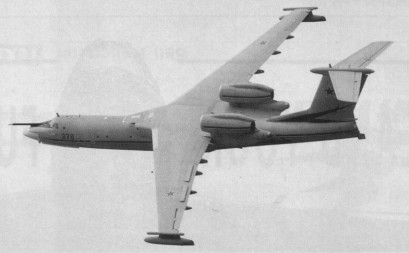
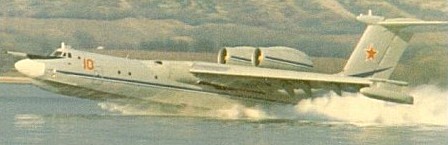
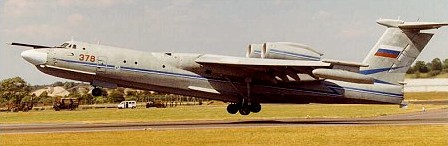
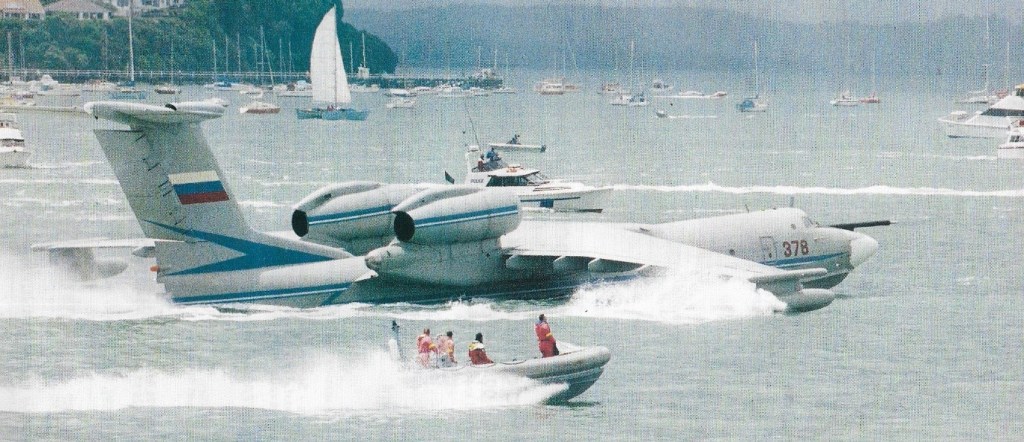
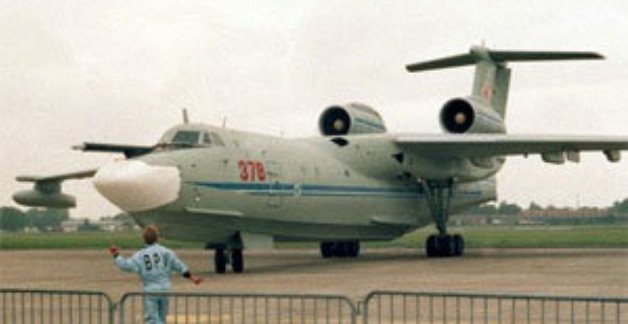
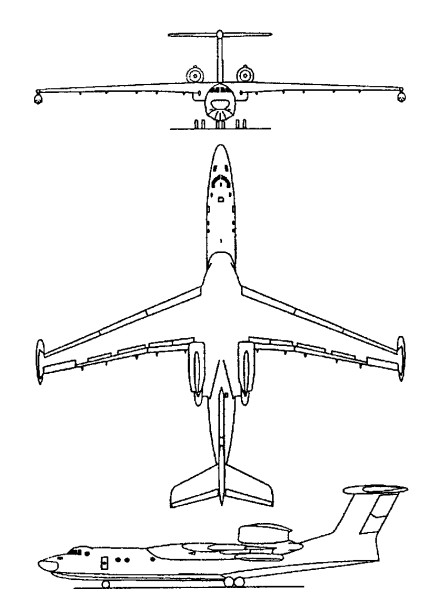
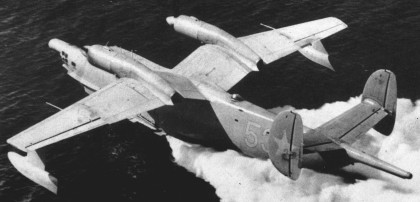
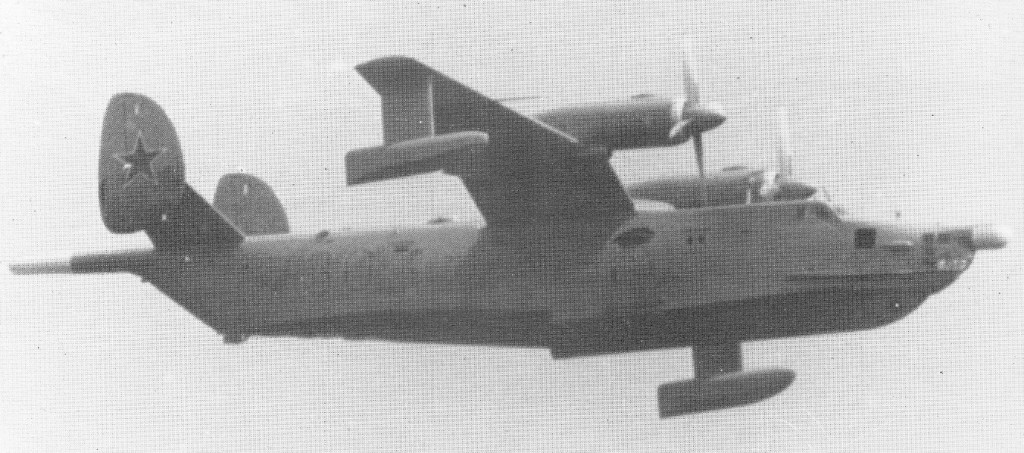

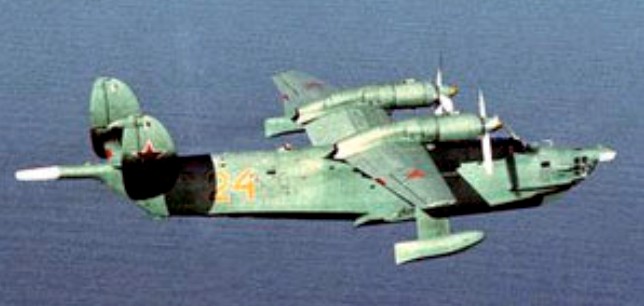

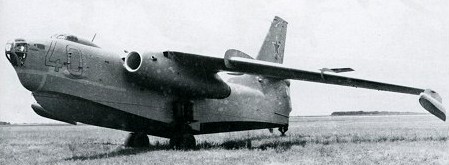


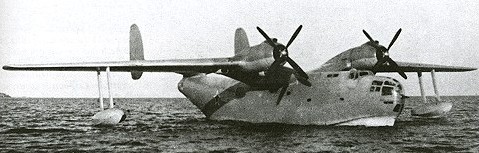

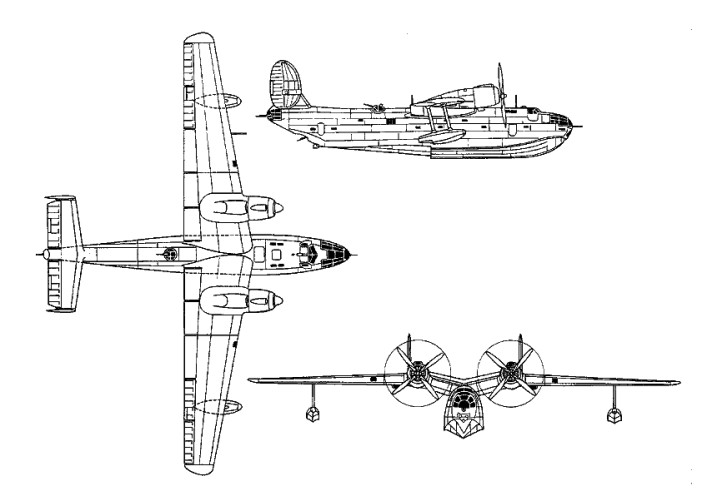
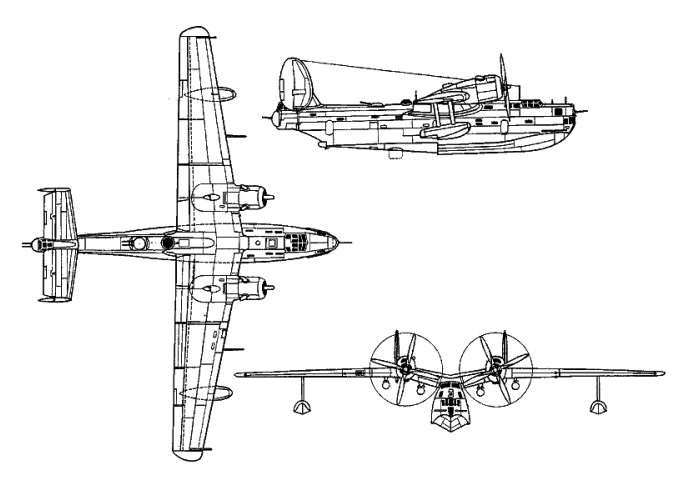
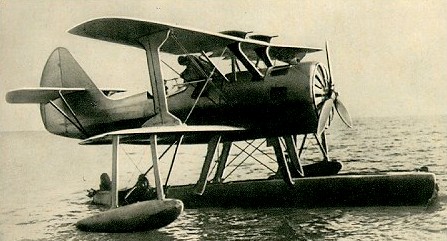
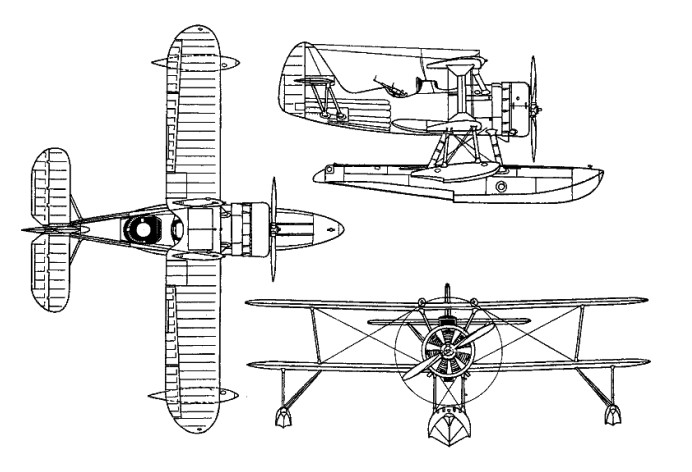
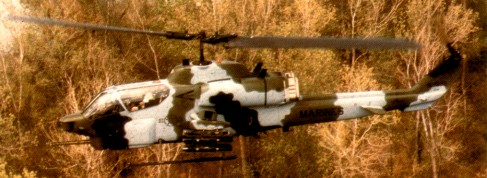
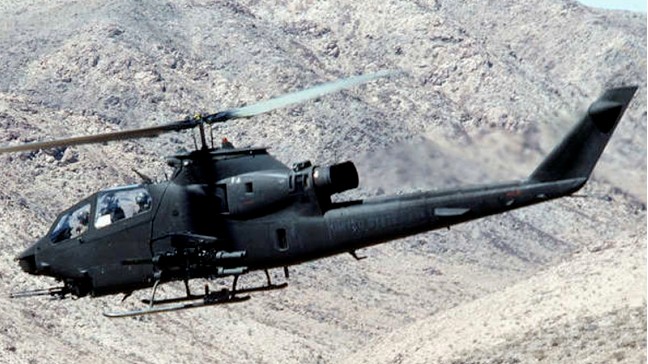
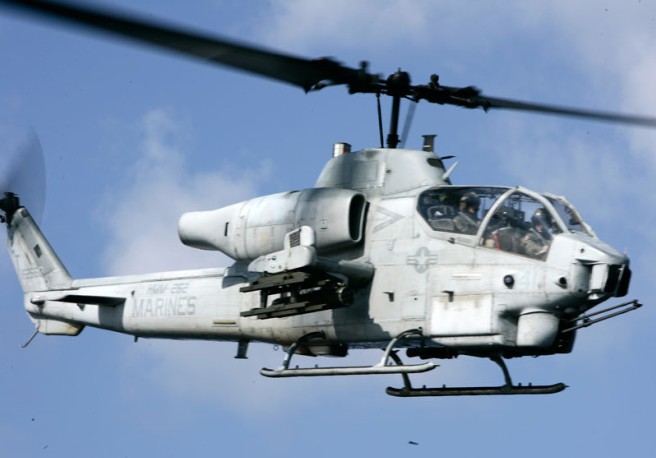
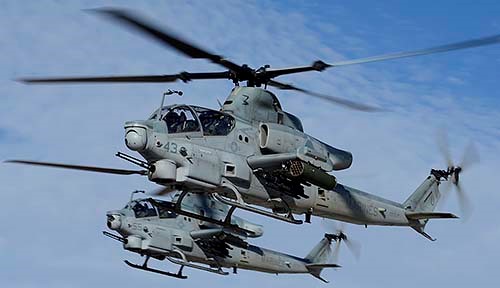
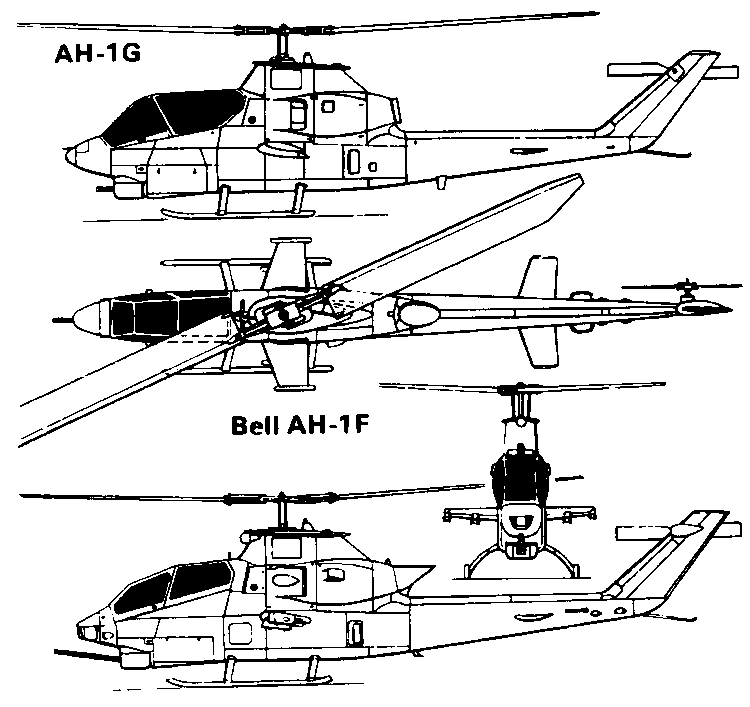
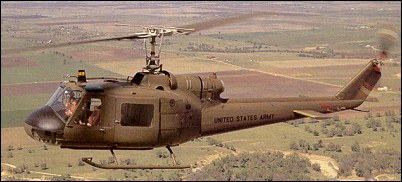
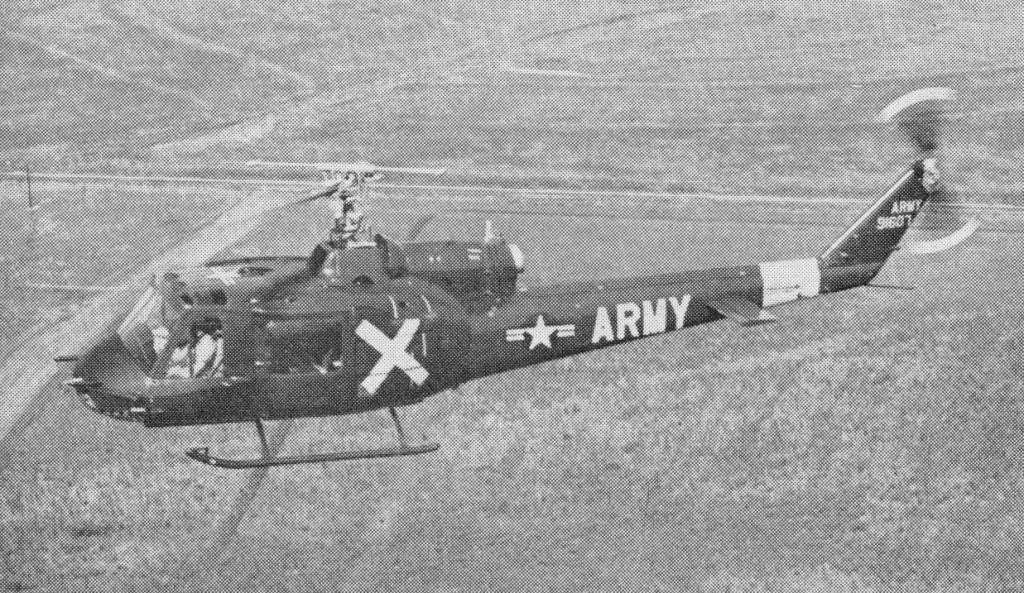
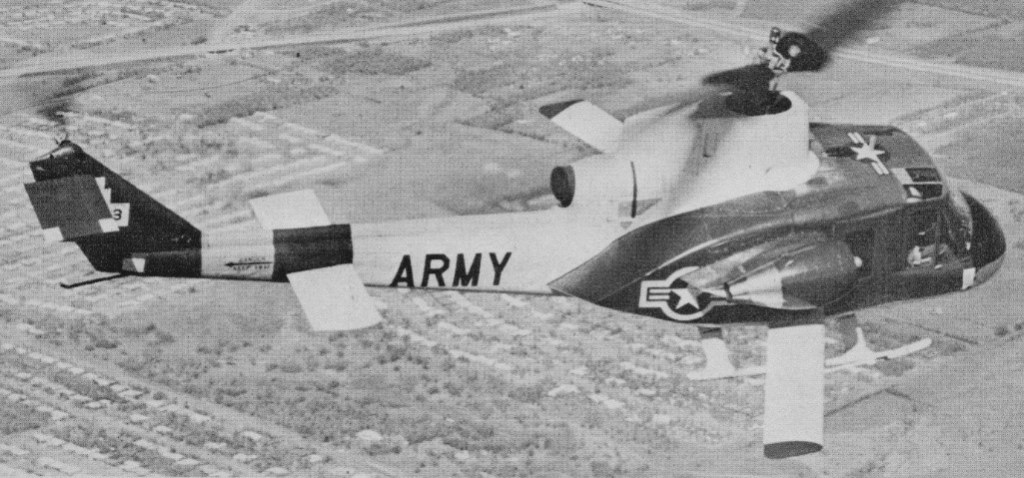
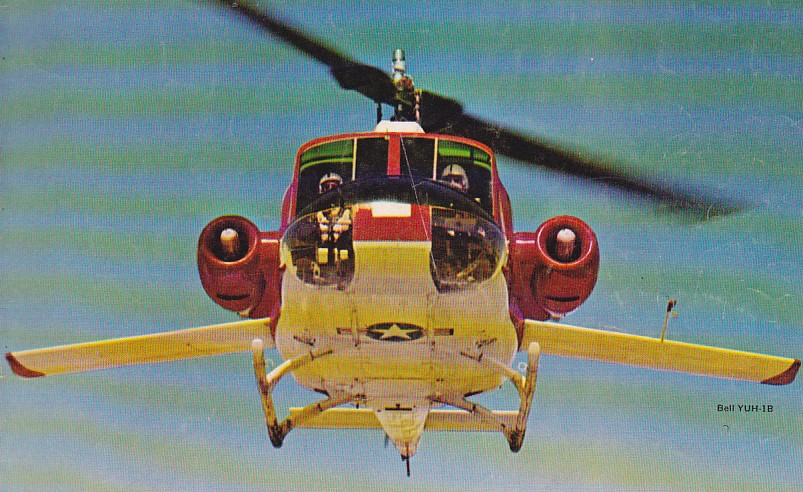

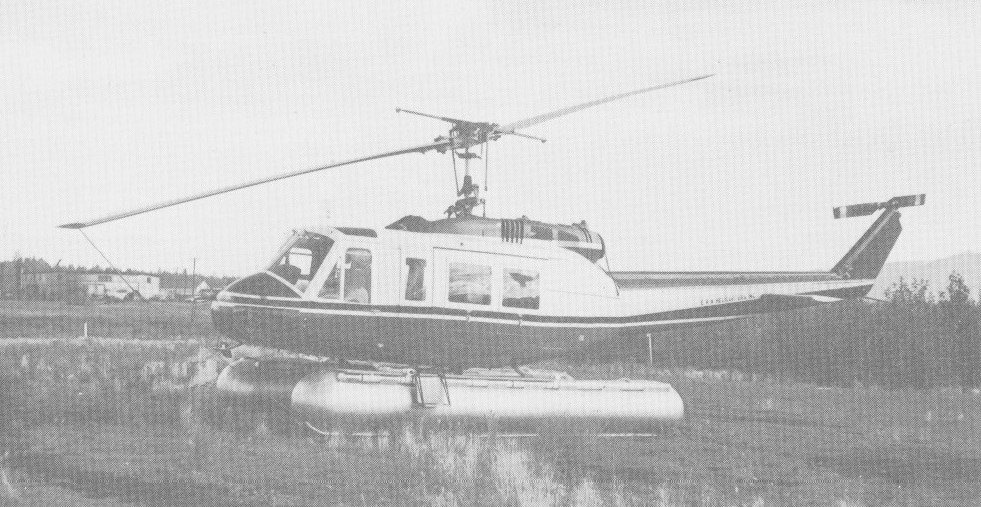
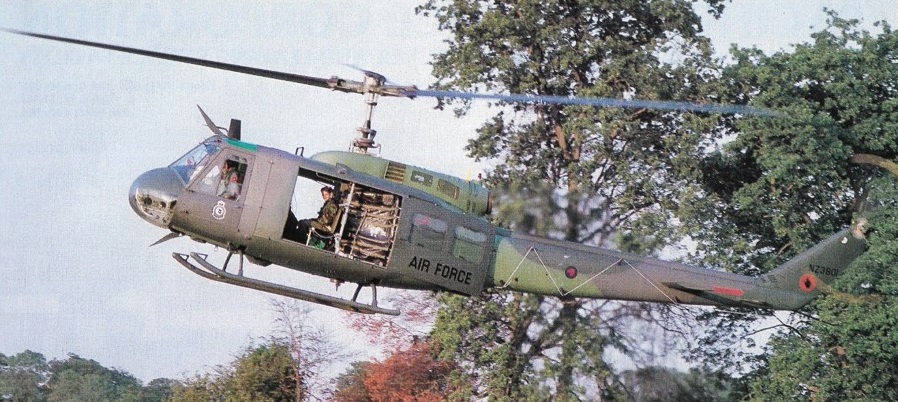
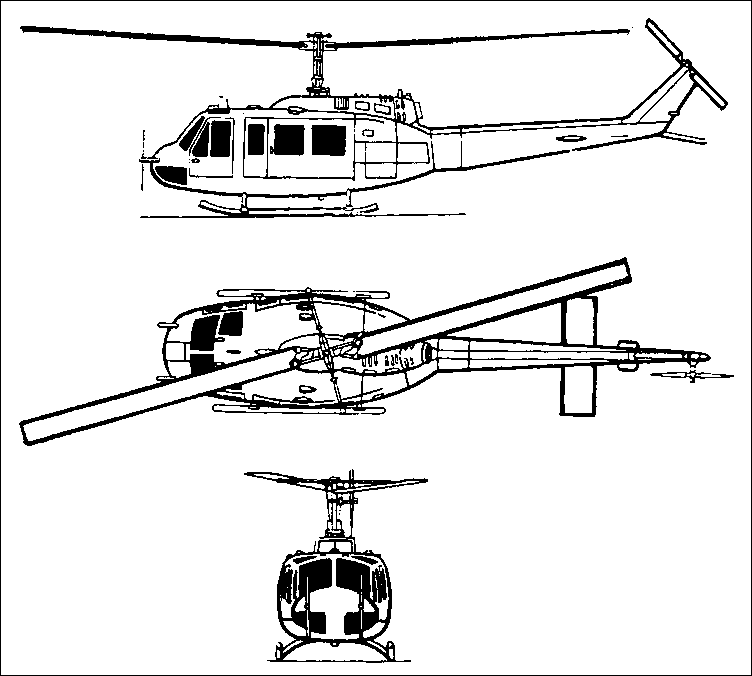
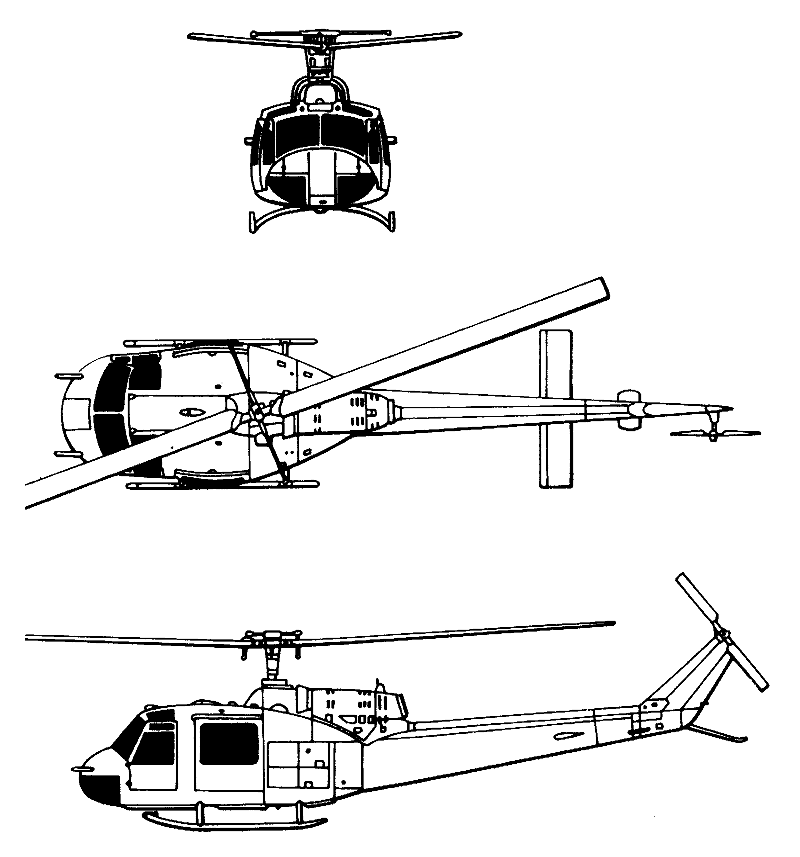
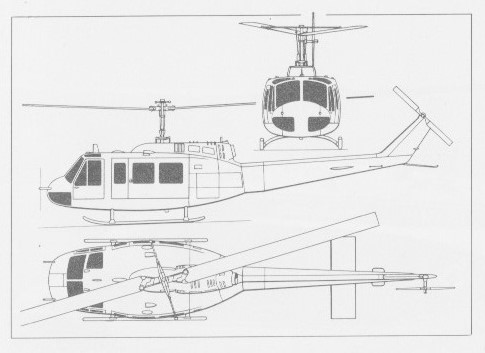
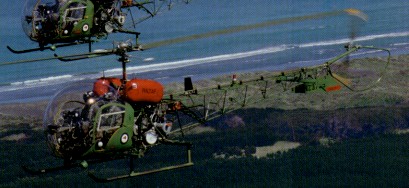
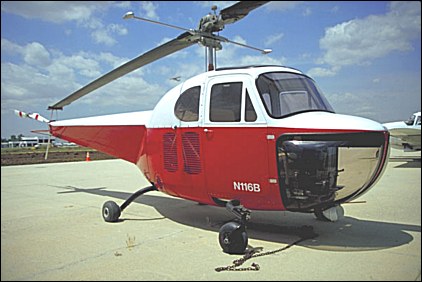
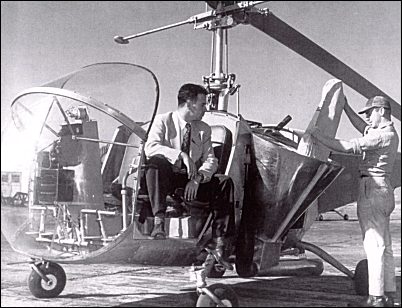

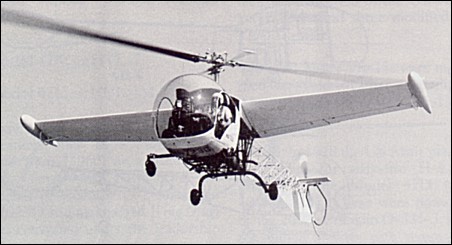


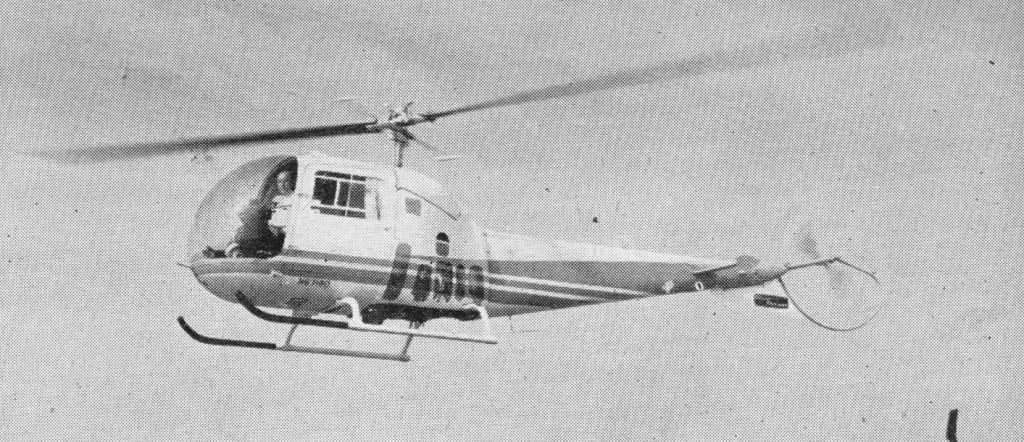
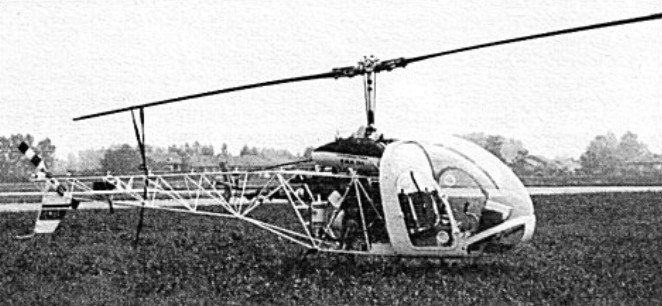
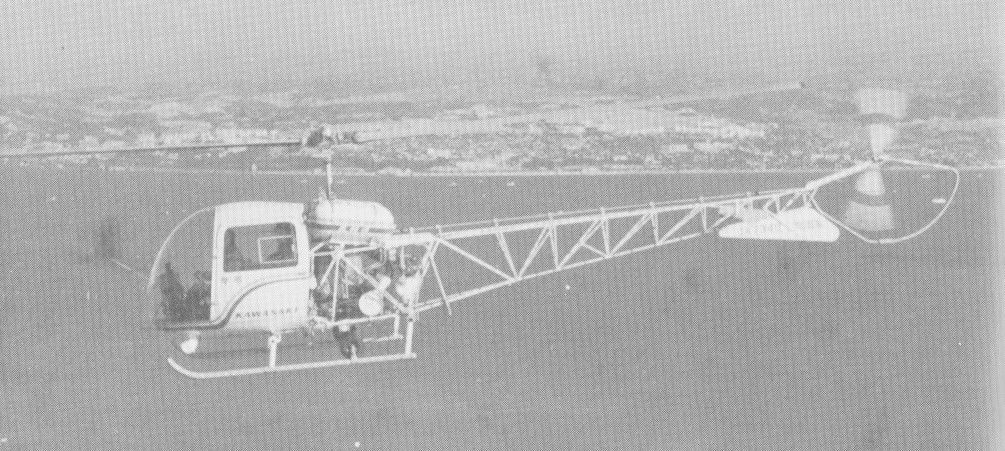








 All Aero