Blackburn RB.1 Iris

Iris III

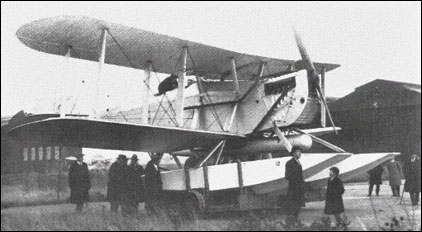
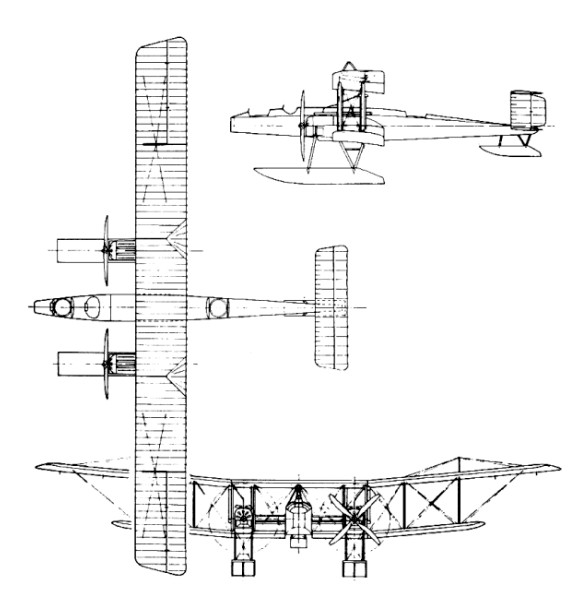
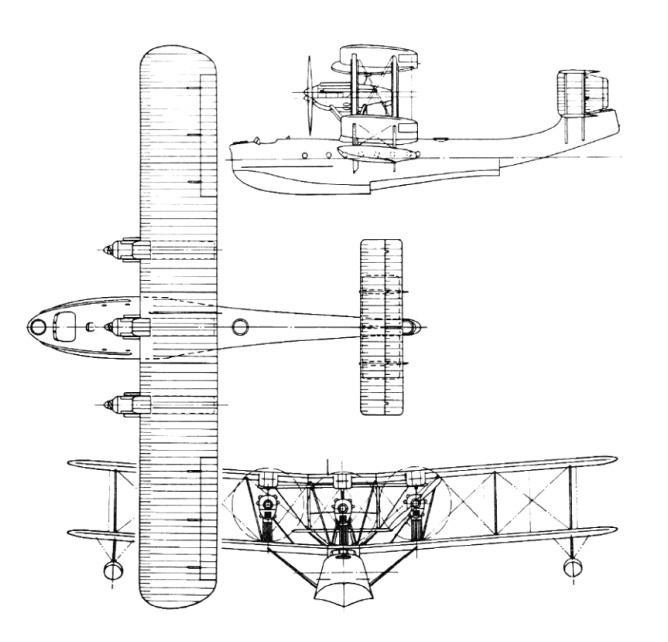
The Blackbrn Iris was designed as a long range, ocean going aircraft to augment the coastal patrol services Supermarine Southamptons. Only one squadron was equipped with Iris aircraft, first with the Mk.III which later, by modification, became the Mk.V, and ultimately with what might have been a later mark, but was designated “Perth”.
The Armament of the Iris consisted of Lewis guns in bow and midship positions with a third one at the tail end of the hull which had only a limited arc of fire. In the bow position, a one pounder gun, made by the Coventry Ordnance Works and consequently known as the Cow gun, could be mounted, and was once every year for demonstration purposes.
The five-seat Iris was a biplane flying-boat. The first of only eight built flew on 19 June 1926. The single Iris I, powered by three 484.4kW Rolls-Royce Condor III engines, was converted into the II with 503kW Condor IIIA. It was followed by four Iris III with 503kW Condor IIIB engines (entering service with the RAF in 1930); a single Mk IV (the first prototype with 596kW Armstrong Siddeley Leopard Ill, mounted as two tractors and one pusher); and three V with 615kW (825 hp) Rolls-Royce Buzzard IIMS engines. A III was also brought up to V standard and the luxury of a roof over the pilot’s positions. No heating.

Iris I
Engines: three 484.4kW Rolls-Royce Condor III

Iris II
Engines: 3 x 503kW Condor IIIA

R.B.1B “Iris” III
Engine: 3 x Rolls-Royce “Condor” IIIB, 503kW, 675 hp
Take-Off Weight: 13376 kg / 29489 lb
Empty Weight: 8640 kg / 19048 lb
Wingspan: 29.57 m / 97 ft 0 in
Length: 20.54 m / 67 ft 5 in
Height: 7.77 m / 25 ft 6 in
Wing Area: 207.07 sq.m / 2228.88 sq ft
Max. Speed: 190 km/h / 118 mph
Cruise Speed: 156 km/h / 97 mph
Ceiling: 3230 m / 10600 ft
Range W/Max.Fuel: 1287 km / 800 miles
Crew: 5
Armament: 3 x 7.7mm machine-guns, 900kg bombs

Iris V
Engines: 3 x Rolls-Royce Buzzard, 825 hp.

Blackburn T.3 Velos

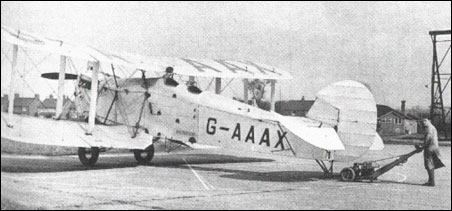
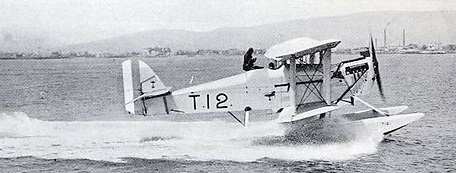
In 1925 the Blackburn Aeroplane & Motor Co concluded an arrangement with the Greek Government to organise an aircraft factory at Phaleron, near Athens, Greece. The EAF / State Aircraft Factory constructed a series of Velos two seat torpedo planes, designed by Blackburn; a series of Armstrong Whitworth Atlas two seat fighters; and a series of Avro 504O and 504N trainers.

Greek built Velos taking off in Phaleron Bay

Engine: 1 x 450hp Napier Lion V
Take-Off Weight: 2815 kg / 6206 lb
Empty Weight: 1766 kg / 3893 lb
Wingspan: 14.78 m / 48 ft 6 in
Length: 10.82 m / 35 ft 6 in
Height: 3.73 m / 12 ft 3 in
Wing Area: 60.76 sq.m / 654.01 sq ft
Max. Speed: 172 km/h / 107 mph
Ceiling: 4298 m / 14100 ft
Range: 580 km / 360 miles
Crew: 2
Armament: 1 x 7.7mm machine-gun, 4 x 100kg bombs or a torpedo

Blackburn R.1 Blackburn

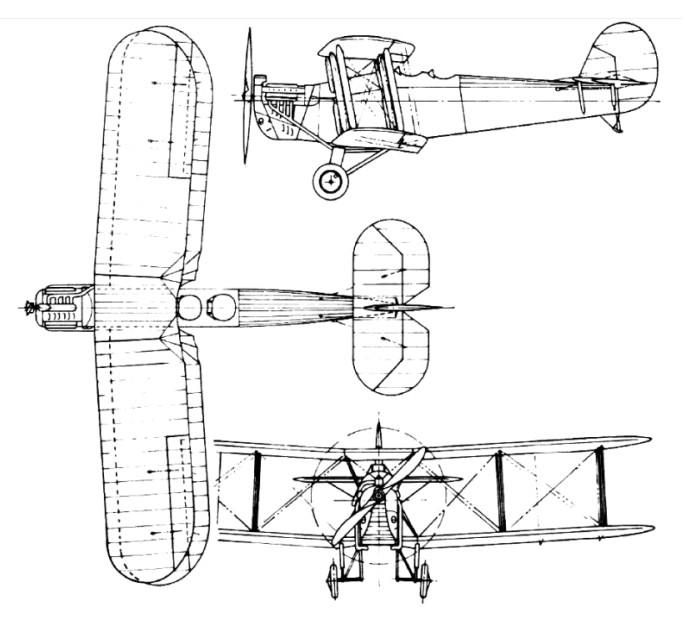
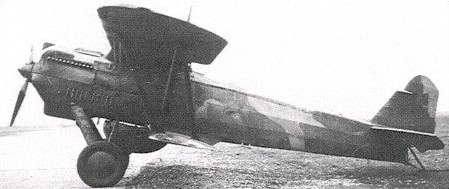
The Blackburn was a 1922 carrier-borne Fleet spotter-reconnaissance biplane, accommodating a pilot in an open cockpit in front of the upper wing leading edge. A wireless operator/gunner and a navigator/observer were provided with a cabin inside the fuselage and only needed to venture out into the open for observation or to use the rear-mounted Lewis machine-gun. Thirty production Blackburn Is, with 335kW Napier Lion IIB engines, were built. The type first entered service on board HMS Eagle in 1923. These were followed by 29 346kW Napier Lion-engined Blackburn IIs, entering service in 1926. All were replaced by Fairey IIIFs in 1931.

Blackburn II
Engine: 346kW Napier Lion
Take-off weight: 3,022 kg / 6648 lb
Wingspan: 13.87 m / 45 ft 6 in
Length: 11.02 m / 36 ft 2 in
Max. speed: 157 km/h / 98 mph
Armament: 2 x 7.7mm machine-guns

Blackburn T.2 Dart

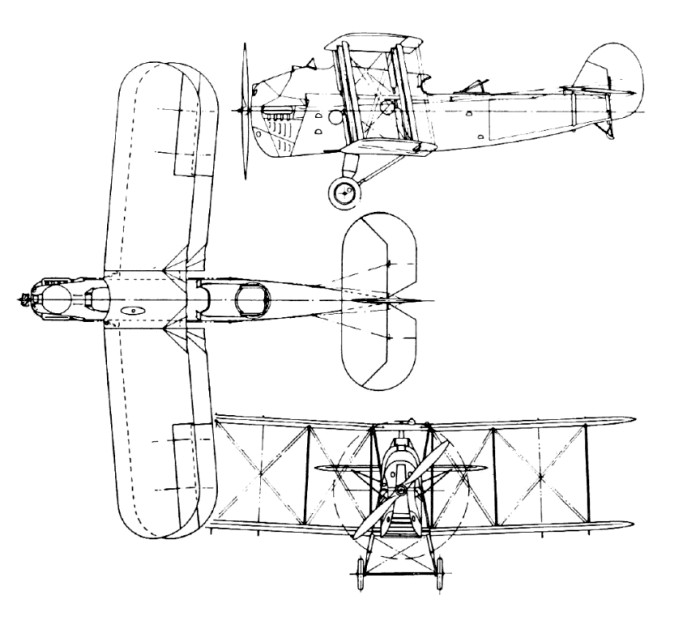
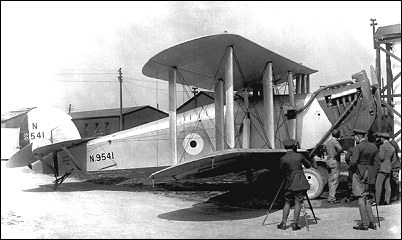
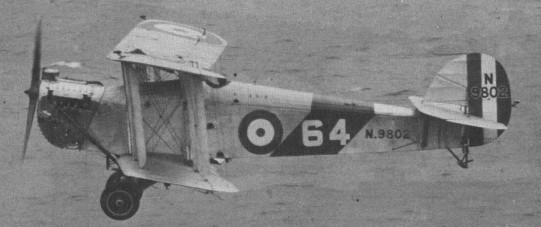
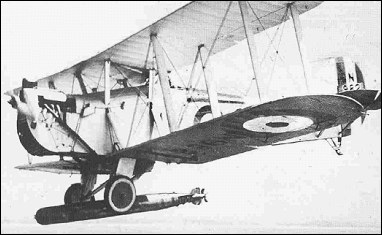
The 1921 Dart was the FAA’s standard single-seat torpedo bomber from 1923 to 1933. Similar to the Blackburn Swift but with reduced wing span, it could carry a torpedo or underwing bombs.

A batch of 32 were ordered by the Fleet Air Arm in August 1924.

The Dart first entered service with No 460 Flight in 1923 on board HMS Eagle, stationed in the Mediterranean; and with Nos 461 and 462 on board HMS Furious, based in home waters. Shore training was by D3 Flight at Gosport. The aircraft’s low stalling speed of 70km/h enabled it to pioneer the technique of deck landing by night on HMS Furious in 1926. In 1928 Nos 463 and 464 Flights embarked on HMS Courageous for service in the Mediterranean and in the following year a single example was delivered to No 36 Squadron, RAF, for smoke-screen trials. Three Darts were also converted into two-seat advanced-training seaplanes for use on the River Humber by Blackburn’s RAF Reserve School, being used between 1925 and 1929.

Production ended in 1928 after the 117th Dart had been completed.

Engine: 1 x Napier Lion IIB, 335kW
Take-Off Weight: 2898 kg / 6389 lb
Empty Weight: 1634 kg / 3602 lb
Wingspan: 13.87 m / 45 ft 6 in
Length: 10.77 m / 35 ft 4 in
Height: 3.94 m / 12 ft 11 in
Wing Area: 60.76 sq.m / 654.01 sq ft
Max. Speed: 172 km/h / 107 mph
Ceiling: 3109 m / 10200 ft
Range: 483 km / 300 miles
Armament: 1 x 240kg bomb or a torpedo

Blackburn T.1 Swift

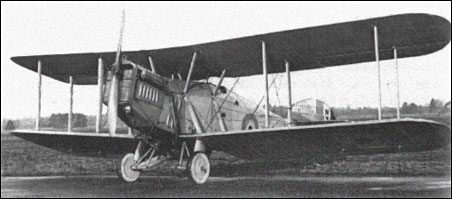
The Blackburn T1 Swift was a private venture torpedo bomber developed by the Blackburn Aeroplane and Motor Company primarily for export sales (whilst having regard to the desire of the Air Ministry to replace the Sopwith Cuckoo). The prototype, designed by Major Frank Arnold Bumpus, was shown in near-complete form at the Olympia Aero Show in July 1920.

The Blackburn T1 Swift was a large conventional single seat two-bay tractor biplane with divided undercarriage legs to accommodate a torpedo. It was also provided with folding wings for stowage aboard ship. The longerons sloped down ahead of the pilot’s cockpit to improve the forward view for deck-landing.

On the first flight in September 1920, the first prototype was found to be seriously tail-heavy and barely controllable. It was safely landed after a wide and flat circuit at low level. The balance of the aircraft was quickly restored by applying a few degrees of sweep to the outboard wing panels.

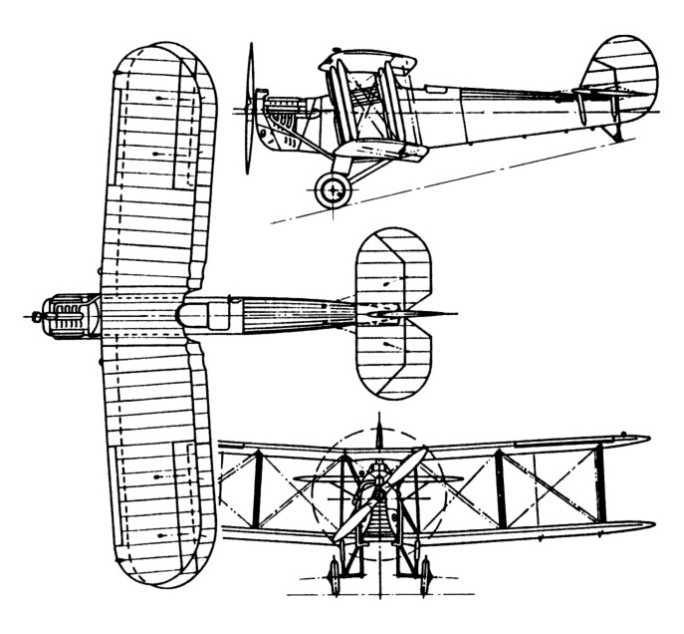
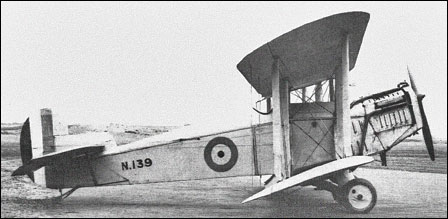
The prototype was sent for trials at Aeroplane and Armament Experimental Establishment (A&AEE) at Martlesham Heath on 21st December 1920, carrying an RAF serial (N139). At Martlesham, it was tested with the Mk VIII and the Mk IX 15-inch torpedo and these trials resulted in the adoption of a revised rudder geometry. After further minor modifications, it proceeded to conduct deck landing trials on HMS Argus in May 1921.

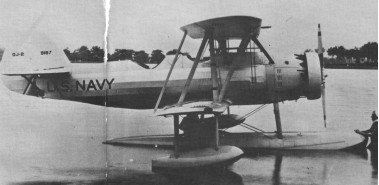
Blackburn then sought export orders for the type, obtaining sales for two aircraft to the US Navy (A-6056 and A-6057) which were to be known the Blackburn Swift F. Later, a further two Blackburn Swift II aircraft were purchased by the Imperial Japanese Navy, as well as a further three (M-NTBA, M-NTBB and M-NTBC) which were sold the Spanish Navy. The export aircraft featured a sloping, front radiator and a further revision to the tail surfaces.

USN A-6056

Such was the promise of the design that it was adopted (following minor modifications such as a 35-inch reduction in wingspan) as the standard Fleet Air Arm torpedo aircraft, subsequently renamed the Blackburn T2 Dart.

Engine: 1 x 450hp Napier Lion IB
Take-Off Weight: 2860 kg / 6305 lb
Empty Weight: 1612 kg / 3554 lb
Wingspan: 14.78 m / 48 ft 6 in
Length: 10.82 m / 35 ft 6 in
Height: 3.73 m / 12 ft 3 in
Wing Area: 66.89 sq.m / 720.00 sq ft
Max. Speed: 171 km/h / 106 mph
Ceiling: 4572 m / 15000 ft
Range: 564 km / 350 miles
Armament: 4 x 100kg bombs or a torpedo

Blackburn RT.1 Kangaroo / GP

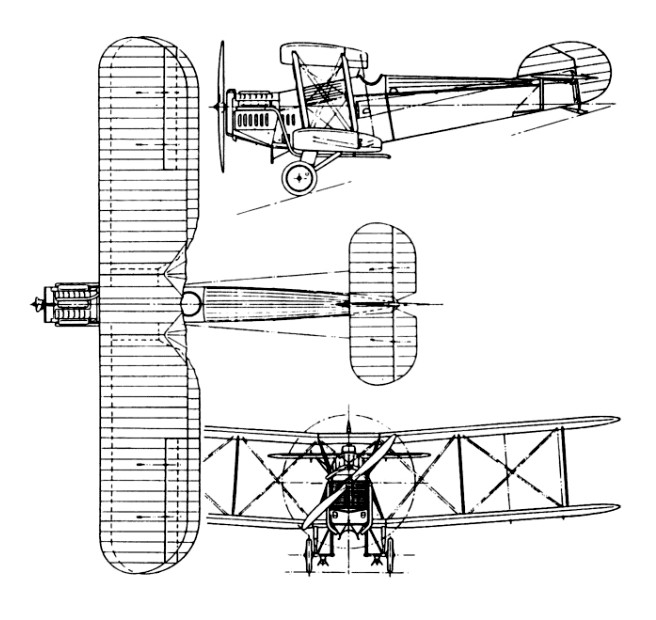
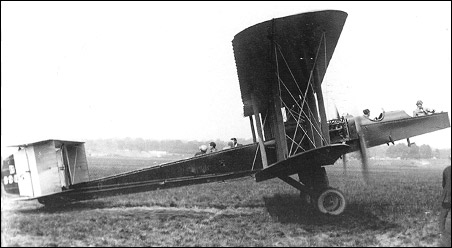
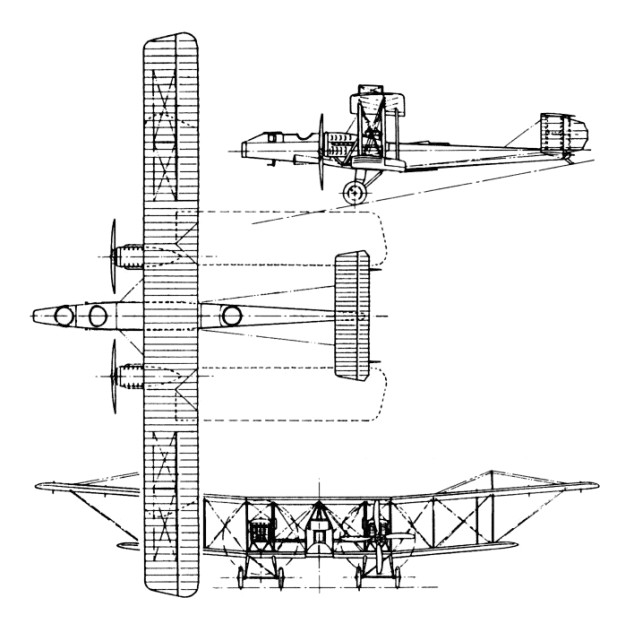
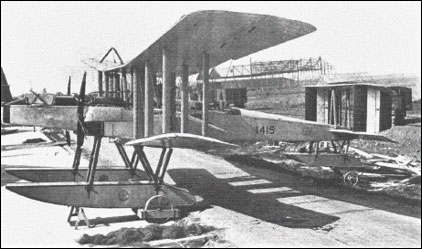
The Blackburn Kangaroo was originally designed as a naval reconnaissance and bomber seaplane in 1916, but was later converted to a landplane.

Two complete prototypes were produced, the first flying in July 1916. These prototype aircraft, known collectively as the Blackburn GP (“GP” for “General Purpose”), featured floats and were designed for use as anti-submarine aircraft

From this, a land-based version was developed as the Blackburn R.T.1 Kangaroo (Reconnaissance Torpedo Type 1). Despite the sub-par performance output of the Rolls-Royce Falcon II series engines (250 horsepower), the Royal Air Force deliveries began sometime in January of 1918 with units made combat-ready the same year. After the sixth production aircraft was complete, an attempt to boost performance was made with the introduction of the Rolls-Royce Falcon III engines developing 270 horsepower each.

Externally, the Kangaroo featured a long box-type straight fuselage. A crew of three was positioned about the forward portion and consisted of the pilot in the center cockpit, a gunner in the forward cockpit and a rear gunner in the far aft cockpit. All three positions were separated from one another. The fuselage was straddled by two engines with either a two- or four-blade propeller. The undercarriage was fixed and featured individual two-wheel bogie front landing gear systems and a tail skid. The main landing gears were positioned just under the engines. Wings were biplane and featured three bays with parallel struts and associated cabling. The wings were of an unequal span. The wings – outboard of the engines – could be swiveled back via hinges and folded against the tail section. The long empennage was fitted with twin vertical tail fins and horizontal plane.

10 were issued to No 246 Squadron (the only unit to operate the type) at Seaton Carew, on the Durham coast, from January 1918. Operations began on 1 May, the Kangaroos flying more than 600 hours on anti-submarine patrols over the North Sea between then and 11 November. During that time they were credited with 12 U-boat sightings and 11 attacks, one of which, on 28 August, resulted in the shared destruction of UC 70 with the destroyer HMS Ouse.

After the war, Kangaroos were used in limited numbers as dual-control trainers up to 1929, when the aircraft was officially retired from service. Several also made their way into the civilian passenger market for a time, ferrying up to 8 people.

The Blackburn Kangaroo was operated exclusively with No. 246 Squadron of the British RAF as well as the Peruvian Army Flying Service. Only 20 of the type were ultimately produced.

Performance from the twin Rolls-Royce Falcon III liquid-cooled, V-12 270 horsepower engines netted a maximum speed of 98 miles per hour with a range out to 487 miles. A rate-of-climb of 480 feet per minute was possible as was a service ceiling of 12,992 feet. As a bomber the Kangaroo could call upon up to 920lbs of ordnance. Self-defense was handled by two 7.7mm Lewis-type machine guns, one mounted in the forward cockpit and the other in the rear cockpit.

Engine: 2 x 255hp Rolls-Royce Falcon II 12-cylinder inline engines
Take-Off Weight: 3636 kg / 8016 lb
Wingspan: 22.82 m / 74 ft 10 in
Length: 14.02 m / 45 ft 12 in
Height: 5.13 m / 16 ft 10 in
Max. Speed: 161 km/h / 100 mph
Ceiling: 3200 m / 10500 ft
Armament: 2 x 7.62mm, 450kg of bombs
Crew: 4

Engines: 2 x Rolls-Royce Falcon III V-12, 270hp each.
Length: 44.16ft (13.46m)
Width: 74.87ft (22.82m)
Height: 16.83ft (5.13m)
Maximum Speed: 98mph (158kmh; 85kts)
Maximum Range: 487miles (784km)
Rate-of-Climb: 480ft/min (146m/min)
Service Ceiling: 13,000 ft (3,960m)
Armament:
1 x 7.7mm Lewis machine gun in forward cockpit
1 x 7.7mm Lewis machine gun in rear cockpit
Bombload: 920lbs
Accommodation: 3
Hardpoints: 1
Empty Weight: 5,284lbs (2,397kg)
Maximum Take-Off Weight: 6,288lbs (2,852kg)

Blackburn General Purpose

1916

Engine: 2 x 150hp Sunbeam Nubian or 190hp Rolls-Royce water-cooled in-line engine
Take-Off Weight: 3904 kg / 8607 lb
Empty Weight: 2651 kg / 5844 lb
Wingspan: 22.81 m / 74 ft 10 in
Length: 14.02 m / 45 ft 12 in
Height: 5.13 m / 16 ft 10 in
Wing Area: 81.75 sq.m / 879.95 sq ft
Max. Speed: 156 km/h / 97 mph
Ceiling: 3353 m / 11000 ft
Armament: 2 x 7.7mm machine-guns, 4 x 100kg bombs or a torpedo

Berliner-Joyce P-16 / PB-1

XP-16

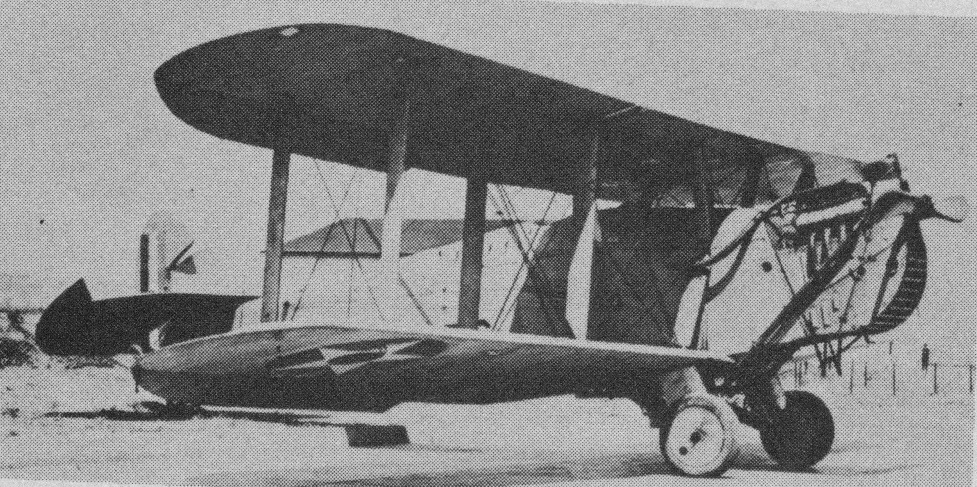
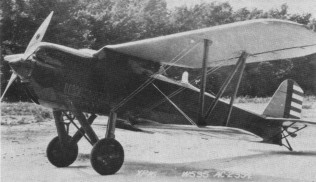
The United States Army Air Corps wrote specs for a two seat fighter, getting a competition held in April, 1929. As per Air Corps specification 1639A, the proposal of the new Berliner/Joyce Aircraft Corp. won out over its competitors, Boeing, Curtiss and Vought. The fighter, officially designated the XP-16, was one of three products of a young company that had come into being in 1928. Two seat fighter concept as envisioned by Air Corps planners required an aft facing gunner.Completed in October 1929, the one and only XP 16 was delivered in October 1930. A supercharged Curtiss V-1570A Conqueror gave it a top speed of 186mph at 5000 feet, and 183 mph at 10,000 ft. The prototype XP-16 was of fabric-covered metal construction with an upper wing of gull configuration. Armament comprised two fixed forward-firing 7.62mm machine guns and a third weapon of similar calibre on a flexible mounting in the rear cockpit. Five 11kg or two 55kg bombs could be carried.Two contracts were issued for a total of 25 service test aircraft as YlP-16s, these being essentially similar to the prototype apart from having the unsupercharged V-1570-25 Conqueror which was also rated at 600hp. The YlP-16s were delivered in 1932 and were later redesignated as PB-1s (pursuit-biplace). These proved to possess insufficient manoeuvrability to oppose single-seat fighters, offered extremely poor visibility for landing and displayed a tendency to nose over. They were withdrawn from USAAC service on 31 January 1934.

PB-1

Prototype XP-16
Engine: Curtiss V-1570A Conqueror 12-cylinder liquid-cooled supercharged, 600hp

P-16
Crew: 2
Engine: 1 x 600hp Ñurtiss V-1570-25 Conqueror
Take-off weight: 1813 kg / 3997 lb
Empty weight: 1271 kg / 2802 lb
Wingspan: 10.36 m / 34 ft 0 in
Length: 8.59 m / 28 ft 2 in
Height: 2.74 m / 9 ft 0 in
Wing area: 25.92 sq.m / 279.00 sq ft
Max. speed: 282 km/h / 175 mph
Cruise speed: 243 km/h / 151 mph
Ceiling: 6585 m / 21600 ft
Rate of climb: 654 m/min / 2150 ft/min
Range: 1046 km / 650 miles
Armament: 3 x 7.62mm