1929:
(William P) Sullivan Aircraft Mfg Co,
630 E Gilbert St,
Wichita KS.
USA
In 1930 built a low-wing cabin monoplane which was developed as the K-3.
Sullivan also built about a dozen SG-1 gliders in 1930 for use at Braley School of Aviation.
1929:
(William P) Sullivan Aircraft Mfg Co,
630 E Gilbert St,
Wichita KS.
USA
In 1930 built a low-wing cabin monoplane which was developed as the K-3.
Sullivan also built about a dozen SG-1 gliders in 1930 for use at Braley School of Aviation.
(W P) Sullivan Aircraft Co
1693 Mission St,
San Francisco CA.
USA
Built the Sullivan Goblin in 1931.
Officers in the Sullivan company were J W Robb and J J Schmidt, who also show up later as principals in the Ful-Vue Fixtures Co Ltd.
In 1924, Pavel O. Sukhoi joined the Central Aero and Hydrodynamic Institute, or TsAGI, eventually becoming a bureau design leader under Andrei N. Tupolev on ANT-25 long-range record-breaker.
During 1939, Sukhoi established his own design bureau, using previous Bureau Osovikh Konstruktsii offices, and began the redesign of the ANT 51 with an M 88B engine, a low wing and an increased offensive load, this emerging as the BB 1, entering series production in 1940, and being redesignated Su 2 in 1941.
In Second World War Sukhoi’s own name was especially associated with Su-2 light bomber and attack aircraft.
After January 1949, the bureau’s next design was the Aircraft R prototype for a planned Su-17 supersonic fighter. But in November 1949 the Sukhoi bureau was closed down by Stalin and the almost complete prototype was cancelled. Sukhoi and most of his team were transferred to the Tupolev bureau and continued work in the development of the aerodynamic and structural features required for supersonic fighters.
In 1953 Stalin died, and Sukhoi’s request for his own design bureau was then granted: this produced a new sequence of numerical designators that leads to considerable confusion in the identification of Sukhoi aircraft. The first result of the bureau’s re-established independence was a series of swept-wing and tailed delta prototypes in the S and T series.
He was responsible for twin jet Su-7 of 1947. The later and unrelated Su-7 of his second jet series became a swept-wing attack aircraft first seen 1956. Su-9, operational from 1959, and Su-11 were single-seat all-weather fighters with delta wings. The operational and large-size Su-15 twin-jet delta-wing allweather interceptor was also tested in prototype Flagon-B STOL form in July 1967. Su-17 first flew August 1966 as very much improved variable-geometry fighter developed from Su-7, and was followed by Su-20 and Su-22 for export. Su-24 is a variable-geometry attack type, seating two crew side-by-side and has been in service since February 1975. A nuclear strike bomber, reconnaissance and electronic warfare aircraft, Su-24 was designed to penetrate enemy defenses for five minutes at 1,400km/h and 200m altitude, as a supersonic replacement for the II-28 and Yak-28. In total, about 1,200 Su-24s were built during 1972-92, finally giving way on the production line to the Su-27IB.
Sukhoi died in September 1975, but subsequent Sukhoi designs continue to honor his name. These include Su-25/Su-28 and Su-39 related subsonic close-air support and tank-busting jets (first Su-25 flew February 1975 and became operational in 1981). The Su-27 Flanker long-range air-supriority fighter (first flown May 1977 and in production since 1982 for home use and export, latter including J-11s assembled in China), the tandem two-seat Su-30 multirole fighter and attack variant of Su-27 that carries further avionics to allow it to command a group of Su-27s (first flown December 1989 and users including India). The side-byside two-seat Su-32FN maritime strike aircraft and Su- 27IB or Su-34 tactical interdictor developed from Su-27, the Su-33, or Su-27K carrierborne fighter Su-27 derivative (first flown August 1987 and first deployed on board Admiral Kuznetsov’m 1995). Su-35 advanced air-superiority fighter (first flown June 1988) and Su-37 variant with thrust-vectoring nozzles, again Su-27 developments.
A fifth-generation tactical fighter, approximately equivalent to the U.S. F-22, is the S-37, first flown in September 1997 and featuring swept-forward wings and eventually to have thrust-vectoring engine nozzles. S-54 and S-55 are newly designed lightweight jets for multirole combat and training uses, T-60S is a projected strike bomber of very stealthy appearance and S-80 is a new transport with patrol and surveillance variants. A program in 1999 was the development of the KR-860, a super-large 860-seat airliner. General-aviation programs include Su-26, Su-29 and Su-31 single- and two-seat aerobatic competition aircraft (first flown 1984, 1991 and 1992 respectively) and Su-49 tandem two-seat primary trainer, while projects are for S-16 twin turboprop transport for 16 passengers or cargo, S-21 10-passenger supersonic business jet (with projected 68-passenger S-51), S-38 single-seat agricultural monoplane, and S- 96 twin-propfan 8-passenger executive transport.
In 2016 Sukhoi, major aircraft holding company, employed more than 26,000 people. 100% of stock of the Sukhoi belonged to the United Aircraft Corporation (JSC). The Company is Russia’s major manufacturer of export aircraft, placed third in the world in terms of the numbers of modern fighters produced.
France
Formed 1935 at Bordeaux-Merignac by the Potez group when it took over the Societe Aerienne Bordelaise. Was intended as a decentralized production source for Potez and Bloch aircraft. A prime responsibility was development and production of Bloch types, especially single-seat fighters derived from MB.150 of 1936. Redesign facilitated production and improved performance, resulting in MB.151 and 152. By June 1940 production totaled about 600, involving five plants. MB.175 twin-engined bomber was in production and was revived after Second World War as torpedo aircraft. Several other prototypes built, including four-engined bomber.
In France, the Socialist Government of the so called Popular Front brought all the companies building military aircraft, aero engines and ar¬mament under its control in 1936. The im¬mediate result was the socialized oblivion of such established companies as Marcel Bloch, Bleriot, Nieuport, Potex, Dewoitine, Hanriot and Farman within half a dozen nationalized groups or Societies Nationales, named ac¬cording to their geographical location (Nord, Ouest, Centre, Midi and so on).
Incorporated in SNCASO 1936, incorporating the factories of Marcel Bloch, Bleriot and Liore et Olivier, subsequently merging with SNCASO and changing name to Ouest Aviation in 1956.
In 1942 completed forerunner of Bretagne twin-engined transport, though not flown until 1945; then used commercially and experimentally. Numerous and varied post-Second World War types included distinctly unusual forms of rotary-wing aircraft. Aeriel (1948) and Djinn (1953) with tip jets, and Farfadet convertiplane (1953).
Aerocentre went into liquidation during 1949, its plants and work being shared by SNCAN (Nord), SNCASO (Sud-Ouest) and engine form SNECMA.
Original designs included S.O.94R twin-engined trainer; S.O.95 Corse, and S.O.30 Bretagne military transports; S.O.4050 Vautour twin-jet bomber; and the S.O.9000 Trident. The S.O.1221 Djinn two-seat helicopter was produced, and Vertol H-21 helicopters were manufactured under license for the French Army. Ouest became part of Aerospatiale.
After World War II, although four of the nationalized groups continued operating un¬der state control, private companies were al¬lowed to resume the design and manufacture of both civil and military aircraft. Some of the pioneering names of French aviation, such as Breguet and Morane Saulnier, returned to prominence, and by 1950 a new one had been added Avions Marcel Dassault.
Loire-Nieuport joined SNCASO in 1942.
SNCASO and SNCASE joined to form Sud-Aviation in 1958.
Societe Nationale de Constructions Aeronautiques du Sud-Est
SNCASE
In France, the Socialist Government of the so called Popular Front brought all the companies building military aircraft, aero engines and ar¬mament under its control in 1936. The im¬mediate result was the socialized oblivion of such established companies as Marcel Bloch, Bleriot, Nieuport, Potex, Dewoitine, Hanriot and Farman within half a dozen nationalized groups or Societies Nationales, named ac¬cording to their geographical location (Nord, Ouest, Centre, Midi and so on). Liore-et-Olivier, Potez, Romano, and SPCA formed SNCASE in 1936. Sud-Est was a nationalised company that had taken over manufacture from Bloch.
Company thus became responsible for development and production of LeO.45 twin-engined bomber, first flown January 1937, outstanding in many points of design and much used and adapted during and after Second World War. Built also Romano trainers and LeO.43 catapult floatplane, of type first flown December 1934.
In 1941 the company absorbed SNCAM. Early post-Second World War products included Languedoc four-engined airliner, developed from Bloch 161 of 1939, which entered service between Paris and Algiers in 1946, and was ordered additionally for military use.
Dewoitine joined SNCASE in 1942.
After World War II, although four of the nationalized groups continued operating un¬der state control, private companies were al¬lowed to resume the design and manufacture of both civil and military aircraft. Some of the pioneering names of French aviation, such as Breguet and Morane Saulnier, returned to prominence, and by 1950 a new one had been added Avions Marcel Dassault.
Military types in development included Grognard twin-jet attack aircraft of 1950; the unique trolley-launched skid-landing Baroudeur strike aircraft of 1953; and Mistral and Aquilon developments of the British de Havilland Vampire and Sea Venom. Especially notable original developments were the Alouette helicopter series first flown in 1951, and the rear-engined twin-jet Caravelle in 1955.
Until 1 September 1956 known as Societe Nationale de Constructions Aeronautiques du Sud-Est (SNCASE). On the 1st September 1956 the S.N.C.A. du Sud-Est was merged with the S.N.C.A. du Sud-Oest into Sud-Aviation.
Formed 1 March 1957 by amalgamation of Ouest-Aviation (SNCASO) and Sud-Est Aviation (SNCASE). Main responsibility was further development and marketing of highly successful S.E.210 Caravelle twin-jet airliner, first flown in 1955, and Alouette series of helicopters. Continued also development of S.E.5000 Baroudeur, S.O.9050 mixed-power interceptor and widely used S.O.4050 Vautour twin-jet multipurpose aircraft. Frelon series of large turbine-powered helicopters developed after first flight in February 1959, and Super Frelon flew December 1962, setting new world records. In 1965, Morane-Saulnier became a subsidiary of Sud-Aviation. Design leadership in A300 European Airbus assumed and diversification into non-aeronautical fields undertaken. Jointly with Nord Aviation made Corvette light rear-engined jet transport.
On January 1st, 1970 became major component of Aerospatiale, with Nord-Aviation and SOCATA, and the missile manufacturing company, SEREB.
Sub4 Performance Aeromotive Parts
25 Euclid Avenue
PO Box 10004
Te Rapa, Hamilton
New Zealand
Phone: 64 7 849 3814
Castech is a Hamilton, New Zealand, non-ferrous foundry and cnc machineshop, established in 1986. The reduction drives and engines plus components have been sold under the brand name Sub4. The new drive are sold under castech but branded according to the customers requirements.
Areas of expertise include Aluminium casting to max 80kg. CNC machine centre and CNC lathes. Welding and fabrication. Machine assembly.
Composites capabilities are increasing with a materials engineers who has a masters degree in composites.
Motor-Park Co.,Ltd
Seoul
South Korea
Trike builder
USA
(Benjamin F) Sturtevant Blower Works
Formed 1915 at, Hyde Park, Boston, Massachusetts. Derived from B. F. Sturtevant Company which made steel products, including engines.
1915: Sturtevant Aeroplane Co (pres: Noble Foss, vp/gen mgr: Grover C Loening), div of Sturtevant Mfg Co, Jamaica Plain MA.
From 1916 built steel-framed tractor seaplanes for U.S. Navy and generally similar landplanes for U.S. Army Signal Corps. Also built Curtiss JN and DH-4 aircraft under subcontract. No production of aircraft after First World War.
Maximillian Stupar was born on Sept. 23, 1885 in Metlika, Slovenia, where he learned the delights of flying kites. Even after his parents uprooted Max from the empire of the Hapsburgs to South Chicago, that joy never left him. He followd the exploits of Octave Chanute, another transplanted European (from France) who had found a home in Chicago and had developed an interest in kites.
Max was inspired by Chanute’s building on the landmark glider experiments of Otto Lilienthal, a German, to write Progress in Flying Machies (1894). This book was the bible of aeronautics. Max’s book, some glider experiments he attempted in the dunes of Indiana, Miller Beach, during 1896, and in Dune park during 1897, provided the design for the Wright brothers’ first airplane.
But while Chanute and the Wright brothers were becoming aeronautical icons, Max managed to elude celebrity. In 1902, as the Wright brothers also experimented with gliders, Max began his own experiments. Instead of taking off from the dunes of Kitty Hawk, Max leaped from the tops of houses, barns, low hills, and slopes of South Chicago.
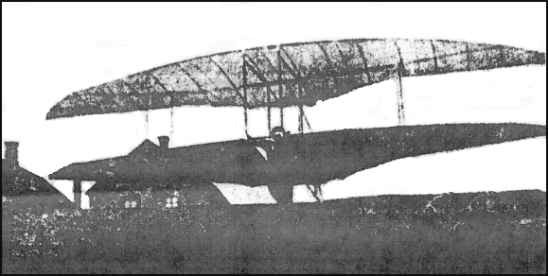
His gliders sometimes reached the awe-inspiring altitude of 300 feet. Some neighbors demanded the kid be given a saliva test. Then, like Octave Chanute, Max moved his experiments to the sands of Dune park, which led in 1908, to his construction of his first airplane. The plane cracked up before Max could test it properly.
Undeterred, Max patterned a plane after the one Louis Bleriot had used to fly the English Channel. He made a test flight to Milwaukee, lifting the hydroplane from the waters of Sandy Beach at 95th and the Big Lake the following year. That plane also had a short life, ignominiously plowing into Chicago’s first airfield, Cicero Field at 22nd and Cicero.
In 1910, he opened the Stupar Aero Works in South Chicago, then sold it in 1912 to the Chicago Aero Works for a one-third ownership, and a position as chief engineer. Between 1912 and 1916, Chicago Aero built 30 airplanes and introduced the Stupar Tractor Biplane, the first biplane to use an enclosed fuselage and tractor propellor.
With a glowing resume that proclaimed Max an aviation pioneer, he left South Chicago, in 1916, to join the Standard Airport Corporation in New Jersey.
With America’s entry into World War I Max returned to Chicago as a member of the inspection service for the new U.S. Air Service, and then went to Buffalo, and finally Washington, D.C., as assistant chief of wood inspection for airplane construction.
Throughout the war, and until 1922, airplanes were made almost exclusively of wood, the so-called “stick and wire” construction. Max knew more about that than just about anybody, having worked closely with several South Chicago lumber firms. He also authored a book entitled “Wood Technology,” as he drifted farther away from the cockpit.
After the war, Max became an engineer with the G. Elias and Brothers Lumber Co., which was just getting into aircraft design. In 1927 joined Curtiss Airplane. He stayed with Curtiss until 1939, as chief of the estimations department, in which post he originated the definitive advanced system of airplane cost estimating.
When war started again in Europe during 1939, not only did Max help develop the modern method of assembly-line airplane construction, he became liason between the government and the aircraft industry, flying all over the country in the process.
On Nov. 27, 1941, near the Dayton field named of the Wright Brothers, Max fell to the earth for the last time.
 All Aero