Owen R Tilbury,
Normal IL.
USA
Tilbury & (Clarence) Fundy,
Bloomington IL or IN.
USA
Airplane builder circa 1929-32.
Owen R Tilbury,
Normal IL.
USA
Tilbury & (Clarence) Fundy,
Bloomington IL or IN.
USA
Airplane builder circa 1929-32.
Baja California
Headed by Gov Abelardo Rodriquez.
William Waterhouse was a respected structural analyst and engineer who “… undertook an assignment late in 1927 for the Mexican Government, which wanted to [produce] its own aircraft. Two monoplanes were constructed by Tijuana Aircraft Co, headed by Gov Abelardo Rodriquez of Baja California. Plans were furnished by the Mexican War Department and adapted by Waterhouse.
The planes, completed in early 1928. In test flights of the first, an observation type, a German BMW engine was used, but the second ship, expected to carry 380 gallons of fuel and make a non-stop flight to Mexico City, was scheduled for a Wright Whirlwind.”
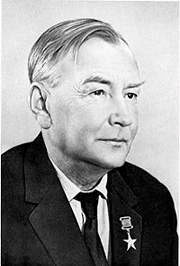
Mikhail Klavdievich Tijonrarov (Russian: Михаил Клавдиевич Тихонравов) was born on July 29, 1900 in the city of Vladimir.
In June 1919 he voluntarily joined the Red Army, serving as a political agitator in the military commissariat of the Vladimir governorship. In 1920 he began his studies at the Institute of Engineers of the Red Air Fleet (Институт инженеров Красного Воздушного Флота) which from 1923 would become the Military Aeronautical Engineering Academy Professor N. Ye. Zhukovski (VVIA) (Военно-воздушная инженерная академия имени Н. Е. Жуковского), graduating in 1925.
After finishing his studies, Tijonrarov served in the 1st “Lenin” light bomber squad. From 1926 he worked in various aeronautical companies, including the bureaus of DP Grigorovich and Nikolai. N. Polikarpov. From 1930 he became head of the KB engine group at Factory No.39 Menzhinski.
In those years, and as a complement to his professional activity, he built around 10 gliders in conjunction with VS Vaxmistrov and AA Dubrovin, among which the AVF-1 “Arap” of 1923, AVF-22 “Zmiei Gorinich” of 1925, “Zhar-Ptitsa” in 1927, “Gamayún” in 1928, “Skif” in 1928, “Konsomolskaya Pravda” or “Zhar Ptitsa-2” in 1929, “Skif-2” in 1931. Many of these specimens competed successfully in the National Sailing Competitions held in Koktebel, Crimea.
Sergei Koroliov proposed to Tijonrarov to devote himself to the development of ballistic missiles propelled by liquid fuel. From 1932 Tijonrarov was appointed brigade chief in the Group for the Study of Reactive Movements (GIRD), which was responsible for the development of the first Soviet two-stage reactive engine.
Starting in 1938, Mikhail Tijonrarov dedicated himself to the research of liquid reactive engines, the development of rockets for the study of the upper layers of the atmosphere, but at the end of the 1930s, work related to the development of ballistic missiles with reactive engines they were canceled and Tijonrarov set about developing the rockets for the “Katiuskas”.
Between 1940 and 1943 Tijonrarov led a construction group, under the leadership of AG Kostikov, which was in charge of the development of the intercept fighter “302” with combined power plant. In this stage of the war he developed an intense work in the development of reactive rockets for the VVS.
Starting in 1946, Tijonrarov was appointed substitute for the head of the reactive rockets group at Institute No. 4 of the USSR Academy of Gun Sciences. Between 1946 and 1956 Mijail Tijonrarov created within the institute a group for the development of a project known as BR-190 consisting of a piloted aircraft that took off vertically with the help of an R-1 rocket, reaching a height of 200 km.
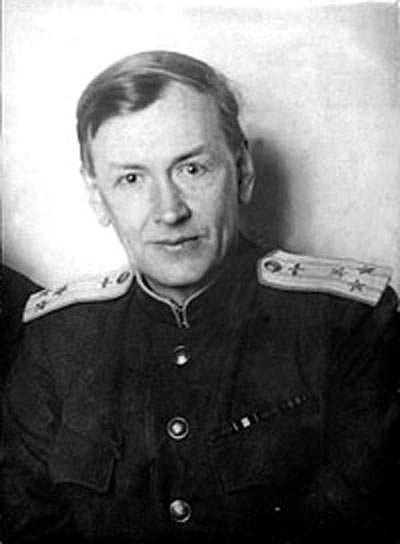
The next works of Tijonrarov’s group were devoted to the study of missile trajectory calculations.
In March 1950 at the NII-4 Tijonrarov gave a lecture entitled ” Rocket packages and prospects for their development.” In his speech he developed the above ideas and for the first time he spoke publicly about the possibility of using these rockets to locate artificial satellites in orbit, and even take people into space. The group’s work was directed to the development of a “package” made up of three R-3 rockets, designed to carry a 3-ton military payload over a distance of 3000 km.
Under the leadership of Tijonrarov, the world’s first manned cosmic ship was successfully developed and launched for which he was awarded on June 17, 1961 with the title Hero of Socialist Labor , along with the Order of Lenin and the Hammer and Sickle medal.
From 1961 Tijonrarov was promoted to head of department and substitute for the main builder of OKB-1, which from 1966 became the Central Construction Bureau for Experimental Machinery Construction (TsKBEM). In the next few years the group under the direction of Tijonrarov worked on the project to develop a manned spacecraft to fly to Mars, several artificial satellites with different objectives. From 1970 he became scientific director of TsKBEM.
Miajil Tijonrarov died on 4 of March of 1974 in Moscow at the age of 73 years.
1997: 134 Cessna Dr, Trenton, SC 29847, USA.
UL builder
Martinsburg WV
USA
A Taiwan-US investment group established in 2000 for the continuance of Grumman-American planes in IFR versions for $215,000.
Czech Republic
Produces the Caprice 21 tandem two-seat very light monoplane.
David Thurston
(David) Thurston-Erlandsen Corp (TEC)
Thurston Aeromarine Corp
1966: Thurston Aircraft Corp
Sanford ME.
USA
Thurston Aircraft Corp was organized in July 1966 by David B. Thurston to develop marine aircraft. It designed and manufactured the TSC-1A1 Teal two/three-seat light amphibian later acquired by Schweizer and later Teal Aircraft Corporation.
Thurston Aeromarine Corp superseded International Aeromarine; initially to produce two-seat Teal III amphibian (delivered from 1995), then expected to be followed by Seafire four-seat amphibian. Also then anticipated was eight-seat Seamaster with two turboprop engines.
In 1972 Schweizer Aircraft Corp acquired all rights to the Teal Amphibian (Thurston became engr mgr).
In 1976 Teal Aircraft Corp, St Augustine FL, bought Teal production rights from Schweizer (D Thurston as vice-pres).
Intl Aeromarine Corp, Sanford FL, partly owned by Thurston Aeromarine Corp, Cumberland Foreside ME.
1975: Thunder Wings, div Thunder Development Inc, Scottsdale AZ.
In the late 1970s, “Thunder Wings” was a company that originated in Vancouver B.C. by Wolfe Nottelman. According to Wolfe, through his connections, he obtained a government grant of 1.5 million. He contracted a company in Scottsdale, Arizona to develop flying prototypes of the FW-190, Spitfire and P-40. They had done some work on a “secret” project of a fighter trainer with a cheap buzz-jet engine of their own design. At the time of the contract it looked like everything would be OK. It was stipulated that the money must be spent in Canada so the US company opened an office in Vancouver. After they obtained the money, they transferred all the funds to Arizona. They got the contract on their “experience”. At that time they had a 3/4 replica of a FW-190 flying. It was built the classic way; tubular structure, covered with fibreglass skins, the same way they built the P-40. On the first test flight, their test pilot was killed. The official version is the man who bought one of them did not take off according to procedure on the maiden flight.
On their marketing material they offered the Spitfire too. In Phoenix in the early 80’s it looked like a good, hard working company. There was an unfinished prototype of an all-composite Spitfire. They said the prototype was sold to someone in England and it was flying over there. They declined to give any info.
The story on the Spitfire in England was a big lie. Friends of mine bought this unfinished prototype (tubular structure covered with skins) from someone in the US a few years later. They changed the design from tubular to composite. They never changed their moulds so many parts did not fit. (For example, the rear wing spars were 1/2 inch higher than rib at the root). Parts were moulded poorly; the main spar had a 2 inch bend. The company never provided plans for the composite model. The plans that were provided were for the tubular structure. Even the manual was only 30% complete. They never finished the project. They were selling unproven kits and they falsely advertised the Spitfire test flights. We paid for the wing skins and spars and they were not delivered. Thanks a lawyer, some managed to obtain the ownership of the moulds, which were exchanged with Wolfe for the moulded parts.
Thunder Wings of Phoenix was folded and re-opened under a new name: Thundergroup, using the original Thunder Wings of Canada money. They screwed about 70 customers who bought the kit from Scottsdale. All the moulds were in storage in Vancouver (Spit, FW-190, and P-40). Wolfe died and there is no details after that.
Papa51 Co. Ltd., the original manufacturer of the Thunder Mustang is no longer in business. The Thunder Builders Group L.L.C. acquired the assets required to manufacture the Thunder Mustang through foreclosure on a loan. We have posted these assets for sale. Discussions are ongoing with several interested parties but at this time we have not finalized an agreement that will see this incredible aircraft back in production. The TBG is focused on finding the right mix of passion and money to make this happen.
Thunder Wing had claimed to build in 1980:
Curtiss P-40C
4/5-scale replica
Two seat, retracting undercarriage
Engine: 300hp Lighting Merlin V-12
Wingspan: 30´0″
Length: 25’0″
Useful load: 574 lb
Cruise speed: 200 mph
Range: 500 mi
Focke-Wulf Fw.190A
4/5-scale replica
Single seat, retracting undercarriage
Engine: 240hp Contentinal W670
Wingspan: 28’0″
Length: 23’0″
Useful load: 600 lb
Cruise speed: 185 mph
Range: 627 mi
Supermarine Spitfire Mk IX
4/5-scale replica
Two seat, retracting undercarriage
Engine: 300hp Lighting Merlin V-12
Wingspan: 27’0″
Length: 23’0″
Useful load: 600 lb
Cruise speed: 225 mph
Range: 812 mi
Colt made a name as a scrappy player in the industry, not to be underestimated. Perhaps because that image so resembled Thunder’s in the ’70s, the two companies merged in 1980. Thunder & Colt continued production of Colt balloons, bringing the marque’s ultimate output to 99 before production ceased.
Later in 1994, Airborne Group Plc (UK), and its various divisions, including Thunder & Colt Ltd., UK were placed into receivership. The hot air ballooning division, Thunder & Colt Ltd. (UK), was purchased in December 1994 by Cameron Balloons Ltd.
In 2011 T&C Balloons US, Inc. offers a complete line of sporting balloons from the one-man cloudhoppers, to the single and dual chariots, right up to the more traditional 77 and 90,000 cubic foot models. For 1995, the sport models were upgraded to include the Classic basket and the new adjustable Stratus double burners. T&C system prices are based on the following equipment: Series I (12-gore) envelope, Classic basket, adjustable double Stratus burners, two 15-gallon stainless steel tanks with jackets and straps and the Ball M55 instrument package. Our envelopes include a Nomex scoop, full Nomex protection in the throat, LongLife fabric in the parachute and top two panels and two paraclear inserts.
In 2011 T&C Balloons US, Inc. offers a complete range of ride balloons unequaled in their quality of construction and passenger comfort. The following sample system prices are based on the following equipment: A-type envelope (24 or 28-gore) with Nomex scoop and full Nomex throat, LongLife fabric in the parachute and top two panels with two paraclear inserts; double adjustable Status burners, two 15-gallon stainless steel tanks with jackets and straps, Ball M55 instruments and Classic T-partition baskets.
In 2011 Thunder & Colt offer a range of four different hot air airships. A standard two person gondola is suspended beneath either a chubby Mark 2 envelope or a slim line GD envelope. Each envelope design comes in a choice of sizes and has its own unique properties.
All T&C systems include your choice of color patterns, any full panel-any color at no extra charge. Other standard equipment includes a fire extinguisher, accessory bag and two strikers. Improvements to balloon and airship equipment are being made all the time.
Cloudhoppers are non-registered ultralight aircraft. Chariots and hot air airships are not US type-certified, but may be flown on British registration, as is the case with special shapes.
Thunder & Colt was bought by Cameron Balloons in 1995. At that time, the T&C factory in Shropshire was not profitable and production was moved to the Cameron factory in Bristol. T&C now operates as a separate division with its own sales and engineering staff, promotion, and model range. Despite the change in ownership, Thunder & Colt continues to lead a separate existence as an independent balloon manufacturer and has kept producing some of the finest hot air vehicles on the market.
Thunder & Colt was the first company to build a pressurized Hot Air Airship. From the very beginning their designs were well thought out. The four designs currently available are the AS-105 Mk II (105,000 cu. ft.), AS-120 Mk II (120,000 cu. ft.) and the AS-80 GD and AS-105 GD which were developed by GEFA-FLUG in Germany. (“GD” stands for “German Design”.) Thunder & Colt also developed the largest hot air airship in the world, the AS-261, to drop an observation platform in the canopy of tropical rainforests. In 1993 the ship was fitted with a larger replacement envelope manufactured by Lindstrand Balloons and has since been known as the AS-300. The main advantage of Thunder & Colt’s airship line is that all models feature internal catenary curtains for load suspension like real helium airships. This improves the aerodynamic shape and stability of the envelope.
At the 1996 Hot Air Airship World Championships in Aosta, Italy, the first three places were won by Thunder & Colt airships with the fourth place being held by a GEFA-FLUG AS 80 GD which features a standard T&C gondola and is also built at the T&C factory in Bristol, England.
T&C also produced the GA-42 non-rigid helium airship which was capable of carrying two people and featured state of the art fly by wire controls. The rights to the GA-42 design were acquired by the American Blimp Corporation when T&C was acquired by Cameron in 1995.
W-F-W Aircraft Corp
Aero Corp of California
1926:
W-F-W Aircraft Corp
(Theodore Woolsey-Jack Frye-Paul Whittier),
Los Angeles CA.
USA
1926:
Aero Corp of California
(Frye & Woolsey, Monte Edwards, Walter Hamilton, Paul Richter),
106 St & Western Ave.
Los Angeles CA.
USA
The Thunderbird Aircraft Company was established in November 1927 at Glendale, California, to build and develop the Thunderbird biplane, designed by Theodore A. Woolsey, and first flown in June 1926. The production W-14 was a three-seat open-cockpit biplane powered by a Curtiss OX-5 engine.
1928:
Thunderbird Aircraft Inc,
900 N Allen St,
Glendale CA.
USA
1928:
General Aircraft Corp,
Los Angeles CA.
USA
1929:
Ended production.
 All Aero