Shigesaburo Torigai was a manager of an imported automobile sales and repair business in Yuraku-cho, Tokyo. Because of his new-found interest in aviation as a hobby, he organized the Nihon Hiko Kenkyukai (Japan Flight Research Association). Under this name, and to satisfy his own interest in aviation, he voluntarily managed and promoted exhibition programmes for Einosuke Shirato who flew the Narahara No.4 Ohtori-go Aeroplane on tours throughout Japan, and his ambition was to have an aeroplane of his own. To achieve this, he asked Toyokichi Daiguchi, who was associated with Narahara, for technical assistance in the building of his own aeroplane.
Manufacturer
Toresi
1998:
Ujezd 474
569 61 Dolni
Czech Republic
LSA builder
Topa Aircraft Co
1983
1401 Offshore
Oxnard
California
USA
UL builder
Topliff, Oliver
Springfield IL.
USA
Light plane builder in 1936.
Tomalesky
Pete Tomalesky, Tomalesky Aviation, Urnatilla Municipal Airport, Umatilla, Florida 32684, USA.
At Urnatilla Municipal Airport, Pete Tomalesky has several other “Cats” in work – one project under construction is an enclosed cabin biplane, the Polecat, with tandem seating, and another is a strut braced mono designed for airshow flying.
The third, scheduled to fly first, is called the Topcat, a two-place, open cockpit bipe with tandem seating; it will carry a 200-hp IO-360 with a constant speed, or maybe a 260-hp Lycoming if Mike can find one at the right price. This particular project,” says Mike, “is being developed for amateur builders, and plans and possibly kits will be offered if public interest warrants it.”
Tokyo Imperial University Aeronautical Research Institute
Professor Tanakadate, who started out as a researcher of geomagnetism and earthquakes, became interested in aviation after witnessing the flight of an airship in France in August 1907, while attending a Paris meeting of the General Conference on Weights and Measures. That experience, along with the findings he gleaned from an aerodynamics book he obtained from a British researcher, stimulated his interest in aviation science and set him on course to become one of Japan’s earliest and most important pioneers in the field.
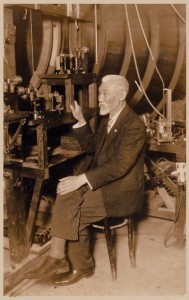
On returning home, Tanakadate built a wind tunnel, the first such device in Japan. His apparatus, created from a nagamochi, a wooden drawer used for storing kimonos, was fed air from one side and had a small glass window in the side through which to observe how a scale-model airplane, hung from the ceiling inside the tunnel, would react to the air flow. He may have used the wind tunnel to test scale models of the first glider to fly in Japan.
Tanakadate frequently emphasized that it was vitally important to fully understand the basics of all related phenomena when it came to aeronautical research. His advocacy for comprehensive learning resulted in the opening in 1918 of Aeronautical Research Institute attached to the University and the commencement of an aeronautical course in the Department of Shipbuilding. This course expanded to become the Department of Aeronautics in 1920.
Todd, Edward
Madison WI.
USA
Airplane builder in 1963.
Todd, Edgar B
Douglas WY.
USA
1929:
Pueblo CO.
USA
Airplane builder
TM Designs
1980: TM Designs, Department HA, Box 3163, Charlotte, NC 28299, USA.
Engine builder
TM Aircraft
W Terry Miller
Furlong PA.
USA
Airplane builder circa 1980-81.
 All Aero