USA
Founded 1966 to build Savoia-Marchetti S.205 (as Waco Vela II) plus turbosupercharged Taurus derivative, SF.260 (as Waco Meteor), and Socata Rallye Commodore (as Waco Minerva). Became Waco Aircraft Division of Allied Aero Industries. Ceased work 1971.
Manufacturer
Waco Aircraft Company Ohio
174 Barklow Rd, Poetsmouth, OH 45662, USA.
Waco replica builder
WACO Aircraft Company
Founded by Rich & Linda Melhoff.
Quillayute Airport
Forks
Washington
USA
Airplane kit builder
Waco / Weaver Aircraft Co
Weaver Aircraft Co
Advanced Aircraft Co
Waco Aircraft Co

Weaver Aircraft Co was formed by George “Buck” Weaver, Elwood “Sam” Junkin, Clayton “Clayt” Bruckner and Charles “Charlie” William Meyers at Loraine, Ohio, in 1919. Waco built Cootie parasol-wing aircraft.
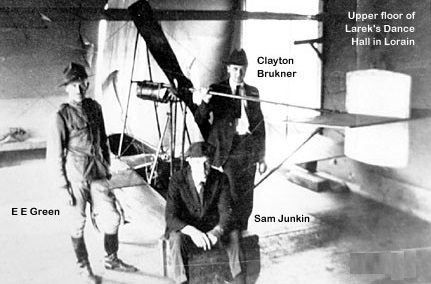
Bruckner and Junkin actually began designing aircraft in 1919 with a flawed plan for a floating airplane that never flew. Meyers, too, had already designed an aircraft with Weaver and the pair approached Bruckner and Junkin, asking them to join their construction efforts on a single-seat monoplane named the “Cootie.” Unfortunately, Weaver crash-landed the Cootie during its first flight attempt and suffered extensive injuries in the crash.
The WACO partners persevered, designing a practical three-seat biplane, the WACO 4, and building it out of parts left over from the Cootie and other biplane efforts. The team continued to assemble airplanes from parts salvaged from surplus World War I Curtiss Jennys, continuously tinkering with their designs and making improvements. Eventually, they sold two WACO 5 biplanes.
From Medina, Ohio, in 1921, reorganized as Advance Aircraft Company in 1923 at Troy, Ohio, although the aircraft retained the WACO designation. The first Troy-built model, the WACO 6, was soon being marketed. Following Buck Weaver’s death in 1924, Clayton Bruckner and Sam Junkin reorganized the business and soon introduced the company’s popular Model 9 (or Nine) in 1925.
First really successful venture was three-seat Model 9 of 1924. Developed long and successful line of cabin biplanes, sporting, racing, and military airplanes. The Waco series of four-seat cabin biplanes were initiated in 1931 and were produced continuously in progressively refined models until 1939. WACO continued to refine the aircraft design and accessories on an annual basis, but retained the basic configuration to maintain quality and avoid the high costs of wholesale redesign; as a result, selling prices remained stable and affordable.
By 1936 was largest constructor of commercial aircraft in USA.
Production of WACO civil aircraft was suspended in 1942 after U.S. entry into World War II. The company contributed to the war effort by building assemblies for a variety of military aircraft and manufactured the well-known CG4-A troop-carrying gliders.
After war developed a new monoplane, the Aristocraft (see O’Neill), but abandoned it in 1947. Company went out of business. Waco production ceased and the company went into contract manufacturing.
Between 1919 and 1947, the company produced sixty-two different aircraft models and led all its competitors in number of aircraft registered.
In 1963 it became Waco Division of Allied Aero Industries (Franklin and Jacobs motors, Omega helicopters).
In 1969 rights sold to SIAI-Marchetti (Italy) for production of new Waco Meteor, Minerva, Sirius, Vega, and Vela.
Early Waco designs were given numbers to designate types but later models gained letter designations. The first letter denoted which engine was used, the second gave the wing design and the third the airframe model. From 1934, the first letter still gave the engine make and horsepower, the second gave the design and the third, the series.
Wackett, Lawrence J.
Broadsmith won the 1924 Low-Powered Aeroplane Competition with his design and the second prize was won by L. J. Wackett with his Warbler aircraft, powered by the Wizard engine, also designed by Wackett.
Lawrence J. Wackett (later Sir Lawrence) started his career in the Australian Flying Corps in the First World War and saw service in Egypt; when the R.A.A.F. was formed in 1921 Wackett decided to move into aircraft design and development and, after a short professional training period, persuaded the then Defence Minister, R. K. Bowden, to set up a R.A.A.F. Experimental Aircraft Station at Randwick, in order to develop aircraft suitable for Australian conditions.
The first design was the Widgeon 1, a flying boat, followed by a much larger amphibian, the Widgeon 11, powered by a 440 hp A.S. Jaguar engine. In 1927, the Widgeon 11 undertook a 9,000 mile flight around Australia.
Two other aircraft were developed at Randwick to the prototype stage: Warrigal I (a trainer) and Warrigal II a single seat fighter. As a result of a government-sponsored report, the Randwick Station was closed in 1931: Wackett resigned from the R.A.A.F. and transferred, with some personnel and equipment to Cockatoo Dockyard. He continued working for the R.A.A.F. but also undertook several civilian projects including the Codock, a six passenger twin engined airliner, commissioned by Sir Charles Kingsford-Smith.
In 1934, Wackett and some of his staff moved again, to the Tugan Aircraft Company at Mascot, where the Codock design was developed into the Gannett a six/seven passenger airliner, which provided service with the R.A.A.F. and with small airlines in N.S.W. Eight Gannetts were completed when the Tugan Company was taken over to form the nucleus of the Commonwealth Aircraft Corporation in Melbourne.
Wabash Aircraft Co
1928
Terre Haute
IN
USA
Airplane builder
Ended operations in 1930
Vultee
Aviation Manufacturing Corp
1923: Acquisition by Reuben H Fleet of Gallaudet and Dayton-Wright interests
1924: Buffalo NY.
Vultee entered aircraft manufacturing in mid-1930s, having formed in 1932 the Airplane Development Corporation, which two years later was acquired by the Aviation Manufacturing Corporation-AVCO, Downey CA (old Emsco plant). A Vultee Aircraft Division of the latter company was formed in 1936, becoming (Gerard Freebairn) Vultee Aircraft Inc. when it acquired the parent corporation’s assets in 1939.
First product was the V-1 eight-passenger monoplane, but became better known for its military aircraft, of which most notable were the V-11 two/three-seat attack monoplane, built for Brazil, China, and Turkey, and a license sold to the USSR; the improved V-12 for China; more than 11,000 BT-13/BT-15 and SNV Valiant two-seat basic trainers for the USAAF and USN between 1940 and 1944; V- 48 Vanguard single-seat fighters for China and USAAF: and V-72 Vengeance dive-bombers for the RAF, USAAF and Brazil between 1941 -1942.
Gerard Vultee was killed in a crash of his personal Stinson in 1938; Richard Palmer as president.
1940: Vultee Aircraft Inc, on acqusition of Barkley-Grow and Stinson Divisions of AVCO.
1940: Nashville (TN) Div.
Vultee purchased Stinson Aircraft Division of the Aviation Manufacturing Corporation in 1940, producing Stinson Model 74s for the USAAF as L-1 Vigilant during Second World War. In December 1941 Vultee bought a 34 percent controlling interest in another subsidiary of The Aviation Corporation, Consolidated Aircraft Inc, with which it merged in 1943 to form the Consolidated Vultee Aircraft Corporation.
1942: Name changed to Convair.
Except only for V-1, V-11, V-12, V-72, and V-77, the prefix was not used at the factory or design levels, and was most likely the doing of media scribes who presumed a “V” for Vultee would follow other manufacturers’ styles—”NA” for North American, “L” for Lockheed, etc.
Vulcan Aircraft Co
Two brothers named Wilson and Harvey Doyle were 1925 graduates of Harvard and Yale respectively and left their home town of Charlotte, North Carolina, for Detroit, Michigan, then a center of aviation activity. After some time spent working for others and trying to obtain financial backing, they moved to Portsmouth, Ohio, where they came in contact with William Burke of the Vulcan Last Company. Burke backed their plan to build a two-place, tandem, open-cockpit parasol sportplane and the Vulcan Aircraft Division began in 1928 design work in a rented second floor room and construction in a former street car barn in Portsmouth.
Vulcan Aircraft Co,
Portsmouth OH
USA
fdrs: William Burke, Harvey & Wilson Doyle, Dwight Hungtinton, Jan Pavleka
The result was the Vulcan “American Moth” two-seat lightweight sporting aircraft. The plane was a hit, but the relationship among the principles was deteriorating and the Doyle brothers left to start their own Doyle Aircraft Company in Baltimore.
1929: Assets sold to Davis Aircraft Corp.
Vulcanair
Established 1989, and in 1996 was purchased by a new holding group to develop aircraft manufacturing, maintenance, airtransport, and other aviation related tasks, plus a flying school for commercial crews. Has taken over the SF600A Canguro multipurpose transport from SIAI-Marchetti (first flown 1978) and in 1998 purchased rights and tooling for former Partenavia’s P 68 series of transport aircraft (P 68, Observer 2 and Viator).
Vulcanair took over the bankrupt Partenavia and continued to produce the VF600M.
Vulcan
1983: Vulcan, Kiefernweg 13, D 8011 Poering bei Munchen, West Germany.
UL builder
 All Aero