2011: Carteton, New Zealand. Rick Walczak had been balloon flying for over 30 years, being self taught.
Manufacturer
WALCO / Weckler-Armstrong Lillie Corporation
Max Lillie (1881-1913, born in Sweden as Maximillian Theo Liljestrand) announced the formation in Chicago of the Weckler-Armstrong Lillie Corporation [WALCO] in February 1913, with the aim to manufacture airplanes and airboats. Adam F. Weckler was a racing boat builder and E. R. Armstrong was an airplane builder and expert on aerodynamics. Max Lillie was the driving force in the new firm.
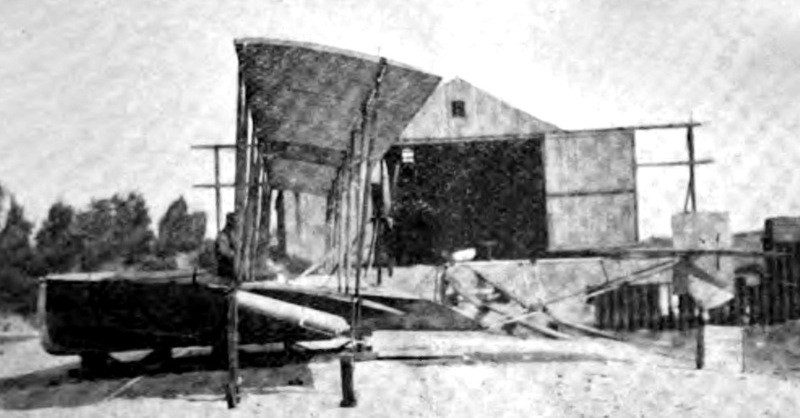
The exact identity of the plane is either a modification of the earlier unsuccessful “Airboat” tandem monoplane design or a second follow-up design.

Two WALCO planes were entered for the 1913 Chicago-Detroit Aero and Hydro Great Lakes cruise, but none actually started.
Wainscott, Lee
Compton CA.
USA
Circa 1930s built the Li’l Twister
Wainfan, Barnaby
Long Beach CA.
USA
Circa 1993 built the FMX-4 Facetmobile
Wagner, Harold A
4539 NE 21 St
Portland
OR.
USA
Circa 1932 airplane builder
Wagner, Helicopter Technik
Germany
Joseph Wagner of Friedrichshafen began developing a helicopter in 1960, as a basic, torque-free vehicle to which specialized equipment and accommodation could be added. Rotorcar III was roadable; main development vehicle was Sky-trac. Aerocar and three Sky-trac 1 s were completed in mid-1960s.
Wagener, Flugzeugbau
Germany
Hans Wagener of Hamburg produced his first aircraft, the HW4A, in 1933. Used as test-bed for anexperimental two stroke engine.
Wag-Aero
Wag-Aero was founded by Dick and Bobbie Wagner in the basement of their house in Lyons in the early 1960s. By 1965, Wag-Aero printed its first catalogue and continued to expand. In 1971, the company moved from Wagner’s basement to North Road. The original warehouse and manufacturing facility has been expanded by three additions. The airstrip was built at the top of the hill for the convenience of fly-in customers.
Wag-Aero’s first kit aircraft, the Sport Trainer, is a replica of the Piper J-3 Cub. Home builders can build this aircraft by ordering many required parts through Wag-Aero. Later, the Wag-A-Bond and the Sportsman 2+2 were added. The Sportsman 2+2 was one of the first four-place homebuilt aircraft which could be purchased via kit.
Aero Fabricators, was formed in the mid – 1970s. There are three departments within Aero Fabricators: welding, sheet metal fabrication, and seat belt manufacturing. The welding department remanufactures aircraft mufflers and engine mounts to FAA standards. They also produce many new manufactured aircraft exhaust systems, as well as structural components. The sheet metal department manufactures gas tanks, leading edges and metal skins and cowlings for many different aircraft, including our own kit aircraft. Both departments work together on the prefabrication of different items for our kit aircraft, including complete pre-welded fuselages. The seat belt division manufactures and repairs FAA approved seat belts and shoulder harnesses in many styles and colors and has been a leader in the industry in designing and manufacturing shoulder harness installation kits. In all, Aero Fabricators produces approximately 850 various components.
1995-8: 1216 North Rd, Box 181, Lyons, WI 53148, USA.
On September 1, 1995, Dick and Bobbie Wagner sold The Wag-Aero Group of companies to Bill Read and Mary Myers. In April 1997 Wag-Aero acquired the assets of Viking Aero Manufacturing to expand the product and manufacturing lines.
In October 2002 Wag-Aero acquired the assets of Ground Support Manufacturing, Inc. which further expanded our product and manufacturing lines into aircraft and airport related equipment. All products are now all manufactured in the facility in Lyons.
Wadsworth, Frederick Elliott
Frederick Elliott Wadsworth (1868-1927), retired automobile body manufacturer of Detroit and Irvington-On-Hudson, in 1911 built a hydro-aeroplane named the Flying Fish
Wade
Chicago
IL.
USA
Circa 1909 built an aircraft
 All Aero