Destiny Powered Parachutes

Destiny Powered Parachutes was founded by sole company owner John Rivers. Using connections from his background in NASCAR Winston Cup auto racing, Rivers designed a sturdy carriage using crashworthy concepts from the racing world. His goal was to provide a higher level of comfort and safety in the carriage than he saw in other brands. A company of 15 employees expected to grow to 20 during 2001, Destiny taps its Michigan-based community for many retired auto workers who are rich in knowledge about machining and parts fabrication. Hiring has been furious with the company growing from 2 employees to 15 in just 2 years.

Began operating circa 2000, in Three Rivers, Michigan.

de Souza, Júlio Cesar Ribeiro         

In 1875, Júlio Cesar Ribeiro de Souza, born in Belém, a city located in northern Brazil, started some research in aeronautics because he was impressed with the flight of certain native birds of the Amazon rain forest. he moved to Rio de Janeiro, where he published works on air navigation and presented talks on this subject to the Instituto Politécnico, an engineering faculty. he designed a dirigible, which was christened Victória after his wife. after obtaining part of the funding in Brazil, the device was constructed in Paris. attempts to place the device airborne failed both in France and in Brazil.

De Schelde

The aircraft department of a dockyard, opened in 1935, employing technicians from Pander. Built S.12 four-seat cabin monoplane, Scheldmusche light single-seat pusher biplane; best known for Scheldmeeuw single-seat flyingboat, which was built in all-metal and composite versions.
It took over the designs of Pander and Zonen when that company went out of business in 1934. Schelde had taken over the aircraft construction department of the Pander furniture factory in The Hague at the end 1934.
From 1939 made wings for Dornier Do 24 flying-boats, Aviolanda building the hulls.
After 1945 began glider construction and Dakota conversion. In 1951 acquired license for production of Saab Safir.
The aircraft construction department of the Royal Company De Schelde, joined Fokker on May lst, 1954.

Descamps

France
Elysee Alfred Descamps designed a machine gun-armed fighter in 1913, but this was not put into production. For a time he worked with Aviatik at Mulhouse, then went to Russia in 1914 to become chief engineer to Anatra. After the revolution he returned to France and built several fighter and bomber prototypes. In 1923-1924 he was carrying out experimental work for the French government.

de Rozier, Jean-François Pilâtre

Jean-François Pilâtre de Rozier was born in Metz, Lorraine on March 30th, 1754, the third son of Magdeleine Wilmard and Mathurin Pilastre.

His interests in the chemistry of drugs had been awakened in the military hospital of Metz, an important garrison town on the border of France. He made his way to Paris at the age of 18, then taught physics and chemistry at the Academy in Reims, which brought him to the attention of the Comte de Provence, brother of King Louis XVI.

He returned to Paris, where he was put in charge of Monsieur’s cabinet of natural history and made a valet de chambre to Monsieur’s wife, Madame, which brought him his ennobled name, Pilâtre de Rozier. He opened his own museum in the Marais quarter of Paris on 11 December 1781, where he undertook experiments in physics, and provided demonstrations to nobles. He researched the new field of gases, and invented a respirator.

In June 1783, he witnessed the first public demonstration of a balloon by the Montgolfier brothers. On 19 September, he assisted with the untethered flight of a sheep, a cockerel and a duck from the front courtyard of the Palace of Versailles.

He is the first man who had the courage to fly in the airs on board an astonishing machine, manufactured only a couple of months prior by Etienne and Joseph Montgolfier (two brothers from Annonay – Ardeche). After the first test without basket and passengers and then the complementary flight with animals, the King Louis XVI didn’t want to kill one of his subjects and wished to send convicts instead.

Along with Joseph Montgolfier, he was one of six passengers on a second flight on 19 January 1784, with a huge Montgolfier balloon Le Flesselles launched from Lyon. Four French nobles paid for the trip, including a prince.

Pilâtre de Rozier, a freemason, friend of Benjamin Franklin, Lafayette and other decision makers, had just created a Sciences Museum in Paris. Surprised and interested, the King’s court accepted Jean-François’ project and gave him the possibility to be the first to fly. During several weeks, he modified and tested the balloon, then flew with the “Marquis d’ Arlandes” on November 21st, 1783. He carried out the first world record of distance, altitude and duration. His fame soon exceeded France and extended to the whole world. The Man achieved his dream: to fly in the air. Pilâtre de Rozier invented the first gas mask, the matches and many other inventions, but he continued his experiments in ballooning. He manufactured “La Rozière”, combination between a hot air balloon and a gas balloon (hydrogen) which had just been set up by the physicist Charles. He also risked himself while researching the flammability of hydrogen: in “A Short History of Nearly Everything”, Bill Bryson writes “In France, a chemist named Pilatre de Rozier tested the flammability of hydrogen by gulping a mouthful and blowing across an open flame, proving at a stroke that hydrogen is indeed explosively combustible and that eyebrows are not necessarily a permanent feature of one’s face.”

His 3rd flight would kill him. He intended to fly from France to England on June 15th, 1785, but the machine wasn’t ready. He died at Wimille, on the French coast, aged 31, with his unfortunate flight companion Pierre Ange Romain, crushed on the ground after a vertiginous fall. Physicist chemist, he was also the creator of a new museum (a kind of “Conservatory of Arts and Crafts). He was also the first air victim and the spiritual father of generations which have succeeded him on board hot air balloons, gas balloons and “Rozières”. It’s with a “rozière” that Bertrand Piccard and Brian Jones accomplished a round the world tour in March 1999, so did Steve Fossett a few years later.
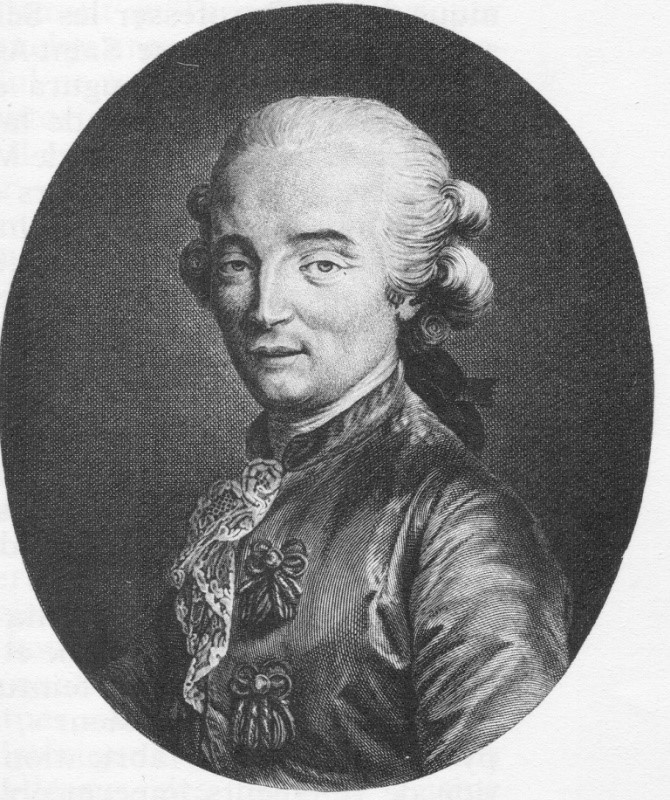
Deperdussin, Societe Provisoire des Aeroplanes

Silk merchant Armand Deperdussin (1867-1924) established Societe Provisoire des Aeroplanes Deperdussin in 1910. Built precursor in 1909 for show in a Paris store. Built during 1912-1913 a series of very advanced monoplane racers with tulip-wood monocoque fuselages. In 1912 a “Dep” was the first aircraft to exceed 160km/h, and Prevost flew one to win the 1913 Schneider Trophy race at Monaco. By 1914 monoplanes bearing Deperdussin name were used not only privately but by several military authorities. Designed by Louis Bechereau, these aircraft were especially noted for speed performances in 1912-1913, and in some instances for monocoque construction.

Deperdussin Article

Deperdussin, a great promoter, became involved in financial difficulties and in 1913 Deperdussin was arrested for embezzlement and the company was taken over by Louis Bleriot. In 1915 the company was declared bankrupt. The Deperdussin name had links with several companies, including the British Deperdussin Company with which John Porte was connected. Bleriot retained the same initials, but now stood for Societe Pour Aviation et ses Derivees (SPAD).

Departamento de Aeronaves / PAR / IPD / Institute de Pesquisas e Desenvolvimento

Brazil
The aircraft department of the Instituto de Pesquisas e Desenvolvimento (IPD). From 1970 concentrated entirely on research, all design and development being handed over to Embraer. Between 1959 and 1964 it developed prototypes of the Beija-Flor two-seat light helicopter, designed especially for Brazilian conditions by Prof. Heinrich Focke, formerly of Focke-Achgelis.