1995: 12451 Oak Plank Rd, Jacksonville, FL 32220, USA.
1997: 15268 Carrollton Blvd, Carrollton, VA 23317, USA.
Founded December 1995 and offering the Eagle’s Perch single-seat kit-built helicopter, first flown 1994 as the Perch Nolan 51-HJ.
Manufacturer
Eagle R&D
Schramm’s association with flying began in 1958 when he built and flew a Bensen Gyrocopter. He studied at California Polytechnic State University and eventually was drafted into the military where he worked on missles as an electronics technician at the White Sands Proving Ground. There he did design and drawings and began to formulate a plan for building a helicopter that the average pilot could afford. After his discharge in 1967, he immediately entered helicopter manufacturing and started his own company, Rotorway, with the goal of producing his own designs.
After Schramm’s health began to fail in 1987, he made some poor business decisions and failed to put the right people in charge of operations during his absence. This resulted in the company declaring bankruptcy in 1990.
After leaving Rotorway, Schramm moved to Nampa, Idaho, and began to develop a new engine for Dan Denney.
By the time he returned to the drawing board, the Rotax 582 and 618 were on the market and the power to weight ration that would suit his design. Almost three years later, he accomplished his goal of landing on War Eagle Mountain. Funds were short so Schramm formed Eagle R&D LLC to try to gain some financial backing.
1997: 2203 S. 10th Ave, Caldwell, ID 83605, USA.
2009: Eagle Research & Development, 2321 Hemingway Blvd, Nampa, Idaho, USA
Eagle Kites
Amongst the early birds, R.Field later went on to become manufacturers as Eagle Kites.
Eaglecraft Co
In 1941, Eaglecraft Co of Ft Worth TX., USA, built a two-place cabin, high wing monoplane, tandem-seat trainer.
Eagle Aircraft [2]
1995: PO Box 586, Fremantle, Western Australia 6160.
Eagle aircraft was formed in 1985 and is a partnership of Composite Technology Research Malaysia and oil company Petronas.
Composite Industries Limited (CIL) was formed to develop the aircraft initially designated the Eagle XDS (Eagle X Dual Seater). That name changed to Eagle Aircraft Australia Ltd in December 1988.
Eagle Aircraft [1]
Developed the Eagle DW-1 single-seat agricultural biplane.
EAF / State Aircraft Factory (Greece)
In 1925 the Blackburn Aeroplane & Motor Co concluded an arrangement with the Greek Government to organise an aircraft factory at Phaleron, near Athens, Greece. The factory constructed a series of Velos two seat torpedo planes, designed by Blackburn; a series of Armstrong Whitworth Atlas two seat fighters; and a series of Avro 504O 504N trainers.
EAA
1980: Box 229, Hales Corners, WI 53130, USA.
1982: Experimental Aircraft Association, EAA-Oshkosh, PO Box 2591, Oshkosh, Wisconsin 54903, USA.
E2RA
As a small paraglider constructor, Paul Amiell doubled his sales in 1997.
1998: 16 CH. DES Gromailles, F-74600 Seynod, France
Działowski Brothers
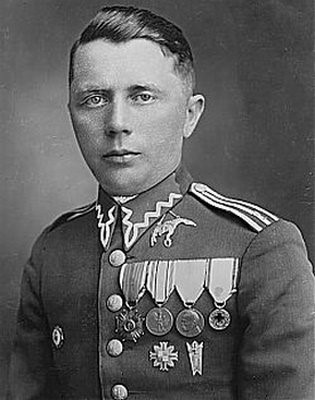
Stanisław Działowski was born on 11.04.1900 in Mielec. He completed six years of elementary school and two classes of high school. In the years 1914-1915 he was in locksmith practice in Vienna, which he did not finish. On December 3, 1916, he joined the air force in the Austro-Hungarian army in Vienna, from where he was sent to the aircraft construction school in Hungary (Szeged), where he stayed until the end of the First World War.
After returning to Poland, he joined the Polish army in November 1918 and, as a corporal, he became the head of the airfield assembly plant in the pilot school park, with which in 1919 he was transferred to Bydgoszcz. In this post he worked until 1926. On April 1 that same year, he joined the pilot school as a pilot student, after which (November 1, 1926) he was assigned as a pilot to the ITBL in Warsaw, at the same time acting as a pilot in the main port training squadron. In May 1927, he passed on his own request to the 2nd Air Regiment to Krakow, where he works as a pilot and constructor of the air park. In 1928, together with his brother Mieczysław Działowski, he founded the aviation company Bracia Działowscy in the park with the thought of producing airplanes for the army.
In 1936, he was released from the army and retired to the rank of senior pilot sergeant. He then worked as a civilian in the 2nd Air Regiment. In 1938, together with his brother, he started working at PZL Warszawa, Mokotów (WP-1) as master assembly master. In 1939, he was transferred to work in PZL WP-2 in Mielec , from where he moved to SHL in Kielce just before the war.
In the interwar period, he belonged to extremely talented aircraft designers. Resigned only to his own strength, working amateurishly, he built with his brother Mieczysław, five successful prototypes of sports aircraft, glider and the original car-plane (not completed due to lack of funds) so-called “Aeromobil” .
In 1925, they built the glider “Bydgoszczanka”, which competed in the Second National Glider Competition in Gdynia, Oksywie, where it received a diploma for a very original design. Shortly after the break-up of the “Bydgoszczanka” glider at the 2nd Glider Competition, they began to build the aircraft. Stanisław Działowski, who was the constructor of the aircraft, had nine years of experience in servicing aircraft and renovations, including five years as head of the Pilots Park Aviation Park in Bydgoszcz. The construction of the plane was made possible by the Bydgoszcz-based shoemaker Jan Krüger, an aviation enthusiast who bought the Haacke engine from Gabriel’s brothers. From here, the aircraft received the DKD-I designation, from the names of the contractors and the founder of the engine. In 1926, the brothers took the first Polish interurban flight from Bydgoszcz to Warsaw. The following airplane constructions of the Działowski brothers are: DKD-II , DKD-III (participated in 1927 in the National Awionete Competition and 3rd place for KKA in 1928), two DKD-IV (with Anzani engine and Siemens-Halske engine, the machine with this first engine has won the 1st place in the 2nd National Competition of Light Ships in 1928, with the second 5th place, both constructors – participants of the competition, also as pilots received for the 1st and 3rd place of their machines the prize of 13 thousand PLN), DKD-V (built on the Challenge in 1932, crashed during a forced landing) KKA in 1928), and pilot S. Działowski suffered severe injuries), DKD-VI , DKD-VII , DKD-VIII (the last two not fully built) and “Aeromobil” (air taxi, unfinished).
Before the outbreak of the war he gave up independent construction work, discouraged by constant financial difficulties and poor health after the crash.
In September 1939, he was appointed to the army and then found himself in Romania, from where he managed to get to France. In France he worked in the assembly plant of Lioré-et-Olivier LeO 451 aircraft. In March 1940, he became a pilot instructor at the 108th Aviation Battalion in Montpellier. After the fall of France, he was evacuated to Great Britain. On June 27, 1940, he was admitted to the RAF and, after training, he flew in the 2nd Anti-Aircraft Cooperation Unit (AACU – Anti-Aircraft Cooperation Unit). On 15.10.1941, he was wounded in a combat flight and sent to a military hospital in East Kilbrick, Scotland. On March 17, 1941, he was released from the RAF for health reasons. He died on 19.03.1942 at the RAF Sanatorium in Perth. Buried in the Wellhill Cemetery there.
As a pilot, he flew on 20 types of aircraft about 800 hours, he also made 12 parachute jumps. He had the following badges and decorations: Bronze Cross of Merit, Medal of the XII anniversary, Field Pilot Badge, Gold Honorary LOPP Badge and parachute badge.

