1984: PO Box 25528, Lake City, WA 98125, USA.
UL builder
1984: PO Box 25528, Lake City, WA 98125, USA.
UL builder
Czechoslovakia
Has developed the Qualt 200L two-seat monoplane.
1998:
972 Weedon Dr NE
St Petersburg FL 33702
USA
Engine builder
The youngest son of John Pitcairn, co-founder of Pittsburgh Plate Glass Company, Harold was born in 1897 and took an early interest in aviation. Inspired by the first flight of the Wright brothers in 1903, he began flight training as an air cadet in the last days of WWI, and would eventually earn a pilot’s license signed by Orville Wright.
1924: (Harold F) Pitcairn Air Service
air field, flight school, FBO
Bryn Athyn PA.
USA
Pitcairn was established in the mid-1920s in Philadelphia, Pennsylvania. Pitcairn and Agnew Larsen, who he had met in pilot training, produced the Mailwing airmail series biplanes including PA- 5 Mailwing high-performance single-seat mailplane used on U.S. Air Mail routes.
1925: Pitcairn Air Lines
sold to Eastern Air Transport in 1929 as origin of Eastern Air Lines
1925: Pitcairn Aircraft Inc
Pitcairn Air Field #2
Willow Grove PA.
USA
In 1928 Harold Pitcairn ordered a Cierva C.8W (the W was for the American Wright Whirlwind engine), which arrived at Pitcairn Field, Willow Grove, Philadelphia, PA and on December 18, 1928. It made the first rotary-wing flight in America, piloted by Cierva pilot H. C. A. “Dizzy” Rawson, followed the next day by Pitcairn.
In early 1929, Cierva and Pitcairn negotiators agreed that the Pitcairn-Cierva Autogiro Company (PCA) would be formed in America with the rights to license Cierva’s patents. Pitcairn threw himself into the development and promotion of the Autogiro – and the results of the next 16 months would earn him and his associates the Collier Trophy for the greatest aviation achievement for 1930.
1929: Autogyro operations as Pitcairn-(Juan de la) Cierva Autogiro Co.
c.1930: Autogiro Co of America (aka AGA) as patent licensee (to Buhl, Kellett, Sikorsky, etc).
Pitcairn Aviation Inc turned to autogiro construction with PAA-1 of 1931 and the name changed to Pitcairn Autogiro Company in the early 1930s. They sold a number of PA-18 and -19 autogiros, including a military version of the PA-34 two-seater to the USAAC. Plant and contracts were taken over in 1940 by Pitcairn-Larsen Autogiro Company, in turn succeeded very shortly afterwards by Aga Aviation Corporation.
Feb 1941: Pitcairn-(Agnew E) Larsen Autogiro Co Inc.
Dec 1941: Renamed AGA Aviation Corp (pres: Virgil H Frazier).
In 1943 G and A was acquired by the Firestone Aircraft Company of Akron, Ohio, together with almost 200 patents concerned with rotary-wing aircraft. G and A built gliders and experimental autogiros in the Second World War, and carried out subcontract manufacture.
1946: Acquired by G&A (Gliders & Aircraft) Div, Firestone Rubber Co.
After the company became the G & A Aircraft Division of Firestone, the emergence of Bell and Sikorsky in a depleted post-war market discouraged continuing the helicopter development in the early 1940s.
Firestone was formed in 1946 by name change from G&A Aircraft Inc., a subsidiary of Firestone Tire and Rubber Company.
1947: Firestone Aircraft Co.
1998: Bullachbergweg 34 a, D-87645 Schwangau, Germany
From 1996, Stephan Müller supervised design and build while Stephen Hüglin handled production and testing.
Paraglider builder
1998: Pagodenburgstr. 8, F-81247 Munchen, GERMANY
Operated by Thomas Finsterwalder.
Hang glider builder
1980: William J. Fike, Box 683, Anchorage, AK 99501, USA.
Built the Fike Model E
1995-7: Ardmore Airpark No.206, Gene Autry, OK 73436-0206, USA.
P-51 replica builder
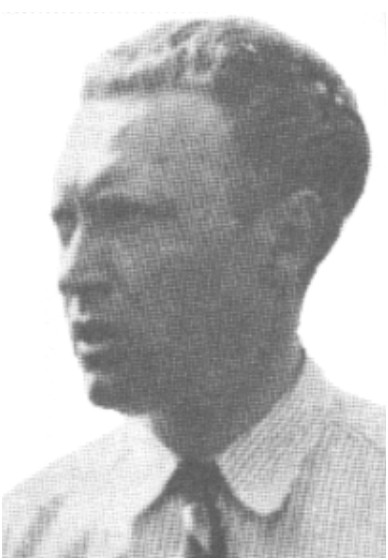
Gerhard Fieseler Werke GmbH established by the aerobatic pilot in 1930. Fi 2 Tiger produced for Fieseler’s own use. Fi 5R two-seat lightplane and Fi 97 four-seat cabin monoplane preceded Fi 156 Storch liaison and communications aircraft with high-lift slots and flaps. Also built Fi 167 torpedo bomber/reconnaissance biplane, designed for carrier operation. Manufactured Messerschmitt Bf 109 fighters.
Fiedler built his aircraft in Wiener Neustadt, Austria. His 60 hp Mercedes D4F engines sponsored by the Princess of Fürstenberg, Fiedler’s employer as a teacher. In December 1910 he received his Austrian pilot’s certificate #19 with his second machine at the Steinfeld in Wiener Neustadt.
In early 1911 Fiedler went to Germany to show his new craft and skills to his benefactors – where he had a first big mishap while crossing the upper Lake Constance/Bodensee.
 All Aero