Williams Aircraft Design Co

The Williams Aircraft Design Company was an American aircraft manufacturer based in Northridge, California and run by Art Williams. The company specialized in the design of racing aircraft.

Several of Williams products were the result of collaboration with other designers. For instance the Williams-Cangie WC-1 Sundancer was designed with Carl Cangie and won first place at the 1973 Reno Air Races Formula One Class.

The Williams W-17 Stinger design captured second place at the 1973 Reno Air Races in the biplane class.
Wilcox Aeronautics Inc

H F Wilcox Aeronautics Inc
Verdigris OK.
USA

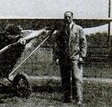
Circa 1930 Wilcox ran an airport, located NE of Tulsa in Verdigris, that consisted of associated hangars and an office on 300 acres. William Collier built a number of planes there, reportedly including the T-12, until he relocated to Kansas. At least one of the hangars with the Collier name was still standing, overgrown and unused, in the ’80s.

Wilford, E Burke

Wilford’s first aircraft, built in conjunction with Vincent Burnelli and entered for the Guggenheim Safe Airplane Contest in 1927, was especially designed for low-speed landing.

In 1928 Wilford visited Europe, and while there acquired the patent rights for the United States of a rotary wing aircraft conceived by a German named Rieseler.

1929: E Burke Wilford, Paoli PA.

In 1929 Wilford began building his own gyroplanes.

1934: Pennsylvania Aircraft Syndicate, Philadelphia PA.

The idea behind this American/German partnership was a scheme for feathering the pitch of the blades rotating round the hub instead of the blade flapping system which La Cierva employed in his autogyros.

Wiley Post Aircraft Corp

Founded in Oklahoma City in 1935 to build Model A, cheap two-seat aircraft. Powered by converted Model A Ford engine, the first example was built by Straughan Aircraft. Wiley Post acquired rights to Straughan assets 1935, and transferred production to Oklahoma City. Thirteen Model As built before company liquidated after Wiley Post’s death.