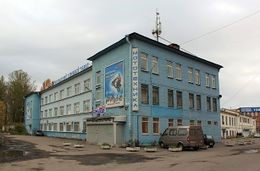
GAZ / Leningrad North Factory State Enterprise / GAZ No.3 Krasni Liotchik

Central building of the former GAZ No.3 aviation factory in Leningrad.

The V. A. Liebediev Aviation Factory Stock Company was created on the outskirts of Petersburg, near the village of Novaya Dirievnya and very close to the Komendantski airfield. Its origins are linked to the sportsman and aviation lover V. A. Liebediev. A law student at the University of Petersburg, he decided to abandon his studies and cycling to study aviation at the Farman School in Paris, France. Upon returning to Russia in 1909, he decided, together with his brother and Captain S. A. Ulyanin, to create the Petersburg Aviation Society (PTA), with the financial support of the businessman Lomach.

In 1914 Liebediev built several productive buildings next to the village of Novaya Dirievnya and very close to the Komendantski airfield, which formed the basis of the new aviation factory known as the “VA Liebediev Aviation Stock Company” and intended primarily for the construction of low-cost aviation models. license, although a short time later, models of their own design began to emerge, which carried the brand “Lievied” (Swan).

By 1917 Liebediev decided to increase production, but unfortunately his plot at the Komendantski airfield did not allow an increase, so he was forced to build new facilities in Taganrog, Penza and Yaroslavl.

By that time around the Komendantski airfield, several aviation factories had already sprung up with their assembly workshops and hangars. Among them the “Gamayún” factory of S. S. Schetinin, the Russian-Baltic Wagon Factory, the factories of Slysarienko, Porojóvchkov, Meltser, Zass, Lanski. By 1918, more than half of the country’s aeronautical technology factories were located around this aerodrome.

On March 13, 1918, by order of the newly created Soviet government, it was decided to close all the aeronautical factories in Petrograd, move the production of the “Ilya Muromets” bomber to the interior of the country and evacuate all the machinery and equipment from the city. This measure affected the small factories of Slyusarienko, Porojovschikov and Grigorovich, which were closed and their personnel and machinery transferred to other factories.

By the decree published on June 28, 1918, all aviation factories were nationalized and the Main Directorate of the Aeronautical Industry known as Glavnoavia was created for their direction. This organization, which began to function on January 1, 1919, was originally subordinated to the United Council of the Economy (VSNJ according to the acronym of Vsiesoyuzni Soviet Narodnovo Jozyaistva), but as of December 22, 1919 it was led by the Council of the Military Industry (SVP).

Created in Saint Petersburg in 1919 as GAZ No.3 “Krasni Liotchik”, on the basis of the nationalized Russian-Baltic Wagon Factory (RBVZ), Slyuzarienko Factory, Schetinin “Gamayún” Factory and V. A. Liebediev Factory. Between 1925 and 1927 it was the productive base of the OMOS directed by D. P. Grigorovich.

The first task of the new organization was to continue the development of hydrofoils for naval aviation. It was decided to develop new models on the basis of the successful Grigorovich / Schetinin M-9. In the “Gamayun” factory in Petrograd there were still several M-9s in different stages of construction, as well as parts and pieces of these models. Unfortunately on June 16, 1921 this factory caught fire, being practically destroyed. The little that was saved was sent to the RBVZ and the old factory in Lievediev.

After the restructuring of the economy and by Resolution of the SNJ SR of December 17, 1918, the aviation factories of Schetinin, Liebediev, Slyusarienko, Grigorovich, Meltser, Semionov, Russo-Baltic and Russian Renault were unified into a productive group under the Directorate of the Petrograd Aviation Factories Directorate (“Aviapravlenie”), subordinate to the SNJ Metal Section in the Northern Region. The balance report of this organization relating to the period between September 1918 and October 1919 defined:
“In January of this year the large factories of the Petrograd region were nationalized: Aeronautical Stock Company of SS Schetinin (“ Gamayún ”), Aeronautical Stock Company of VA Liebediev, aeronautics department of the Russian Wagon Factory -*Baltic. Small factories such as the Grigorovich Experiment Factory and the Porojovchikov Experiment Station were closed and their personnel and materials transferred to other factories in Petrograd. The plans were partly delivered to the “Gamayún” dedicated to naval airplanes and partly to Mosca, which builds the Porojóvchikov-4 training aircraft. The machine tools have been distributed among other factories. The factories of the Petrograd region have been unified in terms of management under Aviachast and Glavnoavia, being subordinate to the latter ”.

In April 1919 the “Aviaprablenie” was reorganized as the Directorate of the North Region and on December 22, 1919, in correspondence with Resolution No. 1171 of the Presidium of the VSNJ, Glavnoavia and its 10 companies were transferred to the jurisdiction of the Council of the Military Industry (SVP), known as Promsoviet, with the main objective of supplying the Red Army and the Fleet. The unified Petrograd factory was renamed the State Aviation Factory (GAZ) No.3 “Krasni Liotchik” (Red Pilot).

In 1920 the Directorate of the North Region became the First Unified State Aviation Factory and between 1921 and 1923 the Directorate of the First Central Unified Aviation Factory of the PSNJ in Petrograd.

In 1924, Factory No.3 was damaged by a flood, destroying several models and damaging the hangars and workshops. At the end of that year, D. P. Grigorovich arrived in Petrograd from Moscow, who engaged in work to recover this facility and here in 1925 he would organize the Experimental Department of Naval Construction (OMOS according to the acronym of Otdiel Morskovo Opytnovo Samoliotostroyenia).

OMOS brought together the best Soviet specialists in the construction of naval aviation and most of them some years later would end up becoming successful aeronautical constructors. In October 1925 as Grigorovich’s second was A. N. Sidielnikov; construction manager – V. L. Korvin; aerodynamic and resistance calculations – K. A. Vigand and V. N. Belyayev (for a short time), A. L. Guimmelfarb and Z. I. Zhurbin; builders – P. D. Samsonov and V. B. Shavrov; drawing bureau – N. G. Mijelson. The group numbered only a few dozen people.
The first major task of the GAZ No.3 was the preparation for the serial construction of the I-2 fighter and its development I-2bis. This model remained in production together with the U-1 and its version with MU-1 floats.

The OMOS would be responsible for the design and construction of a series of experimental models that accumulated failure after failure, so that at the end of November 1927 Grigorovich and his collective were transferred to Moscow, located at Factory No.22 in Fili, in a new structure subordinate to the TsKB, which received the designation OPO-3 (Opytni Otdiel – 3 or Experimental Department – 3).

Until the mid-1920s the facilities at the Komendantski airfield were used solely for aeronautical maintenance and repair.

As of February 1925, GAZ No.3 became subordinate to the State Trust of the Aeronautical Industry of the USSR VSNJ.

On October 1, 1927, aeronautical construction became subordinate to the NKAP. In this period all the factories (not only those of aviation), began to work in the closed (secret) military system and received a new name. The GAZ No.3 was renamed NKAP Factory No.23. With the beginning of the Great Patriotic War she was evacuated to Novosibirsk (a small part to Kazan). Only repair shops remained in Leningrad.

On September 22, 1944, in the facilities of repair bases No.1 and No.2 of the evacuated Factory No.23 a new aviation factory was created, which received number 272 from the NKAP.

This factory mass-produced various models of light and trainer aircraft, primarily designed by A. S. Yakovlev’s OKB. These models include the Yak-11, the Yak-12 multipurpose aircraft, the Yakovlev Yak-18 trainer and multifunctional aircraft, and the Yak-24 heavy twin-rotor helicopter.

After the end of the war, the Aviation Factory No.272 was established in its facilities, which at the end of the 1950s was reoriented to the production of anti-aircraft systems. From 1967 it was renamed the North Leningrad Factory.

From 1967 the factory was renamed the North Leningrad Factory.

In 1976 the factory became the North Leningrad Factory Productive Union.

Since the late 1970s the company began production of the advanced S-300 PMU multi-channel launch container missiles. In parallel and as part of the diversification of production towards the civil market established by the CPSU congress, the manufacture of some 20 lines of electrical appliances and household utensils was assumed.

As of November 1994, the factory changed its name again to the Leningrad North Factory State Enterprise.

In the company since 1994 began the introduction into production of the motorcycle “Pegas”. Currently the factory continues to produce a whole family of motorcycles with domestic and imported engines.
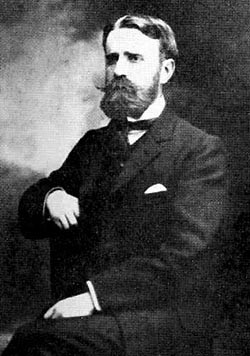
Gates Learjet Corp / Swiss American Aviation / Learjet Inc

Swiss American Aviation Corporation
Gates Learjet Corporation
Learjet Inc

William P. Lear founded the Swiss American Aviation Corporation in 1960 to build a twin-jet executive aircraft, originally designated SAAC-23. Tooling was completed in Europe but moved to Wichita, Kansas, in 1962, when the company became known as Lear Jet Corporation. By 1964 all work had been transferred to USA. In 1967, Bill Lear sold his 60 percent interest in the company to Gates Rubber Corporation, and in 1970 the name was changed to Gates Learjet Corporation. Became Learjet Inc. in 1987.
Lear Jet Inc becoming a division of Bombardier in 1990, offering the 11-seat light Learjet 31A (first flown May 1987), 11 -seat mid-size Learjet 45 (first flown October 1995), and 12-seat transcontinental Learjet 60 (first flown October 1990).

Gatard

M. Albert Gatard, 52 route de Jonzac, 17130-Montendre, France.
M. Albert Gatard designed and built several light monoplanes in mid-1950s with a new control system using a variable-incidence large-area tailplane. AG 01 Alouette was a two-seater, AG 02 Poussin a single-seater, and AG 03 Hirondelle two-seat side-by-side. Development of all three aircraft continued into the 1970s.

Garrett AiResearch / AiResearch

Aircraft Tool and Supply Company
Garrett Supply Company
AiResearch Manufacturing Company
AiResearch
PW-je-tp

John Clifford “Cliff” Garrett founded a company in Los Angeles in 1936 which came to be known as Garrett AiResearch or simply AiResearch. Already operating his Garrett Supply and Airsupply businesses, in 1939 Cliff Garrett established a small research laboratory to conduct “air research” on the development of pressurized flight for passenger aircraft. “[AiResearch’s] first ‘lab’ was a small store building on Melrose Avenue in Los Angeles”.

In 1939 Garrett incorporated the “Garrett Corporation” and the three operating companies became divisions: Airsupply Division, Garrett Supply Division, and AiResearch Manufacturing Division. Needing additional space, they built their own manufacturing facility in Glendale, California, and thereby established the name AiResearch Manufacturing Company.

By 1941, AiResearch needed new space, and on April 28, 1941 moved from Glendale to what until then had been a beanfield on Sepulveda Boulevard, at the corner of Century Boulevard near Mines Field, which later became Los Angeles Airport. In 1942, the Army Air Force concluded that vital cabin pressurization manufacturing facilities should be relocated inland from the coast, and AiResearch set up the AiResearch Phoenix Division in Phoenix, Arizona. For this purpose, AiResearch Manufacturing Company of Arizona was established as a wholly owned subsidiary.

The Company’s first major product was an oil cooler for military aircraft. Garrett designed and produced oil coolers for the Douglas DB-7. Boeing’s B-17 bombers were outfitted with Garrett intercoolers, as was the B-25. The Company developed and produced the cabin pressure system for the B-29 bomber, the first production bomber pressurized for high altitude flying. By the end of World War II, AiResearch engineers had developed air expansion cooling turbines for America’s first jet aircraft, the Lockheed P-80 Shooting Star. In all during World War II, Garrett AiResearch sold $112 million in military equipment and had as many as 5,000 employees at peak.

Having to scale back its workforce to just 600 employees at the end of the war stimulated Garrett to look for new income sources. “He found them in the small turbines which patient Engineer [Walter] Ramsaur had been perfecting since 1943. So that jet pilots could endure the heat generated by air friction at supersonic speeds, a way had to be found to cool their cockpits. Ramsaur’s turbine provided the answer; by putting an engine’s heat to work turning the turbine, it cooled the air by expanding it, shot the air into the cockpit. As rearmament got under way, Garrett began turning out a total of 700 accessory products. With the Navy order for an on-board engine self-starter, by 1951 Garrett Corp. had a $120 million backlog, enough to keep 5,500 workers on three shifts busy for at least the next three years”.

By the end of the 1940s, Garrett Corporation was listed on the New York Stock Exchange. “In the late 1940s and early 1950s, Garrett was heavily committed to the design of small gas turbine engines from 20 – 90 horse power (15 – 67 kW). The engineers had developed a good background in the metallurgy of housings, high speed seals, radial inflow turbines, and centrifugal compressors”.

By 1949, the Sepulveda Blvd. property was increasingly constrained by the demand for development of commercial space near the fast-growing Los Angeles International Airport (LAX). At that time, 2000 people worked at the facility “and Garrett was ranked one of the top three aircraft accessory manufacturers in the world”. In 1959 ground was broken for construction of an additional facility at 190th Street and Crenshaw Boulevard in Torrance, California. Part of that facility was occupied a year later. “By 1962, 1000 employees were working at the Torrance location and by 1972, 3000 employees were based there”. After a gradual series of moves, the Sepulveda facility was closed in 1990.
During the 1950s AiResearch initiated activities in the field of aircraft electronics, “first with an angle-of-attack computer to eliminate gunfire error and then with its first delivery of a complete centralized air data system”. In the 1950s and 1960s Garrett diversified and expanded. Garrett AiResearch designed and produced a wide range of military and industrial products for aerospace and general industry. It focused on fluid controls and hydraulics, avionics, turbochargers, aircraft engines, and environmental control systems for aircraft and spacecraft. “By 1960 Garrett gas turbines, cabin pressurization systems, air conditioners, and flight control systems were aboard the Convair 880, Lockheed Super Constellation, Vickers Viscount, Sud Aviation Caravelle, Douglas DC-8, and Boeing 707. The company had also developed the first inflatable airliner evacuation slides”.
In the 1950s and 1960s Garrett pioneered the development of foil bearings, which were first installed as original equipment on the McDonnell-Douglas DC-10 in 1969 and then became standard equipment on all U.S. military aircraft. In the 1960s, AiResearch Environmental Control Systems provided the life supporting atmosphere for American astronauts in the projects Mercury, Gemini, Apollo, and Skylab.
Garrett AiResearch is credited with inventing one of the first complete microprocessors, when it developed the Central Air Data Computer for the US Navy’s F-14 Tomcat fighter in 1968-1970.

In the 1970s Garrett’s expanding industrial and other non-military applications had changed the basic sources of income. “At the start of the decade sales to the military accounted for 70 percent of the company’s business. At the end of the ten years, largely because of turbochargers and general aviation products, the situation was reversed. Commercial sales made up 70 percent; military had dropped to 30 percent”. Also by the end of the decade “sales had reached $1.3 billion; backlog was $1.9 billion”.

To avoid a hostile takeover of Garrett’s assets by Curtiss-Wright following Cliff Garrett’s death in 1963, Garrett Corporation merged with Signal Oil and Gas Company in 1964. In 1968, the combined company adopted The Signal Companies as its corporate name. In 1985, Signal merged with Allied Corp., becoming Allied-Signal. The company acquired Honeywell Aerospace in 1999. Although AlliedSignal was much larger than Honeywell, it was decided to adopt the Honeywell name because of its greater public recognition.

Part of the original Garrett AiResearch became known as the Garrett Turbine Engine Company from 1979, and became the Garrett Engine Division of AlliedSignal in 1985. In 1994, AlliedSignal acquired the Lycoming Turbine Engine Division of Textron, merging it with Garrett Engine to become the AlliedSignal Engines Division of AlliedSignal Aerospace Company.

The Garrett Aviation Division (“Garrett Aviation”), which mainly services aircraft, was sold to General Electric in 1997 and later renamed Landmark Aviation after a 2004 merger. It became StandardAero after a further merger in 2007 and it was owned by Dubai Aerospace Enterprise, but subsequently purchased by another owner.

Garland-Bianchi Aircraft Co

UK
Garland-Bianchi Aircraft Co was formed in 1955, by P. A. T. Garland and D. E. Bianchi, to license-build the Piel CP.301 Emeraude two-seat light aircraft (subsequently renamed Linnet). Built two aircraft before a new company, Fairtravel Ltd., was formed by AVM Don Bennett to take over production. Fairtravel Ltd. built three more Linnets, the last being delivered in 1965.

Gardan / Societe des Avions Yves Gardan

Light aircraft designer responsible for the CAB Minicab, Supercab, and Sipa 200 and 300. Designed four-seat, allmetal lightplane, the GY-80 Horizon, which flew in July 1960 with 150 hp Lycoming engine. Horizon subsequently entered quantity production with Sud Aviation under an agreement signed in 1962.
1983: Societe des Avions Yves Gardan, 580 rue Helene-Boucher, Zone Industrielle, 78530 Buc, France.