Adam Glück (1886-1966) who with Vollmöller, Heinkel, and Hirth, was one of the pioneers who flew at Canstatter Wasen before the War, and was a “Kriegsflieger” during the War.
Manufacturer
Główny Instytut Lotnictwa / GIL
Technical Research Institute of Aviation
Institute of Aviation
Institute of Aviation
al. al. Krakowska 110/114 Krakow 110/114
02-256 Warszawa 02-256 Warsaw
Poland
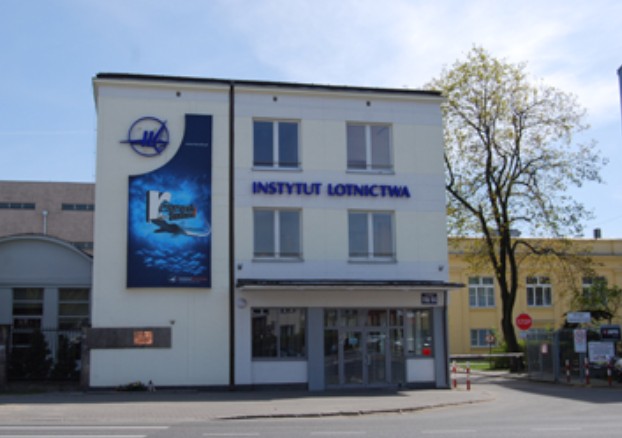
Aviation History of the Institute goes back to the beginnings of Polish independence, but the official start date of the Institute is 1 August 1926. In the initial phase of its operation, acted as the Institute of Technical Research Institute of Aviation. This name survived to the beginning of World War II. Activity in the period 1926-1939 focused primarily on testing and certification of aircraft. All the pre-war Polish military aircraft were tested and certified at the Institute, including the PZL P.11 , PZL.23 Karas , PZL.37 Moose , PZL.38 , and PZL.44 Wind.
In 1948 the Institute changed its name to the Central Institute of Aviation, and 1952 was named Institute of Aviation. In the post war period, constructors dealt mainly with the design and manufacture of licensed Po-2 and MiG-15. The Institute developed pulse motors and jets. In the early years of its operation activities of the Institute focused on the study of equipment derived from the Soviet Union and placed on the license production.
In 1946, the LWD Szpak , a year later, the first glider IS-1 Vulture , after which they were SZD-6 Bat , SZD-8 Swallow , SZD-9 Bocian , Marshmallow SZD-19 , SZD-24 Foka . The Institute of Tadeusz Sołtyk designed the PZL TS-8 Bies and the first Polish jet aircraft TS-11 Iskra , the engine designed in the Institute
Institute engineers also designed the first helicopter: BZ-1 GIL, BZ-4 Zuk and JK-1 Bumblebee. The Institute also, in 1972, designed and built a flying laboratory, the Lala-1. It was a heavily modified aircraft An-2 , which later tested technologies used in the construction of the PZL M-15 (Belphegor) .
In addition to aircraft construction facility began to specialize in designing and testing flying objects such as rockets and flying targets, including the Meteor 1 meteorological rocket project. Subsequent years of the Institute was developing a training-combat aircraft for the military, which resulted in the I-22 Iryda. The institute designed a four-seat, composite passenger aircraft, the I-23 Manager (flown in October 1998, for deliveries from 1999), two-seater trainer, the I-25 ace, two-seater helicopter patrol trainer IS-2 and a rescue patrol-hovercraft, the PRP-560 Ranger.
Proposed the Kobra 2000 in 1993 for air – to- ground combat operations in the next century, but abandoned.
Gloster Aircraft Co Ltd / Gloucestershire Aircraft Company Ltd
Formed in 1917 as the Gloucestershire Aircraft Company Ltd. to take over subcontract work from the Aircraft Manufacturing Company and H. H. Martyn & Co Ltd. of Cheltenham. D.H.4 and D.H.6 fuselages had been built by Martyn, and by the end of the war the company had supplied 461 Bristol Fighters and 165 RAF F.E.2bs, as well as Nieuport Nighthawks and other fuselages.
Fifty Nighthawks, renamed Sparrowhawks, were built for Japan to a 1920 order, and were shortly followed by the first true Gloucester aircraft, the Bamel single-seat racing biplane, designed and built in less than four weeks. H. P. Folland, joined the company soon after the Bamel’s completion. A line of biplane fighters followed, the Grebe and Gamecock being notable successes, and in 1926 the company was renamed Gloster Aircraft Company Ltd. moving its main factory to Hucclecote, Gloucester.
Up to 1930, all but one of their machines had been single-engined, the exception being the A.S.31, which was not originally a Gloster design but based on the de Havilland DH.67B.
Joining the Hawker Siddeley Group in 1934, Gloster continued fighter production with the Gauntlet and Gladiator, the latter being the RAF’s last biplane fighter. Henry Folland, Gloster’s chief designer, would leave Gloster when it was taken over by Hawker in 1937.
During the Second World War Gloster built 2,750 Hurricanes and 3,330 Typhoons, and produced Britain’s first jet aircraft to specification E.28/39, the first of two single-jet prototypes flying in 1941 and leading to the twin-jet Meteor of 1944. A total of 3,545 Meteors was produced by Gloster and Armstrong Whitworth. Gloster’s final production aircraft was the twin-jet delta-wing Javelin all-weather interceptor, flown in 1951, of which 435 were produced for the RAF. Gloster ceased aircraft production in 1956.
Gloster, Armstrong Whitworth and Avro joined Hawker Siddeley Aviation in 1965.
Globe Aircraft Corp / Bennett Aircraft Corp
Formed originally as the Bennett Aircraft Corporation to manufacture aircraft from Duraloid, a new type of bonded plywood. Produced twin-engine eight-seat monoplane, the BTC-1, about 1940. Company reorganized and renamed Globe Aircraft Corporation in 1941. First design under new name was the GC-1 Swift, a two-seat light monoplane with retractable landing gear and Continental engine. Development stopped by war, but produced postwar from 1945. Company built also Beech 18s for U.S. Government during Second World War.
Global Helicopter Technology Huey 800
Global Helicopter Technology Inc was founded 1987, offers the Huey800 as a retrofit installation for the Bell UH-1 H helicopter, based on a replacement LHTEC T801 turboshaft engine, offering much-extended range.
Glassic Composites LLC
1997: 15435 Daton Pike, Box 716 Sale Creek, TN 37373, USA.
Aircraft builder
Glasflugel
Hofener Weg D-72582 Grabenstetten, Germany.
Glider builder
Glasfaser
Italy
Constructed prototype T-30 Katana. Related to PietroTerzi.
Glaser-Dirks / DG Flugzeugbau
Glaser-Dirks Flugzeugbau GmbH
DG Flugzeugbau
Gerhard Glaser, owner of a civil engineering business, and Diplom Ingenieur Wilhelm Dirks, founded the Glaser-Dirks Flugzeugbau GmbH company. In 1972, they built their first glider, the DG-100. Glaser-Dirks produced 105 DG-100 and another 222 units have been produced later at the Elan factory. In 1977 the 15-meter class sailplane DG-200 entered the market. In 1978 the DG-200 was updated with 17-meter wingtip extensions. The DG-200/17 is one of the most sought-after gliders on the secondhand market. By 1980 Glaser-Dirks pushed into carbon fiber construction with the DG-200/17C motorglider. The DG-400 followed the next year and quickly became one of the best-selling motorgliders of all time. In 1983, version DG-300 Club Elan was designed to replace the DG-100 in the production line, and the fully aerobatic version DG-300 Elan Acro contributed to its popularity. The DG-300 is still in production; up until today 484 DG-300s have been delivered. In 1987 the two-seat DG-500 made its first flight, and the motorized DG-500M followed only 4 weeks later. Next came the 15m class sailplane DG-600. In 1989 a motorized self-launching version, the DG-600M followed. The latest product family is the DG-800, which was optimized for 18m span with wing flaps and equipped with modern wing sections designed by L.M. Boermans from the TU Delft. In May 1993, the self-launching version DG-800A and the pure sailplane DG-800S made their maiden flights.
In 2003 Glaser-Dirks Flugzeubau changed their name to DG Flugzeubau GmbH.
March 96 brought news of the company’s crash. Wolff and Glaser sold the remaining company capital, in a completely empty and deserted production hall. Gerhard Wolff joined the company as a partner.
Rolladen-Schneider has had to go into receivership, and DG Flugzeugbau did not take over the liabilities in 2003, but only the rights to build the gliders and use the brand name.
The Wolfgang Dallach Company collapsed and on 1 August 2008 DG Aircraft GmbH took over support of the Dallach “Fascination”, “Evolution”, “Sunwheel” and all derivatives.
Wolfgang Dallach was working for DG Aircraft as a freelancer since 2006.
Gippsland Aeronautics / GippsAero Pty Ltd
Gippsland Aeronautics was established by George Morgan and Peter Furlong in Gippsland, Australia, in 1984.
Approved manufacture and maintenance facility established in 1971. Also developed and offers piston-engined GA-200 Fatman single/two-seat agricultural aircraft with an 800-liter hopper (first flown March 1991) and the AGTrainer as dual-control training model, plus latest GA-8 Airvan piston-engined 8/9-seat general-purpose utility monoplane suited to operations from unprepared and short airstrips (first flown March 1995).
Latrobe Valley, Australia.
The name changed to GippsAero Pty Ltd as of 6 May 2010.
Mr Mahindra, vice-chairman and managing director of the $7 billion conglomerate that bears his family’s name, aspired to turn the group’s aerospace arm into an Indian version of the Brazilian Embraer. The Mahindra brand is better known for its tractors and utility vehicles, and building a regional jet is a complex and time consuming business that usually starts with the production of much smaller turbo prop aircraft. To speed up the process Mahindra agreed to pay about $40 million for a controlling stake in two small Australian aviation companies, Gippsland Aeronautics and Melbourne-based component maker Aerostaff Australia.
Gippsland Aeronautics, based in Victoria’s Latrobe Valley and maker of the popular 8-seat GA8 Skyvan utility plane, planed to beef up its range with an updated 18-seat version of the controversial Australian-made Nomad twin turbo-prop. It bought the rights to the Nomad’s type certification in 2008.
The company was bought back by the founding family in 2023.
The company employed up to 180 local people to send one GA8 Airvan out the factory door every two weeks in 2025.
 All Aero