Aircraft Engineering & Accessory Development Co
Jenkintown PA.
USA
Built the models M and N aero engines in 1932.
Aircraft Engineering & Accessory Development Co
Jenkintown PA.
USA
Built the models M and N aero engines in 1932.
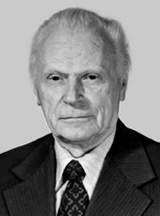
Pyotr Dmitrievich Grushin (Russian: Петр Дмитриевич Грушин) was born in Volsk, Saratov Governorate, Russian Empire on January 2 (15), 1906.
He began his aeronautical construction activity while still a student at the Moscow Aviation Institute (MAI) with the Stal-MAI model that was developed between 1931 and 1934. His diploma work consisted of the project of a light aircraft, developed in 1932 jointly with Dmitr Babad and Afanasiev Marakazov and named ” Brigadny “. This project was presented in the contest developed by the OSOAVIAJIM on October 13, 1932, obtaining the first prize.
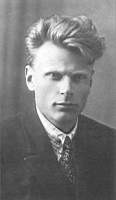
After graduating as a mechanical engineer in aeronautical construction, Grushin remained at the MAI, being appointed from 1933 as main builder of the KB MAI.
Between 1934 and 1940 he worked on various developments including the Oktyabrionok light aircraft, the development of a “blind” cockpit for training flights, an experimental steam engine for the Polikarpov U-2, the ground attack aircraft Sh -Tandem and the BB-MAI light bomber.
In 1940 Grushin was transferred to Factory No.135 in Kharkov as the main builder of the OKB JAZ. The IDS escort aircraft project, also known as Gr-1 (Grushin – 1), stands out in this period.
After the evacuation of 1941 Grushin went to work at Factory No.21 as a senior engineer in Semyon Lavochkin ‘s construction bureau, later being appointed as his replacement.
At the end of 1953 Grushin became head of the Special Construction Bureau No.2 (OKB-2) which since 1967 has been renamed KB “Fakel”. The first major work of this bureau was the development of the 1D (V-750) missile. for the S-75 anti-aircraft system developed by the OKB-1, which entered service with the PVO in December 1957. For the development of this missile on June 25, 1958, Grushin was awarded the title of Hero of Socialist Labor and the Order of Lenin.
Anti-aircraft systems developed by Grushin saw service in Vietnam, Egypt, Syria, and Cuba.
Piotr Grushin died in Moscow on November 29, 1993, at the age of 87.
The former OKB-2, which since 1967 was called KB Fakel today bears the name of Grushin: OAO Bureau of Machine-Building Fakel academician PD Grushin.
In 1987 Grushin gave 140,000 rubles from his private funds to build the “Comprehensive” House of Young Technicians in the city of Khimki, Moscow district, where he lived and worked from 1953 until his death.
A bust of Grushin was erected in his hometown of Volsk, in the Saratov District.
1998:
F-47310 Roquefort
France
Offered Mignet Flying Flea
Grumman American was established in 1972 when the Grumman Corporation acquired 80% of American Aviation’s stock in January 1973, and produced the Gulfstream 2 executive transport and the Lynx, Cheetah, Tiger, Cougar, and T-cat family of light aircraft. Also marketed the Super AgCat cropduster, built for Grumman by Schweizer Aircraft.
In 1976 Grumman Aviation moved production south to Savanna, Georgia.
During 1978 Grummans interest was bought out by American Jet Industries to form Gulfstream American Corp who continued production until late 1979, by which time 4879 aircraft had been produced: 1822 AA-1 series, 3054 AA-5 series and 3 prototypes.
Defense giant General Dynamics bought the business jet maker Gulfstream Aerospace in a stock deal estimated to be worth about $5.3 billion in 1999.
As an ensign in the Navy, Leroy Randle Grumman had worked with Albert and Grover Loening on a Navy monoplane contract. Upon resigning his naval commission in 1920, Grumman joined the Loenings as test pilot for their Air Yacht amphibians, and over the next several years, he took over full responsibility for the company’s aircraft design.
The Loenings sold out their company in 1929 and backed Grumman in a venture of his own incorporated in 1929 at Farmingdale, New York. With their investment of $30,000 making up almost half of the initial capital, Grumman and five other engineers opened the Grumman Aircraft Engineering Corporation in an abandoned garage in Baldwin, Long Island.
Contractor to U.S. Navy and Coast Guard. Built FF-1 (first flown 1931) and SF-1 two-seat biplane fighters with retractable landing gear, followed by single-seat F2F (first flown October 1933) and F3F (delivered 1936), plus all-metal amphibian as the JF-1 (first flown May 1933), later known as the Duck.
In 1936 Grumman moved to Bethpage, Long Island, NY.
Subsequent production, mainly for the U.S. Navy and Marine Corps, included F4F Wildcat fighter (first Grumman monoplane, first flown September 1937), TBM Avenger torpedo-bomber (first flown August 1941), F6F Hellcat fighter (delivered from 1943), F7F Tigercat twin-engined carrier fighter-bomber (first flown December 1943) and F8F Bearcat fighter (first flown August 1944) during Second World War, plus Widgeon and Goose (delivered from 1939) amphibians.
By 1943 his staff had grown from six to 25,000 employees.
Postwar aircraft included the antisubmarine Guardian (first flown December 1945), Albatross amphibian (first flown October 1947), F9F Panther as its first jet fighter (first flown November 1947), and F11F Tiger day jet fighter (first flown July 1954 in original F9F-9 form).
Grumman’s entry into specialized electronic warfare aircraft began in December 1952 with the first flight of its S2F Tracker (later S-2), though this was a carrierborne antisubmarine aircraft. From Tracker were developed variants for carrier transport operations; the C-1 Trader and, more importantly, the WF (later E-1) for airborne early-warning, with an over-fuselage radome (first flown March 1957) and based on the S-2A. Such was the success of the E-1 concept that the much improved E-2 Hawkeye was developed, which first flew in October 1960 (originally as W2F-1) and remains in production in 1999 by Northrop Grumman, itself leading to the C-2 Greyhound transport derivative (first flown November 1964). Grumman also developed the OV-1 Mohawk for the U.S. Army for observation, first flown April 1959 and also using the successful twin-turboprop engine layout.
In April 1960 Grumman flew the A2F-1, which in production form became the A-6 Intruder twin-jet carrier borne long-range and low-level strike aircraft, finally withdrawn from service in the late 1990s. Intruder itself spawned an electronic warfare variant, the EA-6 Prowler, first flown May 1968 and still in service in 1999. The final fighter to carry the Grumman name was the F-14 Tomcat, designed as a carrier based variable-geometry long-range type armed with super-long-range Phoenix air-to-air missiles (first flown December 1970, entering service with the U.S. Navy from 1972 and exported to Iran for land-based operations from 1976).
Grumman merged with American Aviation to form Grumman American.
By the time Tomcat had flown company had been divided (1969) into Grumman Aerospace and other individual corporations via the Grumman Corporation holding company. American Aviation Corporation became part of Grumman American Aviation Corporation in 1973. In May 1994 Grumman and Northrop merged to form Northrop Grumman.
Germany
Deutscher Aero-Lloyd, the air transport company, built a high-wing training monoplane designed by Dr Ing K. Grulich in 1925. Designated S.1, it could have either 75 hp or 100 hp Siemens engine.
After takeover by Keystone, Loening set up the Grover-Loening Aircraft Company at Garden City, New York, as consultant, and built small amphibian flying-boat XS2L for U.S. Navy in 1931. Delivered XSL-2 experimental submarine-borne version in 1933.
Genesis Group is a team assembled around Jim Marske, Robert Mudd and John Roncz (famous aerodynamicist who collaborated with Burt Rutan, the much renowned designer of “canard” airplanes), and led by Jerry Mercer. The goal of this group was to develop a Standard class high-performance glider, made of composite materials, with a self-stable wing, utilising the latest design and aeronautical construction technology.
1995-2008: 1530 Pole Lane Rd., Marion, OH 43302, USA.
229 Yarrow Hill Dr.,
Cottage Grove, WI 53527
2009: 1530 Pole Lane Rd., Marion, OH 43302, USA.
2009: Grosso Aircraft 400 W Oak St. Cottage Grove, WI 53527, USA.
LSA builder
Frank R. Gross was a graduate of Akaflieg Darmstadt.
The Sky Ghost glider was his third glider design after the Baker-McMillan Cadet and the Akron Condor.
 All Aero