Hartland WI.
USA
1928 engine builder
Hartland WI.
USA
1928 engine builder
William Ewart Hart (1885-1943), a dentist by profession, in 1911 bought a Bristol Boxkite and first flew solo on 3 November. He was presented with Australian aviator’s licence no.1, dated 5 December 1911. Hart had a serious accident in a two-seat monoplane at Richmond on 4 September. He was badly injured and never flew again.
1980: J. Waren Harris, 283 East-500 North, Vernal, UT 84078, USA.
Built the LW-108 Geodetic LSA
Arnold Harris
Towanda FL.
USA
Built the B-1 aero engine.
The Harriman Motor Works of South Glastonbury, CT, founded by Frank H. Harriman, produced airplane and marine engines from 1907 until 1916. Perhaps a hundred vertical in-line, water-cooled aircraft engines for four- and six-cylinders and ranging from 30 to 100 hp were produced. Harriman also built several prototype airplanes. He was apparently a more skilled inventor than businessman as the company failed.
Jack Harper soloed at the age of 14 in a J-3 Cub. Later he graduated from Embry-Riddle Aeronautical University in 1989 with a Bachelor of Science degree in Aviation Technology. An A&P mechanic, he’s an instrument-rated pilot holding a Commercial Multi-Engine FAA certificate. He’s logged more than 4,500 hours of flight time by 2005.
Jack had a builder’s background before he started to manufacture the Lil’ Breezy kits. In the 1970s he and his father built a Bede BD-5. Since that project, Jack has built a Hatz Biplane and a Skybolt Biplane plus a Wittman Tailwind and an RV-8. Not content simply to build kits, he also restored a J-3 Cub, an Aeronca Champ and a Starduster Too Biplane.
All that work generated a desire to design an airplane from scratch. He first designed on paper, with drawings of shapes that interested him. He decided to bring some of the drawings to life and built the first Lil’ Breezy model and started improving on it after many hours of flying prototypes. The first planes were single-seaters and used a rear-mounted engine. Later, he went to a front engine and then back to what he calls “the superior rear-mounted engine.”
With the success of a Part 103 the first planes were true ultralights, but with the passing of the FAA Sport Pilot and Light-Sport Aircraft rule, it opened up a whole new set of possibilities. The later Lil’ Breezy “B” model had two seats, convertible to a single-seater (with great performance) if desired.
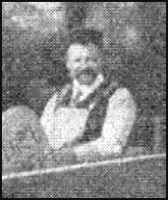
(Arthur) Monnier Harper was born 17-8-1888 in Belfast and was a violin virtuoso, making his public debut at the age of eleven. Probably in 1904 he settled with his mother and brother in Brussels, and at the age of sixteen played in the orchestra of the Ostende Kurhaus. In the following years he performed as a soloist in France, The Netherlands, England, Northern Ireland and Belgium. Monnier Harper also played with the Residentie Orchestra of The Hague during one season (probably 1913-14).
In 1911 he settled in Scheveningen, being appointed Dutch representative of the Weston Hurlin Co., a supplier of aircraft components and founder of flying schools. The Dutch aviation pioneer Adriaan Mulder had been his flying instructor.
Louis Blériot, in his Type XI monoplane, flew across the English Channel from Les Baraques, near Calais, to Northfall Meadow at Dover on Sunday, 25 July 1909, winning the Daily Mail challenge prize of £1,000. Monnier Harper was inspired.
Lodewijk Muns, writing on the NMI website, notes that 1909 was also the year of the first flight over Dutch territory.
It wasn’t by Monnier Harper.
De Dordrechtsche Courant, 17 August 1909, page 2:
‘On Friday on the heath at Vaassenschenweg, Messrs Elbe Rieciel and Arthur Monnier Harper, violinists from Apeldoorn, tried out their homemade flying machine.
‘At first, the machine quite often refused to budge, but with some helpful hands it finally began to move beyond this earthly vale of tears.
‘However, the unevenness of the terrain made the colossus waver and with a thump it smashed into the hillside, crushing the two bicycles which provided the forward momentum.
‘Fortunately, the two pilots were unhurt.
Arthur Monnier Harper died 1-1-1916.
Formed 1938 to develop the Harlow PJC-2 four-seat allmetal cabin monoplane, which remained in production until December 1941. Four were delivered to the USAAF as UC-80s. A PC-5A two-seat trainer version was developed in 1939 and assembled under license 1941-1942 by Hindustan Aeronautics Ltd. After America’s entry into Second World War, Harlow Engineering undertook military contract work.
Harlan, who had rented a shed to Max Schüler, took over the semifinished student model in 1910.
At the end of 1913, the Harlan works had three aircraft sheds, but in the spring of 1914 Harlan was financially deadlocked. He sold his company.
At the beginning of 1914, the “Bussard-Flugzeug-Werke GmbH” emerged from the sale of the remains of the Harlan-Flugzeugwerke GmbH and had its small workshop and flying school in the shed.
1980: Harmon Engineering Co., Rt.1, Box 186, Howe, TX 75059, USA.
LSA builder
 All Aero