Two types of hang-glider were designed by E.A.S. Hulton, London, UK, in 1969.
The first, a biplane, was built.
Two types of hang-glider were designed by E.A.S. Hulton, London, UK, in 1969.
The first, a biplane, was built.
Hughes Aircraft Co was founded in 1935 by businessman/film magnate Howard Hughes to produce the Hughes H-1 racing aeroplane, in which Hughes established a world landplane speed record of 352.46mph (567.23kmh). The Hughes XF-11 experimental twin-engined, twin-boom photo-reconnaissance aircraft, which had contrarotating propellers, crashed on its maiden flight, seriously injuring Hughes. He then sponsored the massive Hughes H-4 Hercules. Made entirely of wood, this eight-engined flying-boat had the greatest wingspan (320 ft; 97.54 m) of any aircraft built to date. It made its one and only flight on November 2,1947 with Howard Hughes at the controls.
Between 1949-1952 the Hughes Aircraft Company built and tested the XH-1 heavylift helicopter, designed as a “flying crane” for the USAF.
Hughes owned Kellett designs.
Known formerly as the Hughes Tool Company, became a Division of the Summa Corporation in the early 1970s. Hughes first two-seat light helicopter, the Model 269, first flew in 1955. It continued in production, though muchmodified, as the Hughes 300. Production of the 0H-6A Cayuse turbine helicopter for the U.S. Army and other military forces led to the commercial Model 500 one/sevenseat light helicopter, with military variants in the Defender series. Hughes won the U.S. Army’s competition for an Advanced Attack Helicopter (AAH) with its Model 77, a twin-turbine design which first flew in September 1975, and which received the Army designation YAH-64 Apache. Also developed the unique NOTAR (no tail rotor) anti-torque system, initially tested on a converted 0H-6A in December 1981. Company taken over by McDonnell Douglas January 1984.
Hughes Helicopters became McDonnell Douglas Helicopters in January 1986 then later to Lynn Tilton’s Patriarch Partners in 2005.
Germany
Flugzeugbau Dr. Georg Huffer produced a civilian version of the First World War Fokker D.VII fighter, known as the Huffer H.9. It was an open-cockpit training/sporting two-seater powered by a Mercedes engine. A parasol-wing monoplane, the HB.28, was also designed and built by the company in the late 1920s.
Huff Daland and Co Inc of Ogdensburg, New York.
Huff-Daland became Keystone March 1927, still centered at Bristol, Pennsylvania.
Keystone Aircraft single-engined biplanes in the early 1920s had their origins in the single-¬engined XLB 1 prototype and nine pre series LB 1 biplanes produced in 1925 by Huff Daland and Co Inc of Ogdensburg, New York.
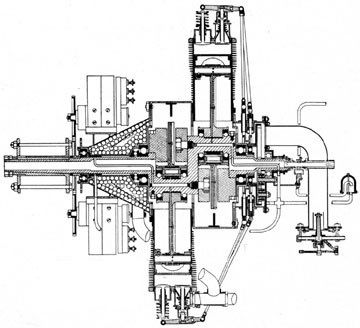
John W Hudson built a 100hp@1000rpm to 120hp@1200rpm 10-cylinder air-cooled radial aero engine of 693.8ci, with a dry weight 32 lb#.
In 1912 brewery manager Hugo Hübner of Mannheim-Mosbach built three monoplanes and one amphibian monoplane.
Glider builder
HPH Ltd, Caslavska 126, P.O.Box 112, CZ-284 01 Kutn & Hor, Czech Republic.
HPH Ltd. took over the original molds and drawings for glider Glasflugel 304 from Mr. George Brauchle in 1998.
2009: HP Aircraft, LLC PO Box 1623, Murphys 95247-1623 CA, USA
Glider builder from 1950s
1996: 27518 County Rd. 561, Tavares, FL 32778, USA.
LSA builder
Howland Aero Design was liquidated in 1995, after the death of Burt Howland.
Classic Aero Enterprises handled the Howland’s designs since the liquidation in 1995.
1983: Howatherm UL Systeme, Postfach 301146, D 6589 Brucken/Birkenfeld, West Germany.
UL builder
 All Aero