1998: Schlesierstr 20, D-83071 Stephanskirchen, GERMANY
Proprieter, Thomas Pellici.
Hang glider builder
1998: Schlesierstr 20, D-83071 Stephanskirchen, GERMANY
Proprieter, Thomas Pellici.
Hang glider builder
Yugoslavia
Formed at Novi Sad in 1923, Ikarus was one of the country’s largest aircraft manufacturers. Initial production centered on a number of S.M. training flying-boats, followed by a military type I.O. In 1926 the company acquired a license to build the Potez 25 biplane, and established a new factory at Zemun for its production.
Four out of five Yugoslav aircraft plants were in close proximity to each other, built in and around Belgrade: Ikarus, Rogožarski, Zmaj and Utva. The fifth one was DFA (Državna Fabrika Aviona – State Aircraft Factory) which was located in Kraljevo.
The production facilities of Ikarus were destroyed in World War Two but rebuilt in 1946 and soon nationalised by the new Tito lead Yugoslav communist government.
In the early 1950’s Ikarus continued to develop a number of experimental research aircraft protoypes. These included a number of early jet aircraft under the Ikarus 451 designation a number which all featured the same basic airframe of the piston engined S-451 but all served different purposes in testing and evaluation. The 451 designated jet aircraft included the first jet designed and built in Yugoslavia (S-451M), a more advanced jet design (S-451M Zolja), a close support military jet development (J-451MM Stršljen) and jet training aircraft (S-451MM / T-451MM).
Ikarus experimented with further jet designs in the early 1950’s. The Ikarus 452M and 453 aircraft were both unconventional designs that were briefly used for flight testing
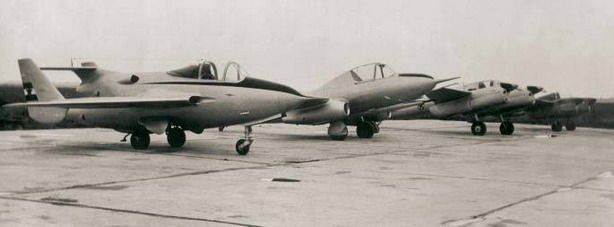
None of the Ikarus experimental aircraft went into wide production but they did provide a stepping stone for future aviation technology development in Yugoslavia. By the early 1960’s aircraft development ceased at Ikarus and had been taken over by Soko based in Mostar, Bosnia-Herzegovina (Ikarus manufacturing buses).
1998:
4722-B NE 148th
OR 97230 Portland
USA
Engine builder
I.C.P. srl was once a distributor of the Zenith STOL CH-701. I.C.P. was established in 1980 to produce accessories for the automotive sector. At the beginning of the 1990s, I.C.P. began production of UL aircraft, in collaboration with Agrocopteros of Colombia, including models such as the MXP-740, the MXP-740 Savannah, the MXP-640 Amigo! and the MXP-650 Amigo!. The Savannah has evolved into the Savannah Turbo, Hydro, ADV, VG (Vortex Generator) and the new Savannah XL which features a wider and more comfortable cabin. A light-weight Savannah is the Bingo, offered with different power units.
1998:
Via Torino 12
I-14020 Poiva’ Massaia
Italy
On 12 September 2009, I.C.P. opened its new factory at Castelnuovo Don Bosco (Province of Asti) in Italy.
ICARO 2000, the first hang-glider factory in Europe, was founded in 1973 by Alfio Caronti & Peter Skaarup.
Alfio received his first glider from Bill Moyes, during a water-ski competition in 1969. He was the first Hang glider pilot in Europe, who took off from a mountain on the 4th November 1971. The glider used by Alfio Caronti was a kingpostless glider with square tubes.
Peter Skaarup was the technician of the factory and together they manufactured hang-gliders under the license of the Australian firm Moyes.
In 1981 Franco Garzia & Gianni Hotz, became the new owners of ICARO 2000 and continued to make Moyes hang-gliders. Their first glider was the Meteor 170.
Since 1983 ICARO has been using only tubes in Perunal (aluminium alloy 7075 for aeronautics) from the Swiss manufacturer Alumenziken.
Until 1991 ICARO sold, in Europe, more then 3,000 gliders (Moyes models like Mega II, Missile, Mars, GT, GTR and XS).
In 1992 Manfred Ruhmer becomes part of the staff and ICARO started to develop original designs with its own sailmakers and workshop with 20 employees and a 1,200+ sq m building. The development of new models was carried out by Manfred Ruhmer, one of the world’s best pilots and Franco Garzia, a former Italian champion. Since this time all ICARO hang glider models are certified by the DHV (Germany).
In 1992 the first ICARO’s original design appeared: the Brazil, followed in 1994 by the Laminar. With this wing ICARO started to reach competition results 1994 European Championship in Laragne (France): Manfred Ruhmer is 2nd 1995 World Championship in Ager (Spain): Manfred Ruhmer is 2nd. In 1995 the first prototype of kingpostless gliders appears.
In 1996 ICARO presented its first prototype of topless glider and with this wing, Manfred reached 2nd place in the European Championship in Hungary.
Since 1998 ICARO has its own landing area (more then 50.000sq m) with Club House, Camping facilities and Store of accessories for Sport Aviation: these facilities are located at Lago Maggiore (northern Italy), facing a mountain ideal for flying.
1998: Via Verdi, I-21038 Sangiano (VA), Italy.
In 1998 ICARO forms an agreement with Felix -A.I.R., by which ICARO will make keels and sails for the Atos (ICARO has made 550 so far) and obtains the option to sell the Atos in certain markets.
ICARO introduces on the paragliders’ scenery the Cyber, a new basic-intermediate wing, with the latest technology and construction methods and highest safety DHV 1. Also in 2000, on October 25th, ICARO reviewed its agreement with Felix; ICARO takes over the worldwide production and distribution of the Atos from the home base in Sangiano. Felix works exclusively on the development of the design.
After having sold more than 400 Atos in two years, a period in which ICARO took an active part in the manufacturing of sails, A-frames and keels, it was decided that henceforth A.I.R. would devote 100% to the development and technical support, whereas ICARO would become in charge of the production and distribution of the Atos.
In September 2001 Christian Ciech starts working for Icaro 2000 in the development team, and after six months comes into the scenery the new Icaro 2000’s rigid wing: the Stratos.
Ukraine
Established 1995 and offering the AP-23M Enei two-seat light recreational and utility braced monoplane (first flown November 1995).
A Czech-Taiwanese joint venture.
Founded in 1997 as a joint venture by Aero Vodochody of Czech Republic and AIDC of Taiwan to develop and manufacture the Ae 270 Ibis ten-seat or utility shorthaul turboprop transport designed by Aero Vodochody and first flown in 1999.
Spain
This company, established in 1946, began the development of aircraft in 1948. A two-seat training glider, the IP- 2, was designed, but construction was undertaken by AISA. Designed and built in 1950 the 1-11 two-seat lightweight training/sporting aircraft, followed by the 1-115 basic trainer. Was involved in helicopter design when the company was taken over by AISA.
Romania
Intreprinderea de Avioane Craiova founded February 1972 to develop the IAR-93/J-22 Orao attack aircraft with SOKO of Yugoslavia (first flown October 1974).
S.C. Avioane Sa Craiova was the new name from 1991 for IAv Craiova. Work on IAR- 93 stopped. IAR 99 Soim (first flown 1985) and improved IAR109 Swift jet trainers, lead-in fighter trainers and light attack aircraft superseded by new IAR 99 Soim that first flew in May 1997.
Romania
Founded 1953 as a repair factory. First flew its version of the Soviet Yakovlev Yak-52 trainer in 1978, and assisted in other Romanian programs, plus aero engines. Became Aerostar SA in 1991.
 All Aero