The Independence brand was created by designer Michael Nesler.
Paraglider builder
The Independence brand was created by designer Michael Nesler.
Paraglider builder
Russia
Formerly known as VIST and founded 1990, is developing a range of turboshaft-powered transport aircraft with vertical take-off and landing/air-cushion capability, by virtue of engine power being switched between conventional propellers and a large horizontal fan occupying the center fuselage. Also developing a 32-passenger regional airliner as the lnalet-32, featuring an aerodynamically shaped fuselage and stub wings, plus the more conventional Inalet- 60 62/68-passenger regional airliner and freighter with twin turbofan engines mounted at the rear of the fuselage.
1998: Feldstrase 3 A, D-85640 Putzbrunn Bei Munchen, GERMANY
Hang glider builder
Argentina
Industria Metalurgica e Plastica SA, a munitions factory, opened an aircraft department in September 1941. The initiative had come from the founder, Eng. Jose Mario Sueiro, who amidst the backdrop of the Second World War, decided to enter the aviation industry.
For it he contracted Spainard Davins Alfredo Ferrer, whom he had met in Paris, and who already had experience in the French aviation industry. Ferrer designed the prototype and oversaw its construction that took place in the 4th floor of the factory. Working steadily, IMPA workers not only developed the body of the plane, but his instruments: speedometers, tachometers, compasses, etc.
A new factory opened at Quilmes Airport, Buenos Aires, in December 1944. Products included prototypes of RR-11 two-seat low-wing cabin monoplane (1942) and Chorlito light single-seat trainer (1943). Only production aircraft was the Tu-Sa (or LF-1), of which 25 were built 1943-1944.
The RR-11 IMPA “fully built in our country, with raw material and Argentine workers” as he liked to say ing. Sueiro was a “feel” for the time and his maiden flight of July 25, 1942 at the airfield of Pacheco, made headlines in major Argentine newspapers.
The event was attended by members of the company; national authorities, as the director of Military Industries, Colonel Savio and the director of Civil Aviation, Dr. Samuel Bosch; and the president of the UIA, Luis Colombo. Besides the pilot sr. Ciro Comi made the opening round.
Thus, IMPA initiated an aircraft production line continued with the prototype IMPA RR-12D-13D RR IMPA, IMPA Your Sa, IMPA Plover, the Impita, and in 1944 opened an office in the town of Quilmes dedicated to this production.
Intermountain Manufacturing Company acquired at public auction the former Callair Inc., developing from the well-known Callair series of agricultural aircraft an improved model designated IMCO Callair A-9. A scaledup version, the B-1, first flew on January 15,1966. IMCO sold the Callair assets to Rockwell-Standard Corporation in December 1966 which continued production of these aircraft at Afton, Wyoming, under the banner of Aero Commander.
In 1965 Rockwell-Standard acquired Snow Aeronautical, continuing to produce agricultural aircraft at Olney as Snow Commanders (as division of Aero Commander), and acquired Intermountain Manufacturing Company (IMCO) 1966.
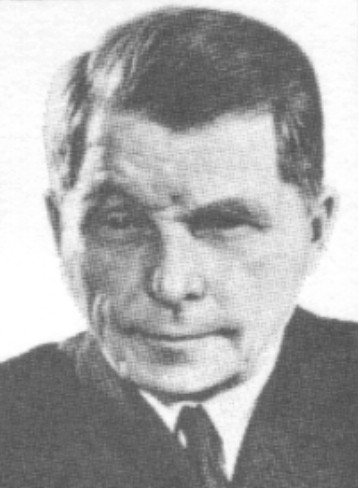
Sergei Ilyushin, was a mechanic in the Russian air force in WW1. During the early 1920s Sergei Vladimirovich llyushin (died 1977) was a student at the Zhukovskii Military Air Academy, and began glider design. Graduating from the Air Academy, Ilyushin went to TsAGI, where he was influenced by Tupolev.
From 1935 one of the most successful Soviet aircraft designers, beginning with IL-4 (DB-3) bomber developed from TsKB-26 design, of which nearly 7,000 built. Founded own OKB just before Second World War, though 1933 generally attributed as starting point for llyushin designs. Most famous wartime aircraft was IL-2 Shturmovik armoured ground-attack aircraft, a vital weapon in the defeat of the German invasion of Russia, and of which more than 36,000 were built.
Post-Second World War developed IL-12 and IL-14 transports which established Aeroflot’s civil airline network. IL- 28 bomber of 1948 (in class of British Canberra) was first Soviet jet bomber, remaining in large scale use for many years. IL-18 civil transport, which entered service with Aeroflot in 1959, was nation’s first turboprop airliner. IL- 38 anti-submarine/maritime patrol aircraft developed from IL-18 and first flown 1961. IL-20 reconnaissance, electronic intelligence, and communications relay aircraft also developed from IL-18, with IL-24 civil variant. IL-62, 114/186- seat turbofan-powered transport, which inaugurated Aeroflot’s Moscow-New York service in July 1968, was Soviet Union’s first long-range jet airliner.
IL-76T four-turbofan medium/long-range freight transport first flew 1971 and over 900 built, with in-flight refueling tanker derivative first flown 1983 as IL-78, and communications relay variant as IL-82. IL-86 wide-body transport first flew December 22,1976; 103 built before production ended. Strategic-command-post version became IL-80 Maxdome. Follow-on IL-96 wide-body airliner first flew December 1988 and remains in production. II- 98 proposed as twin-engined derivative of IL-96. IL-106 heavy military transport and IL-112 shorthaul regional airliner projected. IL-114 twin-turboprop transport first flew March 1990 and ordered with production and marketing by Uzbekistan-Russian consortium. Special electronic versions of IL-114 developed for “Open Skies” missions and Russian Federal Border Guard patrol. IL-103 4/5-seat lightplane first flown May 1994 and manufactured by MAPO “MiG”.
Current name in 1998 llyushin Aviation Complex, or Aviatsionnyi Kompleks imeni S.V. llyushina.
Germany
Offers the Eurofox two-seat, STOL, very light, braced high-wing cabin monoplane (certificated 1996), which is available in assembled or kit forms. Variant of the Czech Aerotechnik Aeropro/Evektor Fox.
1998:
Mennwanger Straβe 3
D 88682 Salem
Germany
LSA builder
In 1976, began making hang gliders, of which under the name Ikarus over 2000 were built.
1983: Ikarus Comco, Tannenweg 20, D 7031 Aidl¬ingen, West Germany.
LSA builder
1974
Icarus Aircraft
37 So. Euclid/Suite 5
Pasadena
California
USA
Hang glider builder
 All Aero