Israel
Developed the ST-50 pusher-engined business aircraft, first flown December 1994. Stopped trading in September 1997.
Manufacturer
Israel Aircraft Industries / Bedek Aircraft Ltd
Bedek Aircraft Ltd was established in 1950 as as an aircraft and aero-engine overhaul centre, and added the licence manufacture of Slingsby sailplanes to its activities in 1957.
Israel Aircraft Industries was established April 1967 from former Bedek Aircraft Company (founded 1953), as a repair and maintenance organization. Bedek manufactured Slingsby sailplanes under license from 1957, and also initiated license production of the French Fouga Magister.
In 1958 it obtained licence rights to manufacture the French Potez Air-Fouga Magister jet trainer for the Israeli Air Force ad flew its first Magister, assembled from imported components, in mid-1960. Delivery of aircraft manufactured entirely by IAI began in 1961 and the production rate was two or three per month.
IAI now composed of several operating groups and subsidiaries, including Bedek Aviation Group (for aircraft maintenance and modification/ upgrading, engine work, overhaul, and modification of components and subsystems, and manufacture of manned and unmanned ground equipment, boats and aircraft structures), Commercial Aircraft Group (work includes Westwind, Astra, and Galaxy business jets, manufacture of subassemblies for Boeing, and much more), Military Aircraft Group (overhaul, repair and modification of combat aircraft, design and manufacture of UAVs, and helicopter work), and Electronics Group.
Built Nesher fighter 1969, an Israeli-designed interim modified version of the French Mirage III. Developed a more-capable version as the Kfir, which first flew in 1973 and went through several progressively improved variants by manufacture and modification. Designed light STOL transport known as Arava, prototype of which first flew November 27,1969, and produced civil and military versions. Acquired in 1967 all rights of Rockwell-Standard Corporation’s Jet Commander twin-turbojet business transport and developed this into the improved twin-turbofan IAI.1124 Westwind, which entered production in 1976. Developed the IAI.1125 Astra (first flown March 1984), which remained available in 1999 in latest SPX form.
Shareholder in Galaxy Aerospace in U.S.A., which promotes the Astra SPX and promotes and fits out the new Galaxy wide-body bizjet developed by IAI.
Developed the Phalcon airborne early warning and intelligence aircraft, using the conformal Phalcon radar system developed in cooperation with Elta Electronics Industries of lAI’s Electronics Group, which can also be installed on aircraft other than the original modified Boeing 707 type (first B707/Phalcon flew May 1993; other platforms being proposed include Airbus A310, Boeing 767, and llyushin II-76).
In June 2001 Gulfstream bought Galaxy Aerospace from Israel Aircraft Industries.
Island Aircraft
UK
Island Aircraft was founded in 1988 to continue development of the ARV Super2 lightplane.
Ishikawajima
Japan
Ishikawajima Kokuki KK was formed at Tokyo in December 1924, with a factory at Tachikawa. Built small batches of 2-seat biplanes: T-2/-3 recon, R-1/-2/-3/-5 trainers and light ambulance (later designated KKY). KKY with 130hp Cirrus replaced by 150hp Ha-12 or Kamikaze radial was developed as KS-I for survey duty while company was being reorganised 1936 as Tachikawa.
Ishikawajima-Hanma Jukogyo Kabushiki Kaisha (Ishikawajima-Harima Heavy Industries Co Ltd)
1962:
2-4
Ote-Machi,
Chiyoda-ku,
Tokyo
Sole manufacturer of aircraft gas-turbine engines in Japan, Ishikawajima-Harima took over the J3 turbojet from the Nippon Jet-Engine Company in 1959, when the latter had completed its five year development programme for the engine.
It is also manufacturing under licence General Electric J79 turbojets to power Japanese-built F-101J Starfighters, and is preparing to produce the General Electric T58 shaft-turbine for helicopter, marine and industrial applications.
Under development is an aft-fan version of the J3, designated J3-F.
The single stage fan will be in line with the turbine and driven by exhaust gases in the main engine, but will be mechanically independent. It is designed to offer a 40 percent increase of thrust compared with the J3, with no increase in fuel consumption.
Isaacs, John
1995-2009: 23 Linden Grove, Chandlers Ford, Eastleigh, Hants SO 53 ILE, England.
Markets plans to build Fury II single-seat biplane, a 70 percent representation of prewar Hawker Fury, and Spitfire as 60 percent representation of Supermarine Spitfire, first flown 1963 and 1975 respectively.
Isaac, A.C.T.
Mr A.C.T. Isaac, of London, later of Hillmorton, near Rugby, Warwickshire, in the UK, built a two-seat primary gliders. The first, in 1923 had trials off Parliament Hill,in North London, resulted in the gliders either breaking up and injuring the pilot, or in requests from the police to ‘take them away’.
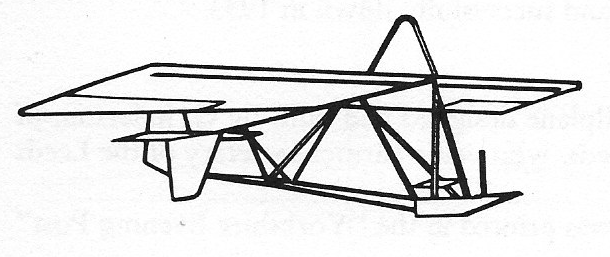
A two seat primary type with 9.29 sq.m / 100 sq.ft wing area with a slotted section.
It was left overnight in dead-calm conditions. The following morning it was not to be seen, and was presumed stolen.
A second machine was built in 1929 to Zogling-like specification but this too was a failure. The flexible structure was abandoned as impracticable. The empty was 45.35 kg / 100 lb.
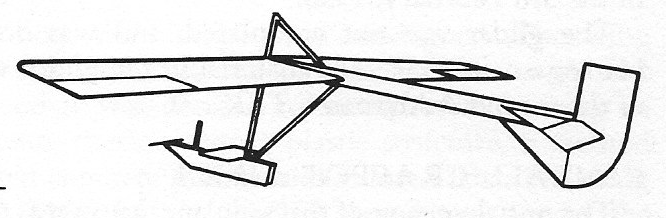
A biplane glider of 7.32m / 24 ft 0 in span was later built and test flown at Chingford, London.
Irwin Aircraft Co
USA
In 1916 J. F. Irwin designed a small single-seat monoplane, designated M-T, powered by a motorcycle engine. After the First World War the company built an improved version, the M-T-2, powered by a 20 hp Meteor engine.
1919: Irwin Aircraft Co, Sacramento CA;
1928: Corning CA;
1930: Watsonville CA.
Irkut
Founded on 28 March 1932 and commissioned on 24 August 1934, as GAZ 125 (becoming GAZ 39 in 1941), Irkut has built some 6,500 aircraft of 16 types from Antonov, Ilyushin, MiG, Petlyakov, Sukhoi, Tupolev and Yakovlev bureaux and supplied them to 21 countries. In recent years, it has manufactured MiG-23UB trainers (1970-85); 165 kits for Indian-assembled MiG-27MLs; Su-27UB trainers (from 1986); and was responsible for producing the Su-30 fighter (since 1991) and Beriev Be-200 amphibian. Su-30 customers include China and India; offers Su-27UBM and Su-30KN upgrades to older aircraft. Series manufacture of the Yak-112 lightplane has been abandoned, although company has been allocated prospective manufacture of the Ilyushin/HAL IL-214 twin-jet transport. Also undertakes Su-30 upgrades.
Irkut is a member of AVPK Sukhoi. Known from April 1989 until 2002 as IAPO (Irkutsk Aviation Industrial Association), having become a joint stock company in October 1992, but on 19 December 2002: shareholders approved a company change of name to Irkut NPK, IAPO becoming a subsidiary.
Ireland Aircraft Inc
USA
One-time sales representative of the Curtiss Aeroplane and Motor Co, G. S. Ireland founded his company to manufacture an aircraft known as the Ireland Comet, which combined surplus-Curtiss Oriole fuselages with new wings and tail unit. Incorporated in 1926, the company began production of the Ireland Neptune, a five-seat amphibian flying-boat.
Irbitis, Karlis
Karlis Irbitis is one of the pioneers of the aircrafts design in Latvia. In his early years Latvia was part of the Russia and he had chance to see some of the Russians war machines of French origins. His early attempt to build aircraft failed when his Nieuport replica crashed so he turn his interest in the modeling.
Karlis Irbitis has enrolled into the Mechanical Engineering Facility and spent time on airframe maintenance for the newly formed Latvian Air Force. In 1925 Irbitis met Nicholas Pulins. Mr. Pulins had an interest in light aviation and Irbitis influencec him to start building a high wing monoplane with Anzani engine. Previously Pulins have interest in biplanes. With the financial support, Irbitris made his first aircraft, the I-1 and it had its maiden flight on 13th June 1925. The I-1 was a single seat airplane and followed by the I-2, two seat aircraft and name Ikarus. On I-2 both, Irbitis and Pulins learn to fly.
After military service, Karlis Irbitis start work as designer in the A.S. Backman company and main work was focused on repairing of aircraft for Latvia. His first work was on Hansa Brandenburg W.29 and this was hard due to the lack of the technical documentation. After several projects A.S. Backman was bankrupted and closed in 1930 and Karlis Irbitis joined the Valsts Elektrotechniska Fabrika electric company. In the 1935 he submit proposal for the company to built aircraft and an aircraft construction division was established in the same year with Irbitis as the head of the division. The very first project was I-11, powered with Minor 90 HP engine and its maiden flight was in July 1936.
 All Aero