UK
Jackaroo Aircraft Ltd was formed late 1950s at Thruxton, Hampshire, to produce the Thruxton Jackaroo widened-fuselage four-seat version of the de Havilland Tiger Moth. First “production” conversion flew on April 15, 1957, and quite a number of Tiger Moths were converted subsequently to Jackaroos. Company also designed a four-seat low-wing lightplane called the Paragon, being re-formed in early 1960s as Paragon Aircraft Ltd. to produce it under new name of Paladin.
Paragon was formed at Thruxton Aerodrome near Andover, Hampshire, from the earlier Jackaroo Aircraft Ltd., for conversion of standard two-seat Tiger Moth biplanes to four-seat configuration by inserting a new wider center fuselage and extending the top wing centre section. 18 Jackaroo conversions were carried out by the company, which also designed a light monoplane, the Paragon (subsequently Paladin), but this was not built. Assets acquired 1964 by Hampshire School of Flying.
Manufacturer
Jabiru Engines
Jabiru engines are designed to be manufactured in small batch quantities using Computer Numerically Controlled (CNC) machine tools. The majority of the components are manufactured in Southern Queensland in a network of high technology small companies. The crankcase halves, cylinder, crankshaft, starter motor housings, gearbox cover (the gearbox powers the distributor rotors) and coil mounts together with many smaller components are machined using the latest CNC machine tools. The sump (oil pan) is the only casting.
The cylinders are machined from solid bar 4140 chrome molybdenum alloy steel, with the pistons running directly in the steel bores. The crankshaft is also machined from solid bar 4140 chrome molybdenum alloy steel, the journals of which are precision ground prior to being Magnaflux inspected. The camshaft is provided by a specialist camshaft manufacturer.
The engine is direct crankshaft driven and does not use a reduction gearbox. This facilitates its light-weight design and keeps maintenance costs to a minimum. The crankshaft features a removable propeller flange which enables the easy replacement of the front crankshaft seal and provides for a propeller shaft extension to be fitted, should this be required for particular applications.
Cylinder heads are machined from solid aluminium billet which is purchased directly from one of Australia’s largest aluminium companies, as is all alloy used in the engine, thereby providing a substantive quality trail to material source. Conrods are machined from 4130 alloy steel, the 45mm big end bearings are of the automotive slipper type.
Under a direct supply arrangement with Honda, various components of the engines are sourced. These items include camshaft followers, and the bendix gear in the starter motor. The ignition coils are also sourced from Honda, but are modified by Jabiru for their own particular application.
An integral alternator using rare earth magnets, provides alternating current for battery charging and electrical accessory drive. The alternator is attached to the flywheel and is driven directly by the crankshaft. The ignition system is a transistorised electronic system; two fixed coils mounted adjacent to the flywheel are energised by rare earth magnets attached to the flywheel. The passing of the coils by the magnets creates the high voltage current which is then transported by high tension leads to the centre post of two automotive type distributors (which are simply rotors and caps) before distribution to automotive spark plugs, two in the top of each cylinder head. The ignition system is fixed timing and, therefore, removes the need for timing adjustment. It is suppressed to prevent radio interference. The ignition system is fully redundant, self-generating and does not depend on battery power.
The crankshaft is designed with a double bearing at the propeller flange end and a main bearing between each big end; it therefore does not have flying webs. 48mm main bearings are also of the automotive slipper type. Thrust bearings are located for and aft of the front double bearing allowing either tractor or pusher installation.
Pistons are General Motors aftermarket made in Australia and are re-machined to include a piston pin circlip groove. They are fitted with 3 rings, the top rings being cast iron to complement the chrome molybdenum cylinder bores. Valves are 7mm (stem dia) which are purpose manufactured for the Jabiru engine in England.
The valve gear includes pushrods from the camshaft from the camshaft followers to valve rockers which are CNC machined from steel plate, induction hardened and polished on contact surfaces and mounted on a shaft through an aluminium bronze bush. Valve guides are manufactured from aluminium/bronze, as is found in larger aero engines and high performance racing engines. Replaceable valve seats are of nickel steel and are shrunk into the aluminium cylinder heads. The valve gear is lubricated from the oil gallery.
An internal gear pump, direct mounted on the camshaft and incorporating a small automotive spin-on filter, provides engine lubrication. An oil cooler adapter is provided. Most installations require an oil cooler to meet oil temperature limits.
The standard engines are supplied with two ramair cooling ducts, which have been developed by Jabiru to facilitate the cooling of the engine and direct air from the propeller to the critical areas of the engine, particularly the cylinder heads and barrels. The fitment of these obviate the need to design and manufacture baffles and the establishment of a plennum chamber, which is the traditional method of cooling air-cooled aircraft engines.
The engine is fitted with a 1 kw starter motor, which is also manufactured by Jabiru and provides very effective starting in all conditions. The engine has very low vibration levels, however it is also supported by four large rubber shock mounts attached to the engine mounts at the rear of the engine. An optional bed mount is available.
The fuel induction system comprises a Bing pressure compensating carburettor. Following carburation, the fuel/air mixture is transported to a small plennum chamber in the sump casting, in which the mixture is warmed prior to entering short induction tubes attached to the cylinder heads.
An effective stainless steel exhaust and muffler system is fitted as standard equipment, ensuring very quiet operations, which in the Jabiru aircraft have been measured at 62dB at 1000′ full power flyover (for 2200 engine).
For those owners wanting to fit vacuum instruments to their aircraft the Jabiru engine design includes a vacuum pump drive, direct mounted through a coupling on the rear of the crankshaft.
The Jabiru engine is manufactured within an Australian Civil Aviation Safety Authority (CASA) approved Quality Assurance System to exacting standards
As at October 2013, Jabiru Engines were offering:
2200 (4 cylinder)
3300 (6 cylinder)
Jabiru Aircraft
Jabiru Aircraft Pty, Ltd has been in the business of producing Light Sport aircraft in Australia since 1991. The fleet of Jabiru LSA aircraft around the world in flight schools and flight clubs had accumulated over a half million flight hours by 2010.
1998:
PO Box 5186
Bundaberg West
West Qld 4670
Australia
Produces a range of two-seat all-composite lightweight cabin aircraft which have been available as either factory built models or as fully comprehensive kitsets. Jabiru produce their own motive power for the aircraft. The engines are already found in a range of other kit manufacturers products.
1995: Bundaberg West 4670, Queensland, Australia.
As at October 2013, Jabiru Aircraft were offering:
J120-C
J160-D
J170-D
J230-D
IVL / Industria Valtion Lentokonetehdas
IVL was founded in 1921 at Sveaborg, near Helsinki, to manufacture aircraft for the Finnish Air Force. The first production was the A-22 seaplane, a license-built version of the Hansa-Brandenburg W.33. A neat biplane reconnaissance/ bombing aircraft, the Korka, was in production in the mid-1920s. Only one nationally-designed combat aircraft saw service in Second World War, the Myrsky single-seat monoplane fighter.
ITV Parapentes
1998: 92 rue du centre, F-74330 Epagny, France
Marcel Alexis Convers, of the SNC corporation, bought back ITV in the Autumn of 1997.
Paraglider builder
Itoh Aeroplane Research Studio / ltoh Hikoki Kenkyusho
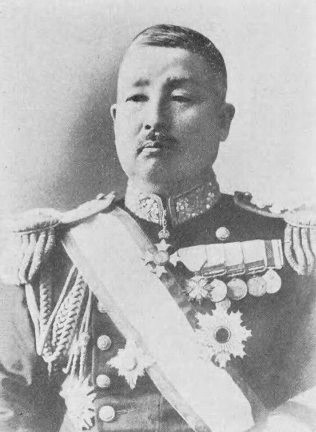
Itô was born in in southern Osaka. While employed as a young man by the Sadoshima Copper and Iron Company in his hometown of Osaka, Otojiro Itoh (伊藤音次郎, Itô Otojirô) (June 3, 1891 – December 26, 1971) became inspired with flight when seeing the Wright brothers’ success in a film. ‘
In September 1909, after reading an article about the new biplane developed by Sanji Narahara, Itô wrote a letter to Narahara pleading to be employed as a pilot. At Narahara’s urging, Itô began taking night classes on mechanical engineering at the Kôshu Gakko (now Kogakuin University). He continued to maintain a correspondence with Narahara for many years.
At the age of 19, in 1910, ltoh left home and moved to Tokyo where he worked as a mechanic at the Narahara aeroplane company. Impressed with his eagerness and interest in aviation, Narahara made ltoh an assistant to Einosuke Shirato, who had worked exclusively for Narahara as a pilot. This association was interrupted when Itoh reached the age of 20 because, like all other young Japanese men, he was conscripted for a one year term of service in the military. Upon returning to Narahara in 1912, he assisted in the manufacture of the aeroplanes and accompanied demonstration flights around Japan as a ground crewman.
In February 1915, following Narahara Sanji’s departure from the aviation community, Itô established the Itô Aircraft Research Center in present day Mihama Ward of Chiba City.
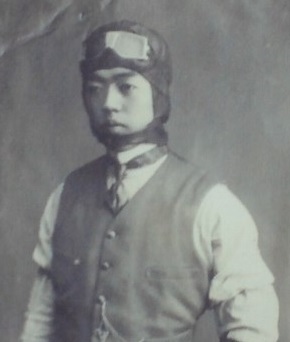
As spare-time employment, ltoh assisted Shigesaburo Torigai with the manufacture of the Torigai Hayabusa-go Aeroplane which eventually crashed in September 1913. ltoh borrowed this aeroplane, quit his job and moved with the aeroplane to Inage, on Tokyo Bay just north of Chiba City. There he made repairs and modifications to the aeroplane, and began to learn to fly with the help of two others. The sandy beach there proved an excellent runway, but its availability was dependent upon the height of the tide. After three months of flying training, maintaining and repairing his own aircraft, he had accumulated a total of a mere 3 hours of flying.
Pilot licences, or, for that matter, any regulations concerning flying and aeroplanes were yet to come. Therefore, Itoh established a flying school on the beach at Inage in February 1915, and called it the ltoh Kyodo Hiko Renshusho (Itoh Co-operative Flight Training Ground). The ltoh Aeroplane Research Studio and Training Ground were both known to the public as ltoh Airfield. For flying training, he used the Torigai Hayabusa-go Aeroplane after it had been modified. To supplement his income, Itoh joined part time with Shirato, formerly with the Narahara company, who now was building his own aeroplanes. This added income allowed ltoh to begin his commercial construction of aircraft and by the autumn of 1915 he completed his first; the Itoh Emi I.
In November 1915, Itô finished construction of an airplane named after himself and his hometown, the “Itô-Emi Type 1.” On January 8, 1916, Itô flew his aircraft over Tokyo, making him famous among Japanese aviators. After Itô’s aircraft facility suffered severe damage from winds and flooding in late September 1917, he moved his operation to Tsunanuma-chô (now Naraishino City), and reestablished his business under the name “Itô Aircraft Manufacturing.” Among the pilots that Itô trained was Tadashi Hyōdō, the first Japanese woman to earn her pilot’s license, and Inoue Chôichi, who established the Japan Air Freight Corporation.
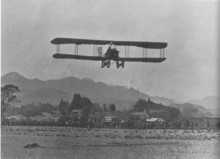
When the Asahi News Corporation established the Tôsai Teiki Airlines in 1923, Itô Aircraft Manufacturing provided both aircraft and pilots, thereby contributing to civil aviation transportation. In 1930, Itô established the Japan Light Aircraft Club and appointed Sanji Narahara as club president, which contributed to the spread of lighter-than-air aircraft in Japan.
Although Itô was one of the few successful aviators to come from a purely civil aviation background, he withdrew from the world of aviation following the ban on all aviation activities from the GHQ after the Occupation of Japan. Itô established a farming cooperative with volunteers drawn from the former workers at his factory in 1948, and moved to Tôyama Village in Chiba Prefecture (now Tôhô, Narita City) to open up new farmland as part of the post-war land reclamation project.
Despite the great effort expended by Itô’s group to cultivate land that had once been bamboo forest, their farm was eventually included in the area designated for the Tokyo International Airport (now Narita International Airport). The sudden announcement of this plan was devastating for many local residents, some of whom participated in the Sanrizuka Struggle, but it was said that Itô alone of all the area’s residents welcomed the arrival of the airport. Although he had put his energy into farming, Itô willingly agreed to sell his land, and was among the first to sign a contract with the airport organization.
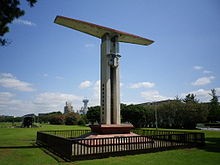
Afterwards, Itô put his energy into the establishment of the Civil Aviation Memorial in Inage Seaside Park. The journals and written records that Itô left behind were eventually used by author Hiragi Kunio. On December 26, 1971, Itô died at the age of 80.
Itoh Chu Koku Seibi Kabushiki Kaisha
Japan
Established in December 1952 as Itoh Chu Koku Seibi Kabushiki Kaisha to maintain and repair light aircraft. In 1960 produced the N-58 Cygnet light cabin monoplane designed by students at Nihon University. Aided in development of, and produced, N-62 Eaglet four-seater also designed at Nihon University. Late in 1968 converted a number of North American T-6 Texan trainers to represent Nakajima B5N torpedo-bombers for film Tora! Tora! Tora! Adopted Shin Nihon Koku Seibi Kabushiki Kaisha name on May 29,1970, thereafter concentrating on manufacture of aircraft equipment.
Italair
Dott Ing Stelio Frati designed the F.20 Pegaso light twin; two prototypes built (first flown 1971) and an agreement was reached for production aircraft to be manufactured by Italair.
Issoudun Aircraft Corp
Northville
Michigan
USA
Circa 1930 airplane builder
Issoire Aviation
Societe Issoire Aviation was formed in 1978, following the bankruptcy of Wassmer Aviation, by President/General Director of Siren SA. In addition to subcontract work for the French aircraft industry and construction of sailplanes, offered IA 80 Piranha as a two-seat lightplane.
1995 saw the takeover of Issoire Aviation by the REXIAA Group. Alongside the subcontracting activities, launch of the LIONCEAU programme, the first “all carbon” aircraft with the participation of all the companies in the group.
 All Aero