Kondor Flugzeug-werke GmbH

Germany
Designed and built military aircraft in First World War, including D I and D 7 single-seat fighter biplanes (1918 and 1917 respectively), and E III parasol monoplane.

In October 1916 Kondor Flugzeug-Werke was awarded an order for 50 Albatros B.IIa (Kon.) s/n 390-439/16 or use as trainers. The B.IIa designation denotes a change in engine and Kondor did some redesign of the empennage.

Kolb / The New Kolb Aircraft Co

1982: Kolb Company Inc, RD 3, Box 38, Phoenixvil¬le, Pennsylvania 19460, USA.
1995-8: R.D.3, Box 38, Phoenixville, PA

The New Kolb Aircraft Co. offers 3 excellent designs to cover a wide spectrum of flying missions. The Firefly, was designed in 1995 and more than 500 units were sold worldwide. The Mark 3 Xtra was designed in 1999 by aircraft designer Barnaby Wainfan and more than 100 were sold in the Unites States. The Kolb Flyer SS was granted the S-LSA certificate and sold since July 2008.

Kocjan, Antoni

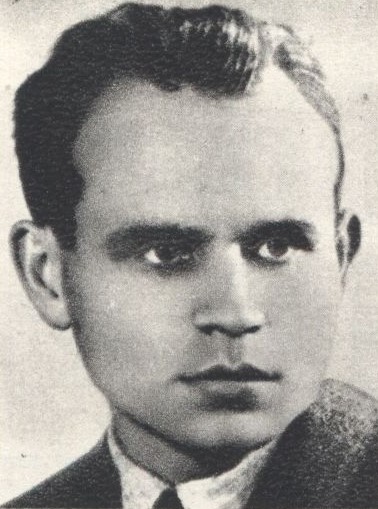
Antoni Kocjan was the son of Michal Kocjan and Franciszka Zurowska, born in the village of Skalskie near Olkusz, Poland, on 12 August 1902. He finished the Gymnasium of Casimir III in Olkusz in 1923 and served in the army during the Polish-Soviet war. Subsequently, he studied at the Warsaw University of Technology in the department of electrical engineering and aviation and at the Warsaw Agricultural University. He married Elizbieta Zanussi on 30 November 1939. During his studies he collaborated with the plane constructors of group RWD.

In 1929 he finished a pilot’s course and in 1930 won the second award at the Young Pilot’s Championship. Later he was part of crew in flights on the airplanes RWD-2 and RWD-7, which beat the world’s height record. In 1931 he obtained an engineer’s degree and began work at the Experimental Aviation Workshops in Warsaw. In the same year he constructed his first plane “Czajka”, a trainer glider that was later put into serialized production in several designs.

Kocjan became the head constructor of the Glider Workshops on the Mokotów Field in Warsaw in 1932. While there he designed the training glider “Wrona” and in 1933 the training-sport glider “Komar”. These three successful gliders and their improved versions, “Czajka-bis”, “Wrona-bis” and “Komar-bis”, became mass-produced in Poland and in lesser quantities under license abroad in Estonia, Finland, Yugoslavia, Bulgaria, and Palestine. In 1934 Kocjan designed a trainer glider “Sroka” that was also built in significant numbers. Subsequently, he designed the aerobatic glider “Sokol” and in 1936, together with Szczepan Frzeszczyk, the aerobatic glider “Mewa”. In 1937 he built his most known single-person aerobatic glider “Orlik”. The version “Orlik 3” took second place in the competition of standard gliders for the anticipated 1940 Summer Olympics. The version “Orlik 2” in the years 1948-49 was piloted by the American Paul MacCready on which he set the world’s height record for gliders of 9,600 metres (31,500 feet). In 1937 Kocjan also designed the motor glider “Bąk” of which ten units were built. The production of “Komar” was also renewed after the war.

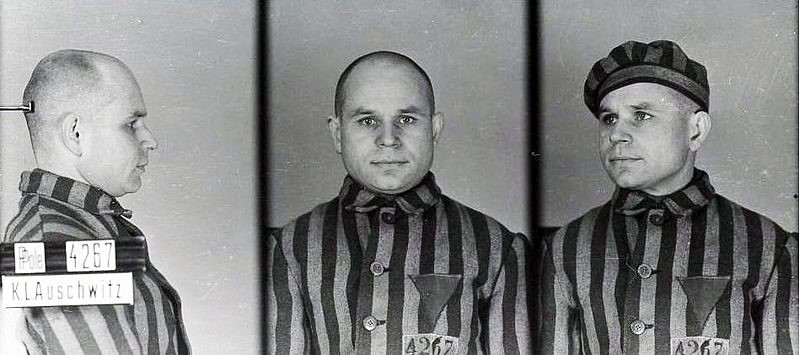
In the first days of World War II, Kocjan was wounded by bomb shrapnel. After the defeat of Poland in 1939, he became a soldier of the underground ZWZ which later became the Home Army. On 19 September 1940 he was caught in a street raid and sent to Auschwitz concentration camp. However, he was released after ten months.

He was characterized by a large degree of daring in planning of actions of the Polish resistance, particularly in connection to the underground production of weapons. He made a significant contribution to the identification of Peenemünde as the testing site of the German Wunderwaffen and recovery of V-2 rocket engine and steering components into London.

On 2 June 1944, he was arrested together with his wife and imprisoned in the Pawiak prison. The Gestapo murdered him on 13 August in the last group of forty prisoners of Pawiak during the Warsaw Uprising.

Kochergin

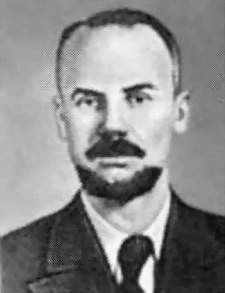
Sergei Alexeyevich Kochierigin (Russian: Сергей Александрович Кочеригин) was born in 1893. In 1912 he entered the Peterburg Technological Institute. In 1917 he completed the theoretical aviation course at the Petrograd Polytechnic Institute and became a military pilot. He began his work at the Shipbuilding Bureau and later went on to work as an instructor at the Naval Aviation School. At the end of the Civil War he continued his studies at the Zhukovski Military Aviation Academy.

He began his work in 1926 in the Nikolai Polikarpov collective. After his arrest in 1929 he went on to direct his KB From him. As a result of the new organization of Soviet aircraft production, the KB was transferred to the “Aviorabotnik” factory named after Menzhinski. In 1933 he became head of the TsKB brigade at this factory.

In 1937 he directed the production under license of the Vultee V-11 and from 1939 he was appointed builder of the OBK-156, attached to the Factory of the same name.

Since 1938 his work group has developed more than 20 projects, mainly fighters, assault planes and light bombers. Although some were relatively successful, most of their designs did not make it past the drawing board, which was mainly due to the fact that, unlike other OKBs of the time, their construction bureau lacked a productive base. Due to the fact that its bureau was integrated within the TsKB, most of its creations present the numbering of the TsKB in parallel with its initials.

The Kochierigin construction bureau was dissolved in 1942. From that date he became the general editor of the NKAP Scientific and Technical Bureau publication.

He died in Moscow in 1958.

Knoll Aircraft Corp

The Knoll Aircraft Corporation received its state charter on October 10, 1928. Felix Knoll, formerly of The Rohrbach Metal Aeroplane Company (Germany) and later the Chief Engineer of the Heinkel Aircraft Company, immigrated to the United States from Germany for better opportunities. Within weeks of being in the country, Wichita business leaders recruited Felix to come to Wichita and start a company of his own. Engineering work, stress calculations, and drawings for the first model, the KN-1, were completed in Room 623 of the Broadview Hotel. Felix and Herbert Schwenke; another German immigrant from The Rohrbach Metal Aeroplane Company, worked on the plans together.

George Siedhoff, who owned and built the Broadview Hotel where the KN-1 was designed, was selected to build a new 50,000 square foot factory on a 148 acre tract of land at the northeast corner of Kellogg and Webb Road. The building featured two stories, a mezzanine area, clear story windows, and adjacent runway. Assets such as machinery, tools, and equipment were purchased from the bankruptcy of Laird Whippoorwill Airplane Company. The company set up a temporary shop at 471 W 1st street in the former building of both the Travel Air Company and Laird Whippoorwill. By the end of December, 1928, the first airplane was ready to fly.

Over five hundred spectators gathered around the East Airport to watch the KN-1 first flight. Amongst the crowd were Lloyd Stearman, Walter Beech, reporters, and motion picture camerame. The December 30, 1928 first test flight was so successful that pilot Howard Jones chose to double the planned time and stayed in the air for thirty minutes. He took the airplane through loops, rolls, and power dives.

In June 1929 new issues of Stock were released.

By July 1929 the company was not paying its bills. The company assets were found to be embezzled soon afterward. Demand for new aircraft in the summer of 1929 was softening. Arguments between the board of directors and management broke out over the necessity of building the new factory, the hiring of too many engineers, and also the Yunker contract work. Payment for the Yunker work was to have been stock in the Yunker Aircraft Company. The lack of funds, and sales combined with the depression, halted production with three new aircraft in development. The company was placed into receivership on August 26, 1929, under the management of Ray Theis.

On December 18, 1929, the assets were liquidated at auction. Roy Buckley purchased the manufacturing machinery and equipment. He would later found the Buckley Aircraft Company. George Siedhoff purchased uncompleted airframe sections and parts, as well as the rights to X8899. C.V. Snyder bought the new plant and grounds. The Yellow Air Cab Company, in turn, bought it in late 1930. The airport property was then purchased by Beechcraft in 1940 and became their Plant II.