1980: (W Keith) Larkin Aircraft Corp, Box 66899, Scots Valley, CA 95066, USA.
Built LSA
1980: (W Keith) Larkin Aircraft Corp, Box 66899, Scots Valley, CA 95066, USA.
Built LSA
Australia
Formed as the Larkin-Sopwith Aviation Company of Australasia, which began operation in 1919 and became Lasco, at Melbourne, in 1921. Built 32 de Havilland Gipsy Moths under license for the government. In 1930 built one- and three-engined transports, known as the Lascoter, Lascowl, and Lasconder. At least one de Havilland D.H.50 constructed. Withdrawal of government subsidy and economic depression caused close-down.
Established in 1927 (pres: Romer G Weyant).
217 E Lincoln,
Wichita KS.
USA.
In 1928 taken over by United Aircraft Corp.
Arthur Lardin, W A McCurdy, E Smith, of New Castle DE, USA.
All were employees of Bellanca Corp who in 1934 built the AL-1 as an off-hours project.
La Porte IN.
USA
Circa 1938 built a monoplane
USA
A New York company, formed to design and build biplanes with variable-incidence wings. Built aircraft to government contract 1917-1918.
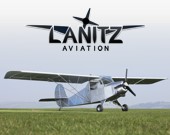
Lanitz Aviation is a German aircraft manufacturer based in Leipzig. The company specializes in the design and manufacture of aircraft fabric systems and in particular their Oratex material for model and ultralight aircraft. The company also has developed and produces three ultralight aircraft that were originally produced by British manufacturers Escapade Aircraft and The Light Aircraft Company.
The company at one time produced its own two-stroke aircraft engine, the 32 hp (24 kW) Lanitz 3W 342 iB2 TS.
C R Lansing
Warren OH.
USA
Circa 1931 airplane builder
LanShe Aerospace in Florida bought the Lake Aircraft Company in 2002.
Edward H Lanier and son (Edward M)
Miami and Jacksonville FL, Covington KY.
USA
1943
(E M) Lanier Aircraft Corp
Marlton NJ.
USA
The elder Lanier was also inventor of the ice cream cone, which he created while an exhibitor at the 1898 Columbian Exposition in Chicago. Although he had a profitable business selling patented cone-making machines, his real fascination was with flight.
Lanier conducted a series of experiments 1928-33 to explore ideas on low-speed flight. The idea was to adopt the vacuum principle for inherent stability, especially at stalling conditions. Low speed was achieved by placing an upwardly-open concave cell (“vacuum cell”) in the center section of the aircraft, most often blending into the fuselage. Slots were also involved. Hence reduced air pressure evolved in the cell which, of course, had a positive influence on the lift. Most Vacuplanes involved the University of Miami aeronautics department and its director, Prof F H Given, to some degree.
In the early 1930s Edward H. Lanier published six US patents concerned with increased aircraft lift and stability, minimising the stall, sideslip and spin. This was to be achieved through vacuum chamber (“Vacua-cells”), initially in the upper fuselage but later in the upper wing, where the reduced pressure established by airflow over a curved surface would act on the lower surface inside the cell, providing lift. The second patent suggests that the cell should contain angled spanwise slats to prevent air entering them at low speeds and that these should be adjustable so that the cells could be closed when required. The earlier patents stress stability improvements; claims of enhanced lift begin with the fourth patent. Five Lanier Vacuaplanes were built in the 1930s, followed by three Paraplanes from about 1948, before the Paraplane Commuter 110 which first flew in 1958.
Relative US patents from 1930-33: #1,750,529, #1,779,005, #1,803,805, #1,813,627, #1,866,214, and #1,913,809.
 All Aero