The Howard T. Wright company established “probably the first real aircraft factory in England and certainly the only one to operate at a profit at the time”, from 1908 to 1912.
Howard T. and Warwick Wright, in 1905, set up his own company in Prince of Wales Road, Battersea, London. There they built some 35 biplanes, monoplanes and an unsuccessful, helicopter. One of their biplanes was bought by Tom Sopwith. The Wrights’ exhibited a monoplane at the 1910 Olympia show. Designed and built helicopters, ornithopter, biplanes, and series of monoplanes, including five Avis. In 1910 T.O.M. Sopwith achieved the longest all-British flight to date with a Howard Wright 1910 biplane, a distance of 272km.
Wright also was secretary-treasurer of Western Airplane & Supply Co in Burbank at the time and might have had a large part in the construction or design of their 1928 Western Sport.
In 1899, the Wright brothers wrote to Dr. Samuel P. Langley that they were about to begin aviation experiments and they wanted to know how to build and fly gliders. Langley replied that they should read Progress in Flying Machines and contact Chanute in Chicago.
The Wright brothers received their copy of Chanute’s book personally from the author, who became both their friend and advisor. At their invitation, Chanute visited the Wrights at Dayton, Ohio and Kitty Hawk, North Carolina. It was Octave Chanute who, at a meeting in December, 1903, of the American Association for the Advancement of Science announced to the world that the Wright Brothers had flown in a heavier than air machine.
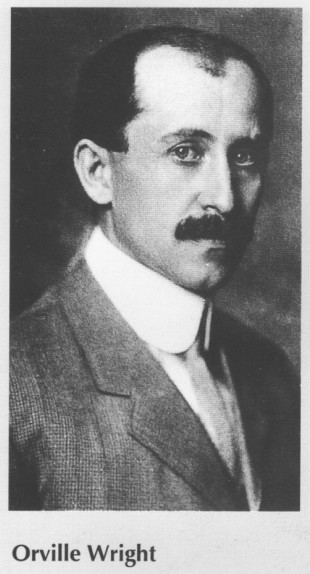
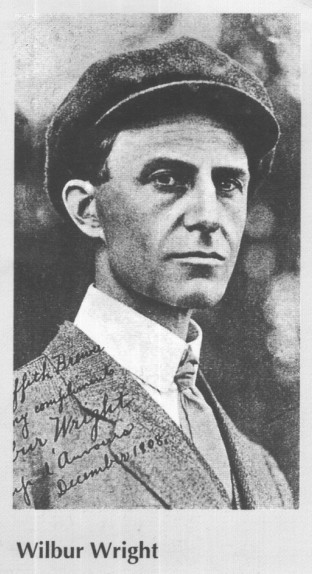
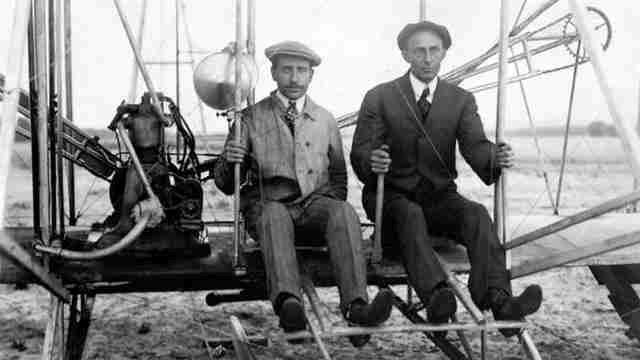
The Wright brothers built first successful aircraft in the world, 1903; first practical model 1905. The invention was patented in 1906 and the Wrights sold first military aircraft in world to U.S. Army Signal Corps 1908.
There were countless personal modifications of the Wright machines in the US, such as Beckworth-Wright, J S Berger-Wright, Lemp-Wright, Parmelee-Wright, with owners often claiming hyphenated name credits, as in similar cases with many Curtiss and Burgess planes. Most were essentially A and B Fliers.
1909: Wright Co; Wright Aeronautical Co Inc.
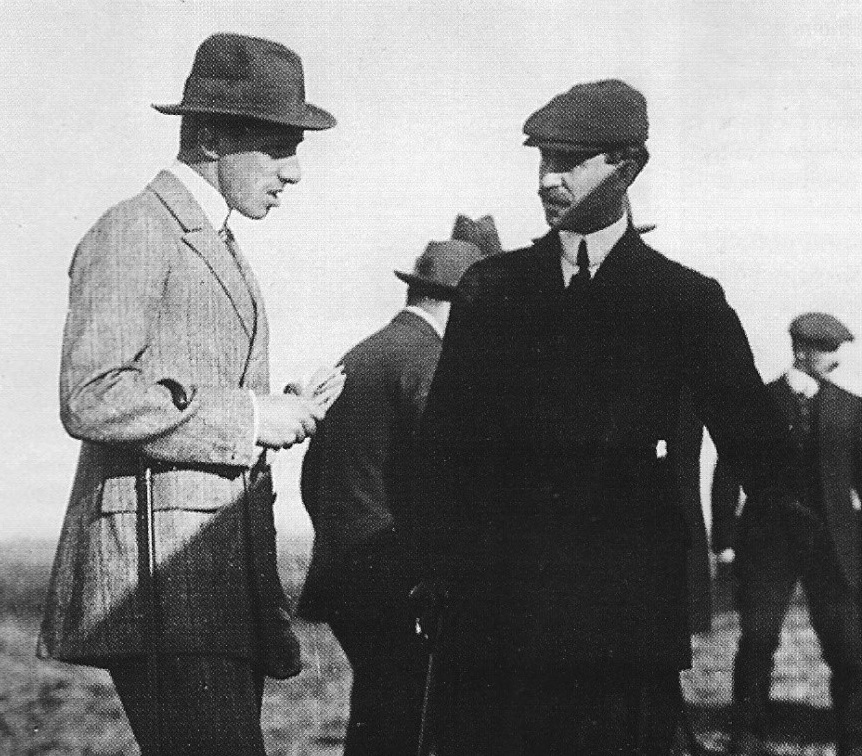
King Alfonso XIII and Orville Wright at Pau airfield, 1909
Continued producing same basic and outdated type though later, from Model I tractor biplane, aircraft were more conventional. Sold a few aircraft to U.S. Navy 1914.
Mainly an engine manufacturing company. After Wilbur’s death, 1912, Orville continued at Dayton plant as independent experimenter. Built to official designs and produced Hispano-Suiza engines during the First World War. Giuseppe Bellanca joined 1924 and Wright-Bellanca monoplane and Apache shipboard fighter produced in 1925. Bellanca left 1927 to re-form his own company (see Bellanca Aircraft Corporation).
Although the 1915 Model L was a commercial failure, the Wright Company refocused on the development of high-powered engines for airplanes and automobiles. In 1916, they acquired the Crane-Simplex Automobile Company and the Glenn L. Martin Aircraft Company. All three companies merged to become the Wright-Martin Aircraft Corporation.
In 1916 the company was sold to a NYC investment group. Became Wright-Martin Aircraft Corporation of California in 1916 when merged with Glenn L Martin Co and Simplex Automobile Co to build Hispano-Suiza motors under license from France.
In 1920 reorganized as Wright Aeronautical Corp.
In 1929 Wright Aeronautical Corp and Curtiss Aeroplane and Motor Company combined to form Curtiss-Wright Corp and in 1931 the engine divisions of Curtiss and Wright merged.
Fort Worth, Texas. Built James L. Robertson’s Wren 460, STOL-configured Cessna 182, first flew 1963. Additions included foreplanes, wing spoilers, and double-slotted flaps. Produced in small numbers.

 All Aero