Letov Air sro

First flew in May 1997 the L-11 side-by-side two-seat basic trainer and glider-towing lightplane, but in 1998 was in financial difficulties and required investor to complete development. Then also offering LK-2 Sluka single-seat microlight (first flown 1991), LK-3 Nova two-seat microlight/ homebuilt (first flown 1993), and ST-4 Aztek two-seat microlight (1996 type), all three in assembled or kit forms.

1998:
Beranovych 65
CZ-19902 Prag 9 Letány
Czech Republic

Letov

Vojenska tovarna na letadla Letov

Czechoslovakia
Vojenska tovarna na letadla Letov was created in 1923, initially building the designs of Alois Smolik. Major output centered on the S-1/S-2 reconnaissance/light bomber biplanes; S-4 fighter of 1922; S-6 bomber; S-10 trainer (licensed from Hansa-Brandenburg); S-16 long-range reconnaissance biplane, built late 1920s/early 1930s for Czechoslavakia, Latvia and Turkey; S-18 trainer; S-19 four-passenger civil transport; S-20 biplane fighter; S-21 trainer version of S- 20; S-32 five-passenger high-wing tri-motor; and the S- 328/528 series of reconnaissance/light bomber biplanes. Also undertook license production of Tupolev SB-2 twin-engined monoplane bomber. Built Arado and Junkers types during German occupation 1940-1945.

Note: early designations combined chief designer, Alois Smolík’s initial with engine type and design number. Eg: SHS-4 = S for chief designer, Alois Smolík; HS for Hispano-Suiza 8Ba; and 4 for the fourth Letov design. Designations were later rationalized, dropping the engine type letters. Design evolutions followed the French pattern (eg: S-18 begets S-118, S218, etc.).

Letord

Établissements Letord – Société d’Aviation Letord – 1921-1922

Beginning in 1909, Emile-Louis Letord began construction of aircraft out of a facility in Meudon near Paris, France. Ultimately the company was commissioned to build aircraft from other manufacturers (including Dorand and Nieuport) until the concern headed development of their own three-seat biplane – the Letord Let.1. The series encompassed the Let.1 up to the Let.7 and some 1,500 were eventually ordered by the French Air Force for service in World War 1 (1914-1918) but only about 300 were realized.

This company built bombers to designs of the Section Technique de I’Aeronautique, 1916-1918, as the Establissements Letord at Chalais-Meudon. The last of these aircraft to be developed was intended as a night bomber. It was in the same class as the Handley Page bombers, with a wingspan of 25.91m. In 1923 Letord built an experimental aircraft for the government, which was evolved by Becherau, designer of the prewar Deperdussins. In 1925 part of the works was let to Villiers, which built racing aircraft and the small Albert biplane produced under license of Tellier-Duhamel.

Lessing, Kurt

Kurt Lessing migrated from Dresden to Australia after WWII. He was a very skilled machinist and proceeded to build this somewhat strange machine more or less in secret in his workshop at Woodend Vic.

In addition Kurt built a launch ramp 20 metres high with winches and an 800 metre catapult. He died before completion of the project.

Lesher, Edgar J.

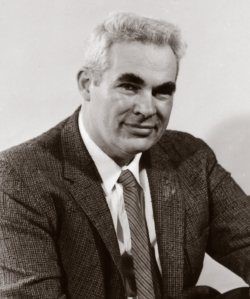
Edgar J. Lesher, 1914 – 1998, earned an undergraduate degree in mathematics during the Great Depression, then did graduate studies in this subject and physics. Prior to World War II, he taught ground school for the Civilian Pilot Training Program and earned his own pilot’s license.

In 1942 Ed joined the University of Michigan’s Department of Aeronautical Engineering, where he taught until retirement in 1985. Ed Lesher was a professor of aeronautical engineering, who used breaks in his academic career to perform design work at Douglas, Stinson and Convair Aircraft.

Attendance at a fledgling Experimental Aircraft Association Fly-In in 1958 inspired Lesher to design and fabricate two aircraft of his own. One of them, the Lesher Teal, set several international records for speed and distance.
Ed also found time to do set design and act at the Ann Arbor Civic Theater and to sing in the Ann Arbor Civic Chorus.

Ed and his wife Margaret had ten children, including four sets of twins. Lesher died in 1998.