Built an aircraft in 1910.
Manufacturer
Makowiecki, Karol
Karol Makowiecki was a landowner living in Odessa and an aviation enthusiast, who has made a balloon already in 1906 and in 1911 he made a copy of Farman biplane in 1912 and later established a factory of aircraft equipment where – besides the main production – two more “Farman-like” aircraft were made.
Makina Ve Kimya Endustrisi Kurumu / MKEK
Turkey
Full name Makina ve Kimya Endustrisi Kurumu. In 1952 MKEK took over THK factory at Ankara, together with existing designs. THK-15 became the MKEK Model 1, THK-16 the Model 2, THK-5 and 5A the Models 5 and 5A, THK Prototype 14 the Model 6 and THK-2 the Model 7. Developed Model 4 Ugur tandem two-seat primary trainer for Turkish Air Force, three presented to Royal Jordanian Air Force.
Makhonine, Ivan
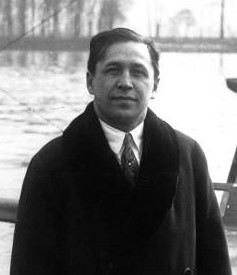
Born in Russia in 1895, Yvan Makhonine, finds himself in the war of 14/18 in a state research center to invent weapons and ammunition of all kinds, which brings him fortune.
Around 1917, he invented a way to produce synthetic fuel, able to run without noticeable changes, all types of combustion engines typically powered by gasoline or other fuels.
Unlike gasoline, his fuel can not be ignited in the cold, but only when hot as fuel. But though it can only be ignited with difficulty by auto ignition, unlike gasoline, it can help to significantly increase the efficiency of combustion engines by simply raising their compression rate.
This fuel, a little fatter than gasoline, with the appearance of diesel, is easily sprayable by carburetor engines, provided you bring the electric air preheating systems to facilitate cold starts and to increase the efficiency of the usual means of heating the body of the carburettor.
Some adjusting the weight floats and sizes of the nozzles are to be made because of the density of the product, markedly higher than gasoline, and close to 1.0.
Around 1918, Mr. Makhonine built an electric-powered locomotive with motors driving the wheel axles are powered by a power generator itself driven by an internal combustion engine with a high compression ratio. The cars of this train were also equipped with electric motors.
According to witnesses, it leaves a vapor with the appearance of a thick smoke, which feeds directly into the combustion engine electric generator.
If this “smoke” is sent to a conventional distillation apparatus, it condenses as fuel that can be stored for later use.
This electric powered locomotive, ultra modern for its time compared to intensive steam engines, was used in Russian cars until 1920 or 1921.
Beginning 1922, Mr. Makhonine with his wife (the singer Nathalie Ermolenko) and fortune, arrived in France, and decided to sell his invention to the French State.
For many years the fuel was used successfully in all vehicles equipped with an internal combustion engine, automobiles, trucks, boats, planes etc.
Finally everything stopped around 1927, when he found himself almost ruined after suffering the fate of many inventors.
Mr. Ivan Makhonine, engineer, Russian inventor, died in France in 1973 in a retirement home for Russian emigrants, without disclosing the precise secret of his invention, i.e., the exact technology that transformed the machine hydrocarbon vapors and other carbon products in a “smoke” condensable giving this famous fuel and this with tremendous efficiency, which we are unable to achieve with our current science.
Mr. Makhonine knew just make an ideal fuel that was neither petrol nor diesel, but an intermediate product.
He could manufacture this fuel from raw materials most unfit for this, i.e., coal tars, the worst coal, crude oil, vegetable oils and all hydrocarbon or carbonaceous waste.
What we know is that it was preparing the base product with means that differed product (see French Patent No. 622036 below), so as to extract a steam that was posing in a kind large insulated tube externally – not described in the patent system – whose other end is connected directly to an engine, or a conventional distillation apparatus where the fuel comes out.
We know that production of this exceptional fuel yields were approximately 95% crude oils and coal tars. These results are not comparable with that obtained in quantity and quality by conventional methods which are known to us.
We also know that the engines burning the fuel, in addition to their exceptional performance, did not pollute, produced no smoke or the usual unpleasant smell, but only a sort of hot gas with a slight pleasant odor.
Mair, J E
J E Mair
3106 W Fullerton Ave
Chicago IL.
USA
Circa 1910 built a Wright Flyer copy.
Mainair Sports Ltd
Mainair Sports are the longest established manufacturer of microlight aircraft in Great Britain, and has been producing aircraft since 1982 when microlight aircraft first began as a sport in the UK.
Since the early beginnings Mainair Sports have been at the forefront of weight-shift microlight design. They were the first company to be granted the Civil Aviation Authority (CAA) Company Approval for manufacturing of microlight aircraft and one of the first to have their aircraft approved by the CAA, against the standards of British Civil Airworthiness Requirements Section S.
Mainair Sports operated from a industrial unit located in Rochdale near Manchester, Great Britain.
1983: Mainair Sports Ltd, Shawelough Road, Roch¬dale, Lancashire OL 12 6LN Great Britain.
Markets Blade tandem two-seat flex-wing microlight in assembled form, Mercury single- or two-seat flex-wing monoplane in assembled or kit forms, and (from 1997) Rapier tandem two-seat flex-wing microlight in assembled or kit forms.
1997-8: Alma Industrial Est. Regent St, Rochdale, Lancashire, OL12 0HQ, Great Britain
Mahoney-Ryan Aircraft Corporation
USA
Incorporated 1922 at St Louis, Missouri, known originally as Ryan Airlines. Developed Ryan M-1 mailplane from which, in 1927, was derived Spirit of St Louis, built for Charles Lindbergh’s New York-Paris flight; commercial development produced as Ryan Brougham.
Purchased Ryan Aircraft Co as B F (Ben Franklin) Mahoney Aircraft Co, later B F Mahoney-Ryan Aircraft Co, San Diego, in 1927.
1929: Ryan Aircraft Corp.
Company merged with Detroit Aircraft Corporation May 24, 1929.
Mahindra
Mr Mahindra and his uncle Keshub Mahindra, who joined the group in 1947 and has been its chairman since 1963. Keshub Mahindra sits on the Prime Minister’s Council on Trade & Industry, while last month, Anand Mahindra was named Ernst & Young’s entrepreneur of the year and business channel NDTV’s business leader of the year.
The Mahindra group’s businesses include financial services, automotive products, trade, retail and logistics, information technology and infrastructure development. It is one of the world’s biggest tractor makers, with plants in India, China and the United States, and an assembly site in Brisbane, Australia. In Australia, it also sells the Mahindra Pik-Up, a light utility.
The Mahindra family and associates hold a stake of about 13 per cent in the main group company, Mahindra & Mahindra, which has a market capitalisation of $7bn.
Mr Mahindra, vice-chairman and managing director of the $7 billion conglomerate that bears his family’s name, aspired to turn the group’s aerospace arm into an Indian version of the Brazilian Embraer. The Mahindra brand is better known for its tractors and utility vehicles, and building a regional jet is a complex and time consuming business that usually starts with the production of much smaller turbo prop aircraft. To speed up the process Mahindra agreed to pay about $40 million for a controlling stake in two small Australian aviation companies, Gippsland Aeronautics and Melbourne-based component maker Aerostaff Australia.
Gippsland Aeronautics, based in Victoria’s Latrobe Valley and maker of the popular 8-seat GA8 Skyvan utility plane, planned to beef up its range with an updated 18-seat version of the controversial Australian-made Nomad twin turbo-prop. It bought the rights to the Nomad’s type certification in 2008.
Aerostaff Australia makes high precision aircraft components and assemblies for makers such as Boeing and Lockheed Martin.
Mahindra group’s experience in aviation extends to the co-design of a five-seater plane with the National Aeronautics Laboratory (NAL) of India – designated the NM5 – and the production under licence of a light Australian plane, the Seabird Seeker, for the Middle East.
“The driving force behind our Australian acquisitions is to be the Embraer of India,” Mr Mahindra said. “We are not gunning for Embraer. It’s more a case that we see it as a role model.”
The NM5 programme is unique in the sense that NAL / National Aerospace Laboratories has started work for creation of an airplane, in equal partnership with a private production agency cum development partner, M/s Mahindra Plexion Technologies Private Ltd., a unit of the Mahindra & Mahindra industrial house. NAL signed an MoU with M/s Mahindra Plexion Pvt Ltd (MP) to jointly develop the 5 seater general aviation aircraft, NM5 and to undertake its production and marketing.
Mahe
1983: Mahe, Flugplatz Schachtlder, D 2370 Rend¬sburg, West Germany.
Built the Pfadfinder UL
Magnuson, Emil
North Dakota
USA
Emil Magnuson was an early constructor of propellers for aircraft and farm wind machines, reported to have built an airplane of some sort, as well.
 All Aero