The Masquito Aircraft company was established in Belgium to produce the Masquito M80 ultralight helicopter. Developed and first flew in May 1996 the M58 two-seat ultralight helicopter. Improved M80 version with more powerful 80 hp Jabiru 2200 piston engine followed, intended for sale in assembled and certificated form, and as a kit of parts.
In 1917 the Maryland Pressed Steel Company of Hagerstown, MD hired Bellanca as a consulting engineer. The aircraft department of Maryland Pressed Steel Company at Hagerstown, Maryland, built designs of Joseph Bellanca, who in 1919 developed single-seat CD biplane powered by 35 hp Anzani engine, and the CE two-seat biplane. With the conclusion of WWI, Maryland Pressed Steel’s contracts were cancelled and the company entered into receivership. Thus, the CE never went into production. Activity ceased and Bellanca joined Omaha Aircraft Corporation in Autumn 1921.
In the form of the Martin Marietta Corporation, Martin returned to piloted aircraft production in 1965 with SV-5 piloted lifting body research vehicle, built as SV-5J with J-85 or J-60 jet engine and as SV-5P or X-24A with XLR-11 rocket engine. Vehicle was launched from Boeing B-52 mother plane.
In March 1995 Martin Marietta merged with Lockheed Corporation to form Lockheed Martin Corporation.
Based at Woking, Surrey, with premises at Brooklands, the partnership of H. P. Martin and G. H. Handasyde built series of monoplanes from 1908 to 1914. Martinsyde Ltd. was registered in 1915 and undertook subcontract production of RAF B.E.2c and S.E.5A.
The first original wartime design was S.1 single-seat scout, built October 1914. The G.100, a large single-seat fighter with Beardmore engine, appeared in late 1915. Later examples with more powerful Beardmore engine were designated G.102; both known colloquially as Elephant, derived from their size.
Six prototypes of the F.3 fighter were ordered in 1917, and developed into the F.4 Buzzard which was ordered in quantity although only 52 had been delivered by Armistice in 1918. Some civil use in developed forms, some sold to overseas air forces.
The company went into liquidation 1921.
With the liquidation of the Martinsyde company in February 1924, and the acquisition of its stores, stocks and goodwill by the Aircraft Disposal Company (A.D.C.), the latter continued development of the Buzzard (see Aircraft Disposal Company A.D.C.1).
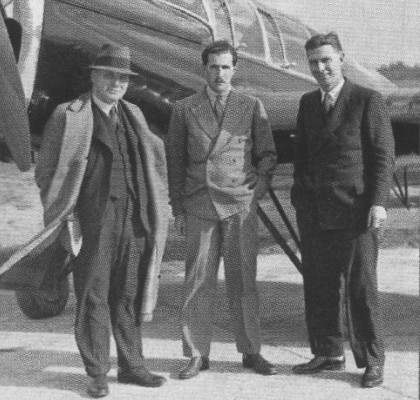
James Martin, Francis Francis, Capt Valentine Baker
Martin-Baker Aircraft was established on August 17,1934, when Mr James Martin joined forces with Capt Valentine Henry Baker (and Mr Francis Francis, who provided the finance) to form the new company at Higher Denharn near Uxbridge in Buckinghamshire. The three men all became directors of the firm, which initially operated under the name “Martin’s Aircraft Works”.
The first objective was to build the experimental M.B.1 two-seat light aircraft. The original offices and works buildings at Denharn were destroyed by fire on April 26, 1940, but by mid-1941, some new modern buildings had been built to replace them. A July 1941 Air Ministry report noted how the conduct of the company’s affairs was characterised by the usual indifference to accounting detail, often found when technical men with outstanding ideas were financed by a wealthy man, all of whom were following an ideal rather than making a profit. The Ministry found no evidence of slackness or extravagance at Martin-Baker, but an air of quiet efficiency about the offices and factory and all connected with them.
Martin was born in September 1893, Martin went on to become an engineer and inventor, designing and building a wide variety of machines when a teenage. In 1929 Martin established his own engineering firm but when he became chief designer and managing director of Martin-Baker in 1934, aviation became his chief interest.
Valentine Henry Baker was born in August 1888 and served with all three Services in the First World War (during which he was awarded the Military Cross and the Air Force Cross). In 1917 he became a flying instructor, and resulted in the establishment of his flying school at Heston, Baker’s students included several members of the royal family and Arny Johnson. In Martin-Baker his main job was company test pilot.
James Martin had evolved a method of steel-tube construction and built experimental MB.1 two-seat light aircraft to demonstrate construction system, flown March 1935. In 1935, with a company employing 35 people, James Martin called for the latest Air Ministry Specification F5/34, to find out what the RAF would require of a new interceptor fighter. Private venture MB.2 eight-gun fighter with Napier Dagger engine flown 3 August 1938. MB.3 experimental fighter with Napier Sabre first flown 31 August 1942, followed by MB.5 with Rolls-Royce Griffon 83 driving contrarotating propellers, which made maiden flight May 23,1944.
Martin-Baker became a leading manufacturer of ejection seats, having made first live firing on May 11,1945.
In 1998 the Martin Aircraft company was founded with the specific goal to research and develop a jetpack that could fly 100 times longer than the Bell Rocket Belt (26 seconds). In 2005, Prototype 9 achieved sustained flight times, laying the foundation for a viable and successful pre-production prototype to be developed.
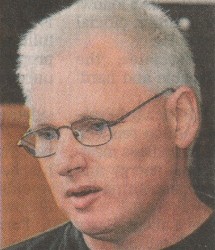
The founder of Martin Aircraft Company and the inventor of the Martin Jetpack is Glenn Martin. Richard Lauder is the company’s Chief Executive.
Glenn Martin
Based in Christchurch, New Zealand, Martin Aircraft Company is developing the world’s first practical jetpack, the Martin Jetpack. Launched to global acclaim at the 2008 Experimental Aviation Association AirVenture air show in the USA, Martin Aircraft Company planned to fulfil its first customer orders in 2010.
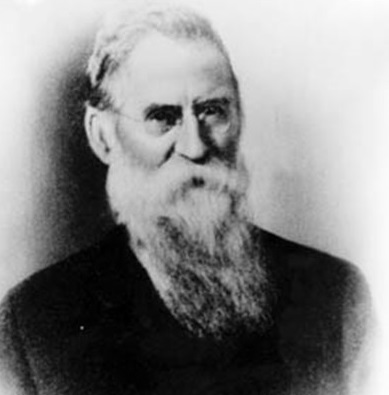
William H. Martin of Canton, Ohio, died in March, 1937. Mr. Martin’s funeral had to be postponed, as international travelers wished to pay their respects to this gentleman who had the courage to stay with his convictions…
William H. Martin’s funeral caravan stretched for five miles…
1982: Marske Aircraft Corporation, 130 Crestwood Drive, Michigan City, Indiana 46360, USA. 1996-7: 975 Loire Valley Dr, Marion, OH 43302, USA. Builder of hang gliders, gliders and motor gliders
During 1958-1960 produced much-modified Auster T.7 designated Marshall MA.4, a boundary layer research aircraft built under Ministry of Aviation contract for Cambridge University.
 All Aero