UK
Founded by Rex McCandless at Newtownards, County Down, to develop single-seat gyroplane built originally as M-2 in 1962. Developed later as M-4 with original Triumph motorcycle engine replaced by 1500cc Volkswagen engine. Production M-4 built by W. H. Ekin (Engineering) Ltd.
Manufacturer
McBroom Sailwings
Amongst the early enthusiasts who were amongst the first to buy, build or fly a hang glider during early seventies who later went on to become manufacturers was Geoff McBroom who founded McBroom Sailwings.
MBB / Kawasaki
Messerschmitt amalgamated with Bolkow as Messerschmitt Bolkow GmbH 1968 and then with Hamburger Flugzeugbau to form Messerschmitt-Bolkow-Blohm 14 May 1969.
MBB / Messerschmitt-Bölkow-Blohm GmbH
Formed 14 May 1969 as merger of Messerschmitt-Bölkow GmbH and Hamburger Flugzeugbau GmbH, headquarters at Ottobrun, Munich. Inherited its forebears’ production programs, including Bolkow’s 208C Junior, 209 Monsun and 223 Flamingo light aircraft and Bo.105 helicopter, also HFB’s Hansa executive jet.
Siebel ATG (SIAT) joined MBB in 1973.
Produced Bo.105 and Tornado, latter by virtue of its 42.5% holding in Panavia, and participated in Airbus, Transall, and Fokker F-28 programs; took over VFW January 1981.
Became part of Deutsche Aerospace AG in 1989.
By 1995, Aerospatiale and MBB had merged to form Eurocopter.
Mayo Composite Aircraft Company Ltd
UK
Formed 1935 to develop Major R. H. Mayo’s concept of composite aircraft. A heavily laden long-range upper component, too heavy to become airborne under its own power, was carried aloft on the back of a short-range aircraft whose function was simply to effect take-off. Ordered by Air Ministry for experimental operation by Imperial Airways, the two components of the Short-Mayo Composite were built by Short Bros at Rochester, and comprised S.20 Mercury floatplane as upper component and S.21 Maia as the lower. Components completed 1937, first separation in flight February 6,1938. On July 21,1938 Mercury carried a 454kg payload non-stop 4,667km from Foynes, Eire, to Montreal and on to New York, a total distance of 5,214km in 22 hr 31 min flying time.
Max Holste
Société des Avions Max Holste
Société Nouvelle des Avions Max Holste
Reims Aviation S.A
France
Max Holste’s first designs were the MH.52 two-seat lightweight sporting aircraft with tricycle landing gear and the MH.53 Cadet trainer variant, characterized by a twin-fin tail which reappeared on the MH.1521M Broussard utility transport and liaison aircraft, produced in quantity for the French Air Force and Army. A twin-engined development, the MH.260 Super Broussard, was redesignated Nord 262 when Max Holste became incorporated with Nord Aviation in 1961.
On 16 February 1960, Cessna Aircraft acquired a 49% shareholding in la Société des Avions Max Holste, which was named the Société Nouvelle des Avions Max Holste. This name was afterwards changed into Reims Aviation S.A., which built Cessna aircraft under license.
Reims acquired license-manufacturing rights for several Cessna types such as the Model 150,172,177,182, and 337, for sale in European and African markets. Manufacturers and customises the twin-turboprop F 406 Caravan II (first flown 1983) unpressurized utility transport, with a range of Vigilant derivatives offered for maritime surveillance, calibration, electronic warfare, border surveillance, survey, pollution control, and other roles, and can be lightly armed. Plans to reintroduce the F172 and F182 versions of Cessna lightplanes was halted in 1998. Subcontract activities include work on Airbus, ATR, and various Dassault Aviation programmes.
Maxair
Franklin Manufacturing Corporation
Maxair Sports Inc
Maxair Sports was founded in 1973 under the name of Franklin Manufacturing Corporation to make metal components for the hang gliding industry.
By 1982 the name had changed to Maxair Sports Inc.
1982-4: Maxair Sports Inc, PO Box 95, 32 Water Street, Glen Rock, Pennsylvania 17327, USA.
Maxair declared bankruptcy in 1991, and the Drifter project was picked up by Phil Lockwood, who had worked for Maxair.
UL builder
Mauro, Larry
1980, Ultralight Flying Machine, 2960 Corvin Dr., Santa Clara, California 95051, USA.
Maupin
Jim Maupin Ltd
1996: 24201 Rowel Ct, Tehachapi, CA 93561, USA.
1998: 24201 Rowel Court, PO Box 4300-37, CA 93561, USA
Builder of light gliders.
Maule
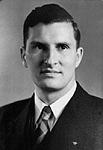
Belford D. Maule, or “B.D.”, as everyone knew him, was born November 4, 1911 in Old Fort, Ohio to farming parents. Not caring much for farm life, he left at the age of 15 to live in Salladasburg, PA. with an uncle and aunt who owned a garage and tea room. There he demonstrated his mechanical ability by building a tractor, and by motorizing an ice cream freezer and an ice saw, among other things.
B.D. joined the Army when he was 18 and was assigned to the 19th Airship Company at Langley Field, Virginia. While working on dirigibles, he found time to design and build his first airplane, a single seat midwing monoplane powered by a Henderson 27 HP motorcycle engine, known as the M-1. Starting with the airplane on floats, and later on wheels at the Salladasburg farm, B.D. taught himself to fly. (Regulations weren’t as strict in those days.)
Following his stint in the Army, B.D. moved back to Pennsylvania and became a family man, marrying June Aderhold in 1934. June and B.D. located in Jersey Shore, Pennsylvania and built their own home there in 1936. Note that Jersey Shore is not only June’s birthplace but is also midway between Lock Haven (Piper Aircraft) and Williamsport (Lycoming Aircraft Engines). This was an area in keeping with B.D.’s interest in aviation. B.D. went to work for Lycoming, and in 1939 designed and built “the Hummer”, a low cost mechanical starter for light aircraft. (Many airplanes did not have electrical systems back then.)
In 1940, the Maule family moved to Jackson, Michigan. Mechanical Products Company was formed to manufacture the Hummer starter (Piper and the Continental Engine Company had shown an interest). In 1941 the B.D. Maule Company was formed in Napoleon, Michigan to build a light aircraft tailwheel which B.D. had designed. The steerable, full-swiveling tailwheel, is still being manufactured by Maule, in an improved form. With the advent of World War II, the starter business waned, and tailwheels were in demand as well as subcontract work to support the war effort.
As a diversion during the latter part of the war, B.D. designed a man-powered glider with flapping wings, known as an ornithopter. He claims to be the first (and is probably the last) person to have successfully flown such a device.
In 1946, B.D. and June purchased a farm near Napoleon, Michigan. With the help of their two oldest children, they converted it to an airport. In the process, they had the dubious honor of leveling a dog race track which had been operated by Al Capone. The airport flourished, being used for flight training during the initial post-war aviation boom.
Maule Aircraft Corporation formed by B. D. Maule at Jackson, Michigan, to manufacture M-4 four-seat light aircraft; production transferred to Moultrie, Georgia, September 1968. The airplane manufacturing business that received its first FAA type certificate in 1961. Prototype flown September 8, 1961, produced as M-4 with 145 hp Continental engine, as M-4 Rocket with 210 hp Continental. M-4 Strata-Rocket with Franklin engine led to M-5-220C Lunar Rocket, flown 1 November 1971, while M-4 Rocket became M-5-210C; M-5- 235 with 235 hp Lycoming 0-540 engine also built. Current name Maule Air Inc., offering large range of four- and five-seat lightplanes for recreational and business uses in the M-7, MT-7 and MXT-7 series. Over 2,000 Maule aircraft built since 1961.
The Maules are built on the Air Force’s abandoned Spence Air Base, just east of Moultrie, Georgia. They had been building airplanes for years in Jackson, Michigan, when in 1972, a particularly severe winter convinced them to seek a warmer haven. Moultrie was looking for industry. The first production model, known as the Jetasen M-4 was delivered in April 1962. Then, as now, all Maules are constructed in Moutrie, Georgia.
 All Aero