Mooney Aircraft formed July 1946 at Wichita, Kansas, USA.
Moved to Texas in 1953. M-20 four-seat version first flown August 10,1953.
Merged with Alon Inc. in October 1967. A variety of problems had run the company mil¬lions of dollars into debt, and in 1969, it was taken over by American Electronic Laboratories.
Became Aerostar Aircraft Corporation on July 1,1970, renamed Mooney Aircraft Corporation October 1973.
Then Butler Aviation International bought the operation, thinking to combine the three most popular Mooneys the Ranger, Chaparral and Executive with the twin engine Aerostar line, the product of still another company that had been taken over by Butler. Mooney might finally have come to an end in 1971 when Mooney quietly closed the doors and shut down production.
The company and its airplane lay dormant for a full three years before Republic Steel, in an unexpected diversification, acquired all rights to the Mooney line in October 1973 and resumed production at the old facility in Kerrville, Texas. In 1976, Republic continued to produce the Ranger, Chaparral and Executive.
1979: Mooney Aircraft Corporation, Subsidiary of Republic Steel, Kerrville, Texas 78028, USA.
Mooney’s 10,000th aircraft built 1994.
In 2001 the Mooney Aircraft Corp filed for bankruptcy, but in 2002 Advanced Aerodynamics & Structures took over the Mooney Aircraft Corporation.
Mooney Mite Aircraft Corp., Box 3999, Charlottesville, VA 22903, USA
Manufacturer
Moon, Edwin Rowland
Edwin Rowland Moon (8 June 1886 – 29 April 1920), possibly inspired by the 1903 Wright brothers flight, took a corner of the workshop of the Moon family owned a boat-building business to realise his dream of constructing and flying an aircraft of his own design.
He tested his first plane, Moonbeam I, in the Fawley area, near the home of his future bride. His first short “hop” took place on Websters Field at Ower Farm, near Calshot and at Moulands Field, Regents Park. Following these test flights on the prototype plane, he built a second plane, Moonbeam II.
He made the first successful flight; the precise date of the first flight is not known, although researchers believe that it was between 12 April 1910 and 11 June 1910.
Following the start of World War I, Moon soon enlisted in the Royal Naval Air Service. On 29 April 1920, Moon was at the controls of a flying boat on an instructional cruise when it crashed into the sea. Moon and three other crew members were killed.
Montgomery, John J.
John Joseph Montgomery was born in Yuba City, California, USA, on 15 February 1858. After graduating from St.Ignatius College (now the University of San Francisco) as a lawyer he entered the law profession but failed. He tried storekeeping but failed.
Montgomery graduated from St. Ignatius College in San Francisco in 1879. He is often referred to as a Professor, though it is believed he didn’t have a Ph.D. He was the son of a former assistant attorney-general of the US. Two of his college classmates were James D. Phelar, mayor of San Francisco (1896-1902) and Rev. R.H. Bell, well known for his work in wireless telegraphy.
At his family ranch near San Diego he studied the flight of birds. He tried building three ornithopters with flapping wings, which failed.
At 25, he built a fixed wing glider with his sisters and younger brother assisting with the fabric. With this glider, on 20 August 1883, he soared 602 feet.
Montgomerie
1998-2009: Jim Montgomerie Gyrocopters
Kirkmichael Road, Crosshill,
Maybole, Ayrshire
Scotland KA197RJ
Gyrocopter builder
Montgolfier
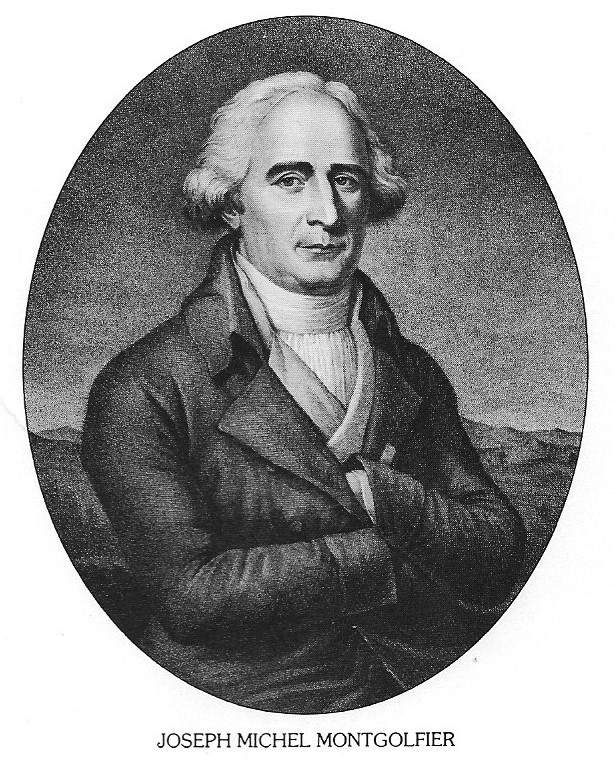
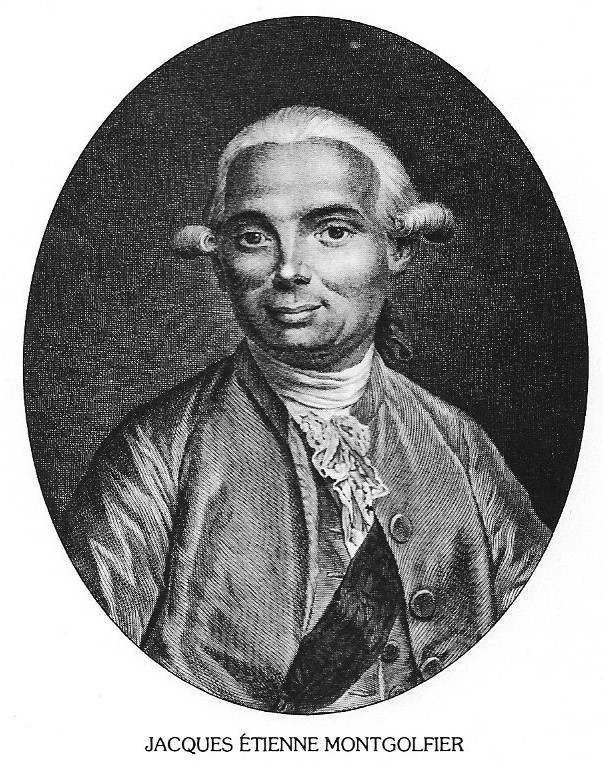
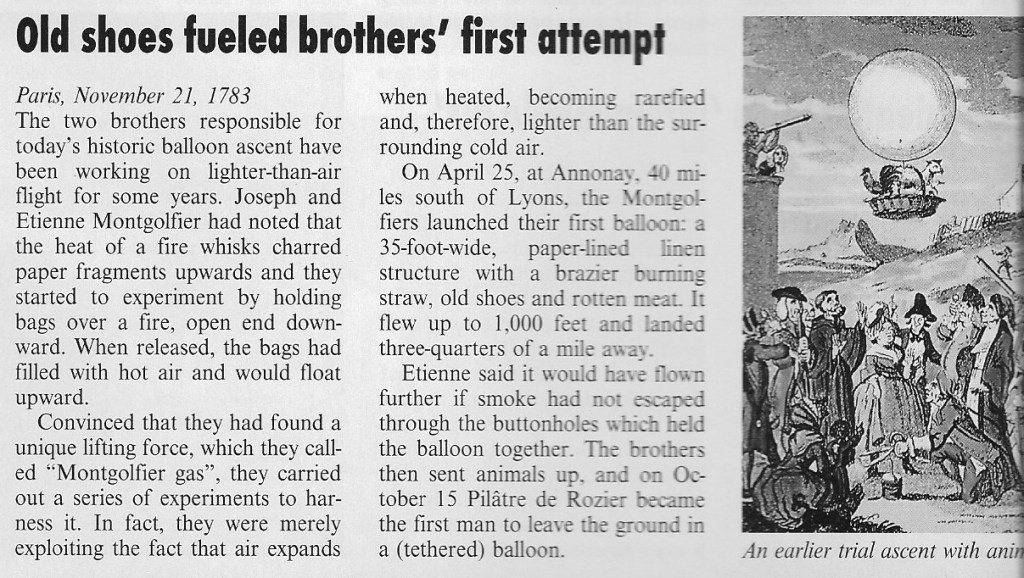
On 4th June 1783 in Annonay, France, the balloon of Etienne & Joseph Montgolfier (225 Kg, 800cu.m) went up 1000m and flew 2 kilometers distance in around 10 minutes.
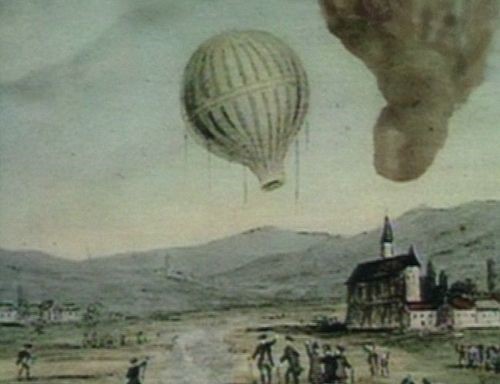
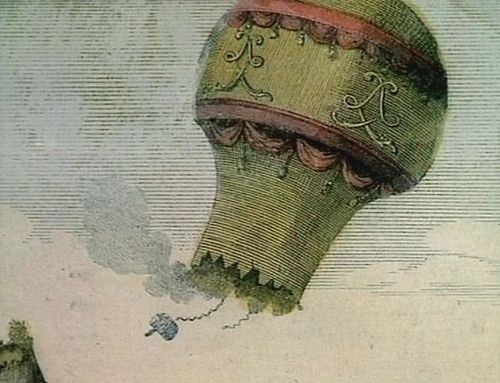
At Versailles on 19th Septembr 1783, their balloon named “Le Réveillon” (400 Kg 1400m3) went up to 500 m high and travelled a distance of 3,5 kilometers in 8 minutes carrying a lamb, a duck and a cock in a basket. The animals were alive and in healthy condition when the balloon landed. The experience showed that a balloon could carry a load and one can survive at altitude. The next step was to be human flight, again in a balloon named “Le Réveillon”.
Montgolfier, Raymond de
Raymond de Montgolfier, a descendant of the famous balloon-pioneering Montgolfier brothers, built at least four monoplanes in the years 1910-1913.
Montee Aircraft Company
Formed by Kenneth W. Montee at Santa Monica, California, in early 1920s. Montee designed four-seat open cockpit monoplane, with Hall-Scott L-4 engine, in which he won second prize in “On to New York” race at 1925 National Air Races; he died in December 1926 while engaged on a mapping operation.
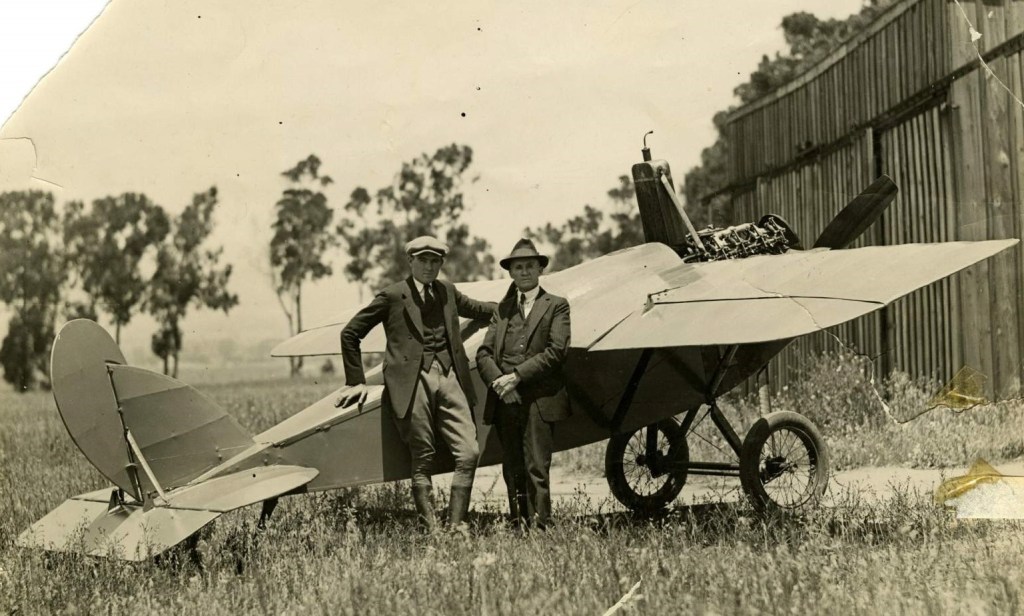
An airplane builder circa 1925, Kenneth Montee built a number of scantly-documented creations.
Montana Coyote Inc
Made kits available for the Mountain Eagle two-seat cabin monoplane, a 1994 revision of a 1991 design.
1996: 3302 Airport Rd, Helena, MT 59601, USA.
Monospar
The Monospar company was established in 1926 and was later absorbed by the General Aircraft Company.
Monocoupe Aircraft of Florida
Successor to Monocoupe Airplane and Engine Corporation of Melbourne, Florida, developed Meteor four/five seat cabin monoplane with two Lycoming O-320 engines.
 All Aero