By 1983 the company had changed its name to Tera¬torn Aircraft, having previously been known as Motorized Gliders of Iowa.
1984: 1604 South Shore Dr, Clear Lake, IA 50428, USA.
1984: RR. 1, Clear Lake, IA 50428, USA.
UL builder
By 1983 the company had changed its name to Tera¬torn Aircraft, having previously been known as Motorized Gliders of Iowa.
1984: 1604 South Shore Dr, Clear Lake, IA 50428, USA.
1984: RR. 1, Clear Lake, IA 50428, USA.
UL builder
Aire Kraft Inc
Snyder, Orville H “Bud”
1929:
Motor Gliders Inc,
Johnson Airport
fdr: Orville H “Bud” Snyder
aka Aire Kraft Inc,
Dayton OH.
USA
1930: Design sold to Curtiss-Wright Corp.
Defunct by 1983.
Built the G-11 UL
1998:
Redland Airfield
Lower Wanborough
SN4 0AA Swindon
United Kingdom
Engine builder
Formed in 1936 at Chorley, Lancashire, where prototype M.A.1 two-seat cabin monoplane was built 1937. Powered by Pobjoy Niagara III engine, it was converted to open cockpit configuration 1938. Following year open-cockpit M.A.2 completed, powered by Cirrus Minor, and later converted to cabin version.

The Moscow Aviation Institute (MAI) was founded in 1930 on the basis of the aeromechanical faculty of the Moscow National Technical University “Bauman” (MGTU), becoming independent from it due to the wide importance that, since then, the aviation in the Soviet Union. It began with two faculties, aircraft construction and engine construction, since then it has been the most important aeronautical academic institution in the entire region, becoming a leader both in the scientific field, being the first to offer science chairs. aeronautics and training its own teachers and doctors who would make up the university boom, as well as technical-industrial, this is confirmed by the fact that it is the only university in the world that has launched its own aircraft on the market, built by its professors and students since 1932, when the MAI set up its own aircraft construction office.
After the Second World War the MAI expanded its academic and scientific interests, a new teaching system was developed, faculties were added in all aeronautical fields, as well as in physical-mathematical sciences, electronics and robotics. The student campus was built with more than 35 buildings, aeronautical infrastructure, workshops and laboratories were acquired, as well as the aerospace faculty, and in this way the MAI obtained the category of technical university. In 1979, artificial satellites ” Radio ” and ” Cosmos ” were launched into space, built with the participation of a large delegation from the MAI.
Although it is true in Soviet times the MAI as a national university maintained a margin of military defense, together with the state and the armed forces, always collaborating with the country, the university has also specialized its engineering in the commercial and experimental field.
The Moscow Aviation Institute (Russian: Московский авиационный институт (МАИ)) is a Russian university located in Moscow dedicated to the study of everything related to the aeronautical and aerospace industry. However, education is currently multidisciplinary and teaching and research programs are offered in multiple scientific and technological fields.
Over the years, the university grew to become the largest aerospace engineering teaching center in Russia, and one of the most prestigious universities in the world. More than 130,000 students, including 1,000 international students from 40 countries, have graduated from MAI after its founding in 1930.
In 1982 by the order of Ministry of Aircraft Industry the Design Bureau was transformed into a branch-wise experimental students aircraft construction design bureau of the MAI. The work was carried out by professional engineers. If necessary the co-workers from among the MAI students and teachers and also from among the workers of the industry were invited. The production facility of the MAI aircraft development plant (EOZ) in the experimental development shop (shop № 3) are manned by qualified technicians. The OSKBES work on the experimental aircraft engineering constantly received high estimations of the industry. Their technical novelty and utility are confirmed by nine Introduction Certificates and more than twenty Invention Certificates. By the end of 1980s six experimental aircraft of different types were designed and built: Kvant, Elf-D UAV, PS-01 small-sized UAV, Elf, Photon and Yunior aircraft.
The basic structure, address and the industrial areas occupied by it in the OSKBES MAI have remained the same. The EOZ MAI (shop № 3) and the MAPO (Moscow aircraft building plant) were used as an industrial base. On July 27, 1992 the application on realization the inspection work in the OKB MA for reception the certificate for the right to develop the civil aircraft engineering was sent to the Aviaregister of the MAK and the Air Industry Department of the Ministry of Industry of Russian Federation. It was made on behalf of the “Aviatika” joint-stock company. According to the inspection results the Aviaregister of the MAK issued Certificate № R-9 to the “Aviatika” joint-stock company with the right to develop light civil aircraft. It was on February 17, 1993.
Aircraft designed and developed at OSKBES include:
A single-seater Aviatika-MAI-890 aircraft — passed certification, had a temporary Certificate of a type of 31 March 1994 № 52В-890, valid till 1 April 1995, is series produced by the RAC “MiG”; A two-seater Aviatika-MAI-890U aircraft is serially produced by the RAC “MiG”; An agricultural Aviatika-MAI-890SKh aircraft is serially produced by the RAC “MiG”; A single-seater Aviatika-MAI-900 aerobatics (“Akrobat”)’ A two-seater Aviatika-MAI-910 with wings, folding on the ground; An Aviatika-MAI-920 glider; A single-seater Aviatika-MAI-890A autogyro, a pre-production model at the stage of flying test. The basis for the “Aviatika” aircraft manufacture at the MAPO plant is the License Agreement concluded by this plant with the “Aviatika” joint-stock company on 10 April 1995 (contract № 4276).
In 1997 Aviatika withdrew from the Design Bureau of Moscow Aviation Institute (Aviatikas) program, after which the manufacturer of Aviatika lightplanes became known as KB MAI.
The personnel of the OSKBES have continued to work in the field of light civil aircraft together with the MAPO MIG.
In April 27, 1998 the Aviaregister of Interstate Aviation Committee issued a Design Organization Certificate R-52 of the developer of light civil aircraft.
29 September 1999 eight members of our design bureau, Moscow Aviation Institute and RAC “MIG” were rewarded by “State Prize of the Russian Federation in science and technology” for designing and development of light multipurpose airplanes in a serial production. They are:
OSKBES MAI Chief Designer K. Zhidovetskiy (posthumously); OSKBES MAI Deputy Chief Designer (after the death of K. Zhidovetskiy — Chief Designer) N. Goryunov; OSKBES MAI Deputy Chief Designer V. Demin; OSKBES MAI Deputy Chief Designer V. Feigenbaum; Rector of MAI A. Matveyenko; Manager of MAI Experimental Plant P. Ogadzhanov; General Manager of RAC “MIG” plant G. Nemov; Deputy Manager of RAC “MIG” O. Chukantsev.
Autogyro MAI-205 made the first flight in 2001, chief designer Andrey Zorin.
In 2002 OSKBES MAI has started designing a new plane MAI-223. This plane made the first flight in 2004.
In 2003 OSKBES MAI started to work on different aircraft, airships and autogyros. It designed and produced gondolas, nacelles, fly-by-wire power plant controls and empennages of NPO “RosAeroSystems” airships Au-30 and Au-12M.
The design and development of Autogyro MAI-208 was started in 2006. The first MAI-208 is undergoing testing. OSKBES MAI presented MAI-208 at the 2nd International exhibition of the helicopter industry “HeliRussia-2009” (21…23 May 2009, Moscow). The new autogyro has caused the big interest of visitors and the press.
July 1, 2008 Vadim Demin was appointed Chief Designer of OSKBES MAI. The same year the design office has started working on a new multi-purpose four-seat twin engine aircraft MAI-407.
In 2009 OSKBES MAI started designing a new training glider MAI-227.
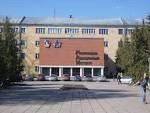
Faculties and Departments of MAI:
High school.
Faculty № 1. Aeronautical Engineering.
Faculty №2. Aircraft Engines
Faculty №3. Computer Science and Navigation System
Faculty №4. Radio and Electronics
Institute of Economic Engineering
Faculty №6. Aerospace
Faculty №7. Robotics and Intellectual Systems
Faculty №8. Applied Physical-Mathematical Sciences
Faculty №9. Applied Mechanics
Faculty №10. Humanities (Social Engineering)
Military Institute
USA
Founded 1986 to develop Aurora 400-C four-seat VTOL aircraft of unusual configuration.

Alexandr Moscaliov was born on 16 of November of 1904 in the city Valuiki, the governor of Voronezh, Russia. In 1913 his family moved to Voronezh where at the age of 10 he started school. Previously his education had been at home.
In 1922 entered the physical-mathematical faculty of the Voronezh University, but it was closed two years later, so Moscaliov was forced to move, first to the Kazan branch and later to Leningrad. In 1928 he finished his studies at the physical-mathematical faculty of the Leningrad State University.
After graduating, he enrolled in a job board from which he was sent to work at Factory No. 23 (formerly “Krasni Liotchik”). His first important work was the development of tests of 12 types of radiators to be located in the I-2bis fighter developed by Grigorovich. Applying his university knowledge Moscaliov managed to make a good selection and propose methods to improve radiators. In this period, externally, he took examinations at the Leningrad Technical Institute, which was soon reflected in his work.
In 1930 Moscaliov entered the competition to develop a fighter-interceptor with the new M-34 engine. His project was selected, but delays in tuning the engine prevented its construction. In 1931 at the “Krasni Liotchik” his first aeronautical design would see the light: the MU-3 training hydrofoil, a development of DP Grigorovich’s MU-2.
Due to health problems, Moscaliov left Leningrad and returned to his native Voronezh where a large aviation factory had begun to be built. From 1932 he began to work as a substitute for the head of the serial construction department (SKO) of the Voronezh Aviation Factory No. 18. From 1933 he began his teaching activity at the Voronezh State University and from 1936 he became a substitute for the director of the Voronezh Aviation Technology.
In 1932 – 1933 Moscaliov led a group of enthusiasts who designed and built one of the first all-metal light aircraft, the SAM-5, in response to a request from the Osoaviajim. This aircraft was the first of the family of aircraft with the acronym SAM designed as high-wing cantilever monoplanes for 5 passengers.
With the help of the facilities of the Voronezh State University, Moscaliov began to develop a research project to achieve a supersonic configuration. As a result of his research, in 1933 he developed a project, not so ambitious, of an interceptor fighter capable of approaching 1000 km / h using two paired tandem engines moving counter-rotating propellers that was called SAM-4 and known as “Sigma”.
The project turned out to be too innovative and received a rather cold reception until a few years later it became known that in the United States experiments were being carried out on a similar configuration and it was urgently requested to create a scale demonstrator, which was launched as SAM-9 “Stelá” in 1937.
By 1936 Moscaliov’s work volume had grown, for which the Main Directorate of the Aviation Industry (GUAP) decided to allow him a bureau of his own design, which became known as OKB-31, in Factory No.18. In 1939 the construction workshop was built and in 1940 the independent building on the airfield was completed. This OKB would be responsible for the creation of a score of new projects.
Moscaliov belongs to that group of enthusiastic designers who stood out for their aeronautical productions despite the absence of regular financial support and their own production base. His aeronautical design and production work included more than 35 models of which 23 were built between 1930 and 1945. Moscaliov’s planes set several records for range and flight duration.
With the start of the war, OKB-31 was evacuated to Siberia, near the city of Yalutorovska, Tyumen Oblast. The decision was made to unify with OKB of P. Grojovski and a small factory Muscovite creating the new factory No.499. Moscaliov was selected as principal director and constructor.

This factory prepared the serial production of the first Soviet reactive fighter, the Bereznyak / Isayev BI, produced the landing cabins for the Ilyushin DB-3 bombers and built different types of gliders. For his contribution in the construction of the AM-14 aircraft for the support of the guerrilla groups in Belarus, Moscaliov received the 1st level “Guerrilla of the Great Patriotic War” medal.
On his return to Leningrad in 1945 the OKB of Moscaliov designed the project supersonic fighter PM-1 with reactive engines Dushkin. This aircraft was also known as SAM-29 RD-2P-3V and maintained the same general scheme of the Sigma project of 1933.
This time the project was studied in depth at the TsAGI and its construction was proposed, but changes in the direction of the MAP led to the closure of the project, the replacement of Moscaliov and the liquidation of the OKB.
From 1948 Moscaliov began working as a professor at the Leningrad Military Aeronautical-Engineering Academy named after AF Mozhaiski (LKVVIA), sharing his experience with new generations of aeronautical designers and engineers. From 1954 he directed the scientific-research laboratory for the development of perspective military technique.
He died on 3 as January as 1982 and his remains lie the North Cemetery in Leningrad (St Petersburg).
Orders and medals:
Order of the Red Star
Medals
In 1979 he was awarded the Koroliov Academic gold medal for contributions to aviation and on the occasion of his 75th birthday.
Aeronautical production:
First designs
SAM-1 – 1930 fighter project with an M-34 engine. It was not built.
MU-3 – 1931 training floatplane. A single copy built.
OKB-31 works in Voronezh:
RDD – Modernization of Túpolev RD with diesel power plant. A single prototype was produced in 1936.
SAM-4 ‘Sigma’ – High speed aircraft project developed between 1933 and 1934
SAM-5 – 1933 light aircraft built in metal.
SAM-5bis – Development of the SAM-5 but with wood construction.
SAM-5-2bis – Improved development of the SAM-5 from 1937.
SAM-6 – Experimental aircraft to test single-wheel landing gear.
SAM-7 “Sigma” – Tailless escort fighter project. A copy was built in 1936.
SAM-9 “Strela” – Development of the SAM-4 concept in an experimental light aircraft prototype.
SAM-10 – Light passenger aircraft from 1938, development of the SAM-5.
SAM-10bis – Improved version of SAM-10 with new powerplant.
SAM-11 – Amphibious training aircraft from 1939.
SAM-11bis – Improved development of SAM-11 with new powerplant.
SAM-12 – 1939 Training Plane Project.
SAM-13 – Experimental twin-fuselage aircraft similar in conception to the Fokker D-XXIII. A copy produced in 1939.
SAM-14 – Light transport aircraft, development of the SAM-5-2bis for Aeroflot. 1939.
SAM-16 – reconnaissance floatplane from 1940. The prototype was never finished.
Works at Factory No. 499 during evacuation
AM-14 – Landing glider. Enlarged version of the Antonov A-7 built in series since 1942. * SAM-18 – Passenger amphibian project for 12 – 14 people.
SAM-19 – Hydrofoil project with tandem paired engines moving counter-rotating propellers
SAM-22 – Motor glider project developed during the war at Factory No.499
SAM-23 (LT) – Cheap “disposable” ground attack aircraft project, developed in 1942 with a similar objective to that of the Tomashevich Pegas.
SAM-23 – Landing glider from 1945. Not built by the end of the war.
SAM-24 – Project for a passenger plane with two M-11E engines.
SAM-25 – Staff liaison aircraft over SAM-5-2bis with M-11E engine. 1943.
SAM-27 – Project for a passenger plane with capacity for 22 people from 1943.
SAM-28 – Motor glider project developed during the war at Factory No. 499 with M-11E engine and capacity for 21 soldiers.
SAM-29 or RM-1 – Project obtained as supersonic fighter development of the concept of the Sigma in 1933 with reactive power plant.
The Mosca Moscow Aviation Works was first established in Russia by F. E. Mosca, Savoia’s designer. By late 1916 this factory was building about five aircraft per month, these being Nieuport and Morane types built under license. First original design was the Mosca MB, first flown in July 1915, a single-seat high-wing monoplane fighter evolved from the Morane J. Followed by MB bis with forward-firing synchronized machine gun.
Established at Ithaca, New York, in January 1917. Thomas brothers, backed by Morse Chain Company, built 100 S- 4B single-seat biplane advanced trainers developed from Thomas S-4 prototype fighter, followed by 497 improved S-4Cs. 200 Morse MB-3A fighters built by Boeing 1921 -1922, in addition to 50 built by Thomas-Morse. O-19 two-seat observation aircraft built 1928-1931.
Thomas Brothers Aeroplane Co merged January 1917 with Morse Chain Company to form Thomas-Morse Aircraft Corporation
 All Aero