Pottsville PA.
USA
Circa 1950s airplane builder
Pottsville PA.
USA
Circa 1950s airplane builder
Established in 1929
(George C) Yunker Aircraft Co
115 Osage St
Wichita KS.
USA
Airplane builder
In receivership in 1930.
Founded in Hong Kong in 1999, Yuneec International Co. Ltd. became a leader in electric aviation.
With hundreds of patents filed, Yuneec’s core technologies power its manned aircraft as well as its drones and its line of radio controlled aircraft for the hobby market.
The company was constructing a 260,000 square foot (25,000 sq m) factory to produce the E430 aircraft in Shanghai that was expected to open in October 2009.
In 2009 the rights, tooling and parts inventory of Flightstar Sportplanes of South Woodstock, Connecticut, were sold to Yuneec International of China when Flightstar Sportplanes’ business was wound up.
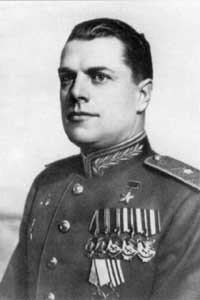
Andrei Borísovich Yumashiev (Russian: Андрей Борисович Юмашев) Andrei Yumashiev was born in Saint Petersburg on March 31, 1902. He finished art school. He joined the Red Army in 1918. In October 1920 and February 1921 he participated in combat actions on the southern front as a soldier in an artillery division. In 1921 he finished artillery courses in Sevastopol.
In 1923 he finished training at the Yegórievsk Aviation Theoretical-military School and in 1924 the Borisoglebsk Higher Flight School and the Serpukhov Higher School of Air Combat, Shooting and Bombing. He later served in the VVS. Between 1926 and 1927 he worked as an instructor pilot at the Serpukhov school.
Between 1927 and 1937 he worked on the NII VVS as a test pilot. He made the first flight and tests of the Bartini Stal-6 (1933). He ran the state tests of the models of A. N Túpolev I-4 (1927), R-3 (1928), TB-1bis (1929 – 1930), R-7 (1930), R-6 (1931), TB -3 (1933), the Polikarpov I-3 fighter (1928 -1929) and the Bartini Stal-7 transport (1936 – 1937).
At the Third National Flying Competitions in Koebel, held in 1925, one of the best Soviet gliders was the Yu-1 designed and built by Yumashiev. This glider demonstrated staying in the air for an hour and a half and reaching 375 meters in height. These results were national records.
He set six world records (including two as co-pilot): in 1936 two flight weight records in the Tupolev TB-3TB-3 and in 1937 two flight distance records aboard the Túpolev ANT-25 as a crew member of MM Gromov.
Between 1937 and 1941 he worked as a test pilot for the TsAGI. During this period, it made the first flight and tests of the BOK-7 (1939). It participated in the crew tests in preparation for the projected long-range voyage on the BOK-15 (1940).
He participated in the Winter War with Finland. Between January and March 1940 he was appointed substitute for the commander of the 85 bombing regiment, carrying out more than 10 combat sorties. As of March 1941 he went on to serve as a substitute for the head of the LII (MM Gromov), attending the flight section. He participated in the flights of the Yakovlev UT-2 with an air cushion and the Gribosvki G-28 “Krechet”.
He fought in the Great Patriotic War. Between July and August 1941, he led the second independent fighter squadron subordinate to the Moscow Air Defense (PVO). In January and February 1942 he commanded the 237th Fighter Aviation Regiment on the Kalinin Front. Between March and August 1942 he was appointed substitute for the commander of the 3rd Air Army and between August 1942 and February 1943, substitute for the commander of the 1st Air Army. Between March and June 1943 he commanded the 6th Fighter Aviation Corps and between July 1943 and December 1944 he led the PVO of the Western and Southern fronts.
Between 1945 and 1946 he was appointed head of the Directorate of Hunting Aviation of the Main Directorate of Combative Preparation of the VVS. From 1946 it went to the reserve.
Lived in Moscow. In his spare time he devoted himself to painting, forming part of the Union of Painters of the USSR. He died on May 20, 1988. His remains rest in the Bagankovsky Cemetery in Moscow.
Awards and distinctions:
Hero of the Soviet Union (1-09- 1937)
Two Order of Lenin
Five Order of the Red Banner
Order of the Patriotic War 1st rank
Order of the Red Star
Medals
He received the De la Vaux medal awarded by the FAI (1937).

Born on 15 December 1882 in the Yanping district of Kwangtung province, Fong Yue (or the now more accepted spelling of his name, Feng Ru, also seen as Fung Joe Guey and Feng Ru) came to the United States at the age of twelve, living and working in various parts of California and attended evening classes to study English before trying to settle in San Francisco in 1906. The earthquake spoiled his plan and sent him fleeing to Oakland. He developed an interest in machinery and electrical technology, spending his evenings home carrying on experiments to satisfy his curiosity. He designed and constructed electric motors and set up a wireless telegraph set in his own room. He was always interested in machinery, and one of the first things he did after arriving in Oakland was to organize an airplane manufacturing company, only a few years after the Wright Brothers’ Kitty Hawk flight.
1904 brought the Japanese-Russian war in northeast China. Feng Ru participated in the happening in China in the USA, and he was conscious itself of the military meaning of the new flight apparatuses. He said: “Had we had thousands of airplanes at the Chinese border, the foreign forces would have surely been deterred.” Thus he decided to dedicate himself to the development of aviation in China.
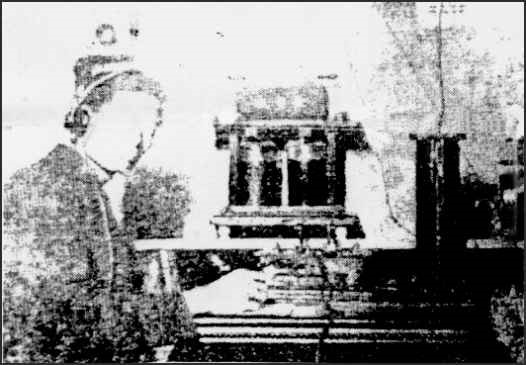
Within two years of founding the company in 1908, Fong Yue constructed his first airplane and even manufactured his own motor.
On its test flight the first one crashed into his own workshop, starting a fire that burned it to the ground. Assumably the airplane went with it, but Yue was undaunted, and built a second ship that he flew from the Piedmont Hills on 21 September 1909, as reported by Associated Press. After 20 minutes a bolt on its propeller shaft broke and it, too, crashed, and its creator was thrown out, but escaped injury. He returned to China in 1911 with his mechanic and two Curtiss planes, and built China’s first aircraft. Yue was killed in a crash there in 1912, but his legend is perpetuated by a play, “Dragonwings,” last presented, as known, in San Francisco 1992.
Undaunted, the aviation pioneer found space to build his second airplane which he launched above the Piedmont hills on September 21, 1909. This was the first airplane manufactured by an Oakland resident to fly in that area. Unfortunately, this airplane crashed as well after a twenty minute flight when the bolt holding the propeller shaft broke. Fong continued building planes, and in 1911, his plane stayed in the air for 40 minutes and landed without a mishap.
Dr. Sun Yat Sen, the prominent revolutionary who at the time was in the USA and had heard of the flights of the Chinese Feng Ru in Oakland. When he learned more of the successful test flights, Sun Yat Sen commended the flight pioneer Feng Ru’s courage and encouraged him to dedicate himself to aviation in China and help organize a national air force.
He did. In February 1911, Feng Ru made his way to China from Oakland, taking with him two airplanes. He wanted to develop aviation in China.
A revolution led by Sun Yat Sen caused the downfall of the Qing dynasty monarchy in China in October, 1911. Feng Ru participated in it and was appointed Captain of the Air Force by the revolutionary government of the Guangdong province. In March 1912, he built his first airplane in China, the very first airplane to be manufactured in China. At that time, the country as a whole acknowleged that Feng Ru had become the pioneer of Chinese aviation.
Later, he organized aviation shows on several occasions in China in order to popularize aviation among the Chinese. On August 25, 1912, at one of the shows in Guangzhou, Feng Ru crashed and died. He was only 29 years of age.
The contribution of Feng Ru to the development of aviation in China is not forgotten. After his death a monument for him was erected in Guangdong.
Ypsilanti MI.
USA
Airplane builder circa 1928.
Oklahoma City OK.
USA
A coaxial rotor helicopter c.1922.
Midland TX.
USA
Airplane builder 1954-66
2008: Box 732, Southampton, Ontario, N0H 2L0, Canada
Airplane builder
Yokosuka’s B3Y1 Navy Type 32 carrier biplane first flew in 1932. Some 200 B4Y1 attack aircraft followed, those remaining in service Second World War known as “Jean” to the Allies. The D4Y Suisei (“Judy” two-seat
carrier dive-bomber was in service by the Battle of Midway in 1942 and appeared also in D4Y2-S nightfighter and D4Y4 suicide attack variants. The P1Y1 Ginga (“Frances”) twin-engined naval attack bomber/nightfighter entered production in 1943 at Nakajima factories. Yokosuka developed also the MXY-7 Ohka (Cherry Blossom) kamikaze piloted missile-bomb, derisively dubbed Baka (“fool” in Japanese) by the U.S. Navy, and of which production by various manufacturers totalled about 800.
 All Aero