Nieuport

Societe Anonyme des Establissements Nieuport
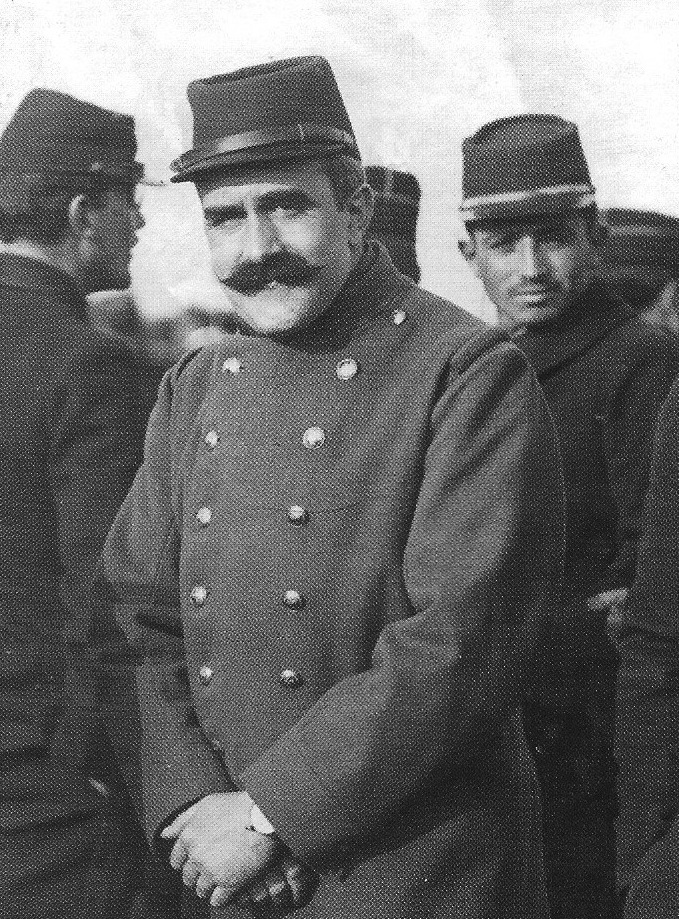
Edouard Nieuport 24 January 1913

Edouard de Nieport was born in Algeria in 1875. With his brother Charles, he emigrated to France, altering their name to Nieuport. In 1905 Edouard began designing aircraft and appliances like spark plugs and magnetos.

In 1910 Edouard de Nieport decided to build a monoplane with a covered fuselage and on 21 June 1911 he flew his Nie-2N monoplane at 87.2mph. In September 1911 Edouard de Nieport was killed in an emergency landing in the -2N. Immediately the company was taken over by Henri de la Meurthe.

Nieuport Article

On 24 Jan 1913 Charles Nieuport and his mechanic, Gouyot, were killed.

By 1914 the firm had at least two factories in Issy-Les-Moulinaux and one flight school at Villacoublay.

Designer Gustave Delage made the Nieuport company famous with his series of fighters. The sesquiplane Nieuport XI and XVII served with British, French, Belgian, Russian, Italian, Dutch, Finnish, and American services during the First World War. The improved Nieuport 28 biplane which appeared in 1917 was less successful, but best known for its exploits with the American 94th Aero Squadron (“Hat-in-Ring”) in the hands of Eddie Rickenbacker and Raoul Lufbery. Nieuport aircraft were manufactured under license in Britain and Italy.

Societe Anonyme des Etablissements Nieuport amalgamated with the Astra airship company in 1921, but all construction of airships was abandoned and the company name changed again to SA Nieuport-Delage.

Gourdou-Leseurre joined Nieuport in 1925 to become Loire-Nieuport.

In France, the Socialist Government of the so called Popular Front brought all the companies building military aircraft, aero engines and armament under its control in 1936. The immediate result was the socialized oblivion of such established companies as Marcel Bloch, Bleriot, Nieuport, Potez, Dewoitine, Hanriot and Farman within half a dozen nationalized groups or Societies Nationales, named according to their geographical location (Nord, Ouest, Centre, Midi and so on).

After World War II, although four of the nationalized groups continued operating under state control, private companies were allowed to resume the design and manufacture of both civil and military aircraft. Some of the pioneering names of French aviation, such as Breguet and Morane Saulnier, returned to prominence, and by 1950 a new one had been added Avions Marcel Dassault.

Loire-Nieuport joined SNCASO in 1942.
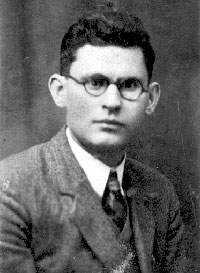
Nieman, Yosif Grigorievich

Yosif Grigorievich Nieman (Russian: Иосиф Григорьевич Неман) was born in 1903 in Bielostok, a Polish city in the Grodnienski Governorate into a Jewish family.

In August 1920, during the Civil War, he volunteered for the Red Army. He served as a politician in the department of the 4th Army and then in the political leadership of the Kharkiv Military Region and the Ukrainian Military Region. In 1922 he was demobilized and sent to study at the Kharkiv Technical Institute, which he finished in 1929.

He began his aeronautical career in the construction bureau of KA Kalinin in 1926, participating in the development of the Kalinin К-3, К-4 and К-5 models.

In 1930, he became head of the aeronautical construction chair at the Kharkov Aviation Institute, where he was able to develop his conception of creating airplanes with high aerodynamic characteristics. With the support of the director PP Krasilnikov he organized the aeronautical projection within the research scientific sector (NIS) of the center. The actual projection, proposed by Nieman as a method of preparing future specialists, was based on the work of brigades of NIS students and professors.

In 1930 YG Nieman was selected as JHA’s head of the aircraft construction chair despite not having the necessary scientific degree. He held this post until his arrest in December 1938. From 1944 he returned to occupy the position, this time until his death.

The first JAI project using the Nieman method was called JAI-1 and originated as a diploma paper from the institute.

In March 1933, after the serial production of the JAI-1 was approved, Nieman’s construction brigade received official status. Thereafter it was named the NIS JHA Project Group and received as its base two small rooms on the fourth floor of the aerodynamics corps of the old Technological Institute, near the wind tunnel. Nieman was named lead builder and engineer S. Ya as replacement. Zholkovsky.

As a productive base for the development of the experimental models, the Central Experimental Workshops of the JHA – TsOM JHA (in Russian: Ц ентральные о пытные м астерские (ЦОМ) ХАИ) directed by the engineer Galietko, were organized. Several specialists from KA Kalinin ‘s KB with extensive experience in aeronautical development entered the projection group.

In September 1934, the specialized magazine Samoliot described the JHA aeronautical construction group as a leader in the USSR “in the openness of aeronautical thinking, courage in solving problems and culture in the production of airplanes.”

In the course of the years 1932 – 1938 and under his direction, a whole family of high-speed aircraft (for the time) was developed at the JAI, which included civil transport, reconnaissance and bomber aircraft, designed to be developed as part of the practical activity by students and teachers of the institute, among which the models JAI-1, JAI-3, JAI-5, JAI-6, JAI-51 and JAI-52 (Ivanov) stood out.

On August 17, 1933, he was awarded the Order of the Red Star for the creation of the JAI-1 airliner.

Once the JHA-5 project was approved in January 1935, Nieman was appointed lead builder of an OKO-135 design bureau based at the Kharkov Aviation Factory.

The title of Professor was received in 1938 by virtue of his achievements in organizing the educational process.

Four years later, on December 11, 1938, Nieman was arrested and sentenced to 15 years of labor in a camp, charged with “organizing subversion in the factory and being an agent of foreign espionage.” The OKO-135 design bureau continued without leadership, working on improvements to the stock R-10 aircraft.

In May 1939 Nieman was posted to the Tupolev “Sharaga” in the NKVD TsKB -29, where he worked under Myasichev on the development of the Pe-2. A year later he was appointed head of the Tupolev Tu-2 construction brigade.

On July 19, 1941, by resolution of the Presidium of the Supreme Soviet of the USSR, Nieman was released and all charges against him were dropped.

After his release Nieman worked in the OKB at the Omsk Aviation Factory. From 1942 he became Myasichev ‘s replacement at Factory No.22 in Kazan.

He died of leukemia on November 18, 1952, his body being buried in Kharkiv City Cemetery 2.

In November 1952 he was preparing for the defense of his doctoral thesis, which did not take place due to his sudden death.

The Supreme Court of the USSR fully rehabilitated him on November 5, 1955, postmortem.

Nicoluer

Avions H. Nicoluer
First flew in 1962 the HN.433 Menestrel single-seat monoplane, available for home construction from plans and some components; redesigned HN.434 also offered. HN.500 Bengali first flew 1988 as side-by-side two-seat monoplane, and HN.700 Menestrel II two-seat version of Menestrel, both were available in plans form.

1998:
13, rue de Verdun
F-25000 Besançon
France

NH Industries

NH Industries WAS founded IN 1992 by Agusta of Italy, Eurocopter Deutschland of Germany, Eurocopter and Fokker to develop and produce the twin-turboshaft NH90 tactical transport (TTH) and multirole NATO frigate helicopter (NFH). First flown December 1995, production deliveries Were expected to begin in 2003, first to the Netherlands (navy). Planned orders were for France to receive between 68 and 133 TTHs and 27 NFHs, Germany 205 TTHs and 38 NFHs, Italy 160 TTHs and 64 NFHs, and the Netherlands 20 NFHs.

NFW / Nordwestdeutsche Flugzeugwerke Heinrich Evers & Co.

In all, 6 different monoplanes, E 1 through E 6, were built by NFW between 1912 and 1913. The engineer Heinrich Evers was the leading force at NFW and while the firm folded for financial reasons within a year, in 1913 he went to the USA to work for the Benoist firm. At the start of WWI he immediately returned to Germany, but was captured by the French and interned in France until 1917 whereas Evers fled to Switzerland and later to Germany. Evers was then employed by Caspar, later again going to the USA to work for the Fokker firm.

Nextant Aerospace

Cleveland-based Nextant was founded in 2007 by aviation entrepreneur Kenneth C. “Kenn” Ricci, who serves as the company’s chief executive officer. Ricci also is a principal of Directional Aviation Capital, a private investment firm which is solely focused on aviation investments. Ricci also serves as chairman of Flight Options, LLC, the second-largest private aviation company in the U.S. Nextant sister company Flight Options has many years experience operating the Beechjet/Hawker 400.