Japan
Formed in June 1941 by the amalgamation of Nippon Koku Kogyu KK and Kokusai Kokuki KK, this small manufacturer produced sub-components and built the Kokusai Ki 86 biplane trainer, a version of the German Bucker Bu 131 Jungmann.
Manufacturer
Nipper Aircraft Ltd / Nipper Kits & Components
UK
In 1966 Nipper Aircraft acquired world marketing rights for the Fairey/Tipsy Nipper ultralight aeroplane, which it supplied in completed or kit form. After liquidation in May 1971 Nipper Kits and Components Ltd. was formed to support existing aircraft, and continued to market the aircraft in Mk III form as plans and some components.
1998:
Foxley Blackness Lane
BR2 6HL Kester
Keny
UK
Nippi Hikoki Kabushiki Kaisha
Best known as Nippi, original Yokohama works date from 1935. Atsugi works followed for maintenance and repair of Japanese aircraft and of U.S. Navy aircraft in region. Yokohama manufactured components/assemblies for Japanese aircraft and Boeing airliners. Has carried out YS-11EA ECM conversions (first flown 1991).
Nikitin, Vasili Vasilievich
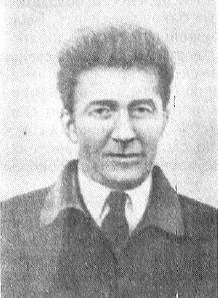
Born in 1901, Vasili Vasilievich Nikitin (In Russian: Василий Васильевич Никитин) came to aircraft construction in an unconventional way. An architect by training, he began working in 1922 at DP Grigorovich’s construction bureau. He soon stood out as an organizer and designer, for which he was appointed as responsible for the general composition.
Between 1925 and 1929 he went to work with NN Polikarpov and between 1930 and 1936 at the TsKB.
From 1933 Nikitin designed several airplanes of his own conception and participated in the development of other models in collaboration with several designers.
In 1933 he designed his first own design, the NV-1 single – seater trainer which was soon upgraded into the NV-2 version. The NV-4 of 1936 appeared as a central float plane and Nikitin developed a military version, which competed unsuccessfully in the competition for the KOR-2.
The NV-5 of 1937 was the forerunner of an entire family of biplane training aircraft that was never produced due to the preference given to single-seater trainers.
From the arrest of Mijelson in 1937 Nikitin went on to head the Experimental Department of Factory No.23 in Leningrad, which was responsible for the continuation of his designs. In this period include flying boat MP from 1937 and training floatplanes MU-4 and MU-5.
In addition to his own designs during this period, Nikitin worked on modifications of aircraft from other manufacturers. The R-5T torpedo boat, developed in 1933 on the basis of the Polikarpov R-5 reconnaissance aircraft, vame to light; the R-5 Jumo from 1935, with a German engine and the special RZ to set records from 1937.
In 1937 the PSN models (special mission gliders) were built, flying bombs without motor. The first model was PSN, developed by NG Mijelson and 10 copies of it were built. The second model, called PSN-2, was conceived by MM Yefimov and had already been towed through the air when it was decided to cancel development.
Between 1939 and 1940 VV Nikitin went on to direct the OKB-30 based on the Moscow Tech and later transferred to Factory No.156. Test pilot Vladimir Shevchenko was appointed lead constructor. Between 1939 and 1941 the OKB-30 would build 3 prototypes (IS-1 , IS-2 and NV-6) and would be responsible for the development of 18 aircraft projects. OKB-30 ceased to exist as a result of NKAP order No. 459ss issued on May 20, 1941.
From 1941 on, he held various management positions in aeronautical repair shops and at TsAGI. In 1942 he converted a captured Junkers Ju-52 from the Germans into a test bed for experimental applications at the TsAGI and later took charge of the design and construction of the wind tunnels and the work of the Scientific-Technical Bureau of the institute.
In 1945 he was in charge of transforming a Douglas Douglas A-20 “Boston” attack aircraft into a liaison plane and staff transport with capacity for several passengers.
After the war he went to work at the NI Kamov bureau, dedicated to the development of helicopters, and was soon selected as its reserve.
Overall VV Nikitin was responsible for the creation of 15 original and successful aircraft. This aeronautical constructor managed to pass the piloting courses and generally tested his designs in the air.
Vasili Vasilievich Nikitin died in 1955.
Nihon University
Nihon University
College of Science and Engineering
Surugadai-Machi
Chiyoda-ku
Tokyo
The students of this university, under the leadership of Dr Hidemasa Kimura, have designed and built two light aircraft. The first was the Okamura N-52 low-wing monoplane, which flew on April 7, 1953.
The second is a high-wing four-seat light-plane known as the N-58 Cygnet.
Nihon Hikoki Kabushiki Kaisha / Japan Aircraft Manufacturing Co Ltd
1962:
No 32,
3-Chome,
Choja-Machi,
Naka-Ku,
Yokohama
This company was engaged mainly on overhaul of US Navy aircraft and of the 60 Grumman Tracker anti-submarine aircraft of the JMSDF.
It built the mock-up of the NAMC YS-11 and was responsible for the design and production of components for this transport.
Under JASDF contract, Japan Aircraft Manufacturing Co carried out a lengthy high-lift research programme with a much-modified Saab-91B Safir.
With the designation Z1G3, this aircraft has a 260 h.p. Continental IO-470-D engine, reduced span of 31ft 6in, blown flaps, large trailing-edge fillets, slotted tailplane and other changes to give it STOL performance.
Nievdachin, Viacheslav Pavlovich
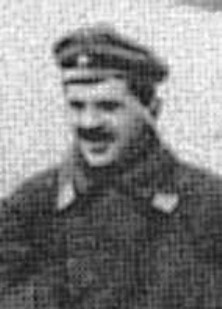
Born in 1887, the first references to Viacheslav Pávlovich Nievdachin date back to 1913, when together with the aeronautical manufacturer VN Jioni, he installed his own built floats to a Farman IV biplane. This aircraft was used in Odessa by Jioni and AV Shiukov to carry out propaganda flights with a characteristic decoration, which included chains of small electric lamps powered by batteries, which, starting from the cockpit, ran the entire wing leading edge and the interalar supports. No evidence has been preserved on the later fate of this device.
During World War I he served as a department head at the Kacha Aviation School, Sevastopol. In 1920 he was one of the members of the Commission for Heavy Aviation / KOMTA).
At the beginning of the 1920s, he became a reference figure in the circles of lovers of aviation. Following a request from glider lovers, the Glavvozdujoflot management decided to approve the creation of a circle of gliders subordinate to the Air Fleet Scientific Office. At the organizational meeting held on October to November of 1921, at the request of Professor VP Vietchikin this circle was called “thermal flying” (Парящий полет). Its first president was AA Zhavrov, who would soon be replaced by KK Artseulov. Among its first members was VP Nievdachin.
In 1923 he was one of the 10 participants in the I National Sailing Competitions flying his “Buriviestnik” glider, being awarded and in the second edition he was part of the organizing committee.
Under his direction, between 1922 and 1929, using funding from the Friends of the Air Fleet Society (ODVF), a glider and four light aircraft were built. All his creations bore the name “Buriviestnik”, but with different indices. The glider was named P-5. The S-2, S-3, S-4 and S-5 light aircraft.
Between 1924 and 1925 the ODVF launched a competition for the development of low-power aircraft and aviation engines. The evaluation committee, which met between 5 and 23 June 1925 declared that none of the projects could be recommended for production without modifications. Despite this, the works of VP Nievdachin, SD Chernijovski, VL Alexandrov, brothers II and EI Pogoski and the project “Tri Druga” were valued positively.
In addition to his love for light aviation, Nievdachin dedicated part of his life to large-scale aviation, working in the propeller and engine group of the Aviation Factory No. 1 and since 1927 in No. 25, subordinate to the Department of Land Aircraft (OSS) under the direction of NN Polikarpov.
He was imprisoned during the great purge and worked on the infamous TsKB-29. At this stage he was responsible for the development of the wing center plane in the Myasichev DVB-102 (“102”) model, designed and built in this prison institution.
It is known that he kept working as a technologist in the aeronautical industry until his death in 1953.
Nieuschloss-Sichtig Aeroplane Works
Hungary
Established at Albertfalva, was building aircraft in 1923 to the design of Bela Oravecz and George Szebeny, including a side-by-side two-seat monoplane evolved by both designers, and a tandem two-seat monoplane.
Nieuport & General Aircraft
UK
Formed to license-manufacture Nieuport fighter designs for the Royal Flying Corps and Royal Naval Air Service. Sopwith Camels and Snipes were also built under subcontract. In 1917 H. P. Folland joined the firm’s Cricklewood- based design team and produced the BN.1 fighter, followed by the Nieuport Nighthawk in 1919, which was produced by the Gloster Company when Nieuport & General closed down in 1920.
Nieuport-Delage
SA Nieuport-Delage
Societe Anonyme des Etablissements Nieuport amalgamated with the Astra airship company in 1921, but all construction of airships was abandoned and the company name changed again to SA Nieuport-Delage.
This new company’s next project was the design and construction of two racing seaplanes for the 1929 Schneider Trophy races, but these were not finished in time to compete. The Nieuport-Delage 62-C1 was a single-seat sesquiplane fighter of partial wood construction, with monocoque fuselage, powered by a Lorraine or Hispano-Suiza engine. The 82-C1 was an all-metal version. Other projects included the N-D 481 single-seat, high-wing aerobatic or sporting monoplane; the N-D 641 mailplane; and the N-D 540 all-metal long-range passenger aircraft, which had jettisonable long-range fuel tanks.
 All Aero