Frank L Pringle
Everton MO.
USA
Built a monoplane in 1937.
Frank L Pringle
Everton MO.
USA
Built a monoplane in 1937.
1997: Rus Isis, 376 Hacareoagua, Rio de Janeiro, Brasil, CEP 22780-670
UL builder
c.1950
Paul Price
Pontiac IL.
USA
19??
Warren OH.
USA
Built two aircraft. In 1950 and 1962.
In 1974 the Prestwick Man Powered Aircraft Group, made up of some Scottish Aviation Employees, announced the Dragonfly man-powered aircraft.
c.1925
(Clarence O) Prest Airplane Supply
Arlington CA
USA
1929:
Prest Airplane & Motor Co.
Italy
Predappio sa, a division of the Caproni Group, produced two trainers in the late 1930s, the Ca.602 two-seat biplane and a single-seat aerobatic version, the Ca.603, both powered by Alfa-Romeo in-line engines.
Cartersville
Georgia
USA
Light sport aircraft builder circa 1990-2000
Markets plans and kits to build the N-3 Pup single-seat microlight representation of a Piper Cub, the Sport as a lighter version of Pup, the L-4 Super Pup as a more-powerful version of Pup, and the two-seat Ultra Pup, and kits for the Stinger single-seat parasol-wing monoplane (first flown 1995). Also produced the Storch Replica.
1995: 1230 Shepard St, Hendersonville, NC 28792, USA.
In 1925, Frederick Rentschler established the Pratt & Whitney Aircraft Company in Hartford, and Connecticut. Former president of the Wright Aeronautical Corporation of New Jersey, Rentschler was an astute businessman and visionary. Rentschler believed that the future of aviation lay in aircraft capable of carrying a large number of passengers’ great distances at ever-faster speeds. To do so required a more reliable, more powerful aircraft engine than was currently available, and this was where Rentschler focused his energies.
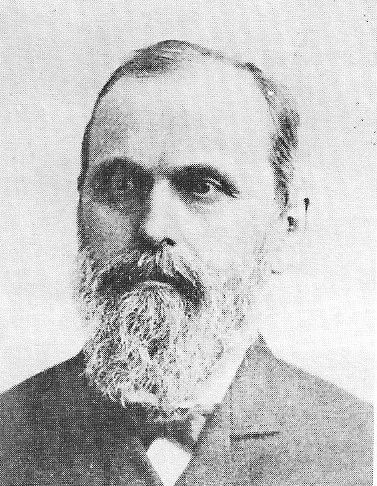
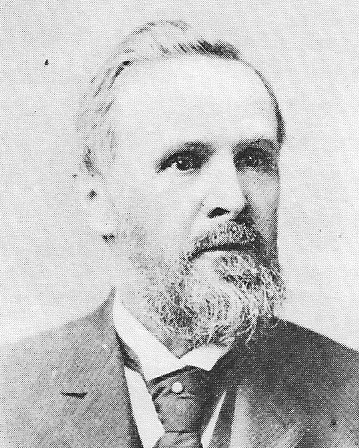
Within a year, Rentschler and his team had designed the air-cooled, radial Wasp engine, which together with its successor, the Hornet, provided increased power and reliability at a low relative weight. Both engines proved extremely successful. By 1929, Pratt & Whitney Aircraft had outgrown its Capitol Avenue plant in Hartford, and Rentschler moved the company to new headquarters on a 1,100-acre site in East Hartford, which included room for further expansion and an airfield to flight test his engines. Pratt & Whitney Aircraft was on its way to becoming one of the state’s largest employers.
Air power played a significant role in the Allied victory during World War II, and Pratt & Whitney Aircraft supplied much of that power. By the end of the war, Pratt & Whitney Aircraft had produced more than 350,000 engines for military use – more in number than any other American manufacturer and, in total horsepower, one half that of America’s combat air forces. In the meantime, Pratt & Whitney Aircraft became a division of the United Aircraft Corporation, which also manufactured the latest in aviation technology, the helicopter, invented by Igor Sikorsky in 1939.
During the post-war decades, Pratt & Whitney Aircraft continued to manufacture aircraft engines for commercial use and was also involved in the development of jet engines. During the 1950s, when government optimism in the peaceful uses of nuclear power was at its peak, Pratt & Whitney even investigated the possibility of using nuclear power in commercial aircraft at its Connecticut Aircraft Nuclear Engine Laboratory in Middletown.
Since 1999 Powrachute has grown steadily as a manufacturer of Powered Parachutes.
 All Aero