Martin Rüter’s (of Roll-Flight) earlier designs were taken over by Krampen (1998).
1998:
Hugo-Jakobs-Straβe 10
D-58332 Schwelm
Germany
Trike builder
Martin Rüter’s (of Roll-Flight) earlier designs were taken over by Krampen (1998).
1998:
Hugo-Jakobs-Straβe 10
D-58332 Schwelm
Germany
Trike builder
Rollason Aircraft and Engines Ltd.
Initially an aircraft sales and service organization. Began aircraft construction in 1957 with Druine Turbulent single-seat light monoplane powered by a Rollason-converted Ardem motor car engine. Production was carried out at their works on the old Croydon Aerodrome with first flights generally taking place at Redhill.
In 1961 built two-seat Druine Condor with 75 hp Continental engine. Later versions used more powerful Continental engines. Rollason also rebuilt a number of Tiger Moths and other aircraft, and carried out seaplane conversions of the Tiger Moth and Turbulent.
In 1973 the company moved from Croydon to premises at Shoreham. Tiger Moth work was concentrated at Rochester, with Redhill providing back-up to both bases and the hub of the sales part of Rollasons.
Walter Schneider and Wolf Lemke commenced glider production in 1968 with the LS1 in the standard class; with the LS3 in 1977 the entrance into the racing class followed.
In 1980 evolved in co-operation of Lemke and Hans Jörg Streifeneder in the LS4 as a successor of the LS1.
1984 the racing class glider LS6, which replaced the LS3, was introduced.
By adding winglets and removing flaps 10 Years later the LS8 developed and first places at the European Championships 1994 and the World Championships 1995 soon proved the successful concept of the LS8.
In 2003 Rolladen-Schneider Flugzeugbau GmbH was taken over by DG Flugzeugbau GmbH (formerly Glaser-Dirks). Rolladen-Schneider had gone into receivership, and DG Flugzeugbau did not take over the liabilities but only the rights to build the gliders and use the brand name.
Rohrbach Metall Flugzeugbau GmbH
Rohrbach-Metall-Aeroplane Co A/S
Rohrbach Metall Flugzeugbau GmbH was founded in 1922 by Dr. Ing. Rohrbach to continue construction and development of all-metal aircraft designed by him when working previously with the Zeppelin company. Associated company, Rohrbach-Metall-Aeroplane Co A/S, formed in Copenhagen to avoid limitations imposed on construction in Germany.
Built ten Ro-ll seaplanes for Japanese Navy and Ro-IIIA for Turkey, followed by Rodra twin-engine flying-boat and Rofix single-seat fighter. Copenhagen plant closed in late 1920s when restrictions on German manufacture were lifted. German factory continued flying-boat and landplane construction, including Roland three-engined 10-passenger monoplane.
In April 1934 Weser Flugzeugbau GmbH took over the company and Dr. Rohrbach became technical director of Weser.
USA
Based at Chula Vista, California, was aircraft component subcontractor in Second World War. Built M.0.1 two-seat tail-first (canard) monoplane in 1946.
(Fred H) Rohr Aircraft Corp, Chula Vista CA. 1940
Fred H Rohr was the person who designed and built the fuel tanks for Lindbergh’s NYP Ryan.
In 1945, ten conversins of Consolidated PB2Y-3 with turrets removed, side hatch added, for 44 passengers, for Naval Air Transport Service were completed as PB2Y-3R.
In 1974, Rohr Chairman Burt Raynes resolved to move Rohr into the light airplane market by summoning Walt Mooney as designer and project manager to come up with a quantum leap in light aircraft technology. Mooney selected the best people Rohr had, including key players Bill Chana, Bob Fronius, Mike Voydisch, and Don Westergren, and built three airframes; two flying prototypes and a static tester, plus 1/10- and 1/2-scale models for feasibility tests. By the time the project ended (for reasons having nothing to do with the merits of the airplane), one prototype had accumulated 23 hours in the air.
Prva Srpska Fabrika Aeroplana Živojin Rogožarski AD
Yugoslavia
First aircraft factory in Yugoslavia, established in 1925 for construction of military types under license. PSFA produced indigenous Rogozarski two-seat reconnaissance biplane in early 1930s, powered by Walter Castor engine. Series of aircraft for Yugoslav Air Force followed, but the Rogozarski factory was destroyed in Second World War. In 1946 the remnants of the Rogozarski, Ikarus, and Zmaj companies were brought into the government aircraft factories and resumed production.
Four out of five Yugoslav aircraft plants were in close proximity to each other, built in and around Belgrade: Ikarus, Rogožarski, Zmaj and Utva. The fifth one was DFA (Državna Fabrika Aviona – State Aircraft Factory) which was located in Kraljevo.
c.1925 (Harry) Rogers Air Lines
Garden City NY & Miami FL.
USA
1928: Rogers Aeronautical Mfg Co
Roosevelt Field
Long Island NY.
USA
Flying boat builder
1980: 758 Libby Drive, Riverside, CA 92507, USA.
Built the Sportaire homebuilt.
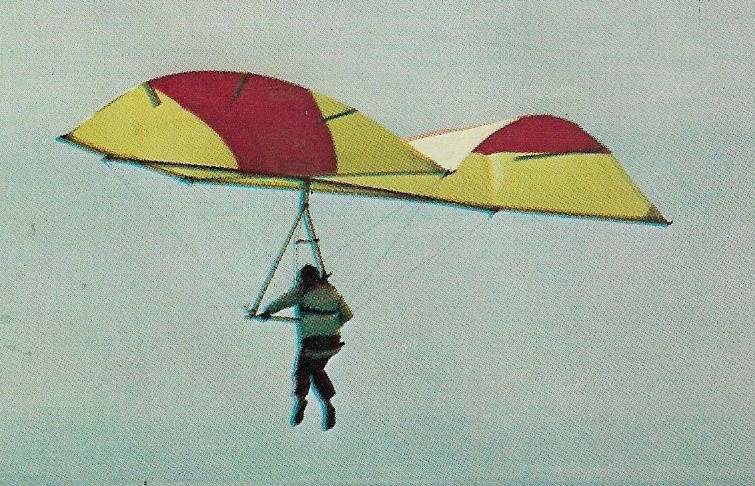
In 1948, Francis Rogallo, a NASA engineer, and his wife Gertrude Rogallo, invented a self-inflating flexible wing they called the Parawing, also known after them as the “Rogallo Wing” and flexible wing.
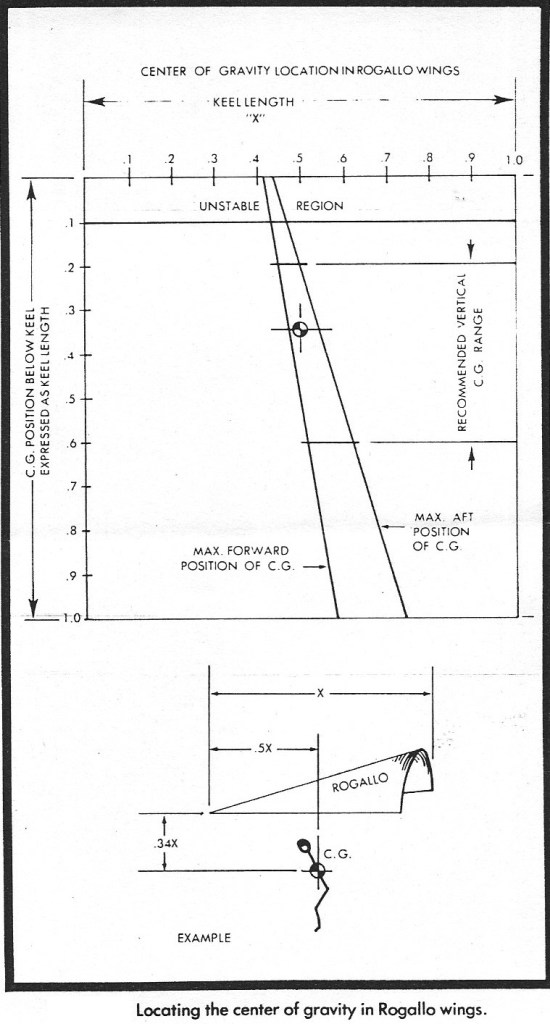
The term “Rogallo wing” is synonymous with one composed of two partial conic surfaces with both cones pointing forward. Slow Rogallo wings have wide, shallow cones. Fast subsonic and supersonic Rogallo wings have long, narrow cones. The Rogallo wing is a simple and inexpensive flying wing with remarkable properties.
The wing itself is not a kite, nor can it be characterized as glider or powered aircraft, until the wing is tethered or arranged in a configuration that glides or is powered. In other words, how it is attached and manipulated determines what type of aircraft it becomes. The Rogallo wing is most often seen in toy kites, but has been used to construct spacecraft parachutes, sport parachutes, ultralight powered aircraft like the trike and hang gliders. Rogallo had more than one patent concerning his finding; the due-diligence expansion of his invention involved cylindrical formats, multiple lobes, various stiffenings, various nose angles, etc. The Charles Richards design and use of the Rogallo wing in the NASA Paresev project resulted in an assemblage that became the stark template for the standard Rogallo hang-glider wing that would blanket the world of the sport in the early 1970s.
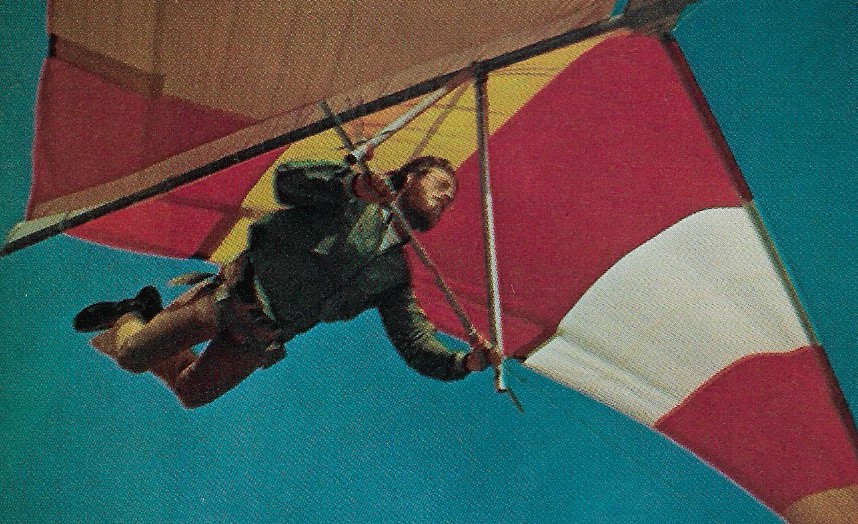
Beyond that, the wing is designed to bend and flex in the wind, and so provides favorable dynamics analogous to a spring suspension. Flexibility allows the wing to be less susceptible to turbulence and provides a gentler flying experience than a similarly sized rigid-winged aircraft. The trailing edge of the wing – which is not stiffened – allows the wing to twist, and provides aerodynamic stability without the need for a tail (empennage).
In 1961–1962, aeronautical engineer Barry Palmer foot-launched several versions of a framed Rogallo wing hang glider to continue the recreational and sporting spirit of hang gliding. Another player in the continuing evolution of the Rogallo wing hang glider was James Hobson whose “Rogallo Hang Glider” was published in 1962 in the Experimental Aircraft Association’s magazine Sport Aviation, as well as shown on national USA television in the Lawrence Welk Show.
1346-56 Wall St
Los Angeles
California
USA
Circa 1920s built aero engines
 All Aero