David Rose has more than 2,500 flight hours in his logbook. He first honed his skills in the U.S. Air Force in Vietnam, flying B-52s and the F-104 Star Fighter. After the military, he joined American Airlines as an ATP, flying 757s, 767s and MD-11s. David is also an avid air racer—he’s won four Reno Gold championships.
Manufacturer
Root, L F
Compton CA.
USA
Built the Root Sport in 1928.
Roos-Bellanca Airplane Co.
USA
Established 1922 at Omaha, Nebraska, to produce aeroplanes designed by Professor G. Bellanca, first being the Bellanca C.F. high-wing monoplane of about 1924, powered by an Anzani engine. Prof. Bellanca left the partnership in 1923 and joined the Wright Aeronautical Corporation the following year. Wright built several Bellanca monoplanes, the last of which established a world endurance record, remaining in the air for more than 51 hours.
Roos, Victor H. Aircraft Co.
USA
Succeeded American Eagle-Lincoln Aircraft Corporation in mid-1930s, and continued to produce American Eaglet light monoplane with 45hp Szekely engine.
Ronchetti, Razzetti Aviacion aa
Argentina
Builder of J-1 Martin Fierro single-seat agricultural monoplane with 300 hp Lycoming engine. Prototype first flew in 1975 and a small batch produced.
Romeo
Officine Ferroviarie Meridionaii
Industrie Meccaniche E Aeronautiche Meridionali
Societa Aninima Industrie Aeronautiche Romeo
Societa Anonima Industrie Meccaniche e Aeronautiche Meridionali (SAIMAM)
SA Industre Meccaniche e Aeronautiche Meridionali (IMAM)
Meridionali-Aerfer SpA
As Officine Ferroviarie Meridionaii in 1925, obtained rights to build Fokker aircraft under license, including the C.V., which was fitted with an Italian-built Jupiter engine and known as the Ro.1. Also built Fiat biplanes. In 1934 Societa Aninima Industrie Aeronautiche Romeo was formed to take over the aeronautical activities of Meridionali, but within two years there was another change of name to Societa Anonima Industrie Meccaniche e Aeronautiche Meridionali (SAIMAM).
Meridionali-Aerfer SpA succeeded Societa Aninima Industrie Aeronautiche Romeo, and became part of Societa Italiana Ernesto Breda group.
Indigenous types of aircraft were produced including the Ro.37 and 45 reconniassance biplanes, the Ro.41 single-seat fighter, and the Ro.43 two-seat fighter seaplane.
The Ro.37 two-seat reconnaissance biplane served October 1936 with Italian Aviacion Legionaria during Spanish Civil War and equipped Italian Air Force reconnaissance units during Second World War. Also used operationally were Ro.43 two-seat, single-float catapult seaplane and single-seat fighter version, Ro.44.
The biplanes produced in the mid-’thirties by the Societâ Anonima Industrie Aeronautiche Romeo enjoyed considerable success, being exported to a variety of countries ranging from Afghanistan to Uruguay, seeing considerable operational service in the Spanish Civil War and the campaign in Ethiopia, and soldiering on, although beset by total obsolescence, into WWII. Although their manufacturer had changed its designation to SA Industre Meccaniche e Aeronautiche Meridionali (IMAM) in 1936, and adhered to wire-braced and be-strutted for the Regia Aeronautica, which, in the popular press, were often referred to as “Romeos”. In fact, the “Ro” prefix was to be retained by IMAM for all aircraft produced by the organisation throughout its existence.
Romano
Built R-3 seaplane with Hispano-Suiza engine in early 1920s to carry out research on seaplane floats. Subsequently produced series of aircraft from the R-5 all-metal flying-boat to R-16 general-purpose tri-motor monoplane.
Liore-et-Olivier, Potez, Romano, and SPCA formed SNCASE in 1936.
Romano, Eugene Joseph
Eugene Romano Aerial Navigation Co
Seattle WA.
USA
Circa 1910 built aircraft.
Romaero
Intreprinderea De Reparat Material Aeronautice
Romania
Intreprinderea de Reparat Material Aeronautice was the Bucharest unit of the Centrala Industrial Aeronautica Romana, formed by reorganization of the national aircraft industry in 1968. Specialised in the repair and overhaul of aircraft and engines for Tarom and other airlines, and manufactured under license the Britten-Norman BN-2A Islander. Became lAv Bucuresti.
With a lineage that can be traced to 1920 (via companies including IRMA and lAv Bucuresti), this company assembled from British-supplied kits nine BAC One-Eleven airliners as 1-11s, the first appearing in 1982. Work, in 1999, included the manufacture of Britten-Norman BN2 Islanders (some 500 produced over 30 years) and the production of subassembles for Boeing and Galaxy Aerospace.
In January 1999 Britten-Norman of the U.K. received approval from the Board of Directors of Romania’s State Ownership Fund for its tender offer to acquire Romaero.
Rolls-Royce
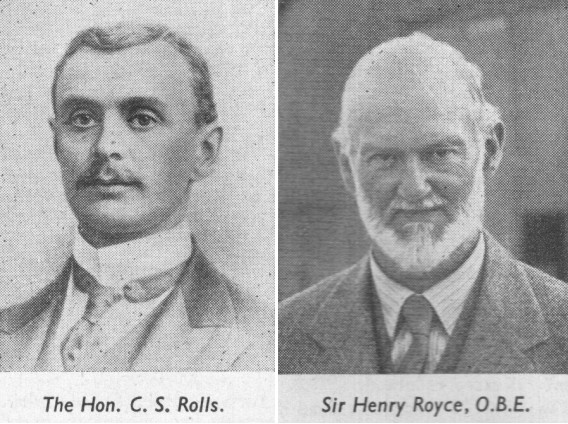
Rolls and Royce, met in Manchester in 1904. Rolls-the Hon. Charles Stewart Rolls-possessed wealth, an Eton-and-Cambridge education, a degree in mathematics and applied science, and a fine record as a motorist. He was a sportsman he had consistently displayed a daring at the wheel and a determined approach to the technical problems of motoring.
In the business of C. S. Rolls and Co., which he established with Claude Johnson in 1902. In 1903 he set a world speed record of 93 m.p.h.; but the car was a 70 h.p. Mors, and by the following year, when his books showed orders for a hundred Continental cars, he could still not find a British product which measured up to his standards.
At ten years of age Henry Royce started work as a telegraph boy, later attending a technical college, and serving a few years in the Great Northern locomotive shops at Peterborough. After a spell in an engineering works at Leeds, he set up a business in Manchester, making arc lamps and dynamos. The slump after the Boer War caused him to turn his ambition to cars. Disappointed with a foreign model which he acquired, he decided to put his own ideas into practice, and in 1903 he completed a two-cylinder car of 10 h.p., having handled much of the precision work himself.
One of his first three cars went to Henry Edmunds, who arranged the meeting in Manchester. The two men took to each other immediately, and having tried out Royce’s car, young Rolls undertook to sell its maker’s entire output. But he began to ply his partner with suggestions and demands.
The “two Rs” were first officially linked in business association at Christmas 1904, by a working agreement between the two firms; and thenceforth the Rolls-Royce car began.
By 1906 Royce’s production was large enough to allow Rolls to stop his sales of other makes of car, and Rolls-Royce, Ltd., was founded. Royce’s old partner, A. E. Claremont, became chairman; Rolls was technical managing director; and Royce was nominated chief engineer and works director.
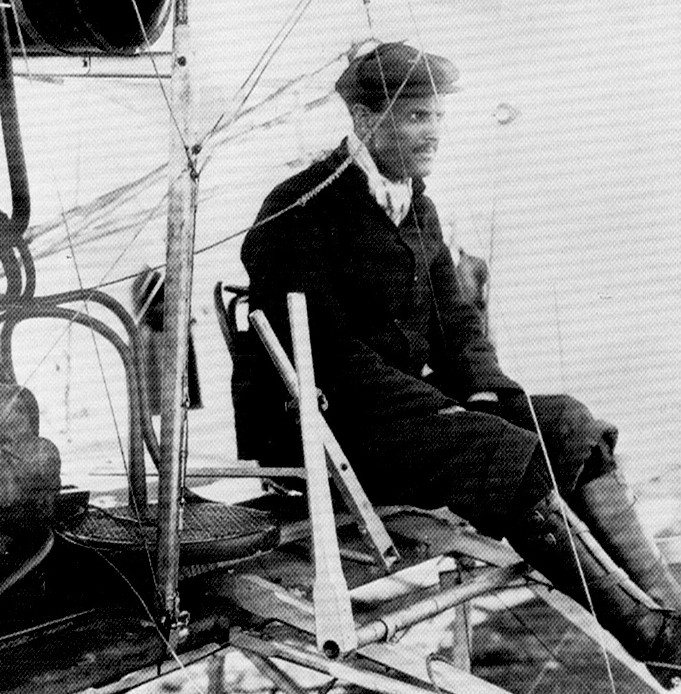
Rolls, who had become a member of the Aeronautical Society in 1901, was already a keen balloonist; then, having met the Wright brothers, he turned to heavier-than–aircraft. He was awarded his pilot’s certificate (No. 2) on March 8th, 1910-the very same day that Lord Brabazon received his No. 1. On the Wright biplane he made the first heavier-than-air crossing of the Channel by an Englishman, and the first double crossing by any aeroplane in history; but soon afterwards-on July 12th, 1910, he crashed to his death at the Bournemouth flying meeting, only 33 years of age. He was the first Englishman to die in an accident to a powered, heavier-than-air machine. His Wright Flyer broke up at 20 ft agl and he cracked his skull.
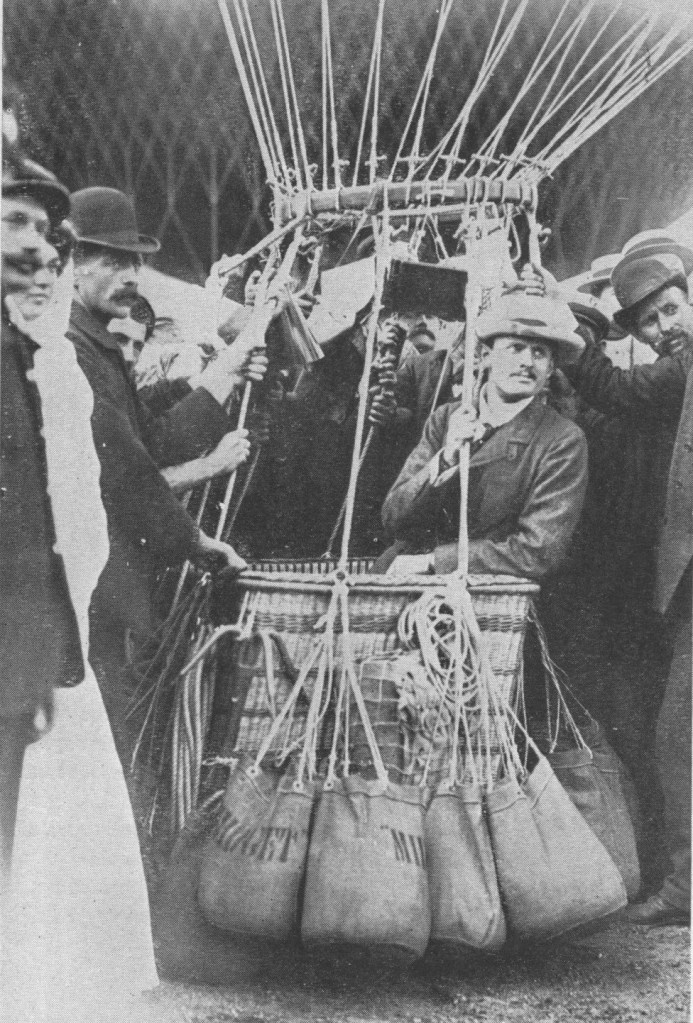
In 1910 Royce became seriously ill and thereafter was absent for long periods from his new factory at Derby. He worked on in the south of France and on the south coast of England.
Following the British Schneider victory of 1929-made possible by the “R” engine-a baronetcy was conferred upon him, and he heard from his bed how an improved engine of this type sent a Supermarine S.6B to final victory in the Schneider Race of 1931. He died on April 22nd, 1933.
1914 Design of first Rolls-Royce aero engine-later named Eagle started. Company making engines of official pattern at Derby.
1915 Eagle on test six months after design initiated. Hawk
designed and developed. Falcon designed
1918 Condor on test at 525 h.p.
1919 Alcock and Brown, in a Vickers Vimy (two Rolls-Royce Eagle Vills), mode first direct crossing of North Atlantic; flying time, 16 hir 12 min. Ross Smith and Keith Smith, in an Eagle-Vimy, made first flight from England to Australia11,130 miles in 124 hr flying time.
1920 Van Ryneveld and Quintin Brand, also in an Eagle-Vimy, made first flight from England to South Africa-6,281 miles in 92 hr 58 min flying time.
Between 1915 and 1924 Rolls-Royce Aero-engine production was: Eagle, 4,674; Hawk, 200; Falcon, 2,185; Condor, 327.
1925 Design of Rolls-Royce “F” series of engines (later called
Kestrel) started.
1926 First “F” engine tested and delivered.
1927 The ” H ” engine-later the Buzzard-under development.
1929 Air Ministry decided in February to compete in Schneider Trophy Contest; Rolls-Royce asked to develop a racing engine. Within six months “R” engine was delivering 1,900 h.p. for a weight of 1,350 ]b. Installed in Supermarine S.6, which won Schneider Contest at 328.63 m.p.h.
1931 Rolls-Royce again asked to develop a Schneider Trophy engine to help secure a third victory, which would gain Trophy outright for Gt. Britain. Outcome was improved “R” engine of 2,360 h.p., weighing 1,630 lb. Schneider Trophy won outright. Later “R” engine gave 2,530 h.p. and enabled world speed record to be raised to 407.5 m.p.h.
By 1931, during the Great Depression, Bentley was having financial difficulties. When funds ran out in 1931, the receivers were negotiating with D.Napier & Sons Ltd for the sale of the remains of Bentley. However, Rolls-Royce put in a secret bid through a Liechtenstein company, and secured Bentley Motors for £125,256. For this, Rolls-Royce got the factory equipment, a number of incomplete car chassis, and the services of Walter Bentley for three years.
1932 Design of the P.V.12 engine (later called Merlin) started.
(P.V. denoted private venture.)
1934 Merlin completed its first 100 hr run at 790 h.p.
1936 Merlin completed Service Type Test at 975 h.p.
1938 Building of Crewe factory started.
1939 First Merlin built at Crewe. Design and development work
started on 37.V.12 engine, later named Griffon. Building of
Glasgow factory begun in August. 1
1940 First Merlin built at Glasgow. First test run of Griffon.
1942 Quantity production of Griffon started.
1943 First Rolls-Royce turbojet-the Welland-passed its 100 hr type test; thrust, 1,700 lb, weight, 850 lb. Design of Derwent 1 started.
1944 Deliveries of Welland begun, for installation in Gloster
Meteor. Design and development of Nene started.
1945 Meteor powered with Derwent Vs broke world air speed record at 606 m.p.h. In September a Meteor was flown with two Rolls-Royce Trent turboprops, being the first turboprop aircraft to fly. By this year power of Merlin had increased to over 2,000 h.p.
1946 World airspeed record again broken by a Derwent-Meteor;
speed 616 m.p.h.
1947 Pratt and Whitney signed licence agreement for manufacture of Rolls-Royce Nene and Toy. Nenes in production at Derby. Trans-Canada Airlines started operations with Merlin powered Canadair North Stars.
1948 First public appearance ofAvon turbojet at S.B.A.C. Display. Belgium signed licence agreement for manufacture of Derwents.
1949 Dart turboprop type-tested at 1,000 h.p. B.O.A.C. intro-
duced Merlin-powered Argonauts (similar to North Stars).
1950 Australia signed licence agreement to build Nene and Avon.
Hispano signed agreement to make Nene and Toy.
1951 English Electric Canberra, with two Rolls-Royce Avons, made first non-stop transatlantic crossing by a jet aircraft the first of numerous record flights by Avon-Canberras.
1952 Sweden signed licence agreement to build Avon.
1953 Avon-Canberra flew from London Airport to Darwin, Northern Australia, in 22 hr 21 sec. Avon-powered Hawker Hunter established world air speed record of 726.6 m.p.h.; Avon-powered Supermarine Swift later raised record to 735.7 m.p.h. Ministry of Supply opened new factory at East Kilbride, Lanarkshire, to augment production of Avons for the R.A.F. (in addition, Avons were being made by the Bristol Aeroplane Co., Ltd., D. Napier and Son, Ltd., and the Standard Motor Company.)
1954 By May 1954 British-built Rolls-Royce gas turbines had completed 23 million flying hours; Merlins had cornpleted over 5.1 million flying hours in commercial service. By the end of the year over 185,000 Rolls-Royce piston and gas-turbine engines will have been built.
LHTEC (Light Helicopter Turbine Engine Company) is a joint venture between Rolls-Royce and Honeywell founded in 1985. The company was originally a partnership between the Allison Engine Company and AlliedSignal Aerospace . In 1995 Rolls-Royce acquired Allison, and AlliedSignal merged with Honeywell in 1999, and adopted its name.
 All Aero