A single-seat microlight
LSA/UL
Lucchini & C
Italy
Markets Speedy single-seat microlight in assembled and kit forms.
Lucas L.11/L.12
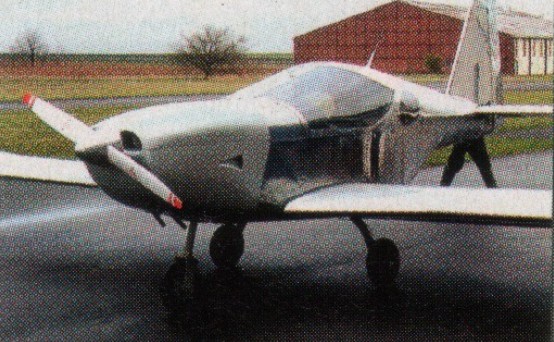
LSA legal
Cruise: 103 mph
Stall: 42 mph
Range: 645 sm
Rate of climb: 1200 fpm
Takeoff dist: 600 ft
Landing dist: 500 ft
Engine: Jabiru, 80 hp
HP range: 80-150
Fuel capacity: 20 USG
Empty weight: 618 lb
Gross weight: 990 lb
Length: 18.3 ft
Wing span: 26 ft
Wing area: 80 sq.ft
Cockpit width: 44 in
Landing gear: nose wheel
Lovegrove Cloudhopper
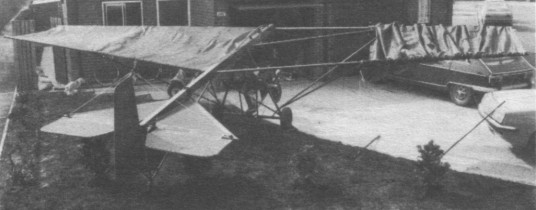
Single seat single engined high wing mono¬plane with two axis control. Wing has swept back leading edge, unswept trailing edge and tapering chord; conventional tail. Pitch control by elevator on tail; yaw control by fully flying rudder; no separate roll control; control inputs through stick for pitch/yaw. Wing braced from below by struts; wing profile; 75% double surface. Undercarriage has three wheels in tricycle formation; no suspension on any wheels. Push right go right nosewheel steering independent from yaw control. No brakes. Aluminium tube framework, without pod. Engine mounted below wing driving pusher propeller.
The Cloudhopper is a simple homebuilt tube and dacron design with pedals reserved for ground steering, all flying being done with the stick. The machine has progressed through various stages Mk.I, II and III, the principal difference between the machines is the tailplane design, which was initially a tubular structure. Peter was not satisfied with the rigidity of this and replaced it with a fabricated box section structure to create the MkII.
Although this proved more rigid than its predecessor, it too was rejected as too complex and in 1983 Peter was working on a MkIII design, reverting to a tubular empennage but with greater rigidity than the MkI. The Mk.III will also feature stronger engine mountings, which are being designed to withstand 15g in accordance with the UK microlight airworthiness regulations.
Cloudhopper Mk.II
Engine: Robin EC25PS, 18.5 hp at 5500 rpm.
Propeller diameter 42 inch, 1.06 m (3 blade).
V belt reduction, ratio 2.2/1.
Power per unit area 0.11 hp/sq.ft, 1.3 hp/sq.m.
Fuel capacity 2.4 US gal, 2.0 Imp gal, 9.1 litre.
Length overall 14.4 ft, 4.39 m.
Height overall 4.8ft, 1.45m.
Wing span 27.7ft, 13.12m.
Chord at root 7.64ft, 2.33m.
Chord at tip 4.0ft, 1.22m.
Dihedral 6 degs.
Sweepback 15 degs.
Tailplane span 8.2 ft, 2.51 m.
Rudder height 4.1 ft, 1.26 m.
Total wing area 161 sq.ft, 15.0 sq.m.
Rudder area 6.7 sq.ft, 0.63 sq.m.
Tailplane area 13.5 sq.ft, 1.26 sq.m.
Total elevator area 9.2 sq.ft, 0.86 sq.m.
Wing aspect ratio 5.8/1.
Wheel track 4.4ft, 1.33m.
Nosewheel diameter overall 10 inch, 25 cm.
Main wheels diameter overall 10 inch, 25 cm.
Empty weight 217 lb, 98 kg.
Max take off weight 450 lb, 204kg.
Payload 233 lb, 106 kg.
Max wing loading 2.80lb/sq.ft, 13.6 kg/sq.m.
Max power loading 24.3 lb/hp, 10.9kg/hp.
Load factors +4.0, 2.0 design.
Lovegrove
1983: Peter Lovegrove, 1 Beaufort Close, Didcot, Oxfordshire OX118TS, Great Britain.
Peter Lovegrove, who is technical editor of the British Microlight Aircraft Association’s magazine Flightline, has been an aviation enthusiast for many years but the Cloudhopper is his first micro light, his previous aircraft having been largely gyroplanes.
Lotus Prototype
Lotus has long been known for sophisticated yet affordable sports cars, but founder Colin Chapman also aimed to build aircraft. Colin Chap¬man, founder and head of the Lotus Car company, discussed a microlight project with Alain-¬Yves Berger, who had met Colin on the motor racing circuits many years before and had remained in touch with him. Colin envisaged making a very high performance composite construction tandem two seater using a canard wing, and a four stroke engine of his own design, and had set himself some tough performance targets a design top speed of 125 mph (200 kph), fuel consumption per hour of 1. 3 US gal (1.1 Imp gal, 5.0 litre), and a selling price around £5500 for a production run of 500 aircraft.
Chapman believed that Lotus composites technology could be applied to build an aircraft that still met ultralight rules, would be cheap and easy to fly, and very attractive to buyers. After reading up on German glider technology, Chapman approached the Rutan brothers in 1982 to study the feasibility of the project and commissioned Burt to design a new type of microlight based on Rutan’s love of composites, efficiency, and the use of the “canard” wing layout for which Rutan is famous. Several designs were envisaged, one being the Rutan Model 91 ML (for MicroLight), a one-person 300 lb. ultralight aircraft, powered by two 25 hp jet engines. Despite Burt Rutan’s dismissing the idea as complicated, Chapman insisted that the new plane should be a two-seater.
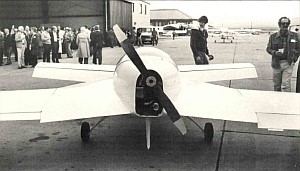
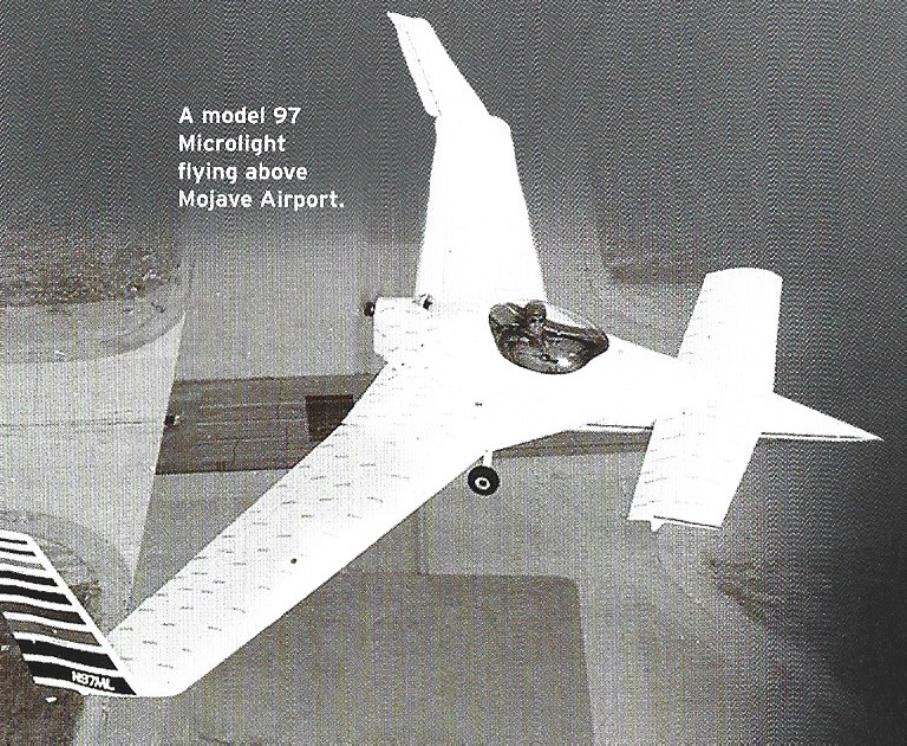
By June 1982, the final configuration was chosen out of nine different studied designs, and in December, the prototype Lotus MicroLight (Rutan Model 97M), built by Scaled Composites Inc. and appropriately registered N97ML, arrived at the Group Lotus airfield at Hethel in Norfolk, England. It was a side-by-side two-seater with a pointy nose, an enclosed cockpit, a retractable front wheel, and is of a unique design with a canard foreplane and a swept back wing, and a pusher propeller behind the cockpit. Pitch control by elevator on canard; yaw control by tip rudders; roll control by spoilerons; control inputs through stick for pitch/roll and pedals for yaw. Undercarriage has three wheels in tricycle formation; glass fibre carbon fibre suspension on main wheels. Push right go-¬right nosewheel steering. Brakes on main wheels. Composite fuselage, totally enclosed. Engine mounted below wing driving pusher propeller.
Tragically Colin Chapman, the visionary who championed the Lotus MicroLight, died December 16, 1982 at the age of 54, the day before the prototype’s first flight.
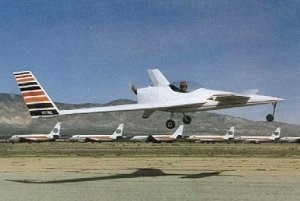
It is often said that the program was shelved by Lotus due to the death of Mr. Chapman. This was not so. Prototype trials continued with a little Italian KFM 109 ER two-stroke 23 hp engine, up to the end of the proof-of-concept phase. Specs for the Lotus MicroLight are lacking, but a 25 hp engine was originally planned for it. A Lotus engine that was being developed by Tony Rudd (a senior officer at Lotus), the 50 hp Magnum 4.5, was to have been installed in the production aircraft. The plane was assembled and flown for the first time in public in August 1983. It arrived in a crate at Hethel in August 1983, two days before the Lotus Open Day. It was assembled on Friday and Saturday, and was taxied in daylight on Saturday afternoon, and “accidentally” hopped in the dusk. Its first proper flight was Sunday morning, and the demo flight was in the afternoon for the crowds. It was now registered as G-MMLC.
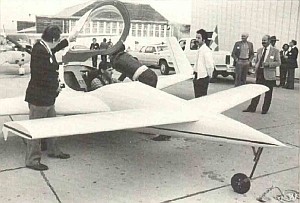
The Lotus MicroLight was apparently a technical success, but a marketing failure. Despite both Lotus’s and Rutan’s credentials, the business arrangements didn’t work out. Lotus wanted to build a business for the MicroLight, and sought backing to continue alone. When that wasn’t approved, Lotus went looking for partners and teamed up with the Eipper company to distribute it in the USA, while Malcolm Lawrence’s Aviation Composites of Thatcham in Berkshire, was to distribute it in the UK and Europe.
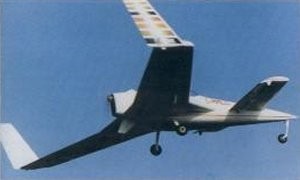
Lotus originally planned to build the basic structure themselves, with Aircraft Composites finishing and distributing it. It was then decided that the materials (epoxy glass) and the quality control techniques were not part of the Lotus core business, and Aircraft Composites agreed to take over the development and build, with the help of Peter Jackson’s Specialised Mouldings (a firm in motorsport). Since Lotus was struggling to cope with the aftermath of Colin Chapman’s death, the Aircraft Composites move into taking over the whole project was heaven sent. Instead, Aviation Composites used the design’s features as a basis for a different aircraft. The company employed VariEze builder Ivan Shaw, and built a similar but much heavier version, the Mercury prototype (G-INAV), which incorporated various modifications from the Rutan design and had several problems with it.
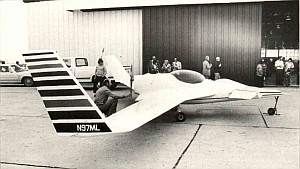
The MicroLight was de-registered and returned to the USA in 1988, but it was lost in an accident in which both the owner and test pilot of the aircraft were killed
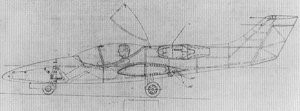
Lotus Cars Ltd
1983: Lotus Cars Ltd, Norwich, Norfolk, Great Britain.
Built the Lotus Prototype UL
LO-Fluggerätebau LO-120 / LO-120 Bausatz I
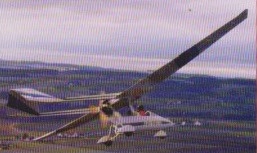
A tandem two-seat very light aircraft, with smaller LO-120 Bausatz I version. The LO 120 S can operate as a motorglider or microlight by changing the outer portions of the wings. Comstruction is wood and fabric.
LO 120 S
Engine: Hirth 2704, 40 hp
Wing span: 15.80 m
Wing area: 16 sq.m
MAUW: 400 kg
Empty weight: 235 kg
Fuel capacity: 32 lt
Max speed: 150 kph
Cruise speed: 120 kph
Minimum speed: 50 kph
Climb rate: 3 m/s
Certification: VZ
Seats: 2
Fuel consumption: 8-10 lt/hr
Price (1998): 65 900 DM
Kit price (1998): 26 400 DM
LO-Fluggerätebau GmbH
Germany
Markets kits to build LO-120 tandem two-seat very light aircraft, with smaller LO-120 Bausatz I also offered.
1998:
Aspachstr 14
D 88276 Ettishofen
Germany
Loehle KW-909
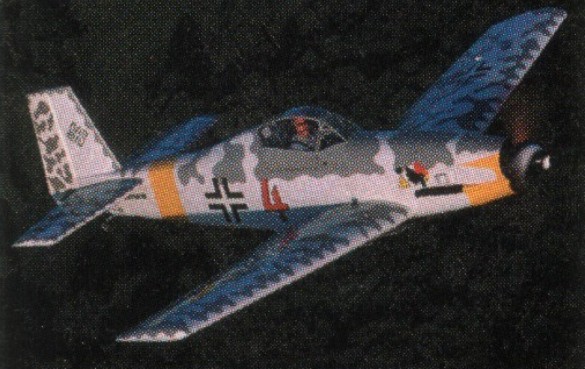
A LSA aircraft, the KW-909 can be flown by a Sport Pilot.
Cruise: 85 mph
Stall: 30 mph
Range: 370 sm
Rate of climb: 1200 fpm
Takeoff dist: 150 ft
Landing dist: 250 ft
Engine: Rotax 582, 65 hp
Fuel capacity: 13 USG
Empty weight: 575 lb
Gross weight: 900 lb
Length: 22.9 ft
Wing span: 27.4 ft
Wing area: 130 sq.ft
Cockpit width: 22.5 in
Seats: 1
Landing gear: Retractable/tailwheel
 All Aero