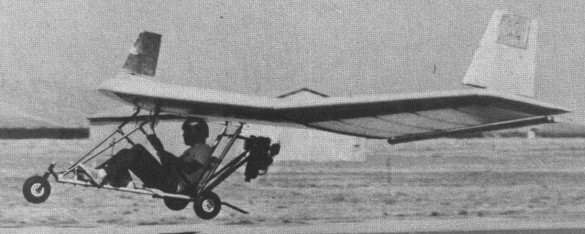
A hang gliding fanatic, Dr H Long, gave Don Mitchell control of a high performance wing. By 1975 this same wing had become the B 10. The first powered version now carries the designation of B40F (F for foot launch). The aircraft is in effect a wing, supporting beneath its lower surface a rigid frame formed by two sets of struts in the shape of an N, at the back of which is mounted a McCulloch Mc101 12hp engine with direct drive to a two blade pusher propeller.
The addition of a go-kart engine and streamlined pilot pod has turned the design into a high-performance ultralight. It is fast, sensitive and very maneuverable. The wing is wooden and built up in a typical “D” Section cantilever, with pilot cage attached underneath and a pusher prop in the rear. Top speed is about 55 mph, and climbout is around 350 fpm. It can be foot-launched, but the added weight of an engine and its accessories make it wise to consider tricycle gear. A Mac 101 engine swings a 42-inch prop and sips two gallons of gas in two hours.
Single seat single engined high wing mono¬plane with conventional three axis control. Wing has swept back leading and trailing edges, and tapering chord; no tall. Pitch/roll control by stabilators; yaw control by tip rudders; control inputs through stick for pitch/roll and pedals for yaw. Cantilever wing: wing profile NACA 23015; double surface. Undercarriage has three wheels in tricycle formation; suspension on all wheels. Push right go right nosewheel steering con¬nected to yaw control. Optional brake on nosewheel.
Aluminium tube/wood/steel tube framework, with optional pod. Engine mounted below wing driving pusher propeller.
A hang gliding fanatic, Dr H Long, gave Don Mitchell control of a high performance wing. By 1975 this same wing had become the B 10. The first powered version now carries the designation of B40F (F for foot launch). The aircraft is in effect a wing, supporting beneath its lower surface a rigid frame formed by two sets of struts in the shape of an N, at the back of which is mounted a McCulloch Mc101 12hp engine with direct drive to a two blade pusher propeller.
Very quickly Don Mitchell fitted the framework with a tricycle undercarriage with a nosewheel steered by the rudder bar, while a more elaborate version of the B 10 was shown at Oshkosh in August 1981, fitted with a glass fibre fairing and main wheel spats. By 1980, more than 500 sets of plans or kits for the B 10 had been sold. Previously only sold as sets of plans or as a kit, the B 10 Mitchell Wing has been offered factory built, since September 1982.
The structure of each wing has five central ribs in a wooden lattice with six ribs on either side, all of quite conventional construction. The thick plywood spar has D shaped pieces of polyurethene foam resting on it every 4.3 inch (11 cm), which are then covered in 0.04 inch (l mm) thick sheets of plywood to form the leading edge. The control surfaces are made in the same way except for the rudders which have a tubular metallic spar. The covering is of Dacron or aviation quality Ceconite.
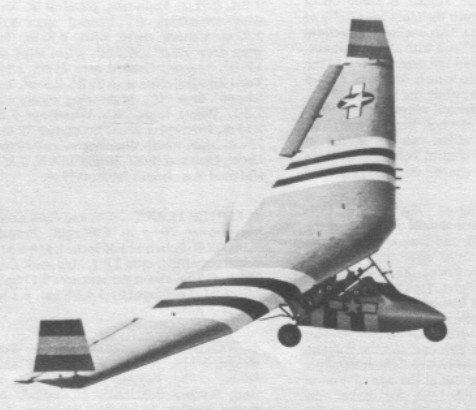
Due to the absence of a tail, roll and pitch control are both provided by stabilators, which span most of each half wing. Controlled from the stick, these stabilators act differentially like ailerons and together as elevators, while the rudders can also act as air brakes. The B 10 Mitchell Wing has dropped the Mc101 engine in favour of the Zenoah G25B. According to Mitchell Aircraft, con¬struction requires 250h of work. The 1983 prices are $6995 ready built, economy kit $1995 (without engine, instru¬ments and undercarriage), homebuilder’s kit $1295 (including raw materials and all hard¬ware but without engine, undercarriage, paint or glue), power pack $1595, tricycle undercarriage $495 and plans $125.
Units and plans delivered by June 1981 1,200 + kits.
Basically a strengthened B 10, the 1981 prototype of the XF 10 was originally shown by Mitchell Aircraft under the name of SR 10 and is a modified version of the B 10 Mitchell Wing, intended for the military market. This machine is today offered as a kit for an extra $1100 on top of the price of a B 10, compared with which the XF 10 is structurally reinforced and has a faired cockpit as standard. Like the standard B 10, the XF 10 uses the single cylinder Zenoah G2513 1.
Plans for the Mitchell wing B-10 became available from Richard Avalon at US Pacific, 892 Jenevein Ave., San Bruno, CA 94066. The B-10 has held world records by George Worthington. Richard worked with Don just before Don’s death and was not able to carry forward with some planned designs, but Richard is offering Don’s plans.
The Mitchell B-10J is a package available from Jim Gordon’s Micro Aviation. The US$5200 package includes a Garrett JFS100-13 originally used as a starter for the TF-41 engine in the A-7 Corsair. Including throttle package, lubrication and tailpipe assembly, the engine weight is 53 lb, and replaces the Zenoah. First flights were in February 1996, with 80 lb thrust.
Variation: Bremner Mitchell B10 Wing Special
B-10 Engine: Zenoah G2SB 1, 23 hp at 6500 rpm Propeller diameter 44 inch, 1.11 m Toothed belt reduction, ratio 3.0/1 Max static thrust 165 lb, 75 kg Power per unit area 0.17hp/sq.ft, 1.8hp/sq.m Fuel capacity 3.0 US gal, 2.5 Imp gal, 11.4 litre Length overall 6.0ft, 1.83 m Height overall 4.0ft, 1.21m Wing span 34.0ft, 10.36m Chord at root 6.0ft, 1.83 m Chord at tip 2.0 ft, 0.61 m Dihedral (On outboard part of wing) 6 deg Sweepback 12 deg Total wing area 136 sq.ft, 12.6 sq.m Wing aspect ratio 8.5/1 Nosewheel diameter overall 10 inch, 25 cm Main wheels diameter overall 10 inch, 25cm Empty weight 185 lb, 84kg Max take off weight 525 lb, 238kg Payload 340 lb, 154kg Max wing loading 3.86 lb/sq.ft, 18.8kg/sq.m Max power loading 22.8 lb/hp, 10.3kg/hp Load factors; +4.2 ultimate Max level speed 55 mph, 88 kph Max cruising speed 45 mph, 72kph Stalling speed 25mph, 40kph Max climb rate at sea level 300 ft/min, 1.5 m/s Min sink rate 225ft/min at 35mph, 1.1m/s at 56 kph Best glide ratio with power off 16/1 Take off distance 175ft, 53m Landing distance 175 ft, 53 m Service ceiling 12,000 ft, 3648 m Range at average cruising speed 135 mile, 217 km
XF 10 Engine: Zenoah G2SB 1, 23 hp at 6500 rpm Propeller diameter 44 inch, 1.11 m Toothed belt reduction, ratio 3.0/1 Max static thrust 165 lb, 75 kg Power per unit area 0.17hp/sq.ft, 1.8hp/sq.m Fuel capacity 6.0 US gal, 5.0 Imp gal, 22.7 litre Length overall 6.0ft, 1.83 m Height overall 4.0ft, 1.21m Wing span 34.0ft, 10.36m Chord at root 6.0ft, 1.83 m Chord at tip 2.0 ft, 0.61 m Dihedral (On outboard part of wing) 6 deg Sweepback 12 deg Total wing area 136 sq.ft, 12.6 sq.m Wing aspect ratio 8.5/1 Nosewheel diameter overall 10 inch, 25 cm Main wheels diameter overall 10 inch, 25cm Empty weight 200 lb, 91kg Max take off weight 600 lb, 272kg Payload 400 lb, 181kg Max wing loading 4.41 lb/sq.ft, 21.5 kg/sq.m Max power loading 26.1 lb/hp, 11.8kg/hp Never exceed speed 50mph, 80kph Stalling speed 25mph. 40 kph
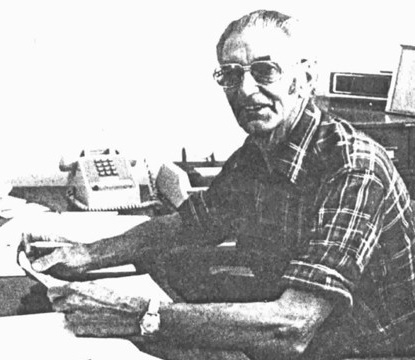
The Mitchell family of aircraft began in 1915, in Scotland, with the birth of Donald S. “Don” Mitchell. Hoping to create a better life for themselves, the family immigrated to the United States when the boy was only seven years old. He was still in school when he became fascinated with gliding. Indeed, Mitchell was a student at Alameda High School in Alameda when he built his first glider, under the tutelage of a pilot who had seen action during the First World War.
Intent on pursuing a career in aviation, Mitchell enlisted at the Boeing School of Aeronautics in Oakland.
In the 1930s, Mitchell worked for United Air Lines at Oakland and Fresno as a radio operator and station attendant. By now, however, he only dreamt of gliding. In spite of the Depression, Mitchell left his job in order to move south to San Fernando, near Los Angeles, where he visited glider pioneer William H. Bowlus – shop foreman at the factory which built Charles Lindbergh’ Spirit of St. Louis – and all but begged him to teach him how to design and build gliders.
Bowlus accepted and Mitchell trained under him for the next six years. All in all, Mitchell spent eleven years with Bowlus, working as his right-hand man on numerous projects during his last five years with his mentor. Along with another gentleman, the duo founded Bowlus Sailplane toward the end of 1936 and developed the BA-100 Baby Albatross glider, a very popular design with some structural problems, which was sold mainly if not exclusively in kits.
As the 1940s began, Mitchell designed and started to construct a large two-seat flying wing glider. To keep it under control without the usual tail, he developed a combination of aileron and elevator which he called a stabilator. All the while, Mitchell took part in demonstration flights for Bowlus Seaplane and was appointed soaring editor of Western Flying Magazine.
When he finally left Bowlus Sailplane, Mitchell went to teach aircraft welding at a technical institute located close by, at the Grand Central Air Terminal near Glendale. Leaving this position, he moved another short distance to the new Timm Aircraft factory in Van Nuys, where he helped with the molding of the fuselage of the S-160, a plastic-bonded wood basic trainer developed for use by the U.S. Navy and U.S. Army Air Corps. Mitchell later assisted the Civil Aeronautics Administration when the time came to perform the static tests of the aircraft. It passed with flying colours and later became, in April 1941, one of the first if not the very first ever plastic-bonded aircraft to receive an American Approved Type Certificate. The S-160 was later ordered by the U.S. Navy. Approximately 260 of these airplanes – now designated Timm N2T Tutors – were produced.
In early 1942, Timm Aircraft was awarded a U.S. Army Air Forces (USAAF) contract to build Waco CG-4 cargo gliders. Many other American companies received orders as well. Timm Aircraft eventually built close to 450 CG-4s. This aircraft turned out to be the most widely produced cargo glider in history.
His superiors at Timm Aircraft instructed Mitchell to organise construction of CG-4A wings in the factories of two furniture makers of the Los Angeles area. Weber Showcase, one of these manufacturers, soon hired him to take over control of their production. As all this was taking place, Mitchell nonetheless found the time to spend numerous evening and weekends with Bowlus to help with the design and construction of a pair of gliders – quite possibly two military transport gliders which proved eventually faulty under test and failed to win orders – as well as a half-size prototype of a large and rather unusual-looking transport glider designed as a private venture for the USAAF.
Confident that his design could help the war effort, Bowlus and an associate organised a company which finally became General Airborne Transport. Construction of a full-size prototype capable of carrying 42 soldiers or 10,000 pounds of freight, began. Mitchell left Weber Showcase in the spring of 1943 to work on this glider, all the while spending some time on his own flying wing design. Mitchell apparently became Director of Projects at General Airborne Transport. Sadly, the prototype of the CG-16 crashed in September 1943 during a test flight. Only Bowlus and one of the VIP passengers managed to parachute to safety. Still, the company managed to obtain permission to build a second prototype. An imposing-looking machine with good flying characteristics, the CG-16 nonetheless suffered from a number of design flaws. The program was cancelled in late 1944 and a third airplane was not built.
Following the end of the CG-16, Bowlus and a friend, Ted Nelson, started to work on a motorised version of the BA-100 Baby Albatross glider. The two of them formed Nelson Aircraft in San Fernando (California) to meet a perceived need for powered gliders now that the Second World War seemed about to end. Mitchell, who may helped with the design of the airplane, the Nelson Dragonfly, took part in the Civil Aeronautics Administration certification tests. Bowlus later appointed him supervisor of production.
In April 1946, after some years of work, Mitchell finally completed construction of his flying wing glider. After a number of successful test flights, Mitchell mounted a small engine on it and flew it as a powered airplane. In the meantime, the expected postwar light airplane boom was slowly turning into a bust and only a handful of Dragonflies left the factory. When the company closed its doors, Mitchell moved to San Leandro where he worked with Nelson and an associate on the design of new powered gliders. Their 1949 Nelson Hummingbird proved to be a better performer than the Dragonfly but its cost and relative lack of performance doomed it on the market. Only a handful were built.
As he worked on the Dragonfly, Mitchell set out on his own to build a new flying wing glider, which he called the Osprey, a single seat machine fitted with stabilators. Mitchell tested his flying wing several times near Oakland, in 1950. Unfortunately, the building in which the glider was stored burned to the ground and the flying wing was destroyed.
Faced with this, Mitchell threw himself into the design and construction of the Nimbus series of sailplanes. The Mitchell Nimbus III – which was developed around 1956 from the earlier Nimbus I and II – won the High Performance Sailplane Design Award at the 23rd National Soaring Contest held in Texas, as well as an award at the San Diego soaring meet.
During much of the 1960 and early 70s, Mitchell kept himself occupied by repairing and customising a number of aircraft. Around 1974, as interest in hang gliding was rapidly increasing, a Dr. Howard Long became intrigued by the idea of a flying wing hang glider. He asked Mitchell to build him such an aircraft. The first foot-launched Mitchell Wing hang glider, the first rigid-wing hang glider that could be controlled in roll, pitch and yaw, flew in 1976. Its flying characteristics and performance showed such promise that Mitchell received orders to build twelve after just one public demonstration flight.
Fascinated by the idea of capturing all the official records for hang gliding newly recognised by the Fédération aéronautique internationale, American champion sailplane pilot George Worthington bought the third one built and went on to set half a dozen world records between 1976 and 1981. Interest among enthusiasts was such that Mitchell organised Mitchell Wing – later Mitchell Aircraft – at Porterville (California). Orders came in from all over North America, Europe and beyond.
In the mid 1970s, Mitchell added a tubular structure and a small engine on one of his wings, turning it into a powered glider or ultralight airplane. A prototype first flew in 1976. The new powered model gained fame as the Mitchell B-10. Mitchell took his flying wings to the world famous fly-ins at Oshkosh and was awarded top honors on numerous occasions.
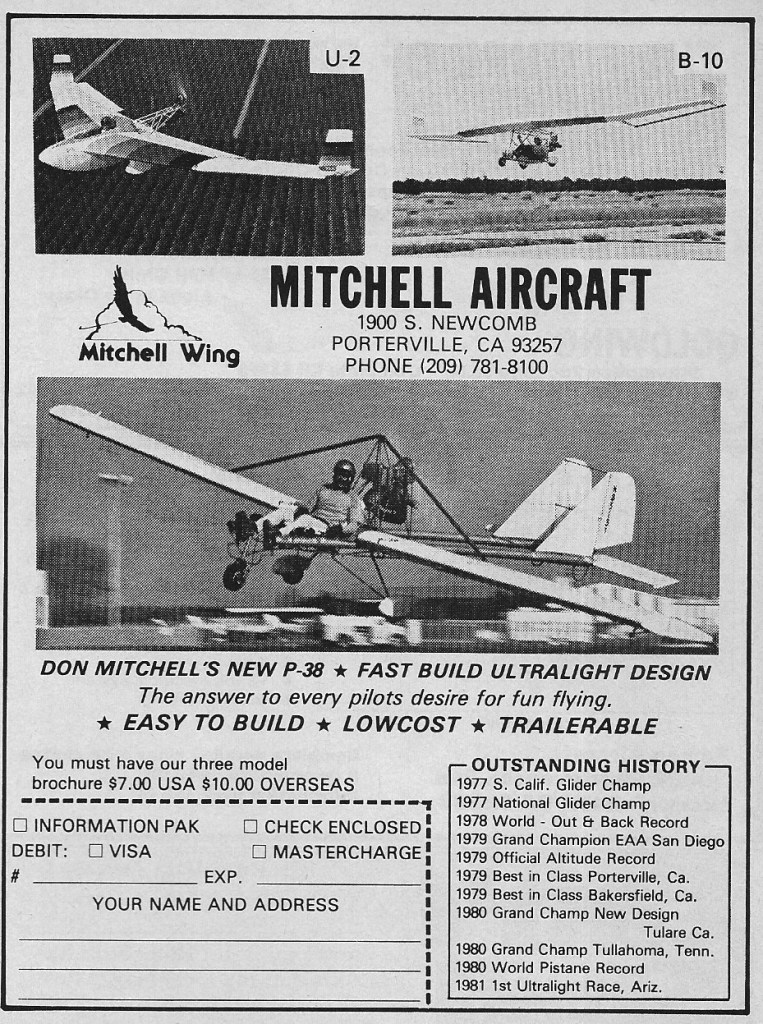
Design and construction of the U-2, an ultralight fitted with an enclosed nacelle for the pilot followed in 1979. In 1983, a Mitchell U-2 set a new world altitude record for aircraft weighting less than 270 kg with a climb to about 26,000, as well as a sustained altitude record of slightly less than 26,000 ft. The Mitchell P-38 flew later on.
May 1981
1983: Mitchell Aircraft Corp, 1900 South Newcomb, Porterville, California 93257, USA. 1984: 11616 W. 59th Street South, Sand Springs, OK 74063, USA.
Over the years, Mitchell has sold hundreds of drawings and kits for the B-10, the U-2, the P-38 as well as the hang gliding version of the B-10. The designations Mitchell gave to his creations were those of great American aircraft, i.e. the very modern Martin B-10 bomber of the 1930s, the highly distinctive Lockheed P-38 Lightning fighter of the Second World War and the famous Lockheed U-2 spy plane of the Cold War era.
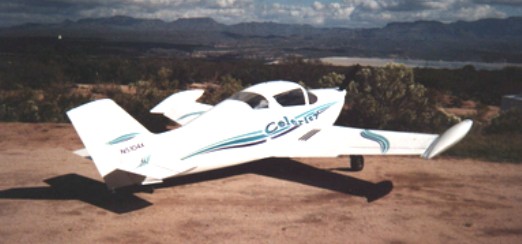
The Celerity was designed by Larry Burton, who flew the prototype in 1985 and won an Oshkosh workmanship award that same year. The prototype has accumulated over 900 hours. It is designed to be built by the average person, with average skills, at low cost, yet perform as well as the most expensive kit airplanes in it’s class.
The Celerity is a high performance, 2-place side-by-side plans built airplane with fully retractable landing gear, including the tail wheel. It can also be built as the “Marathon” with fixed tricycle gear. Designed for builders with average skills, both aircraft are constructed from wood with fiberglass covering. Six construction videos were available. Celerity cruises in the 200 mph range on 150 to 180 hp and has an operating range of more than 750 miles with fuel reserve. The builder has the choice of carrying all the fuel in the wing, or sleek tip tanks can be installed.
Complete landing gear assemblies and other finished components were available from Mirage Aircraft.
Engine: Lycoming O-320, 160 hp HP range: 150-180 Height: 5.5 ft Length: 21 ft 10 in Wing span: 25 ft Wing area: 100 sq.ft Weight empty: 1169 lb Gross: 1800 lb Fuel cap: 44 USG Speed max: 220 mph Cruise: 205 mph Range: 1000 sm Stall: 50 mph ROC: 1800 fpm Take-off dist: 800 ft Landing dist: 1000 ft Service ceiling: 20,000 ft Seats: 2 Landing gear: retractable tail wheel
Made plans and some components available for the construction of the Celerity two-seat monoplane, originally designed by Larry Burton and first flown in 1985.
1996: 3936 Austin St, Klamath Falls, OR 97603, USA. 2009: Mirage Aircraft, Inc, 8702 N Silver Moon Way, Tucson, AZ 85743, USA
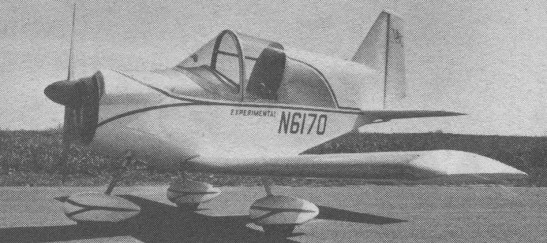
The Mini-Hawk combines the economy of the Volkwagen engine with that of detachable wings for towing or storage. Standard VW engines up to 67 hp can be used. The wings can be removed in under 10 minutes. Its all-metal construction is built around a configuration which includes low wings with trailing-edge flaps and seating for one under an enclosed canopy. The tricycle landing gear includes a steerable nosewheel, disc brakes and wheel fairings all around.
Gross Wt. 800 lb Empty Wt. 525 lb Fuel capacity 12 USG Wingspan 18 ft Length 13 ft 3 in Engine 72-hp Revmaster Volkswagen Top speed 175 mph Cruise 160 mph Stall 50 mph Climb rate 1000 fpm Ceiling 10,000 ft Takeoff run 400 ft Landing roIl 400 ft Range 700 nm
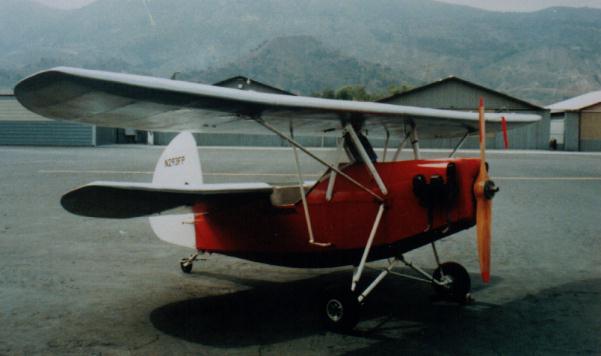
Originally introduced in the 1990s, Jim Millett’s Hornet returned in 2004 with a new team. One of the features is a large rubber donut shock-absorber that is centrally located in the fuselage to bear the load from the main gear.
Development has continued since World War 2, the basic post war single seat version being the HM-290 with a 25 hp Poinsard engine.
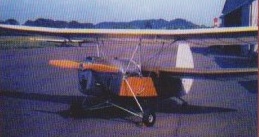
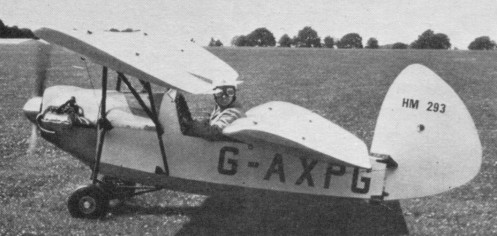
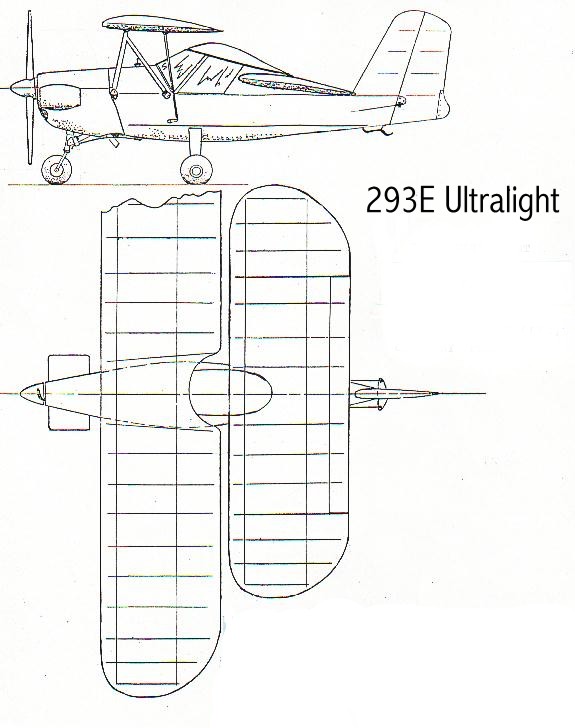
The HM 290 Series included: F293E ultralight model- for medium size pilot F295E ultralight model- for medium size pilot (with simplifications) HM290 amateur built model – for small pilot HM293 amateur built model – for medium size pilot
HM293
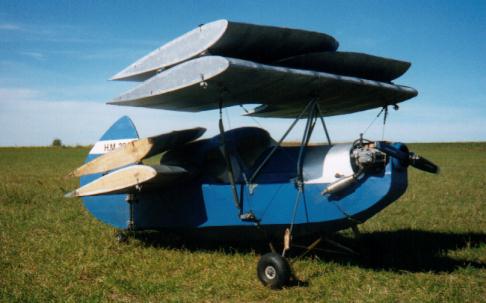
These tandem wing aircraft feature a large speed range, stall resistant, and spin proof. Both wings lift and being small size, minimal space is needed to build. Landing gear arrangement: tail dragger or tri-gear. Options include swept fin and rudder.
Falconar devised design changes for easier construction, modern materials, Delrin bearings, tri-gear and HIPEC® covering.
Rodolphe Grunberg has redrawn the 1940s HM.293 plans, updated them for 1990s materials, and fitted new light weight engines. Over 40 Grunberg HM.293s were reported either flying or close to completition in France in 1998.
Rodolphe Grunberg HM 293
In 2010 Falconar MIGNET “Flying Flea” plans cost: HM290E, HM293E, HM290, HM293 cost US$65. Falconar Avia produced kits as an LSA.
HM 293
On June 30, 2019, Falconar Avia Inc closed for business and assets dissolved. The Master Sets (Original Drawings, Plans, Info Kits, Documentation) were available for sale and full transfer of rights included the MIGNET “Flying Flea” HM 290/293, 290/293 E, F295 E, and 295 F for $4500 USD.
“Flying Flea” HM 290E/293E ULTRA LIGHT Engine: 25/30 hp Hirth or Rotax Cruise speed: 60 mph Length: 13 ft Empty weight: 246 lb Gross weight: 476 lb Wing span: 20 ft
HM290/HM293 amateur built Engine: 50/60 hp Little Demon (VW) or similar Cruise speed: 90 mph Length: 12-13 ft Empty weight: 360 lb Gross weight: 580 lb Wing span: 18-20 ft
HM290/293 Engine: VW, 60 hp HP range: 50-60 Height: 5.5 ft Length: 13 ft Wing span: 20 ft Wing area: 113 sq.ft Cruise: 90 mph Stall: 28 mph Range: 300 sm Rate of climb: 800 fpm Takeoff dist: 150 ft Landing dist: 150 ft Fuel capacity: 10 USG Empty weight: 350 lb Gross weight: 600 lb Seats: 1 Landing gear: nose or tail
HM 293 Engine: VW, 60 hp Speed max: 110 mph Cruise: 90 mph Range: 300 sm Stall: 28 mph ROC: 1400 fpm Take-off dist: 150 ft Landing dist: 150 ft Fuel cap: 10 USG Weight empty: 350 lbs Gross: 600 lbs Height: 5.5 ft Length: 13 ft Wing span: 20 ft Wing area: 113 sq.ft Seats: 1 Landing gear: nose or tail wheel.
Falconar Avia 290E/293E Engine: Kawasaki, 30 hp HP range: 25-35 Length: 13 ft Wing span: 20 ft Wing area: 117 sq.ft Empty weight: 246 lb Gross weight: 476 lb Fuel capacity: 5 USG Cruise: 55 mph Stall: 28 mph Range: 290 sm Rate of climb: 500 fpm Takeoff dist: 180 ft Landing dist: 150 ft Cockpit width: 23 in Landing gear: nose or tail
Rodolphe Grunberg HM 293 Engine: 30-40 hp Wing span: 6.10 m Wing area: 12 sq.m MAUW: 250 kg Empty weight: 117 kg Fuel capacity: 30 lt Max speed: 130 kph Cruise speed: 90 kph Minimum speed: 30 kph Seats: 1 Plan price (1998): 295 Fnc
Avions Henry Mignet Societe D’exploitation Des Aeronefs Henri Mignet Mignet do Brasil
Early aircraft from Henri Mignet was HM.14, popularly known as the Flying Flea (first flown 1933). Founded Mignet do Brasil postwar, but later returned to native France to produce series of new aircraft. or kit form is HM.1000 Balerit microlight, a tandem-wing two-seat Pou-du-Ciel type; customers include the French Armee de I’Air, for surveillance.
1998: Aviona Henri Mignet, 17600 St.Romain de Benet, France.
Available in assembled or kit form is HM.1000 Balerit microlight, a tandem-wing two-seat Pou-du-Ciel type; customers include the French Armee de I’Air, for surveillance.
1998: Aviona Henri Mignet, 17600 St.Romain de Benet, France.


 All Aero