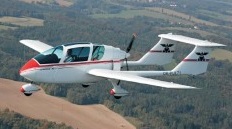
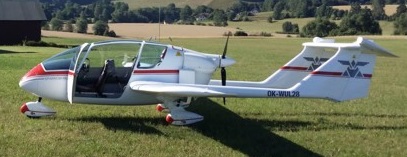
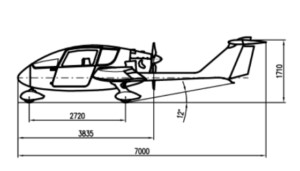
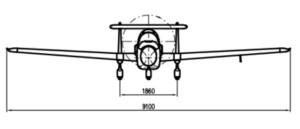
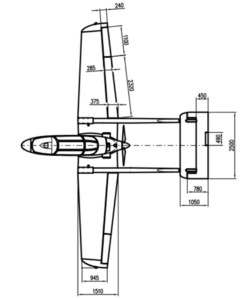
The Wolfsberg Letecka Tovrna Sparrow ML is a twin tail boom airplane with a pusher propeller. The design features large car-like doors that can be opened up to 90°. The pilot position in front of the wing brings excellent view.
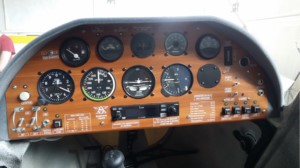
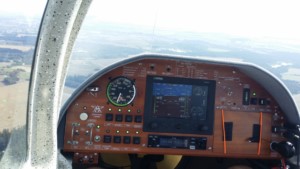
The Sparrow is equipped with the 80hp and 100 hp Rotax engines. The main undercarriage is equipped with oil dampers, the wheels of the main chassis are fitted with hydraulic disc brakes. The dashboard is designed for mounting both classic mechanical devices and state-of-the-art glass cockpit.
Sparrow ML was designed, calculated and tested to fulfill all requirements of Ultralight and LSA standards.
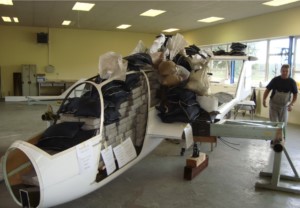
The airplane has modern light carbon fiber construction and conventional controls with control stick and pedals and electric flaps and trim control. Sparrow ML can have full dual controls or only pilot control on front seat.
The dashboard position allows convenient control of all devices and switches.
The aircraft is equipped with a proven ballistic rescue system.
Engine: Rotax 912 ULS: 80-100 hp Wing span: 9.1m / 29.9 ft Wing area: 11.6 sq.m / 124.9 sq.ft Length: 7 m / 23.0 ft Height: 1.7 m / 5.6 ft Empty weight: 272 kg / 600 lb Gross weight: 600 kg / 1323 kg Fuel capacity: 60 lt / 15.9 gal Min pilot weight: 75 kg / 165 lb Max baggage weight: 8 kg / 17.6 lb Stall clean: 60 kph / 32.4 kt Stall ldg config: 57 kph / 30.8 kt Maneuvering speed: 160 kph / 86.4 kt Max speed ldg config: 115 kph / 62.1 kt Max cruise: 210 kph / 113.4 kt Vne: 234 kph / 126.4 kt
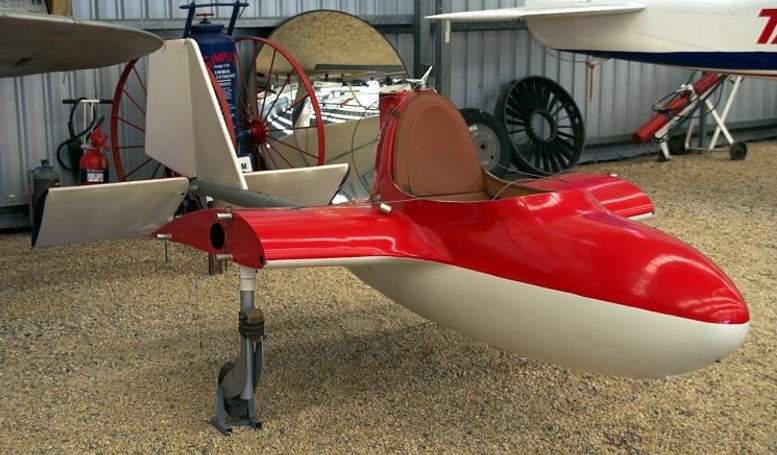
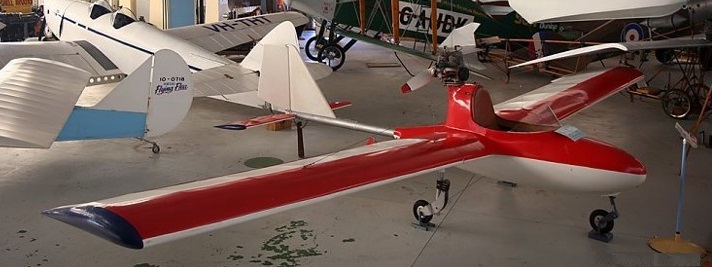
The Sportsman is the latest release from Col Winton on the Gold Coast who has been designing and building ultralights over the last nine years. The mid wing pusher comes either in kit form with or without the engine or complete and ready to fly. The sleek fibreglass body can be removed for maintenance or for those who like that airy feel, and the cantilevered mid wing unbolts for trailering a channel section aluminium boom supports the tail “feathers”. This aircraft can use a Rotax engine in lieu of the VW unit.
Since designing the Grasshopper, Col has produced the Jackeroo. The aircraft uses composite construction wings and a fuselage based on a 6 x 4 inch (152 x 102 mm) tube of rectangular section. The Mk2 version of the Jackeroo uses a deep section wing, with depth 20% of chord, which Col chose to lower the landing and take off speeds. However, to his surprise, it also improved the Jackeroo’s cruising speed. Assembly time for the Mk2 Jackeroo from a trailer is 10min, and the aircraft weighs some 250lb (113kg) empty.
Single seat single engined mid wing mono¬plane with conventional three axis control. Wing has swept back leading and trailing edges, and tapering chord; cruciform tail. Pitch control by fully flying tail; yaw control by fin mounted rudder; control inputs through stick for pitch/roll and pedals for yaw. Wing braced from above by cables; wing profile Karman; 100% double¬ surface. Undercarriage has three wheels in tricycle formation. Push right go right nosewheel steering connected to yaw control. Aluminium tube/glass¬fibre fuselage, partially enclosed. Engine mounted above wing driving pusher propeller.
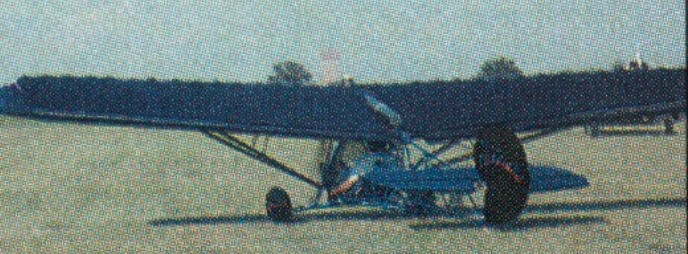
Col Winton’s Grasshopper won an award for the best foreign ultralight at the 1981 Oshkosh being a sophisti¬cated design, even by 1983 standards. Using Karman aerodynamics for both fuselage and wings, this machine was original¬ly powered by a 432 cc two stroke developing 23 hp. However, following its win at Oshkosh, Pterodactyl Ltd agreed to market the aircraft in the US, using a 30hp Cuyuna, while Col himself had plans to re engine the machine with a 440 cc Robin.
In concept the Grasshopper is a mixture of composite and tube and Dacron construc¬tion. The fuselage is principally made from glass fibre, while the wings are tube and Dacron with glass fibre leading edges and tips. Wings can be removed for transport and storage. The undercarriage has suspension on all three wheels and sometimes wheel spats are fitted.
Tolhurst purchased the moulds and rights from Colin Winton and produced an updated model at Camden, Sydney, Australia.
In 1978 the aircraft was purchased by Mr Juan Humberto Burnett of Perth and used for recreational flying mainly in the Rockingham area from 1978 to 1979. During this time, Burnett made a forced landing on a dry saltlake at Rockingham, due to a blocked fuel line.
Burnett moved to Mt Newman in 1979, and made several long distance flights from that town. One such flight was to Lake Disappointment and return (during which extra fuel was carried), and another flight was made to Port Hedland. The machine crashed on two occasions whilst based at Mt Newman. Once at Newman itself, and once at Marble Bar. In both incidents, damage to the machine was minimal and Burnett was unhurt.
In May 1981 Burnett returned to Perth, and did not get the opportunity to fly the Grasshopper again. The slightly damaged machine was donated to the RAAF Assn. Aviation Museum, where a rebuild was undertaken to bring the machine up to display condition.
On 25 April 2008 it was purchased from the Aviation Heritage Museum, Bull Creek by Greg Ackman who loaned the aircraft to the Queensland Aviation Museum. On 17 July 2008 it arrived at QAM, Caloundra by road. The aircraft was later donated to QAM.
Have acquired and earlier model grasshopper and am seeking to identify what model and year it was constructed, i also wish to get my hands on a construction manual as i want to restore this aircraft back to its original flying state, Will White ima224ru12@yahoo.com.au
Engine: Robin EC44PM Prop: VAC 36 x 50 Wingspan: 27 ft 11.5 in / 8.52 m Length: 16 ft 4.75 in / 5.0 m Empty wt: 122 kg AUW: 249 kg Cruise: 60 kts Max level speed: 75 mph, 120 kph Initial Climb: 192m/min / 630ft/min Service Ceiling: 3 962m / 13 000ft Range: 483km / 300mile
I use to work for winton aircraft back in 1977 with col and Micky building grasshoppers and crickets at the north st Mary’s factory would like to catch up with col and Micky one of these days Terry Cameron. Sept 2014
A very low cost, tube and fabric ultralight which was available as plans, kit, or ready to fly. The plans did cost US$100, and ready to fly US$10,500.
Doug Widmar / Dwidmar@comcast.net Jan 2014 I have one and wonder how many are out there and flying. So Far I’ve just got all three wheels off the ground high speed taxi. Ran out of summer 2013. Looking forward to 2014 actually flying it.
Top speed: 63 mph Cruise: 45 mph Stall: 27 mph Range: 120 sm Rate of climb: 400 fpm Takeoff dist: 300 ft Landing dist: 300 ft Service ceiling: 8000 ft Engine: 2si (LAPS), 32 hp HP range: 25-40 Fuel capacity: 5 USG Empty weight: 245 lb Gross weight: 500 lb Height: 5 ft Length: 15.8 ft Wing span: 27 ft Wing area: 145 sq.ft Seats: 1 Landing gear: tailwheel
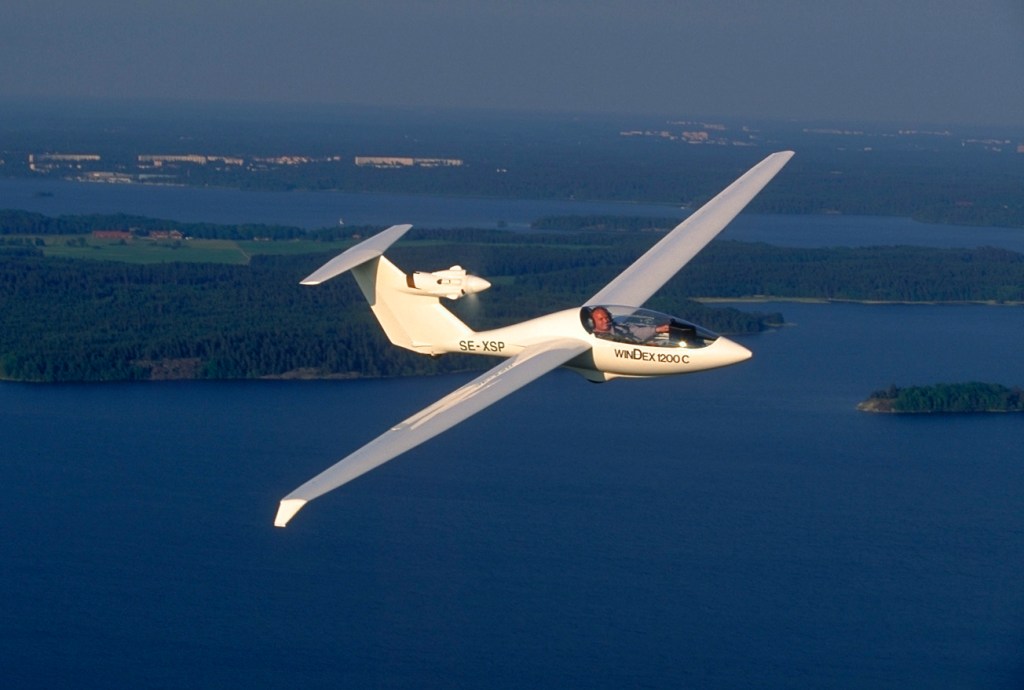
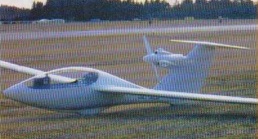
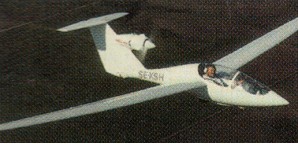
In 1980 Sven-Olof Ridder and Harald Undén start a hobby project which was intended to become a very light self-launching glider. During 1983 the Windex wing section developed and tested in wind tunnel. During 1985 Windex 1100 (unpowered) flies and work have started on moulds for powered version with 12 m. span, Windex 1200 C. In 1986 all Windex 1200 C moulds burn in a factory fire after only 2 sets of laminates have been produced but during 1987 the Windex 1200 C prototype was shown at the Paris Air show. During 1990 new moulds were being produced for kit production model, Windex 1200 C, fully aerobatic, with carbon fibre spars. The Windex 1200 C prototype took part in Aerobatic World Championships 1991 for Gliders in Poland. Bronze medal in 2 categories. 10 “pilot-builders” in Sweden and abroad tested kit parts, drawing, manual etc during 1993. During 1992-1995, intensive kit development work, product testing took place with 2 factory prototypes under construction. The first amateur-constructed kit Windex 1200C flew in 1996. In 1999 Windexair AB took over the Windex 1200C project from RADAB.
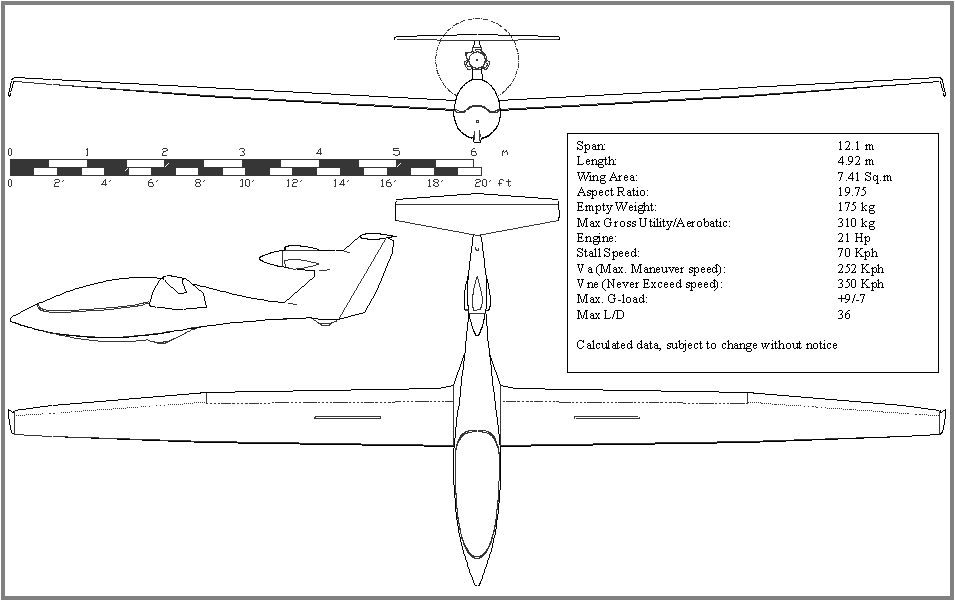
Windex 1200 C is primarily a high-performance sailplane, but has a low-drag fin-mounted engine installation and a variable-pitch propeller turning it into an efficient touring aircraft with a cruising speed of 210 km/h (130 mph) and self-launching capability. The airframe of Windex 1200 C is stressed for aerobatic manoeuvres and designed to JAR 22 (A). It’s a powered high-performance sailplane that can be easily handled on the ground by one person. Even with engine nacelle, propeller and a 20% smaller span it has a soaring performance equal to or better then a 15-metre Standard Cirrus glider. It also has a climb rate of approximately 2.5 metre/sec (685 fpm), under power. The specially designed 17% thick airfoil section has comparatively low drag and a wide low drag bucket that is further expanded by a 22.5% chord trailing edge flap. The basic airfoil has very docile stall characteristics in both smooth and rough condition. The carbon fibre spar has been successfully proof tested at 2175 kgs each side. That gives a useable load factor of +9 g and -7 g (with added safety factor of x 1.725). The König SC-430 3-cylinder engine, used in the Windex 1200C is manufactured in Canada. A displacement of 430 cc gives a take off power of 20 hp at 4200 rpm. Weight of the König engine is 13.8 kg (30.4 lbs). Starting is electric and it uses gasoline of types 100LL, 80UL and mogas98. The variable-pitch propeller unit for the König engine has been built and successfully tested to JAR 22 standards. The pilot control pitch from the cockpit, fine pitch to fully feathered. The JAR tests include 50 hours running and 500 control movements with engine running. After that the propeller unit is dismantled, searched for damage, tolerances checked and finally function checked again. The unit has come through bench testing without problems.
The Windex 1200 C Fuselage kit consist the following: Laminate parts: Upper and lower fuselage shells, vertical tail with engine nacelle, left and right, spar for vertical tail, upper and lower stabiliser shells, including spar caps moulded-in, spar web stabiliser, reinforcement module including seat and backrest, cockpit frame left and right, wheel housings for main- and tail wheel fairings, housing, ventilation channel with mechanism mounted, stick mechanism cover, fwd push rod cover aft rudder line covers and rudder pedal assembly. Plexiglas canopy cut to size with ventilation window (Mecaplex). Main wheel with tire. Tail wheel, complete. Miscellaneous tubing, electrical wiring, switches, fuel lines, etc. All metal parts are pre made. All hardware, bolts etc., is AN-quality. (With a few stainless steel exceptions) 5-Point (aerobatic) harness. Tow hook. Full scale templates for bulkheads, etc. All necessary drawings. Building manual (English language) Epoxy, fibreglass, adhesives. NOT INCLUDED: Instrument, paint, abrasive paper and similar materials. Wood, chipboard etc. for building cradle and jigs. Wing kit All internal wing fittings, hinges, spoilers, push rods, fuel tanks and wing spars are fitted. Wing is closed to eliminate wing jig and to considerably save building time Metal parts: All metal parts are pre-made. Wing spar pin bolts, bolts for rear and fwd attachment. AN aircraft hardware. Push rods for ailerons and spoiler. 2 x aluminium fuel tanks each 17 litres. Associated couplings and hardware. All necessary drawings and templates. Building manual. Epoxy, fibreglass, adhesives, NOT INCLUDED: Paint. Abrasive paper and similar materials. Wood, chipboard etc. for jigs.
The span is 39′ 8″ and best L/D is 38:1. They also offered a fast build kit version for $5l,890 that saves approximately 300 hours from the normal 1000 hour build time. The glider is stressed for aerobatics and has enough fuel capacity and a variable pitch propeller for efficient powered cruising up to 3 hours. The Windex uses preimpregnated composite materials and an autoclave cure process for high strength to weight ratio in the structures. No other current sailplane uses this fairly expensive process. The prize of the kit was US$39,000 in 1997. Windex also offered a building assistance program in Sarasota, Florida for $870 per month and will provide qualified helpers for $40 per hour.

 All Aero