Germany
PC Flight offers kits to construct Pretty Flight two-seat high-wing cabin microlight.
1998:
Dr.Herrmann-Str. 4
D-87719 Mindelheim
Germany
Germany
PC Flight offers kits to construct Pretty Flight two-seat high-wing cabin microlight.
1998:
Dr.Herrmann-Str. 4
D-87719 Mindelheim
Germany
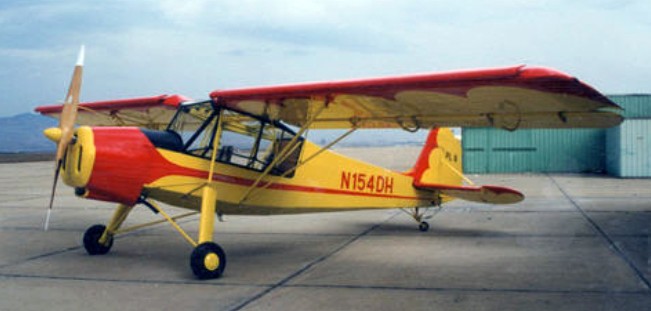
The Pazmany PL-9 Stork is an 3/4 replica of the Fieseler Storch. It authenticity is backed up by more than 9000 hours of aeronautical engineering design in order to obtain the same flying and handling characteristics of the original German Aircraft. The fuselage is welded chrome alloy steel tube, with aluminum sheet metal/fabric covered wing and empenage.
Designed to take off and land in extremely short distances, the Storch had a take off ground roll of 131 feet and a landing roll of 36 feet with 13 miles per hour head wind.
It has a well-proven aircraft configuration designed for a number of functions such as fish spotting, forest fire detection, farm work, missionary work, etc. The PL-9 Stork has a cruise speed of 104 mph with a standard Lyc. O-320/150 hp engine. Optional Subaru 2.2 lt engine.
Using the new Pazmany 3/4 scale plans, amateur builder Ruben Hardy embarked on his own construction of the PL-9. With great enthusiasm, financial commitment, and building ingenuity, bringing the first new Stork to life.
In March l999 at Oshkosh, Wisconsin his plane was displayed at the EAA convention to great public interest, in the presence of the design engineer Ladislao Pazmany.
PL-9
Engine LYC 0-320
Power Range 150-160 hp
Height 7 ft
Length 24.3 ft
Wing Span 36 ft
Wing Area 166 sq. ft
Empty Weight 1,132 lb
Gross Weight 1,739 lb
Fuel Capacity 30 USG
Top Speed 116 mph
Cruise 104 mph
Stall 33 mph
Range 332 mi
Rate of Climb 1400 fpm
Take-Off Distance 250 ft
Landing Distance 90 ft
Service Ceiling 15,000 ft
Number of Seats 2
Landing Gear Tailwheel
Information Package PDF 2009 $9
Information Package printed 2009 $12
Plans 2009 $550
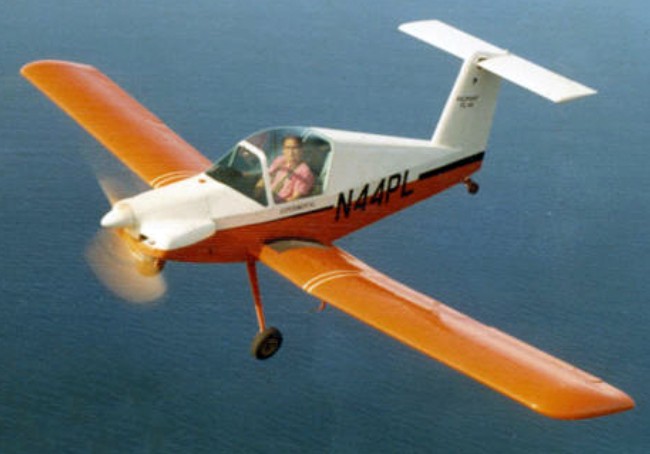
When designer Ladislao Pazmany was encouraged to come up with an easy-to-build, simple, safe, inexpensive, metal plane that could carry a Volkswagen 1600-cc or Continental A-65 engine in the early l970’s, he came up with the PL-4A. The fuselage is made up from formed sheet metal channels and standard extruded aluminium angles for the longerons with sheet metal skins. The wing consists of a centre section and two outer panels which can be folded back along the fuselage. Each panel incorporates a metal spar, a Zed section rear spar, pressed metal ribs and metal skins. Pop rivets are used extensively. Plain ailerons, but no flaps or trim tabs are fitted to the wing. The empennage is of “T” tail configuration with an all moving tailplane at the top of the fin with a large anti-servo tab. The tailwheel undercarriage consists of spring steel main legs with 3.50 x 6” tyres and brakes and a steerable tailwheel. A 9.5 Imperial gallon moulded fibreglass fuel tank is fitted behind the firewall. Engines from 50 to 75 hp may be installed.
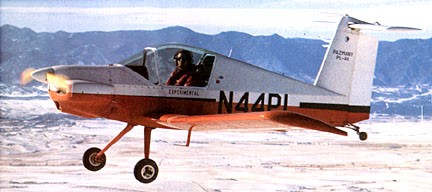
The prototype was flown on July 9, 1972 and plans were made available. The plane is roadable (folding wings), and Pazmany did supply the fiberglass pieces, plexiglass windscreen and canopy, landing gear, welded engine mount, and control stick.
The PL-4A has been built by air cadets in Argentina and Canada.
PL-4A
Engine Used: VW 1600 c.c.
Power Range: 50-90 hp
Top Speed: 120 mph
Cruise: 97 mph
Stall: 46 mph
Range: 280 mi
Rate of Climb: 650 fpm
Take-Off Distance: 560 ft
Landing Distance: 440 ft
Service ceiling: 13,000 ft
Fuel Capacity: 12 USgal
Empty Weight: 578 lb
Gross Weight: 850 lb
Height: 5.7 ft
Length: 16.5 ft
Wing Span: 26.7 ft
Wing Area: 89 sq. ft
Seats: 1
Landing Gear: Tailwheel
Information Package (PDF) 2009: $9
Information Package (printed) 2009: $12
Plans 2009: $375

Developed from the PL.1 “Laminar”, the PL.2 is a side by side two seater, all metal tricycle undercarriage, dual control aircraft. The parallel chord wing panels incorporate flanged aluminium ribs, a main spar with machined extruded booms, a metal false rear spar and aluminium skins. The fuselage is built up of conventional pressed metal frames longerons and skins. The curved sides of the cockpit are designed to break outwards in a crash. The all flying tail is equipped with an anti-servo tab for trimming and providing adequate stick forces. The main undercarriage is attached to the wing spar and the steerable nosewheel to the engine mount. Shock absorbers are of the oleo pneumatic type. Brakes are fitted to the main wheels. All fuel is carried in two 10 Imp. gallon wing tip tanks. Cabin width is 3’ 4”. Engines from 100 to 150 hp may be fitted. And, it is stressed for aerobatics.
The design followed his earlier PL 1 but with improvements in construction techniques in¬tended to make the aircraft easier for amateur engineers to build. Noticeable changes in¬cluded an increase in dihedral for the PL 2 from 2.5 to 5 degrees and a change in the fuselage to provide for 5cm of increased cabin width.
The first one flew on April 4, 1969.
Along with the PL-1, the PL-2 is for amateur builders. The external shape and flight characteristics are almost identical to the PL-1, but the construction has been simplified. The PL-2 offers a wider cockpit, better canopy and fuselage lines, simplified dihedral and the possibility of using engines from 90 to 150-hp, Despite its aerodynamically clean lines, there are no compound curves anywhere in the skin. This is partly the result of the use of a fiberglass cowl to streamline the nose. Pilots who have flown the PL-2 say it is an airplane flown with the fingers and not the fist. And, like the PL-1, it is stressed for aerobatics.
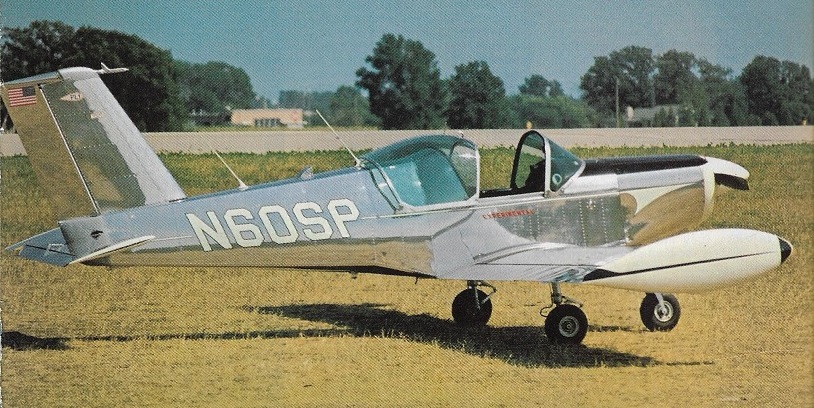
The Vietnam, Royal Thai and Korea Air Forces have each built a prototype. So, also, has the Miyauchi Manufacturing Company in Tokyo, which hoped to market this ‘homebuilt’ as a production aircraft.
The PL 2 has been evaluated by the air forces of Indonesia, Korea, Thailand and Vietnam as a trainer. Fifty PL 2, known as the LT 200, were built in 1976 by Indonesia’s Lipnur Aircraft Industry. The Indonesian air force’s production facility, Lembaga Industri Penerbangan Nurtanio, flew the prototype (IN-200) of the LT-200 two-seat lightweight trainer on 9 November 1974; this was based on the PL-2.
276 sets of plans had been sold by early 1975.
PL-2
Engine: Lycoming O-235-C1B, 108 hp
Speed max: 138 mph
Cruise: 119 mph
Range: 492 sm
Stall: 41 mph
ROC: 1200 fpm
Take-off dist: 700 ft
Landing dist: 600 ft
Service ceiling: 18,000 ft
Fuel cap: 25 USG
Weight empty: 875 lb
Gross: 1416 lb
Height: 7.7 ft
Length: 19.3 ft
Wing span: 27.8 ft
Wing area: 116 sq.ft
Seats: 2
Landing gear: nose wheel
PL-2
Engine: Lycoming O 290 G, 125 hp
Wing span: 28 ft
Airfoil: NACA 63 615
Length: 18 ft. 11 in
Height: 7 ft. 7 in
Wing area: 116 sq.ft
Wing loading: 12 lb/sq.ft
Seats: 2
Empty weight: 820 lb
Useful load: 526 lbs
Gross weight: 1,400 lbs
Power loading: 11 lb/hp
Fuel capacity: 25 USG
Baggage capacity: 40 lbs
Rate of climb: 1,500 fpm
Max speed: 144 mph
Cruise speed (75% power): 130 mph
Range (at max cruise, no res): 450 sm
Stall speed (flaps down): 54 mph
PL-2
Engine: Lycoming, 135 h.p
Span: 28’ 0”
Length: 19’ 8”
Wing Area: 116 sq. ft
Empty Weight: 900 lb
Loaded Weight: 1,445 lb
Wing Loading: l2.41b/sq. ft
Max. Speed: 140 mph
Cruise Speed: 120 mph
Stall Speed: 54 mph
Initial Climb: 1,000 fpm
Range: 490 miles
PL-2A
Engine LYC-235
Power Range 108-100-150 hp
Height 7.7 ft
Length 19.3 ft
Wing Span 27.8 ft
Wing Area 116 sq. ft
Empty Weight 875 lb
Gross Weight 1,416 lb
Fuel Capacity 25 USG
Top Speed 138 mph
Cruise 119 mph
Stall 52 mph
Range 492 mi
Rate of Climb 1200 fpm
Take-Off Distance 700 ft
Landing Distance 600 ft
Service Ceiling 18,000 ft
Number of Seats 2
Landing Gear Trigear
Information Package PDF 2009 $9
Information Package printed 2009 $12
Plans 2009 $425
PL-2B
Engine: Lycoming O 320 E2A, 150hp
Propellor: Ian Henry 69×66
Span: 9.0m
Length: 6.0m
Height: 2.2m
Empty weight: 423kg
MAUW: 625 kg
Baggage: 18kg
Fuel capacity: 2 x 50 lt
Endurance: 3 hr
Fuel consumption: 32 lt/hr
VNE: 162 kts
Cruise 2450 rpm: 115 kts
Max struc cruise: 130 kts
Vfe: 88 kts
V approach: 65 kts
Vs: 45 kts
ROC: 350 ft/min at 2450 rpm
Manoeuvre envelope: +6, 3g
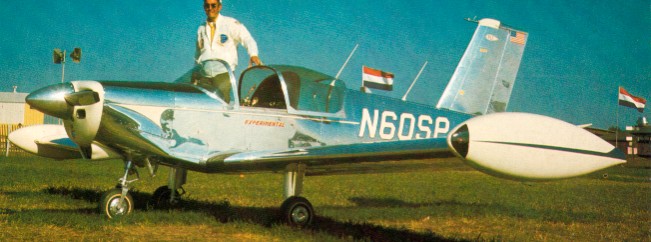
PL-1 Laminar was designed by Ladislao Pazinany. The prototype PL-1 of 1962 was stressed to nine G’s for aerobatics and featured a low-wing, tricycle-gear configuration with a sliding canopy.
Together with its advanced counterpart, the PL-2, the two Pazmany designs represent more hours flown than any other “amateur built’ aircraft design. Nearly 400 sets of plans were sold for the PL-1 before their sale was discontinued. The fuselage of the plane is all-metal with only flat or single-curvature skins. The wings are built around a single all-metal spar with a leading edge torsion box. In the cabin, seating is side-by-side with dual controls, and there is room for 40 pounds of baggage.
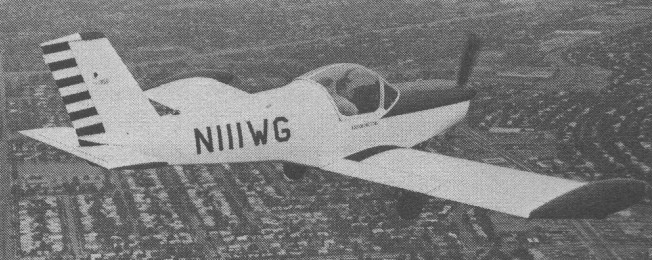
In 1968, a set of drawings were acquired by the Aeronautical Research Laboratory of the Chinese Nationalist Air Force in Taiwan who presented a PL-1, which they built, to Generalisimo Chiang Kai-Shek. Following construction and testing of a prototype it was decided to adopt the type as a basic trainer, and 40 aircraft designated PL-1B have been built for the Chinese Nationalist Air Force and 10 for the Nationalist Chinese Army. In the late l960’s the Nationalist Chinese Air Force acquired plans to build a version of the PL-1 to serve as a primary trainer. Their prototype flew on October 26, 1968, and an additonal 35 aircraft were started that year, and 58 were completed, overall.
The first PL-1 flying in England was Harold Jones G-BDHJ.
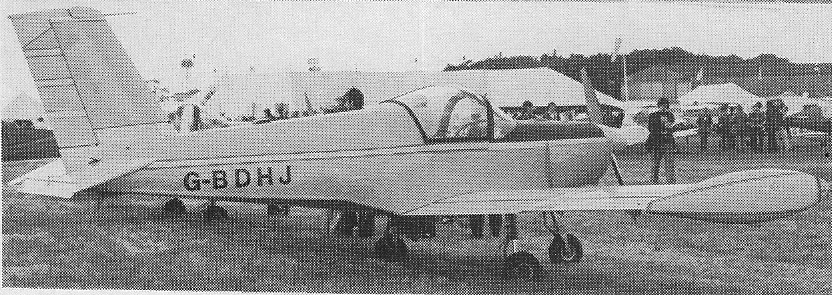
Engine: Continental C90-12F, 95 hp
Gross Weight: 1,320 lb
Wing Area: 116 sq. ft
Wing Loading: 11.4 lb/sq. ft
Rated Power Loading: 14.7 lb/hp
Empty Weight: 800 lb
Span: 28 ft
Length: 18’11”
Fuel Capacity: 25 USG
Max Speed SL: 120 mph
Cruise Speed SL: 115 mph
Landing Speed SL, 37 deg Flap – 1.1VS: 56 mph
Stall Speed SL, 37 deg Flap: 51 mph (44.3 knots)
Rate of Climb SL: 1,000 fpm
Service Ceiling: 18,000 ft
Normal Range SL: 500 mi
Take-Off Distance/50 ft, 15 deg Flap: 784 ft
Engine: Lycoming O-235, 115 hp
Engine: Lycoming 0-290-D2b, 135 hp (Estimated Performance)
Gross Weight: 1,407 lb
Wing Area: 116 sq. ft
Wing Loading: 12.1 lb/sq. ft
Rated Power Loading: 10.4 lb/hp
Empty Weight: 881 lb
Span: 28 ft
Length: 18’11”
Fuel Capacity: 25 USG
Max Speed SL: 160 mph
Cruise Speed SL: 155 mph
Landing Speed SL, 37 deg Flap – 1.1VS: 59 mph
Stall Speed SL, 37 deg Flap: 54 mph (46.9 knots)
Rate of Climb SL: 1,600 fpm
Service Ceiling: 22,000 ft
Normal Range SL: 450 mi
Take-Off Distance/50 ft, 15 deg Flap: 560 ft

Ladislao Pazmany is of Hungarian descent. His family moved to Argentina when he was three and he grew up and was educated there. After obtaining a degree in aero engineering, he worked wherever engineering jobs were available in the unstable economy that prevailed in Argentina at the time.
For nearly a decade he designed aircraft, pipelines, high tension power towers, suspenison bridges, chemical and hydroelectric plants, was an instructor at an aeronautics school.
In May of l956 Paz and his family moved to the U.S. and settled in San Diego where he went to work for Convair. The following month he attended his first EAA Chapter 14 meeting and has been involved in EAA activity ever since. At Convair, he worked on F-102, F-106 and other projects, and founded L. Pazmany & Associates at San Diego, California.
Concurrent with his full time employment he designed he PL-1, which flew for the first time on March 23, 1962, made plans available to homebuilders and wrote the book “Light Airplane Design”.
1980-95: Pazmany Aircraft, P.O. Box 80051, San Diego, CA 92138.

A wood and fabric design, the prototype was completed in 1994. The kit price in 1997 was US$7500, including engine, prop and instruments.
Engine: Subaru EA 81, 100 hp
HP range: 65-115
Height: 6 ft
Length: 20.5 ft
Wing span: 27 ft
Wing area: 102 sq.ft
Empty weight: 650 lb
Gross weight: 1300 lb
Fuel capacity: 17 USG
Top speed: 130 mph
Cruise: 110 mph
Stall: 38 mph
Range: 585 sm
Rate of climb: 1500 fpm
Takeoff dist: 300 ft
Landing dist: 400 ft
Seats: 2
Landing gear: tailwheel
Engine: Suzuki Turbo, 100 hp
HP range: 65-115
Height: 6 ft
Length: 20.5 ft
Wing span: 27 ft
Wing area: 102 sq.ft
Weight empty: 585 lbs
Gross: 1050 lbs
Fuel cap: 17 USG
Speed max: 125 mph
Cruise: 110 mph
Range: 585 sm
Stall: 38 mph
ROC: 1500 fpm
Take-off dist: 300 ft
Landing dist: 400 ft
Seats: 2
Landing gear: tail wheel
1995-7: PO Box 1155, Glenwood, AB TOK 2R0 Canada.
Built the Viper LSA
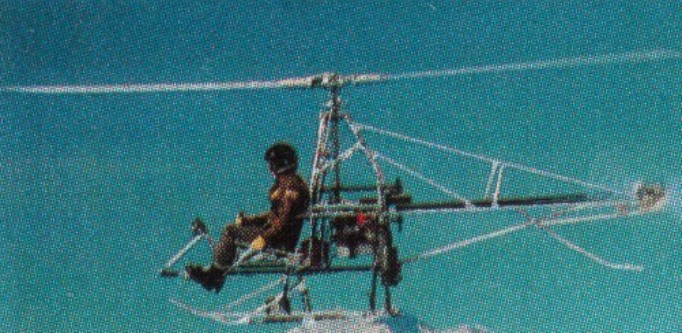
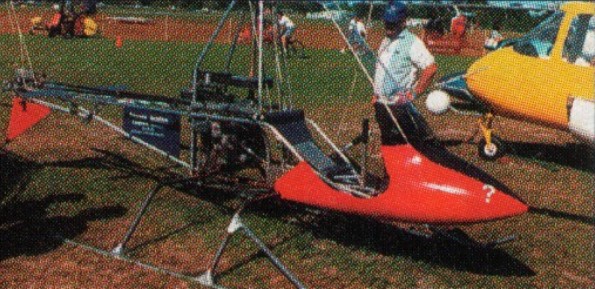
A kit helicopter, first flown in 1992, the kits had all major parts assembled, and all blades and parts balanced.
Kit price in 1997 was US$15,500.
Engine: Hirth, 65 hp
hp range: 65-110
Height: 7 ft
Length: 15 ft
Disk span: 21 ft
Empty weight: 435 lb
Gross weight: 825 lb
Fuel capacity: 14 USG
Max speed: 100 mph
Cruise: 80 mph
Range: 175 sm
Rate of climb: 1000 fpm
Service ceiling: 10,000 ft
Seats: 1
Max speed: 95 mph
Cruise: 80 mph
Range: 175 sm
Rate of climb: 1000 fpm
Service ceiling: 10,000 ft
Engine: Hirth, 65 hp
hp range: 65-110
Fuel capacity: 10 USG
Empty weight: 350 lb
Gross weight: 700 lb
Height: 7 ft
Length: 20 ft
Disk span: 21 ft
Seats: 1
 All Aero